This document discusses non-communicable diseases (NCDs) such as cancer, heart disease, and diabetes. It notes that NCDs are usually not infectious or contagious, have a long duration, and can often be asymptomatic, making them a "silent killer". The document outlines specific NCDs that commonly affect younger and older age groups. It also discusses risk factors for NCDs, including modifiable factors like smoking and physical inactivity, and non-modifiable factors like genetics. The key NCDs of cardiovascular disease, cancer, chronic respiratory disease, diabetes, and obesity are then summarized in more detail.
Non-communicable disease:a disease that can NOT be
spread from person to person. Ex: cancer, heart disease,
cirrhosis, etc.
which is not infectious
with long duration
relatively slow in progress
which a person is unaware of the disease unless or
otherwise examined
a silent killer of people
NON-MODIFIABLE
Age
Sex
Family History
Genetic Factors
Personality
MODIFIABLE
Cigarette Smoking
Alcohol Abuse
Dyslipidemia
Sedentary Life Style
Stress
Environmental Risk Factors
Inability to avail preventive
health care services
17 August 2018NCDs- Dr. Anindya 4
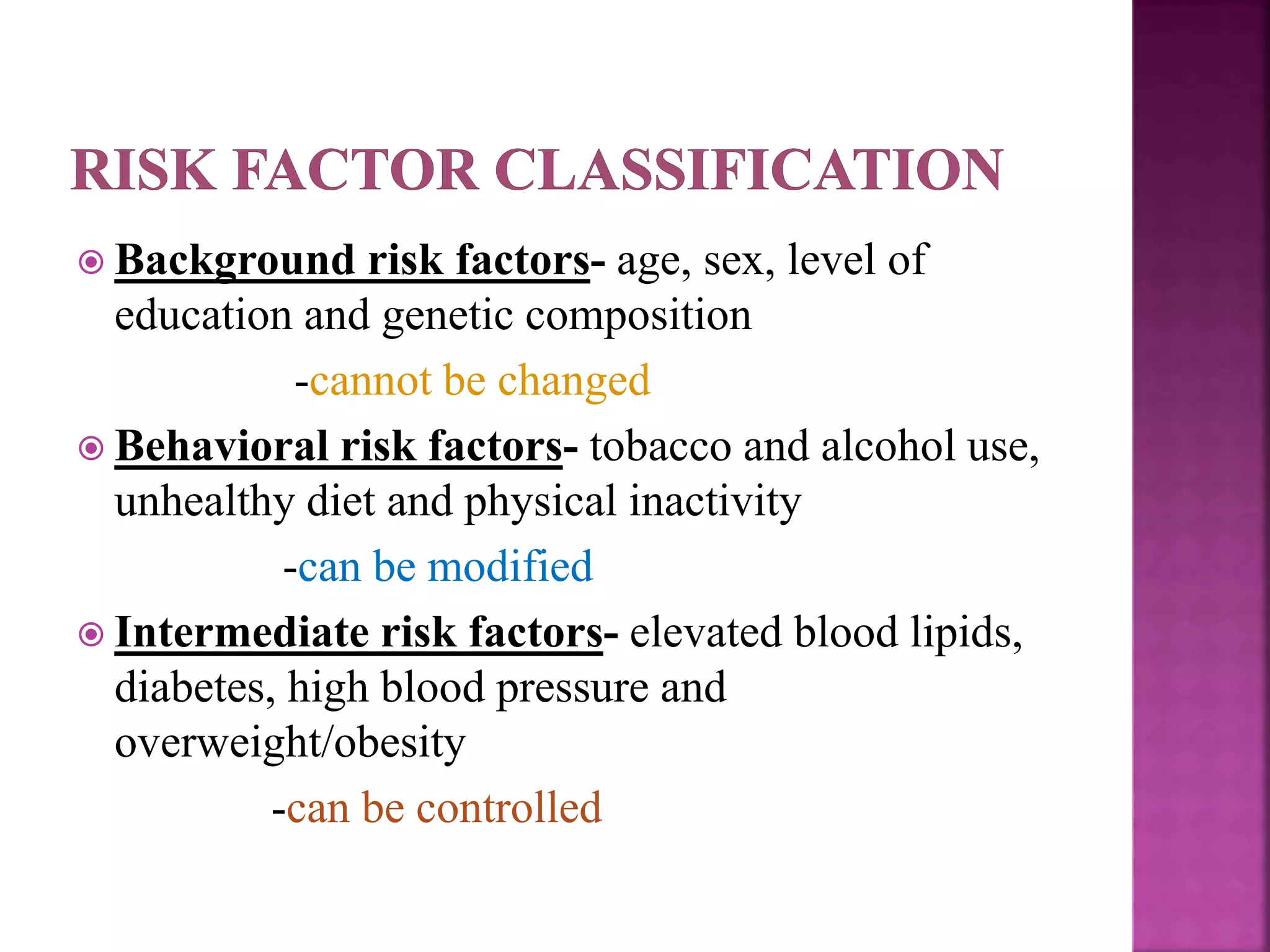
Background riskfactors- age, sex, level of
education and genetic composition
-cannot be changed
Behavioral risk factors- tobacco and alcohol use,
unhealthy diet and physical inactivity
-can be modified
Intermediate risk factors- elevated blood lipids,
diabetes, high blood pressure and
overweight/obesity
-can be controlled
7.
Cardiovascular disease iscaused by disorders of the
heart and blood vessels, and includes 1.coronary
heart disease (heart attacks),
2.cerebrovascular disease (stroke),
3.Raised blood pressure (hypertension),
4.peripheral artery disease,
5.rheumatic heart disease,
6. congenital heart disease
7. Heart failure.
Although heart attacks and strokes are major
killers in all parts of the world, 80% of premature
deaths from these causes could be avoided by
controlling the main risk factors: tobacco,
unhealthy diet and physical inactivity.
7
8.
Genetic make-upof a person
Life style habits early age
Socioeconomic status
Mental health
Diet
Overweight and obesity
Occupation
Smoking
Alcohol Abuse
Diabetes
Urbanization
8
9.
Maintaining ahealthy life style habits
Focusing on a combination of risk factors for
cardiovascular disease
Regular medical screening for individuals at risk
Providing effective and affordable treatment to
those who require it to avoid further complications.
9
10.
Cancer isthe abnormal growth and spread of
cells that arises from a change in one single cell. The
change may be started by external agents and
inherited genetic factors and can affect almost any
part of the body. The transformation from a normal
cell into a tumour cell is a multistage process where
growths often invade surrounding tissue and can
metastasize to distant sites.
10
11.
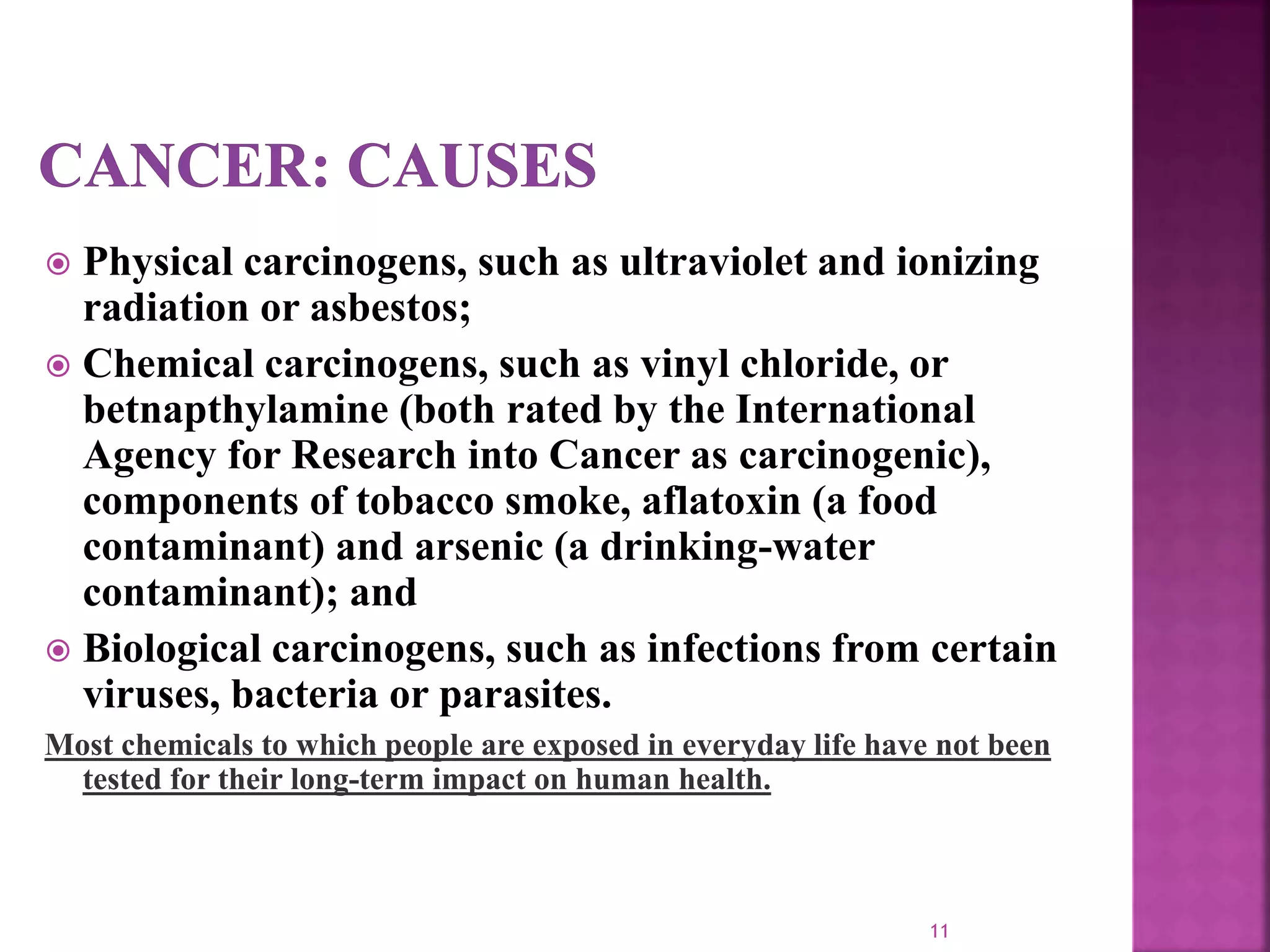
Physical carcinogens,such as ultraviolet and ionizing
radiation or asbestos;
Chemical carcinogens, such as vinyl chloride, or
betnapthylamine (both rated by the International
Agency for Research into Cancer as carcinogenic),
components of tobacco smoke, aflatoxin (a food
contaminant) and arsenic (a drinking-water
contaminant); and
Biological carcinogens, such as infections from certain
viruses, bacteria or parasites.
Most chemicals to which people are exposed in everyday life have not been
tested for their long-term impact on human health.
11
12.
Lung, breast,colorectal, stomach and liver
cancers
In high-income countries, the leading causes of
cancer deaths are lung cancer among men and
breast cancer among women.
In low- and middle-income countries cancer levels
vary according to the prevailing underlying risks.
In sub-Saharan Africa, for example, cervical
cancer is the leading cause of cancer death among
women.
12
13.
tobacco use
unhealthy diet
insufficient physical activity
the harmful use of alcohol
Infections (hepatitis B, hepatitis C (liver cancer), human
papillomavirus (HPV; cervical cancer), Helicobacter
pylori (stomach cancer)
Radiation
variety of environmental and occupational exposures of
varying importance
13
14.
Chronic respiratorydiseases like Asthma, COPD,
lung cancer , etc are caused due to exposure to
tobacco, that affects lungs.
Second-hand smoke causes severe respiratory
health problems in children, such as asthma and
reduced lung function; and asthma is now the most
common chronic disease among children
throughout the Region.
14
15.
Children areparticularly susceptible to the health
effects of damp, which include respiratory disorders
such as irritation of the respiratory tract, allergies
and exacerbation of asthma. Damp is often
associated with poor housing and social conditions,
poor indoor air quality and inadequate housing
hygiene.
15
16.
Diabetes isa chronic metabolic disorder that occurs
when the pancreas does not produce enough insulin
(a hormone that regulates blood sugar) or
alternatively, when the body cannot effectively use
the insulin it produces. The overall risk of dying
among people with diabetes is at least double the
risk of their peers without diabetes.
16
17.
About 347million people worldwide
have diabetes.
There is an emerging global epidemic of
diabetes that can be traced back to rapid
increases in overweight, obesity and
physical inactivity.
17
18.
80% ofdiabetes deaths occur in low- and
middle-income countries.
In developed countries most people with diabetes
are above the age of retirement, whereas in
developing countries those most frequently
affected are aged between 35 and 64.
18
19.
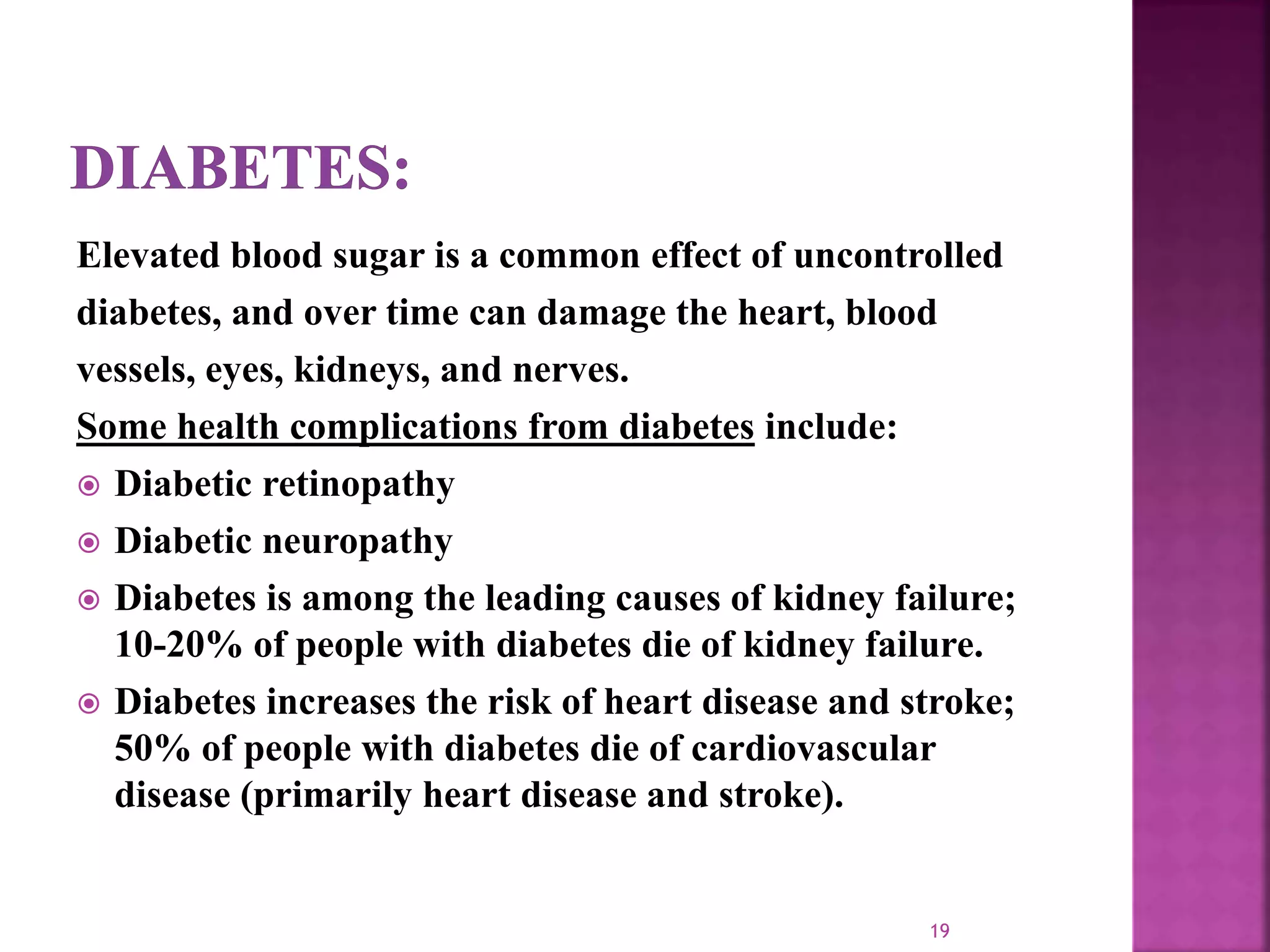
Elevated blood sugaris a common effect of uncontrolled
diabetes, and over time can damage the heart, blood
vessels, eyes, kidneys, and nerves.
Some health complications from diabetes include:
Diabetic retinopathy
Diabetic neuropathy
Diabetes is among the leading causes of kidney failure;
10-20% of people with diabetes die of kidney failure.
Diabetes increases the risk of heart disease and stroke;
50% of people with diabetes die of cardiovascular
disease (primarily heart disease and stroke).
19
20.
Without urgent action,diabetes-related deaths will increase
by more than 50% in the next 10 years. To help prevent type
2 diabetes and its complications, people should:
Achieve and maintain healthy body weight.
Be physically active - at least 30 minutes of regular,
moderate-intensity activity on most days.
Early diagnosis can be accomplished through relatively
inexpensive blood testing.
Treatment of diabetes involves lowering blood sugar and the
levels of other known risk factors that damage blood
vessels.
Tobacco cessation is also important to avoid complications.
20
21.
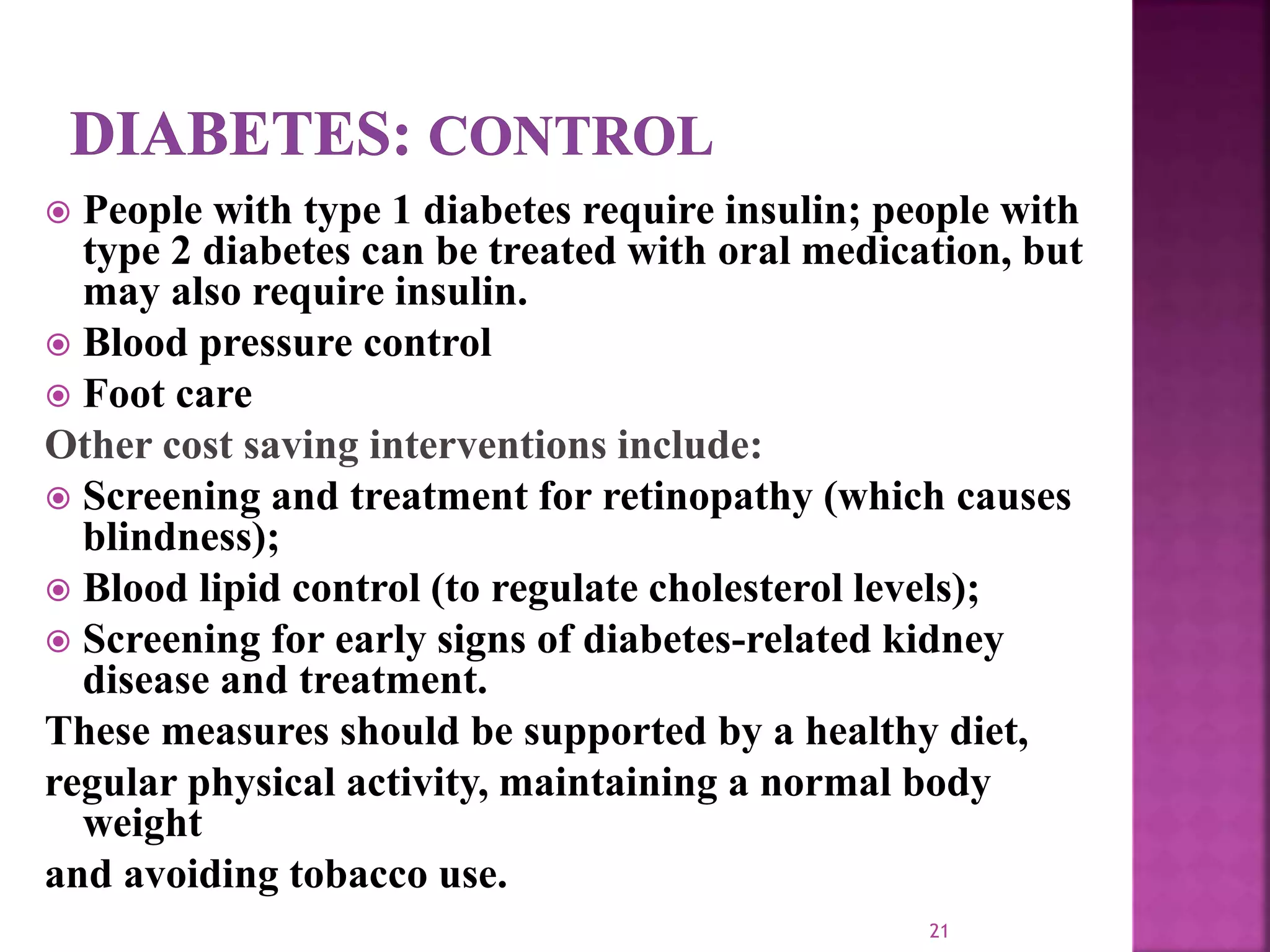
People withtype 1 diabetes require insulin; people with
type 2 diabetes can be treated with oral medication, but
may also require insulin.
Blood pressure control
Foot care
Other cost saving interventions include:
Screening and treatment for retinopathy (which causes
blindness);
Blood lipid control (to regulate cholesterol levels);
Screening for early signs of diabetes-related kidney
disease and treatment.
These measures should be supported by a healthy diet,
regular physical activity, maintaining a normal body
weight
and avoiding tobacco use.
21
22.
Obesity isone of the greatest public health
challenges of the 21st century. Its prevalence has
tripled in many countries of the WHO European
Region since the 1980s, and the numbers of those
affected continue to rise at an alarming rate,
particularly among children.
In addition to causing various physical disabilities
and psychological problems, excess weight
drastically increases a person’s risk of developing a
number of noncommunicable diseases (NCDs),
including cardiovascular disease, cancer and
diabetes.
The risk of developing more than one of these
diseases (co-morbidity) also increases with
increasing body weight.
22
23.
Overweight andobesity
are defined as "abnormal
or excessive fat
accumulation that may
impair health“
Body mass index (BMI) – the
weight in kilograms divided by
the square of the height in
meters (kg/m2) – is a commonly
used index to classify
overweight and obesity in
adults. WHO defines
overweight as a BMI equal to or
more than 25, and obesity as a
BMI equal to or more than 30.
23
24.
Childhood obesityis one of the most serious public
health challenges of the 21st century. Overweight
children are likely to become obese adults. They are
more likely than non-overweight children to develop
diabetes and cardiovascular diseases at a younger age,
which in turn are associated with a higher chance of
premature death and disability.
Supportive environments and communities are
fundamental in shaping people’s choices and
preventing obesity
24
25.
Individual responsibilitycan only have its
full effect where people have access to a
healthy lifestyle, and are supported to make
healthy choices.
WHO mobilizes the range of stakeholders
who have vital roles to play in shaping
healthy environments and making healthier
diet options affordable and easily accessible.
25
26.
Millions ofdeaths can be prevented by stronger
implementation of measures that exist today.
These include policies that promote government-wide action
against NCDs:
1. stronger anti-tobacco controls
2. promoting healthier diets,
3. physical activity,
4. reducing harmful use of alcohol;
5. along with improving people's access to essential health care.
26
27.
Ways toprevent Non-Infectious or Non-
Communicable diseases
– Avoiding triggers of allergies or asthma
– Having a healthy diet, getting plenty of exercise to
prevent high blood pressure, cancer, heart disease,
stroke, and type 2 diabetes.
– Taking medication for diseases you are born with, like
asthma, allergies, and type 1 diabetes
– Going to the doctor regularly to get tested for things
that may run in your family, like high blood pressure,
cancer, heart disease, etc.
![JOHNY WILBERT, M.Sc[N]
LECTURER,
APOLLO INSTITUTE OF HOSPITAL
MANAGEMENT AND ALLIED SCIENCE](https://image.slidesharecdn.com/noncommunicablediseases-180817073200/75/Non-communicable-diseases-1-2048.jpg)