
1
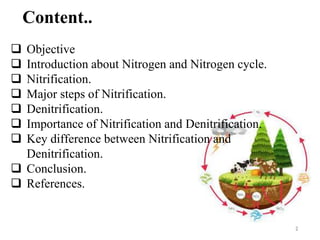
Content..
 Objective
 Introduction about Nitrogen and Nitrogen cycle.
 Nitrification.
 Major steps of Nitrification.
 Denitrification.
 Importance of Nitrification and Denitrification.
 Key difference between Nitrification and
Denitrification.
 Conclusion.
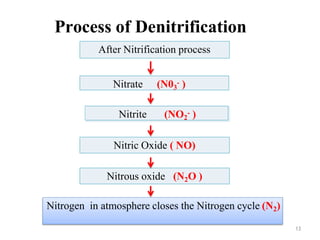
 References.
2
Objective
 To identify the important roles and the
differences of nitrification and denitrification in
the nitrogen cycle.
3
4
Introduction about Nitrogen and
Nitrogen cycle.
What is Nitrogen?
 Nitrogen is,
• The largest single source in the atmosphere.
(N2-78%)
• An element used to build DNA,RNA and
proteins,this is the building block of life.
 Most living organisms are unable to use nitrogen
as it exists in the atmosphere. (Why ???)
 It can be used by most living organism by travelling
through one of the four processes in the nitrogen
cycle.
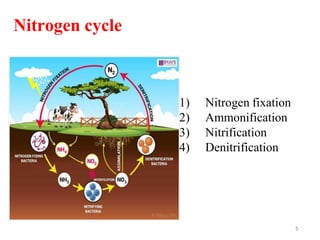
Nitrogen cycle
5
1) Nitrogen fixation
2) Ammonification
3) Nitrification
4) Denitrification
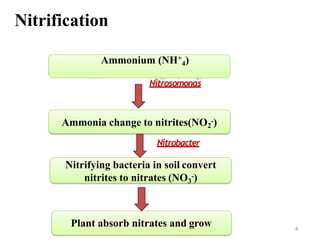
Plant absorb nitrates and grow
Ammonium (NH+
4)
Nitrosomonas
Ammonia change to nitrites(NO2
-)
Nitrobacter
Nitrifying bacteria in soil convert
nitrites to nitrates (NO3
-)
6
Nitrification
7
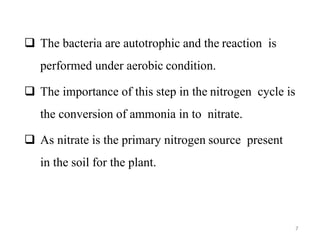
 The bacteria are autotrophic and the reaction is
performed under aerobic condition.
 The importance of this step in the nitrogen cycle is
the conversion of ammonia in to nitrate.
 As nitrate is the primary nitrogen source present
in the soil for the plant.
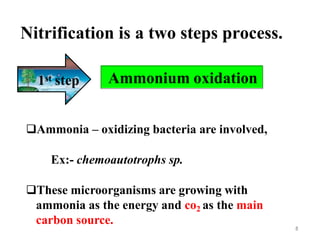
Nitrification is a two steps process.
1st step Ammonium oxidation
8
Ammonia – oxidizing bacteria are involved,
Ex:- chemoautotrophs sp.
These microorganisms are growing with
ammonia as the energy and co2 as the main
carbon source.
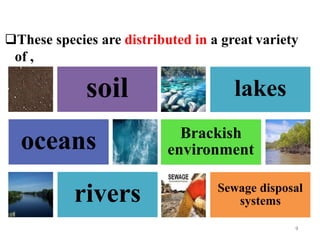
These species are distributed in a great variety
of ,
soil
oceans
rivers
lakes
Brackish
environment
Sewage disposal
systems
9
10
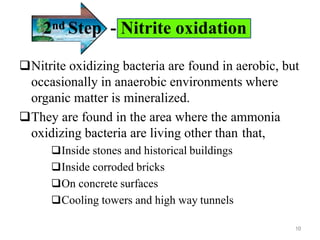
2nd Step - Nitrite oxidation
Nitrite oxidizing bacteria are found in aerobic, but
occasionally in anaerobic environments where
organic matter is mineralized.
They are found in the area where the ammonia
oxidizing bacteria are living other than that,
Inside stones and historical buildings
Inside corroded bricks
On concrete surfaces
Cooling towers and high way tunnels
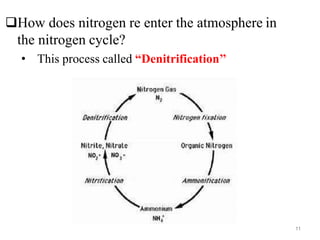
How does nitrogen re enter the atmosphere in
the nitrogen cycle?
• This process called “Denitrification’’
11
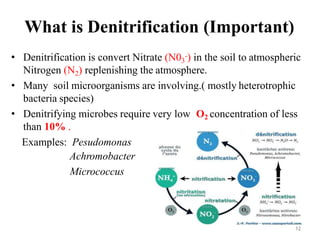
What is Denitrification (Important)
• Denitrification is convert Nitrate (N03
-) in the soil to atmospheric
Nitrogen (N2) replenishing the atmosphere.
• Many soil microorganisms are involving.( mostly heterotrophic
bacteria species)
• Denitrifying microbes require very low O2 concentration of less
than 10% .
Examples: Pesudomonas
Achromobacter
Micrococcus
12
After Nitrification process
Nitrogen in atmosphere closes the Nitrogen cycle (N2)
Process of Denitrification
Nitrite (NO2
- )
Nitrate (N03
- )
Nitric Oxide ( NO)
Nitrous oxide (N2O )
13
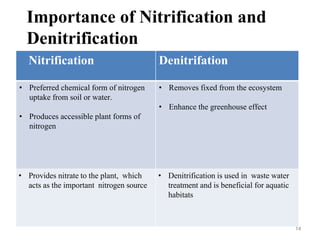
Importance of Nitrification and
Denitrification
Nitrification Denitrifation
• Preferred chemical form of nitrogen
uptake from soil or water.
• Produces accessible plant forms of
nitrogen
• Removes fixed from the ecosystem
• Enhance the greenhouse effect
• Provides nitrate to the plant, which
acts as the important nitrogen source
• Denitrification is used in waste water
treatment and is beneficial for aquatic
habitats
14
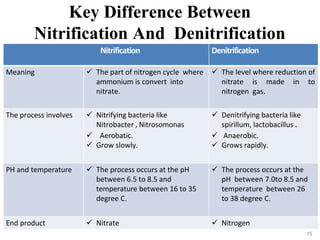
Key Difference Between
Nitrification And Denitrification
Nitrification Denitrification
Meaning  The part of nitrogen cycle where
ammonium is convert into
nitrate.
 The level where reduction of
nitrate is made in to
nitrogen gas.
The process involves  Nitrifying bacteria like
Nitrobacter , Nitrosomonas
 Aerobatic.
 Grow slowly.
 Denitrifying bacteria like
spirillum, lactobacillus .
 Anaerobic.
 Grows rapidly.
PH and temperature  The process occurs at the pH
between 6.5 to 8.5 and
temperature between 16 to 35
degree C.
 The process occurs at the
pH between 7.0to 8.5 and
temperature between 26
to 38 degree C.
End product  Nitrate  Nitrogen
15
15
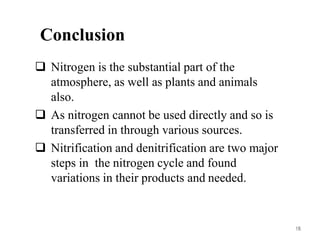
Conclusion
 Nitrogen is the substantial part of the
atmosphere, as well as plants and animals
also.
 As nitrogen cannot be used directly and so is
transferred in through various sources.
 Nitrification and denitrification are two major
steps in the nitrogen cycle and found
variations in their products and needed.
16
16
T A
H
N
K
Y O U
17

Nitrification process

  • 1.
  • 2.
    Content..  Objective  Introductionabout Nitrogen and Nitrogen cycle.  Nitrification.  Major steps of Nitrification.  Denitrification.  Importance of Nitrification and Denitrification.  Key difference between Nitrification and Denitrification.  Conclusion.  References. 2
  • 3.
    Objective  To identifythe important roles and the differences of nitrification and denitrification in the nitrogen cycle. 3
  • 4.
    4 Introduction about Nitrogenand Nitrogen cycle. What is Nitrogen?  Nitrogen is, • The largest single source in the atmosphere. (N2-78%) • An element used to build DNA,RNA and proteins,this is the building block of life.  Most living organisms are unable to use nitrogen as it exists in the atmosphere. (Why ???)  It can be used by most living organism by travelling through one of the four processes in the nitrogen cycle.
  • 5.
    Nitrogen cycle 5 1) Nitrogenfixation 2) Ammonification 3) Nitrification 4) Denitrification
  • 6.
    Plant absorb nitratesand grow Ammonium (NH+ 4) Nitrosomonas Ammonia change to nitrites(NO2 -) Nitrobacter Nitrifying bacteria in soil convert nitrites to nitrates (NO3 -) 6 Nitrification
  • 7.
    7  The bacteriaare autotrophic and the reaction is performed under aerobic condition.  The importance of this step in the nitrogen cycle is the conversion of ammonia in to nitrate.  As nitrate is the primary nitrogen source present in the soil for the plant.
  • 8.
    Nitrification is atwo steps process. 1st step Ammonium oxidation 8 Ammonia – oxidizing bacteria are involved, Ex:- chemoautotrophs sp. These microorganisms are growing with ammonia as the energy and co2 as the main carbon source.
  • 9.
    These species aredistributed in a great variety of , soil oceans rivers lakes Brackish environment Sewage disposal systems 9
  • 10.
    10 2nd Step -Nitrite oxidation Nitrite oxidizing bacteria are found in aerobic, but occasionally in anaerobic environments where organic matter is mineralized. They are found in the area where the ammonia oxidizing bacteria are living other than that, Inside stones and historical buildings Inside corroded bricks On concrete surfaces Cooling towers and high way tunnels
  • 11.
    How does nitrogenre enter the atmosphere in the nitrogen cycle? • This process called “Denitrification’’ 11
  • 12.
    What is Denitrification(Important) • Denitrification is convert Nitrate (N03 -) in the soil to atmospheric Nitrogen (N2) replenishing the atmosphere. • Many soil microorganisms are involving.( mostly heterotrophic bacteria species) • Denitrifying microbes require very low O2 concentration of less than 10% . Examples: Pesudomonas Achromobacter Micrococcus 12
  • 13.
    After Nitrification process Nitrogenin atmosphere closes the Nitrogen cycle (N2) Process of Denitrification Nitrite (NO2 - ) Nitrate (N03 - ) Nitric Oxide ( NO) Nitrous oxide (N2O ) 13
  • 14.
    Importance of Nitrificationand Denitrification Nitrification Denitrifation • Preferred chemical form of nitrogen uptake from soil or water. • Produces accessible plant forms of nitrogen • Removes fixed from the ecosystem • Enhance the greenhouse effect • Provides nitrate to the plant, which acts as the important nitrogen source • Denitrification is used in waste water treatment and is beneficial for aquatic habitats 14
  • 15.
    Key Difference Between NitrificationAnd Denitrification Nitrification Denitrification Meaning  The part of nitrogen cycle where ammonium is convert into nitrate.  The level where reduction of nitrate is made in to nitrogen gas. The process involves  Nitrifying bacteria like Nitrobacter , Nitrosomonas  Aerobatic.  Grow slowly.  Denitrifying bacteria like spirillum, lactobacillus .  Anaerobic.  Grows rapidly. PH and temperature  The process occurs at the pH between 6.5 to 8.5 and temperature between 16 to 35 degree C.  The process occurs at the pH between 7.0to 8.5 and temperature between 26 to 38 degree C. End product  Nitrate  Nitrogen 15
  • 16.
    15 Conclusion  Nitrogen isthe substantial part of the atmosphere, as well as plants and animals also.  As nitrogen cannot be used directly and so is transferred in through various sources.  Nitrification and denitrification are two major steps in the nitrogen cycle and found variations in their products and needed. 16
  • 17.