ROLE OF FUNCTIONAL LIPIDS IN
PREVENTION AND MANAGEMENT OF
DISEASE
GROUP MEMBERS –
2017t00093 G.V. Edussuriya
2017T00158 S.S.V.Sumanadasa
2017T00169 C.I. Wedasinghe
2017T00124 M.H.C.Y. Munasinghe
2017T00110 V. Kalaldora
2017T00114 E.A.D.S.N. Kumara
2017T00120 A.S. Madushan
2017T00091 D.M.W.C. Dissanayaka
2017T00137 R.M.M. Amashakya
2017T00138 R.M.N.P. Rathnayaka
CONTENT
01. INTRODUCTION
02. COMPONENT OF FUNCTIONAL LIPIDS
03. DIETARY SOURCES OF FUNCTIONAL LIPIDS
04 PREVENTION AND MANAGEMENT OF DISEASES WITH FUNCTIONAL
LIPIDS
4.1 Obesity
4.2 Bone health
4.3 Autoimmune Inflammatory Diseases
4.4 Chronic Kidney Diseases(CKD)
4.5 Plasma Lipid Concentrations
4.6 Depression
4.7 Alzheimer's diseases
4.8 Parkinson’s Diseases
4.9 Atopic dermatitis
4.10 Cholesterol
05. SIDE EFFECTS
06. CONCLUSION
07. REFERENCES
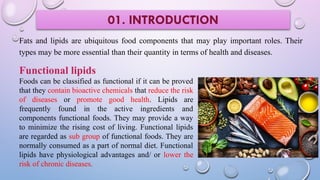
Fats and lipids are ubiquitous food components that may play important roles. Their
types may be more essential than their quantity in terms of health and diseases.
01. INTRODUCTION
Functional lipids
Foods can be classified as functional if it can be proved
that they contain bioactive chemicals that reduce the risk
of diseases or promote good health. Lipids are
frequently found in the active ingredients and
components functional foods. They may provide a way
to minimize the rising cost of living. Functional lipids
are regarded as sub group of functional foods. They are
normally consumed as a part of normal diet. Functional
lipids have physiological advantages and/ or lower the
risk of chronic diseases.
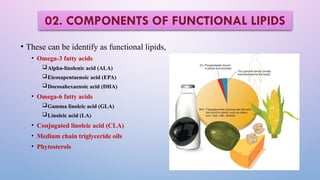
• These can be identify as functional lipids,
• Omega-3 fatty acids
Alpha-linolenic acid (ALA)
Eicosapentaenoic acid (EPA)
Docosahexaenoic acid (DHA)
• Omega-6 fatty acids
Gamma linoleic acid (GLA)
Linoleic acid (LA)
• Conjugated linoleic acid (CLA)
• Medium chain triglyceride oils
• Phytosterols
02. COMPONENTS OF FUNCTIONAL LIPIDS
• Omega-3 and omega-6 fatty acids are just two of the essential nutrients (cell-
membrane phospholipids and they have several other functional roles ) our bodies
need to function.
• Essential means our bodies can’t make them, so we have to get them from
other sources, either through food or supplementation.
• Humans can synthesize saturated and monounsaturated fatty acids but cannot
synthesize polyunsaturated omega-3 and omega-6 fatty acids de novo.
• This is because humans like other animals, lack the desaturase enzymes required
to produce the simplest members of these families (ala and la, respectively).
OMEGA-3 AND OMEGA-6 FATTY ACIDS
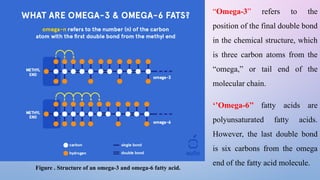
“Omega-3” refers to the
position of the final double bond
in the chemical structure, which
is three carbon atoms from the
“omega,” or tail end of the
molecular chain.
Figure . Structure of an omega-3 and omega-6 fatty acid.
‘’Omega-6’’ fatty acids are
polyunsaturated fatty acids.
However, the last double bond
is six carbons from the omega
end of the fatty acid molecule.
Omega-3 fatty acids
(c) Docosahexaenoic acid (DHA)
(b) Eicosatetraenoic acid (EPA)
(a) Alpha-linolenic acid (ALA)
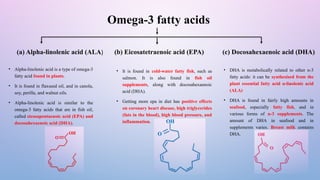
• Alpha-linolenic acid is a type of omega-3
fatty acid found in plants.
• It is found in flaxseed oil, and in canola,
soy, perilla, and walnut oils.
• Alpha-linolenic acid is similar to the
omega-3 fatty acids that are in fish oil,
called eicosapentaenoic acid (EPA) and
docosahexaenoic acid (DHA).
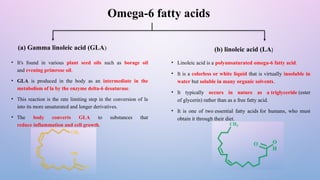
• It is found in cold-water fatty fish, such as
salmon. It is also found in fish oil
supplements, along with docosahexaenoic
acid (DHA).
• Getting more epa in diet has positive effects
on coronary heart disease, high triglycerides
(fats in the blood), high blood pressure, and
inflammation.
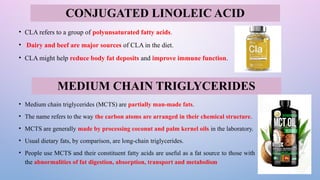
• DHA is metabolically related to other n-3
fatty acids: it can be synthesised from the
plant essential fatty acid α-linolenic acid
(ALA)
• DHA is found in fairly high amounts in
seafood, especially fatty fish, and in
various forms of n-3 supplements. The
amount of DHA in seafood and in
supplements varies. Breast milk contains
DHA.
Omega-6 fatty acids
(a) Gamma linoleic acid (GLA) (b) linoleic acid (LA)
• It's found in various plant seed oils such as borage oil
and evening primrose oil.
• GLA is produced in the body as an intermediate in the
metabolism of la by the enzyme delta-6 desaturase.
• This reaction is the rate limiting step in the conversion of la
into its more unsaturated and longer derivatives.
• The body converts GLA to substances that
reduce inflammation and cell growth.
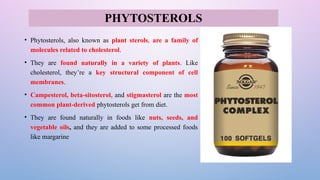
• Linoleic acid is a polyunsaturated omega-6 fatty acid.
• It is a colorless or white liquid that is virtually insoluble in
water but soluble in many organic solvents.
• It typically occurs in nature as a triglyceride (ester
of glycerin) rather than as a free fatty acid.
• It is one of two essential fatty acids for humans, who must
obtain it through their diet.
• CLA refers to a group of polyunsaturated fatty acids.
• Dairy and beef are major sources of CLA in the diet.
• CLA might help reduce body fat deposits and improve immune function.
• Medium chain triglycerides (MCTS) are partially man-made fats.
• The name refers to the way the carbon atoms are arranged in their chemical structure.
• MCTS are generally made by processing coconut and palm kernel oils in the laboratory.
• Usual dietary fats, by comparison, are long-chain triglycerides.
• People use MCTS and their constituent fatty acids are useful as a fat source to those with
the abnormalities of fat digestion, absorption, transport and metabolism
CONJUGATED LINOLEIC ACID
MEDIUM CHAIN TRIGLYCERIDES
• Phytosterols, also known as plant sterols, are a family of
molecules related to cholesterol.
• They are found naturally in a variety of plants. Like
cholesterol, they’re a key structural component of cell
membranes.
• Campesterol, beta-sitosterol, and stigmasterol are the most
common plant-derived phytosterols get from diet.
• They are found naturally in foods like nuts, seeds, and
vegetable oils, and they are added to some processed foods
like margarine
PHYTOSTEROLS
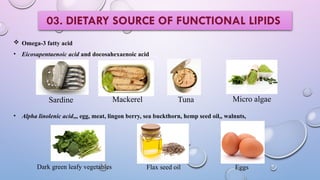
 Omega-3 fatty acid
• Eicosapentaenoic acid and docosahexaenoic acid
Mackerel
Sardine Tuna Micro algae
• Alpha linolenic acid,,, egg, meat, lingon berry, sea buckthorn, hemp seed oil,, walnuts,
Flax seed oil
Dark green leafy vegetables Eggs
03. DIETARY SOURCE OF FUNCTIONAL LIPIDS
Chia seed oil
Meat lingonberry
Canola oil Walnuts
Hazelnuts
 Omega-6 fatty acid
• Linoleic acids
Vegetable oil Salad dressing Nuts
• Gamma linolenic acid
Black currant oil Evening primrose oil Borage oil
 Conjugated linoleic acid
,
Milk Meats (kangaroo meat) Egg yolk Fish
Fresh ground beef
Cheddar cheese
Cultured buttermilk
Plain yogurt
Custard style yogurt
Butter fat
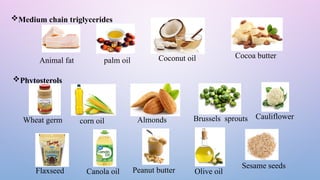
Medium chain triglycerides
Animal fat palm oil Coconut oil Cocoa butter
Phytosterols
Wheat germ corn oil Almonds Brussels sprouts Cauliflower
Flaxseed Canola oil Peanut butter Olive oil
Sesame seeds
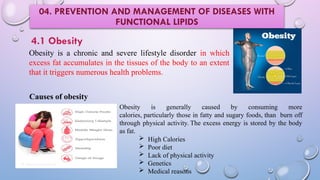
Obesity is a chronic and severe lifestyle disorder in which
excess fat accumulates in the tissues of the body to an extent
that it triggers numerous health problems.
4.1 Obesity
Causes of obesity
Obesity is generally caused by consuming more
calories, particularly those in fatty and sugary foods, than burn off
through physical activity. The excess energy is stored by the body
as fat.
 High Calories
 Poor diet
 Lack of physical activity
 Genetics
 Medical reasons
04. PREVENTION AND MANAGEMENT OF DISEASES WITH
FUNCTIONAL LIPIDS
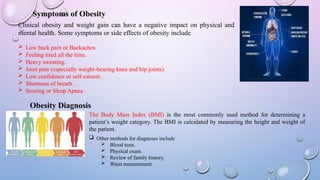
Symptoms of Obesity
Clinical obesity and weight gain can have a negative impact on physical and
mental health. Some symptoms or side effects of obesity include
 Low back pain or Backaches.
 Feeling tired all the time.
 Heavy sweating.
 Joint pain (especially weight-bearing knee and hip joints).
 Low confidence or self-esteem.
 Shortness of breath.
 Snoring or Sleep Apnea
Obesity Diagnosis
The Body Mass Index (BMI) is the most commonly used method for determining a
patient’s weight category. The BMI is calculated by measuring the height and weight of
the patient.
 Other methods for diagnoses include
 Blood tests.
 Physical exam.
 Review of family history.
 Waist measurement.
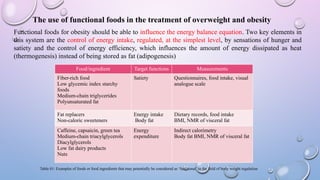
The use of functional foods in the treatment of overweight and obesity
Functional foods for obesity should be able to influence the energy balance equation. Two key elements in
this system are the control of energy intake, regulated, at the simplest level, by sensations of hunger and
satiety and the control of energy efficiency, which influences the amount of energy dissipated as heat
(thermogenesis) instead of being stored as fat (adipogenesis)
Food/ingredient Target functions Measurements
Fiber-rich food
Low glycemic index starchy
foods
Medium-chain triglycerides
Polyunsaturated fat
Satiety Questionnaires, food intake, visual
analogue scale
Fat replacers
Non-caloric sweeteners
Energy intake
Body fat
Dietary records, food intake
BMI, NMR of visceral fat
Caffeine, capsaicin, green tea
Medium-chain triacylglycerols
Diacylglycerols
Low fat dairy products
Nuts
Energy
expenditure
Indirect calorimetry
Body fat BMI, NMR of visceral fat
Table 01: Examples of foods or food ingredients that may potentially be considered as ‘functional’ in the field of body weight regulation
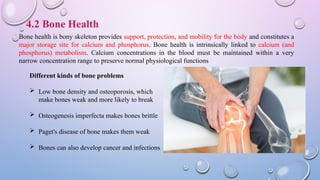
4.2 Bone Health
Bone health is bony skeleton provides support, protection, and mobility for the body and constitutes a
major storage site for calcium and phosphorus. Bone health is intrinsically linked to calcium (and
phosphorus) metabolism. Calcium concentrations in the blood must be maintained within a very
narrow concentration range to preserve normal physiological functions
Different kinds of bone problems
 Low bone density and osteoporosis, which
make bones weak and more likely to break
 Osteogenesis imperfecta makes bones brittle
 Paget's disease of bone makes them weak
 Bones can also develop cancer and infections
Affect of the bone health
 The amount of calcium in diet - A diet low in calcium contributes to diminished bone density, early
bone loss and an increased risk of fractures.
 Physical activity - People who are physically inactive have a higher risk of osteoporosis than do their
more-active counterparts.
 Tobacco and alcohol use - Research suggests that tobacco use contributes to weak bones. Similarly,
regularly having more than one alcoholic drink a day for women or two alcoholic drinks a day for men
may increase the risk of osteoporosis.
 Hormone levels - Too much thyroid hormone can cause bone loss. In women, bone loss increases
dramatically at menopause due to dropping estrogen levels. Prolonged absence of menstruation
(amenorrhea) before menopause also increases the risk of osteoporosis. In men, low testosterone levels
can cause a loss of bone mass.
 Eating disorders and other conditions - Severely restricting food intake and being underweight
weakens bone in both men and women. In addition, weight-loss surgery and conditions such as celiac
disease can affect your body's ability to absorb calcium.
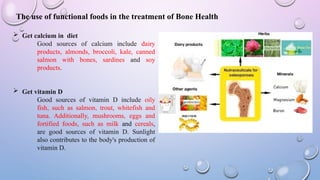
 Get calcium in diet
Good sources of calcium include dairy
products, almonds, broccoli, kale, canned
salmon with bones, sardines and soy
products.
 Get vitamin D
Good sources of vitamin D include oily
fish, such as salmon, trout, whitefish and
tuna. Additionally, mushrooms, eggs and
fortified foods, such as milk and cereals,
are good sources of vitamin D. Sunlight
also contributes to the body's production of
vitamin D.
The use of functional foods in the treatment of Bone Health
4.3 Autoimmune inflammatory
diseases
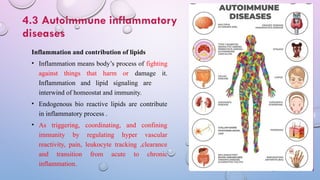
Inflammation and contribution of lipids
• Inflammation means body’s process of fighting
against things that harm or damage it.
Inflammation and lipid signaling are
interwind of homeostat and immunity.
• Endogenous bio reactive lipids are contribute
in inflammatory process .
• As triggering, coordinating, and confining
immunity by regulating hyper vascular
reactivity, pain, leukocyte tracking ,clearance
and transition from acute to chronic
inflammation.
The connection between lipids and some related inflammatory diseases
1.Type 1 diabetes- lipid induced insulin resistance in skeletal muscle stem from defects in insulin stimulated glucose transport
activity. The pancrease produce insulin .So in type 1 diabetes mellitus the immune system attacks and destroys insulin producing
cells in the pancreas. Due to that patients with type 1 diabetes show lipid disorders.
2. Systemic lupus erythematosus- SLE is an autoimmune disease in which the immune system attacks its own tissues causing
widespread inflammation and tissue damage in the affected organs like joints ,skin brain ,lungs kidneys and blood vessels.
Changes in the lipid composition in patients with SLE might be attributable to oxidation damages, mtorc1-dependent
mitochondrial dysfunction, and cell death.
3. Rheumatoid arthritis –the immune system attacks the joints. These attack causes redness, warmth, soreness and stiffness in
the joints. Eicosanoids are implicated in the development of synovitis and the disintegration of the joints in inflammatory
arthritis. The pathogenesis of rheumatoid and psoriatic arthritis was proposed to arise from an imbalanced regulation of pro- and
anti-inflammatory eicosanoids.
An inflammatory disease is a condition that the immune system mistakenly attacks the body. In this situation the
immune system mistakes part of body like joint or skin as foreign. It release protein called autoantibodies that attack
healthy cells. There are more than 80 different autoimmune diseases and most common ones mention in below.
Anti-inflammatory lipids and their therapeutic potential
• Omega-3
1.Omega 3 fatty acids inhibit an enzyme called cyclooxygenase which produces the prostaglandine hormones that spark
inflammation.
2.Regulation of mtor activity.
3.Change in the fatty acid composition of the cell membranes.
4.Increasing levels of pro-resolving mediators .
• Polyunsaturated fatty acids - The n-6 polyunsaturated fatty acid arachidonic gives rise to the eicosanoid family of
inflammatory mediators (prostaglandins, leukotrienes and related metabolites)and through these regulates the activities of inflammatory
cells, the production of cytokines and the various balances withing the immune system.
• EPA
1.Prevents from the blood clotting
2.Reduces tryglyceride levels in the blood
• DHA - DHA lowering the genetics expression of four types of pro inflammatory proteins whereas EPA lowered only one type. DHA
lowered white blood cell secreation of 3 types of pro inflamotory proteins,whereas EPA lowered only one type.
4.4 Chronic Kidney Disease (CKD)
Chronic kidney disease
• CDK is a long term condition where the kidneys don’t work as they should. The damaged kidneys cannot filter extra water and wastes out of
blood as compared to the healthy kidneys. The disease prognosis and control are categorized based on disease severity, which is evaluated by
glomerular filtration rate (GFR) and albuminuria, and clinical diagnosis.
Different components that affects to the CKD
CKD and poly unsaturated fatty acids (PUFA)
• PUFA’s are essential because they cannot be synthesized by the human body. Polyunsaturated fats have reported anti-inflammatory
properties, which has been suggested, may protect against kidney damage in adults
• PUFA and renal inflammation and fibrosis which are crucial stages in CDK .
• Polyunsaturated or monounsaturated fatty acids decrease glomerulosclerosis and glomeruli loss in rodent models of diabetic nephropathy and
hypertension.
Vitamin b
• Prevents albuminuria.
• Inhibits anemia due to blood loss from hemodialysis.
• Suppression of hyper-homocysteinemia and prevention of cardiovascular disease.
Effect of fish oil on cardiovascular complications and CKD
• The patients with CKD for amount of fish to be taken in their diet. As hemodialysis is found to increase the oxidation, thus, increased omega-3
peroxidation might be happening in the patients undergoing dialysis.
• . Peroxidation causes breakdown of fatty acyl structure and loss of its biologic function. As patients with CKD are kept on low potassium diet.
Association between CKD and linolenic acid
• Linolenic acid (CLA) is produced naturally in grass-fed ruminants .They are synthesized by fermentative bacteria, butyrivibrio fibrisolvens .
• CLA has anti-atherosclerotic, antidiabetic, anti-inflammatory, and immune-modulating properties.
• CLA is also known to reduce renal production of pge2, demonstrating a reduction in the inflammation and fibrosis associated with the progression of
renal disease . pge2 leads to a natriuretic effect during increases in renal blood flow .
• Reduction in the level of parathyroid hormone and hence prevents surgical removal of thyroid gland in patients with CKD
CKD and soy
• A very low-protein diet is beneficial with CKD.
• Too much protein would place undue stress on the kidneys, the possible effects of which include renal calcification, inhibited mineral absorption,
and excessive levels of toxic minerals.
• Due to that animal protein with soy protein has been suggested to be effective including genetic kidney disease such as polycystic kidney disease.
• Isoflavones a component of soy has a protective effect on kidney
4.5 Plasma Lipid Concentration
Plasma lipid profile is a major factor affecting dietary quality and fat.
Long-chain ω-3 PUFA is important to prevent sudden death from heart attack.
Co-administration with ω-3 fatty acid statins leads to symbiotic and additive effects on plasma lipids.
PUFA is generally divided into two types, hypotriglyceridemic and hypocholoestrolemic.
Ex:- marine ω-3 PUFA are not lowering and LA cholesterol and LDL cholesterol are lowering.
Show a cardio protective effect of ω-3 fatty acids in the patients on chronic renal failure and
haemodialysis.
Consumption of 2g of PUFA daily for 12 weeks of 2.4g for 8 weeks can increase high density
lipoprotein levels.
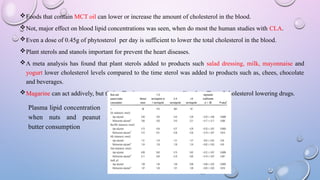
Foods that contain MCT oil can lower or increase the amount of cholesterol in the blood.
Not, major effect on blood lipid concentrations was seen, when do most the human studies with CLA.
Even a dose of 0.45g of phytosterol per day is sufficient to lower the total cholesterol in the blood.
Plant sterols and stanols important for prevent the heart diseases.
A meta analysis has found that plant sterols added to products such salad dressing, milk, mayonnaise and
yogurt lower cholesterol levels compared to the time sterol was added to products such as, chees, chocolate
and beverages.
Magarine can act addively, but their effectiveness cannot equalize the effect of cholesterol lowering drugs.
Plasma lipid concentration
when nuts and peanut
butter consumption
4.6 Depression
Depression is one of the most common mental illnesses in the world and affects about
5% of adults. Generally, more women are affected by depression than men. Suicide due
to depression is on the rise. There are currently treatments for mild to moderate as well
as severe depression. Approximately 280 million people in the world have depression
Lipid make up 36-60% of the brain’s nerve tissue. Fatty acids play an important role in the cell structure of the
brain. Important in brain tissue related functions. That is,
 Regulation of membrane bound enzymes & glucose uptake.
 Regulation of dopaminergic and serotonergic neurotransmission.
 Signal transduction.
 Regulation of synthesis of eicosanoids derived from AA.
 Regulation of neuron size and nerve growth factor.
 Regulation of gene expression.
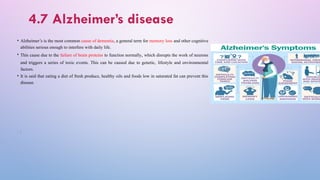
4.7 Alzheimer’s disease
• Alzheimer’s is the most common cause of dementia, a general term for memory loss and other cognitive
abilities serious enough to interfere with daily life.
• This cause due to the failure of brain proteins to function normally, which disrupts the work of neurons
and triggers a series of toxic events. This can be caused due to genetic, lifestyle and environmental
factors.
• It is said that eating a diet of fresh produce, healthy oils and foods low in saturated fat can prevent this
disease.
• F
• F
Role of ω- against Alzheimer's
• ω -3 is a group of polyunsaturated fatty acids which are important for the normal
functioning of the body and for optimal health.
• DHA and EPA can be found in fish and seafood oils whereas α-linoleic acid can
be found in plant oils.
• Animal studies have shown that ω-3 can lower the total β-amyloid levels in the
brain, which is regarded as the major factor for alzheimer's.
• Furthermore, some studies have shown an improvement in cognition after ω-3
intake.
• However, a long term intake of ω-3 prior to advanced disease stage is important.
4.8 Parkinson’s disease
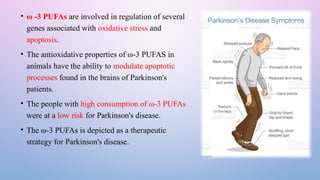
• Parkinson’s disease is a nervous system disorder that affect movement.
• Its common symptoms are tremor, slowness of movement, stiff muscles,
unsteady walk and balance and coordinate problems.
• Here, certain neurons in the brain gradually breakdown or die. These neurons
produce dopamine, a chemical that helps the brain cells communicate. When
these cells die, it produce less dopamine. This causes movement symptoms in the
body.
• ω -3 PUFAs are involved in regulation of several
genes associated with oxidative stress and
apoptosis.
• The antioxidative properties of ω-3 PUFAS in
animals have the ability to modulate apoptotic
processes found in the brains of Parkinson's
patients.
• The people with high consumption of ω-3 PUFAs
were at a low risk for Parkinson's disease.
• The ω-3 PUFAs is depicted as a therapeutic
strategy for Parkinson's disease.
4.9 Atopic dermatitis
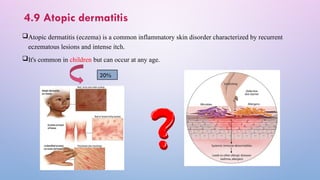
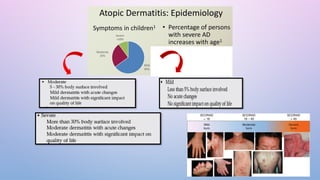
Atopic dermatitis (eczema) is a common inflammatory skin disorder characterized by recurrent
eczematous lesions and intense itch.
It's common in children but can occur at any age.
20%
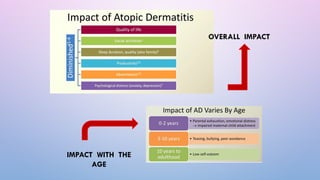
OVERALL IMPACT
IMPACT WITH THE
AGE
Treatment measures
Not possible with a single drug or action so ,
• Avoidance strategies: those affected should avoid factors that have been recognized as triggers for
flare-ups if possible.
• Basic care: it is used to keep dry skin moist and supple and to improve its protective function.
• Treatment of itching: it reduces the need to scratch. The skin is spared. Any changes are not enlarged.
• Anti-inflammatory measures: they support healing.
Prevention and treatment of infections: The colonization with bacteria is a constant source of
irritation for the immune system. Infections can also lead to serious complications.
In individual cases with simultaneous allergic rhinitis, immunotherapy (desensitization) is an option.
Complementary and alternative medical measures: Their effectiveness has not been scientifically
proven, but they are still in high demand.
Patient education: Studies have shown that patients can cope better with their condition if they are
well informed.
4.10 Cholesterol
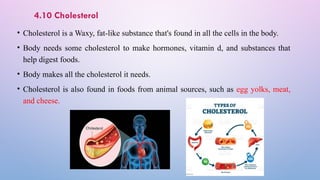
• Cholesterol is a Waxy, fat-like substance that's found in all the cells in the body.
• Body needs some cholesterol to make hormones, vitamin d, and substances that
help digest foods.
• Body makes all the cholesterol it needs.
• Cholesterol is also found in foods from animal sources, such as egg yolks, meat,
and cheese.
High density, low density, very low density lipoprotein
• They are a combination of fat (lipid) and protein. The lipids need to be attached to the proteins so they
can move through the blood.
Different types of lipoproteins have different purposes:
• HDL - it is sometimes called "good" cholesterol because it carries cholesterol from other parts of the body
back to the liver. Liver then removes the cholesterol .
• LDL -. it is sometimes called "bad" cholesterol because a high LDL level leads to the buildup of plaque in
arteries.
• VLDL - a "bad" cholesterol because it too contributes to the buildup of plaque in arteries. But VLDL and
LDL are different; VLDL mainly carries triglycerides and LDL mainly carries cholesterol.
Reason of having high cholesterol
The most common cause of high cholesterol is an unhealthy lifestyle.
This can include:
• Unhealthy eating habits, such as eating lots of bad fats.
Saturated fat - some meats, dairy products, chocolate, baked goods
Deep-fried and processed foods.
Trans fat - fried and processed foods. Eating these fats can raise LDL (bad) cholesterol.
• Lack of physical activity, with lots of sitting and little exercise. This lowers HDL (good) cholesterol.
• Smoking, which lowers hdl cholesterol, especially in women. It also raises LDL cholesterol.
The way of diagnosing high cholesterol
There are usually no signs or symptoms that have high cholesterol. There is a blood test to measure
cholesterol level. This test depends on age, risk factors, and family history.
For people who are age 19 or younger:
• The first test should be between ages 9 to 11
• Children should have the test again every 5 years
• Some children may have this test starting at age 2 if there is a family history of high blood cholesterol,
heart attack, or stroke
For people who are age 20 or older:
• Younger adults should have the test every 5 years
• Men ages 45 to 65 and women ages 55 to 65 should have it every 1 to 2 years
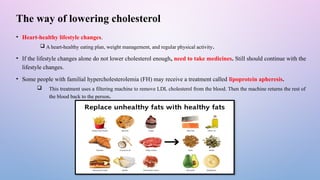
The way of lowering cholesterol
• Heart-healthy lifestyle changes.
 A heart-healthy eating plan, weight management, and regular physical activity.
• If the lifestyle changes alone do not lower cholesterol enough, need to take medicines. Still should continue with the
lifestyle changes.
• Some people with familial hypercholesterolemia (FH) may receive a treatment called lipoprotein apheresis.
 This treatment uses a filtering machine to remove LDL cholesterol from the blood. Then the machine returns the rest of
the blood back to the person.
Omega-3 fatty acids
 These are usually mild and transient mostly including a fishy after taste and
gastrointestinal disturbances. Other symptoms include nausea, heartburn or
indigestion, and diarrhea.
 Nevertheless doses greater than 3 g/day of fish oil (or high dietary fish intake) may
inhibit platelet aggregation and increase bleeding, so care should be taken before
the consumption of ω-3 fatty acids with antithrombotic therapies.
 Long-term (>3 months) fish oil supplementation may be beneficial in reducing
plasma total triglycerides; susceptibility of plasma lipids to free radical attack is
potentiated.
05. SIDE EFFECTS
Omega-6 fatty acids
 An improper ratio of ω-6 to ω-3 fatty acids may promote problems like
inflammation as an increased amount of ω-6 fatty acids produces eicosanoids which
are responsible for the formation of thrombus and atheromas and which play a role
in inflammatory disorders
Conjugated linoleic acid
 Clarinol is a mixture of CLA isomers; it includes some cis-9, trans-11 CLA. It was
found to cause liver enlargement in female rats but this effect was reported to be
reversible and no major liver abnormalities have been reported in humans
consuming.
 Insulin resistance and increased oxidative stress have been reported with the
consumption of trans-10, cis-12 CLA but not with a mixed preparation of cis-9,
trans- 11 and trans-10, cis-12 CLA.
Medium chain triglycerides
 Ingestion of larger amounts (>25–30 g) of MCTs causes adverse gastrointestinal
symptoms, including nausea, vomiting, abdominal cramps, gastrointestinal
discomfort, bloating, and osmotic diarrhea.
 Due to hyperosmolarity, MCTs cause a large influx of fluid into the large intestines
and initiate gastrointestinal problems.
Phytosterols
 The side effect associated with phytosterol and stanol is their interference with the
absorption of beta-carotenoids, while levels of fat soluble vitamins A, D, K1 and E
did not change.
 It seems unlikely that phytosterols induced beta carotenoid deficiency is of much
concern in other subgroups. Therefore it is advised to pregnant women and children
do not consume supplemental phytosterols.
 Functional lipids are beneficial dietary components that have the potential to
improve human health by lowering diseases, risk and increasing quality of life.
 The main component of functional lipids including Omega -3, Omega-6, Conjugated
linoleic acid (CLA), Medium chain triglyceride oils and Phytosterols.
 Functional lipids reduce vulnerability to heart disease could be one of the health
benefits.
 And also they are beneficial in Alzheimer’s disease, obesity, depression, Parkinson’s
diseases.
 In diseases such as Atopic dermatitis they have been proven to be true.
 Functional lipid contain foods are effective, easy to obtain and cost- efficient to add.
06. CONCLUSION
• Vig S., Sabbisetti V.S., And ajay A.K. Functional lipids and other functional metabolites intake
for patients with chronic kidney disease: their target and mechanism of action. Functional foods
in health and disease 2019; 9(6): 412-429. DOI: https://doi.Org/10.31989/ffhd.V9i5.578
• Alabdulkarim B.,Bakeet Z.A.N, Arzoo S, Role of some functional lipids in preventing diseases
and promoting health. Department of Food and Nutrition Science, King Saud University, 27
March 2012. : www.ksu.edu.sa/www.scincedirect.com
• Michele Dei Cas 1 , Gabriella Roda 2, Feng Li 3 and Francesco Secundo 4,* Functional Lipids in
Autoimmune Inflammatory Diseases. 27 April 2020
07. REFERENCES
THANK
YOU !

Functional Foods and neutraceutical technology

  • 1.
    ROLE OF FUNCTIONALLIPIDS IN PREVENTION AND MANAGEMENT OF DISEASE GROUP MEMBERS – 2017t00093 G.V. Edussuriya 2017T00158 S.S.V.Sumanadasa 2017T00169 C.I. Wedasinghe 2017T00124 M.H.C.Y. Munasinghe 2017T00110 V. Kalaldora 2017T00114 E.A.D.S.N. Kumara 2017T00120 A.S. Madushan 2017T00091 D.M.W.C. Dissanayaka 2017T00137 R.M.M. Amashakya 2017T00138 R.M.N.P. Rathnayaka
  • 2.
    CONTENT 01. INTRODUCTION 02. COMPONENTOF FUNCTIONAL LIPIDS 03. DIETARY SOURCES OF FUNCTIONAL LIPIDS 04 PREVENTION AND MANAGEMENT OF DISEASES WITH FUNCTIONAL LIPIDS 4.1 Obesity 4.2 Bone health 4.3 Autoimmune Inflammatory Diseases 4.4 Chronic Kidney Diseases(CKD) 4.5 Plasma Lipid Concentrations 4.6 Depression 4.7 Alzheimer's diseases 4.8 Parkinson’s Diseases 4.9 Atopic dermatitis 4.10 Cholesterol 05. SIDE EFFECTS 06. CONCLUSION 07. REFERENCES
  • 3.
    Fats and lipidsare ubiquitous food components that may play important roles. Their types may be more essential than their quantity in terms of health and diseases. 01. INTRODUCTION Functional lipids Foods can be classified as functional if it can be proved that they contain bioactive chemicals that reduce the risk of diseases or promote good health. Lipids are frequently found in the active ingredients and components functional foods. They may provide a way to minimize the rising cost of living. Functional lipids are regarded as sub group of functional foods. They are normally consumed as a part of normal diet. Functional lipids have physiological advantages and/ or lower the risk of chronic diseases.
  • 4.
    • These canbe identify as functional lipids, • Omega-3 fatty acids Alpha-linolenic acid (ALA) Eicosapentaenoic acid (EPA) Docosahexaenoic acid (DHA) • Omega-6 fatty acids Gamma linoleic acid (GLA) Linoleic acid (LA) • Conjugated linoleic acid (CLA) • Medium chain triglyceride oils • Phytosterols 02. COMPONENTS OF FUNCTIONAL LIPIDS
  • 5.
    • Omega-3 andomega-6 fatty acids are just two of the essential nutrients (cell- membrane phospholipids and they have several other functional roles ) our bodies need to function. • Essential means our bodies can’t make them, so we have to get them from other sources, either through food or supplementation. • Humans can synthesize saturated and monounsaturated fatty acids but cannot synthesize polyunsaturated omega-3 and omega-6 fatty acids de novo. • This is because humans like other animals, lack the desaturase enzymes required to produce the simplest members of these families (ala and la, respectively). OMEGA-3 AND OMEGA-6 FATTY ACIDS
  • 6.
    “Omega-3” refers tothe position of the final double bond in the chemical structure, which is three carbon atoms from the “omega,” or tail end of the molecular chain. Figure . Structure of an omega-3 and omega-6 fatty acid. ‘’Omega-6’’ fatty acids are polyunsaturated fatty acids. However, the last double bond is six carbons from the omega end of the fatty acid molecule.
  • 7.
    Omega-3 fatty acids (c)Docosahexaenoic acid (DHA) (b) Eicosatetraenoic acid (EPA) (a) Alpha-linolenic acid (ALA) • Alpha-linolenic acid is a type of omega-3 fatty acid found in plants. • It is found in flaxseed oil, and in canola, soy, perilla, and walnut oils. • Alpha-linolenic acid is similar to the omega-3 fatty acids that are in fish oil, called eicosapentaenoic acid (EPA) and docosahexaenoic acid (DHA). • It is found in cold-water fatty fish, such as salmon. It is also found in fish oil supplements, along with docosahexaenoic acid (DHA). • Getting more epa in diet has positive effects on coronary heart disease, high triglycerides (fats in the blood), high blood pressure, and inflammation. • DHA is metabolically related to other n-3 fatty acids: it can be synthesised from the plant essential fatty acid α-linolenic acid (ALA) • DHA is found in fairly high amounts in seafood, especially fatty fish, and in various forms of n-3 supplements. The amount of DHA in seafood and in supplements varies. Breast milk contains DHA.
  • 8.
    Omega-6 fatty acids (a)Gamma linoleic acid (GLA) (b) linoleic acid (LA) • It's found in various plant seed oils such as borage oil and evening primrose oil. • GLA is produced in the body as an intermediate in the metabolism of la by the enzyme delta-6 desaturase. • This reaction is the rate limiting step in the conversion of la into its more unsaturated and longer derivatives. • The body converts GLA to substances that reduce inflammation and cell growth. • Linoleic acid is a polyunsaturated omega-6 fatty acid. • It is a colorless or white liquid that is virtually insoluble in water but soluble in many organic solvents. • It typically occurs in nature as a triglyceride (ester of glycerin) rather than as a free fatty acid. • It is one of two essential fatty acids for humans, who must obtain it through their diet.
  • 9.
    • CLA refersto a group of polyunsaturated fatty acids. • Dairy and beef are major sources of CLA in the diet. • CLA might help reduce body fat deposits and improve immune function. • Medium chain triglycerides (MCTS) are partially man-made fats. • The name refers to the way the carbon atoms are arranged in their chemical structure. • MCTS are generally made by processing coconut and palm kernel oils in the laboratory. • Usual dietary fats, by comparison, are long-chain triglycerides. • People use MCTS and their constituent fatty acids are useful as a fat source to those with the abnormalities of fat digestion, absorption, transport and metabolism CONJUGATED LINOLEIC ACID MEDIUM CHAIN TRIGLYCERIDES
  • 10.
    • Phytosterols, alsoknown as plant sterols, are a family of molecules related to cholesterol. • They are found naturally in a variety of plants. Like cholesterol, they’re a key structural component of cell membranes. • Campesterol, beta-sitosterol, and stigmasterol are the most common plant-derived phytosterols get from diet. • They are found naturally in foods like nuts, seeds, and vegetable oils, and they are added to some processed foods like margarine PHYTOSTEROLS
  • 11.
     Omega-3 fattyacid • Eicosapentaenoic acid and docosahexaenoic acid Mackerel Sardine Tuna Micro algae • Alpha linolenic acid,,, egg, meat, lingon berry, sea buckthorn, hemp seed oil,, walnuts, Flax seed oil Dark green leafy vegetables Eggs 03. DIETARY SOURCE OF FUNCTIONAL LIPIDS
  • 12.
    Chia seed oil Meatlingonberry Canola oil Walnuts Hazelnuts
  • 13.
     Omega-6 fattyacid • Linoleic acids Vegetable oil Salad dressing Nuts • Gamma linolenic acid Black currant oil Evening primrose oil Borage oil
  • 14.
     Conjugated linoleicacid , Milk Meats (kangaroo meat) Egg yolk Fish Fresh ground beef Cheddar cheese Cultured buttermilk Plain yogurt Custard style yogurt Butter fat
  • 15.
    Medium chain triglycerides Animalfat palm oil Coconut oil Cocoa butter Phytosterols Wheat germ corn oil Almonds Brussels sprouts Cauliflower Flaxseed Canola oil Peanut butter Olive oil Sesame seeds
  • 16.
    Obesity is achronic and severe lifestyle disorder in which excess fat accumulates in the tissues of the body to an extent that it triggers numerous health problems. 4.1 Obesity Causes of obesity Obesity is generally caused by consuming more calories, particularly those in fatty and sugary foods, than burn off through physical activity. The excess energy is stored by the body as fat.  High Calories  Poor diet  Lack of physical activity  Genetics  Medical reasons 04. PREVENTION AND MANAGEMENT OF DISEASES WITH FUNCTIONAL LIPIDS
  • 17.
    Symptoms of Obesity Clinicalobesity and weight gain can have a negative impact on physical and mental health. Some symptoms or side effects of obesity include  Low back pain or Backaches.  Feeling tired all the time.  Heavy sweating.  Joint pain (especially weight-bearing knee and hip joints).  Low confidence or self-esteem.  Shortness of breath.  Snoring or Sleep Apnea Obesity Diagnosis The Body Mass Index (BMI) is the most commonly used method for determining a patient’s weight category. The BMI is calculated by measuring the height and weight of the patient.  Other methods for diagnoses include  Blood tests.  Physical exam.  Review of family history.  Waist measurement.
  • 18.
    The use offunctional foods in the treatment of overweight and obesity Functional foods for obesity should be able to influence the energy balance equation. Two key elements in this system are the control of energy intake, regulated, at the simplest level, by sensations of hunger and satiety and the control of energy efficiency, which influences the amount of energy dissipated as heat (thermogenesis) instead of being stored as fat (adipogenesis) Food/ingredient Target functions Measurements Fiber-rich food Low glycemic index starchy foods Medium-chain triglycerides Polyunsaturated fat Satiety Questionnaires, food intake, visual analogue scale Fat replacers Non-caloric sweeteners Energy intake Body fat Dietary records, food intake BMI, NMR of visceral fat Caffeine, capsaicin, green tea Medium-chain triacylglycerols Diacylglycerols Low fat dairy products Nuts Energy expenditure Indirect calorimetry Body fat BMI, NMR of visceral fat Table 01: Examples of foods or food ingredients that may potentially be considered as ‘functional’ in the field of body weight regulation
  • 19.
    4.2 Bone Health Bonehealth is bony skeleton provides support, protection, and mobility for the body and constitutes a major storage site for calcium and phosphorus. Bone health is intrinsically linked to calcium (and phosphorus) metabolism. Calcium concentrations in the blood must be maintained within a very narrow concentration range to preserve normal physiological functions Different kinds of bone problems  Low bone density and osteoporosis, which make bones weak and more likely to break  Osteogenesis imperfecta makes bones brittle  Paget's disease of bone makes them weak  Bones can also develop cancer and infections
  • 20.
    Affect of thebone health  The amount of calcium in diet - A diet low in calcium contributes to diminished bone density, early bone loss and an increased risk of fractures.  Physical activity - People who are physically inactive have a higher risk of osteoporosis than do their more-active counterparts.  Tobacco and alcohol use - Research suggests that tobacco use contributes to weak bones. Similarly, regularly having more than one alcoholic drink a day for women or two alcoholic drinks a day for men may increase the risk of osteoporosis.  Hormone levels - Too much thyroid hormone can cause bone loss. In women, bone loss increases dramatically at menopause due to dropping estrogen levels. Prolonged absence of menstruation (amenorrhea) before menopause also increases the risk of osteoporosis. In men, low testosterone levels can cause a loss of bone mass.  Eating disorders and other conditions - Severely restricting food intake and being underweight weakens bone in both men and women. In addition, weight-loss surgery and conditions such as celiac disease can affect your body's ability to absorb calcium.
  • 21.
     Get calciumin diet Good sources of calcium include dairy products, almonds, broccoli, kale, canned salmon with bones, sardines and soy products.  Get vitamin D Good sources of vitamin D include oily fish, such as salmon, trout, whitefish and tuna. Additionally, mushrooms, eggs and fortified foods, such as milk and cereals, are good sources of vitamin D. Sunlight also contributes to the body's production of vitamin D. The use of functional foods in the treatment of Bone Health
  • 22.
    4.3 Autoimmune inflammatory diseases Inflammationand contribution of lipids • Inflammation means body’s process of fighting against things that harm or damage it. Inflammation and lipid signaling are interwind of homeostat and immunity. • Endogenous bio reactive lipids are contribute in inflammatory process . • As triggering, coordinating, and confining immunity by regulating hyper vascular reactivity, pain, leukocyte tracking ,clearance and transition from acute to chronic inflammation.
  • 23.
    The connection betweenlipids and some related inflammatory diseases 1.Type 1 diabetes- lipid induced insulin resistance in skeletal muscle stem from defects in insulin stimulated glucose transport activity. The pancrease produce insulin .So in type 1 diabetes mellitus the immune system attacks and destroys insulin producing cells in the pancreas. Due to that patients with type 1 diabetes show lipid disorders. 2. Systemic lupus erythematosus- SLE is an autoimmune disease in which the immune system attacks its own tissues causing widespread inflammation and tissue damage in the affected organs like joints ,skin brain ,lungs kidneys and blood vessels. Changes in the lipid composition in patients with SLE might be attributable to oxidation damages, mtorc1-dependent mitochondrial dysfunction, and cell death. 3. Rheumatoid arthritis –the immune system attacks the joints. These attack causes redness, warmth, soreness and stiffness in the joints. Eicosanoids are implicated in the development of synovitis and the disintegration of the joints in inflammatory arthritis. The pathogenesis of rheumatoid and psoriatic arthritis was proposed to arise from an imbalanced regulation of pro- and anti-inflammatory eicosanoids. An inflammatory disease is a condition that the immune system mistakenly attacks the body. In this situation the immune system mistakes part of body like joint or skin as foreign. It release protein called autoantibodies that attack healthy cells. There are more than 80 different autoimmune diseases and most common ones mention in below.
  • 24.
    Anti-inflammatory lipids andtheir therapeutic potential • Omega-3 1.Omega 3 fatty acids inhibit an enzyme called cyclooxygenase which produces the prostaglandine hormones that spark inflammation. 2.Regulation of mtor activity. 3.Change in the fatty acid composition of the cell membranes. 4.Increasing levels of pro-resolving mediators . • Polyunsaturated fatty acids - The n-6 polyunsaturated fatty acid arachidonic gives rise to the eicosanoid family of inflammatory mediators (prostaglandins, leukotrienes and related metabolites)and through these regulates the activities of inflammatory cells, the production of cytokines and the various balances withing the immune system. • EPA 1.Prevents from the blood clotting 2.Reduces tryglyceride levels in the blood • DHA - DHA lowering the genetics expression of four types of pro inflammatory proteins whereas EPA lowered only one type. DHA lowered white blood cell secreation of 3 types of pro inflamotory proteins,whereas EPA lowered only one type.
  • 25.
    4.4 Chronic KidneyDisease (CKD) Chronic kidney disease • CDK is a long term condition where the kidneys don’t work as they should. The damaged kidneys cannot filter extra water and wastes out of blood as compared to the healthy kidneys. The disease prognosis and control are categorized based on disease severity, which is evaluated by glomerular filtration rate (GFR) and albuminuria, and clinical diagnosis. Different components that affects to the CKD CKD and poly unsaturated fatty acids (PUFA) • PUFA’s are essential because they cannot be synthesized by the human body. Polyunsaturated fats have reported anti-inflammatory properties, which has been suggested, may protect against kidney damage in adults • PUFA and renal inflammation and fibrosis which are crucial stages in CDK . • Polyunsaturated or monounsaturated fatty acids decrease glomerulosclerosis and glomeruli loss in rodent models of diabetic nephropathy and hypertension. Vitamin b • Prevents albuminuria. • Inhibits anemia due to blood loss from hemodialysis. • Suppression of hyper-homocysteinemia and prevention of cardiovascular disease.
  • 26.
    Effect of fishoil on cardiovascular complications and CKD • The patients with CKD for amount of fish to be taken in their diet. As hemodialysis is found to increase the oxidation, thus, increased omega-3 peroxidation might be happening in the patients undergoing dialysis. • . Peroxidation causes breakdown of fatty acyl structure and loss of its biologic function. As patients with CKD are kept on low potassium diet. Association between CKD and linolenic acid • Linolenic acid (CLA) is produced naturally in grass-fed ruminants .They are synthesized by fermentative bacteria, butyrivibrio fibrisolvens . • CLA has anti-atherosclerotic, antidiabetic, anti-inflammatory, and immune-modulating properties. • CLA is also known to reduce renal production of pge2, demonstrating a reduction in the inflammation and fibrosis associated with the progression of renal disease . pge2 leads to a natriuretic effect during increases in renal blood flow . • Reduction in the level of parathyroid hormone and hence prevents surgical removal of thyroid gland in patients with CKD CKD and soy • A very low-protein diet is beneficial with CKD. • Too much protein would place undue stress on the kidneys, the possible effects of which include renal calcification, inhibited mineral absorption, and excessive levels of toxic minerals. • Due to that animal protein with soy protein has been suggested to be effective including genetic kidney disease such as polycystic kidney disease. • Isoflavones a component of soy has a protective effect on kidney
  • 27.
    4.5 Plasma LipidConcentration Plasma lipid profile is a major factor affecting dietary quality and fat. Long-chain ω-3 PUFA is important to prevent sudden death from heart attack. Co-administration with ω-3 fatty acid statins leads to symbiotic and additive effects on plasma lipids. PUFA is generally divided into two types, hypotriglyceridemic and hypocholoestrolemic. Ex:- marine ω-3 PUFA are not lowering and LA cholesterol and LDL cholesterol are lowering. Show a cardio protective effect of ω-3 fatty acids in the patients on chronic renal failure and haemodialysis. Consumption of 2g of PUFA daily for 12 weeks of 2.4g for 8 weeks can increase high density lipoprotein levels.
  • 28.
    Foods that containMCT oil can lower or increase the amount of cholesterol in the blood. Not, major effect on blood lipid concentrations was seen, when do most the human studies with CLA. Even a dose of 0.45g of phytosterol per day is sufficient to lower the total cholesterol in the blood. Plant sterols and stanols important for prevent the heart diseases. A meta analysis has found that plant sterols added to products such salad dressing, milk, mayonnaise and yogurt lower cholesterol levels compared to the time sterol was added to products such as, chees, chocolate and beverages. Magarine can act addively, but their effectiveness cannot equalize the effect of cholesterol lowering drugs. Plasma lipid concentration when nuts and peanut butter consumption
  • 29.
    4.6 Depression Depression isone of the most common mental illnesses in the world and affects about 5% of adults. Generally, more women are affected by depression than men. Suicide due to depression is on the rise. There are currently treatments for mild to moderate as well as severe depression. Approximately 280 million people in the world have depression Lipid make up 36-60% of the brain’s nerve tissue. Fatty acids play an important role in the cell structure of the brain. Important in brain tissue related functions. That is,  Regulation of membrane bound enzymes & glucose uptake.  Regulation of dopaminergic and serotonergic neurotransmission.  Signal transduction.  Regulation of synthesis of eicosanoids derived from AA.  Regulation of neuron size and nerve growth factor.  Regulation of gene expression.
  • 30.
    4.7 Alzheimer’s disease •Alzheimer’s is the most common cause of dementia, a general term for memory loss and other cognitive abilities serious enough to interfere with daily life. • This cause due to the failure of brain proteins to function normally, which disrupts the work of neurons and triggers a series of toxic events. This can be caused due to genetic, lifestyle and environmental factors. • It is said that eating a diet of fresh produce, healthy oils and foods low in saturated fat can prevent this disease. • F • F
  • 31.
    Role of ω-against Alzheimer's • ω -3 is a group of polyunsaturated fatty acids which are important for the normal functioning of the body and for optimal health. • DHA and EPA can be found in fish and seafood oils whereas α-linoleic acid can be found in plant oils. • Animal studies have shown that ω-3 can lower the total β-amyloid levels in the brain, which is regarded as the major factor for alzheimer's. • Furthermore, some studies have shown an improvement in cognition after ω-3 intake. • However, a long term intake of ω-3 prior to advanced disease stage is important.
  • 32.
    4.8 Parkinson’s disease •Parkinson’s disease is a nervous system disorder that affect movement. • Its common symptoms are tremor, slowness of movement, stiff muscles, unsteady walk and balance and coordinate problems. • Here, certain neurons in the brain gradually breakdown or die. These neurons produce dopamine, a chemical that helps the brain cells communicate. When these cells die, it produce less dopamine. This causes movement symptoms in the body.
  • 33.
    • ω -3PUFAs are involved in regulation of several genes associated with oxidative stress and apoptosis. • The antioxidative properties of ω-3 PUFAS in animals have the ability to modulate apoptotic processes found in the brains of Parkinson's patients. • The people with high consumption of ω-3 PUFAs were at a low risk for Parkinson's disease. • The ω-3 PUFAs is depicted as a therapeutic strategy for Parkinson's disease.
  • 34.
    4.9 Atopic dermatitis Atopicdermatitis (eczema) is a common inflammatory skin disorder characterized by recurrent eczematous lesions and intense itch. It's common in children but can occur at any age. 20%
  • 36.
  • 37.
    Treatment measures Not possiblewith a single drug or action so , • Avoidance strategies: those affected should avoid factors that have been recognized as triggers for flare-ups if possible. • Basic care: it is used to keep dry skin moist and supple and to improve its protective function. • Treatment of itching: it reduces the need to scratch. The skin is spared. Any changes are not enlarged. • Anti-inflammatory measures: they support healing.
  • 38.
    Prevention and treatmentof infections: The colonization with bacteria is a constant source of irritation for the immune system. Infections can also lead to serious complications. In individual cases with simultaneous allergic rhinitis, immunotherapy (desensitization) is an option. Complementary and alternative medical measures: Their effectiveness has not been scientifically proven, but they are still in high demand. Patient education: Studies have shown that patients can cope better with their condition if they are well informed.
  • 39.
    4.10 Cholesterol • Cholesterolis a Waxy, fat-like substance that's found in all the cells in the body. • Body needs some cholesterol to make hormones, vitamin d, and substances that help digest foods. • Body makes all the cholesterol it needs. • Cholesterol is also found in foods from animal sources, such as egg yolks, meat, and cheese.
  • 40.
    High density, lowdensity, very low density lipoprotein • They are a combination of fat (lipid) and protein. The lipids need to be attached to the proteins so they can move through the blood. Different types of lipoproteins have different purposes: • HDL - it is sometimes called "good" cholesterol because it carries cholesterol from other parts of the body back to the liver. Liver then removes the cholesterol . • LDL -. it is sometimes called "bad" cholesterol because a high LDL level leads to the buildup of plaque in arteries. • VLDL - a "bad" cholesterol because it too contributes to the buildup of plaque in arteries. But VLDL and LDL are different; VLDL mainly carries triglycerides and LDL mainly carries cholesterol.
  • 41.
    Reason of havinghigh cholesterol The most common cause of high cholesterol is an unhealthy lifestyle. This can include: • Unhealthy eating habits, such as eating lots of bad fats. Saturated fat - some meats, dairy products, chocolate, baked goods Deep-fried and processed foods. Trans fat - fried and processed foods. Eating these fats can raise LDL (bad) cholesterol. • Lack of physical activity, with lots of sitting and little exercise. This lowers HDL (good) cholesterol. • Smoking, which lowers hdl cholesterol, especially in women. It also raises LDL cholesterol.
  • 42.
    The way ofdiagnosing high cholesterol There are usually no signs or symptoms that have high cholesterol. There is a blood test to measure cholesterol level. This test depends on age, risk factors, and family history. For people who are age 19 or younger: • The first test should be between ages 9 to 11 • Children should have the test again every 5 years • Some children may have this test starting at age 2 if there is a family history of high blood cholesterol, heart attack, or stroke For people who are age 20 or older: • Younger adults should have the test every 5 years • Men ages 45 to 65 and women ages 55 to 65 should have it every 1 to 2 years
  • 43.
    The way oflowering cholesterol • Heart-healthy lifestyle changes.  A heart-healthy eating plan, weight management, and regular physical activity. • If the lifestyle changes alone do not lower cholesterol enough, need to take medicines. Still should continue with the lifestyle changes. • Some people with familial hypercholesterolemia (FH) may receive a treatment called lipoprotein apheresis.  This treatment uses a filtering machine to remove LDL cholesterol from the blood. Then the machine returns the rest of the blood back to the person.
  • 44.
    Omega-3 fatty acids These are usually mild and transient mostly including a fishy after taste and gastrointestinal disturbances. Other symptoms include nausea, heartburn or indigestion, and diarrhea.  Nevertheless doses greater than 3 g/day of fish oil (or high dietary fish intake) may inhibit platelet aggregation and increase bleeding, so care should be taken before the consumption of ω-3 fatty acids with antithrombotic therapies.  Long-term (>3 months) fish oil supplementation may be beneficial in reducing plasma total triglycerides; susceptibility of plasma lipids to free radical attack is potentiated. 05. SIDE EFFECTS
  • 45.
    Omega-6 fatty acids An improper ratio of ω-6 to ω-3 fatty acids may promote problems like inflammation as an increased amount of ω-6 fatty acids produces eicosanoids which are responsible for the formation of thrombus and atheromas and which play a role in inflammatory disorders Conjugated linoleic acid  Clarinol is a mixture of CLA isomers; it includes some cis-9, trans-11 CLA. It was found to cause liver enlargement in female rats but this effect was reported to be reversible and no major liver abnormalities have been reported in humans consuming.
  • 46.
     Insulin resistanceand increased oxidative stress have been reported with the consumption of trans-10, cis-12 CLA but not with a mixed preparation of cis-9, trans- 11 and trans-10, cis-12 CLA. Medium chain triglycerides  Ingestion of larger amounts (>25–30 g) of MCTs causes adverse gastrointestinal symptoms, including nausea, vomiting, abdominal cramps, gastrointestinal discomfort, bloating, and osmotic diarrhea.  Due to hyperosmolarity, MCTs cause a large influx of fluid into the large intestines and initiate gastrointestinal problems.
  • 47.
    Phytosterols  The sideeffect associated with phytosterol and stanol is their interference with the absorption of beta-carotenoids, while levels of fat soluble vitamins A, D, K1 and E did not change.  It seems unlikely that phytosterols induced beta carotenoid deficiency is of much concern in other subgroups. Therefore it is advised to pregnant women and children do not consume supplemental phytosterols.
  • 48.
     Functional lipidsare beneficial dietary components that have the potential to improve human health by lowering diseases, risk and increasing quality of life.  The main component of functional lipids including Omega -3, Omega-6, Conjugated linoleic acid (CLA), Medium chain triglyceride oils and Phytosterols.  Functional lipids reduce vulnerability to heart disease could be one of the health benefits.  And also they are beneficial in Alzheimer’s disease, obesity, depression, Parkinson’s diseases.  In diseases such as Atopic dermatitis they have been proven to be true.  Functional lipid contain foods are effective, easy to obtain and cost- efficient to add. 06. CONCLUSION
  • 49.
    • Vig S.,Sabbisetti V.S., And ajay A.K. Functional lipids and other functional metabolites intake for patients with chronic kidney disease: their target and mechanism of action. Functional foods in health and disease 2019; 9(6): 412-429. DOI: https://doi.Org/10.31989/ffhd.V9i5.578 • Alabdulkarim B.,Bakeet Z.A.N, Arzoo S, Role of some functional lipids in preventing diseases and promoting health. Department of Food and Nutrition Science, King Saud University, 27 March 2012. : www.ksu.edu.sa/www.scincedirect.com • Michele Dei Cas 1 , Gabriella Roda 2, Feng Li 3 and Francesco Secundo 4,* Functional Lipids in Autoimmune Inflammatory Diseases. 27 April 2020 07. REFERENCES
  • 50.