Inland Salinity Development in
Anuradhapura
AG 4015
 2017T00094
 2017T00097
 2017T00111
1
Introduction
 Salinization is an increase in the total dissolved solids (TDS) of the aquifer
caused by natural or anthropogenic factors.
 Salinity is the accumulation of salt in land water to a level that damage the
natural and built environment,
 The processes and sources of salinization vary for inland and coastal aquifers.
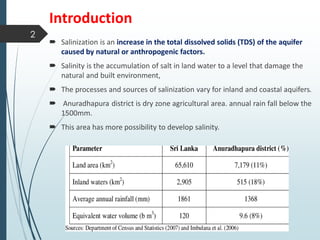
 Anuradhapura district is dry zone agricultural area. annual rain fall below the
1500mm.
 This area has more possibility to develop salinity.
2
• Soil pH drastically change due to salinity,
• pH usually increases with an increase in salinity due to the presence of
sodium ions.
3
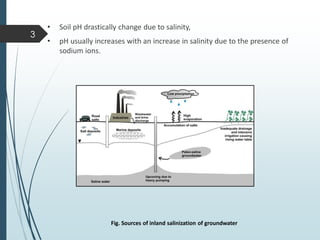
Fig. Sources of inland salinization of groundwater
Factors affect for the salinity
 Major anthropogenic sources of inland salinization include,
• Irrigation of dry areas that lack proper drainage.
• Increased evaporation and decreased precipitation facilitated by climate
change.
• Excessive groundwater pumping.
• wastewater with a high salt content being disposed of carelessly by industries
onto the surface.
• The distribution and rates of precipitation.
• Evapotranspiration and recharge rates.
• Type of aquifer material and its characteristics, residence time.
• Nature of the discharge areas
4
Effect of inland salinity
 Salinization, which is the biggest troublemaker in Anuradhapura district.
 It will result in the deterioration of the physical, chemical, fertility, and
biological properties of soil
 And loss of organic matter in soil due to excess salt and sodium
accumulation in fertile agricultural areas.
 plant functions such as taking plant nutrients from soil including nitrogen
will decline and stop completely and production will be adversely affected.
.
How to avoid
 Maintain the adequate vegetation cover
 Adding gypsum or fertilizer to plant growth
 Planting salt tolerant grass
5
Summary
 Anuradhapura district is dry zone agricultural area annual rain fall below
the 1500mm.
 Salinity is the saltiness or amount of salt dissolved in a body of water.
• There are some factors affect for the salinity like Excessive groundwater
pumping. ,Irrigation of dry areas that lack proper drainage, The distribution
and rates of precipitation, Evapotranspiration and recharge rates
 Salinity will result in the deterioration of the physical, chemical, fertility,
and biological properties of soil
 It has been revealed that soil salinity has increased with the increase of
cropping duration of Agro-wells. After the next 25 years E/C values can be
increased up to “medium salinity “ level (up to 0.4 ds/m) and after the next
40 years E/C values can be increased up to “high salinity “ level (more than
0.8 ds/m) under the current condition.
References
 R.S. Dharmakeerthi, et al, “Manual of Soil Sampling and Analysis”, Soil
Science Society of Sri Lanka, Peradeniya, 2007.
 International Research Centre (InRC), University of Peradeniya, Sri Lanka,
Grants Reference Number: InRC/RG/13/06 P.B.
 Dharmasena, “Guidelines for Use of Ground Water in the Dry Zone:
Project Terminal Report”, FCRDI, MahaIluppallama, 2000.
6

Inland Salinity Development in A'pura.pdf

  • 1.
    Inland Salinity Developmentin Anuradhapura AG 4015  2017T00094  2017T00097  2017T00111 1
  • 2.
    Introduction  Salinization isan increase in the total dissolved solids (TDS) of the aquifer caused by natural or anthropogenic factors.  Salinity is the accumulation of salt in land water to a level that damage the natural and built environment,  The processes and sources of salinization vary for inland and coastal aquifers.  Anuradhapura district is dry zone agricultural area. annual rain fall below the 1500mm.  This area has more possibility to develop salinity. 2
  • 3.
    • Soil pHdrastically change due to salinity, • pH usually increases with an increase in salinity due to the presence of sodium ions. 3 Fig. Sources of inland salinization of groundwater
  • 4.
    Factors affect forthe salinity  Major anthropogenic sources of inland salinization include, • Irrigation of dry areas that lack proper drainage. • Increased evaporation and decreased precipitation facilitated by climate change. • Excessive groundwater pumping. • wastewater with a high salt content being disposed of carelessly by industries onto the surface. • The distribution and rates of precipitation. • Evapotranspiration and recharge rates. • Type of aquifer material and its characteristics, residence time. • Nature of the discharge areas 4
  • 5.
    Effect of inlandsalinity  Salinization, which is the biggest troublemaker in Anuradhapura district.  It will result in the deterioration of the physical, chemical, fertility, and biological properties of soil  And loss of organic matter in soil due to excess salt and sodium accumulation in fertile agricultural areas.  plant functions such as taking plant nutrients from soil including nitrogen will decline and stop completely and production will be adversely affected. . How to avoid  Maintain the adequate vegetation cover  Adding gypsum or fertilizer to plant growth  Planting salt tolerant grass 5
  • 6.
    Summary  Anuradhapura districtis dry zone agricultural area annual rain fall below the 1500mm.  Salinity is the saltiness or amount of salt dissolved in a body of water. • There are some factors affect for the salinity like Excessive groundwater pumping. ,Irrigation of dry areas that lack proper drainage, The distribution and rates of precipitation, Evapotranspiration and recharge rates  Salinity will result in the deterioration of the physical, chemical, fertility, and biological properties of soil  It has been revealed that soil salinity has increased with the increase of cropping duration of Agro-wells. After the next 25 years E/C values can be increased up to “medium salinity “ level (up to 0.4 ds/m) and after the next 40 years E/C values can be increased up to “high salinity “ level (more than 0.8 ds/m) under the current condition. References  R.S. Dharmakeerthi, et al, “Manual of Soil Sampling and Analysis”, Soil Science Society of Sri Lanka, Peradeniya, 2007.  International Research Centre (InRC), University of Peradeniya, Sri Lanka, Grants Reference Number: InRC/RG/13/06 P.B.  Dharmasena, “Guidelines for Use of Ground Water in the Dry Zone: Project Terminal Report”, FCRDI, MahaIluppallama, 2000. 6