why do the authors conclude that, Soil in highly
structured and high organic matter soils can
display a finite capacity to store carbon.
Content..
• Objectives
• Introduction
• Carbon sequestration
• The importance of carbon for the plant growth.
• Background of the experiment.
• Methodology.
• The effect of different farming practices on crop production
& soil fertility.
• RESULTS.
• Discussion.
• Conclusion.
• To identify why do the
authors conclude that,
Objective.
‘Soil in highly structured and
high organic matter soils can
display a finite capacity to store
carbon.”
Objective.
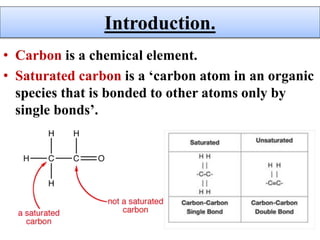
• Carbon is a chemical element.
• Saturated carbon is a ‘carbon atom in an organic
species that is bonded to other atoms only by
single bonds’.
Introduction.
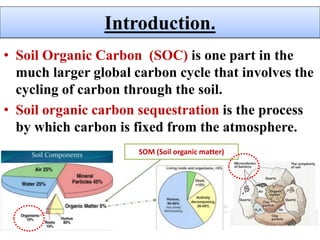
• Soil Organic Carbon (SOC) is one part in the
much larger global carbon cycle that involves the
cycling of carbon through the soil.
• Soil organic carbon sequestration is the process
by which carbon is fixed from the atmosphere.
Introduction.
SOM (Soil organic matter)
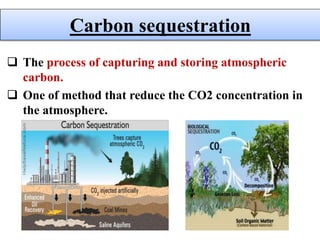
 The process of capturing and storing atmospheric
carbon.
 One of method that reduce the CO2 concentration in
the atmosphere.
Carbon sequestration
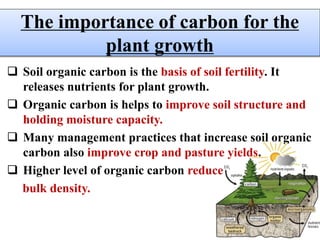
 Soil organic carbon is the basis of soil fertility. It
releases nutrients for plant growth.
 Organic carbon is helps to improve soil structure and
holding moisture capacity.
 Many management practices that increase soil organic
carbon also improve crop and pasture yields.
 Higher level of organic carbon reduce
bulk density.
The importance of carbon for the
plant growth
why do the authors conclude
that,
Soil in highly structured and
high organic matter soils can
display a finite capacity to
store carbon.
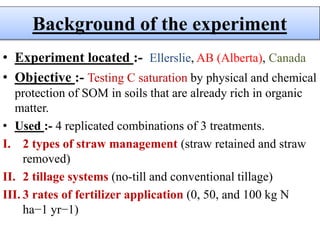
• Experiment located :- Ellerslie, AB (Alberta), Canada
• Objective :- Testing C saturation by physical and chemical
protection of SOM in soils that are already rich in organic
matter.
• Used :- 4 replicated combinations of 3 treatments.
I. 2 types of straw management (straw retained and straw
removed)
II. 2 tillage systems (no-till and conventional tillage)
III. 3 rates of fertilizer application (0, 50, and 100 kg N
ha−1 yr−1)
Background of the experiment
Methodology
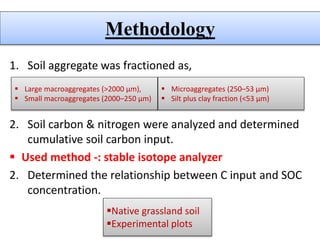
1. Soil aggregate was fractioned as,
2. Soil carbon & nitrogen were analyzed and determined
cumulative soil carbon input.
 Used method -: stable isotope analyzer
2. Determined the relationship between C input and SOC
concentration.
 Large macroaggregates (>2000 μm),
 Small macroaggregates (2000–250 μm)
 Microaggregates (250–53 μm)
 Silt plus clay fraction (<53 μm)
Native grassland soil
Experimental plots
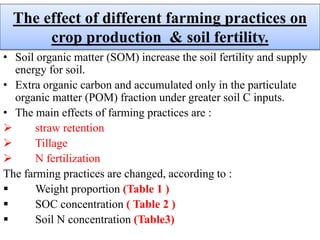
• Soil organic matter (SOM) increase the soil fertility and supply
energy for soil.
• Extra organic carbon and accumulated only in the particulate
organic matter (POM) fraction under greater soil C inputs.
• The main effects of farming practices are :
 straw retention
 Tillage
 N fertilization
The farming practices are changed, according to :
 Weight proportion (Table 1 )
 SOC concentration ( Table 2 )
 Soil N concentration (Table3)
The effect of different farming practices on
crop production & soil fertility.
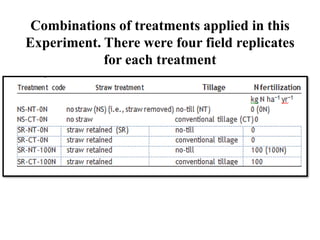
Combinations of treatments applied in this
Experiment. There were four field replicates
for each treatment
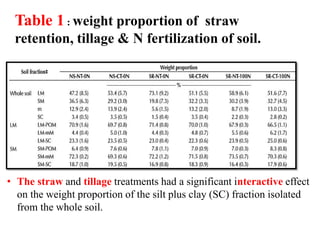
Table 1 : weight proportion of straw
retention, tillage & N fertilization of soil.
• The straw and tillage treatments had a significant interactive effect
on the weight proportion of the silt plus clay (SC) fraction isolated
from the whole soil.
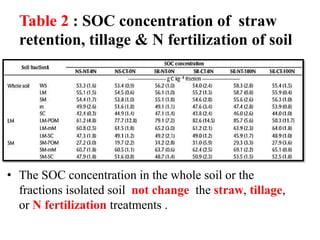
Table 2 : SOC concentration of straw
retention, tillage & N fertilization of soil
• The SOC concentration in the whole soil or the
fractions isolated soil not change the straw, tillage,
or N fertilization treatments .
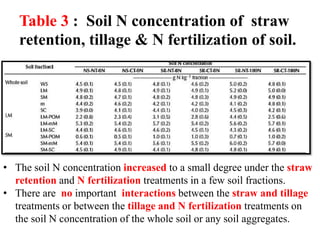
Table 3 : Soil N concentration of straw
retention, tillage & N fertilization of soil.
• The soil N concentration increased to a small degree under the straw
retention and N fertilization treatments in a few soil fractions.
• There are no important interactions between the straw and tillage
treatments or between the tillage and N fertilization treatments on
the soil N concentration of the whole soil or any soil aggregates.
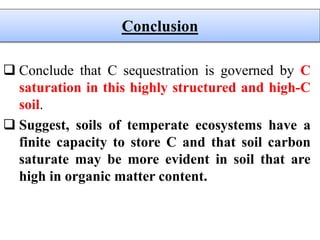
 Conclude that C sequestration is governed by C
saturation in this highly structured and high-C
soil.
 Suggest, soils of temperate ecosystems have a
finite capacity to store C and that soil carbon
saturate may be more evident in soil that are
high in organic matter content.
Conclusion
Therefore
authors conclude that,
Soil in highly structured and high
organic matter soils can display a
finite capacity to store carbon.
Evidence for Carbon Saturation.pptx

Evidence for Carbon Saturation.pptx

  • 1.
    why do theauthors conclude that, Soil in highly structured and high organic matter soils can display a finite capacity to store carbon.
  • 2.
    Content.. • Objectives • Introduction •Carbon sequestration • The importance of carbon for the plant growth. • Background of the experiment. • Methodology. • The effect of different farming practices on crop production & soil fertility. • RESULTS. • Discussion. • Conclusion.
  • 3.
    • To identifywhy do the authors conclude that, Objective. ‘Soil in highly structured and high organic matter soils can display a finite capacity to store carbon.” Objective.
  • 4.
    • Carbon isa chemical element. • Saturated carbon is a ‘carbon atom in an organic species that is bonded to other atoms only by single bonds’. Introduction.
  • 5.
    • Soil OrganicCarbon (SOC) is one part in the much larger global carbon cycle that involves the cycling of carbon through the soil. • Soil organic carbon sequestration is the process by which carbon is fixed from the atmosphere. Introduction. SOM (Soil organic matter)
  • 6.
     The processof capturing and storing atmospheric carbon.  One of method that reduce the CO2 concentration in the atmosphere. Carbon sequestration
  • 7.
     Soil organiccarbon is the basis of soil fertility. It releases nutrients for plant growth.  Organic carbon is helps to improve soil structure and holding moisture capacity.  Many management practices that increase soil organic carbon also improve crop and pasture yields.  Higher level of organic carbon reduce bulk density. The importance of carbon for the plant growth
  • 8.
    why do theauthors conclude that, Soil in highly structured and high organic matter soils can display a finite capacity to store carbon.
  • 9.
    • Experiment located:- Ellerslie, AB (Alberta), Canada • Objective :- Testing C saturation by physical and chemical protection of SOM in soils that are already rich in organic matter. • Used :- 4 replicated combinations of 3 treatments. I. 2 types of straw management (straw retained and straw removed) II. 2 tillage systems (no-till and conventional tillage) III. 3 rates of fertilizer application (0, 50, and 100 kg N ha−1 yr−1) Background of the experiment
  • 10.
    Methodology 1. Soil aggregatewas fractioned as, 2. Soil carbon & nitrogen were analyzed and determined cumulative soil carbon input.  Used method -: stable isotope analyzer 2. Determined the relationship between C input and SOC concentration.  Large macroaggregates (>2000 μm),  Small macroaggregates (2000–250 μm)  Microaggregates (250–53 μm)  Silt plus clay fraction (<53 μm) Native grassland soil Experimental plots
  • 11.
    • Soil organicmatter (SOM) increase the soil fertility and supply energy for soil. • Extra organic carbon and accumulated only in the particulate organic matter (POM) fraction under greater soil C inputs. • The main effects of farming practices are :  straw retention  Tillage  N fertilization The farming practices are changed, according to :  Weight proportion (Table 1 )  SOC concentration ( Table 2 )  Soil N concentration (Table3) The effect of different farming practices on crop production & soil fertility.
  • 12.
    Combinations of treatmentsapplied in this Experiment. There were four field replicates for each treatment
  • 13.
    Table 1 :weight proportion of straw retention, tillage & N fertilization of soil. • The straw and tillage treatments had a significant interactive effect on the weight proportion of the silt plus clay (SC) fraction isolated from the whole soil.
  • 14.
    Table 2 :SOC concentration of straw retention, tillage & N fertilization of soil • The SOC concentration in the whole soil or the fractions isolated soil not change the straw, tillage, or N fertilization treatments .
  • 15.
    Table 3 :Soil N concentration of straw retention, tillage & N fertilization of soil. • The soil N concentration increased to a small degree under the straw retention and N fertilization treatments in a few soil fractions. • There are no important interactions between the straw and tillage treatments or between the tillage and N fertilization treatments on the soil N concentration of the whole soil or any soil aggregates.
  • 16.
     Conclude thatC sequestration is governed by C saturation in this highly structured and high-C soil.  Suggest, soils of temperate ecosystems have a finite capacity to store C and that soil carbon saturate may be more evident in soil that are high in organic matter content. Conclusion
  • 17.
    Therefore authors conclude that, Soilin highly structured and high organic matter soils can display a finite capacity to store carbon.