Follow us @Socitm www.socitm.net/linkedin@Socitm www.Socitm.net/linkedin
A Digital Journey
(for a local authority CIO)
Nick Roberts
Head of ICT London Borough Croydon, &
Immediate Past President, Socitm
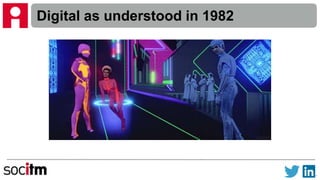
Digital as understood in 1982
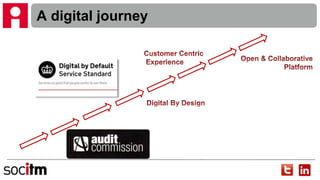
A digital journey
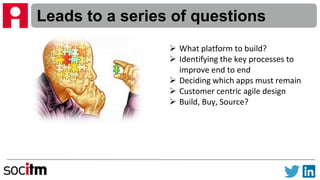
Leads to a series of questions
 What platform to build?
 Identifying the key processes to
improve end to end
 Deciding which apps must remain
 Customer centric agile design
 Build, Buy, Source?
3 key technologies disruptions
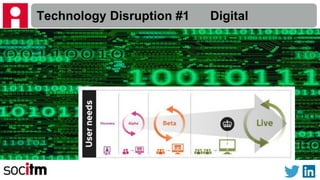
Technology Disruption #1 Digital
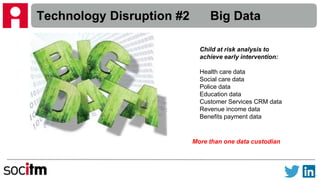
Technology Disruption #2 Big Data
Child at risk analysis to
achieve early intervention:
Health care data
Social care data
Police data
Education data
Customer Services CRM data
Revenue income data
Benefits payment data
More than one data custodian
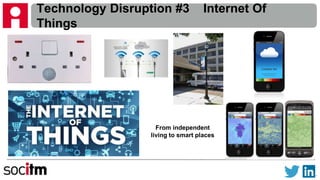
Technology Disruption #3 Internet Of
Things
From independent
living to smart places
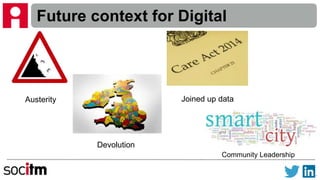
Future context for Digital
Austerity
Devolution
Joined up data
Community Leadership
Place As A Platform
 Community Leadership
role for Local Authorities
 Facilitator of facts
 Connected community
 Economic enabler
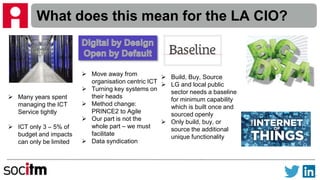
What does this mean for the LA CIO?
 Many years spent
managing the ICT
Service tightly
 ICT only 3 – 5% of
budget and impacts
can only be limited
 Move away from
organisation centric ICT
 Turning key systems on
their heads
 Method change:
PRINCE2 to Agile
 Our part is not the
whole part – we must
facilitate
 Data syndication
 Build, Buy, Source
 LG and local public
sector needs a baseline
for minimum capability
which is built once and
sourced openly
 Only build, buy, or
source the additional
unique functionality
The Dangers
 The platform of Digital local government is not yet well
formed. We can’t afford to wait long.
 The politics of government drives local innovation.
 The baseline for standard business processes and
supporting systems has yet to be set. Difficult to only focus
on the local uniques without this.
 Our LA systems supply chain does not yet recognise the
implications of Government’s open by default approach.
Some Principles for the LA CIO
 Standardisation through Software As A Service
 Open Systems that can be Open Source
 Push for Open APIs
 Cloud-based architecture
 Build strong business analysis and Agile development skills
internally
 Ensure you are customer, not just business driven
 Look beyond the perimeter fence – many custodians of data
 Take responsibility for all technology deployments – be innovative
 Be the Community Digital Leader – whether syndicating data,
building smart places, or driving economic innovation
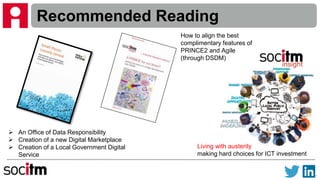
Recommended Reading
 An Office of Data Responsibility
 Creation of a new Digital Marketplace
 Creation of a Local Government Digital
Service
How to align the best
complimentary features of
PRINCE2 and Agile
(through DSDM)
Living with austerity
making hard choices for ICT investment
insight
Thank you - any questions?
Nick Roberts
Immediate Past President, Socitm
Head of ICT London Borough Croydon
nick.roberts@socitm.net
@NickDRoberts
@Socitm

The Digital Journey - A Local Government Perspective

  • 1.
    Follow us @Socitmwww.socitm.net/linkedin@Socitm www.Socitm.net/linkedin A Digital Journey (for a local authority CIO) Nick Roberts Head of ICT London Borough Croydon, & Immediate Past President, Socitm
  • 2.
  • 3.
  • 4.
    Leads to aseries of questions  What platform to build?  Identifying the key processes to improve end to end  Deciding which apps must remain  Customer centric agile design  Build, Buy, Source?
  • 5.
    3 key technologiesdisruptions
  • 6.
  • 7.
    Technology Disruption #2Big Data Child at risk analysis to achieve early intervention: Health care data Social care data Police data Education data Customer Services CRM data Revenue income data Benefits payment data More than one data custodian
  • 8.
    Technology Disruption #3Internet Of Things From independent living to smart places
  • 9.
    Future context forDigital Austerity Devolution Joined up data Community Leadership
  • 10.
    Place As APlatform  Community Leadership role for Local Authorities  Facilitator of facts  Connected community  Economic enabler
  • 11.
    What does thismean for the LA CIO?  Many years spent managing the ICT Service tightly  ICT only 3 – 5% of budget and impacts can only be limited  Move away from organisation centric ICT  Turning key systems on their heads  Method change: PRINCE2 to Agile  Our part is not the whole part – we must facilitate  Data syndication  Build, Buy, Source  LG and local public sector needs a baseline for minimum capability which is built once and sourced openly  Only build, buy, or source the additional unique functionality
  • 12.
    The Dangers  Theplatform of Digital local government is not yet well formed. We can’t afford to wait long.  The politics of government drives local innovation.  The baseline for standard business processes and supporting systems has yet to be set. Difficult to only focus on the local uniques without this.  Our LA systems supply chain does not yet recognise the implications of Government’s open by default approach.
  • 13.
    Some Principles forthe LA CIO  Standardisation through Software As A Service  Open Systems that can be Open Source  Push for Open APIs  Cloud-based architecture  Build strong business analysis and Agile development skills internally  Ensure you are customer, not just business driven  Look beyond the perimeter fence – many custodians of data  Take responsibility for all technology deployments – be innovative  Be the Community Digital Leader – whether syndicating data, building smart places, or driving economic innovation
  • 14.
    Recommended Reading  AnOffice of Data Responsibility  Creation of a new Digital Marketplace  Creation of a Local Government Digital Service How to align the best complimentary features of PRINCE2 and Agile (through DSDM) Living with austerity making hard choices for ICT investment insight
  • 15.
    Thank you -any questions? Nick Roberts Immediate Past President, Socitm Head of ICT London Borough Croydon nick.roberts@socitm.net @NickDRoberts @Socitm