Gov4All:
An open data and open services repository
for supporting citizen-driven application
development for governance
Yannis Charalabidis, Charalampos Alexopoulos,
Vassiliki Diamantopoulou, Aggeliki Androutsopoulou
University of the Aegean
Rationale
 Making open data available does not necessarily lead to better utilisation
from citizens and businesses
 End users (non-developers / non-researchers) are not interested in data – but
they might be interested in new data-driven services and applications
 Public authorities need to know if someone is going to do something with the
data, to justify the data curation and publishing effort
 Crowd sourcing is a prime example of community engagement – the
community that wants the data helps to create and manage the data
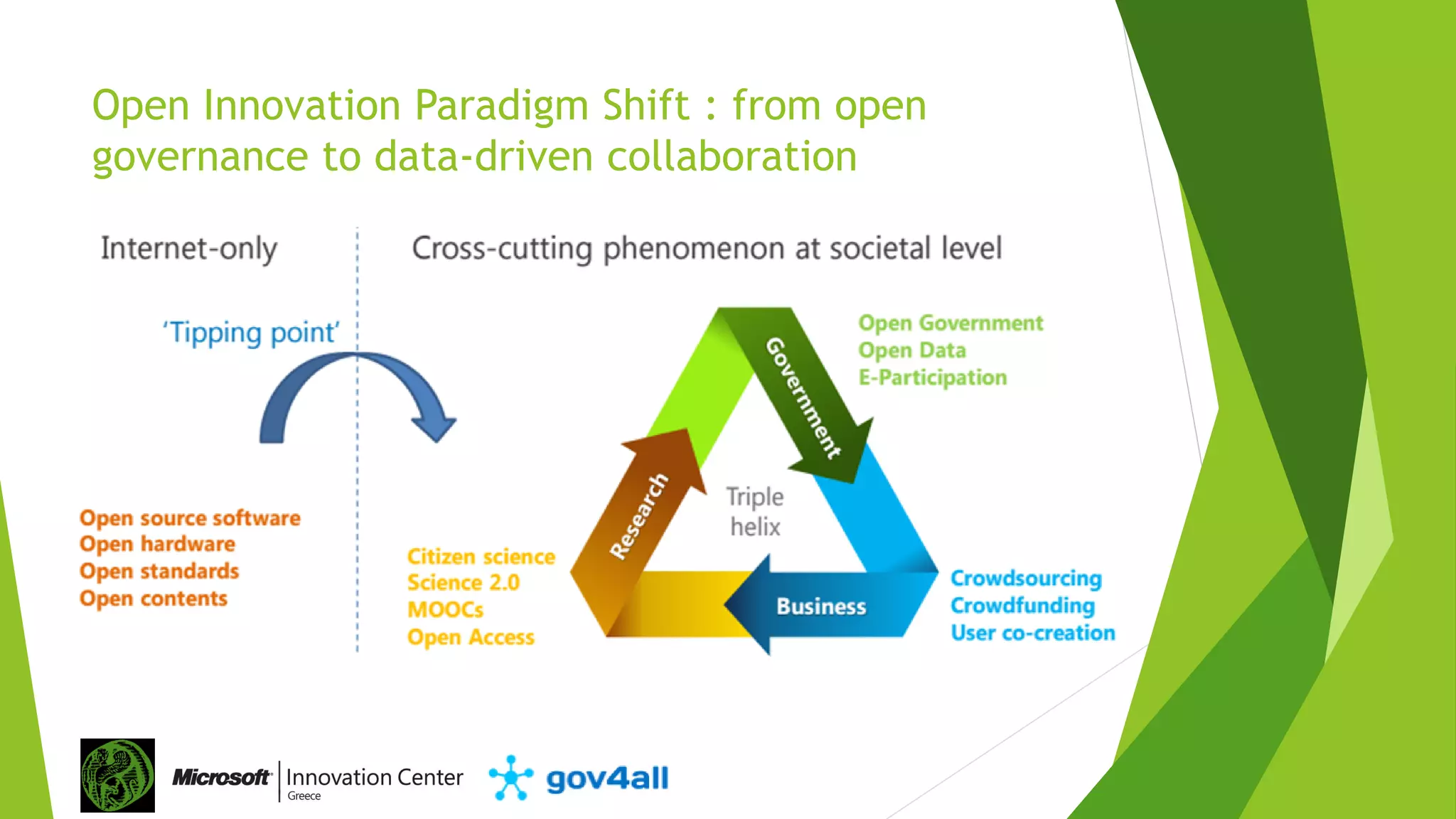
Open Innovation Paradigm Shift : from open
governance to data-driven collaboration
Why open services are important
 Open data provide a static representation of a phenomenon
 Open data, in the form of datasets, are useful primarily:
 for the analysis of a phenomenon (research)
 For the prototyping of an application
 Really useful applications have to be based on on-line / real-time provision of
information in the form of web services (open services)
 Example: the traffic lights dataset vs the traffic lights feed
Crowdsourcing
Citizen involvement can be crucial, in a set of activities and objectives:
 Identification of the need for a new application / dataset / web service
 Aggreggation of citizens needs, towards sets of services or applications
 Development of new ideas for tackling problems of the society
 Prototyping of applications for citizen use
 Testing and rating applications and services
 Gathering of data on behalf of the community
 Provide funding in order to sustain crowd sourcing efforts.
Objectives
 Provide a home - offer the ability to developers to
create a profile and login via social media.
 Create an open data marketplace – citizens can put
in requests for data or services – that is public for
everyone to see.
 Allow users to be publishers - allow for upload of
datasets by users.
 Allow working on datasets, i.e. make users curators.
 Provide a place for all developed applications and
services
 Provide a place for web services, offered by the
public sector
 Provide incentives such as:
 publishing the popularity of the users;
 free tickets to community events, free parking etc.
 'Datathons' (longer competitions);
 data journalism competitions.
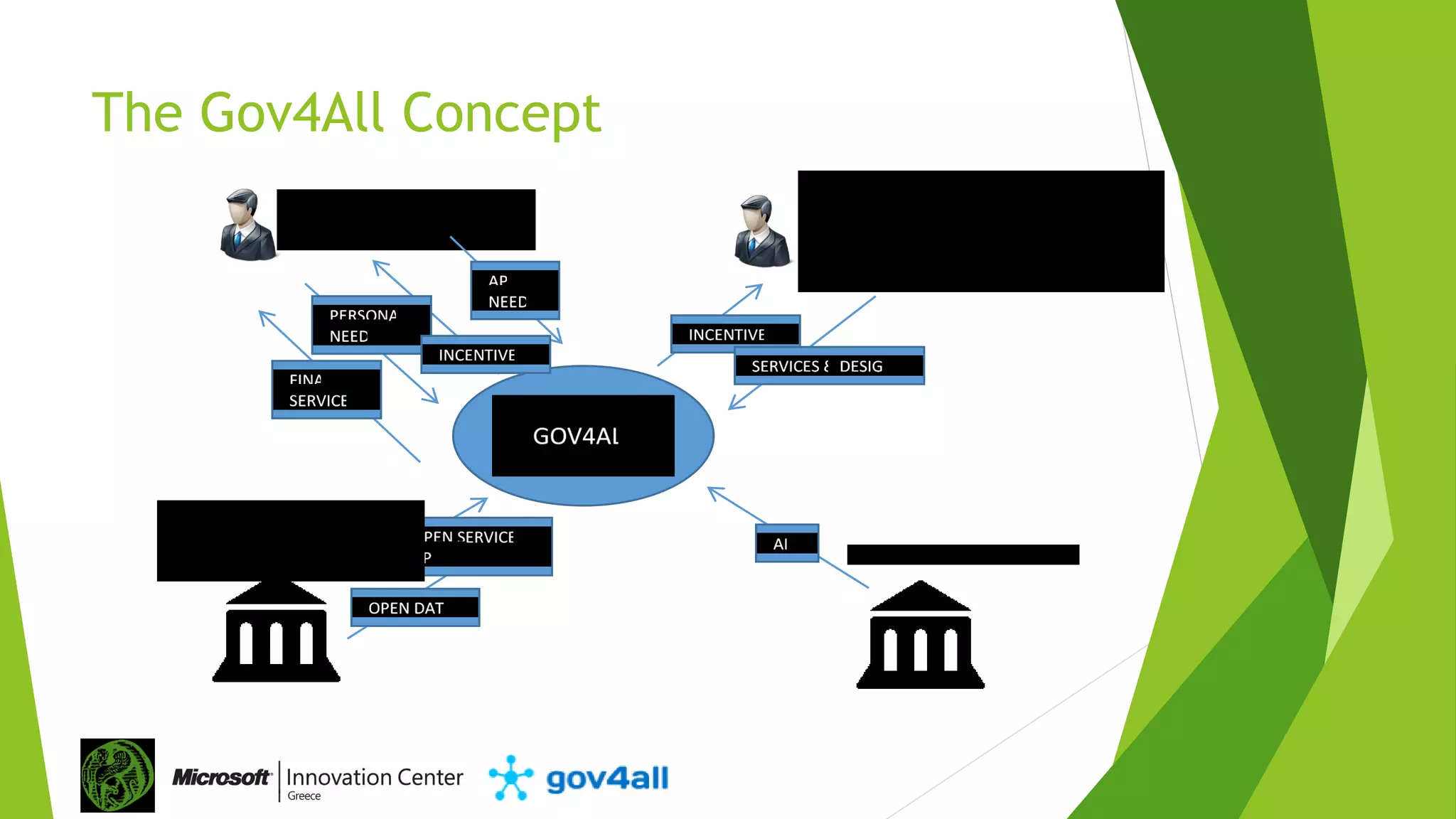
The Gov4All Concept
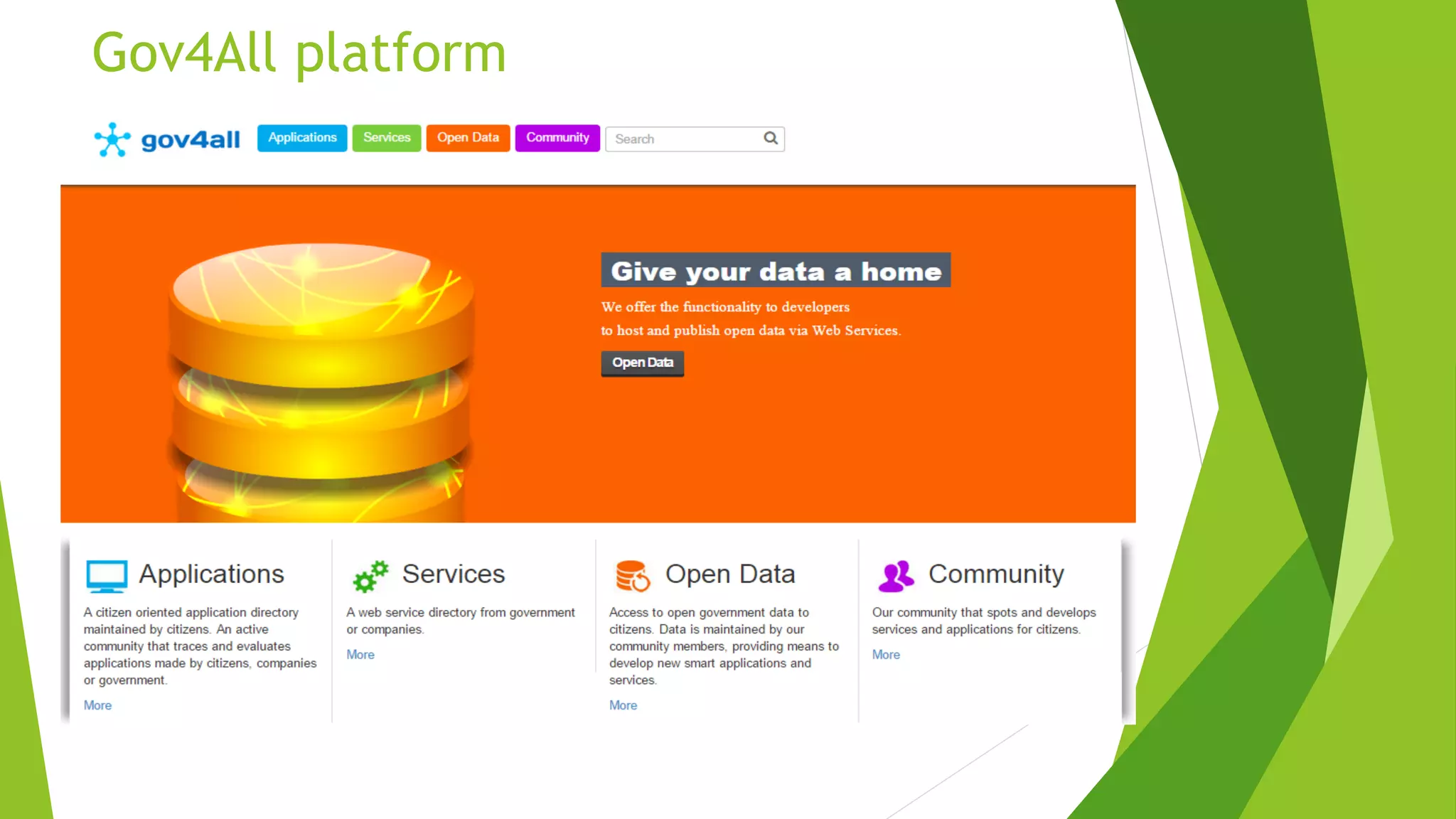
Gov4All platform
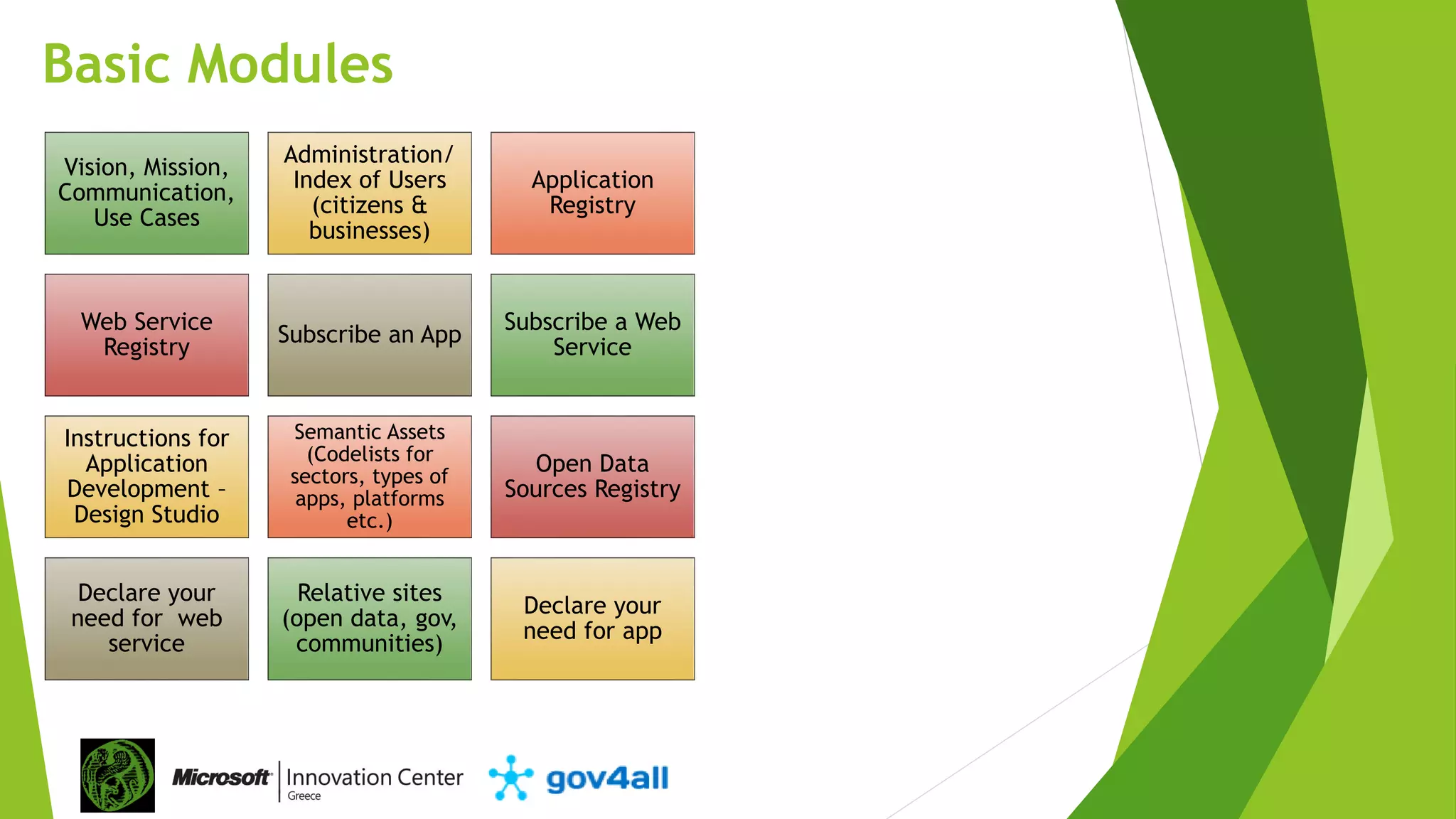
Basic Modules
Vision, Mission,
Communication,
Use Cases
Administration/
Index of Users
(citizens &
businesses)
Application
Registry
Web Service
Registry
Subscribe an App
Subscribe a Web
Service
Instructions for
Application
Development –
Design Studio
Semantic Assets
(Codelists for
sectors, types of
apps, platforms
etc.)
Open Data
Sources Registry
Declare your
need for web
service
Relative sites
(open data, gov,
communities)
Declare your
need for app
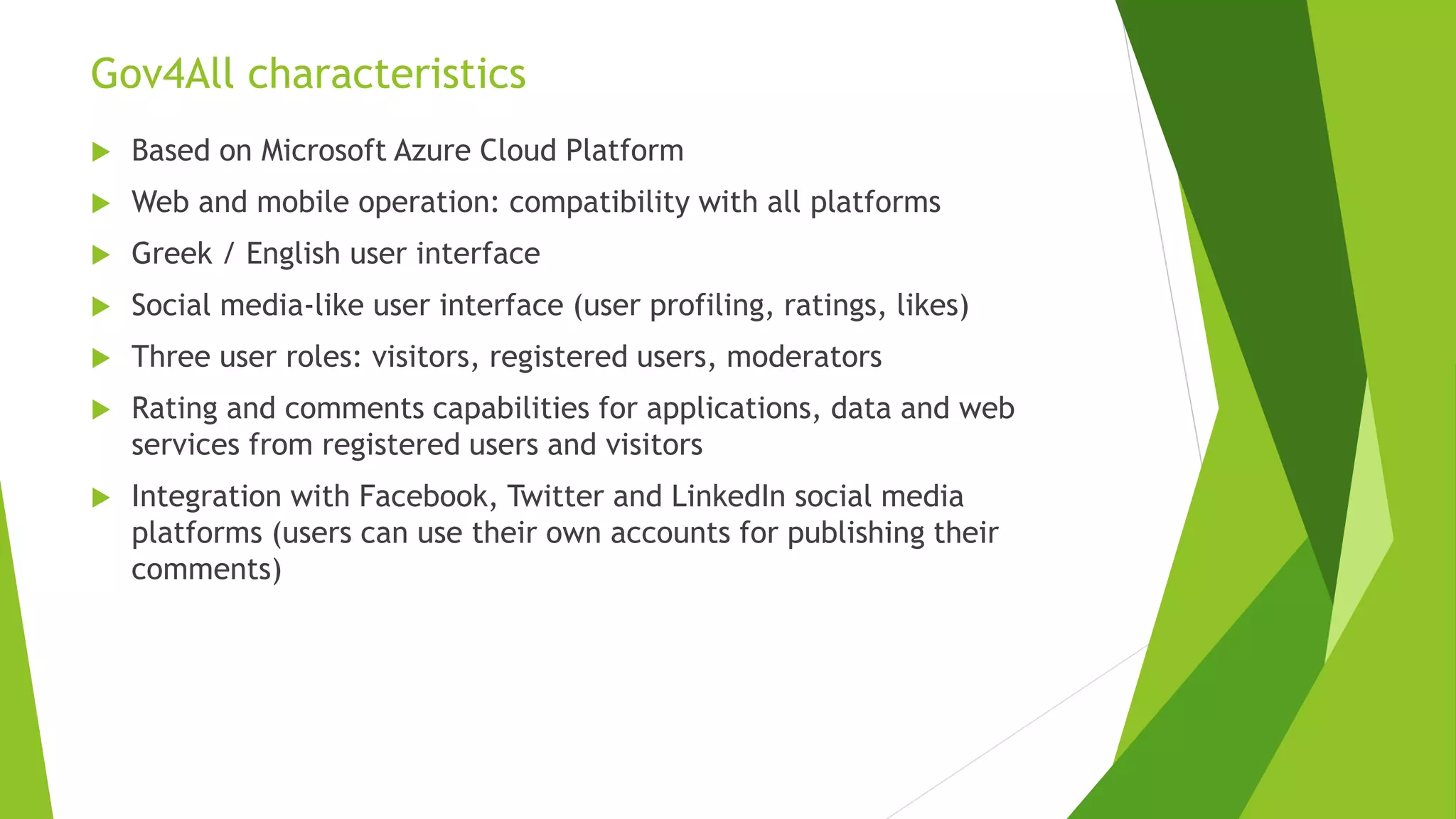
Gov4All characteristics
 Based on Microsoft Azure Cloud Platform
 Web and mobile operation: compatibility with all platforms
 Greek / English user interface
 Social media-like user interface (user profiling, ratings, likes)
 Three user roles: visitors, registered users, moderators
 Rating and comments capabilities for applications, data and web
services from registered users and visitors
 Integration with Facebook, Twitter and LinkedIn social media
platforms (users can use their own accounts for publishing their
comments)
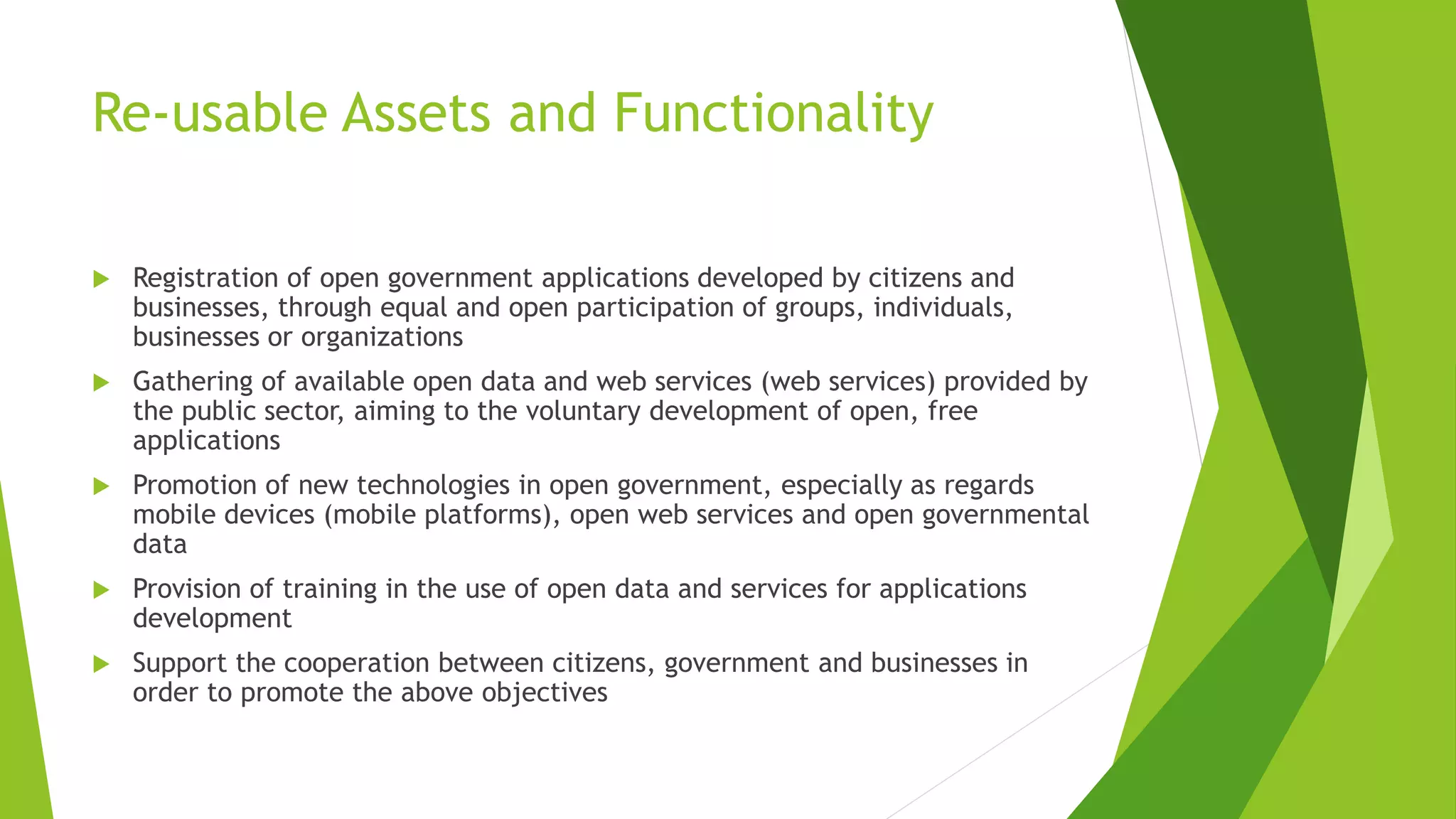
Re-usable Assets and Functionality
 Registration of open government applications developed by citizens and
businesses, through equal and open participation of groups, individuals,
businesses or organizations
 Gathering of available open data and web services (web services) provided by
the public sector, aiming to the voluntary development of open, free
applications
 Promotion of new technologies in open government, especially as regards
mobile devices (mobile platforms), open web services and open governmental
data
 Provision of training in the use of open data and services for applications
development
 Support the cooperation between citizens, government and businesses in
order to promote the above objectives
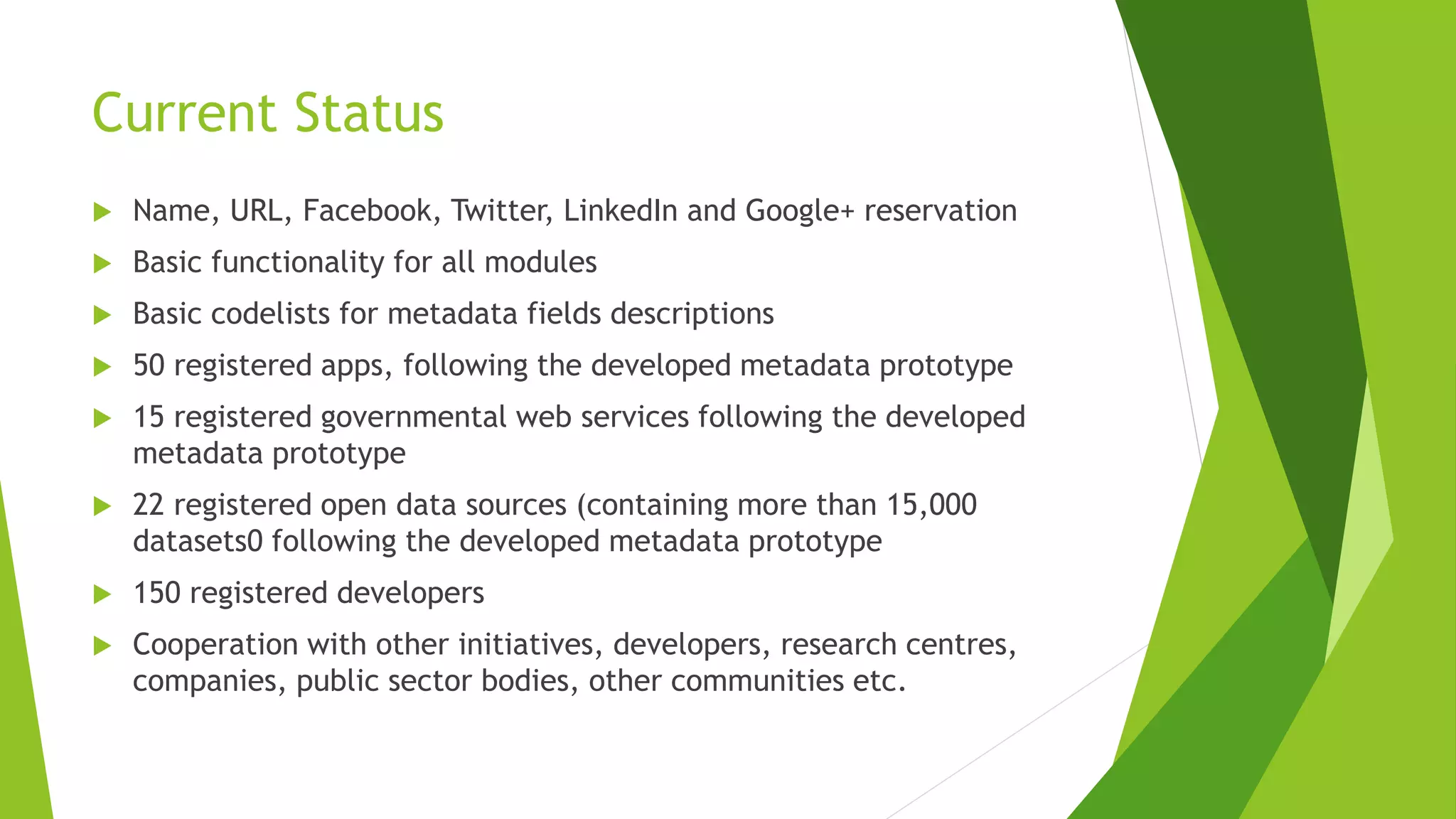
Current Status
 Name, URL, Facebook, Twitter, LinkedIn and Google+ reservation
 Basic functionality for all modules
 Basic codelists for metadata fields descriptions
 50 registered apps, following the developed metadata prototype
 15 registered governmental web services following the developed
metadata prototype
 22 registered open data sources (containing more than 15,000
datasets0 following the developed metadata prototype
 150 registered developers
 Cooperation with other initiatives, developers, research centres,
companies, public sector bodies, other communities etc.
Lessons Learned
 Open data strategy is important, as a basis for collaborative government
attempts
 Open services (in the form of web services) are essential for the development
of applications of value for the citizen
 Being able to gather and aggregate the citizen needs leads to better scoping
of services and open data strategies by governments
 Training material and guidance is important
 The “gov4all” type of initiatives can be performed at central or local level
 Architecture, metadata structures and training material are reusable

 It needs time and patience …
Further Steps
 The Collaborative Service Design Studio
 to allow uesrs design and create their own applications
 to support the creation of mashup applications, combining already existing
applications and web services
 The Services Marketplace
 offers the created personalized services under commercial terms.
 It implements the vision where governments, citizens, and businesses in Europe
mutually benefit from services of public value.
Thank you for your attention !
Yannis Charalabidis
Head, Information Systems Laboratory
Director, Innovation and Entrepreneurship Unit
_________________________________________________________
Department of Information and Communication Systems Engineering
University of the Aegean
Twitter : yannisc
Email : yannisx@aegean.gr

Gov4All : An open data and open services repository for supporting citizen-driven application development for governance

  • 1.
    Gov4All: An open dataand open services repository for supporting citizen-driven application development for governance Yannis Charalabidis, Charalampos Alexopoulos, Vassiliki Diamantopoulou, Aggeliki Androutsopoulou University of the Aegean
  • 2.
    Rationale  Making opendata available does not necessarily lead to better utilisation from citizens and businesses  End users (non-developers / non-researchers) are not interested in data – but they might be interested in new data-driven services and applications  Public authorities need to know if someone is going to do something with the data, to justify the data curation and publishing effort  Crowd sourcing is a prime example of community engagement – the community that wants the data helps to create and manage the data
  • 3.
    Open Innovation ParadigmShift : from open governance to data-driven collaboration
  • 4.
    Why open servicesare important  Open data provide a static representation of a phenomenon  Open data, in the form of datasets, are useful primarily:  for the analysis of a phenomenon (research)  For the prototyping of an application  Really useful applications have to be based on on-line / real-time provision of information in the form of web services (open services)  Example: the traffic lights dataset vs the traffic lights feed
  • 5.
    Crowdsourcing Citizen involvement canbe crucial, in a set of activities and objectives:  Identification of the need for a new application / dataset / web service  Aggreggation of citizens needs, towards sets of services or applications  Development of new ideas for tackling problems of the society  Prototyping of applications for citizen use  Testing and rating applications and services  Gathering of data on behalf of the community  Provide funding in order to sustain crowd sourcing efforts.
  • 6.
    Objectives  Provide ahome - offer the ability to developers to create a profile and login via social media.  Create an open data marketplace – citizens can put in requests for data or services – that is public for everyone to see.  Allow users to be publishers - allow for upload of datasets by users.  Allow working on datasets, i.e. make users curators.  Provide a place for all developed applications and services  Provide a place for web services, offered by the public sector  Provide incentives such as:  publishing the popularity of the users;  free tickets to community events, free parking etc.  'Datathons' (longer competitions);  data journalism competitions.
  • 7.
  • 8.
  • 9.
    Basic Modules Vision, Mission, Communication, UseCases Administration/ Index of Users (citizens & businesses) Application Registry Web Service Registry Subscribe an App Subscribe a Web Service Instructions for Application Development – Design Studio Semantic Assets (Codelists for sectors, types of apps, platforms etc.) Open Data Sources Registry Declare your need for web service Relative sites (open data, gov, communities) Declare your need for app
  • 10.
    Gov4All characteristics  Basedon Microsoft Azure Cloud Platform  Web and mobile operation: compatibility with all platforms  Greek / English user interface  Social media-like user interface (user profiling, ratings, likes)  Three user roles: visitors, registered users, moderators  Rating and comments capabilities for applications, data and web services from registered users and visitors  Integration with Facebook, Twitter and LinkedIn social media platforms (users can use their own accounts for publishing their comments)
  • 11.
    Re-usable Assets andFunctionality  Registration of open government applications developed by citizens and businesses, through equal and open participation of groups, individuals, businesses or organizations  Gathering of available open data and web services (web services) provided by the public sector, aiming to the voluntary development of open, free applications  Promotion of new technologies in open government, especially as regards mobile devices (mobile platforms), open web services and open governmental data  Provision of training in the use of open data and services for applications development  Support the cooperation between citizens, government and businesses in order to promote the above objectives
  • 12.
    Current Status  Name,URL, Facebook, Twitter, LinkedIn and Google+ reservation  Basic functionality for all modules  Basic codelists for metadata fields descriptions  50 registered apps, following the developed metadata prototype  15 registered governmental web services following the developed metadata prototype  22 registered open data sources (containing more than 15,000 datasets0 following the developed metadata prototype  150 registered developers  Cooperation with other initiatives, developers, research centres, companies, public sector bodies, other communities etc.
  • 13.
    Lessons Learned  Opendata strategy is important, as a basis for collaborative government attempts  Open services (in the form of web services) are essential for the development of applications of value for the citizen  Being able to gather and aggregate the citizen needs leads to better scoping of services and open data strategies by governments  Training material and guidance is important  The “gov4all” type of initiatives can be performed at central or local level  Architecture, metadata structures and training material are reusable   It needs time and patience …
  • 14.
    Further Steps  TheCollaborative Service Design Studio  to allow uesrs design and create their own applications  to support the creation of mashup applications, combining already existing applications and web services  The Services Marketplace  offers the created personalized services under commercial terms.  It implements the vision where governments, citizens, and businesses in Europe mutually benefit from services of public value.
  • 15.
    Thank you foryour attention ! Yannis Charalabidis Head, Information Systems Laboratory Director, Innovation and Entrepreneurship Unit _________________________________________________________ Department of Information and Communication Systems Engineering University of the Aegean Twitter : yannisc Email : yannisx@aegean.gr