The Ideas of David Gauntlett

Media in the Online Age
Web 1.0 Vs Web 2.0
• http://www.youtube.com/watch?v=YuWCvGB
QXJw&feature=related
• Web 1.0 – No interaction. Information is
provided for the user.
• Web 2.0 – More collaborative, participatory
and creative. Upload, share, download and
create.
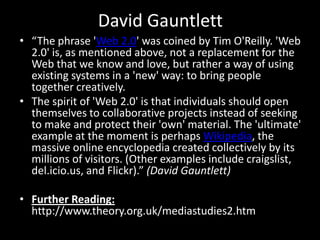
David Gauntlett
• “The phrase 'Web 2.0' was coined by Tim O'Reilly. 'Web
2.0' is, as mentioned above, not a replacement for the
Web that we know and love, but rather a way of using
existing systems in a 'new' way: to bring people
together creatively.
• The spirit of 'Web 2.0' is that individuals should open
themselves to collaborative projects instead of seeking
to make and protect their 'own' material. The 'ultimate'
example at the moment is perhaps Wikipedia, the
massive online encyclopedia created collectively by its
millions of visitors. (Other examples include craigslist,
del.icio.us, and Flickr).” (David Gauntlett)
• Further Reading:
http://www.theory.org.uk/mediastudies2.htm
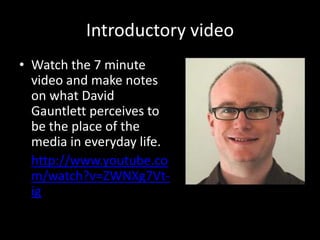
Introductory video
• Watch the 7 minute
video and make notes
on what David
Gauntlett perceives to
be the place of the
media in everyday life.
• http://www.youtube.co
m/watch?v=ZWNXg7Vtig
What is Web 2.0?
• User-generated material via software and hosted
sites – YouTube, MySpace, Facebook – which
have been labelled ‘Web 2.0’.
• A way of using existing systems in a 'new' way: to
bring people together creatively.
• The 'ultimate' example at the moment is perhaps
Wikipedia, the massive online encyclopaedia
created collectively by its millions of visitors.
• http://www.youtube.com/watch?v=nF4OBfVQmC
I&feature=channel_page
David Gauntlett
• David Gauntlettargues that people don’t just
get represented by the media they use the
web 2.0 platforms to make their own media
to share with the world and represent
themselves.
• Media 2.0 is more about people and less
about ‘the media’.
More about people less about the
media
How the internet can transform a
person’s life as their video goes
viral.

• http://www.youtube.com/watch?v=UCOC1YwN
wZw
• http://www.youtube.com/watch?v=5y3
• B6jipB90
• http://www.youtube.com/watch?v=FTgCHqSrR
nI
Task
• What examples can you find that support David
Gauntlett’s theory?
• Think about examples of creativity and people
attempting to change culture (YouTube?)
• Participatory culture – Wikipedia? Comments on
YouTube?
• What about people using the platforms of web
2.0 to represent/expose themselves – Vlogging
(video blogs)?
• Be prepared to feed your ideas to the rest of the
group.
What do you think?
• Charles Leadbeater opens up the debate
suggesting how user generated material can
be beneficial and also detrimental.
• http://www.youtube.com/watch?v=qiP79vYsf
bo
• What examples can you provide to both
support and challenge his response to the
impact of web 2.0?

Web 2.0 Lesson

  • 1.
    The Ideas ofDavid Gauntlett Media in the Online Age
  • 2.
    Web 1.0 VsWeb 2.0 • http://www.youtube.com/watch?v=YuWCvGB QXJw&feature=related • Web 1.0 – No interaction. Information is provided for the user. • Web 2.0 – More collaborative, participatory and creative. Upload, share, download and create.
  • 3.
    David Gauntlett • “Thephrase 'Web 2.0' was coined by Tim O'Reilly. 'Web 2.0' is, as mentioned above, not a replacement for the Web that we know and love, but rather a way of using existing systems in a 'new' way: to bring people together creatively. • The spirit of 'Web 2.0' is that individuals should open themselves to collaborative projects instead of seeking to make and protect their 'own' material. The 'ultimate' example at the moment is perhaps Wikipedia, the massive online encyclopedia created collectively by its millions of visitors. (Other examples include craigslist, del.icio.us, and Flickr).” (David Gauntlett) • Further Reading: http://www.theory.org.uk/mediastudies2.htm
  • 4.
    Introductory video • Watchthe 7 minute video and make notes on what David Gauntlett perceives to be the place of the media in everyday life. • http://www.youtube.co m/watch?v=ZWNXg7Vtig
  • 5.
    What is Web2.0? • User-generated material via software and hosted sites – YouTube, MySpace, Facebook – which have been labelled ‘Web 2.0’. • A way of using existing systems in a 'new' way: to bring people together creatively. • The 'ultimate' example at the moment is perhaps Wikipedia, the massive online encyclopaedia created collectively by its millions of visitors. • http://www.youtube.com/watch?v=nF4OBfVQmC I&feature=channel_page
  • 6.
    David Gauntlett • DavidGauntlettargues that people don’t just get represented by the media they use the web 2.0 platforms to make their own media to share with the world and represent themselves. • Media 2.0 is more about people and less about ‘the media’.
  • 7.
    More about peopleless about the media How the internet can transform a person’s life as their video goes viral. • http://www.youtube.com/watch?v=UCOC1YwN wZw • http://www.youtube.com/watch?v=5y3 • B6jipB90 • http://www.youtube.com/watch?v=FTgCHqSrR nI
  • 8.
    Task • What examplescan you find that support David Gauntlett’s theory? • Think about examples of creativity and people attempting to change culture (YouTube?) • Participatory culture – Wikipedia? Comments on YouTube? • What about people using the platforms of web 2.0 to represent/expose themselves – Vlogging (video blogs)? • Be prepared to feed your ideas to the rest of the group.
  • 9.
    What do youthink? • Charles Leadbeater opens up the debate suggesting how user generated material can be beneficial and also detrimental. • http://www.youtube.com/watch?v=qiP79vYsf bo • What examples can you provide to both support and challenge his response to the impact of web 2.0?