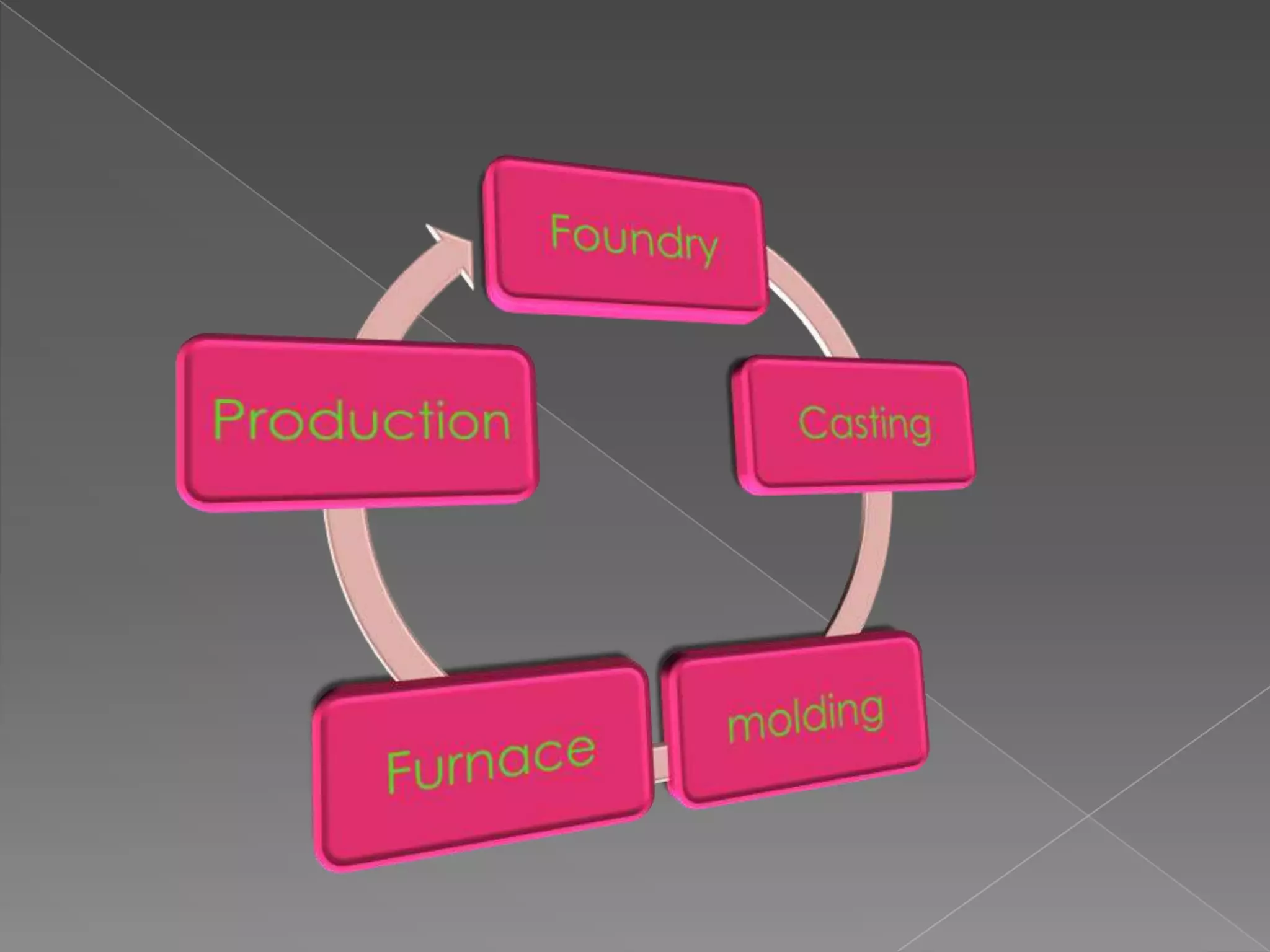
Foundry consist machinery , man power ,
advance technology etc.
 Foundry contain mainly metal casting ,
furnace ,molding and other
process[production]
 After all of that,
 New technologies and techniques enter
in foundry and factories.

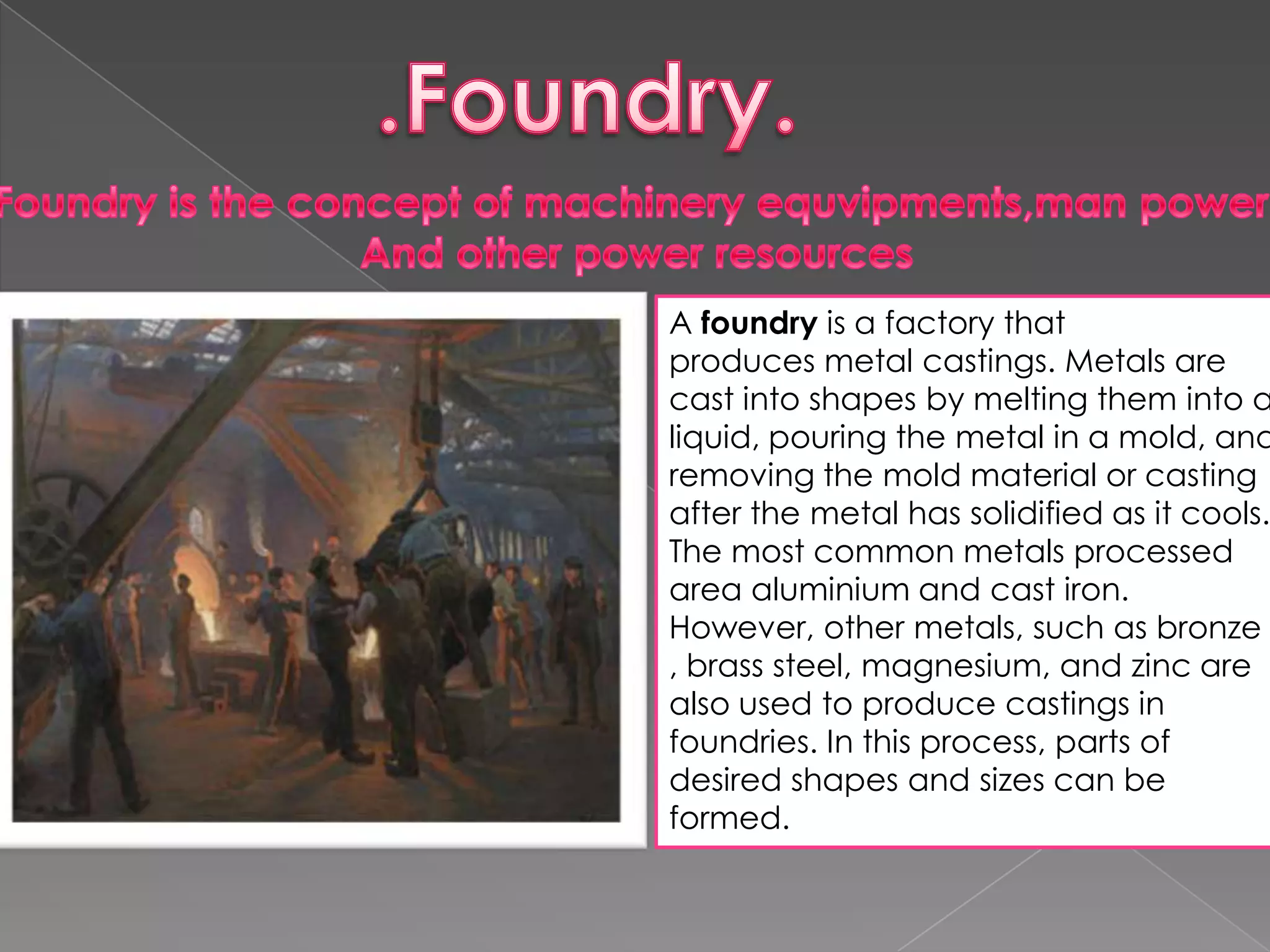
A foundry is a factory that
produces metal castings. Metals are
cast into shapes by melting them into a
liquid, pouring the metal in a mold, and
removing the mold material or casting
after the metal has solidified as it cools.
The most common metals processed
area aluminium and cast iron.
However, other metals, such as bronze
, brass steel, magnesium, and zinc are
also used to produce castings in
foundries. In this process, parts of
desired shapes and sizes can be
formed.


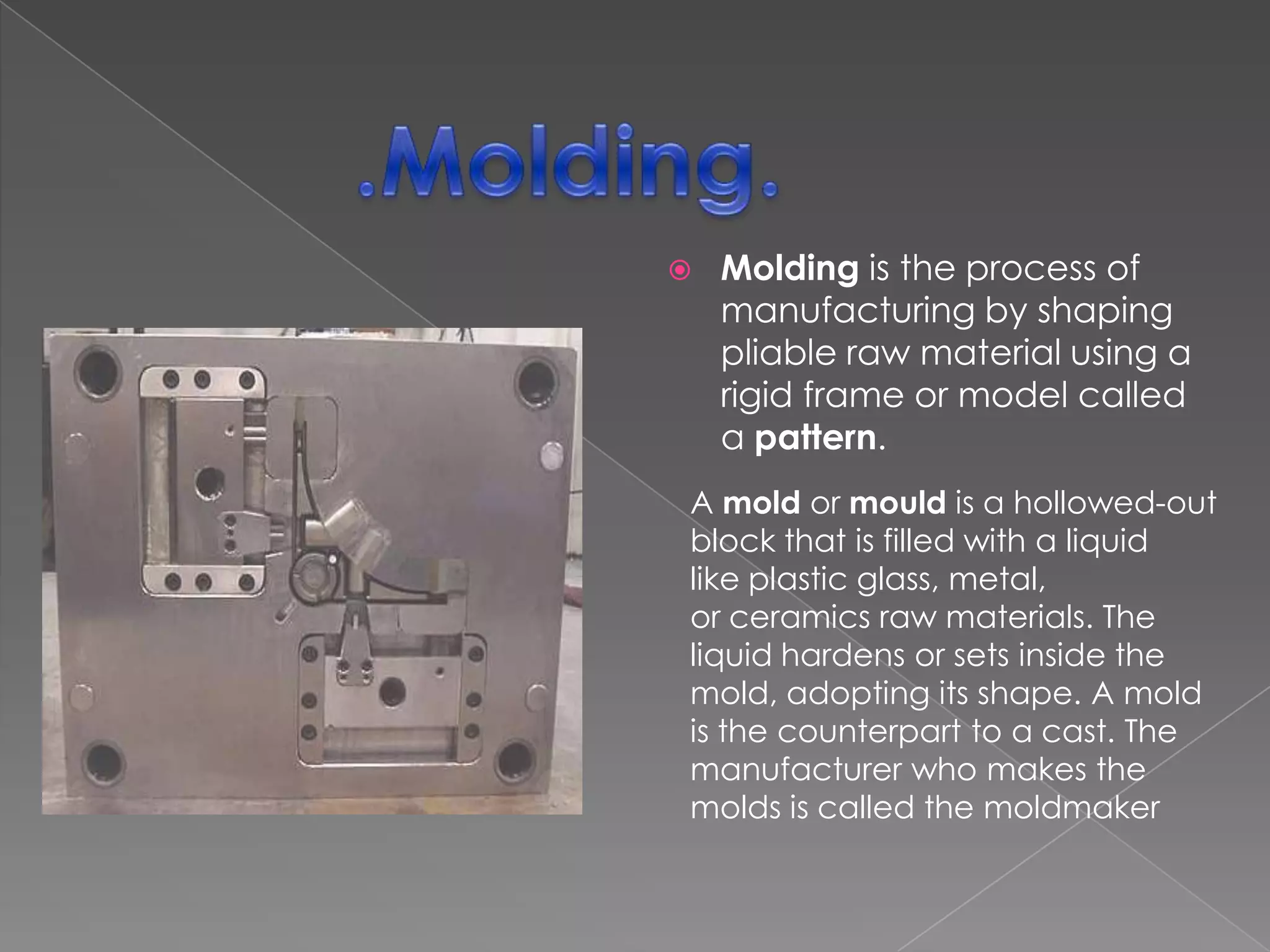
Molding is the process of
manufacturing by shaping
pliable raw material using a
rigid frame or model called
a pattern.

A mold or mould is a hollowed-out
block that is filled with a liquid
like plastic glass, metal,
or ceramics raw materials. The
liquid hardens or sets inside the
mold, adopting its shape. A mold
is the counterpart to a cast. The
manufacturer who makes the
molds is called the moldmaker


.

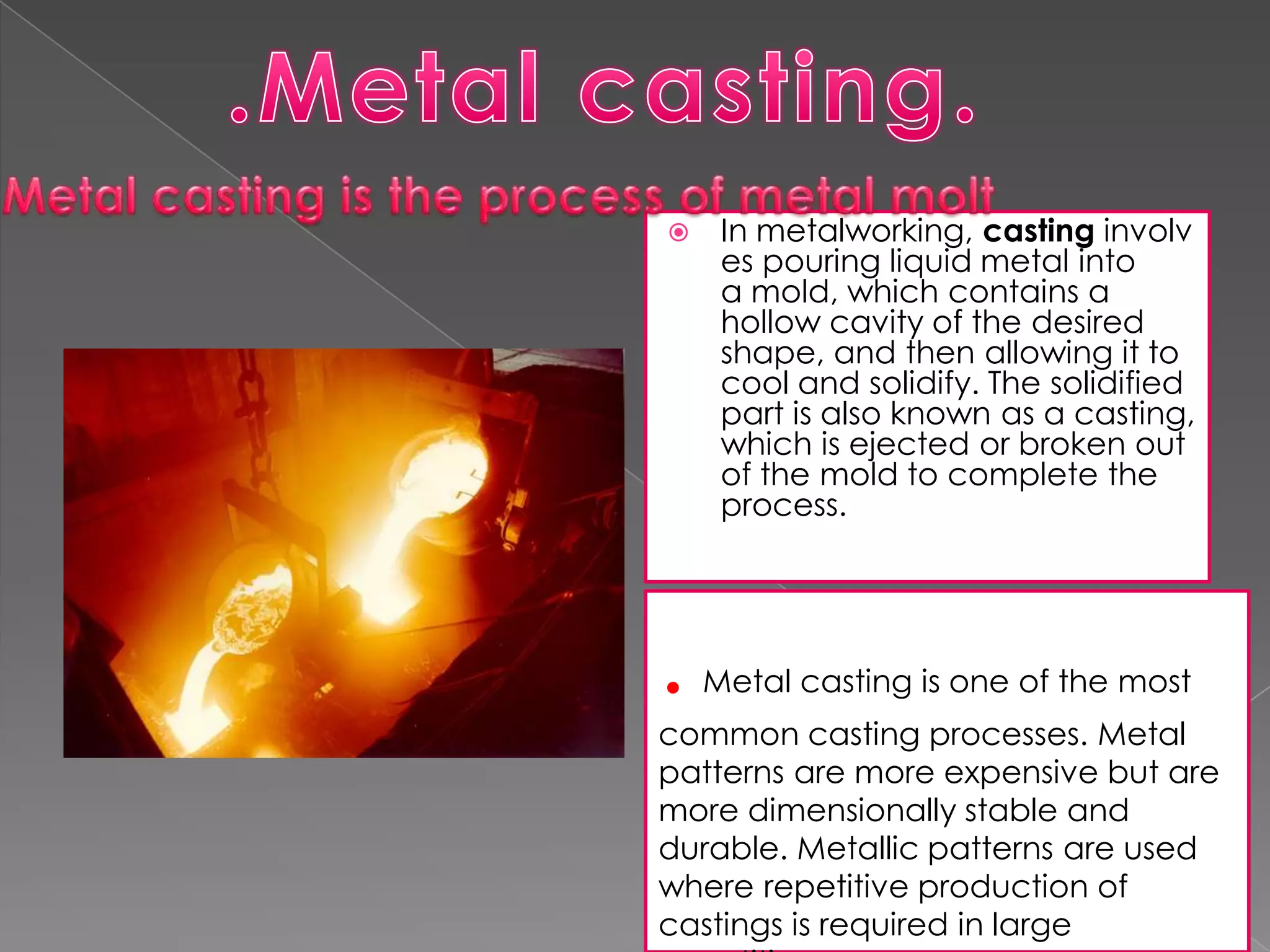
In metalworking, casting involv
es pouring liquid metal into
a mold, which contains a
hollow cavity of the desired
shape, and then allowing it to
cool and solidify. The solidified
part is also known as a casting,
which is ejected or broken out
of the mold to complete the
process.

Metal casting is one of the most

common casting processes. Metal
patterns are more expensive but are
more dimensionally stable and
durable. Metallic patterns are used
where repetitive production of
castings is required in large




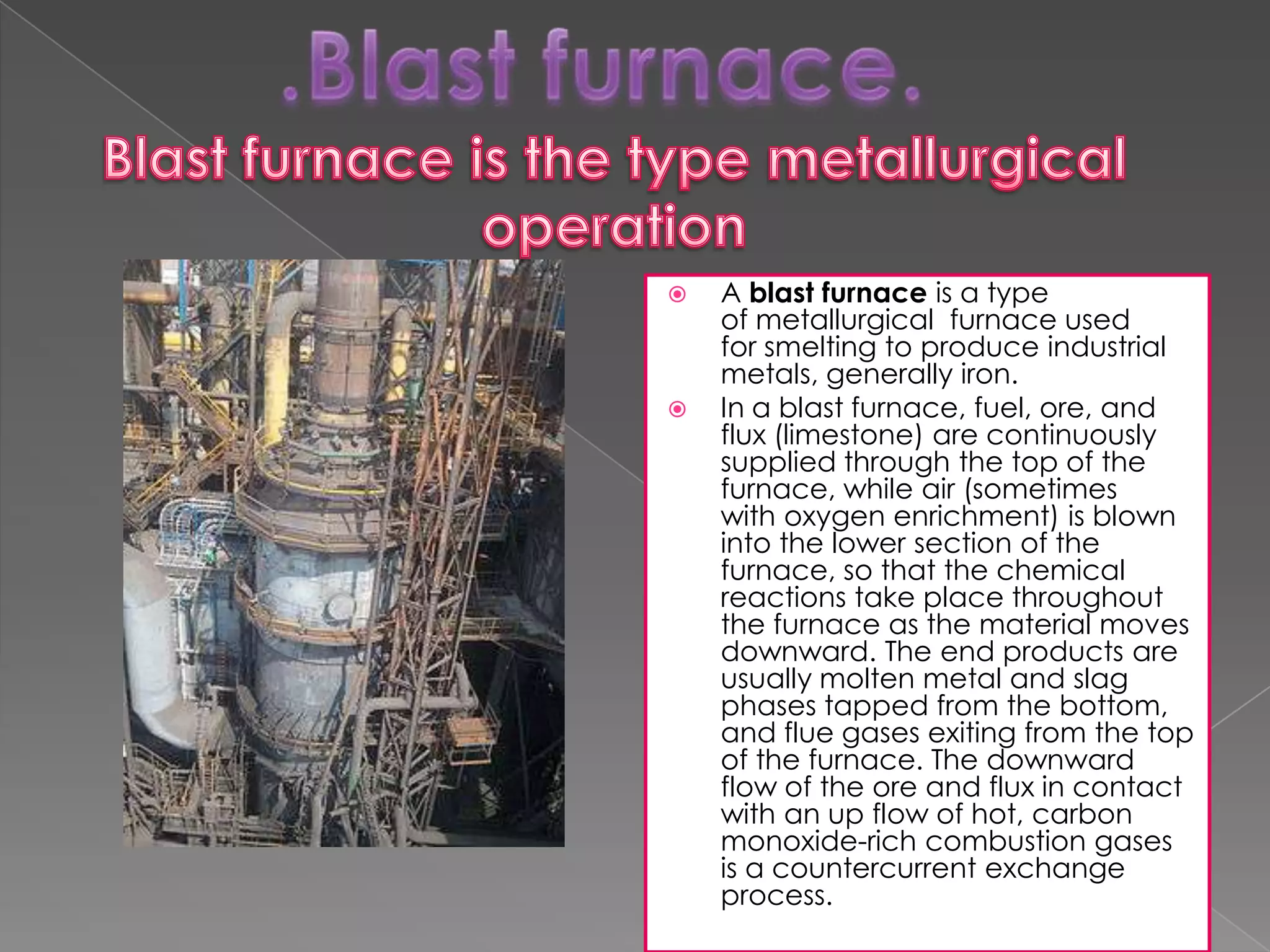
A blast furnace is a type
of metallurgical furnace used
for smelting to produce industrial
metals, generally iron.
In a blast furnace, fuel, ore, and
flux (limestone) are continuously
supplied through the top of the
furnace, while air (sometimes
with oxygen enrichment) is blown
into the lower section of the
furnace, so that the chemical
reactions take place throughout
the furnace as the material moves
downward. The end products are
usually molten metal and slag
phases tapped from the bottom,
and flue gases exiting from the top
of the furnace. The downward
flow of the ore and flux in contact
with an up flow of hot, carbon
monoxide-rich combustion gases
is a countercurrent exchange
process.











We need more new and more advance
but 1901-1999 there is no more advance
technologies and techniques.
So there are lot of losses.
1.more work
2.lot of man power
3.lot of money for buy machines
4.lot of space occupy old type factory
5.only one way of earning money
6.not so good productivity
When different techniques and
technologies entered in factory then lot
of benefits are creates for all of us.
 1.less work
 2.less time
 3.less money [low cost machine]
 4.less man power
 5.more ways of earning
 6.good productivity

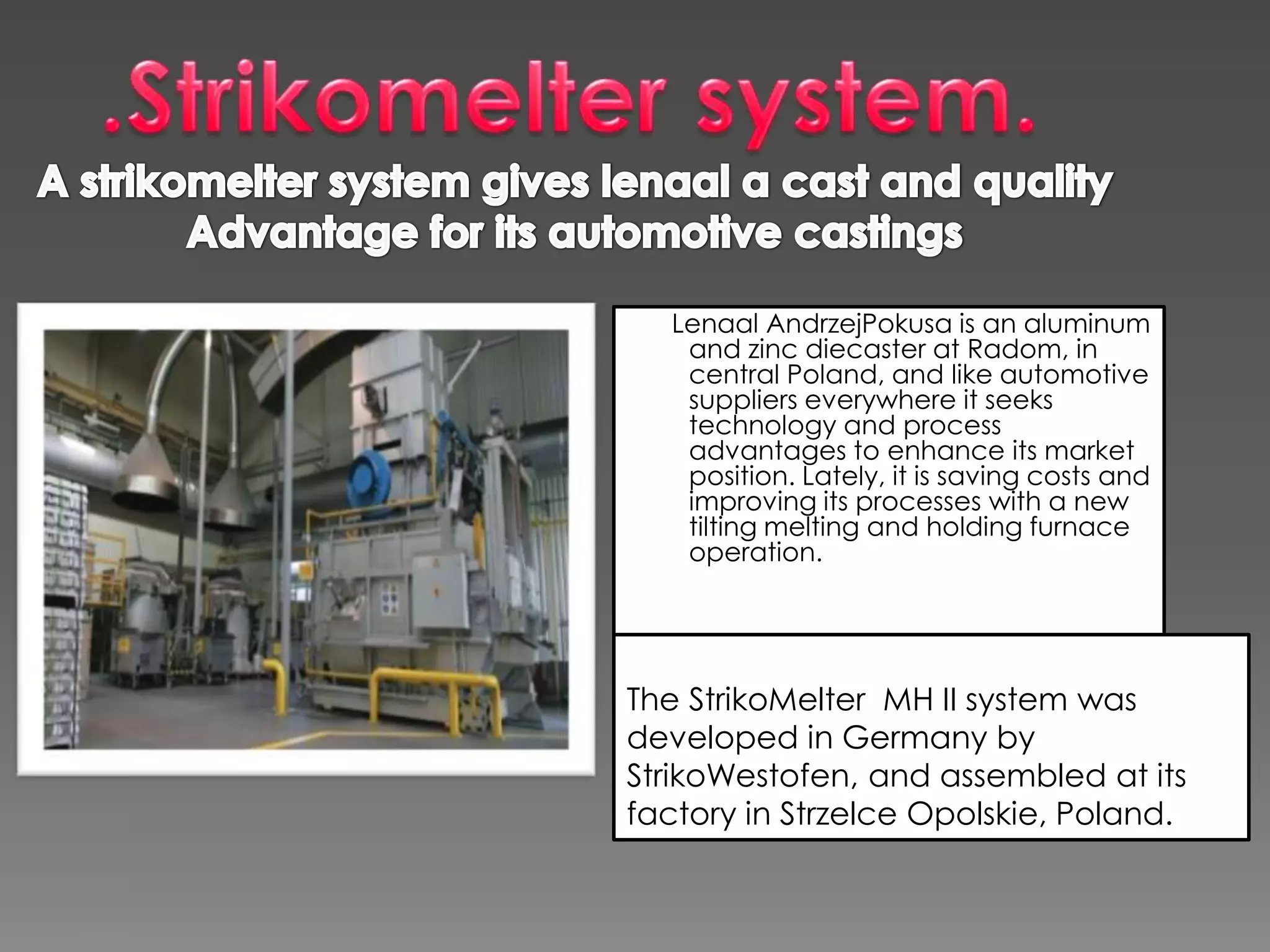
Lenaal AndrzejPokusa is an aluminum
and zinc diecaster at Radom, in
central Poland, and like automotive
suppliers everywhere it seeks
technology and process
advantages to enhance its market
position. Lately, it is saving costs and
improving its processes with a new
tilting melting and holding furnace
operation.

The StrikoMelter MH II system was
developed in Germany by
StrikoWestofen, and assembled at its
factory in Strzelce Opolskie, Poland.


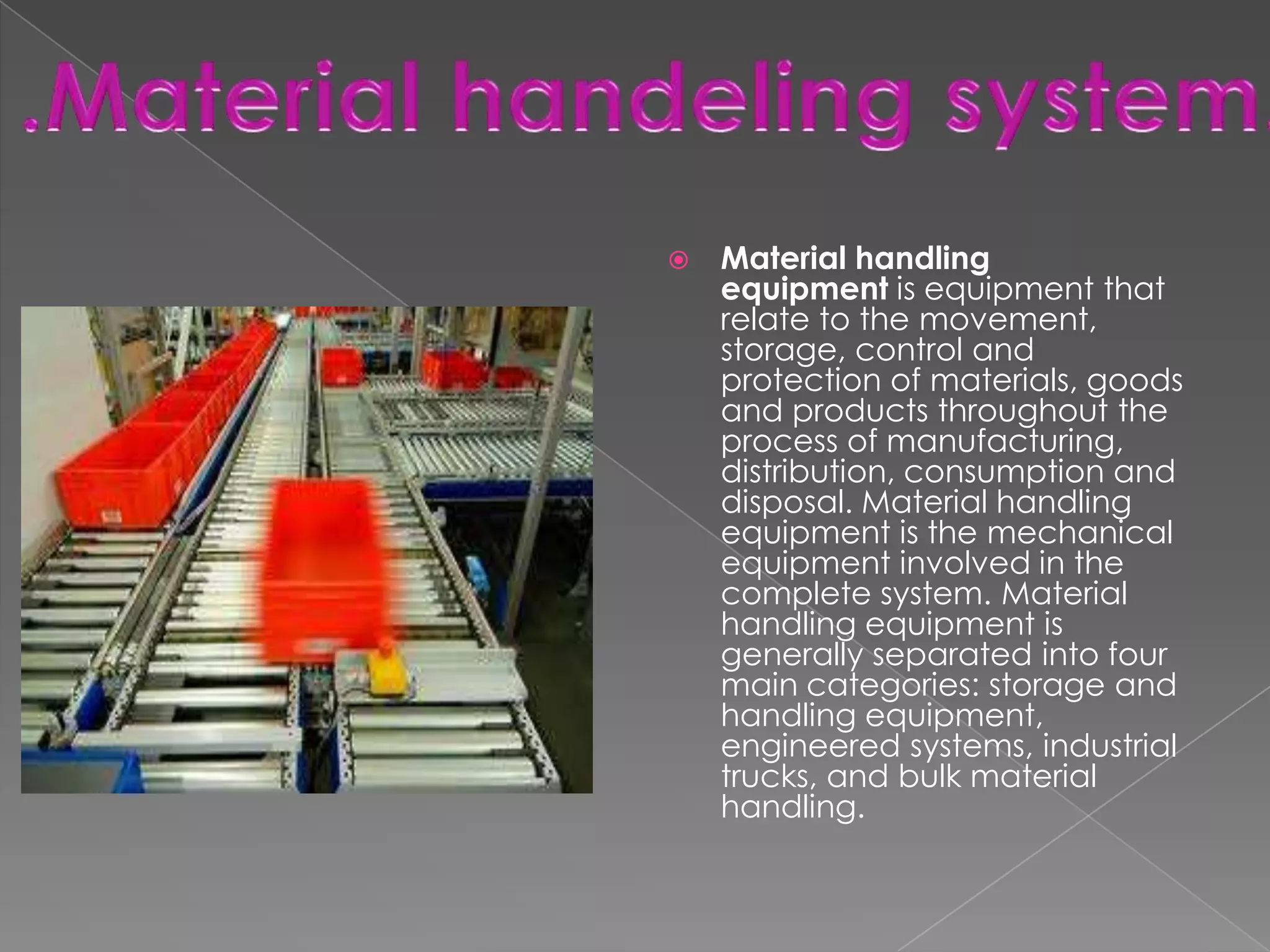
Material handling
equipment is equipment that
relate to the movement,
storage, control and
protection of materials, goods
and products throughout the
process of manufacturing,
distribution, consumption and
disposal. Material handling
equipment is the mechanical
equipment involved in the
complete system. Material
handling equipment is
generally separated into four
main categories: storage and
handling equipment,
engineered systems, industrial
trucks, and bulk material
handling.




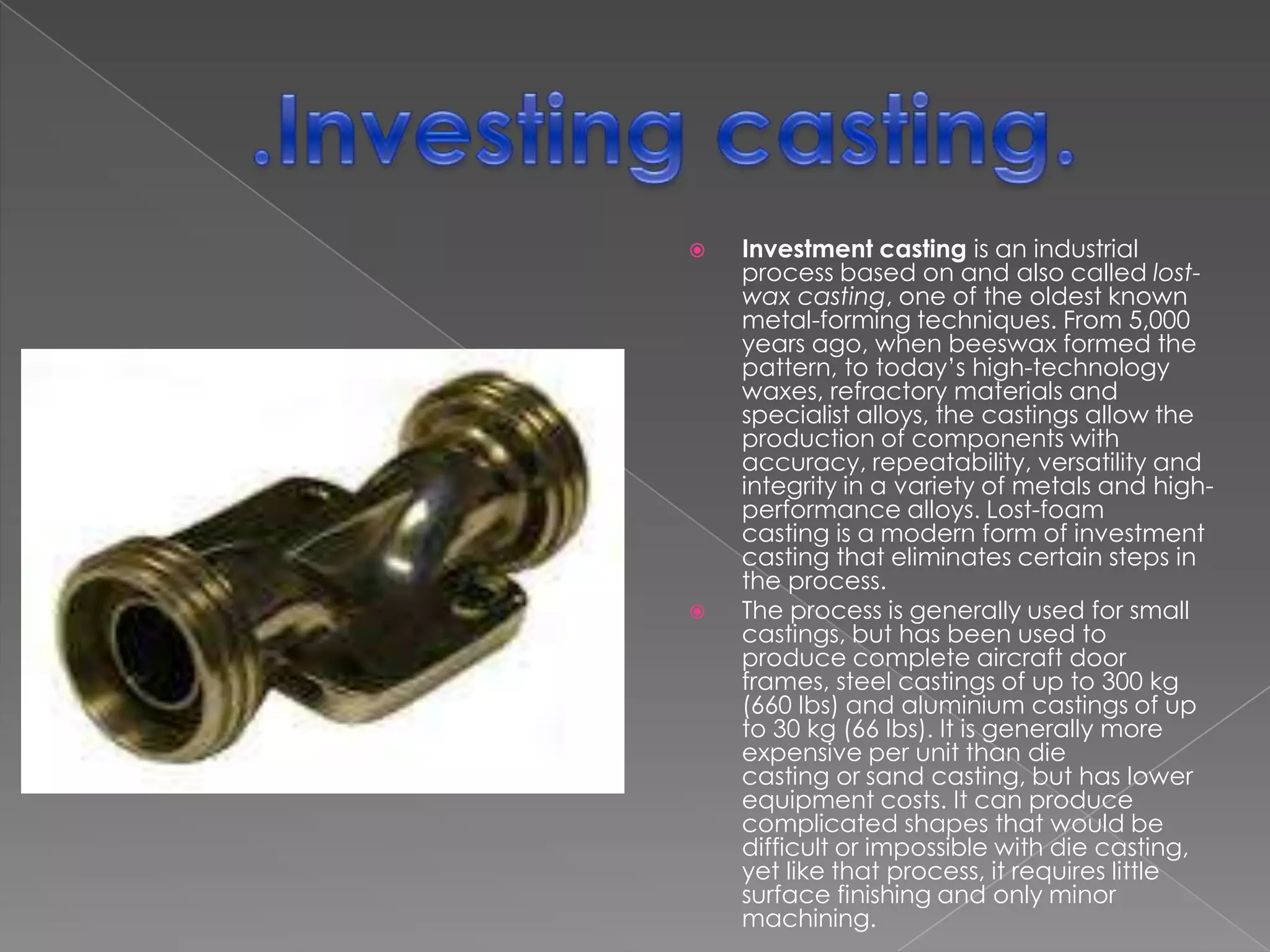
Investment casting is an industrial
process based on and also called lostwax casting, one of the oldest known
metal-forming techniques. From 5,000
years ago, when beeswax formed the
pattern, to today’s high-technology
waxes, refractory materials and
specialist alloys, the castings allow the
production of components with
accuracy, repeatability, versatility and
integrity in a variety of metals and highperformance alloys. Lost-foam
casting is a modern form of investment
casting that eliminates certain steps in
the process.
The process is generally used for small
castings, but has been used to
produce complete aircraft door
frames, steel castings of up to 300 kg
(660 lbs) and aluminium castings of up
to 30 kg (66 lbs). It is generally more
expensive per unit than die
casting or sand casting, but has lower
equipment costs. It can produce
complicated shapes that would be
difficult or impossible with die casting,
yet like that process, it requires little
surface finishing and only minor
machining.




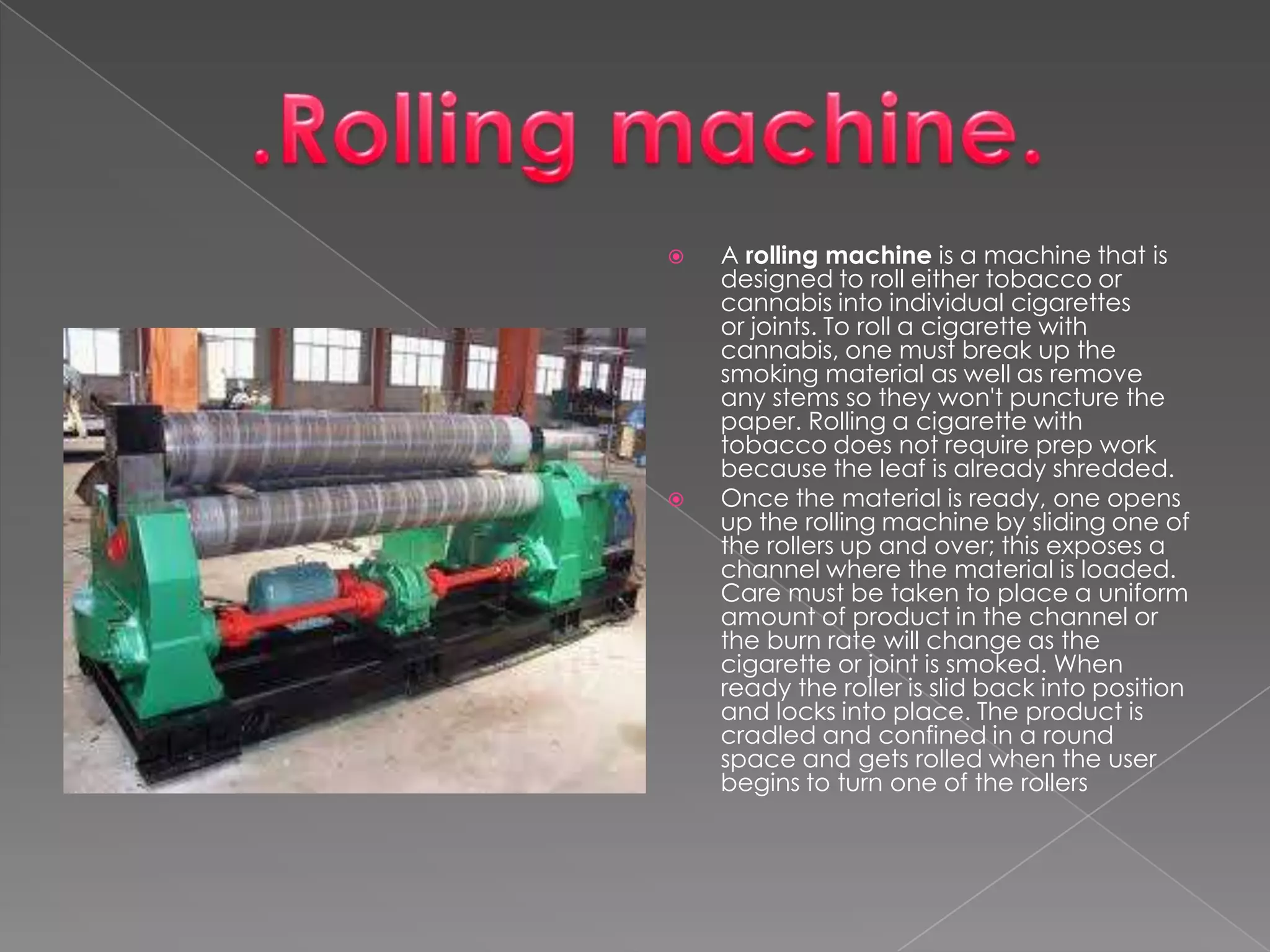
A rolling machine is a machine that is
designed to roll either tobacco or
cannabis into individual cigarettes
or joints. To roll a cigarette with
cannabis, one must break up the
smoking material as well as remove
any stems so they won't puncture the
paper. Rolling a cigarette with
tobacco does not require prep work
because the leaf is already shredded.
Once the material is ready, one opens
up the rolling machine by sliding one of
the rollers up and over; this exposes a
channel where the material is loaded.
Care must be taken to place a uniform
amount of product in the channel or
the burn rate will change as the
cigarette or joint is smoked. When
ready the roller is slid back into position
and locks into place. The product is
cradled and confined in a round
space and gets rolled when the user
begins to turn one of the rollers
New trends in foundry technologies

New trends in foundry technologies

  • 3.
    Foundry consist machinery, man power , advance technology etc.  Foundry contain mainly metal casting , furnace ,molding and other process[production]  After all of that,  New technologies and techniques enter in foundry and factories. 
  • 4.
    A foundry isa factory that produces metal castings. Metals are cast into shapes by melting them into a liquid, pouring the metal in a mold, and removing the mold material or casting after the metal has solidified as it cools. The most common metals processed area aluminium and cast iron. However, other metals, such as bronze , brass steel, magnesium, and zinc are also used to produce castings in foundries. In this process, parts of desired shapes and sizes can be formed.
  • 5.
     Molding is theprocess of manufacturing by shaping pliable raw material using a rigid frame or model called a pattern. A mold or mould is a hollowed-out block that is filled with a liquid like plastic glass, metal, or ceramics raw materials. The liquid hardens or sets inside the mold, adopting its shape. A mold is the counterpart to a cast. The manufacturer who makes the molds is called the moldmaker
  • 6.
     . In metalworking, castinginvolv es pouring liquid metal into a mold, which contains a hollow cavity of the desired shape, and then allowing it to cool and solidify. The solidified part is also known as a casting, which is ejected or broken out of the mold to complete the process. Metal casting is one of the most common casting processes. Metal patterns are more expensive but are more dimensionally stable and durable. Metallic patterns are used where repetitive production of castings is required in large
  • 7.
      A blast furnaceis a type of metallurgical furnace used for smelting to produce industrial metals, generally iron. In a blast furnace, fuel, ore, and flux (limestone) are continuously supplied through the top of the furnace, while air (sometimes with oxygen enrichment) is blown into the lower section of the furnace, so that the chemical reactions take place throughout the furnace as the material moves downward. The end products are usually molten metal and slag phases tapped from the bottom, and flue gases exiting from the top of the furnace. The downward flow of the ore and flux in contact with an up flow of hot, carbon monoxide-rich combustion gases is a countercurrent exchange process.
  • 9.
            We need morenew and more advance but 1901-1999 there is no more advance technologies and techniques. So there are lot of losses. 1.more work 2.lot of man power 3.lot of money for buy machines 4.lot of space occupy old type factory 5.only one way of earning money 6.not so good productivity
  • 10.
    When different techniquesand technologies entered in factory then lot of benefits are creates for all of us.  1.less work  2.less time  3.less money [low cost machine]  4.less man power  5.more ways of earning  6.good productivity 
  • 11.
    Lenaal AndrzejPokusa isan aluminum and zinc diecaster at Radom, in central Poland, and like automotive suppliers everywhere it seeks technology and process advantages to enhance its market position. Lately, it is saving costs and improving its processes with a new tilting melting and holding furnace operation. The StrikoMelter MH II system was developed in Germany by StrikoWestofen, and assembled at its factory in Strzelce Opolskie, Poland.
  • 12.
     Material handling equipment isequipment that relate to the movement, storage, control and protection of materials, goods and products throughout the process of manufacturing, distribution, consumption and disposal. Material handling equipment is the mechanical equipment involved in the complete system. Material handling equipment is generally separated into four main categories: storage and handling equipment, engineered systems, industrial trucks, and bulk material handling.
  • 13.
      Investment casting isan industrial process based on and also called lostwax casting, one of the oldest known metal-forming techniques. From 5,000 years ago, when beeswax formed the pattern, to today’s high-technology waxes, refractory materials and specialist alloys, the castings allow the production of components with accuracy, repeatability, versatility and integrity in a variety of metals and highperformance alloys. Lost-foam casting is a modern form of investment casting that eliminates certain steps in the process. The process is generally used for small castings, but has been used to produce complete aircraft door frames, steel castings of up to 300 kg (660 lbs) and aluminium castings of up to 30 kg (66 lbs). It is generally more expensive per unit than die casting or sand casting, but has lower equipment costs. It can produce complicated shapes that would be difficult or impossible with die casting, yet like that process, it requires little surface finishing and only minor machining.
  • 14.
      A rolling machineis a machine that is designed to roll either tobacco or cannabis into individual cigarettes or joints. To roll a cigarette with cannabis, one must break up the smoking material as well as remove any stems so they won't puncture the paper. Rolling a cigarette with tobacco does not require prep work because the leaf is already shredded. Once the material is ready, one opens up the rolling machine by sliding one of the rollers up and over; this exposes a channel where the material is loaded. Care must be taken to place a uniform amount of product in the channel or the burn rate will change as the cigarette or joint is smoked. When ready the roller is slid back into position and locks into place. The product is cradled and confined in a round space and gets rolled when the user begins to turn one of the rollers