Chemical machining
12 MECHANICAL
MANUFACTURING TECHNOLOGY II
PRESENTEDBY:
ASLAMSOLANGI K-12ME55
outlines
 Introduction
 CM-Process steps
1. Preparing
2. Masking
3. Etching
4. Removing mask
5. Finish
 Maskants
 Etchants
 Advantages
 Disadvantages
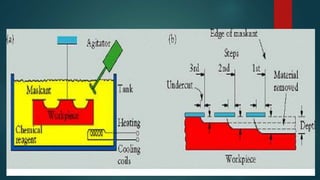
Chemical machining
 Chemical machining is a well known nontraditional
machining process is the controlled chemical dissolution of
the machined workpiece material by contact with a strong
acidic or alkaline chemical reagent.
 Special coatings called maskants protect areas from which
the metal is not to be removed.
 The process is used to produce pockets and contours and to
remove materials from parts having a high strength-to-
weight ratio.
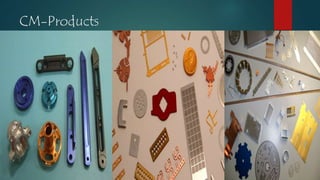
CM-Products
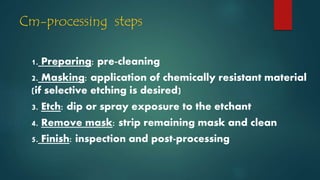
Cm-processing steps
1. Preparing: pre-cleaning
2. Masking: application of chemically resistant material
(if selective etching is desired)
3. Etch: dip or spray exposure to the etchant
4. Remove mask: strip remaining mask and clean
5. Finish: inspection and post-processing
1. Workpiece preparation
 The work piece material has to be cleaned in the beginning
of chemical machining process.
 The cleaning operation is earned out to remove the oil,
grease, dust, rust or any substance from the surface of
material.
 A good cleaning process produces a good adhesion of the
masking material.
 There are two cleaning methods: mechanical and chemical
methods.
 Mechanical and chemical methods
Mechanical cleaning methods consist of physically
disturbing and contaminants, as with wire or fiber
brushing, dry or wet abrasive blasting, tumbling and
steam jets. These processes are used to remove rust,
scale and other solid contaminants.
Chemical cleaning methods usually involve the removal
of oil and grease from workpiece surfaces. They consists
of solution, saponification, emulsifition, dispersion and
aggregation.
2. Coating with masking material
 The next step is the coating cleaned workpiece
material with masking material.
 The selected masking material should be readily
strippable mask, which is chemically impregnable
(impenetrable) and adherent enough to stand
chemical abrasion during etching.
3. Scribing of the mask
 This step is guided by templates to expose the areas that
receive chemical machining process.
 The selection of mask depends on the size of the
workpiece material, the number of parts to be produced,
and the desired detail geometry.
4. Etching
 This step is the most important stage to produce the required
component from the sheet material.
 This stage is carried out by immerse type etching machine.
 The workpiece material is immersed into selected etchant and
the uncovered areas were machined.
 This process is generally carried out in elevated temperatures
which are depended on the etched material.
 Then the etched workpiece is rinsed to clean etchant from
machined surface.
5. Cleaning masking material
Final step is to remove masking material from
etched part. The inspections of the dimensions
and surface quality are completed before
packaging the finished part.
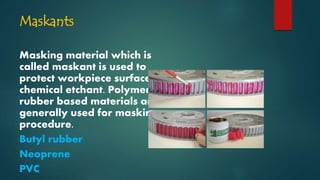
Maskants
Masking material which is
called maskant is used to
protect workpiece surface from
chemical etchant. Polymer or
rubber based materials are
generally used for masking
procedure.
Butyl rubber
Neoprene
PVC
The selected maskant material should have
following properties
 Tough enough to withstand handling
 Well adhering to the workpiece surface
 Easy scribing
 Inert to the chemical reagent used
 Able to withstand the heat used during chemical
machining
 Easy and inexpensive removal after chemical
machining etching
Maskants
 Multiple maskant coatings are used to provide a higher
etchant resistance.
 Long exposure time is needed when thicker and rougher
dip or spray coatings are used.
 Various maskant application methods can be used such
as dip, brush, spray, and electro coating as well as
adhesive tapes.
ECHANTS
Etchants are the most
influential factor in the
chemical machining of
any material. Various
etchant are available
due to workpiece
material.
Ferric chloride (FeCl3)
Cupric chloride (CuCl2)
etchant should have properties as follow
 High etch rate
 Good surface finish
 Minimum undercut
 Compatibility with commonly used Maskants
 High dissolved-material capacity
 Economic regeneration
 Easy control of process.
 Personal safety maintenance
Advantages of chemical machining
 Easy weight reduction
 No effect of workpiece materials properties such as hardness
 Simultaneous material removal operation
 No burr formation
 No stress introduction to the workpiece
 Low capital cost of equipment
 Requirement of less skilled worker
 Low tooling costs
 The good surface quality
 Using decorative part production
 Low scrap rates (3%).
disadvantages of chemical machining
 Difficult to get sharp corner
 Difficult to chemically machine thick material (limit is
depended on workpiece material, but the thickness
should be around maximum 10 mm)
 Scribing accuracy is very limited, causes less
dimensional accuracy
 Etchants are very dangerous for workers
 Etchant disposals are very expensive
Chemical machining

Chemical machining

  • 1.
    Chemical machining 12 MECHANICAL MANUFACTURINGTECHNOLOGY II PRESENTEDBY: ASLAMSOLANGI K-12ME55
  • 2.
    outlines  Introduction  CM-Processsteps 1. Preparing 2. Masking 3. Etching 4. Removing mask 5. Finish  Maskants  Etchants  Advantages  Disadvantages
  • 3.
    Chemical machining  Chemicalmachining is a well known nontraditional machining process is the controlled chemical dissolution of the machined workpiece material by contact with a strong acidic or alkaline chemical reagent.  Special coatings called maskants protect areas from which the metal is not to be removed.  The process is used to produce pockets and contours and to remove materials from parts having a high strength-to- weight ratio.
  • 4.
  • 5.
    Cm-processing steps 1. Preparing:pre-cleaning 2. Masking: application of chemically resistant material (if selective etching is desired) 3. Etch: dip or spray exposure to the etchant 4. Remove mask: strip remaining mask and clean 5. Finish: inspection and post-processing
  • 6.
    1. Workpiece preparation The work piece material has to be cleaned in the beginning of chemical machining process.  The cleaning operation is earned out to remove the oil, grease, dust, rust or any substance from the surface of material.  A good cleaning process produces a good adhesion of the masking material.  There are two cleaning methods: mechanical and chemical methods.  Mechanical and chemical methods
  • 7.
    Mechanical cleaning methodsconsist of physically disturbing and contaminants, as with wire or fiber brushing, dry or wet abrasive blasting, tumbling and steam jets. These processes are used to remove rust, scale and other solid contaminants. Chemical cleaning methods usually involve the removal of oil and grease from workpiece surfaces. They consists of solution, saponification, emulsifition, dispersion and aggregation.
  • 8.
    2. Coating withmasking material  The next step is the coating cleaned workpiece material with masking material.  The selected masking material should be readily strippable mask, which is chemically impregnable (impenetrable) and adherent enough to stand chemical abrasion during etching.
  • 9.
    3. Scribing ofthe mask  This step is guided by templates to expose the areas that receive chemical machining process.  The selection of mask depends on the size of the workpiece material, the number of parts to be produced, and the desired detail geometry.
  • 10.
    4. Etching  Thisstep is the most important stage to produce the required component from the sheet material.  This stage is carried out by immerse type etching machine.  The workpiece material is immersed into selected etchant and the uncovered areas were machined.  This process is generally carried out in elevated temperatures which are depended on the etched material.  Then the etched workpiece is rinsed to clean etchant from machined surface.
  • 12.
    5. Cleaning maskingmaterial Final step is to remove masking material from etched part. The inspections of the dimensions and surface quality are completed before packaging the finished part.
  • 13.
    Maskants Masking material whichis called maskant is used to protect workpiece surface from chemical etchant. Polymer or rubber based materials are generally used for masking procedure. Butyl rubber Neoprene PVC
  • 14.
    The selected maskantmaterial should have following properties  Tough enough to withstand handling  Well adhering to the workpiece surface  Easy scribing  Inert to the chemical reagent used  Able to withstand the heat used during chemical machining  Easy and inexpensive removal after chemical machining etching
  • 15.
    Maskants  Multiple maskantcoatings are used to provide a higher etchant resistance.  Long exposure time is needed when thicker and rougher dip or spray coatings are used.  Various maskant application methods can be used such as dip, brush, spray, and electro coating as well as adhesive tapes.
  • 16.
    ECHANTS Etchants are themost influential factor in the chemical machining of any material. Various etchant are available due to workpiece material. Ferric chloride (FeCl3) Cupric chloride (CuCl2)
  • 17.
    etchant should haveproperties as follow  High etch rate  Good surface finish  Minimum undercut  Compatibility with commonly used Maskants  High dissolved-material capacity  Economic regeneration  Easy control of process.  Personal safety maintenance
  • 18.
    Advantages of chemicalmachining  Easy weight reduction  No effect of workpiece materials properties such as hardness  Simultaneous material removal operation  No burr formation  No stress introduction to the workpiece  Low capital cost of equipment  Requirement of less skilled worker  Low tooling costs  The good surface quality  Using decorative part production  Low scrap rates (3%).
  • 19.
    disadvantages of chemicalmachining  Difficult to get sharp corner  Difficult to chemically machine thick material (limit is depended on workpiece material, but the thickness should be around maximum 10 mm)  Scribing accuracy is very limited, causes less dimensional accuracy  Etchants are very dangerous for workers  Etchant disposals are very expensive