SPECIAL PURPOSE
MACHINE
Submitted by:
Nishit N Ambule
13MT07IND008
Guided by,
Prof. Dr. Y. M. Puri
Department of Mechanical Engineering
VNIT, Nagpur
INTRODUCTION:
 SPM is designed specifically for exact requirement of component to
be processed or machined.
 It is used to manufacture special type of products.
 Generally used in mass production environment.
 SPM tools are designed to perform special machining operations,
usually for production purposes. Examples include gear-cutting and
gear-grinding machines, broaching machines, lapping and honing
machines, and boring machines.
 Special purpose machinery, as the name suggests, is
constructed for some very particular purpose.
 These machines are not built en masse as is the case with
most types of machinery and are custom made.
 the special purpose machine would be created to serve a
very particular purpose in the bigger scheme of things.
Why do people order special purpose machines as
against mass produced machines?
 special purpose machines are in demand because they do the job
they are created for more efficiently when compared against mass
produced machines available in the market.
 This efficiency can be measured in two ways. In different words,
people order special purpose machines for two reasons.
1. The first is to save money.
 leads to a considerably less amount of investment in the long term.
 lower power consumption.
 less wastage material.
2. The second reason is the aspect of
time
 which is a major commodity when it comes to commercial
industries.
 In fact, indirectly speaking, even the saving of time due to
the use of special purpose machines can be taken as a
way of saving money.
 Therefore, an engineer job in the special purpose
machinery industry would require an engineer to optimize a
process as much as is logically possible with the help of
the machine.
Specific considerations pertaining to special purpose
machines:
 Special purpose machines are almost always designed and created
fresh for one particular purpose which is defined or specified by the client
in question.
 it is very rare for special purpose machines to be alike in terms of size
and capacity, even if they are similar with respect to their functionality.
These variants of the same design are known as ‘modules’.
Fundamentals of SPM technology
 Groover (2008) has defined the term ”production automation” as the
application of electrical, electronic, mechanical, hydraulic and pneumatic
systems for rapid and quality productions in large volumes.
 Automated production techniques are widely used in manufacturing
industries for dealing with issues such as
 high cost of labour,
shortage of skilled people,
 low interest of labour to work in production firms,
 safety,
high cost of raw materials,
 improved quality,
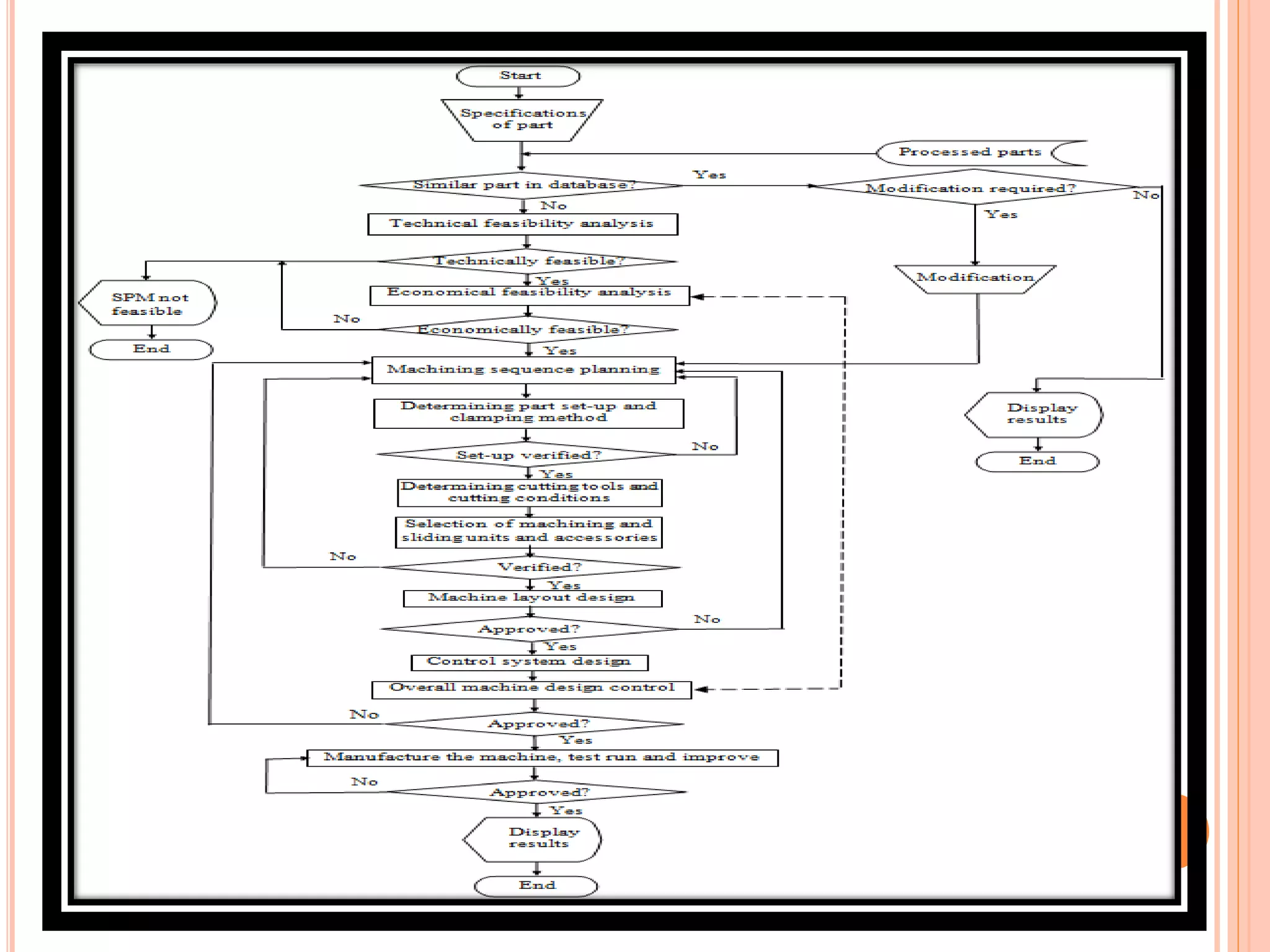
FLOWCHART FOR SPM DESIGN AND
MANUFACTURE
DIFFERENT LAYOUTS OF SPM:
Generally there are two layouts for SPMs; single-station and
multi-station. In the former method the workpiece is held in a
fixed position where machining and sliding units are
positioned around it such that they can process the part from
different directions. In the case of multiple machining units
they may process the part simultaneously or in sequence
depending on the geometry of the workpiece and machining
features.
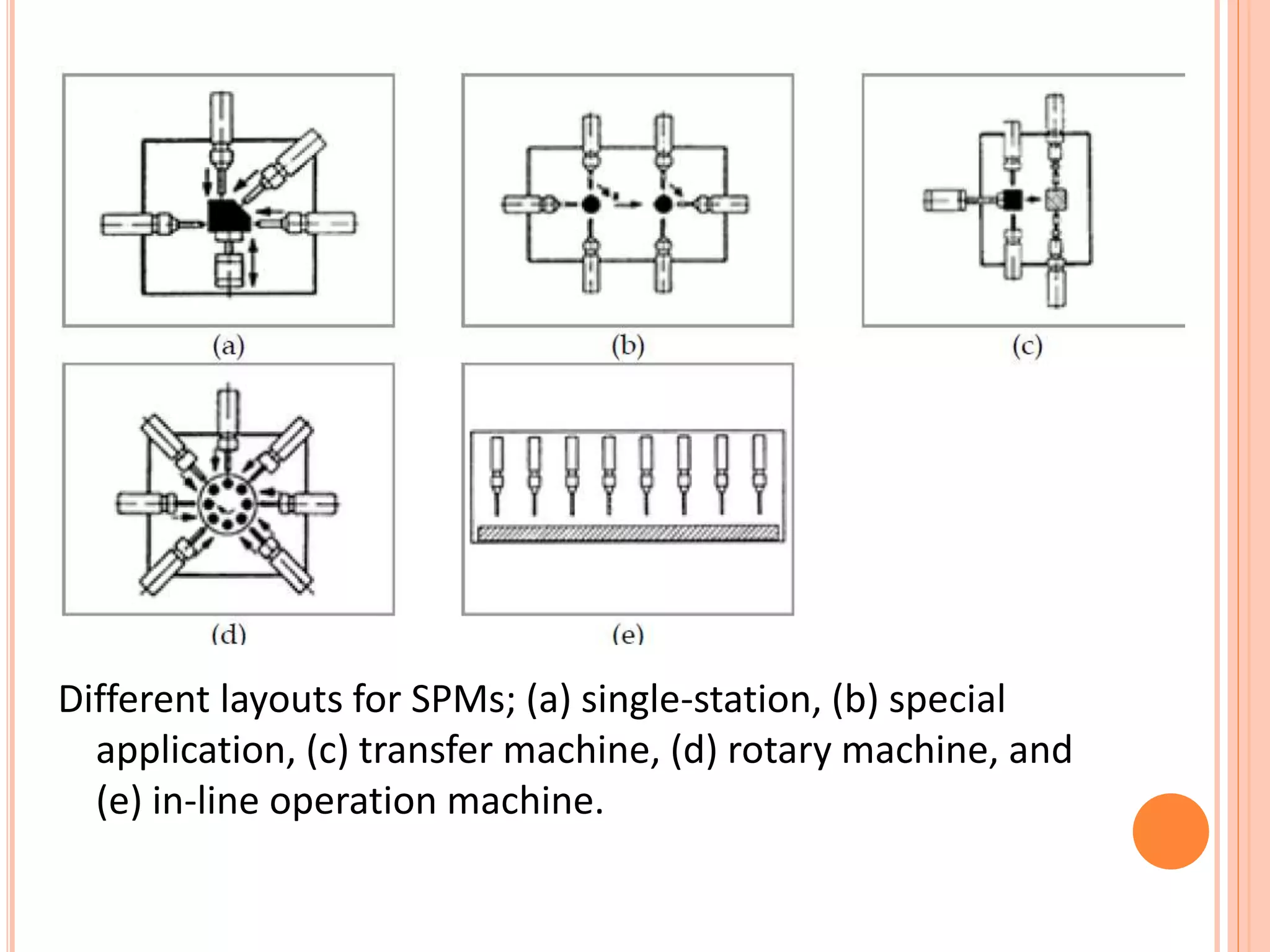
Different layouts for SPMs; (a) single-station, (b) special
application, (c) transfer machine, (d) rotary machine, and
(e) in-line operation machine.
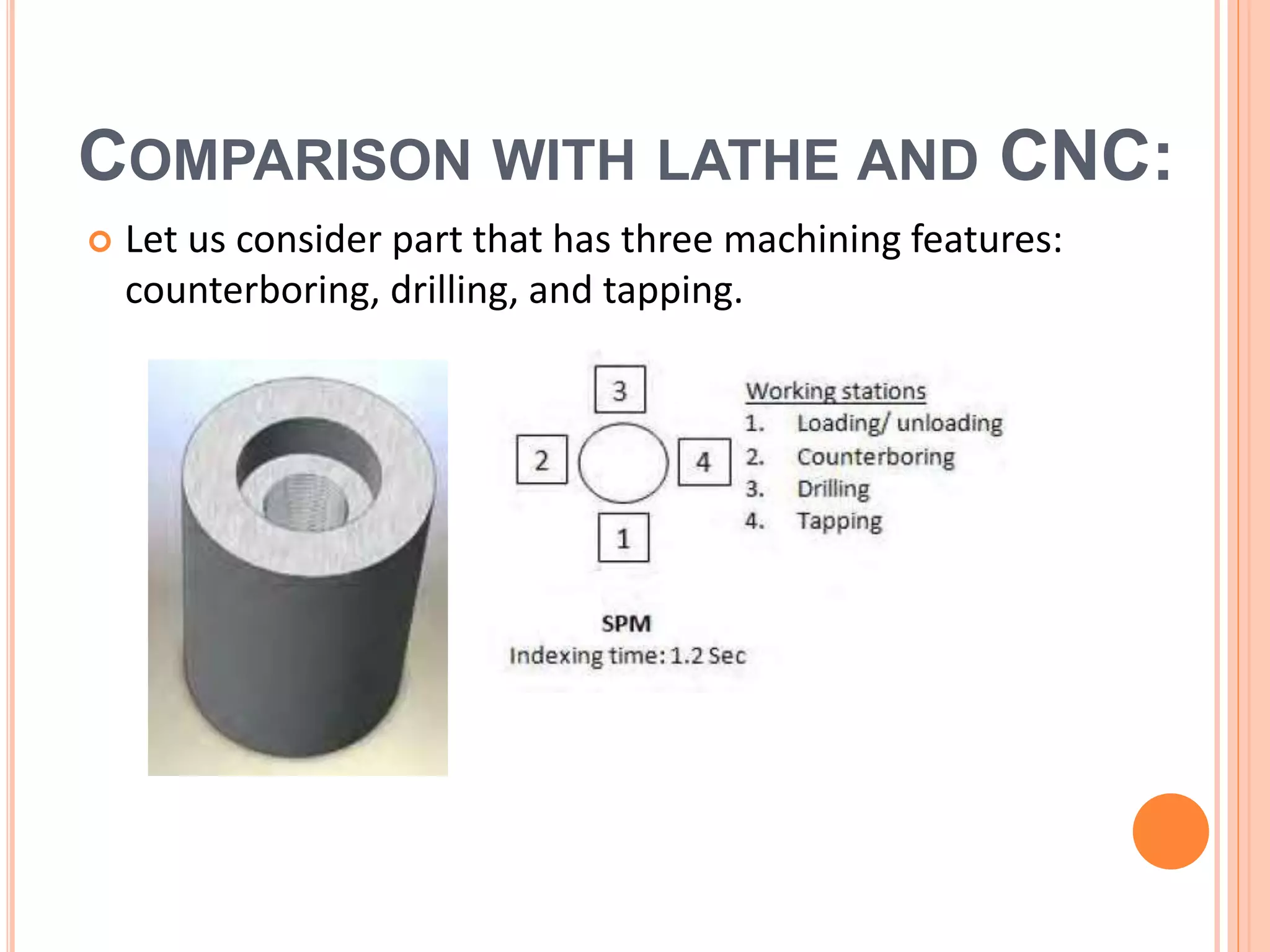
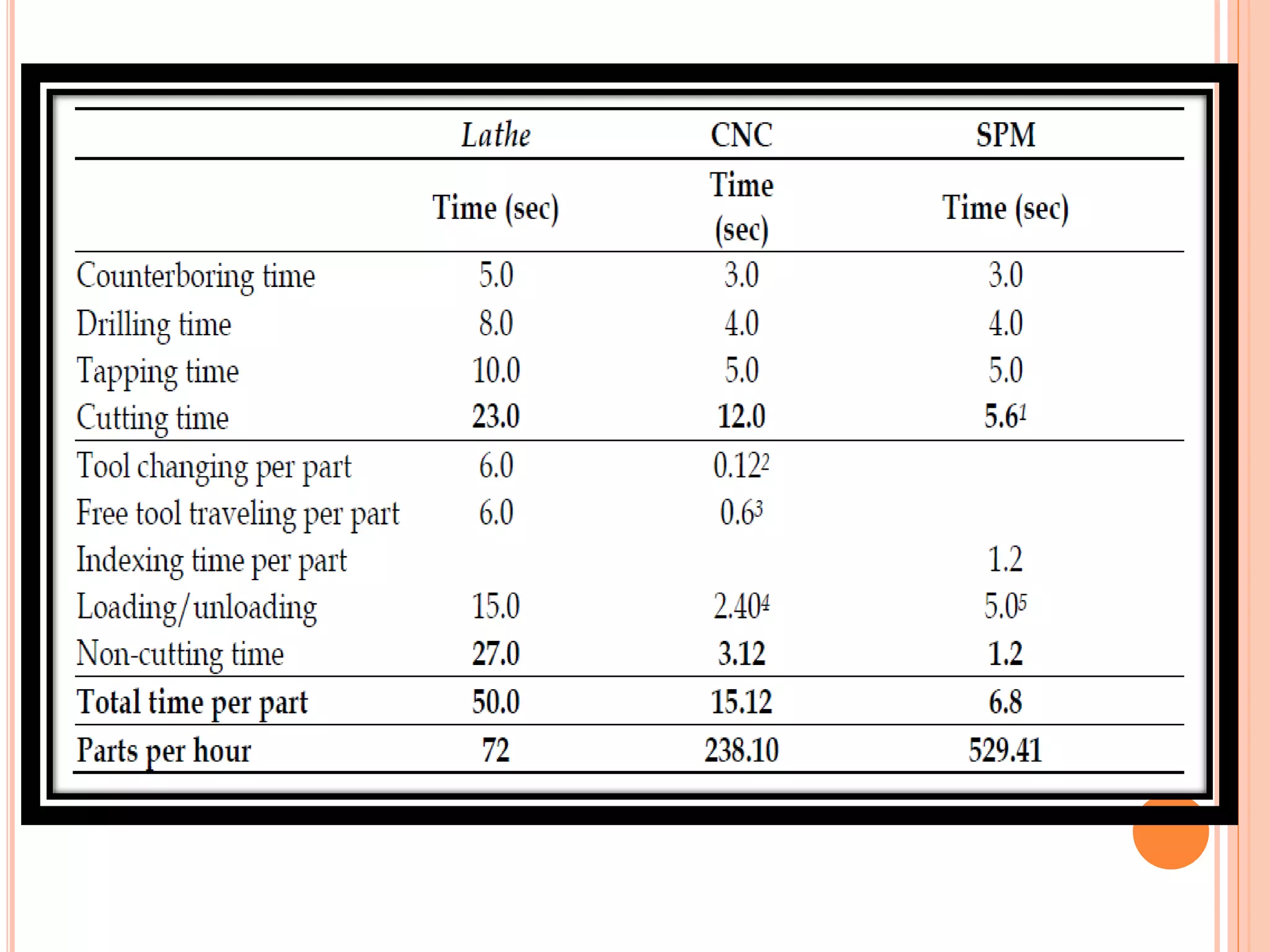
COMPARISON WITH LATHE AND CNC:
 Let us consider part that has three machining features:
counterboring, drilling, and tapping.
VARIOUS TYPES OF SPM:
 SPM for metal cutting.
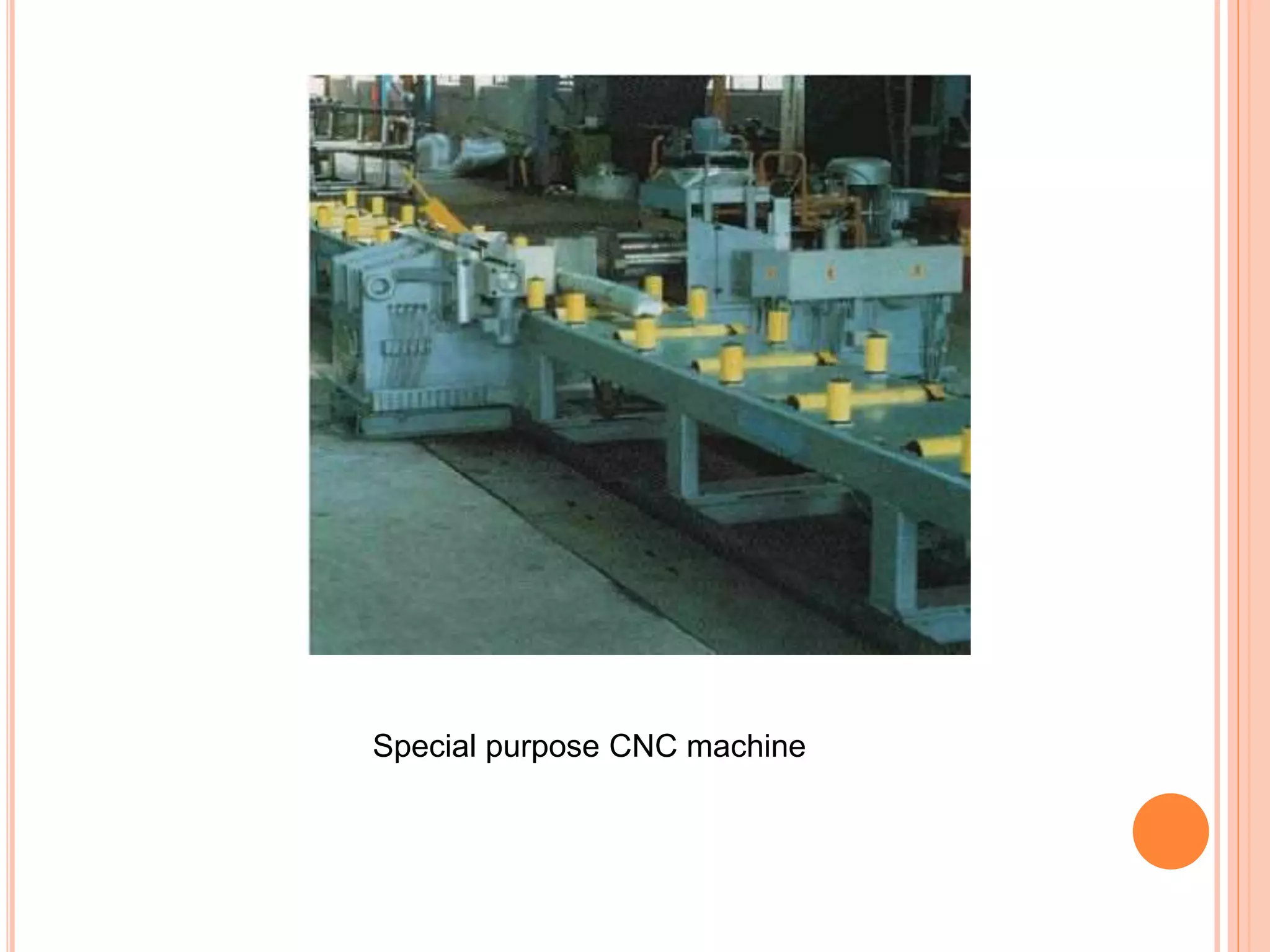
 Special purpose CNC machine.
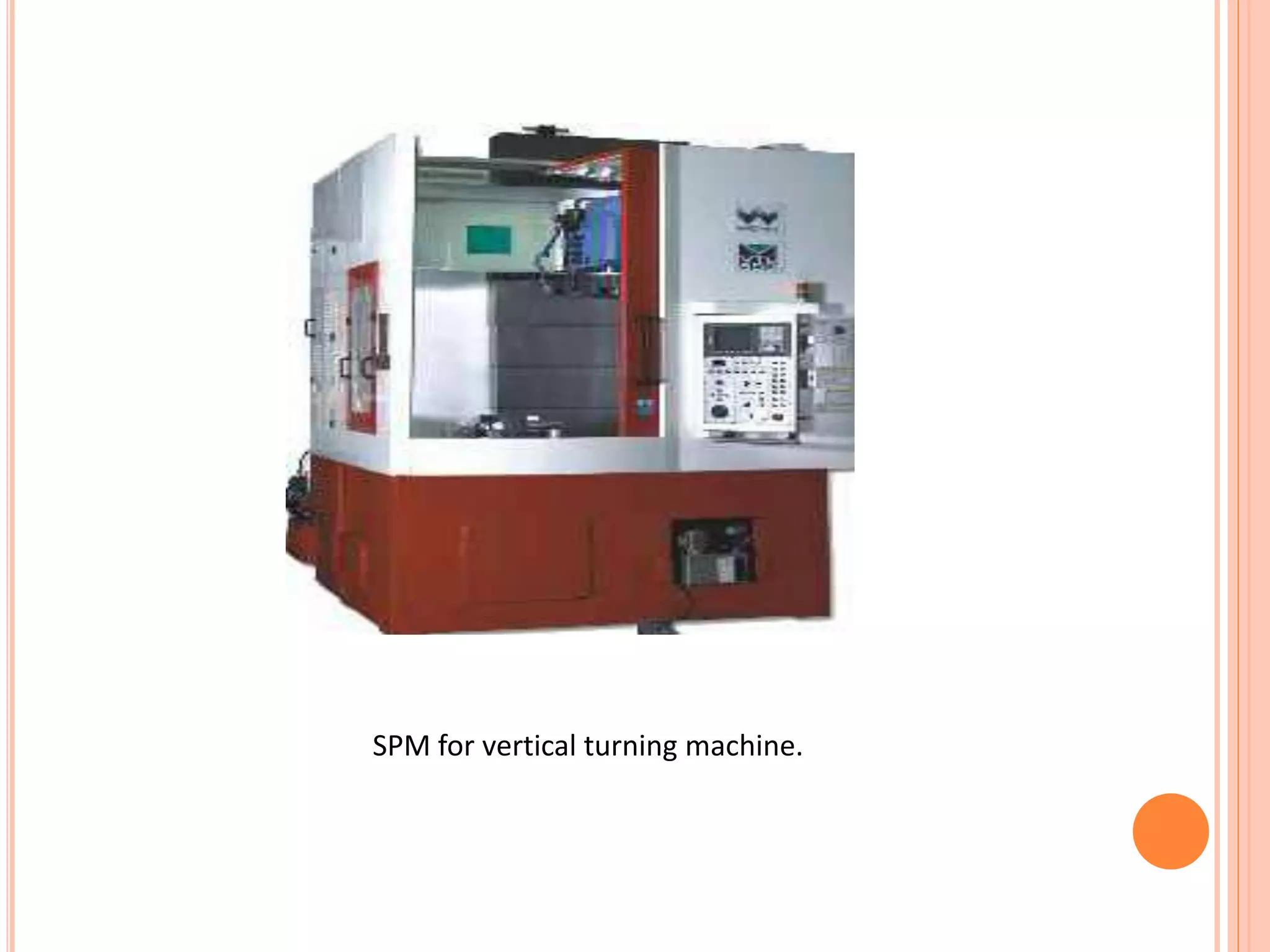
 SPM for vertical turning machine.
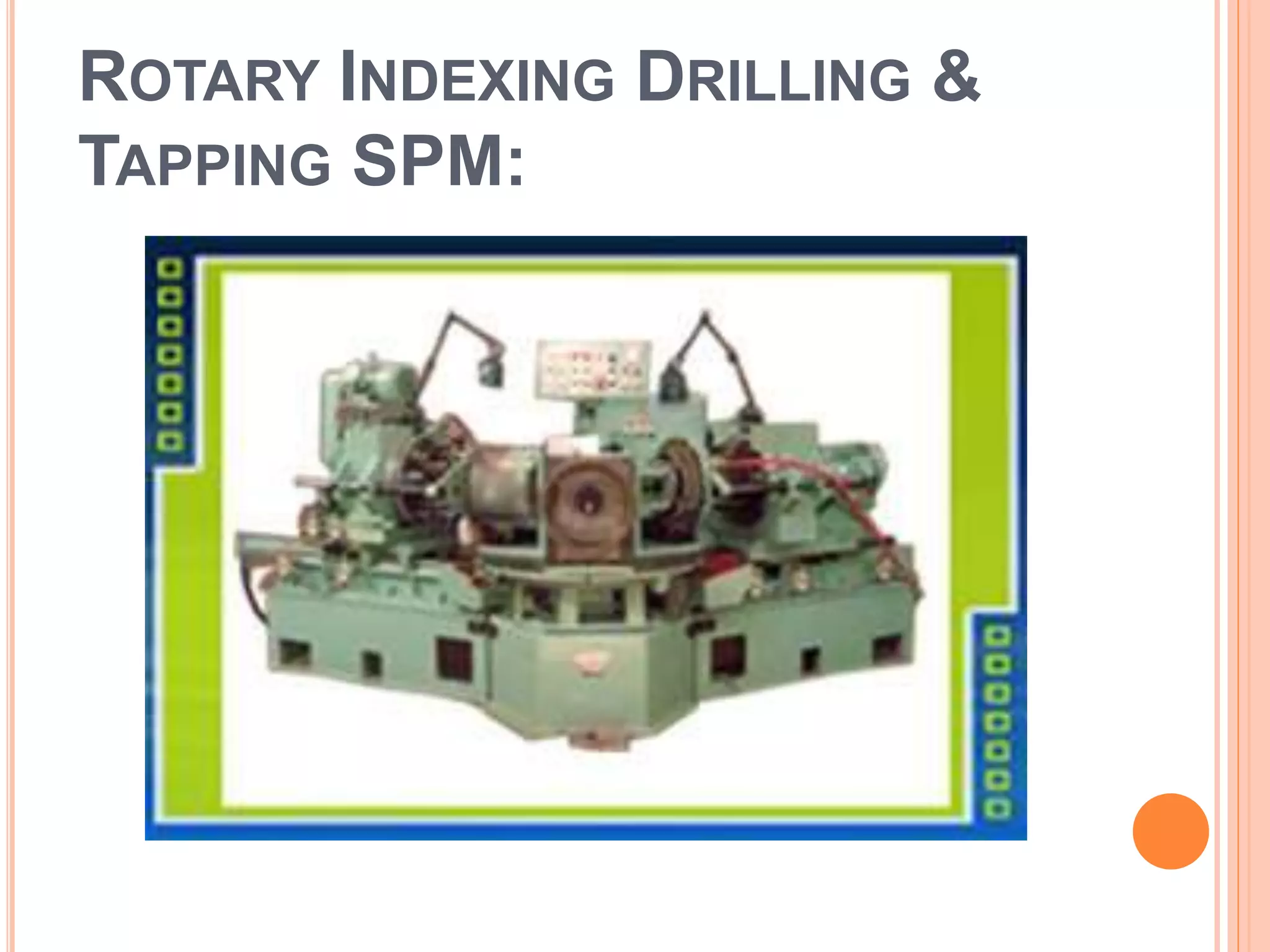
 Rotary Indexing Drilling & Tapping SPM.
 SPMs for multi and simultaneous operations such as Drilling,
Milling, Boring etc.
SPECIAL PURPOSE CNC MACHINE:
 Machining Process
 Component Handling & Holding System
 Particular Fixture For Particular Component Holding
 Component's Measuring
Special purpose CNC machine
SPM FOR VERTICAL TURNING
MACHINE:
SPM for vertical turning machine are designed in three
configurations to suit specific requirement-
 VT- turning machines
 VM- multi tasking turn-mill machines
 VU- 5-axis universal turn-mill machines
SPM for vertical turning machine.
ROTARY INDEXING DRILLING &
TAPPING SPM:
Rotary Indexing Drilling & Tapping SPM.
The Rotary Table has 3 stations -
• Job loading / unloading
• Drilling
• Tapping
ADVANTAGES:
 Increase in productivity.
 Less time consuming.
 Reduces maintenance and servicing cost.
 Increase in production rate and tool life.
 Less complicated.
 High durability.
 Effective in mass production.
LIMITATIONS:
 High initial investment.
 Less flexible.
THANK YOU

nishit ambule special purpose machines presentation

  • 1.
    SPECIAL PURPOSE MACHINE Submitted by: NishitN Ambule 13MT07IND008 Guided by, Prof. Dr. Y. M. Puri Department of Mechanical Engineering VNIT, Nagpur
  • 2.
    INTRODUCTION:  SPM isdesigned specifically for exact requirement of component to be processed or machined.  It is used to manufacture special type of products.  Generally used in mass production environment.  SPM tools are designed to perform special machining operations, usually for production purposes. Examples include gear-cutting and gear-grinding machines, broaching machines, lapping and honing machines, and boring machines.
  • 3.
     Special purposemachinery, as the name suggests, is constructed for some very particular purpose.  These machines are not built en masse as is the case with most types of machinery and are custom made.  the special purpose machine would be created to serve a very particular purpose in the bigger scheme of things.
  • 4.
    Why do peopleorder special purpose machines as against mass produced machines?  special purpose machines are in demand because they do the job they are created for more efficiently when compared against mass produced machines available in the market.  This efficiency can be measured in two ways. In different words, people order special purpose machines for two reasons. 1. The first is to save money.  leads to a considerably less amount of investment in the long term.  lower power consumption.  less wastage material.
  • 5.
    2. The secondreason is the aspect of time  which is a major commodity when it comes to commercial industries.  In fact, indirectly speaking, even the saving of time due to the use of special purpose machines can be taken as a way of saving money.  Therefore, an engineer job in the special purpose machinery industry would require an engineer to optimize a process as much as is logically possible with the help of the machine.
  • 6.
    Specific considerations pertainingto special purpose machines:  Special purpose machines are almost always designed and created fresh for one particular purpose which is defined or specified by the client in question.  it is very rare for special purpose machines to be alike in terms of size and capacity, even if they are similar with respect to their functionality. These variants of the same design are known as ‘modules’.
  • 7.
    Fundamentals of SPMtechnology  Groover (2008) has defined the term ”production automation” as the application of electrical, electronic, mechanical, hydraulic and pneumatic systems for rapid and quality productions in large volumes.  Automated production techniques are widely used in manufacturing industries for dealing with issues such as  high cost of labour, shortage of skilled people,  low interest of labour to work in production firms,  safety, high cost of raw materials,  improved quality,
  • 8.
    FLOWCHART FOR SPMDESIGN AND MANUFACTURE
  • 10.
    DIFFERENT LAYOUTS OFSPM: Generally there are two layouts for SPMs; single-station and multi-station. In the former method the workpiece is held in a fixed position where machining and sliding units are positioned around it such that they can process the part from different directions. In the case of multiple machining units they may process the part simultaneously or in sequence depending on the geometry of the workpiece and machining features.
  • 11.
    Different layouts forSPMs; (a) single-station, (b) special application, (c) transfer machine, (d) rotary machine, and (e) in-line operation machine.
  • 12.
    COMPARISON WITH LATHEAND CNC:  Let us consider part that has three machining features: counterboring, drilling, and tapping.
  • 14.
    VARIOUS TYPES OFSPM:  SPM for metal cutting.  Special purpose CNC machine.  SPM for vertical turning machine.  Rotary Indexing Drilling & Tapping SPM.  SPMs for multi and simultaneous operations such as Drilling, Milling, Boring etc.
  • 15.
    SPECIAL PURPOSE CNCMACHINE:  Machining Process  Component Handling & Holding System  Particular Fixture For Particular Component Holding  Component's Measuring
  • 16.
  • 17.
    SPM FOR VERTICALTURNING MACHINE: SPM for vertical turning machine are designed in three configurations to suit specific requirement-  VT- turning machines  VM- multi tasking turn-mill machines  VU- 5-axis universal turn-mill machines
  • 18.
    SPM for verticalturning machine.
  • 19.
  • 20.
    Rotary Indexing Drilling& Tapping SPM. The Rotary Table has 3 stations - • Job loading / unloading • Drilling • Tapping
  • 21.
    ADVANTAGES:  Increase inproductivity.  Less time consuming.  Reduces maintenance and servicing cost.  Increase in production rate and tool life.  Less complicated.  High durability.  Effective in mass production.
  • 22.
    LIMITATIONS:  High initialinvestment.  Less flexible.
  • 23.