Presentation on:
EXTRUSION DEFECTS
Presented by:
Nishat Riaz
MME-13-27
IAM,BZU,MULTAN
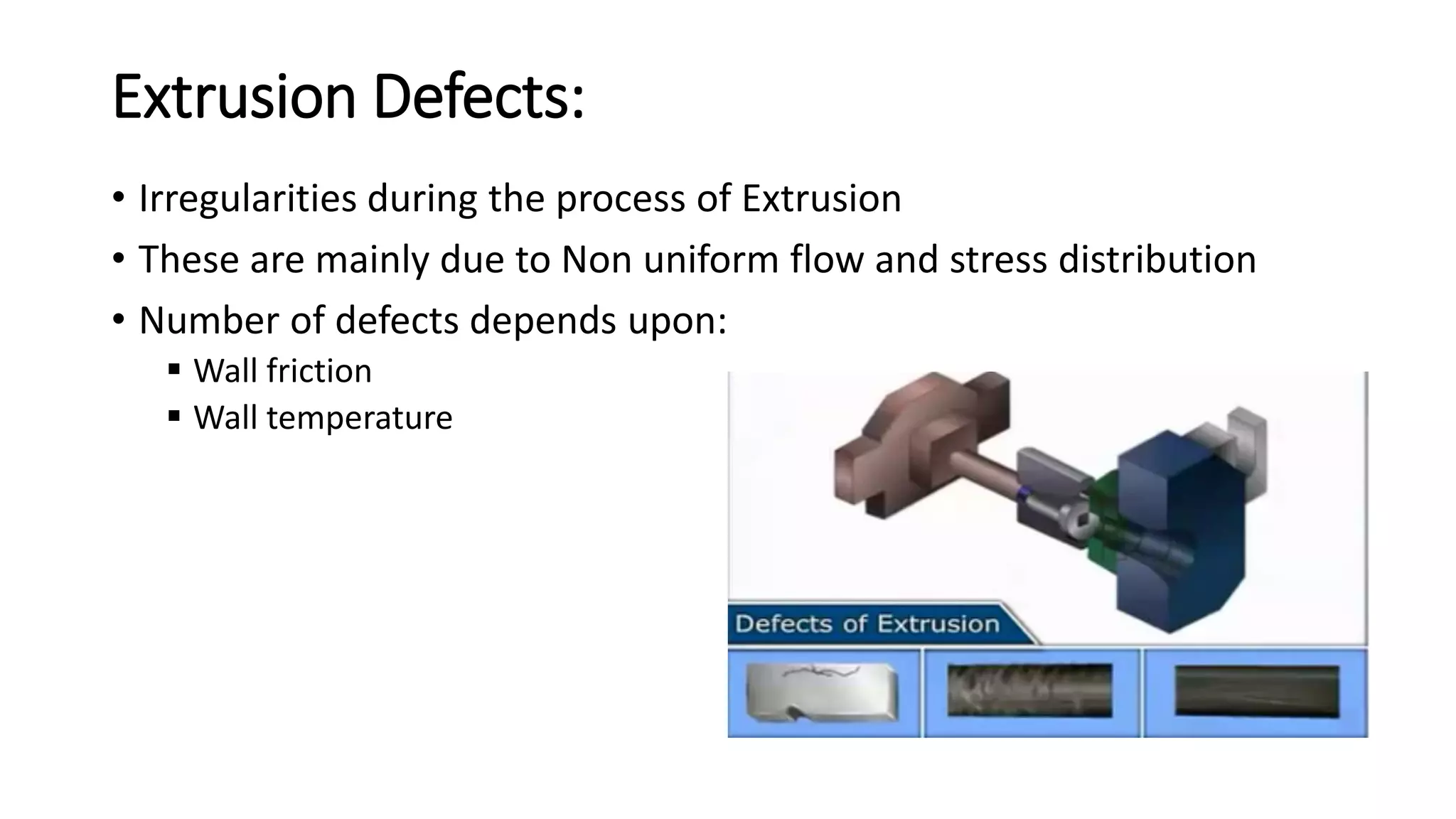
Extrusion Defects:
• Irregularities during the process of Extrusion
• These are mainly due to Non uniform flow and stress distribution
• Number of defects depends upon:
 Wall friction
 Wall temperature
Types of Extrusion defects:
• Surface Cracking
• Internal Cracking
• Piping Defect
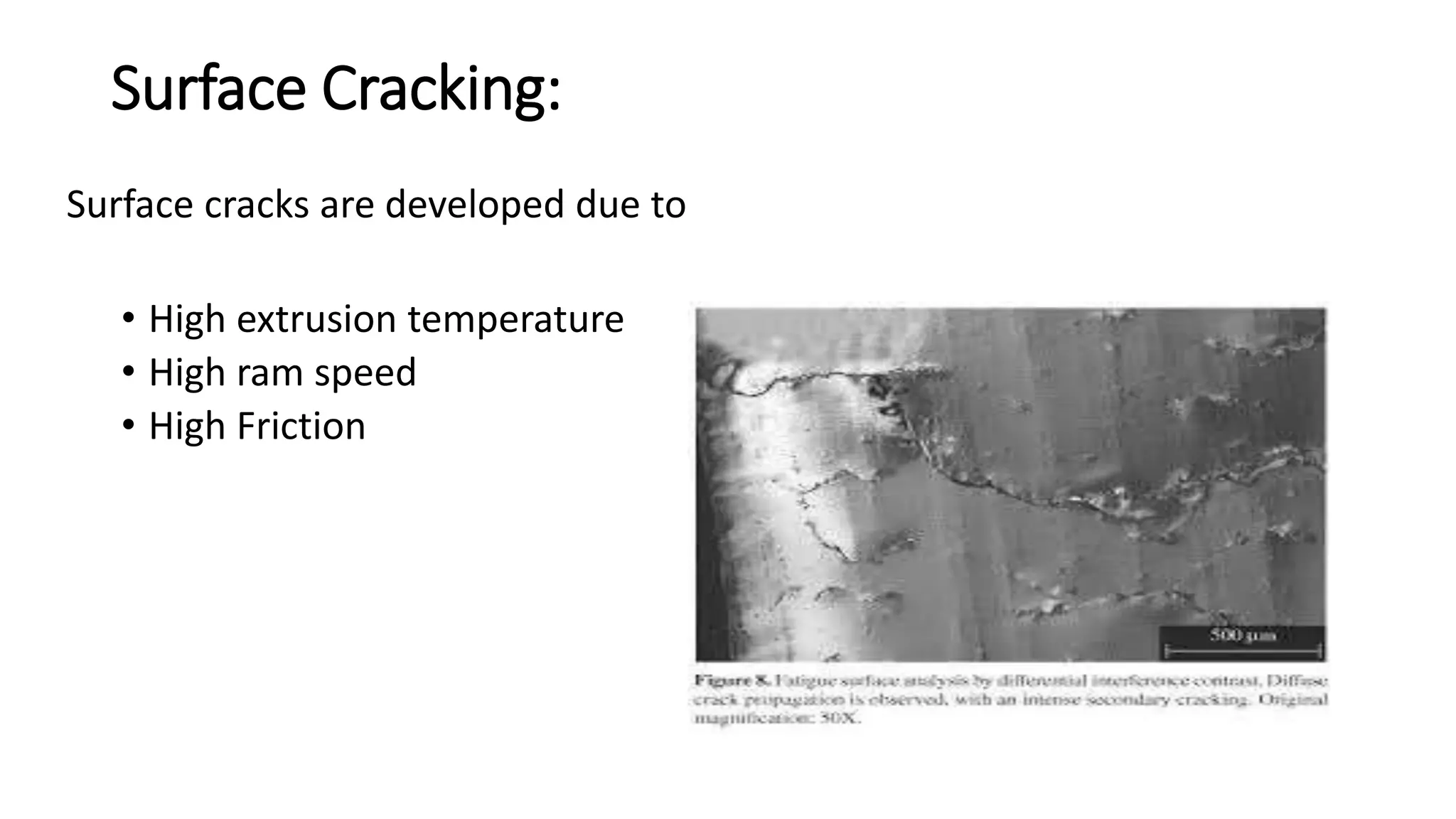
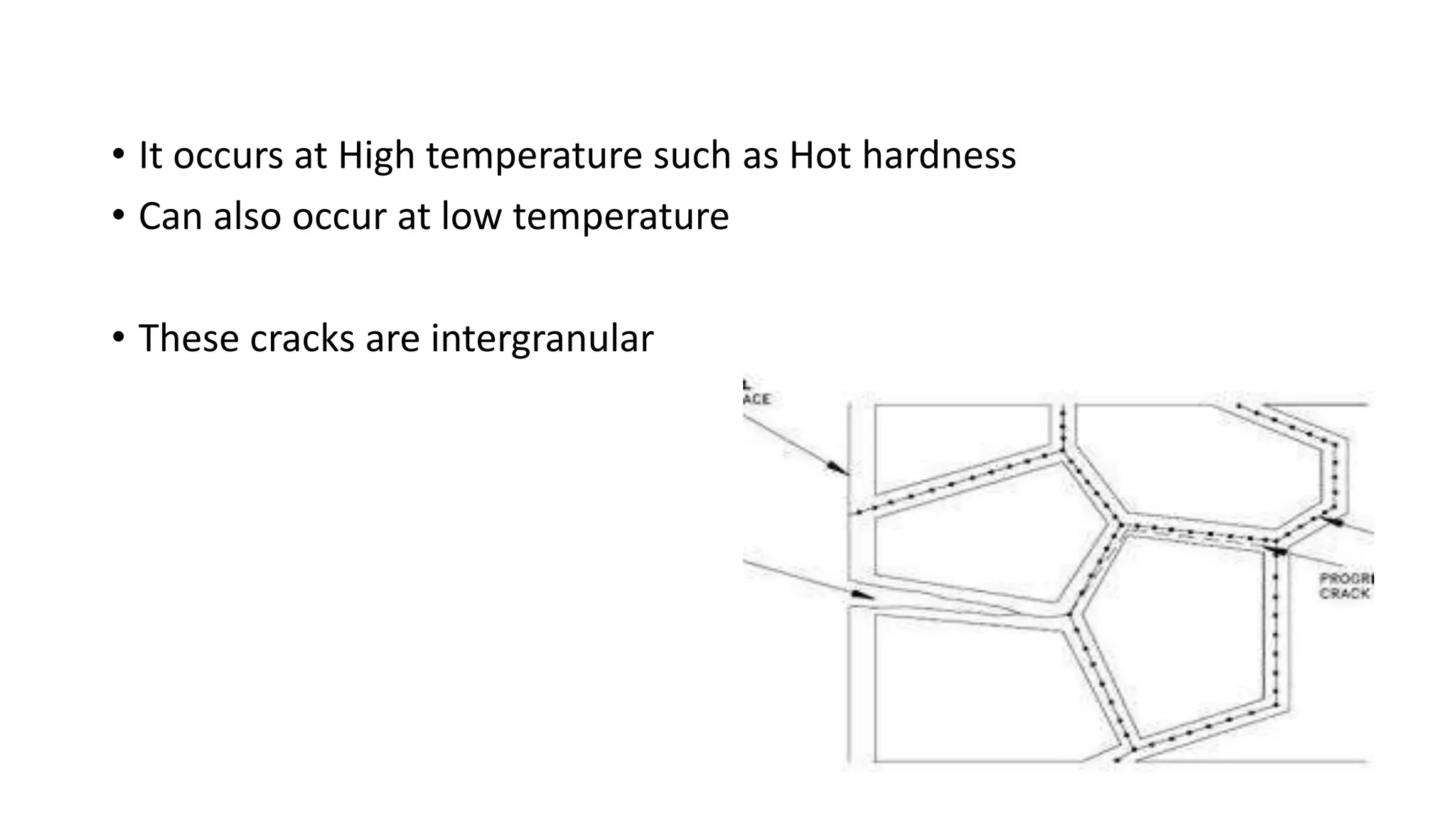
Surface Cracking:
Surface cracks are developed due to
• High extrusion temperature
• High ram speed
• High Friction
• It occurs at High temperature such as Hot hardness
• Can also occur at low temperature
• These cracks are intergranular
Internal Cracking:
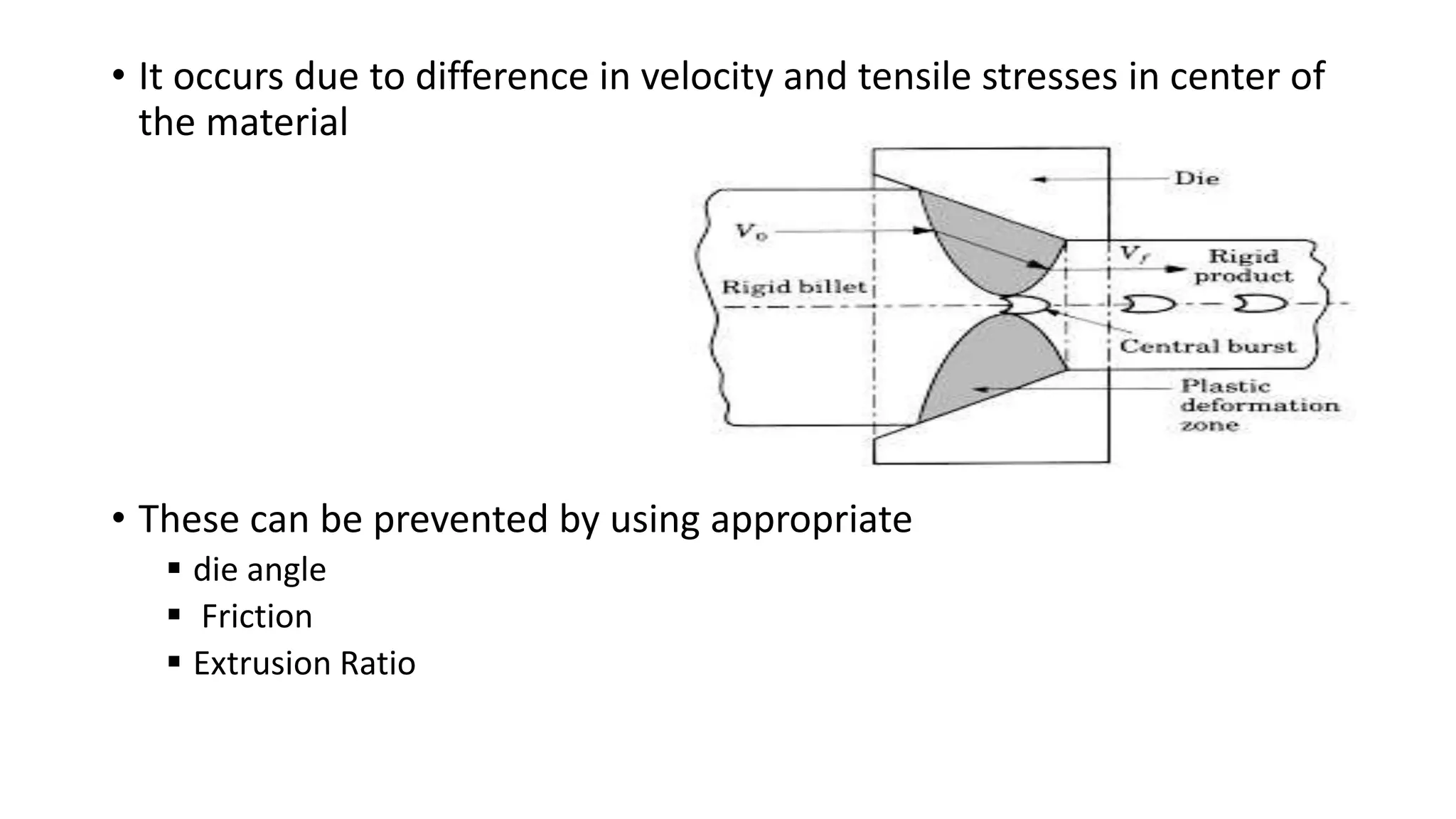
• Cracks are developed in the center of extruded material
• This is also named as
 Center Cracking
 Center Burst
 Chevron Cracking
 Arrow head Cracking
• These are hard to detect in the material
• It occurs due to difference in velocity and tensile stresses in center of
the material
• These can be prevented by using appropriate
 die angle
 Friction
 Extrusion Ratio
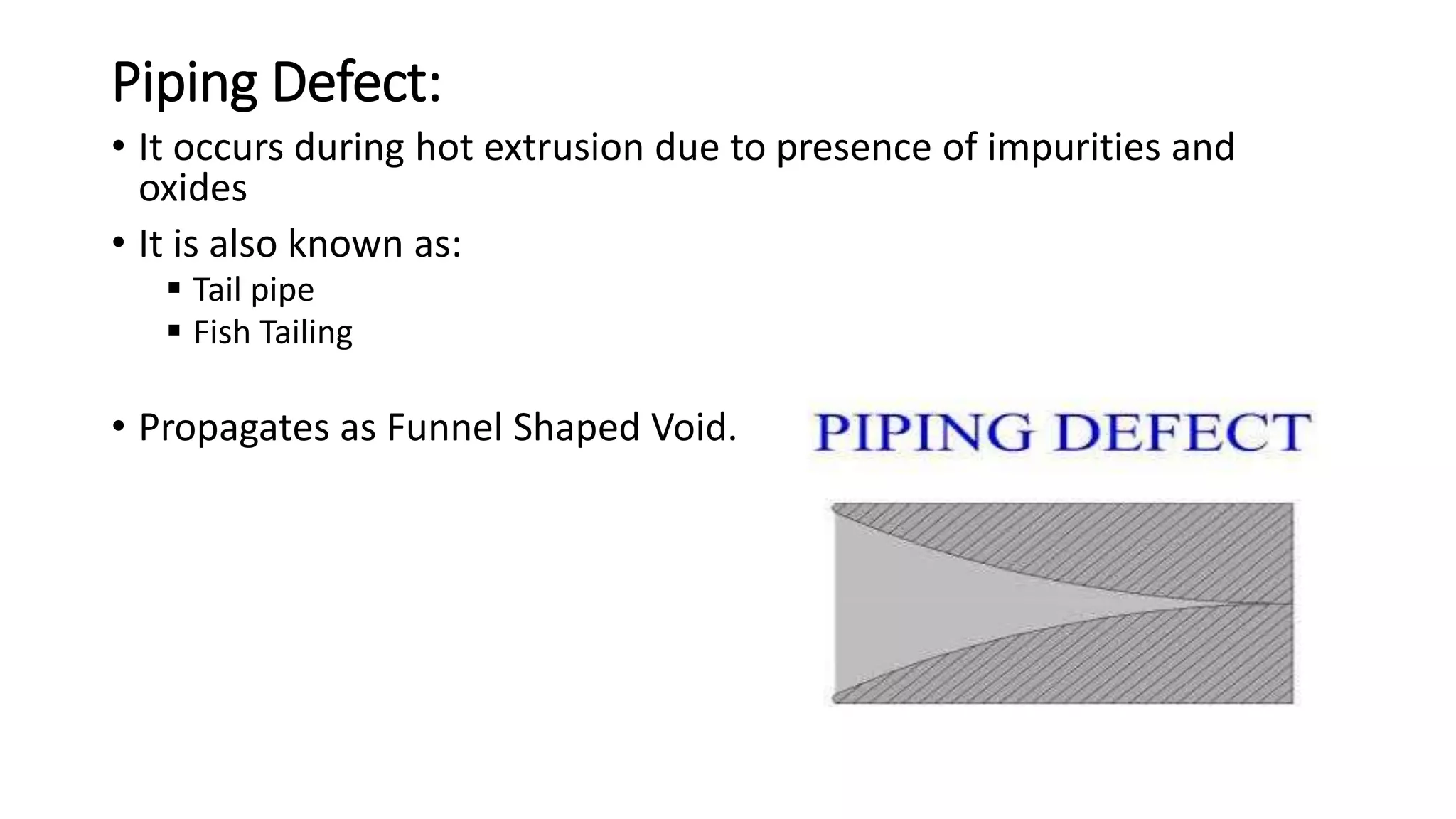
Piping Defect:
• It occurs during hot extrusion due to presence of impurities and
oxides
• It is also known as:
 Tail pipe
 Fish Tailing
• Propagates as Funnel Shaped Void.
• Metal in contact with walls cools down rapidly as compared to center
part resulting in non uniform flow of metal
Prevention:
• Modifying flow pattern by controlling temperature and friction
• Machining billet surface prior to extrusion
• Using dummy block

Extrusion defects

  • 2.
    Presentation on: EXTRUSION DEFECTS Presentedby: Nishat Riaz MME-13-27 IAM,BZU,MULTAN
  • 3.
    Extrusion Defects: • Irregularitiesduring the process of Extrusion • These are mainly due to Non uniform flow and stress distribution • Number of defects depends upon:  Wall friction  Wall temperature
  • 4.
    Types of Extrusiondefects: • Surface Cracking • Internal Cracking • Piping Defect
  • 5.
    Surface Cracking: Surface cracksare developed due to • High extrusion temperature • High ram speed • High Friction
  • 6.
    • It occursat High temperature such as Hot hardness • Can also occur at low temperature • These cracks are intergranular
  • 7.
    Internal Cracking: • Cracksare developed in the center of extruded material • This is also named as  Center Cracking  Center Burst  Chevron Cracking  Arrow head Cracking • These are hard to detect in the material
  • 8.
    • It occursdue to difference in velocity and tensile stresses in center of the material • These can be prevented by using appropriate  die angle  Friction  Extrusion Ratio
  • 9.
    Piping Defect: • Itoccurs during hot extrusion due to presence of impurities and oxides • It is also known as:  Tail pipe  Fish Tailing • Propagates as Funnel Shaped Void.
  • 10.
    • Metal incontact with walls cools down rapidly as compared to center part resulting in non uniform flow of metal
  • 11.
    Prevention: • Modifying flowpattern by controlling temperature and friction • Machining billet surface prior to extrusion • Using dummy block