NEUTRALISATION
Y E A R 1 0 – A C I D S A N D I N D I C AT O R S

G.Ajetrao
AIM
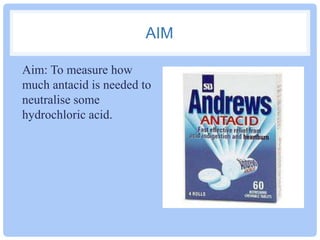
Aim: To measure how
much antacid is needed to
neutralise some
hydrochloric acid.
BACKGROUND INFORMATION
• Neutralisation is a reaction
in which an acid and a base cancel
each other out to form a salt and water.
To neutralise an acid you add a base, and to neutralise a base
you add an acid.
• acid + base → salt + water
• There are many applications of neutralisation in everyday life.
For example, the odour of fish and other seafood is due to
bases called amines. Adding lemon juice or vinegar, which is
acidic, neutralises the amines, giving a more pleasant smell.
EQUIPMENT
1. Dil Hydrochloric acid
(0.1M)
2. Small conical flask
(250mL)
3. Measuring cylinder
(50mL)
4. Methyl orange indicator
5. Spatula
6. Antacid powder/ crushed
tablet.
7. Plastic petridish/paper
8. Electronic balance

9. White paper
RISK ASSESSMENT
Risk
Acids are corrosive

Injury
Burns and irritation if in
contact with skin .

Prevention
Measure dil HCl carefully.
Wear safety goggles
METHOD
1. Clean the petridish.
2. Measure the mass of 1spatula full (level) of powdered
antacid using an electronic balance. ( weigh a piece of small
paper or a plastic petridish / or use tare button to make the
paper weight zero, then add powdered antacid)
3. Record the weight of antacid in a result table.
4. Use a measuring cylinder to measure out 50 mL of dilute
hydrochloric acid.
5. Pour the acid into the flask.
6. Add 3 – 4 drops of methyl orange indicator to the acid.
METHOD
7. Place a sheet of white paper under the flask.
8. Use the spatula to add antacid bit by bit to the acid.
9. Swirl the flask gently to stir the mixture.
10. Stop adding antacid when the colour changes from red to
orange.
11. Measure the mass of the unused antacid using electronic
balance.
12. Find the mass of antacid used to neutralise 50 mL of dil HCl
by subtracting the mass of unused antacid from the original mass
of the antacid .
13. Record the data in result table.
RESULTS
• Take a picture of the before and after result of neutralisation
reaction and upload the picture to your experimental report.
• Mass of petridish + powdered antacid = _________ (m1)
• Mass of petridish + unused antacid = ___________ (m2)
• Mass of antacid used to neutralise dil HCl = m1 – m2
•
=
DISCUSSION
• Write an appropriate discussion.
CONCLUSION
• Write an appropriate conclusion
QUESTIONS
1. How much antacid was needed to neutralise 50 mL of dilute
HCl?
2. Compare your results with other groups. How accurate do you
think your measurement was? Explain your answer.
3. If your stomach contained 1 L of dilute HCl, how much
antacid powder would you need to neutralise it?

Neutralisation reaction

  • 1.
    NEUTRALISATION Y E AR 1 0 – A C I D S A N D I N D I C AT O R S G.Ajetrao
  • 2.
    AIM Aim: To measurehow much antacid is needed to neutralise some hydrochloric acid.
  • 3.
    BACKGROUND INFORMATION • Neutralisationis a reaction in which an acid and a base cancel each other out to form a salt and water. To neutralise an acid you add a base, and to neutralise a base you add an acid. • acid + base → salt + water • There are many applications of neutralisation in everyday life. For example, the odour of fish and other seafood is due to bases called amines. Adding lemon juice or vinegar, which is acidic, neutralises the amines, giving a more pleasant smell.
  • 4.
    EQUIPMENT 1. Dil Hydrochloricacid (0.1M) 2. Small conical flask (250mL) 3. Measuring cylinder (50mL) 4. Methyl orange indicator 5. Spatula 6. Antacid powder/ crushed tablet. 7. Plastic petridish/paper 8. Electronic balance 9. White paper
  • 5.
    RISK ASSESSMENT Risk Acids arecorrosive Injury Burns and irritation if in contact with skin . Prevention Measure dil HCl carefully. Wear safety goggles
  • 6.
    METHOD 1. Clean thepetridish. 2. Measure the mass of 1spatula full (level) of powdered antacid using an electronic balance. ( weigh a piece of small paper or a plastic petridish / or use tare button to make the paper weight zero, then add powdered antacid) 3. Record the weight of antacid in a result table. 4. Use a measuring cylinder to measure out 50 mL of dilute hydrochloric acid. 5. Pour the acid into the flask. 6. Add 3 – 4 drops of methyl orange indicator to the acid.
  • 7.
    METHOD 7. Place asheet of white paper under the flask. 8. Use the spatula to add antacid bit by bit to the acid. 9. Swirl the flask gently to stir the mixture. 10. Stop adding antacid when the colour changes from red to orange. 11. Measure the mass of the unused antacid using electronic balance. 12. Find the mass of antacid used to neutralise 50 mL of dil HCl by subtracting the mass of unused antacid from the original mass of the antacid . 13. Record the data in result table.
  • 8.
    RESULTS • Take apicture of the before and after result of neutralisation reaction and upload the picture to your experimental report. • Mass of petridish + powdered antacid = _________ (m1) • Mass of petridish + unused antacid = ___________ (m2) • Mass of antacid used to neutralise dil HCl = m1 – m2 • =
  • 9.
    DISCUSSION • Write anappropriate discussion.
  • 10.
    CONCLUSION • Write anappropriate conclusion
  • 11.
    QUESTIONS 1. How muchantacid was needed to neutralise 50 mL of dilute HCl? 2. Compare your results with other groups. How accurate do you think your measurement was? Explain your answer. 3. If your stomach contained 1 L of dilute HCl, how much antacid powder would you need to neutralise it?