DEMYELINATING DISEASES Nurse Licensure Examination Review
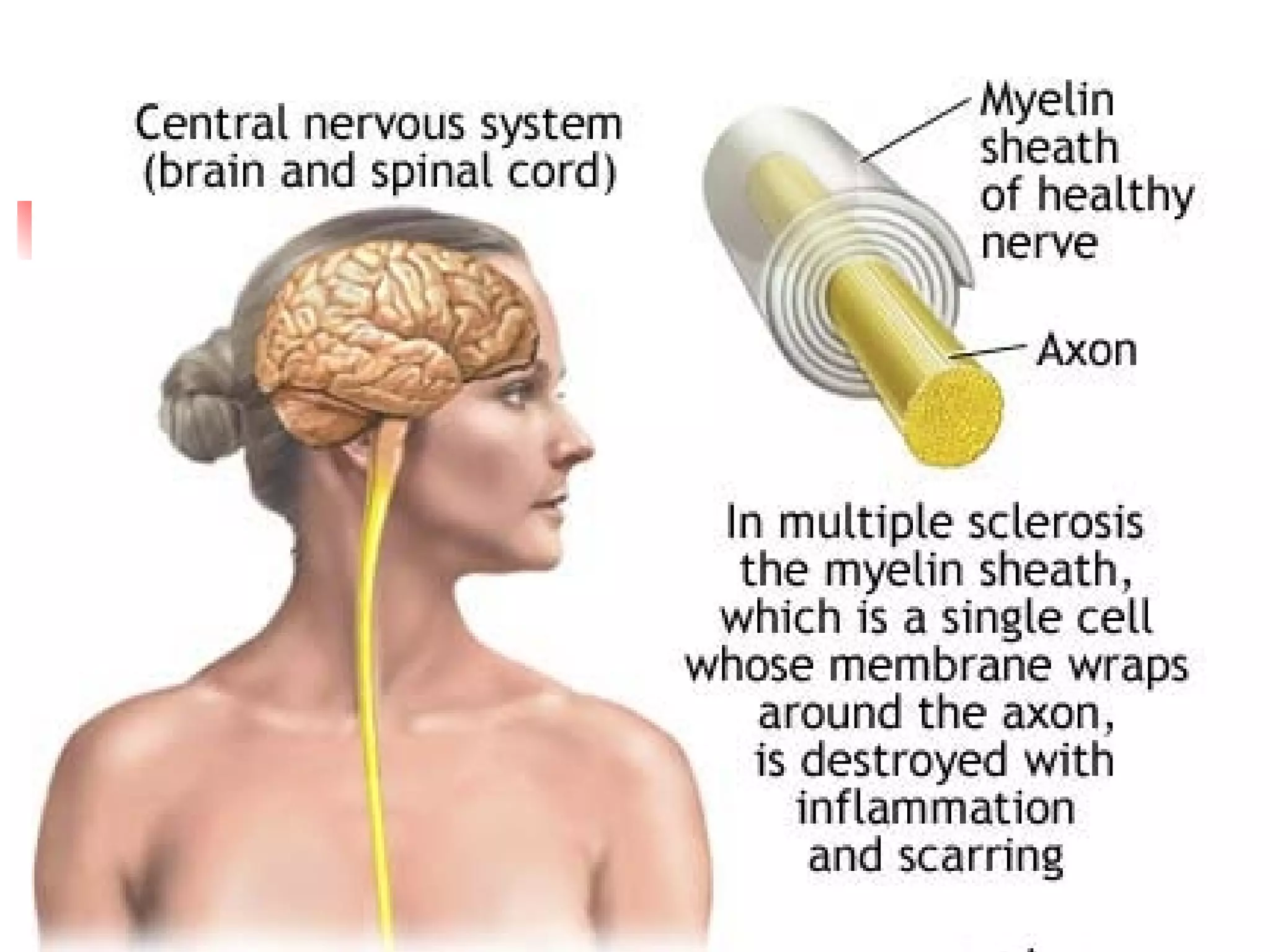
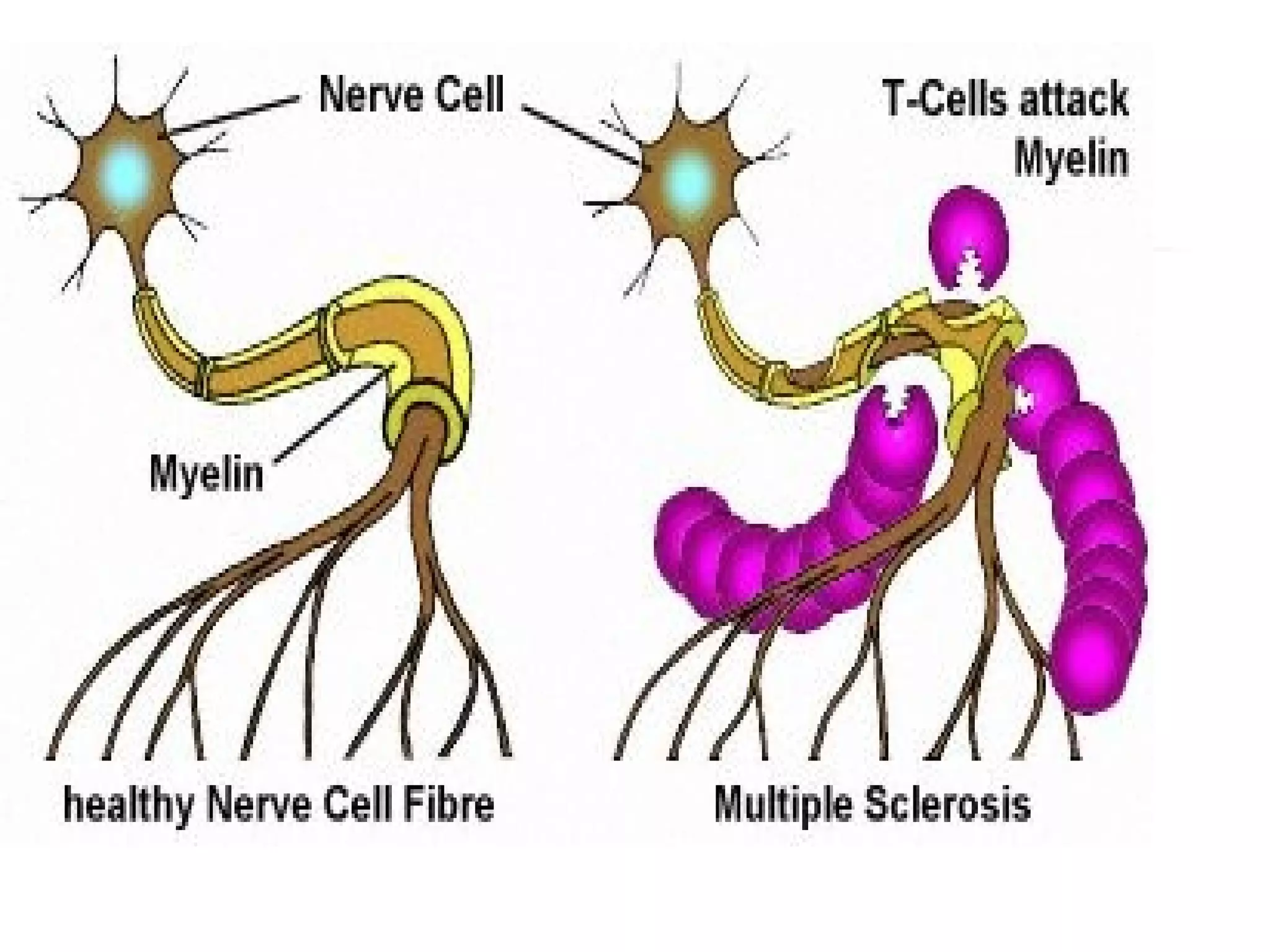
MULTIPLE SCLEROSIS An auto-immune mediated progressive demyelinating disease of the CNS The myelin sheath is destroyed and replaced by sclerotic tissue (sclerosis)
MULTIPLE SCLEROSIS CAUSE- unknown Multiple factors- viral infection, environmental factors,geographic location and  genetic predisposition Common in WOMEN ages 20-40
 
 
MULTIPLE SCLEROSIS PATHOPHYSIOLOGY Sensitized T cells will enter the brain and promote antibody production that damages the myelin sheath Plaques of sclerotic tissues appear on the  demyelinated  axons interrupting the neuronal transmission
MULTIPLE SCLEROSIS PATHOPHYSIOLOGY The most common areas affected are Optic nerves and chiasm Cerebrum Cerebellum Spinal cord
MULTIPLE SCLEROSIS CLINICAL MANIFESTATIONS 1.  visual problems such as diplopia, blurred vision and nystagmus 2. motor dysfunction 3. Fatigue 4. Mental changes like mood swings, depression 5. spasticity
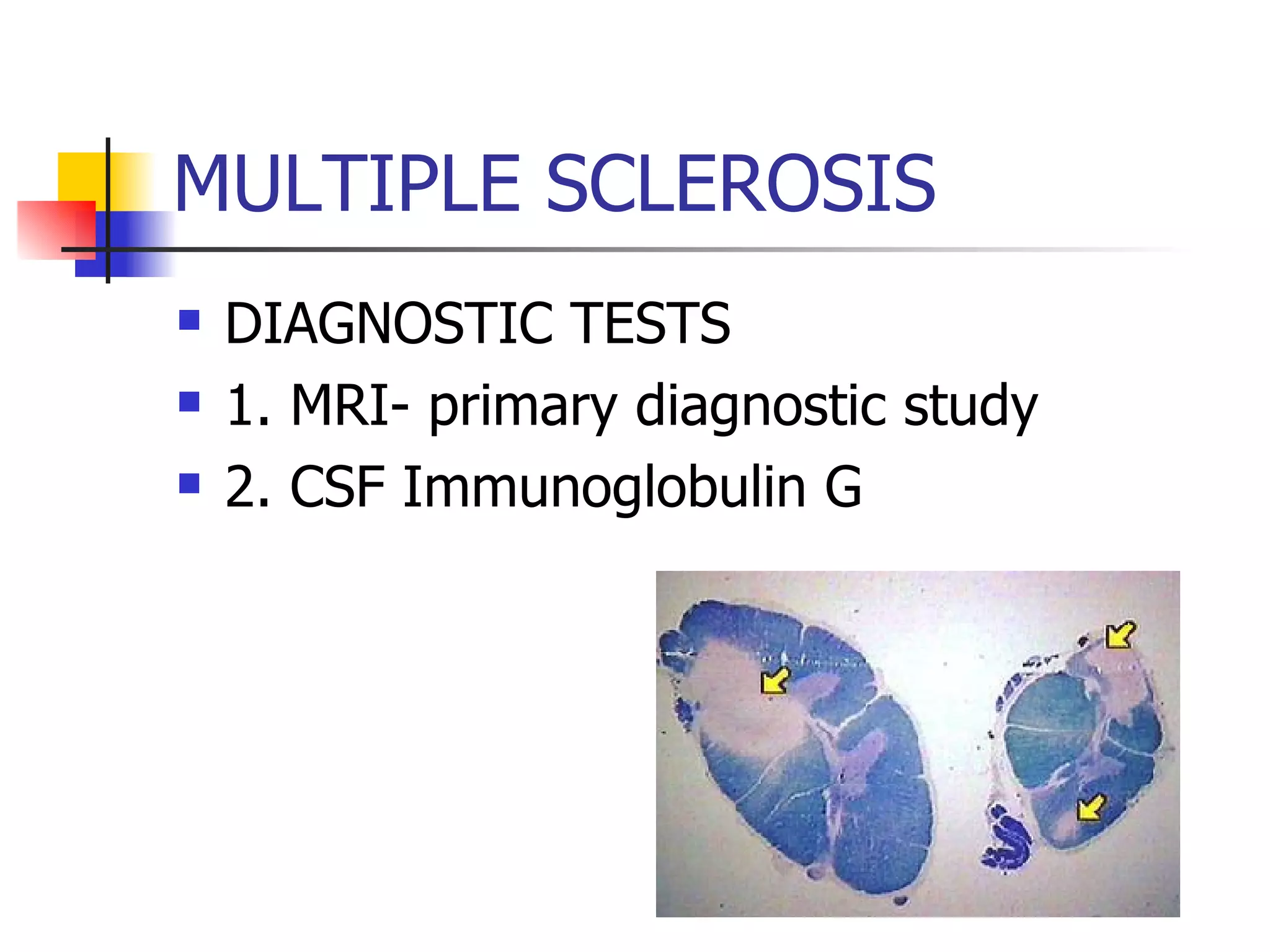
MULTIPLE SCLEROSIS DIAGNOSTIC TESTS 1. MRI- primary diagnostic study 2. CSF Immunoglobulin G
MULTIPLE SCLEROSIS NURSING INTERVENTIONS 1. Promote physical mobility Exercise Schedule activity and rest periods Warm packs over the spastic area Swimming and cycling are very useful
MULTIPLE SCLEROSIS NURSING INTERVENTIONS 2. Prevent injuries Wide stance walking Use of walking aids Wheelchair
MULTIPLE SCLEROSIS 3. Enhance bladder and bowel control Set a voiding schedule Intermittent bladder catheterization Use of condom catheter Adequate fluids, dietary fibers and bowel training program
MULTIPLE SCLEROSIS 4 . Manage speech and swallowing difficulties Careful feeding, proper positioning, suction machine availability Speech therapist
MULTIPLE SCLEROSIS 5. Improve Sensory and Cognitive function Vision- use eye patch for diplopia Obtain large printed reading materials Offer emotional support Involve the family in the care
MULTIPLE SCLEROSIS 6. Strengthen coping mechanism Alleviate the stress Referral to the appropriate agencies
MULTIPLE SCLEROSIS 7. improve self-care abilities Modify activities according to physical strength Provide assistive devices
MULTIPLE SCLEROSIS 8. promote sexual functioning  Refer to sexual counselor
MULTIPLE SCLEROSIS MEDICAL MANAGEMENT Pharmacotherapy Interferons Immunomodulators Corticosteroids BACLOFEN for muscle spasms NSAIDS for pain
Guillian-Barre’ Syndrome An auto-immune attack of the peripheral nerve myelin Acute, rapid segmental demyelination of peripheral nerves and some cranial nerves
Guillian-Barre’ Syndrome CAUSE: post-infectious polyneuritis of unknown origin commonly follows viral infection
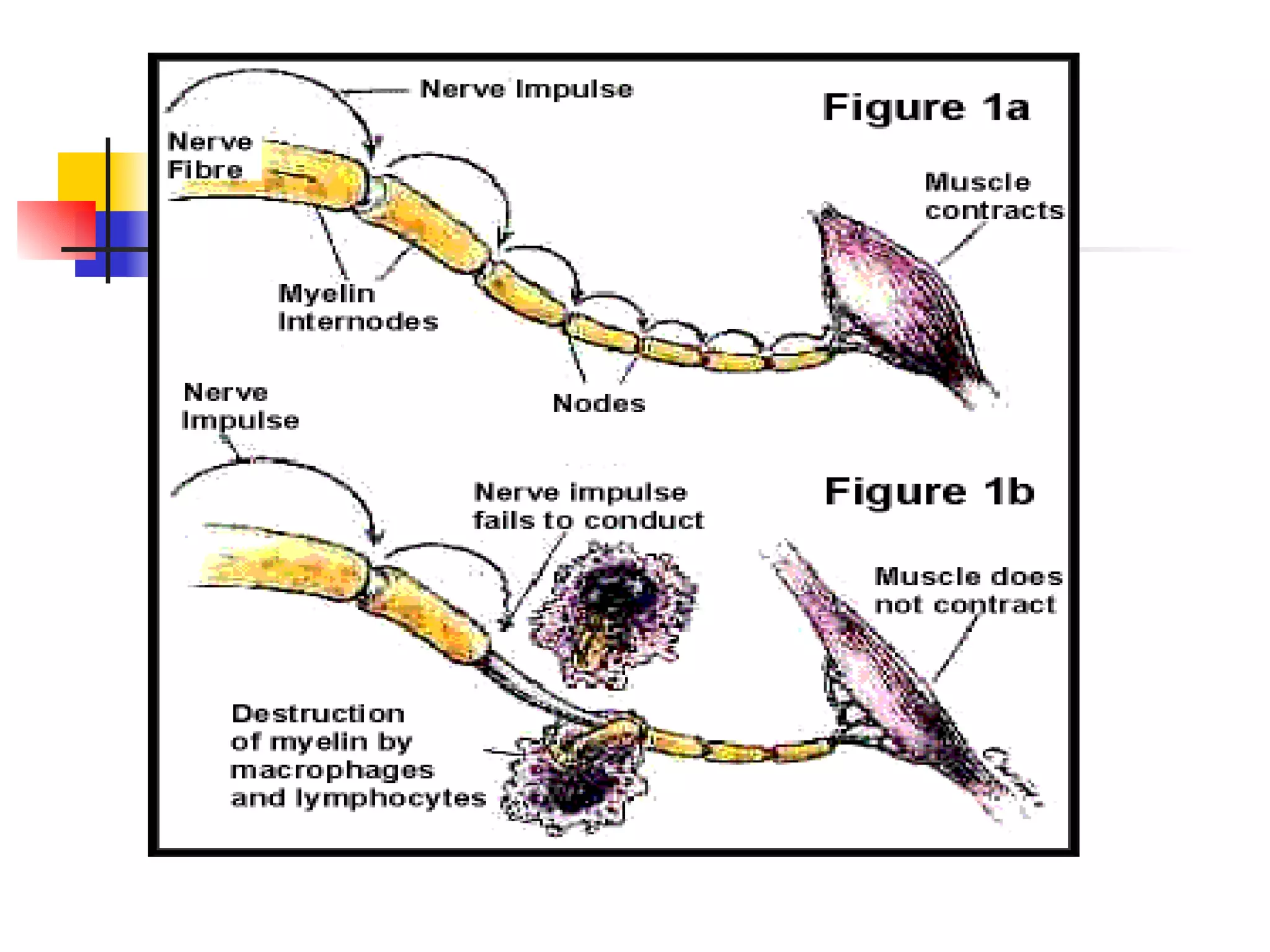
Guillian-Barre’ Syndrome PATHOPHYSIOLOGY Cell-mediated imune attack to the myelin sheath of the peripheral nerves Infectious agent may elicit antibody production that can also destroy the myelin sheath
 
Guillian-Barre’ Syndrome CLINICAL MANIFESTATIONS 1.  Ascending weakness and paralysis 2. diminished reflexes of the lower extremities 3. paresthesia 4. potential respiratory failure
Guillian-Barre’ Syndrome NURSING INTERVENTIONS Maintain respiratory function Chest physiotherapy and incentive spirometry Mechanical vetnilator
Guillian-Barre’ Syndrome NURSING INTERVENTIONS 2. Enhance physical mobility Support paralyzed extremities Provide passive range of motion exercise Prevent DVT and pulmonary embolism Padding over bony prominences
Guillian-Barre’ Syndrome NURSING INTERVENTIONS 3. Provide adequate nutrition IVF  Parenteral nutrition Assess frequently return o gag refelx
Guillian-Barre’ Syndrome NURSING INTERVENTIONS 4. Improve communication Use other means of communication
Guillian-Barre’ Syndrome NURSING INTERVENTIONS 5. Decrease fear and anxiety Provide Referrals Answer questions  Provide diversional activities 6. Monitor and manage complications DVT, Urinary retention, pulmonary embolism, respiratory failure
Guillian-Barre’ Syndrome MEDICAL MANAGEMENT ICU admission Mechanical Ventilation TPN and IVF PLASMAPHERESIS IV IMMUNOGLOBULIN
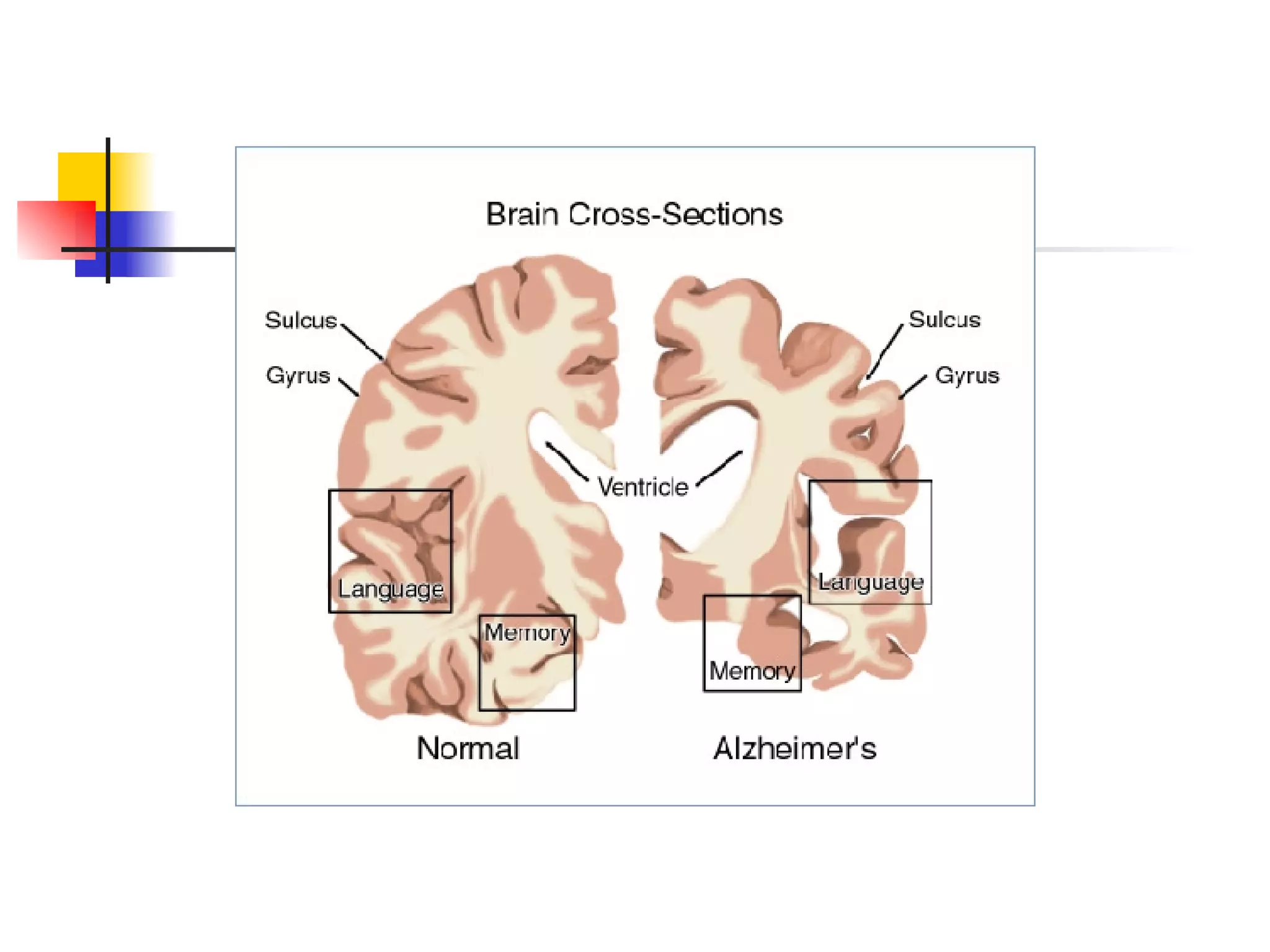
ALZHEIMER’S disease A progressive neurologic disorder that affects the brain resulting in cognitive impairments
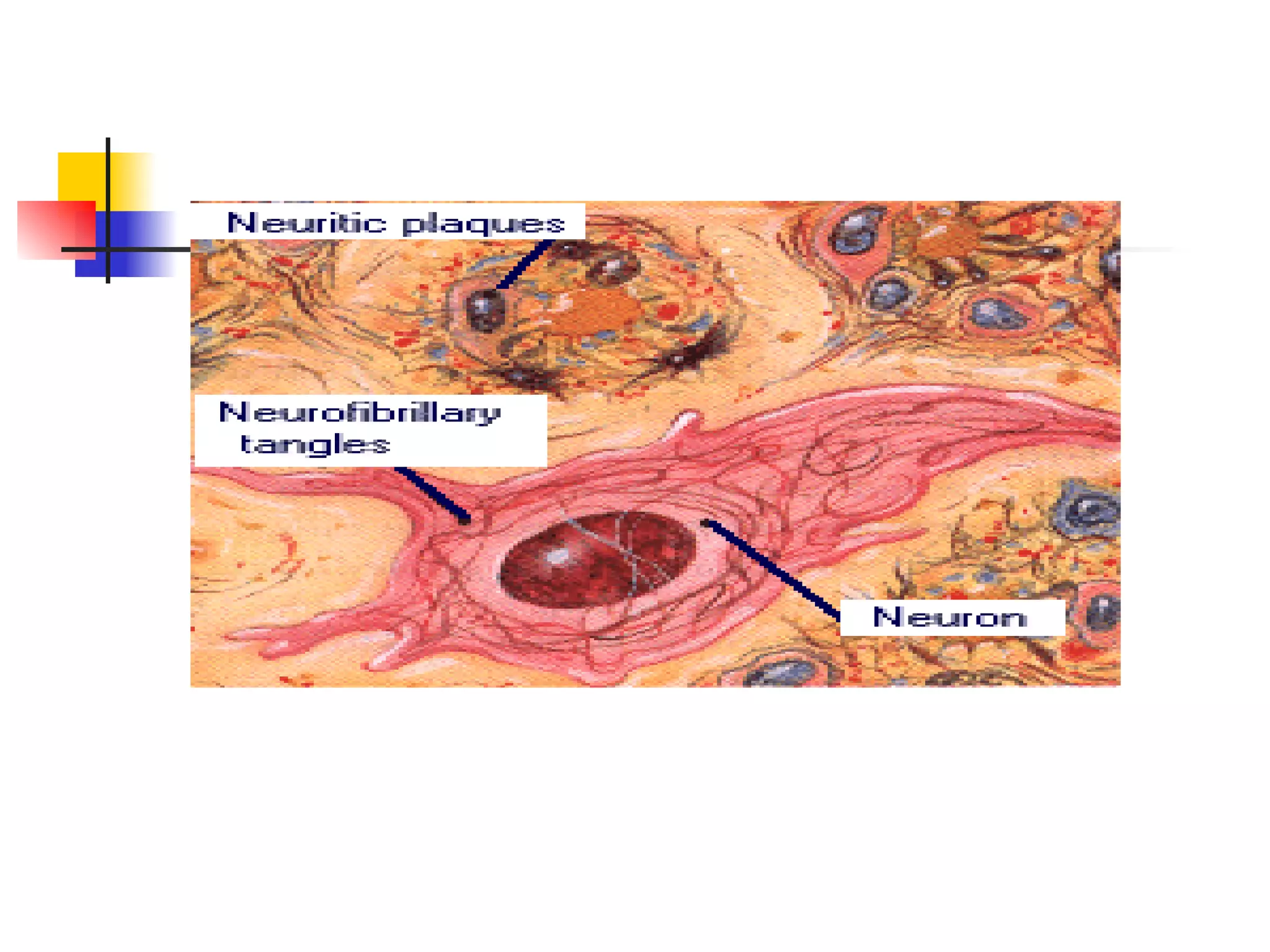
ALZHEIMER’S disease CAUSES: Unknown Potential factors- Amyloid plaques in the brain, Oxidative stress, neurochemical deficiencies
 
 
ALZHEIMER’S disease CLINCAL MANIFESTATIONS 1. Forgetfulness 2. Recent memory loss 3. Difficulty learning 4. Deterioration in personal hygiene 5. Inability to concentrate
ALZHEIMER’S disease LATE CLINICAL MANIFESTATIONS 6. Difficulty in abstract thinking 7. Difficulty communicating 8. Severe deterioration in memory, language and motor function 9. repetitive action- perseveration 10. personality changes
ALZHEIMER’S disease DIAGNOSTIC TEST Neurologic examination PET scan EEG, CT and MRI Other tests to rule out Vit B deficiencies and hypothyroidism Autopsy is the most definitive
ALZHEIMER’S disease Drug therapy 1. drugs to treat behavioral symptoms- antipsychotics 2. anxiolytics 3. Donepezil 4. Tacrine
ALZHEIMER’S disease Nursing Interventions 1. Support patient’s abilities 2. Provide emotional support
ALZHEIMER’S disease Nursing Interventions 3. Establish an effective communication system with the patient and family Use short simple sentences, words and gestures Maintain a calm and consistent approach Attempt to analyze behavior for meaning
ALZHEIMER’S disease 4. protect the patient from injury Provide a safe and structured environment Requests a family member to accompany client if he wanders around Keep bed in low position Provide adequate lightning  Assign consistent caregivers
ALZHEIMER’S disease 5. Encourage exercise to maintain mobility
PARKINSON’s Disease A slowly progressing neurologic movement disorder The degenerative idiopathic form is the most common form
PARKINSON’s Disease CAUSATIVE FACTORS: unknown Potential factors: genetics, atherosclerosis, free radical stress, viral infection, head trauma and environmental factors
 
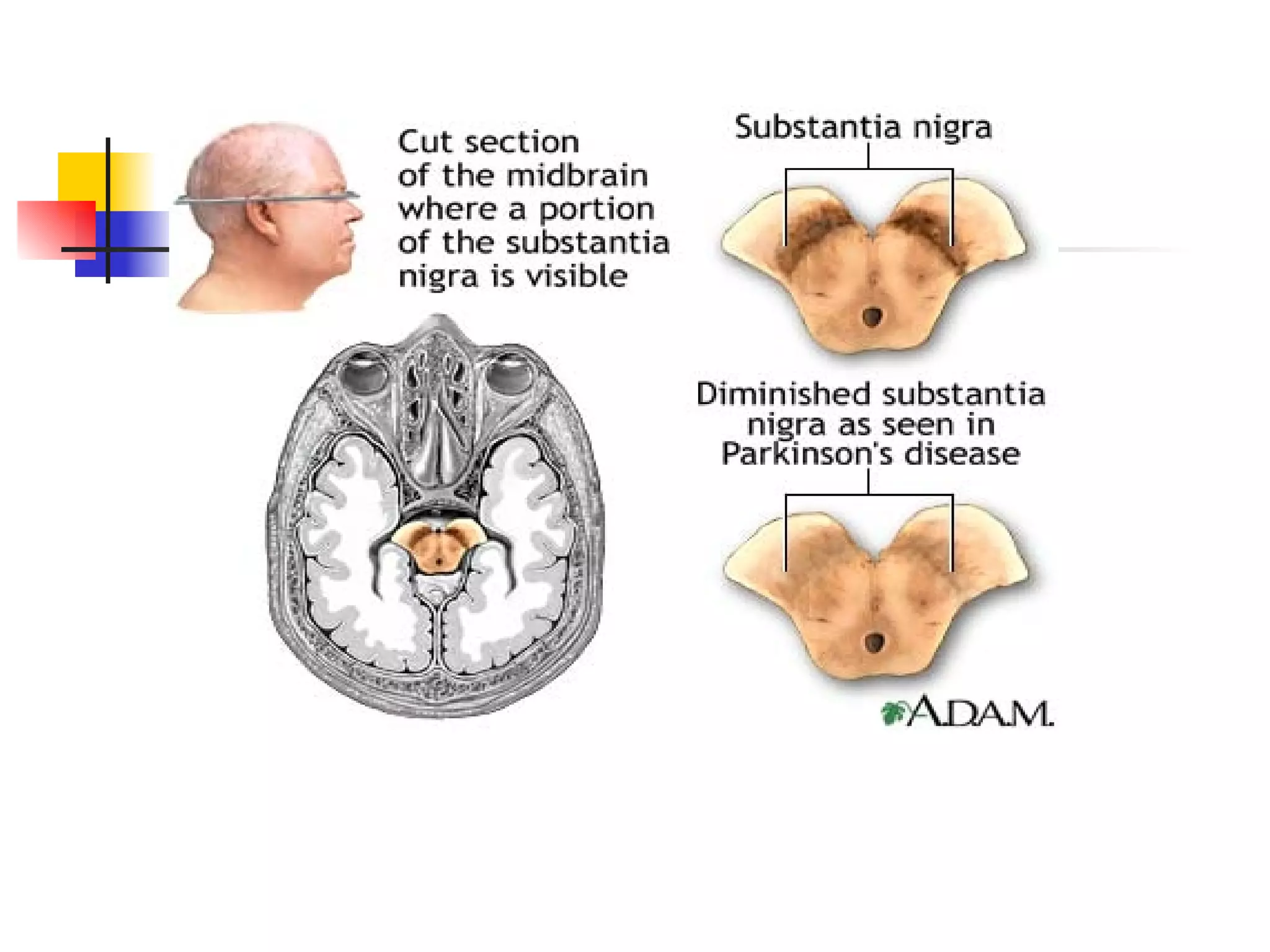
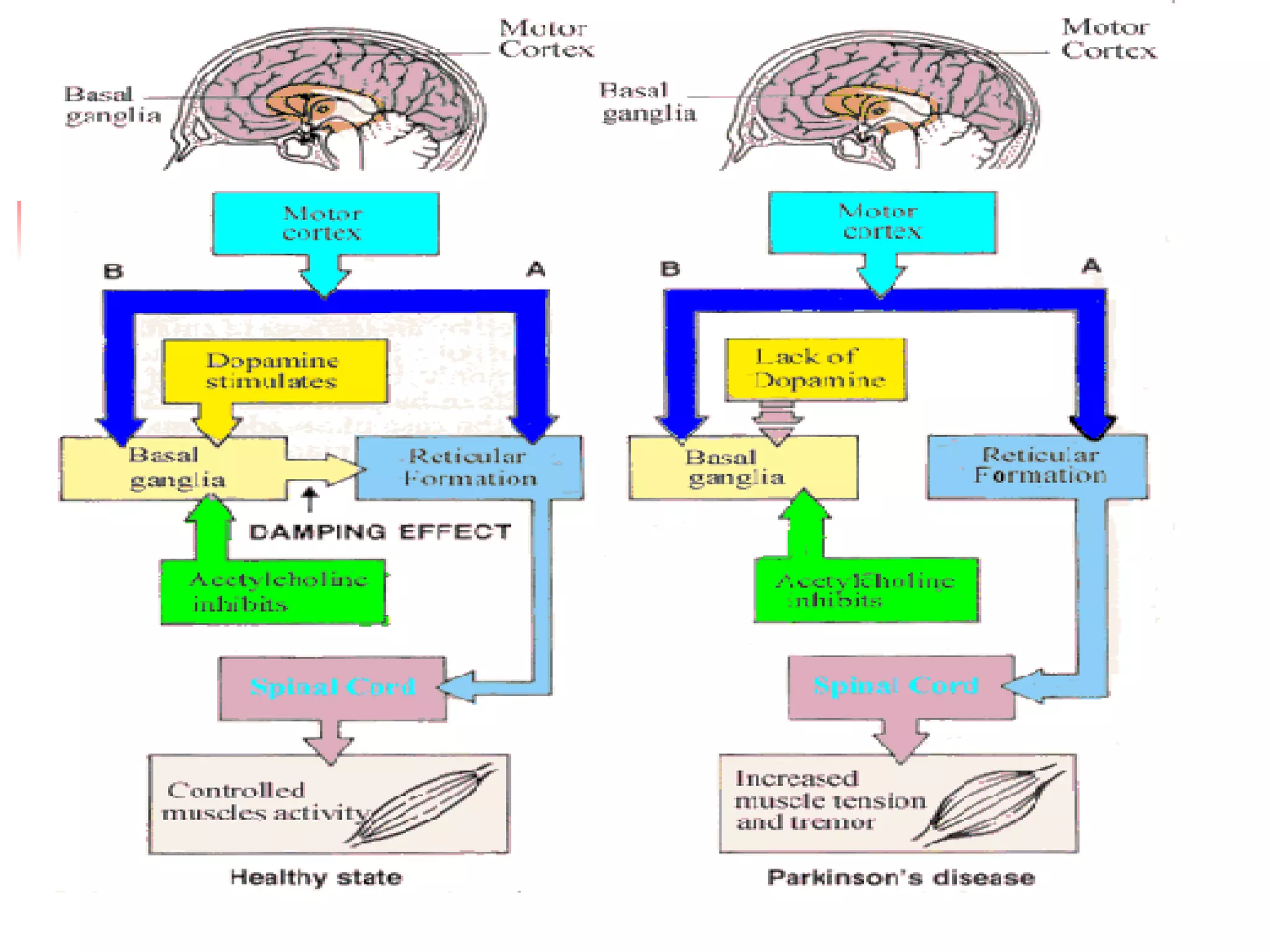
PARKINSON’s Disease Pathophysiology Decreased levels of dopamine due to destruction of pigmented neuronal cells in the substantia nigra in the basal ganglia Clinical symptoms do not appear until 60% of the neurons have disappeared
 
PARKINSON’s Disease CLINICAL MANIFESTATIONS 1. Tremor- resting, pill-rolling 2. Rigidity- cog-wheel, lead-pipe 3. Bradykinesia- abnormally slow movement 4. Dementia, depression, sleep disturbances and hallucinations 5. excessive sweating, paroxysmal flushing, orthostatic hypotension
PARKINSON’s Disease Medical management 1. Anti-parkinsonian drugs- Levodopa, Carbidopa 2. Anti-cholinergic therapy 3. Antiviral therapy- Amantadine 4. Dopamine  Agonists-  bromocriptine and Pergolide, Ropirinole anmd Pramipexole
PARKINSON’s Disease Medical management 5. MAOI 6. Anti-depressants 7. Antihistamine
PARKINSON’s Disease NURSING INTERVENTIONS 1. Improve mobility 2. Enhance Self- care activities 3. Improve bowel elimination 4. Improve nutrition 5. Enhance swallowing 6. Encourage the use of assistive devices
PARKINSON’s Disease NURSING INTERVENTIONS 7. improve communication 8. Support coping abilities
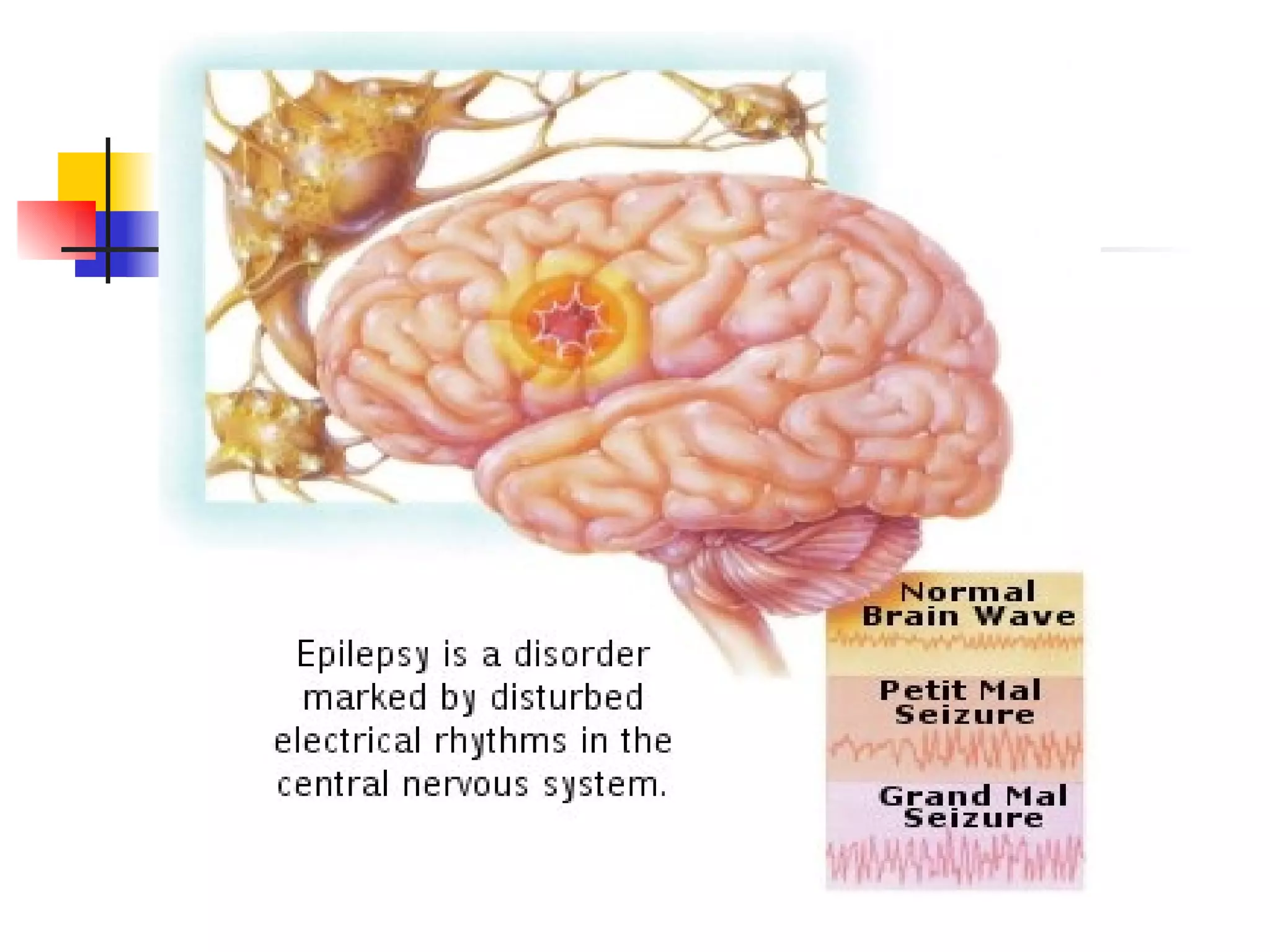
EPILEPSY A group of syndromes characterized by recurring seizures CAUSES 1. idiopathic  6. brain tumors 2. Birth trauma  7. head Injury 3. perinatal infection  8. metabolic disorders  4. infectious disease  9. CVA 5. ingestion of toxins
 
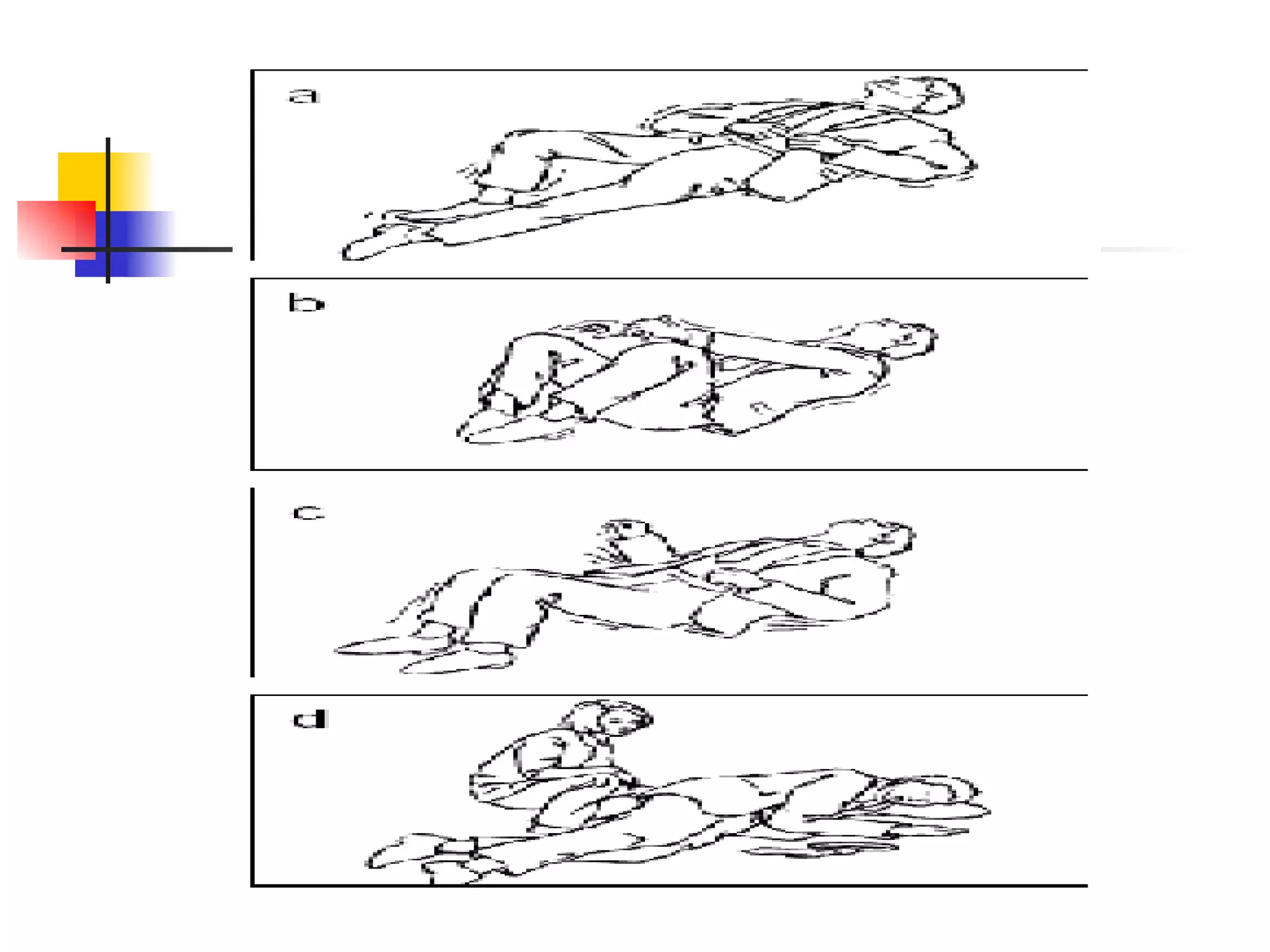
EPILEPSY Recurring seizures may be classified as GENERALIZED or PARTIAL SEIZURES Generalized Seizures- cause a generalized electrical abnormality within the brain Partial seizures- these seizures arise from a localized part of the brain and cause specific symptoms
GENERALIZED SEIZURES 1. General Tonic-Clonic seizure- ( Grand mal ) characterized by loss of consciousness and alternating movements of the extremities  2. Absence Seizure ( Petit mal )- common in children, begins with a brief change in the LOC, indicated by blinking, rolling of eyes and blank stares
GENERALIZED SEIZURES 3. Myoclonic seizure- characterized by brief, involuntary muscular jerks of body extremities 4. Akinetic seizure- general loss of postural tone and a temporary loss of consciousness- a drop attack
 
PARTIAL SEIZURES 1. Simple partial seizure- typically limited to one cerebral hemisphere 2. Complex partial seizure- begins with an aura, then with impaired consciousness, with purposeless behaviors like lip-smacking, chewing movements
Epilepsy DIAGNOSTIC TESTS 1. EEG 2. CT 3. MRI 4. LP 5. Angiography
Epilepsy Medical treatment 1. Anticonvulsants- most commonly phenytoin, phenobarbital and carbamazepine Ethosuximide and valproic acid for absence seizure 2. surgery
Epilepsy Nursing Intervention 1. Care of patients during seizure 2. care of patients after seizures 3. patient teaching
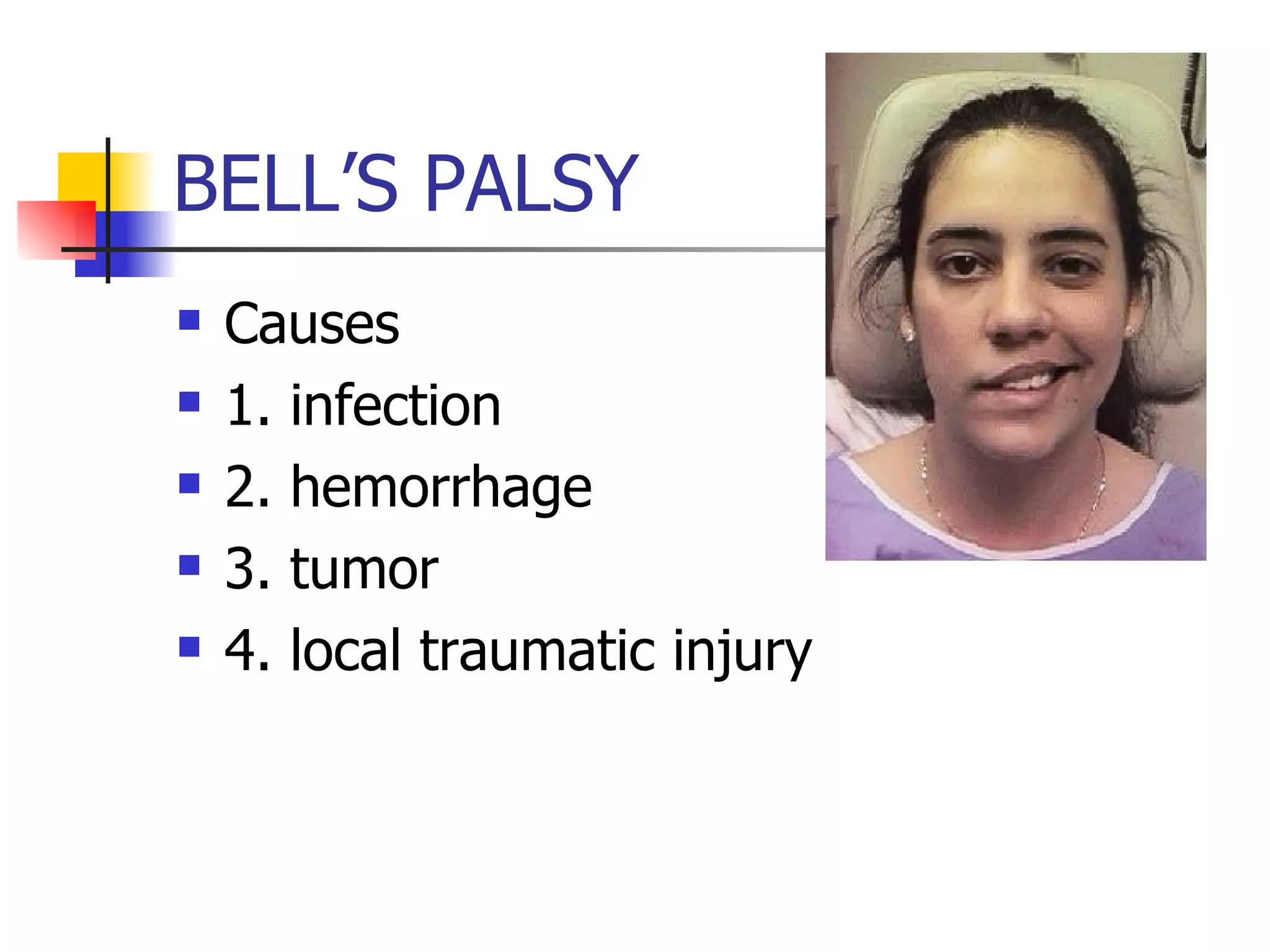
BELL’S PALSY Causes 1. infection 2. hemorrhage 3. tumor 4. local traumatic injury
 
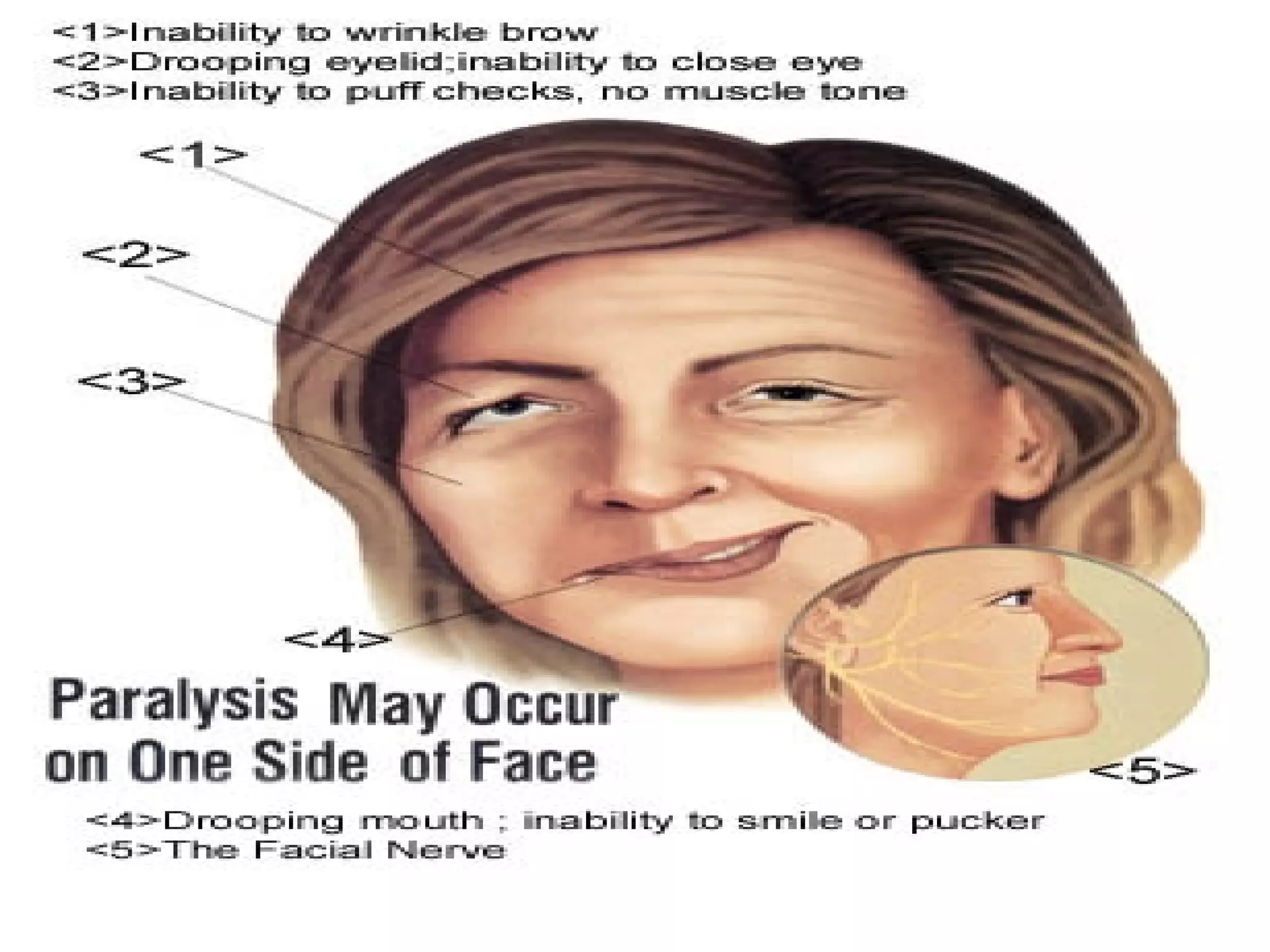
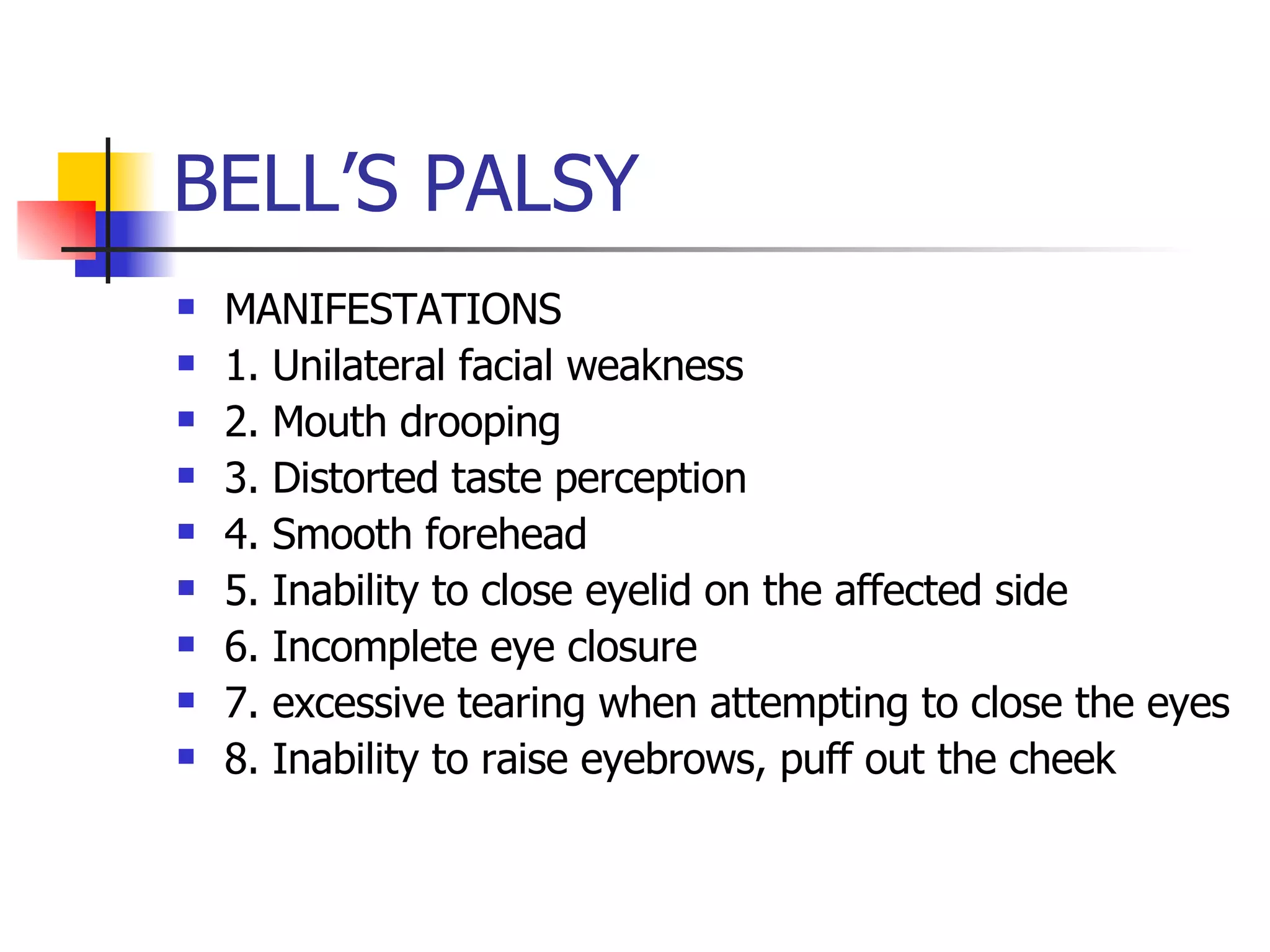
BELL’S PALSY MANIFESTATIONS 1. Unilateral facial weakness 2. Mouth drooping 3. Distorted taste perception 4. Smooth forehead 5. Inability to close eyelid on the affected side 6. Incomplete eye closure 7. excessive tearing when attempting to close the eyes 8. Inability to raise eyebrows, puff out the cheek
BELL’S palsy Diagnostic tests EMG Medical management 1. Prednisone 2. Artificial tears
BELL’S palsy Nursing Interventions 1. Apply moist heat to reduce pain 2. Massage the face to  maintain muscle tone 3. Give frequent mouth care 4. protect the eye with an eye patch. Eyelid can be taped at night 5. instruct to chew on unaffected side
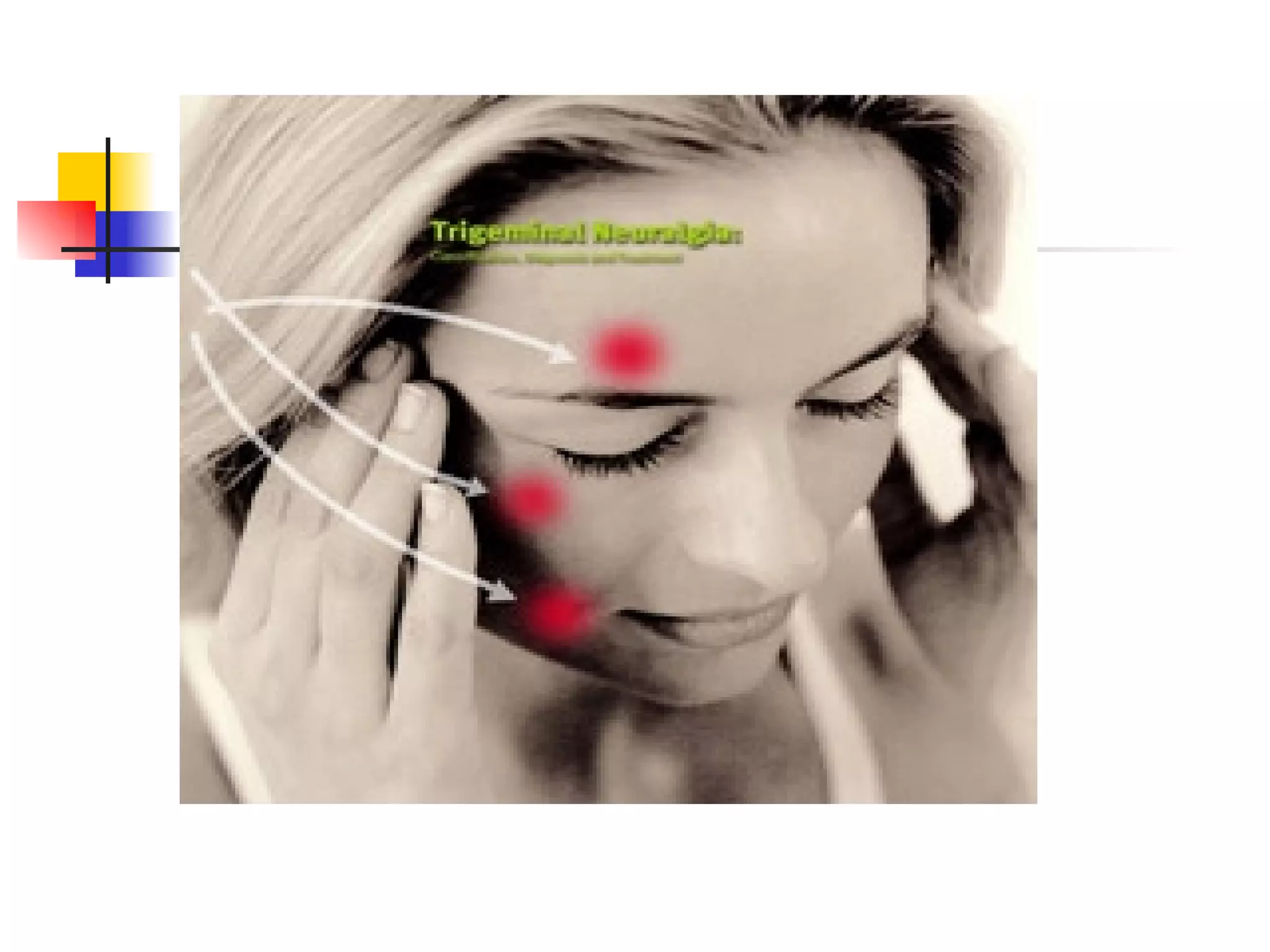
Trigeminal neuralgia Also called Tic Douloureux Painful disorder that affects one or more branches of the fifth cranial nerve CAUSES: repetitive pulsation of an artery as it exits the pons is the usual cause
 
Trigeminal neuralgia ASSESSMENT 1. Pain history 2. Searing or burning jabs of pain lasting from 1-15 minutes in an area innervated by the trigeminal nerve DIAGNOSTIC TESTS Skull x-ray or CT scan
Trigeminal neuralgia NURSING INTERVENTIONS 1. provide emotional support 2. encourage to express feelings 3. provide adequate nutrition in small frequent meals at room temperature
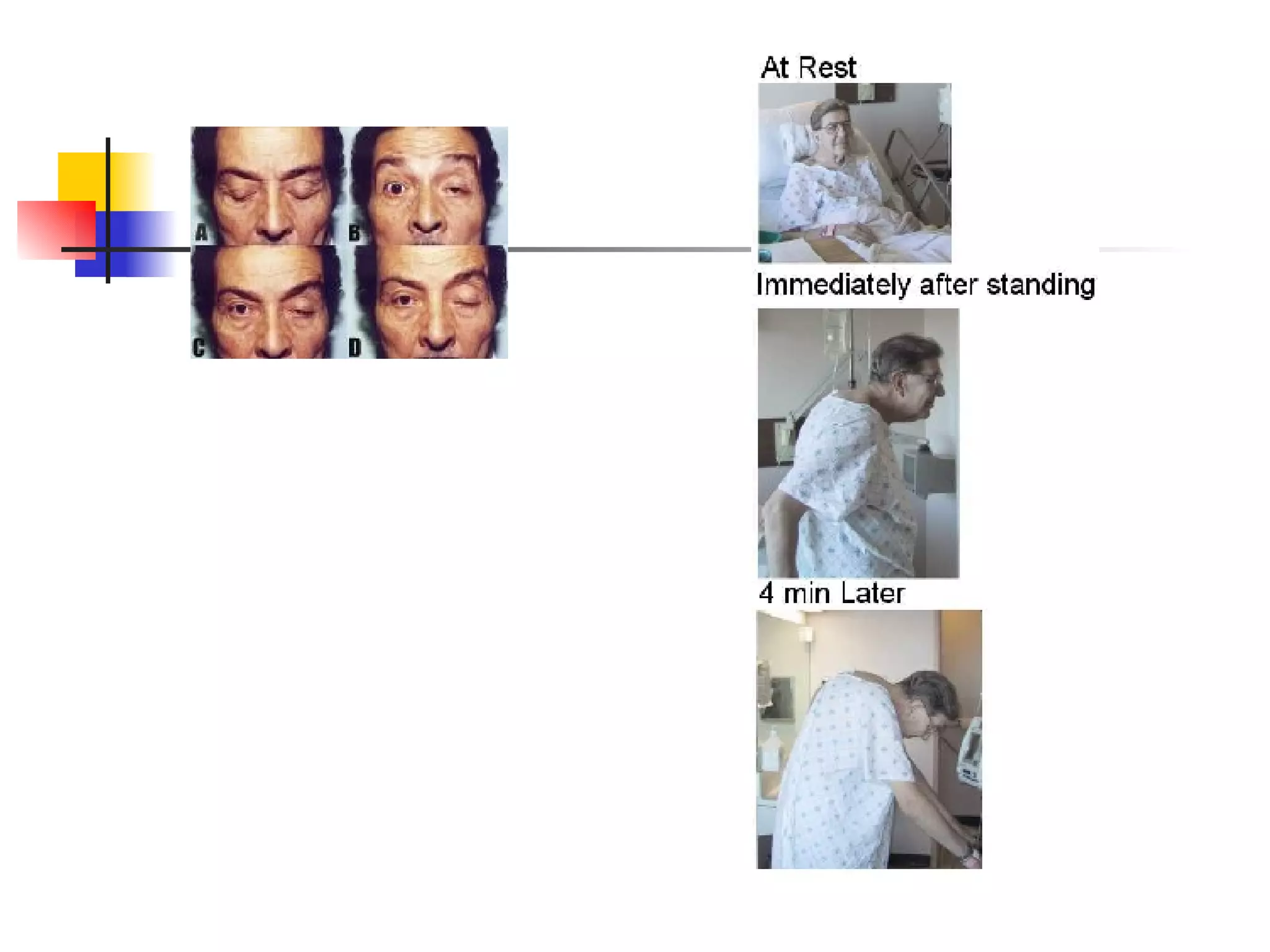
Myasthenia gravis A sporadic, but progressive weakness and abnormal fatigability of striated muscles which are exacerbated by exercise and repetitive movements
Myasthenia gravis ETIOLOGY Autoimmune disease Thymoma Women suffer at an earlier age and are more affected
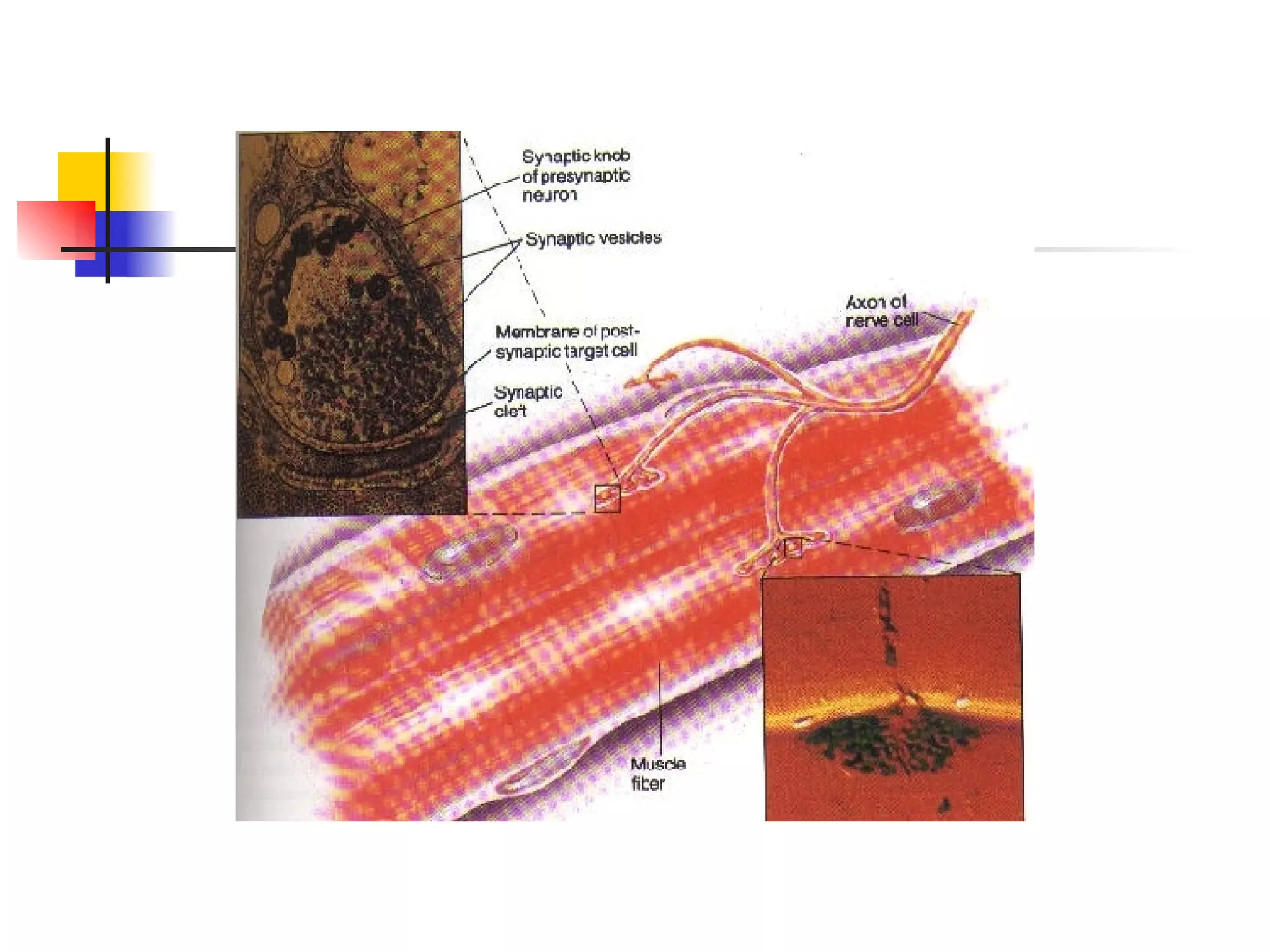
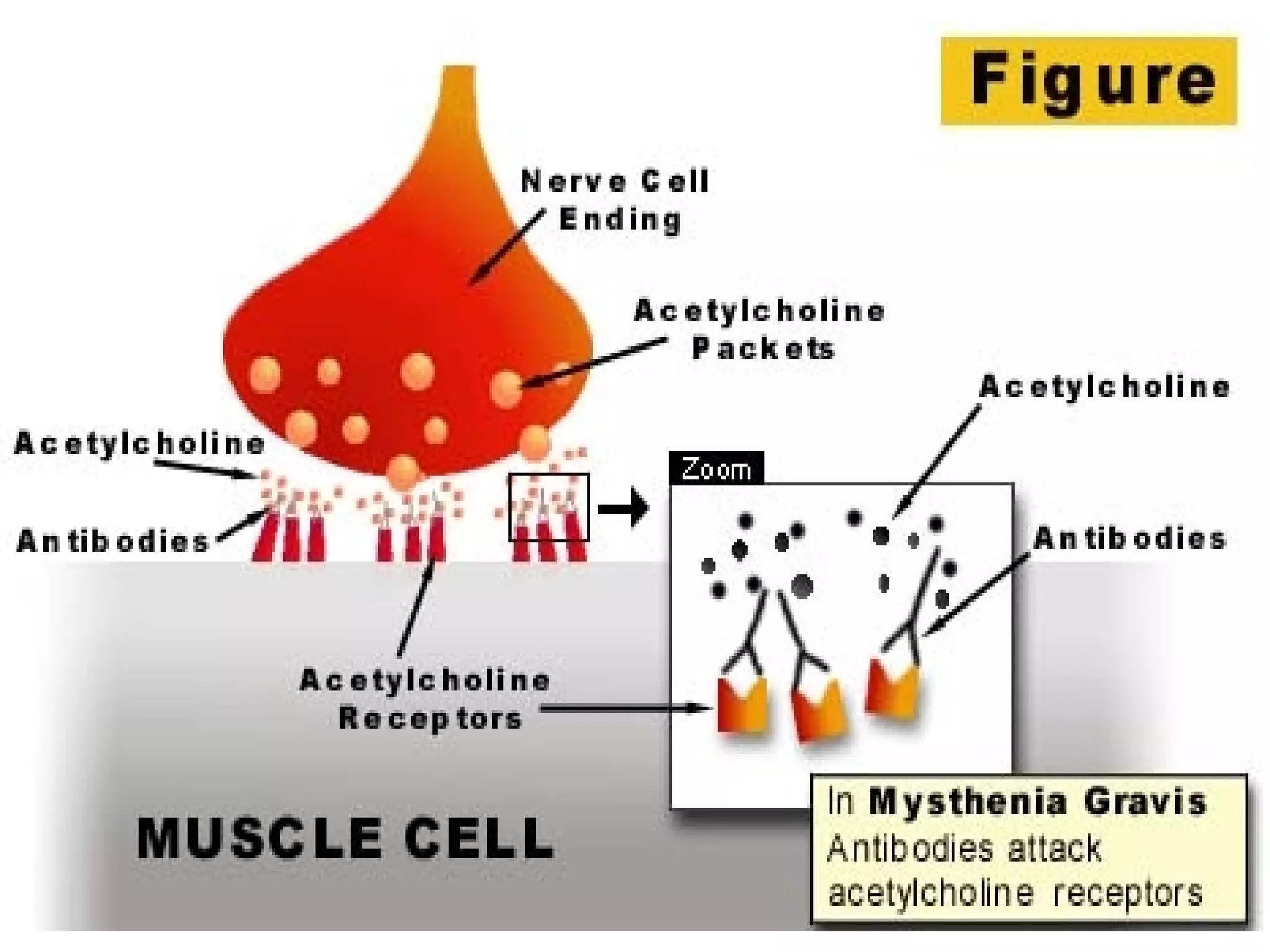
Myasthenia gravis Pathophysiology: 1. Acetylcholine receptor antibodies interfere with impulse transmission 2. Follows an unpredictable course of periodic exacerbations and remissions
 
 
Myasthenia gravis CAUSE: autoimmune disorder that impairs transmission of nerve impulses ASSESSMENT FINDINGS Gradually progressive skeletal muscle weakness and fatigue Weakness that worsens during the day Ptosis, diplopia and weak eye closure Blank, mask-like facies Difficulty chewing and swallowing Respiratory difficulty
Myasthenia gravis DIAGNOSTIC TESTS 1. EMG 2. TENSILON TEST 3. CT scan 4. Serum anti-AchReceptor antibodies
Myasthenia gravis MEDICAL THERAPY Anticholinesterase drugs- pyridostigmine and neostigmine Corticosteroids Immunosuppresants  Plasmapheresis Thymectomy
 
Myasthenia gravis NURSING INTERVENTIONS 1. Administer prescribed medication as scheduled 2. Prevent problems with chewing and swallowing 3. Promote respiratory function 4. Encourage adjustments in lifestyle to prevent fatigue 5.maximize functional abilities
Myasthenia gravis 6. Prepare for complications like myasthenic crisis and cholinergic crisis 7. prevent problems associated with impaired vision resulting from ptosis of eyelids 8. provide client teaching 9. promote client and family coping
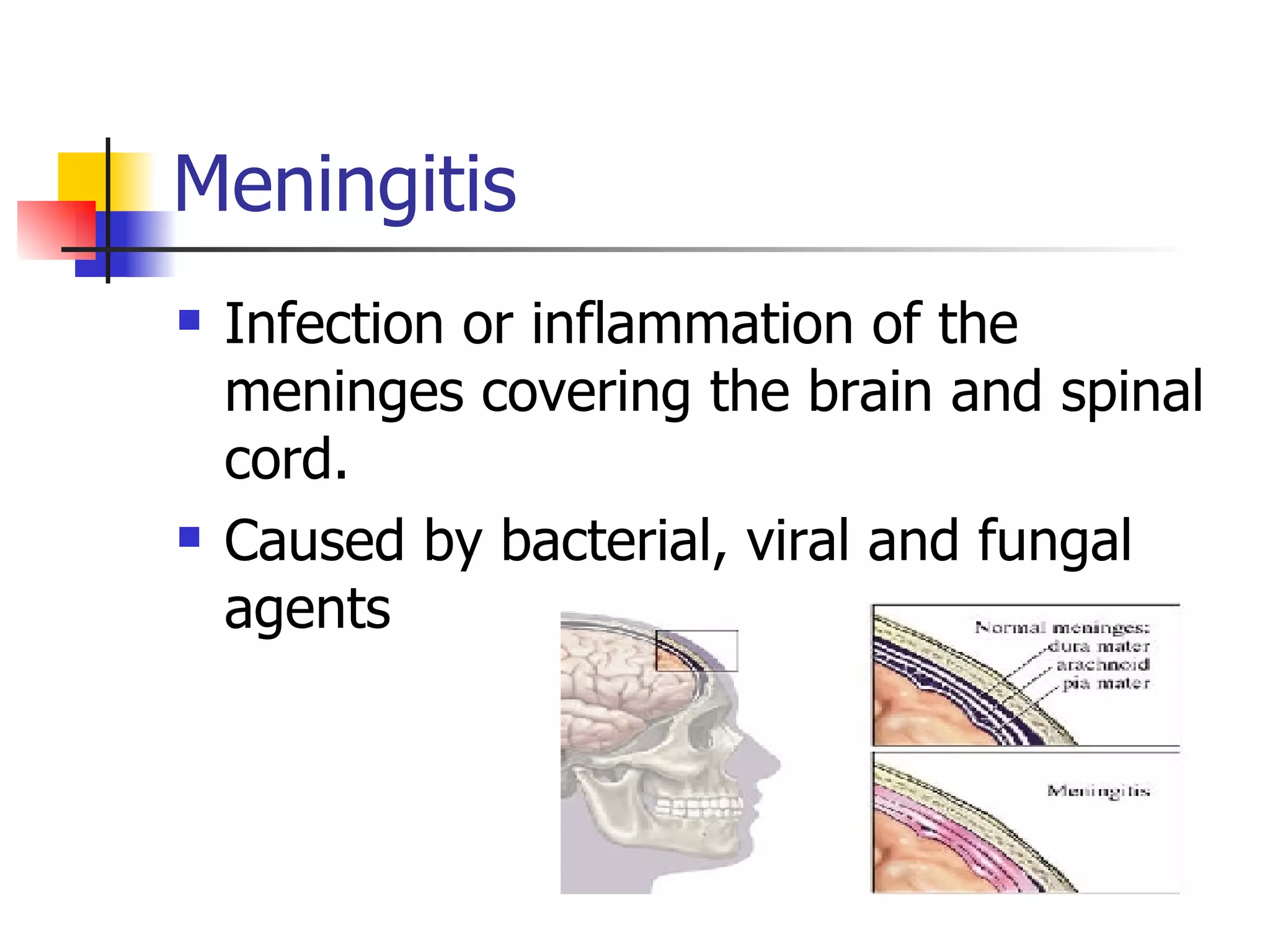
Meningitis Infection or inflammation of the meninges covering the brain and spinal cord. Caused by bacterial, viral and fungal agents
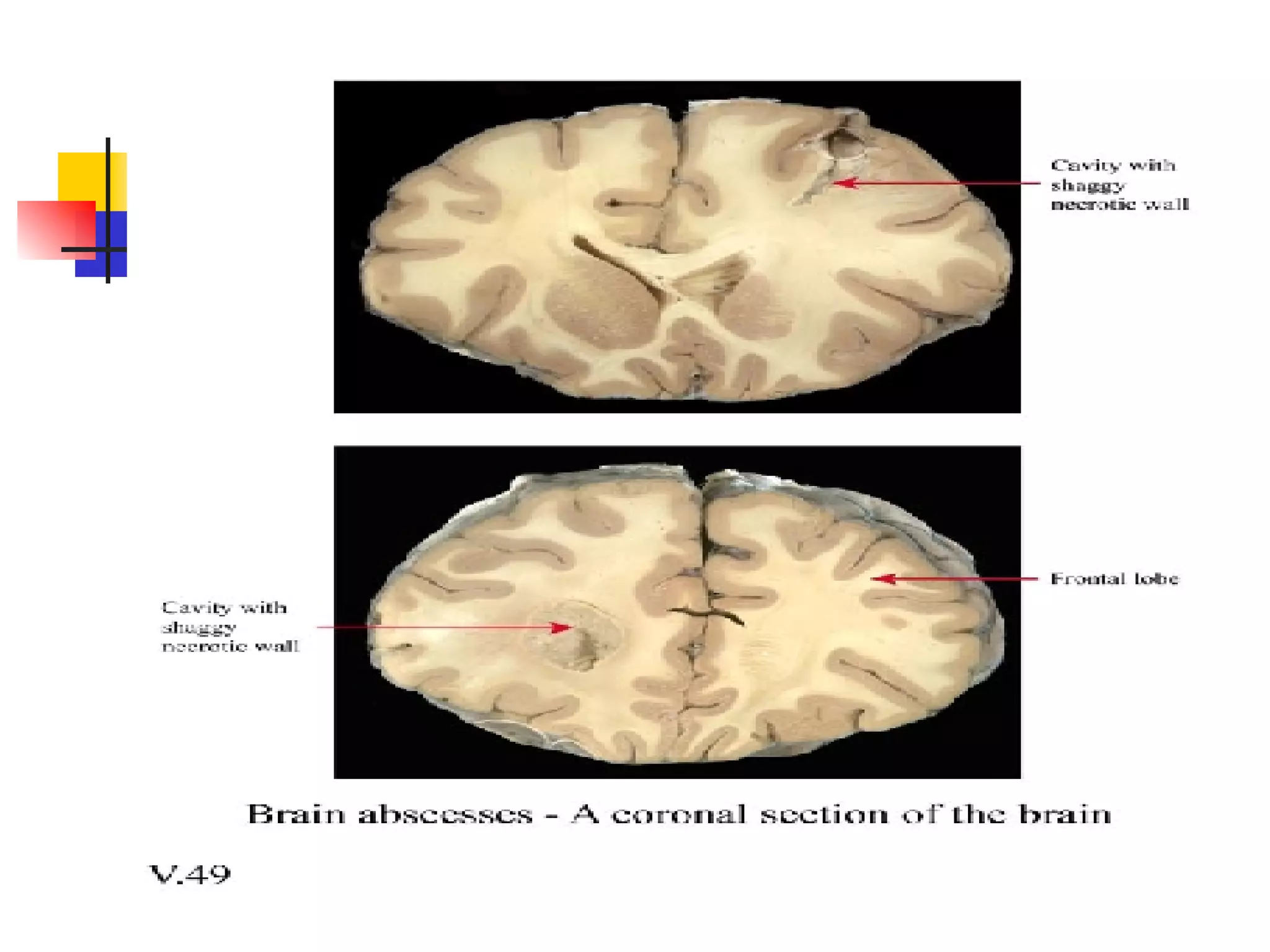
Brain Abscess A free or encapsulated collection of pus in the brain parenchyma Causes: usually secondary to another infection like- sinusitis, meningitis, dental abscess, mastoiditis, bacteremia and trauma
 
Encephalitis Intense inflammation of the brain tisssue with lymphocytic infiltration, cerebral edema, degeneration of brain cells and diffuse nerve cell destruction
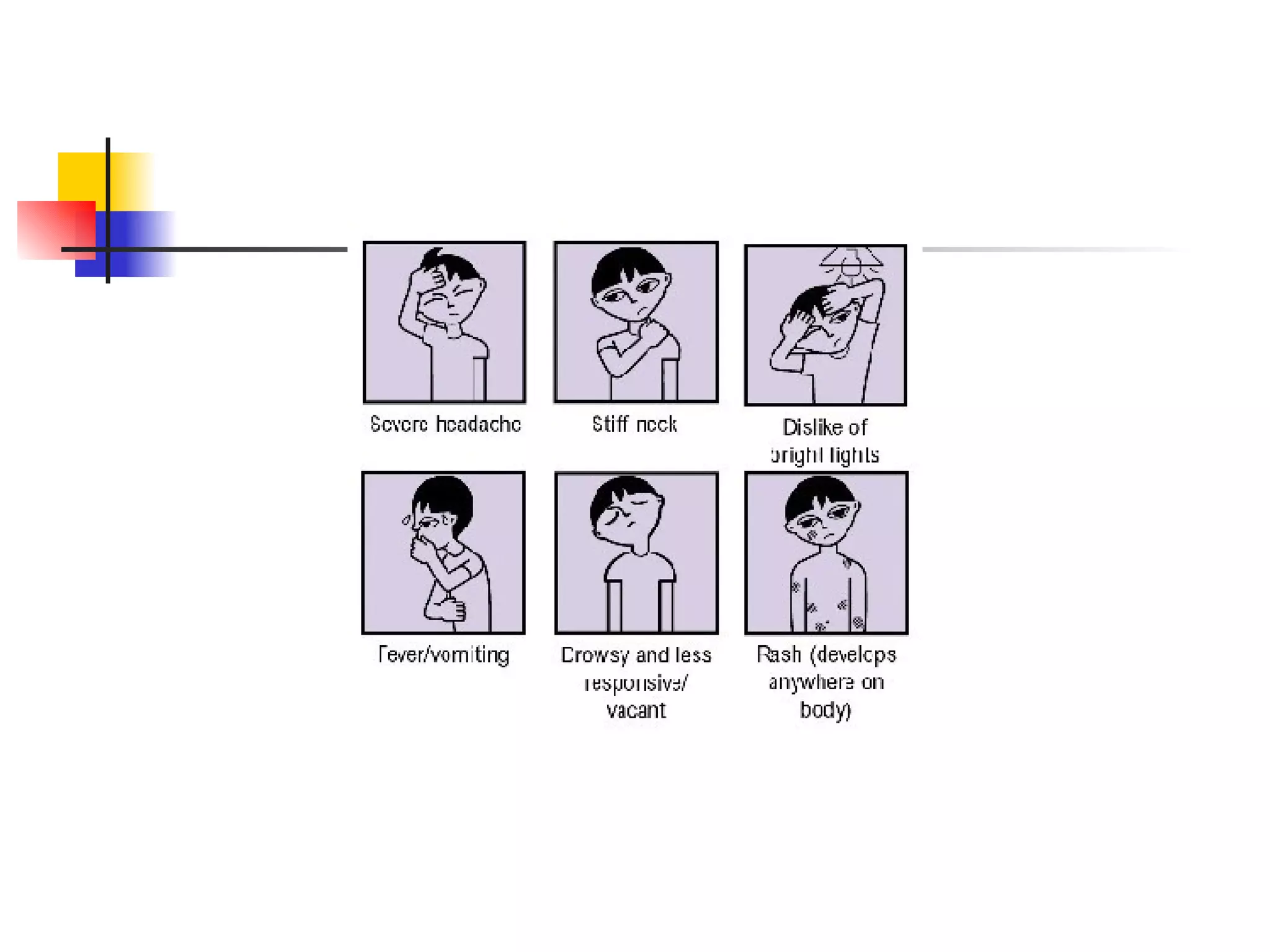
CNS infections ASSESSMENT FINDINGS Meningitis 1. fever, headache, vomiting 2. positive meningeal sings Brain abscess 1. headache, N/V, seizures, changes in LOC 2. Focal neurologic deficits
 
CNS infections DIAGNOSTIC TESTS 1. CT scan 2. MRI 3. EEG MEDICAL TREAMENT 1. Antibiotics 2. Surgical drainage 3. Drugs to reduce increased ICP
CNS infections NURSING INTERVENTIONS 1. Frequent monitoring of neurologic status 2. Monitor intake and output 3. Administer antibiotics 4. Administer mild laxative to prevent  constipation 5. maintain quiet environment
Neoplastic diseases A brain tumor is a localized intracranial lesion that occupies space within the skull Primary brain tumors originate from cells and structures within the brain.
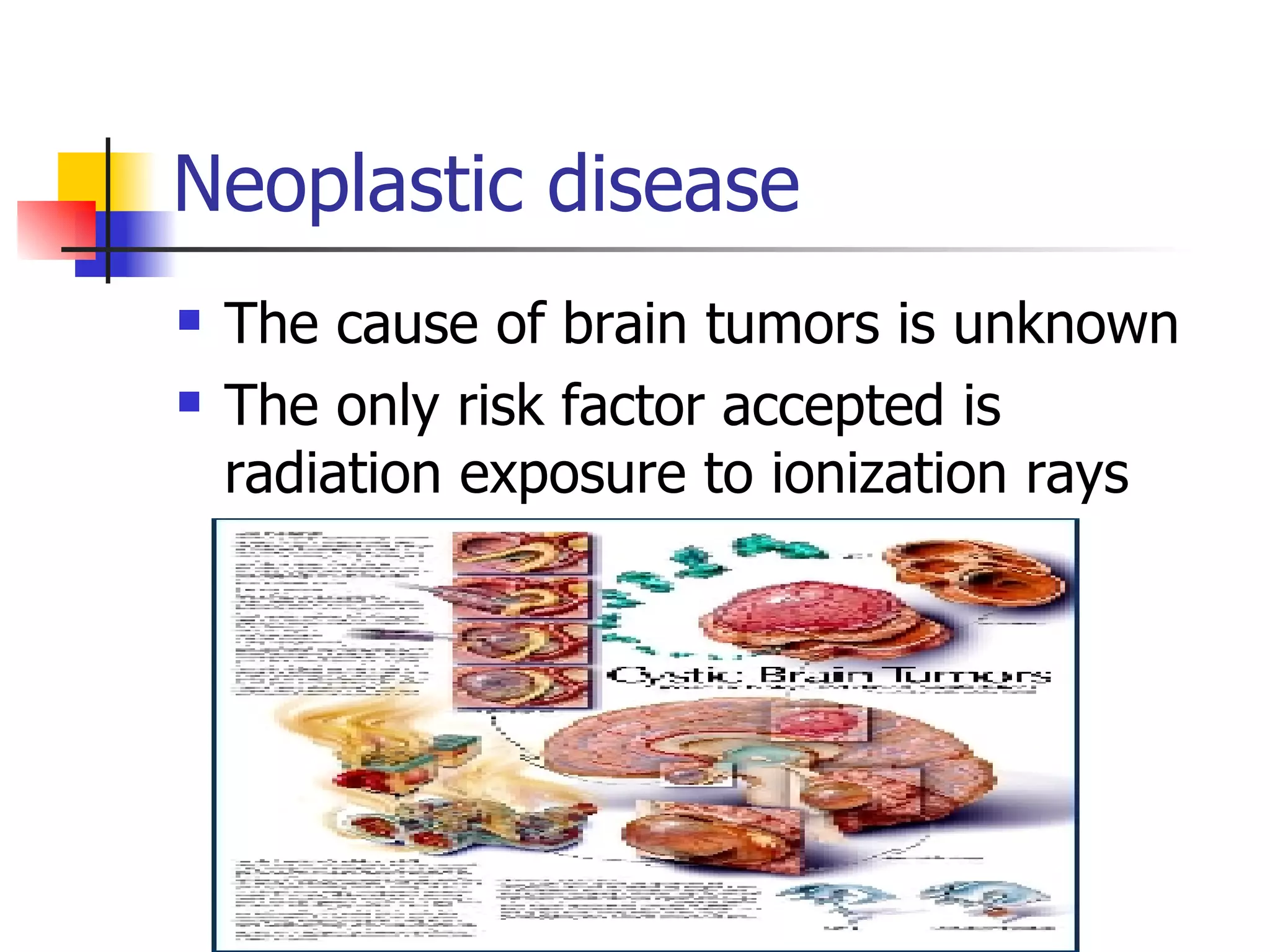
Neoplastic disease The cause of brain tumors is unknown The only risk factor accepted is radiation exposure to ionization rays
Neoplastic disease CLINICAL MANIFESTATIONS 1. increased ICP Vomiting Headache. Especially early in the morning Vomiting Visual disturbances
Neoplastic disease 2. Localized symptoms Hemiparesis Seizures Mental status changes
Neoplastic disease DIAGNOSTIC TESTS 1. CT scan 2. MRI 3. PET 4. EEG
Neoplastic disease MEDICAL MANAGEMENT Surgery Chemotherapy Radiotherapy
Neoplastic disease NURSING INTERVENTIONS 1. promote self-care independence 2. improve nutrition 3. relieve anxiety 4. enhance family processes 5. provide pre-operative and post-operative care 6. manage pain

NurseReview.Org Neurology Part 2

  • 1.
    DEMYELINATING DISEASES NurseLicensure Examination Review
  • 2.
    MULTIPLE SCLEROSIS Anauto-immune mediated progressive demyelinating disease of the CNS The myelin sheath is destroyed and replaced by sclerotic tissue (sclerosis)
  • 3.
    MULTIPLE SCLEROSIS CAUSE-unknown Multiple factors- viral infection, environmental factors,geographic location and genetic predisposition Common in WOMEN ages 20-40
  • 4.
  • 5.
  • 6.
    MULTIPLE SCLEROSIS PATHOPHYSIOLOGYSensitized T cells will enter the brain and promote antibody production that damages the myelin sheath Plaques of sclerotic tissues appear on the demyelinated axons interrupting the neuronal transmission
  • 7.
    MULTIPLE SCLEROSIS PATHOPHYSIOLOGYThe most common areas affected are Optic nerves and chiasm Cerebrum Cerebellum Spinal cord
  • 8.
    MULTIPLE SCLEROSIS CLINICALMANIFESTATIONS 1. visual problems such as diplopia, blurred vision and nystagmus 2. motor dysfunction 3. Fatigue 4. Mental changes like mood swings, depression 5. spasticity
  • 9.
    MULTIPLE SCLEROSIS DIAGNOSTICTESTS 1. MRI- primary diagnostic study 2. CSF Immunoglobulin G
  • 10.
    MULTIPLE SCLEROSIS NURSINGINTERVENTIONS 1. Promote physical mobility Exercise Schedule activity and rest periods Warm packs over the spastic area Swimming and cycling are very useful
  • 11.
    MULTIPLE SCLEROSIS NURSINGINTERVENTIONS 2. Prevent injuries Wide stance walking Use of walking aids Wheelchair
  • 12.
    MULTIPLE SCLEROSIS 3.Enhance bladder and bowel control Set a voiding schedule Intermittent bladder catheterization Use of condom catheter Adequate fluids, dietary fibers and bowel training program
  • 13.
    MULTIPLE SCLEROSIS 4. Manage speech and swallowing difficulties Careful feeding, proper positioning, suction machine availability Speech therapist
  • 14.
    MULTIPLE SCLEROSIS 5.Improve Sensory and Cognitive function Vision- use eye patch for diplopia Obtain large printed reading materials Offer emotional support Involve the family in the care
  • 15.
    MULTIPLE SCLEROSIS 6.Strengthen coping mechanism Alleviate the stress Referral to the appropriate agencies
  • 16.
    MULTIPLE SCLEROSIS 7.improve self-care abilities Modify activities according to physical strength Provide assistive devices
  • 17.
    MULTIPLE SCLEROSIS 8.promote sexual functioning Refer to sexual counselor
  • 18.
    MULTIPLE SCLEROSIS MEDICALMANAGEMENT Pharmacotherapy Interferons Immunomodulators Corticosteroids BACLOFEN for muscle spasms NSAIDS for pain
  • 19.
    Guillian-Barre’ Syndrome Anauto-immune attack of the peripheral nerve myelin Acute, rapid segmental demyelination of peripheral nerves and some cranial nerves
  • 20.
    Guillian-Barre’ Syndrome CAUSE:post-infectious polyneuritis of unknown origin commonly follows viral infection
  • 21.
    Guillian-Barre’ Syndrome PATHOPHYSIOLOGYCell-mediated imune attack to the myelin sheath of the peripheral nerves Infectious agent may elicit antibody production that can also destroy the myelin sheath
  • 22.
  • 23.
    Guillian-Barre’ Syndrome CLINICALMANIFESTATIONS 1. Ascending weakness and paralysis 2. diminished reflexes of the lower extremities 3. paresthesia 4. potential respiratory failure
  • 24.
    Guillian-Barre’ Syndrome NURSINGINTERVENTIONS Maintain respiratory function Chest physiotherapy and incentive spirometry Mechanical vetnilator
  • 25.
    Guillian-Barre’ Syndrome NURSINGINTERVENTIONS 2. Enhance physical mobility Support paralyzed extremities Provide passive range of motion exercise Prevent DVT and pulmonary embolism Padding over bony prominences
  • 26.
    Guillian-Barre’ Syndrome NURSINGINTERVENTIONS 3. Provide adequate nutrition IVF Parenteral nutrition Assess frequently return o gag refelx
  • 27.
    Guillian-Barre’ Syndrome NURSINGINTERVENTIONS 4. Improve communication Use other means of communication
  • 28.
    Guillian-Barre’ Syndrome NURSINGINTERVENTIONS 5. Decrease fear and anxiety Provide Referrals Answer questions Provide diversional activities 6. Monitor and manage complications DVT, Urinary retention, pulmonary embolism, respiratory failure
  • 29.
    Guillian-Barre’ Syndrome MEDICALMANAGEMENT ICU admission Mechanical Ventilation TPN and IVF PLASMAPHERESIS IV IMMUNOGLOBULIN
  • 30.
    ALZHEIMER’S disease Aprogressive neurologic disorder that affects the brain resulting in cognitive impairments
  • 31.
    ALZHEIMER’S disease CAUSES:Unknown Potential factors- Amyloid plaques in the brain, Oxidative stress, neurochemical deficiencies
  • 32.
  • 33.
  • 34.
    ALZHEIMER’S disease CLINCALMANIFESTATIONS 1. Forgetfulness 2. Recent memory loss 3. Difficulty learning 4. Deterioration in personal hygiene 5. Inability to concentrate
  • 35.
    ALZHEIMER’S disease LATECLINICAL MANIFESTATIONS 6. Difficulty in abstract thinking 7. Difficulty communicating 8. Severe deterioration in memory, language and motor function 9. repetitive action- perseveration 10. personality changes
  • 36.
    ALZHEIMER’S disease DIAGNOSTICTEST Neurologic examination PET scan EEG, CT and MRI Other tests to rule out Vit B deficiencies and hypothyroidism Autopsy is the most definitive
  • 37.
    ALZHEIMER’S disease Drugtherapy 1. drugs to treat behavioral symptoms- antipsychotics 2. anxiolytics 3. Donepezil 4. Tacrine
  • 38.
    ALZHEIMER’S disease NursingInterventions 1. Support patient’s abilities 2. Provide emotional support
  • 39.
    ALZHEIMER’S disease NursingInterventions 3. Establish an effective communication system with the patient and family Use short simple sentences, words and gestures Maintain a calm and consistent approach Attempt to analyze behavior for meaning
  • 40.
    ALZHEIMER’S disease 4.protect the patient from injury Provide a safe and structured environment Requests a family member to accompany client if he wanders around Keep bed in low position Provide adequate lightning Assign consistent caregivers
  • 41.
    ALZHEIMER’S disease 5.Encourage exercise to maintain mobility
  • 42.
    PARKINSON’s Disease Aslowly progressing neurologic movement disorder The degenerative idiopathic form is the most common form
  • 43.
    PARKINSON’s Disease CAUSATIVEFACTORS: unknown Potential factors: genetics, atherosclerosis, free radical stress, viral infection, head trauma and environmental factors
  • 44.
  • 45.
    PARKINSON’s Disease PathophysiologyDecreased levels of dopamine due to destruction of pigmented neuronal cells in the substantia nigra in the basal ganglia Clinical symptoms do not appear until 60% of the neurons have disappeared
  • 46.
  • 47.
    PARKINSON’s Disease CLINICALMANIFESTATIONS 1. Tremor- resting, pill-rolling 2. Rigidity- cog-wheel, lead-pipe 3. Bradykinesia- abnormally slow movement 4. Dementia, depression, sleep disturbances and hallucinations 5. excessive sweating, paroxysmal flushing, orthostatic hypotension
  • 48.
    PARKINSON’s Disease Medicalmanagement 1. Anti-parkinsonian drugs- Levodopa, Carbidopa 2. Anti-cholinergic therapy 3. Antiviral therapy- Amantadine 4. Dopamine Agonists- bromocriptine and Pergolide, Ropirinole anmd Pramipexole
  • 49.
    PARKINSON’s Disease Medicalmanagement 5. MAOI 6. Anti-depressants 7. Antihistamine
  • 50.
    PARKINSON’s Disease NURSINGINTERVENTIONS 1. Improve mobility 2. Enhance Self- care activities 3. Improve bowel elimination 4. Improve nutrition 5. Enhance swallowing 6. Encourage the use of assistive devices
  • 51.
    PARKINSON’s Disease NURSINGINTERVENTIONS 7. improve communication 8. Support coping abilities
  • 52.
    EPILEPSY A groupof syndromes characterized by recurring seizures CAUSES 1. idiopathic 6. brain tumors 2. Birth trauma 7. head Injury 3. perinatal infection 8. metabolic disorders 4. infectious disease 9. CVA 5. ingestion of toxins
  • 53.
  • 54.
    EPILEPSY Recurring seizuresmay be classified as GENERALIZED or PARTIAL SEIZURES Generalized Seizures- cause a generalized electrical abnormality within the brain Partial seizures- these seizures arise from a localized part of the brain and cause specific symptoms
  • 55.
    GENERALIZED SEIZURES 1.General Tonic-Clonic seizure- ( Grand mal ) characterized by loss of consciousness and alternating movements of the extremities 2. Absence Seizure ( Petit mal )- common in children, begins with a brief change in the LOC, indicated by blinking, rolling of eyes and blank stares
  • 56.
    GENERALIZED SEIZURES 3.Myoclonic seizure- characterized by brief, involuntary muscular jerks of body extremities 4. Akinetic seizure- general loss of postural tone and a temporary loss of consciousness- a drop attack
  • 57.
  • 58.
    PARTIAL SEIZURES 1.Simple partial seizure- typically limited to one cerebral hemisphere 2. Complex partial seizure- begins with an aura, then with impaired consciousness, with purposeless behaviors like lip-smacking, chewing movements
  • 59.
    Epilepsy DIAGNOSTIC TESTS1. EEG 2. CT 3. MRI 4. LP 5. Angiography
  • 60.
    Epilepsy Medical treatment1. Anticonvulsants- most commonly phenytoin, phenobarbital and carbamazepine Ethosuximide and valproic acid for absence seizure 2. surgery
  • 61.
    Epilepsy Nursing Intervention1. Care of patients during seizure 2. care of patients after seizures 3. patient teaching
  • 62.
    BELL’S PALSY Causes1. infection 2. hemorrhage 3. tumor 4. local traumatic injury
  • 63.
  • 64.
    BELL’S PALSY MANIFESTATIONS1. Unilateral facial weakness 2. Mouth drooping 3. Distorted taste perception 4. Smooth forehead 5. Inability to close eyelid on the affected side 6. Incomplete eye closure 7. excessive tearing when attempting to close the eyes 8. Inability to raise eyebrows, puff out the cheek
  • 65.
    BELL’S palsy Diagnostictests EMG Medical management 1. Prednisone 2. Artificial tears
  • 66.
    BELL’S palsy NursingInterventions 1. Apply moist heat to reduce pain 2. Massage the face to maintain muscle tone 3. Give frequent mouth care 4. protect the eye with an eye patch. Eyelid can be taped at night 5. instruct to chew on unaffected side
  • 67.
    Trigeminal neuralgia Alsocalled Tic Douloureux Painful disorder that affects one or more branches of the fifth cranial nerve CAUSES: repetitive pulsation of an artery as it exits the pons is the usual cause
  • 68.
  • 69.
    Trigeminal neuralgia ASSESSMENT1. Pain history 2. Searing or burning jabs of pain lasting from 1-15 minutes in an area innervated by the trigeminal nerve DIAGNOSTIC TESTS Skull x-ray or CT scan
  • 70.
    Trigeminal neuralgia NURSINGINTERVENTIONS 1. provide emotional support 2. encourage to express feelings 3. provide adequate nutrition in small frequent meals at room temperature
  • 71.
    Myasthenia gravis Asporadic, but progressive weakness and abnormal fatigability of striated muscles which are exacerbated by exercise and repetitive movements
  • 72.
    Myasthenia gravis ETIOLOGYAutoimmune disease Thymoma Women suffer at an earlier age and are more affected
  • 73.
    Myasthenia gravis Pathophysiology:1. Acetylcholine receptor antibodies interfere with impulse transmission 2. Follows an unpredictable course of periodic exacerbations and remissions
  • 74.
  • 75.
  • 76.
    Myasthenia gravis CAUSE:autoimmune disorder that impairs transmission of nerve impulses ASSESSMENT FINDINGS Gradually progressive skeletal muscle weakness and fatigue Weakness that worsens during the day Ptosis, diplopia and weak eye closure Blank, mask-like facies Difficulty chewing and swallowing Respiratory difficulty
  • 77.
    Myasthenia gravis DIAGNOSTICTESTS 1. EMG 2. TENSILON TEST 3. CT scan 4. Serum anti-AchReceptor antibodies
  • 78.
    Myasthenia gravis MEDICALTHERAPY Anticholinesterase drugs- pyridostigmine and neostigmine Corticosteroids Immunosuppresants Plasmapheresis Thymectomy
  • 79.
  • 80.
    Myasthenia gravis NURSINGINTERVENTIONS 1. Administer prescribed medication as scheduled 2. Prevent problems with chewing and swallowing 3. Promote respiratory function 4. Encourage adjustments in lifestyle to prevent fatigue 5.maximize functional abilities
  • 81.
    Myasthenia gravis 6.Prepare for complications like myasthenic crisis and cholinergic crisis 7. prevent problems associated with impaired vision resulting from ptosis of eyelids 8. provide client teaching 9. promote client and family coping
  • 82.
    Meningitis Infection orinflammation of the meninges covering the brain and spinal cord. Caused by bacterial, viral and fungal agents
  • 83.
    Brain Abscess Afree or encapsulated collection of pus in the brain parenchyma Causes: usually secondary to another infection like- sinusitis, meningitis, dental abscess, mastoiditis, bacteremia and trauma
  • 84.
  • 85.
    Encephalitis Intense inflammationof the brain tisssue with lymphocytic infiltration, cerebral edema, degeneration of brain cells and diffuse nerve cell destruction
  • 86.
    CNS infections ASSESSMENTFINDINGS Meningitis 1. fever, headache, vomiting 2. positive meningeal sings Brain abscess 1. headache, N/V, seizures, changes in LOC 2. Focal neurologic deficits
  • 87.
  • 88.
    CNS infections DIAGNOSTICTESTS 1. CT scan 2. MRI 3. EEG MEDICAL TREAMENT 1. Antibiotics 2. Surgical drainage 3. Drugs to reduce increased ICP
  • 89.
    CNS infections NURSINGINTERVENTIONS 1. Frequent monitoring of neurologic status 2. Monitor intake and output 3. Administer antibiotics 4. Administer mild laxative to prevent constipation 5. maintain quiet environment
  • 90.
    Neoplastic diseases Abrain tumor is a localized intracranial lesion that occupies space within the skull Primary brain tumors originate from cells and structures within the brain.
  • 91.
    Neoplastic disease Thecause of brain tumors is unknown The only risk factor accepted is radiation exposure to ionization rays
  • 92.
    Neoplastic disease CLINICALMANIFESTATIONS 1. increased ICP Vomiting Headache. Especially early in the morning Vomiting Visual disturbances
  • 93.
    Neoplastic disease 2.Localized symptoms Hemiparesis Seizures Mental status changes
  • 94.
    Neoplastic disease DIAGNOSTICTESTS 1. CT scan 2. MRI 3. PET 4. EEG
  • 95.
    Neoplastic disease MEDICALMANAGEMENT Surgery Chemotherapy Radiotherapy
  • 96.
    Neoplastic disease NURSINGINTERVENTIONS 1. promote self-care independence 2. improve nutrition 3. relieve anxiety 4. enhance family processes 5. provide pre-operative and post-operative care 6. manage pain