Presentation
by
Maryam Ameen
(2021-ag-1095)
Department of Epidemiology and Public Health
Topic :
Neurocysticercosis:
Road Map of presentation:
 Introduction
 Etiology of disease
 Source of infection
 Epidemiology of disease
 Life cycle
 Pathophysiology of disease
 Diagnosis
 Treatment
 Prevention
Introduction:
 Neurocysticercosis is the infection of CNS by larval stage of pork
tapeworm Taenia solium.
 Infection commonly targets subarachnoid spaces, spinal cord, eyes and
muscles.
 The most common manifestation of the disease is epilepsy, but can have
several other manifestations.
Etiology of the disease:
Neurocycticercosis is a special form of infectious parasitic disease
cysticercosis which is caused by the infection with Taenia solium, a tapeworm
found in pigs.
Source of Infection:
consumption of contaminated pork
Epidemiology:
 NCC is endemic in sub-Saharan Africa, Latin America and Asia including
subcontinent India and china.
 It is one of the neglected tropical diseases.
 Disease is rare in developed countries.
 Epidemiology of the disease is also associated with poor sanitation.
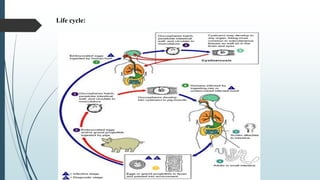
Life cycle:
Pathophysiology of disease:
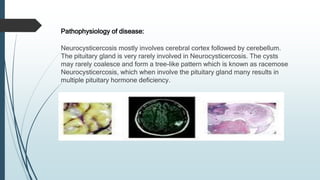
Neurocysticercosis mostly involves cerebral cortex followed by cerebellum.
The pituitary gland is very rarely involved in Neurocysticercosis. The cysts
may rarely coalesce and form a tree-like pattern which is known as racemose
Neurocysticercosis, which when involve the pituitary gland many results in
multiple pituitary hormone deficiency.
Diagnosis:
NCC can be diagnosed by
 CT scan
 Stool examination
confirmatory tests include
 ELISA
 Immunoblotting techniques.
Treatment:
 Epileptic therapy
 Praziquantel
 Albendazol
 Surgical removal of brain cyst.
Prevention:
 Proper hand washing.
 Avoid contact with stool of infected person.
 Proper cocking of meat and meat products.
Thank you

Para 706 Presentation.pptx

  • 1.
  • 2.
  • 3.
    Road Map ofpresentation:  Introduction  Etiology of disease  Source of infection  Epidemiology of disease  Life cycle  Pathophysiology of disease  Diagnosis  Treatment  Prevention
  • 4.
    Introduction:  Neurocysticercosis isthe infection of CNS by larval stage of pork tapeworm Taenia solium.  Infection commonly targets subarachnoid spaces, spinal cord, eyes and muscles.  The most common manifestation of the disease is epilepsy, but can have several other manifestations.
  • 5.
    Etiology of thedisease: Neurocycticercosis is a special form of infectious parasitic disease cysticercosis which is caused by the infection with Taenia solium, a tapeworm found in pigs. Source of Infection: consumption of contaminated pork
  • 6.
    Epidemiology:  NCC isendemic in sub-Saharan Africa, Latin America and Asia including subcontinent India and china.  It is one of the neglected tropical diseases.  Disease is rare in developed countries.  Epidemiology of the disease is also associated with poor sanitation.
  • 7.
  • 8.
    Pathophysiology of disease: Neurocysticercosismostly involves cerebral cortex followed by cerebellum. The pituitary gland is very rarely involved in Neurocysticercosis. The cysts may rarely coalesce and form a tree-like pattern which is known as racemose Neurocysticercosis, which when involve the pituitary gland many results in multiple pituitary hormone deficiency.
  • 9.
    Diagnosis: NCC can bediagnosed by  CT scan  Stool examination confirmatory tests include  ELISA  Immunoblotting techniques. Treatment:  Epileptic therapy  Praziquantel  Albendazol  Surgical removal of brain cyst.
  • 10.
    Prevention:  Proper handwashing.  Avoid contact with stool of infected person.  Proper cocking of meat and meat products.
  • 11.