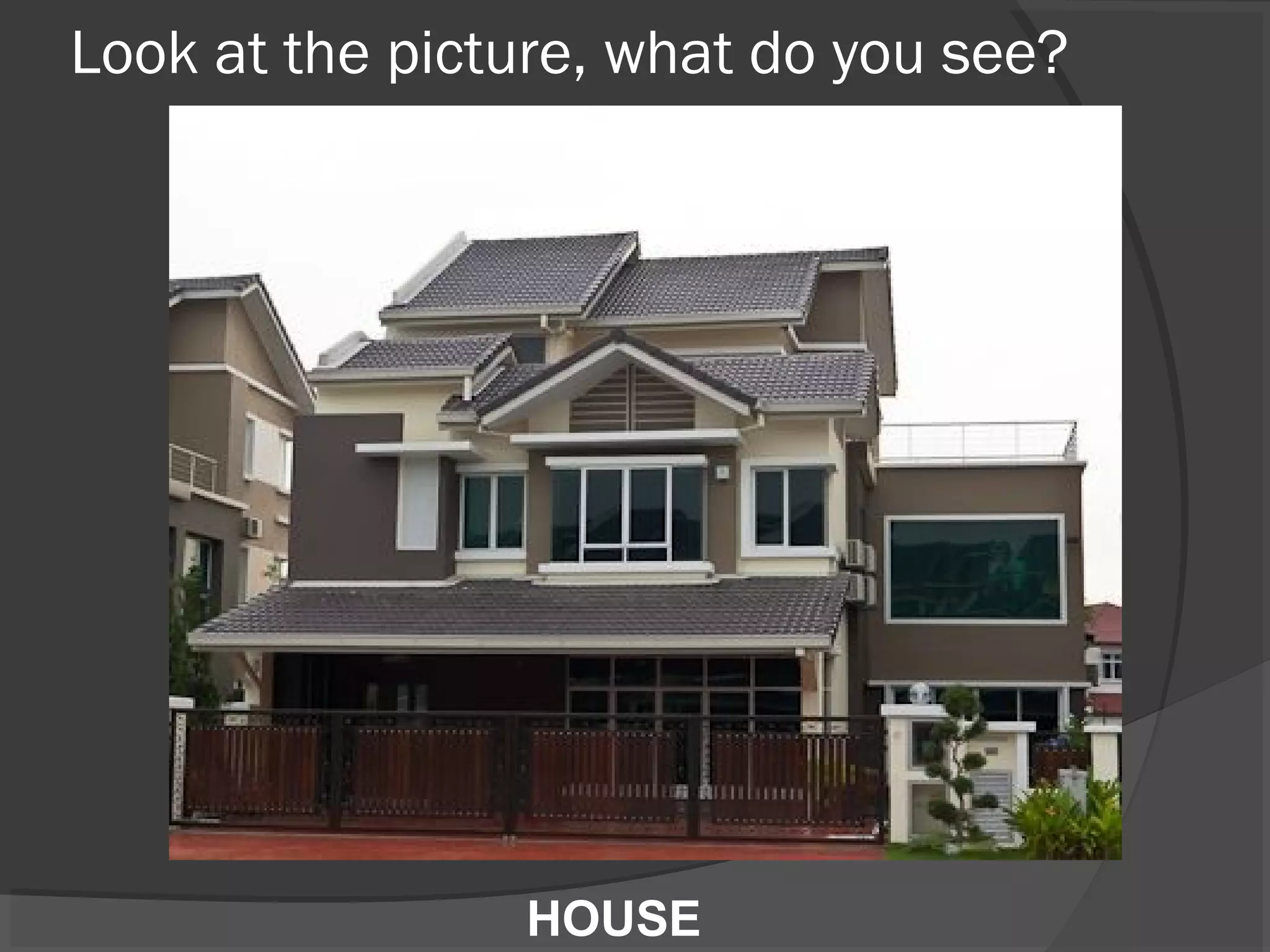
Look at the picture, what do you see?
HOUSE
MODEL OF THE HOUSE
MODEL
HOUSE
 Network architecture is the overall design
of a computer network that describes how
the computer network is configured and
what strategies are being used.
 Network architecture are also known as
network model of design.
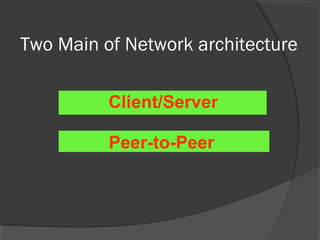
Two Main of Network architecture
Client/Server
Peer-to-Peer
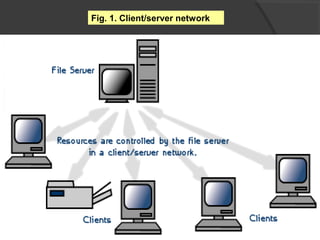
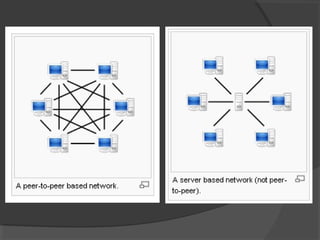
 On a client / server network, one
computer act as a server that provides
services and the other computers
(client) on the network request services
from the server.
Client / Server
Server
○ A server is sometimes called a host
computer.
○ A computer that control access to the
hardware, software, and other resources
on the network and provides a
centralized storage area for program.
○ The are many type of server such as mail
server, web server, file server and FTP
server.
 Client
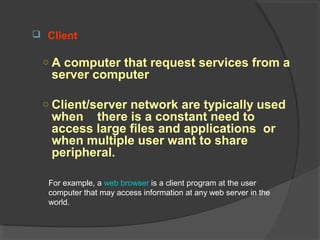
○ A computer that request services from a
server computer
○ Client/server network are typically used
when there is a constant need to
access large files and applications or
when multiple user want to share
peripheral.
For example, a web browser is a client program at the user
computer that may access information at any web server in the
world.
Fig. 1. Client/server network
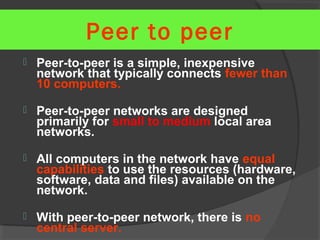
 Peer-to-peer is a simple, inexpensive
network that typically connects fewer than
10 computers.
 Peer-to-peer networks are designed
primarily for small to medium local area
networks.
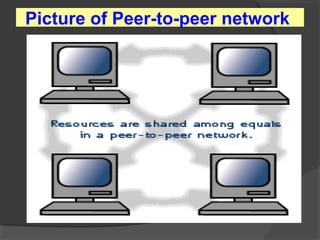
 All computers in the network have equal
capabilities to use the resources (hardware,
software, data and files) available on the
network.
 With peer-to-peer network, there is no
central server.
Peer to peer
Fig. 2. Peer-to-peer networkPicture of Peer-to-peer network
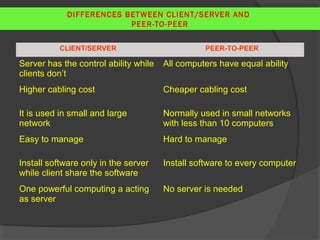
DIFFERENCES BETWEEN CLIENT/SERVER AND
PEER-TO-PEER
CLIENT/SERVER PEER-TO-PEER
Server has the control ability while
clients don’t
All computers have equal ability
Higher cabling cost Cheaper cabling cost
It is used in small and large
network
Normally used in small networks
with less than 10 computers
Easy to manage Hard to manage
Install software only in the server
while client share the software
Install software to every computer
One powerful computing a acting
as server
No server is needed

Network architecture

  • 1.
    Look at thepicture, what do you see? HOUSE
  • 2.
  • 3.
  • 5.
     Network architectureis the overall design of a computer network that describes how the computer network is configured and what strategies are being used.  Network architecture are also known as network model of design.
  • 6.
    Two Main ofNetwork architecture Client/Server Peer-to-Peer
  • 7.
     On aclient / server network, one computer act as a server that provides services and the other computers (client) on the network request services from the server. Client / Server
  • 8.
    Server ○ A serveris sometimes called a host computer. ○ A computer that control access to the hardware, software, and other resources on the network and provides a centralized storage area for program. ○ The are many type of server such as mail server, web server, file server and FTP server.
  • 9.
     Client ○ Acomputer that request services from a server computer ○ Client/server network are typically used when there is a constant need to access large files and applications or when multiple user want to share peripheral. For example, a web browser is a client program at the user computer that may access information at any web server in the world.
  • 10.
  • 11.
     Peer-to-peer isa simple, inexpensive network that typically connects fewer than 10 computers.  Peer-to-peer networks are designed primarily for small to medium local area networks.  All computers in the network have equal capabilities to use the resources (hardware, software, data and files) available on the network.  With peer-to-peer network, there is no central server. Peer to peer
  • 12.
    Fig. 2. Peer-to-peernetworkPicture of Peer-to-peer network
  • 14.
    DIFFERENCES BETWEEN CLIENT/SERVERAND PEER-TO-PEER CLIENT/SERVER PEER-TO-PEER Server has the control ability while clients don’t All computers have equal ability Higher cabling cost Cheaper cabling cost It is used in small and large network Normally used in small networks with less than 10 computers Easy to manage Hard to manage Install software only in the server while client share the software Install software to every computer One powerful computing a acting as server No server is needed