NetoperatingINCOMEapproach
P EARNESWAR KUMAR
18331E0079
In Financial Management, Capital Structure Theory Refers To A Systematic
Approach To Financing Business Activities Through A Combination Of
Equities And Liabilities. There Are Several Competing Capital Structure
Theories, Each Of Which Explores The Relationship Between Debt
Financing, Equity Financing, And The Market Value Of The Firm Slightly
Differently.
Capital structure theory:
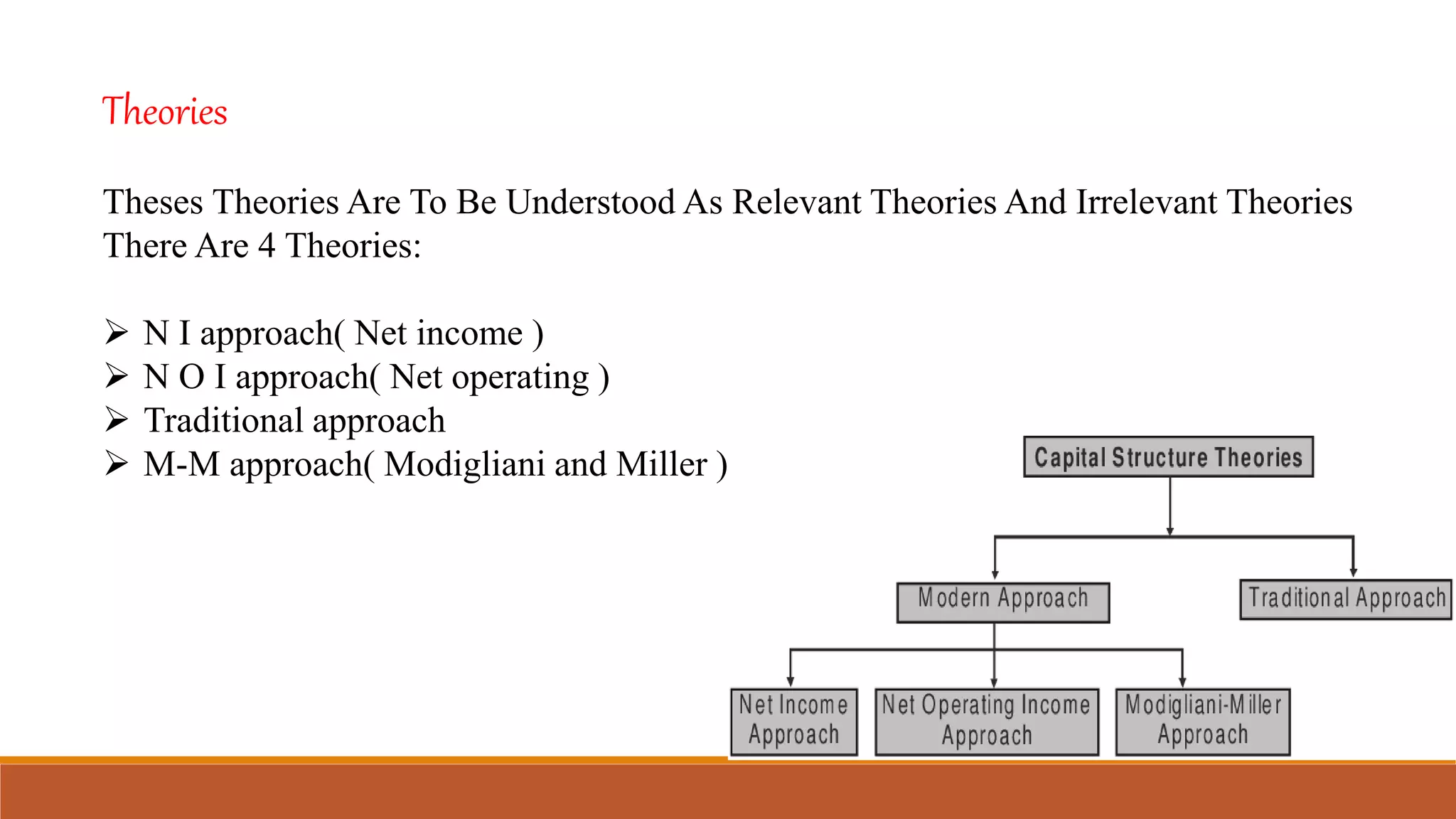
Theories
Theses Theories Are To Be Understood As Relevant Theories And Irrelevant Theories
There Are 4 Theories:
 N I approach( Net income )
 N O I approach( Net operating )
 Traditional approach
 M-M approach( Modigliani and Miller )
This Approach Was Totally Differs From The Net Income Approach. Also Famous As
Traditional Approach, Net Operating Income Approach Suggests That Change In Debt Of
The Firm or Company Or The Change In Leverage Fails To Affect The
Total Value Of The Firm or Company. As Per This Approach, The WACC
And The Total Value Of A Company Are Independent Of The Capital
Structure Decision Or Financial Leverage Of A Company.
As Per This Approach, The Market Value Is Dependent On The Operating Income And The
Associated Business Risk Of The Firm. Both These Factors Cannot Be Impacted By The
Financial Leverage. Financial Leverage Can Only Impact The Share Of Income Earned By
Debt Holders And Equity Holders But Cannot Impact The Operating Incomes Of The Firm.
Therefore, Change In Debt To Equity Ratio Cannot Make Any Change In The Value Of The
Firm.
Net operating income approach
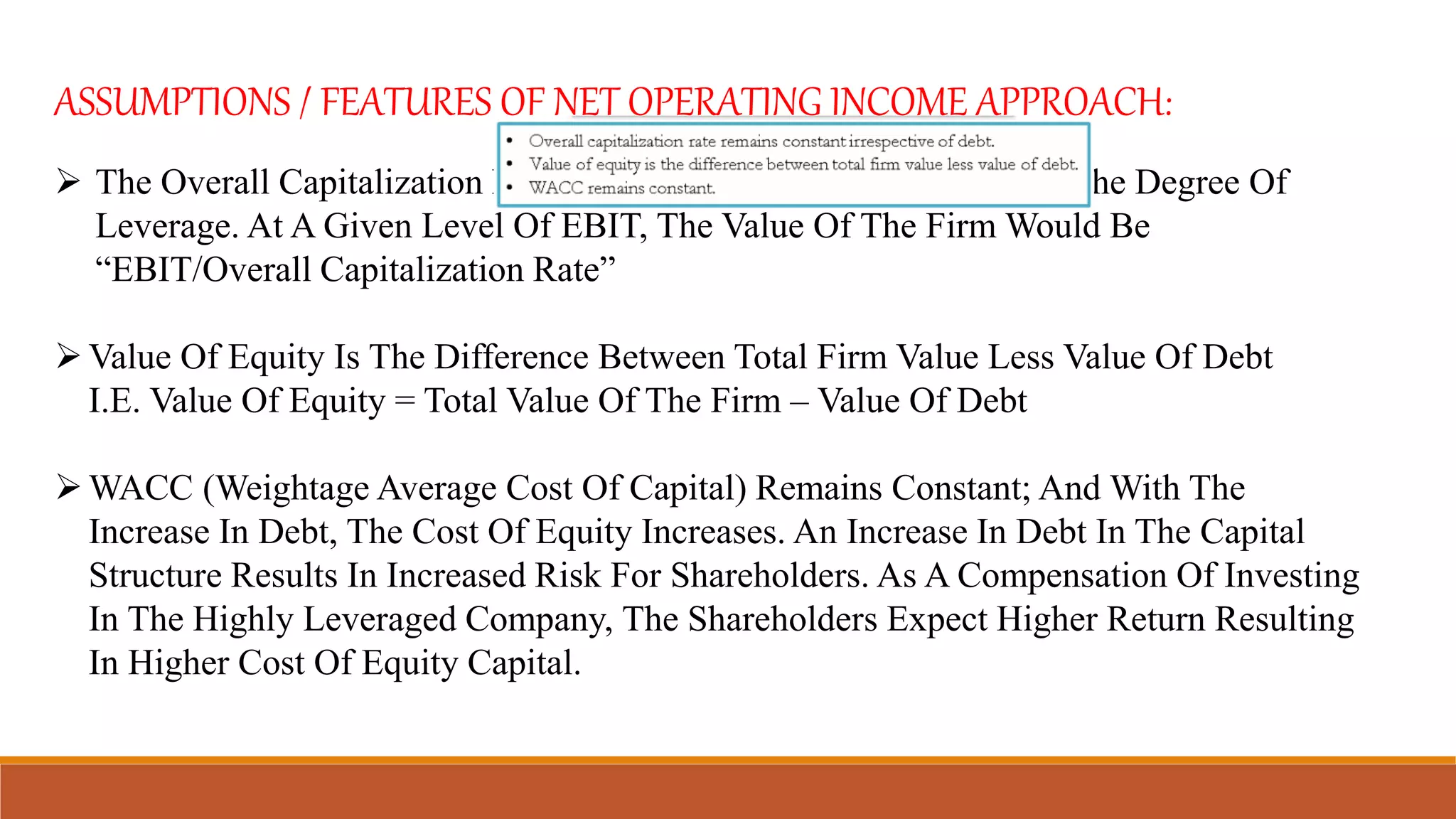
ASSUMPTIONS / FEATURES OF NET OPERATING INCOME APPROACH:
 The Overall Capitalization Rate Remains Constant Irrespective Of The Degree Of
Leverage. At A Given Level Of EBIT, The Value Of The Firm Would Be
“EBIT/Overall Capitalization Rate”
Value Of Equity Is The Difference Between Total Firm Value Less Value Of Debt
I.E. Value Of Equity = Total Value Of The Firm – Value Of Debt
WACC (Weightage Average Cost Of Capital) Remains Constant; And With The
Increase In Debt, The Cost Of Equity Increases. An Increase In Debt In The Capital
Structure Results In Increased Risk For Shareholders. As A Compensation Of Investing
In The Highly Leveraged Company, The Shareholders Expect Higher Return Resulting
In Higher Cost Of Equity Capital.
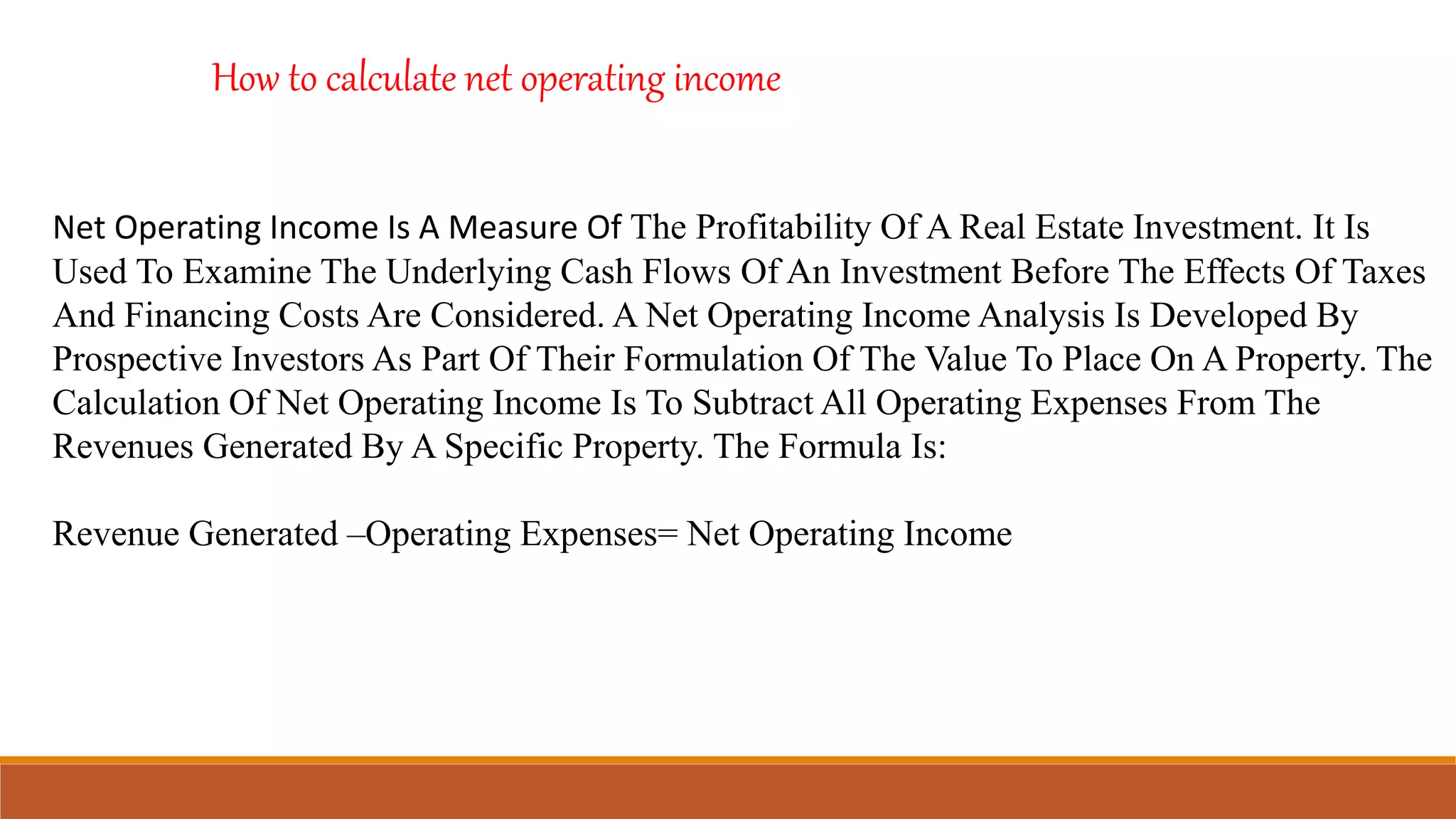
Net Operating Income Is A Measure Of The Profitability Of A Real Estate Investment. It Is
Used To Examine The Underlying Cash Flows Of An Investment Before The Effects Of Taxes
And Financing Costs Are Considered. A Net Operating Income Analysis Is Developed By
Prospective Investors As Part Of Their Formulation Of The Value To Place On A Property. The
Calculation Of Net Operating Income Is To Subtract All Operating Expenses From The
Revenues Generated By A Specific Property. The Formula Is:
Revenue Generated –Operating Expenses= Net Operating Income
How to calculate net operating income
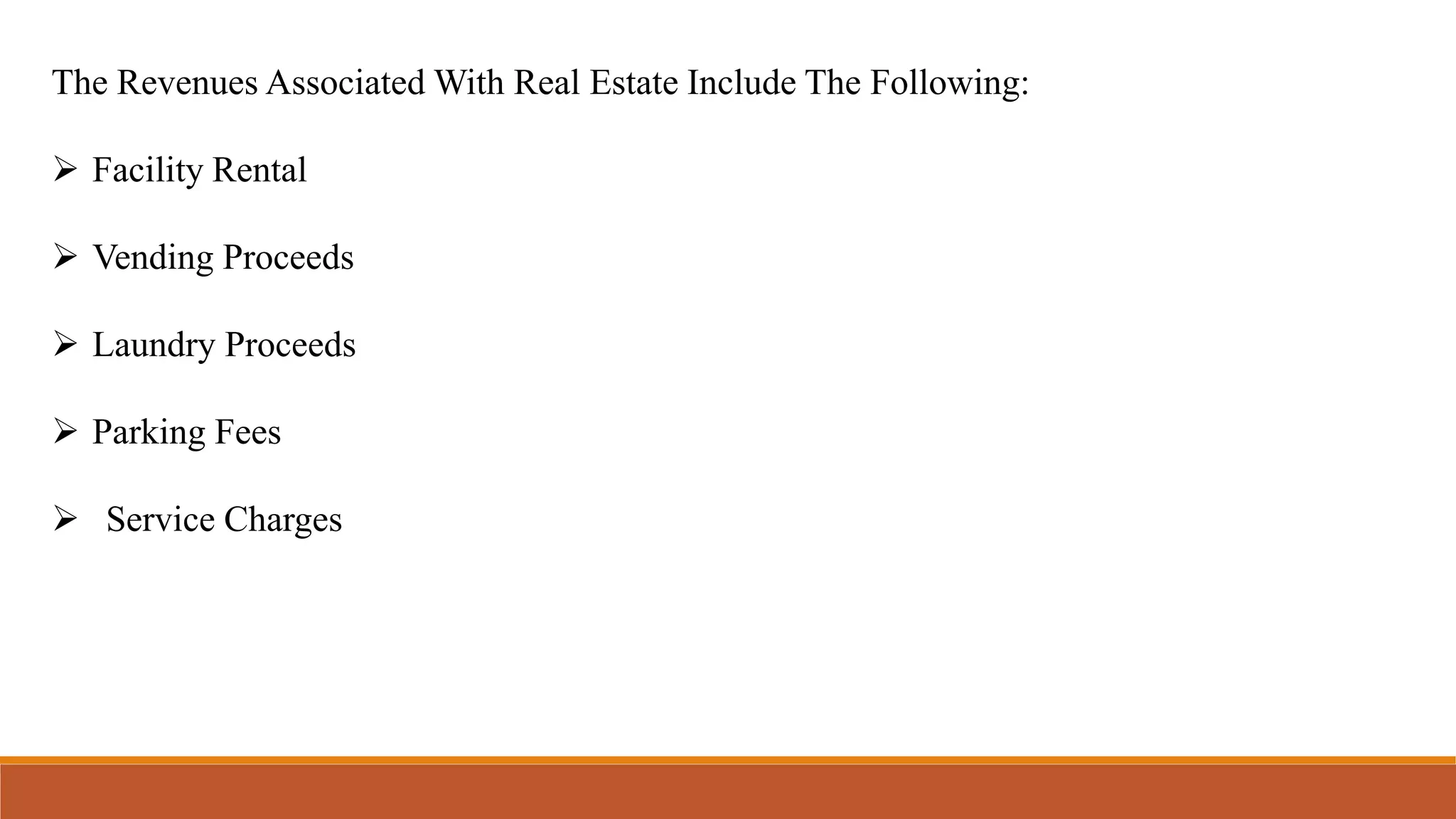
The Revenues Associated With Real Estate Include The Following:
 Facility Rental
 Vending Proceeds
 Laundry Proceeds
 Parking Fees
 Service Charges
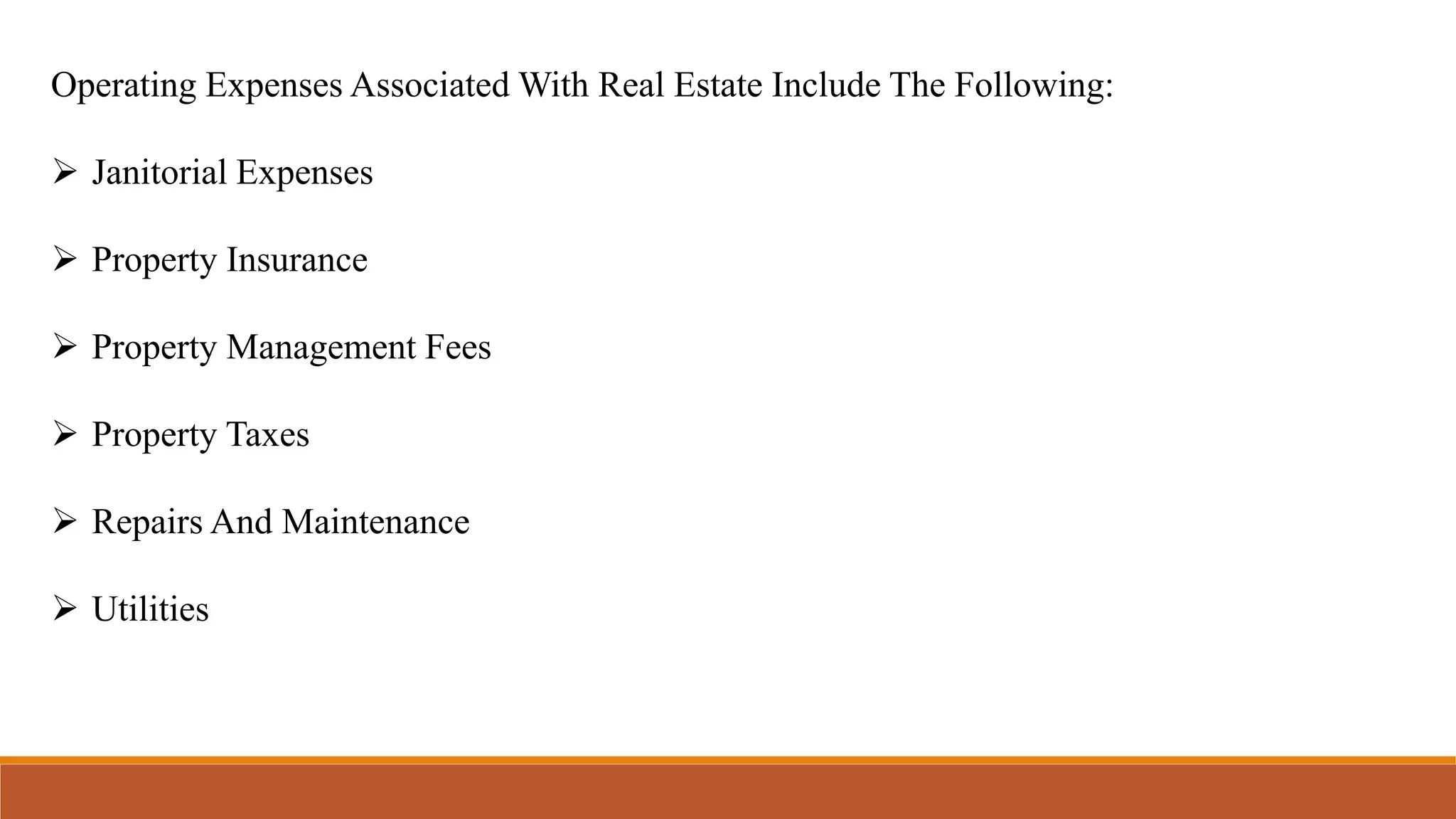
Operating Expenses Associated With Real Estate Include The Following:
 Janitorial Expenses
 Property Insurance
 Property Management Fees
 Property Taxes
 Repairs And Maintenance
 Utilities
conclusion
Expenses Not Included In The Operating Expenses Category Include Income
Taxes And Interest Expense.
 Capital Expenditures Are Not Included In The Formulation Of Operating
Expenses.
Though The Net Operating Income Concept Is Most Commonly Applied To
Real Estate, It Can Be Used Anywhere, Usually Under The Alternative Name Of
Earnings Before Interest And Taxes (EBIT).
Net operating approach in financial management

Net operating approach in financial management

  • 1.
  • 2.
    In Financial Management,Capital Structure Theory Refers To A Systematic Approach To Financing Business Activities Through A Combination Of Equities And Liabilities. There Are Several Competing Capital Structure Theories, Each Of Which Explores The Relationship Between Debt Financing, Equity Financing, And The Market Value Of The Firm Slightly Differently. Capital structure theory:
  • 3.
    Theories Theses Theories AreTo Be Understood As Relevant Theories And Irrelevant Theories There Are 4 Theories:  N I approach( Net income )  N O I approach( Net operating )  Traditional approach  M-M approach( Modigliani and Miller )
  • 4.
    This Approach WasTotally Differs From The Net Income Approach. Also Famous As Traditional Approach, Net Operating Income Approach Suggests That Change In Debt Of The Firm or Company Or The Change In Leverage Fails To Affect The Total Value Of The Firm or Company. As Per This Approach, The WACC And The Total Value Of A Company Are Independent Of The Capital Structure Decision Or Financial Leverage Of A Company. As Per This Approach, The Market Value Is Dependent On The Operating Income And The Associated Business Risk Of The Firm. Both These Factors Cannot Be Impacted By The Financial Leverage. Financial Leverage Can Only Impact The Share Of Income Earned By Debt Holders And Equity Holders But Cannot Impact The Operating Incomes Of The Firm. Therefore, Change In Debt To Equity Ratio Cannot Make Any Change In The Value Of The Firm. Net operating income approach
  • 5.
    ASSUMPTIONS / FEATURESOF NET OPERATING INCOME APPROACH:  The Overall Capitalization Rate Remains Constant Irrespective Of The Degree Of Leverage. At A Given Level Of EBIT, The Value Of The Firm Would Be “EBIT/Overall Capitalization Rate” Value Of Equity Is The Difference Between Total Firm Value Less Value Of Debt I.E. Value Of Equity = Total Value Of The Firm – Value Of Debt WACC (Weightage Average Cost Of Capital) Remains Constant; And With The Increase In Debt, The Cost Of Equity Increases. An Increase In Debt In The Capital Structure Results In Increased Risk For Shareholders. As A Compensation Of Investing In The Highly Leveraged Company, The Shareholders Expect Higher Return Resulting In Higher Cost Of Equity Capital.
  • 6.
    Net Operating IncomeIs A Measure Of The Profitability Of A Real Estate Investment. It Is Used To Examine The Underlying Cash Flows Of An Investment Before The Effects Of Taxes And Financing Costs Are Considered. A Net Operating Income Analysis Is Developed By Prospective Investors As Part Of Their Formulation Of The Value To Place On A Property. The Calculation Of Net Operating Income Is To Subtract All Operating Expenses From The Revenues Generated By A Specific Property. The Formula Is: Revenue Generated –Operating Expenses= Net Operating Income How to calculate net operating income
  • 7.
    The Revenues AssociatedWith Real Estate Include The Following:  Facility Rental  Vending Proceeds  Laundry Proceeds  Parking Fees  Service Charges
  • 8.
    Operating Expenses AssociatedWith Real Estate Include The Following:  Janitorial Expenses  Property Insurance  Property Management Fees  Property Taxes  Repairs And Maintenance  Utilities
  • 9.
    conclusion Expenses Not IncludedIn The Operating Expenses Category Include Income Taxes And Interest Expense.  Capital Expenditures Are Not Included In The Formulation Of Operating Expenses. Though The Net Operating Income Concept Is Most Commonly Applied To Real Estate, It Can Be Used Anywhere, Usually Under The Alternative Name Of Earnings Before Interest And Taxes (EBIT).