Nervous System
           Nighat Ali
 BIOS120 – Medical Terminology
  Professor Rashidah Abdullah
           11/04/2012
What is Nervous System?

 The nervous system is a complex network of
 nerves and cells that carry messages to and from
 the brain and spinal cord to various parts of the
 body.

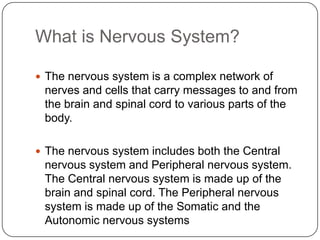
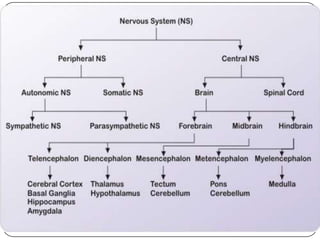
 The nervous system includes both the Central
 nervous system and Peripheral nervous system.
 The Central nervous system is made up of the
 brain and spinal cord. The Peripheral nervous
 system is made up of the Somatic and the
 Autonomic nervous systems
Nervous System Suffixes

This presentation will focus on two suffixes relative
 to the nervous system

 –phasia
 –esthesia
–phasia: suffix for speech
 Aphasia is a condition that takes away the
 ability to communicate. It can affect your
 ability to express and understand language,
 both verbal and written. It occurs after a
 stroke or a head injury, but can also come on
 gradually from a slowly growing brain tumor or
 a degenerative disease. The amount of
 disability depends on the location and the
 severity of the brain damage.
 Dysphasia is a language problem caused by
 stroke or other brain damage in the left side of the
 brain. It is characterized by complete or partial
 loss of language function including ability to
 understand, speak, read and write. All of these
 areas will be impaired to some extent, however,
 some areas may be affected more than others
 may. The type of severity of the language
 problem will depend on which part of the brain
 has been damaged.
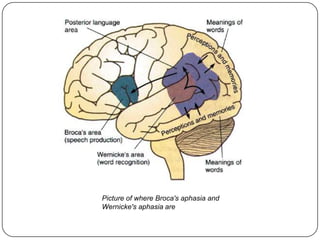
Picture of where Broca's aphasia and
Wernicke's aphasia are
–esthesia: suffix for
feeling/sensation
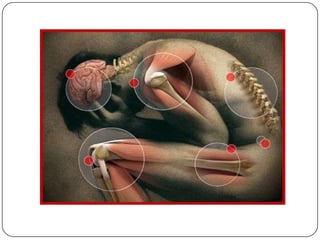
 Paresthesia refers to a burning or prickling
 sensation that is usually felt in the hands, arms,
 legs, or feet, or anywhere in the body. The
 sensation, which happens without warning, is
 often described as tingling or numbness, skin
 crawling, or itching, burning pain. Chronic
 Paresthesia is often a symptom of an underlying
 neurological disease or traumatic nerve damage.
 Paresthesia can be caused by disorders affecting
 the central nervous system, such as Multiple
 Sclerosis and also by a tumor or vascular lesion
 pressed up against the brain or spinal cord.
 Paresthesia can last for little or long time. The
 numbness and tingling can vary in intensity and
 can come at different times of the day. It can feel
 Hyperesthesia is somatosensory disorder that
  involves an abnormal increase in sensitivity
  to stimuli of the senses. Stimuli of the senses can
  include sound that one hears, foods that one
  tastes, textures that one feels, and so forth.
  Increased touch sensitivity is referred to as
  "tactile hyperesthesia", and increased sound
  sensitivity is called "auditory hyperesthesia".
 Tactile hyperesthesia can be a symptom of
  neurologic disorders such as herpes zoster and
  peripheral neuropathy.
THE END 
Hope you enjoyed and learned
        Thank you!!!

Nervous system chapter 12

  • 1.
    Nervous System Nighat Ali BIOS120 – Medical Terminology Professor Rashidah Abdullah 11/04/2012
  • 2.
    What is NervousSystem?  The nervous system is a complex network of nerves and cells that carry messages to and from the brain and spinal cord to various parts of the body.  The nervous system includes both the Central nervous system and Peripheral nervous system. The Central nervous system is made up of the brain and spinal cord. The Peripheral nervous system is made up of the Somatic and the Autonomic nervous systems
  • 4.
    Nervous System Suffixes Thispresentation will focus on two suffixes relative to the nervous system  –phasia  –esthesia
  • 5.
    –phasia: suffix forspeech  Aphasia is a condition that takes away the ability to communicate. It can affect your ability to express and understand language, both verbal and written. It occurs after a stroke or a head injury, but can also come on gradually from a slowly growing brain tumor or a degenerative disease. The amount of disability depends on the location and the severity of the brain damage.
  • 6.
     Dysphasia isa language problem caused by stroke or other brain damage in the left side of the brain. It is characterized by complete or partial loss of language function including ability to understand, speak, read and write. All of these areas will be impaired to some extent, however, some areas may be affected more than others may. The type of severity of the language problem will depend on which part of the brain has been damaged.
  • 7.
    Picture of whereBroca's aphasia and Wernicke's aphasia are
  • 8.
    –esthesia: suffix for feeling/sensation Paresthesia refers to a burning or prickling sensation that is usually felt in the hands, arms, legs, or feet, or anywhere in the body. The sensation, which happens without warning, is often described as tingling or numbness, skin crawling, or itching, burning pain. Chronic Paresthesia is often a symptom of an underlying neurological disease or traumatic nerve damage. Paresthesia can be caused by disorders affecting the central nervous system, such as Multiple Sclerosis and also by a tumor or vascular lesion pressed up against the brain or spinal cord. Paresthesia can last for little or long time. The numbness and tingling can vary in intensity and can come at different times of the day. It can feel
  • 10.
     Hyperesthesia issomatosensory disorder that involves an abnormal increase in sensitivity to stimuli of the senses. Stimuli of the senses can include sound that one hears, foods that one tastes, textures that one feels, and so forth. Increased touch sensitivity is referred to as "tactile hyperesthesia", and increased sound sensitivity is called "auditory hyperesthesia".  Tactile hyperesthesia can be a symptom of neurologic disorders such as herpes zoster and peripheral neuropathy.
  • 11.
    THE END  Hopeyou enjoyed and learned Thank you!!!