Bio 120 Medical Terminology
Tim Widlic
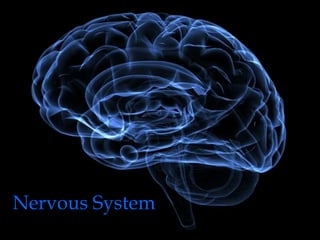
Nervous System
Aphasia
•Aphasia manifests as a dysfunction of linguistic abilities, either partial or complete, due to an
abnormal neurological condition.
•Causation: Due to trauma to certain areas of the cerebral cortex, ie, direct head trauma, hypoxia,
cerebrovascular accident, and cancer.
•Types:
•Sensory aphasia – Language is not understood.
•Expressive aphasia – Words cannot be formed or expressed, either partially and/or fully.
•Most commonly both types manifest, to some degree.
•For example: Patient may be able to write but not speak, or vice versa, Additionally, other
deficiencies in language comprehension and production may occur, such as being able to sing
but not speak.
•Can be transient: Occurring as a result of a transient ischemic attack and/or head injury, with
symptoms eventually subsiding, and a return to one’s previous linguistic abilities.
Analgesia
•A decreased or absent sensation of pain.
•Is the desired outcome when analgesic medication is administered. Analgesics are
commonly known as “painkillers”.
•Two types:
•Non narcotic: Used to treat mild to moderate pain. Does not alter a patient’s
perception, nor do they produce tolerance nor dependence. Ex: aspirin, Bayer,
Ecotrin; acetaminophen, Tylenol; ibuprofen, Aleve.
•Narcotic: Also known as an opiate or an opioid. Used to treat severe pain.
Acts on the CNS (central nervous system), specifically, the opioid receptors.
Alters the patient’s perceptions, produces tolerance, and potentially,
dependence.
•Natural opiates: alkaloids contained in the resin of the opium poppy,
primarily morphine, codeine, and thebane, but not papaverine
and noscapine.
Analgesia
Types of opioids continued…
Semi-synthetic opioids: Created from natural opiates, such as
hydromorphone, hydrocodone, oxycodone, oxymorphone,
desomorphine, diacetylmorphine (heroin), nicomophine,
dipropanoylmorphine, benzylmorphine, and ethylmorphine, and
buprenorphine
Fully synthetic opiods: Such as Fentanyl, pethidine, methadon,
tramadol, and dextropropoxyphene.
Endogenous opioid: Such as peptides, produced naturally in the
body, such as endorphins, enkephalins, dynorphins, and
endomorphins.
References:
Fremgen, Bonnie F., Medical Terminology: A Living Language. 4 th. ed. Upper Saddle
River: Pearson, 2009.
Mosby's Medical, Nursing, and Allied Health Dictionary. 6th ed. St. Louis: Mosby,
2002.
Internet sources:
http://en.wikipedia.org/wiki/Aphasia
http://en.wikipedia.org/wiki/Opioid
Thank you for viewing.

Bio120 Nervous System

  • 1.
    Bio 120 MedicalTerminology Tim Widlic
  • 2.
  • 3.
    Aphasia •Aphasia manifests asa dysfunction of linguistic abilities, either partial or complete, due to an abnormal neurological condition. •Causation: Due to trauma to certain areas of the cerebral cortex, ie, direct head trauma, hypoxia, cerebrovascular accident, and cancer. •Types: •Sensory aphasia – Language is not understood. •Expressive aphasia – Words cannot be formed or expressed, either partially and/or fully. •Most commonly both types manifest, to some degree. •For example: Patient may be able to write but not speak, or vice versa, Additionally, other deficiencies in language comprehension and production may occur, such as being able to sing but not speak. •Can be transient: Occurring as a result of a transient ischemic attack and/or head injury, with symptoms eventually subsiding, and a return to one’s previous linguistic abilities.
  • 4.
    Analgesia •A decreased orabsent sensation of pain. •Is the desired outcome when analgesic medication is administered. Analgesics are commonly known as “painkillers”. •Two types: •Non narcotic: Used to treat mild to moderate pain. Does not alter a patient’s perception, nor do they produce tolerance nor dependence. Ex: aspirin, Bayer, Ecotrin; acetaminophen, Tylenol; ibuprofen, Aleve. •Narcotic: Also known as an opiate or an opioid. Used to treat severe pain. Acts on the CNS (central nervous system), specifically, the opioid receptors. Alters the patient’s perceptions, produces tolerance, and potentially, dependence. •Natural opiates: alkaloids contained in the resin of the opium poppy, primarily morphine, codeine, and thebane, but not papaverine and noscapine.
  • 5.
    Analgesia Types of opioidscontinued… Semi-synthetic opioids: Created from natural opiates, such as hydromorphone, hydrocodone, oxycodone, oxymorphone, desomorphine, diacetylmorphine (heroin), nicomophine, dipropanoylmorphine, benzylmorphine, and ethylmorphine, and buprenorphine Fully synthetic opiods: Such as Fentanyl, pethidine, methadon, tramadol, and dextropropoxyphene. Endogenous opioid: Such as peptides, produced naturally in the body, such as endorphins, enkephalins, dynorphins, and endomorphins.
  • 6.
    References: Fremgen, Bonnie F.,Medical Terminology: A Living Language. 4 th. ed. Upper Saddle River: Pearson, 2009. Mosby's Medical, Nursing, and Allied Health Dictionary. 6th ed. St. Louis: Mosby, 2002. Internet sources: http://en.wikipedia.org/wiki/Aphasia http://en.wikipedia.org/wiki/Opioid
  • 7.
    Thank you forviewing.