Presentation:
Chapter 12
Phil Traini
Medical terminology
• Medical terminology is a language of its own. This
language helps professionals accurately describe
the human body along with any conditions
associated with it in a scientific manner.
• There are 3 parts when considering the systematic
approach of creating a word: prefixes, word roots,
and suffixes.
• So these parts of words help
Suffix Defined
• What is a suffix?
• A suffix is placed at the end of the root word in order to
add meaning in terms of condition, disease, and/or
procedure.
• Examples:
• One suffix example is -plegia. -Plegia means paralysis
and can help identify the condition and individual is
suffering from after properly identifying the root word.
• A second example is -phasia. -Phasia means speech.
•
Suffix -Plegia relating to
nervous system
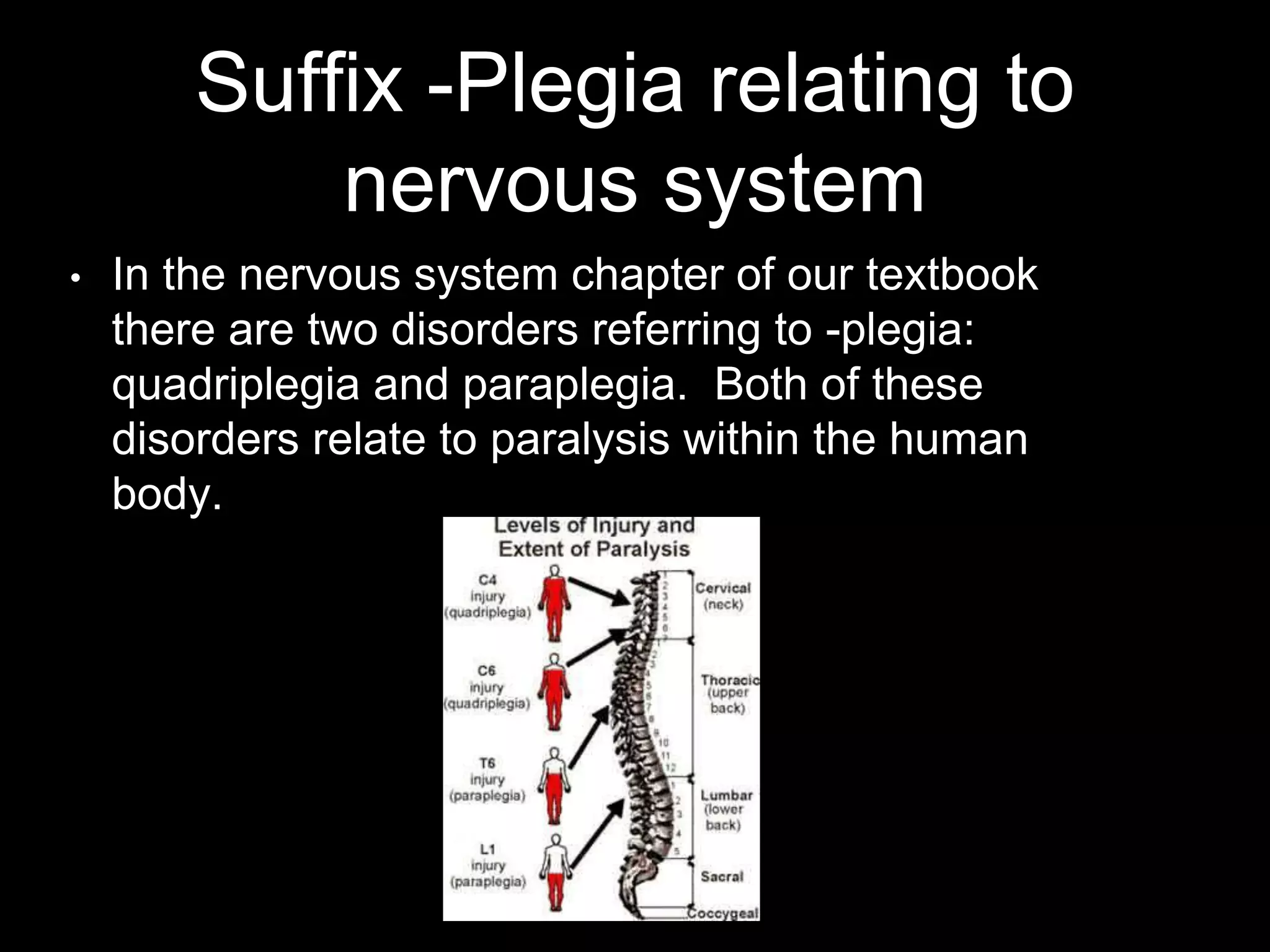
• In the nervous system chapter of our textbook
there are two disorders referring to -plegia:
quadriplegia and paraplegia. Both of these
disorders relate to paralysis within the human
body.
Quadriplegia
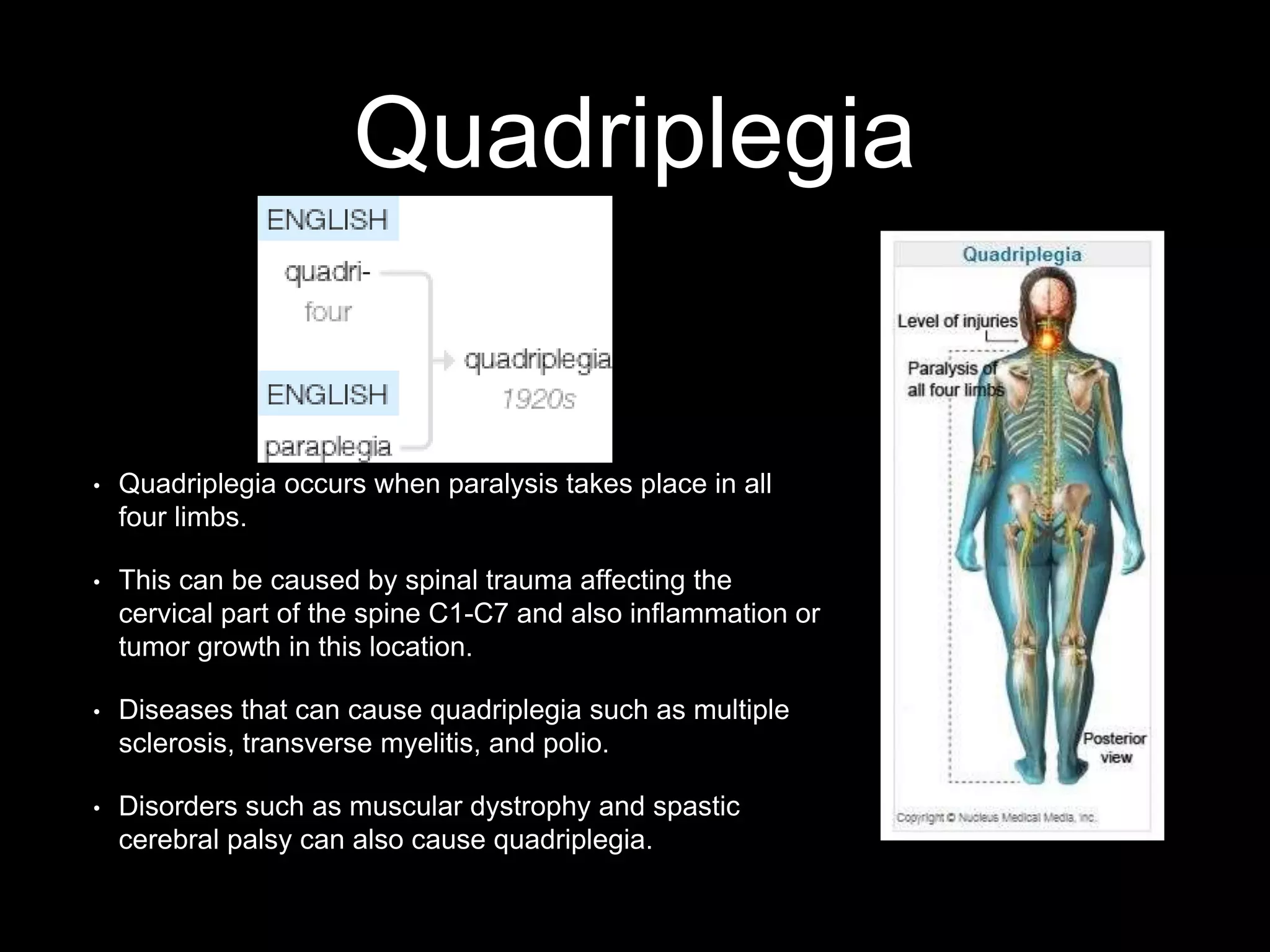
• Quadriplegia occurs when paralysis takes place in all
four limbs.
• This can be caused by spinal trauma affecting the
cervical part of the spine C1-C7 and also inflammation or
tumor growth in this location.
• Diseases that can cause quadriplegia such as multiple
sclerosis, transverse myelitis, and polio.
• Disorders such as muscular dystrophy and spastic
cerebral palsy can also cause quadriplegia.
Paraplegia
• Paraplegia is defined as paralysis
of the legs and lower body,
typically caused by spinal injury or
disease.
• It usually occurs form trauma,
inflammation(through infection or
trauma), or tumor growth on the
lumbar region of the spine L1-L5.
• Autoimmune disorders, hereditary
spastic paraplegia, syrinx, multiple
sclerosis, spina bifida, and other
disorders.
Suffix -phasia relating to
nervous system
• In the nervous system chapter of our textbook two
disorders a mentions that have the suffix -phasia. They
are aphasia and dysphasia. Both of these disorders
affect speech.
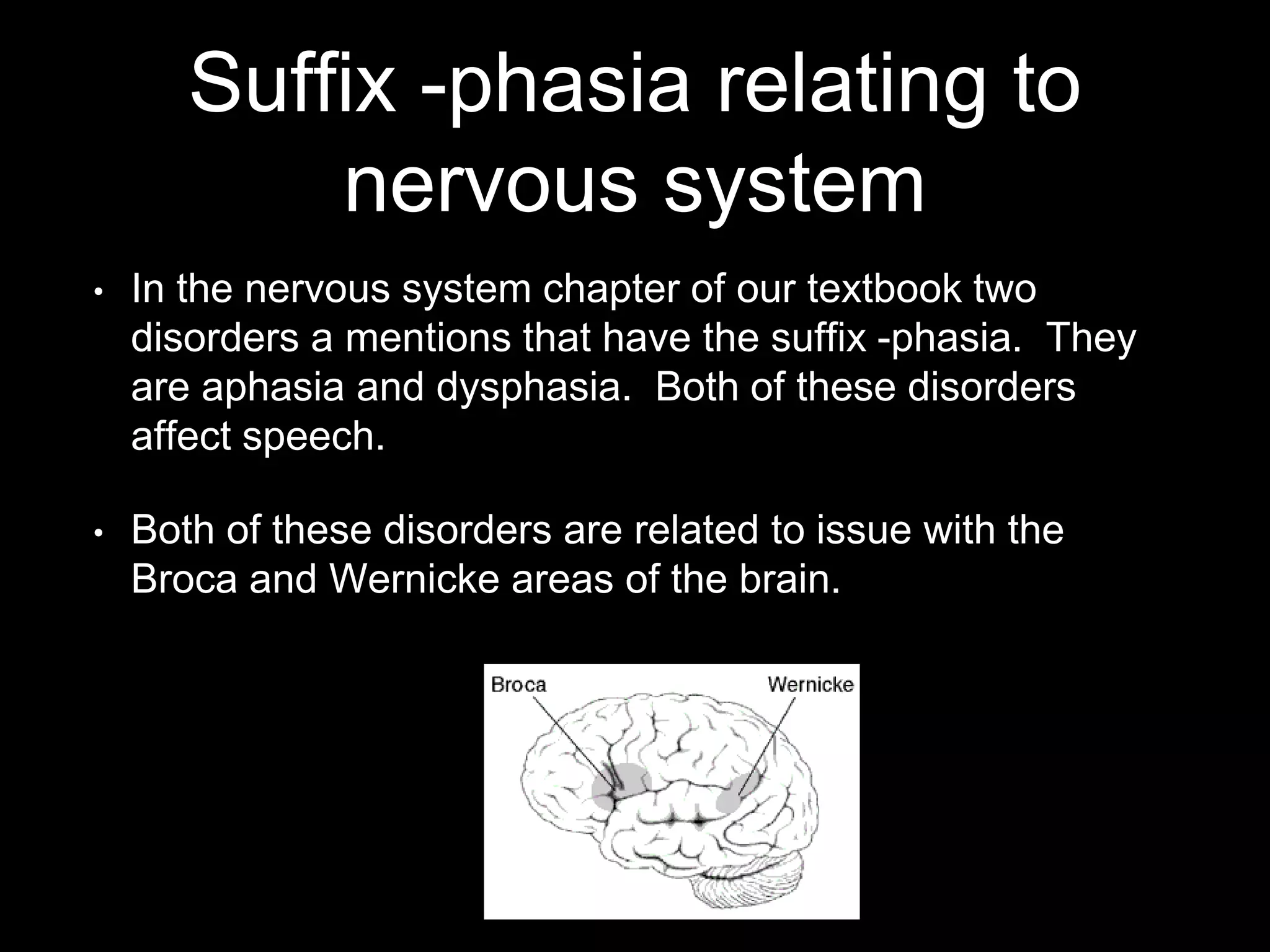
• Both of these disorders are related to issue with the
Broca and Wernicke areas of the brain.
Aphasia
• This disorder refers to the complete inability to communicate verbally or
in writing.
• A breakdown of this work (a- without, phasia-speech)
• Causes of this disorder can result from traumatic damage to the Broca's
and Wernicke's regions of the brain or the neural pathways between
them.
• Brain tumors and disorders such a Alzheimer’s and Parkinson’s disease
can also cause aphasia.
• Herpesviral encephalitis can cause aphasia.
• Epilepsy and severe migraines can sometimes cause episodic aphasia.
Dysphasia
• When broken down (dys- means abnormal, difficult -phasia
speech).
• Dysphasia is difficulty verbally communicating and also
writing.
• Although it is different than aphasia sometimes the two are
used interchangeably.
• The most common cause of dysphasia is a stroke.
• It can also be caused by trauma, infection, and tumor
growth in the Broca’s and Wernicke’s areas of the brain.
References
• Fremgen, Bonnie F., and Suzanne S. Frucht. Medical
Terminology: A Living Language. Boston: Pearson, 2013. Print.
• MayoClinic- Spinal cord injury-Diseases and conditions
(http://www.mayoclinic.org/)
• NYU Langone Medical Center- Pediatrics department-
paraplegia (http://pediatrics.med.nyu.edu/)
• thefreedictionary.com-Medical Dictionary- Dysphasia
• WebMd- Paraplegia, Quadriplegia, Aphasia, and Dysphasia
(www.webmd.com)

Phil traini presentation chapter 12

  • 1.
  • 2.
    Medical terminology • Medicalterminology is a language of its own. This language helps professionals accurately describe the human body along with any conditions associated with it in a scientific manner. • There are 3 parts when considering the systematic approach of creating a word: prefixes, word roots, and suffixes. • So these parts of words help
  • 3.
    Suffix Defined • Whatis a suffix? • A suffix is placed at the end of the root word in order to add meaning in terms of condition, disease, and/or procedure. • Examples: • One suffix example is -plegia. -Plegia means paralysis and can help identify the condition and individual is suffering from after properly identifying the root word. • A second example is -phasia. -Phasia means speech. •
  • 4.
    Suffix -Plegia relatingto nervous system • In the nervous system chapter of our textbook there are two disorders referring to -plegia: quadriplegia and paraplegia. Both of these disorders relate to paralysis within the human body.
  • 5.
    Quadriplegia • Quadriplegia occurswhen paralysis takes place in all four limbs. • This can be caused by spinal trauma affecting the cervical part of the spine C1-C7 and also inflammation or tumor growth in this location. • Diseases that can cause quadriplegia such as multiple sclerosis, transverse myelitis, and polio. • Disorders such as muscular dystrophy and spastic cerebral palsy can also cause quadriplegia.
  • 6.
    Paraplegia • Paraplegia isdefined as paralysis of the legs and lower body, typically caused by spinal injury or disease. • It usually occurs form trauma, inflammation(through infection or trauma), or tumor growth on the lumbar region of the spine L1-L5. • Autoimmune disorders, hereditary spastic paraplegia, syrinx, multiple sclerosis, spina bifida, and other disorders.
  • 7.
    Suffix -phasia relatingto nervous system • In the nervous system chapter of our textbook two disorders a mentions that have the suffix -phasia. They are aphasia and dysphasia. Both of these disorders affect speech. • Both of these disorders are related to issue with the Broca and Wernicke areas of the brain.
  • 8.
    Aphasia • This disorderrefers to the complete inability to communicate verbally or in writing. • A breakdown of this work (a- without, phasia-speech) • Causes of this disorder can result from traumatic damage to the Broca's and Wernicke's regions of the brain or the neural pathways between them. • Brain tumors and disorders such a Alzheimer’s and Parkinson’s disease can also cause aphasia. • Herpesviral encephalitis can cause aphasia. • Epilepsy and severe migraines can sometimes cause episodic aphasia.
  • 9.
    Dysphasia • When brokendown (dys- means abnormal, difficult -phasia speech). • Dysphasia is difficulty verbally communicating and also writing. • Although it is different than aphasia sometimes the two are used interchangeably. • The most common cause of dysphasia is a stroke. • It can also be caused by trauma, infection, and tumor growth in the Broca’s and Wernicke’s areas of the brain.
  • 10.
    References • Fremgen, BonnieF., and Suzanne S. Frucht. Medical Terminology: A Living Language. Boston: Pearson, 2013. Print. • MayoClinic- Spinal cord injury-Diseases and conditions (http://www.mayoclinic.org/) • NYU Langone Medical Center- Pediatrics department- paraplegia (http://pediatrics.med.nyu.edu/) • thefreedictionary.com-Medical Dictionary- Dysphasia • WebMd- Paraplegia, Quadriplegia, Aphasia, and Dysphasia (www.webmd.com)