By: Shirley Ocana
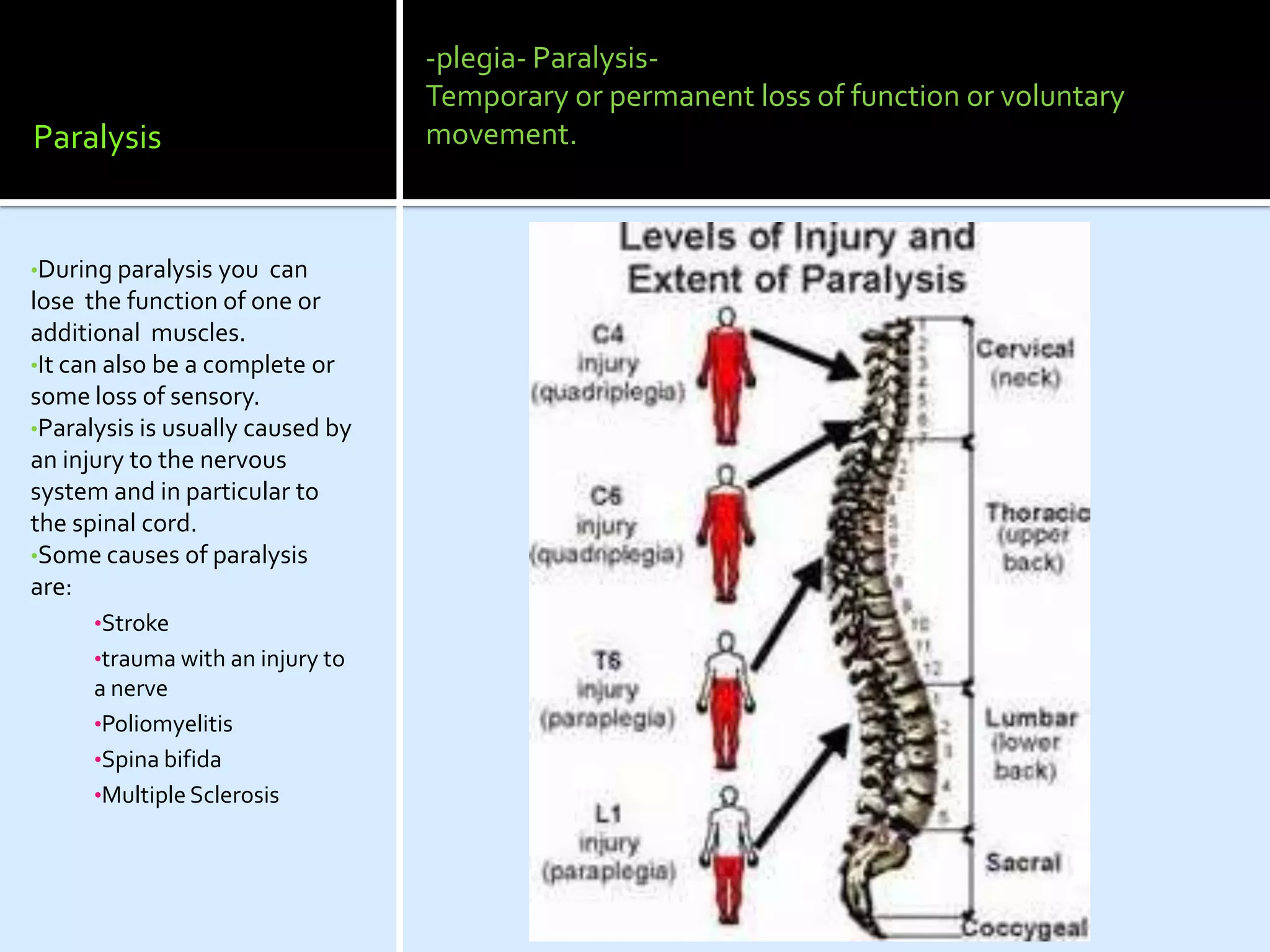
-plegia- Paralysis-
                                  Temporary or permanent loss of function or voluntary
Paralysis                         movement.


•During paralysis you   can
lose the function of one or
additional muscles.
•It can also be a complete or
some loss of sensory.
•Paralysis is usually caused by
an injury to the nervous
system and in particular to
the spinal cord.
•Some causes of paralysis
are:
      •Stroke
      •trauma with an injury to
      a nerve
      •Poliomyelitis
      •Spina bifida
      •Multiple Sclerosis
Give an example of its use in the nervous system.
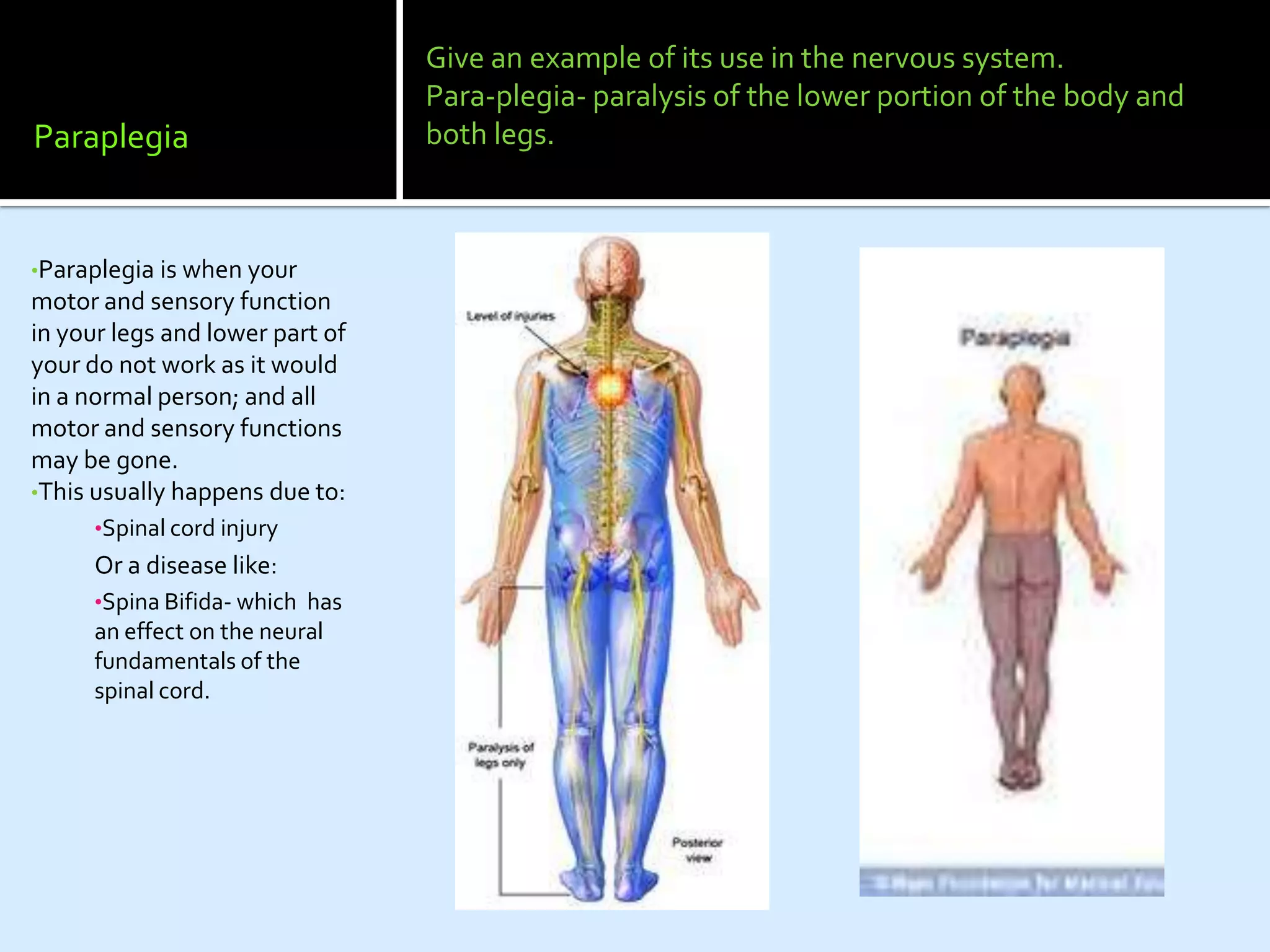
                                 Para-plegia- paralysis of the lower portion of the body and
Paraplegia                       both legs.


•Paraplegia is when your
motor and sensory function
in your legs and lower part of
your do not work as it would
in a normal person; and all
motor and sensory functions
may be gone.
•This usually happens due to:
      •Spinal cord injury
      Or a disease like:
      •Spina Bifida- which has
      an effect on the neural
      fundamentals of the
      spinal cord.
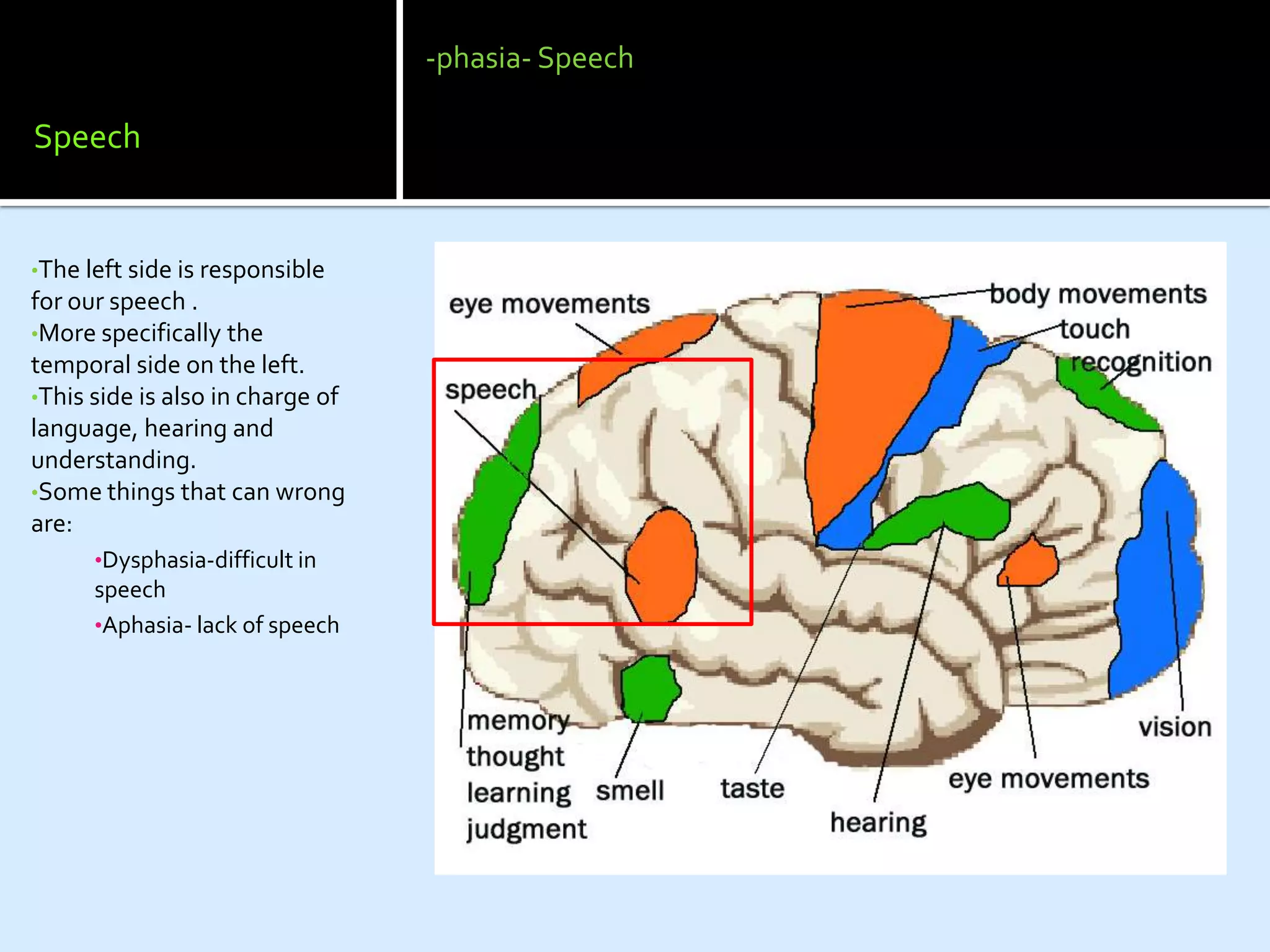
-phasia- Speech

Speech


•The left side is responsible
for our speech .
•More specifically the
temporal side on the left.
•This side is also in charge of
language, hearing and
understanding.
•Some things that can wrong
are:
      •Dysphasia-difficult in
      speech
      •Aphasia- lack of speech
Give an example of its use in the nervous system.
                                A-phasia- lack of speech.
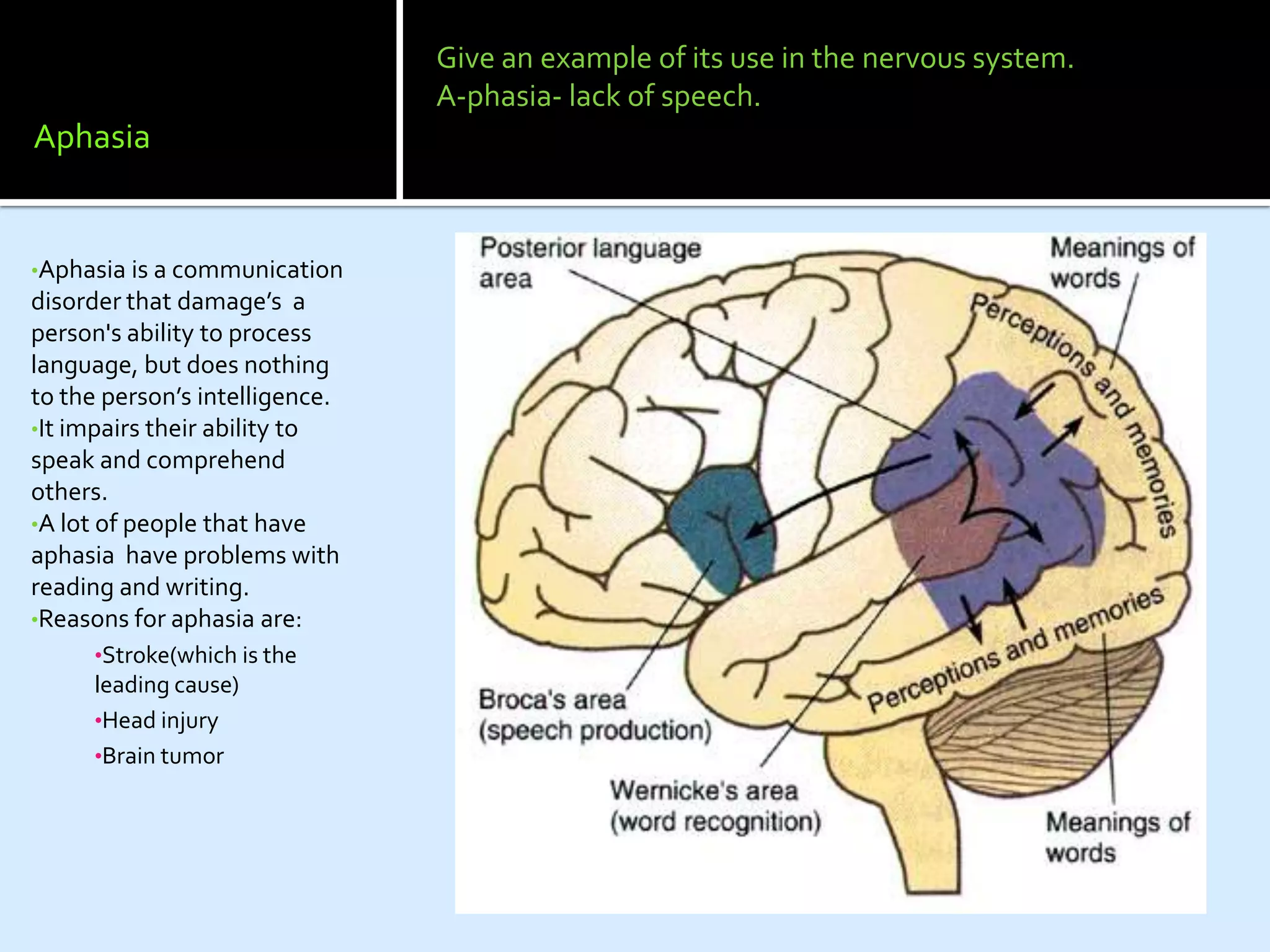
Aphasia


•Aphasia is a communication
disorder that damage’s a
person's ability to process
language, but does nothing
to the person’s intelligence.
•It impairs their ability to
speak and comprehend
others.
•A lot of people that have
aphasia have problems with
reading and writing.
•Reasons for aphasia are:
     •Stroke(which is the
     leading cause)
     •Head injury
     •Brain tumor

Nervous system

  • 1.
  • 3.
    -plegia- Paralysis- Temporary or permanent loss of function or voluntary Paralysis movement. •During paralysis you can lose the function of one or additional muscles. •It can also be a complete or some loss of sensory. •Paralysis is usually caused by an injury to the nervous system and in particular to the spinal cord. •Some causes of paralysis are: •Stroke •trauma with an injury to a nerve •Poliomyelitis •Spina bifida •Multiple Sclerosis
  • 4.
    Give an exampleof its use in the nervous system. Para-plegia- paralysis of the lower portion of the body and Paraplegia both legs. •Paraplegia is when your motor and sensory function in your legs and lower part of your do not work as it would in a normal person; and all motor and sensory functions may be gone. •This usually happens due to: •Spinal cord injury Or a disease like: •Spina Bifida- which has an effect on the neural fundamentals of the spinal cord.
  • 5.
    -phasia- Speech Speech •The leftside is responsible for our speech . •More specifically the temporal side on the left. •This side is also in charge of language, hearing and understanding. •Some things that can wrong are: •Dysphasia-difficult in speech •Aphasia- lack of speech
  • 6.
    Give an exampleof its use in the nervous system. A-phasia- lack of speech. Aphasia •Aphasia is a communication disorder that damage’s a person's ability to process language, but does nothing to the person’s intelligence. •It impairs their ability to speak and comprehend others. •A lot of people that have aphasia have problems with reading and writing. •Reasons for aphasia are: •Stroke(which is the leading cause) •Head injury •Brain tumor