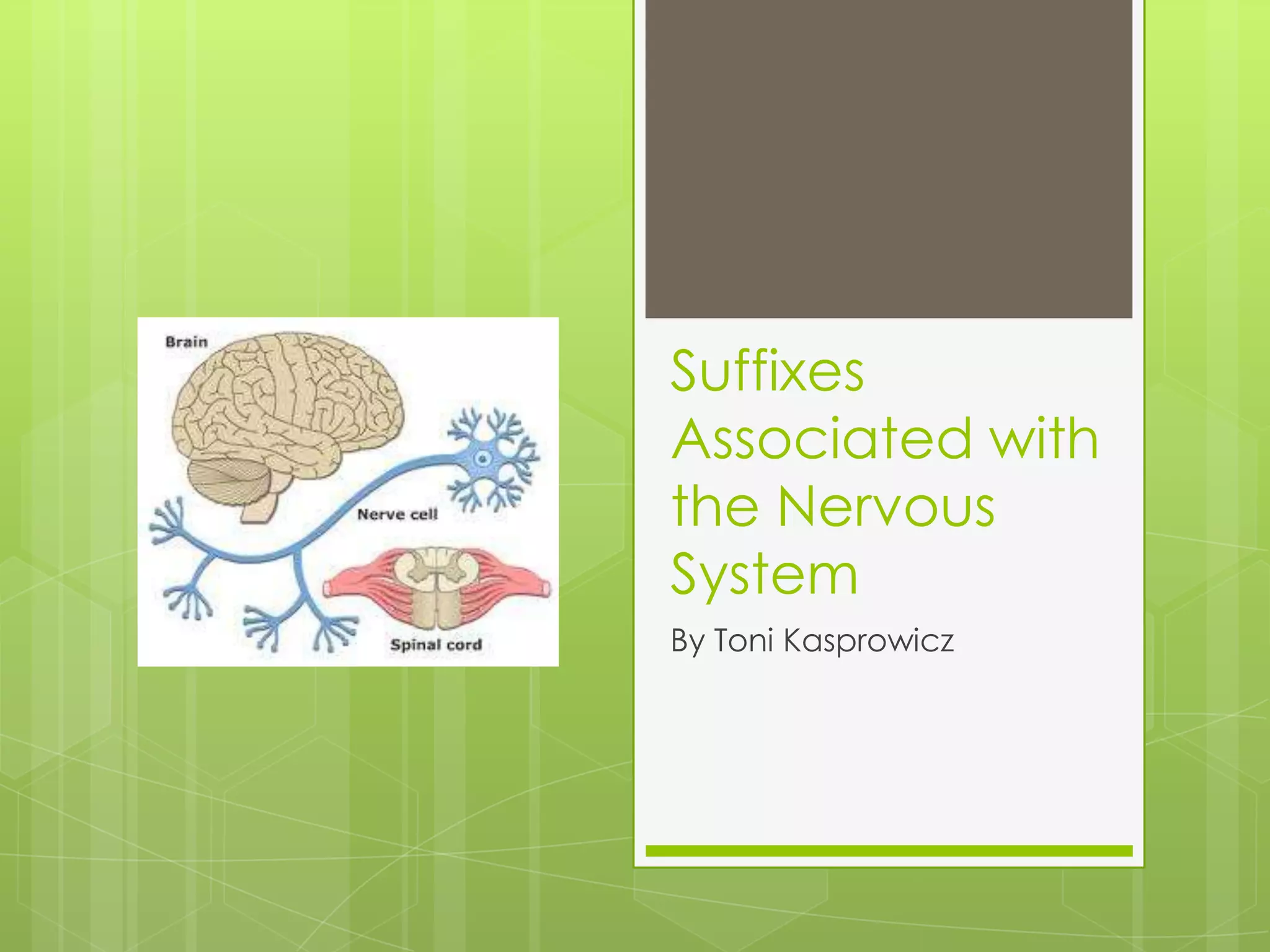
Suffixes
Associated with
the Nervous
System
By Toni Kasprowicz
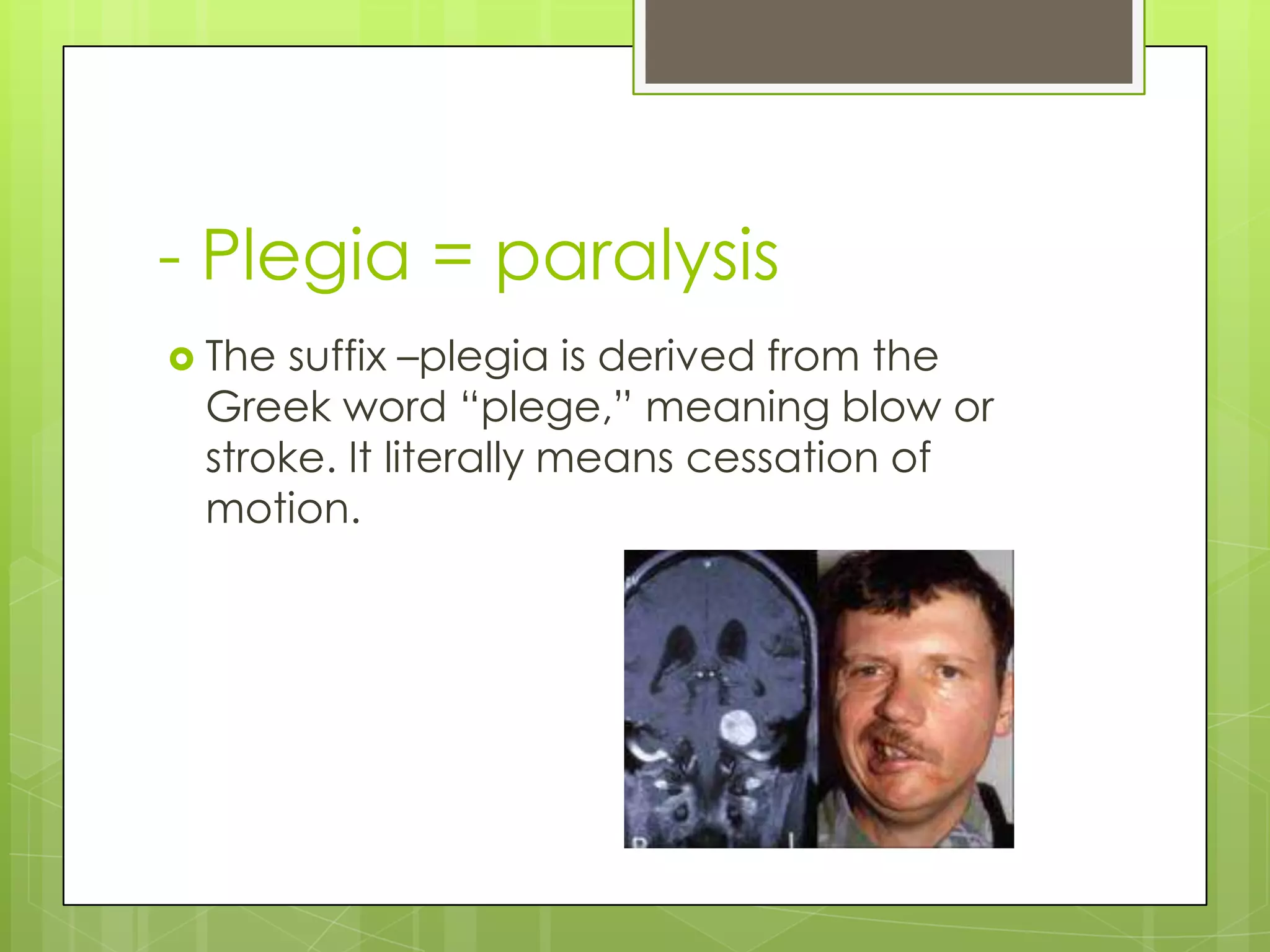
- Plegia = paralysis
 The suffix –plegia is derived from the
 Greek word “plege,” meaning blow or
 stroke. It literally means cessation of
 motion.
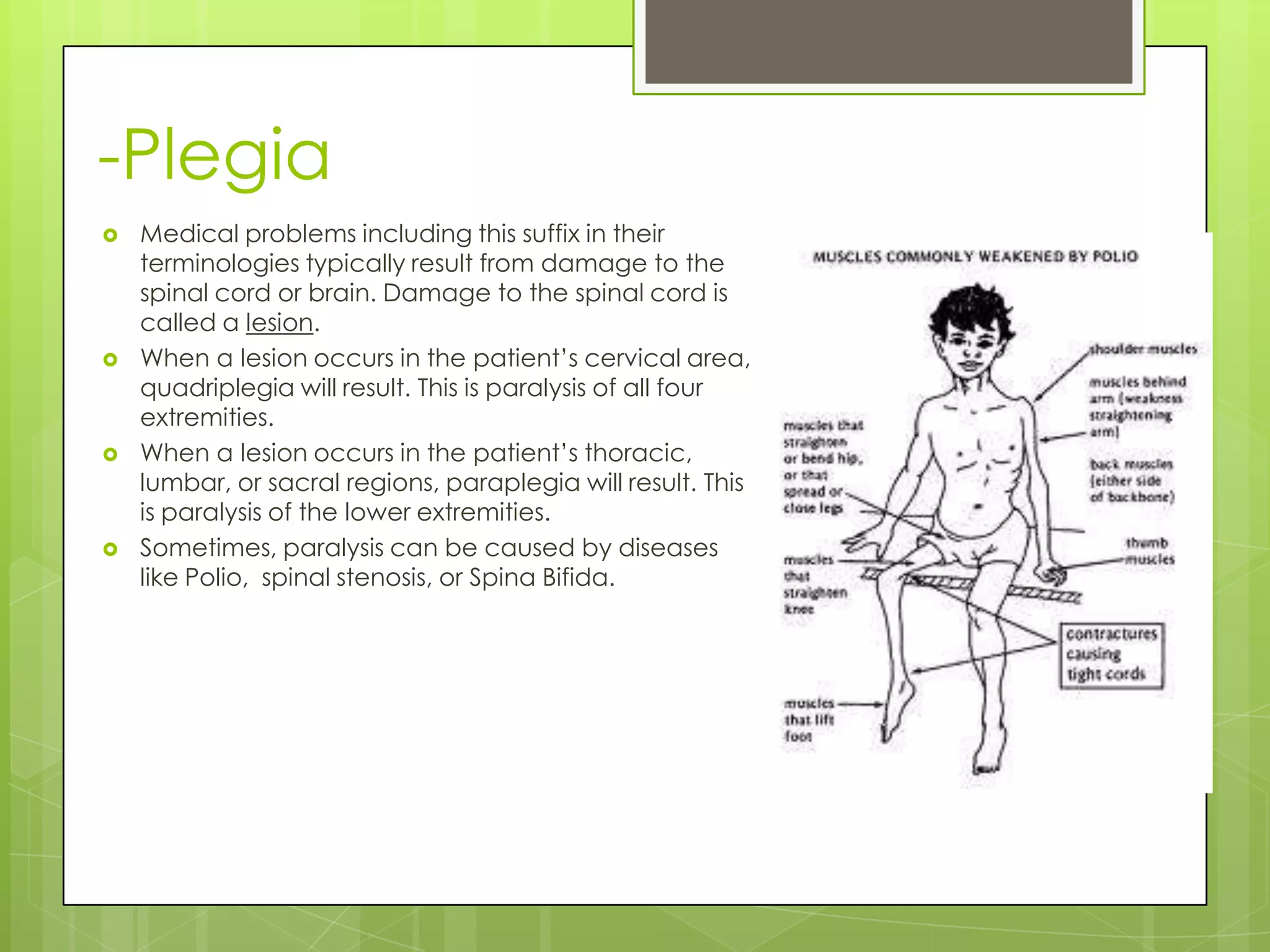
-Plegia
   Medical problems including this suffix in their
    terminologies typically result from damage to the
    spinal cord or brain. Damage to the spinal cord is
    called a lesion.
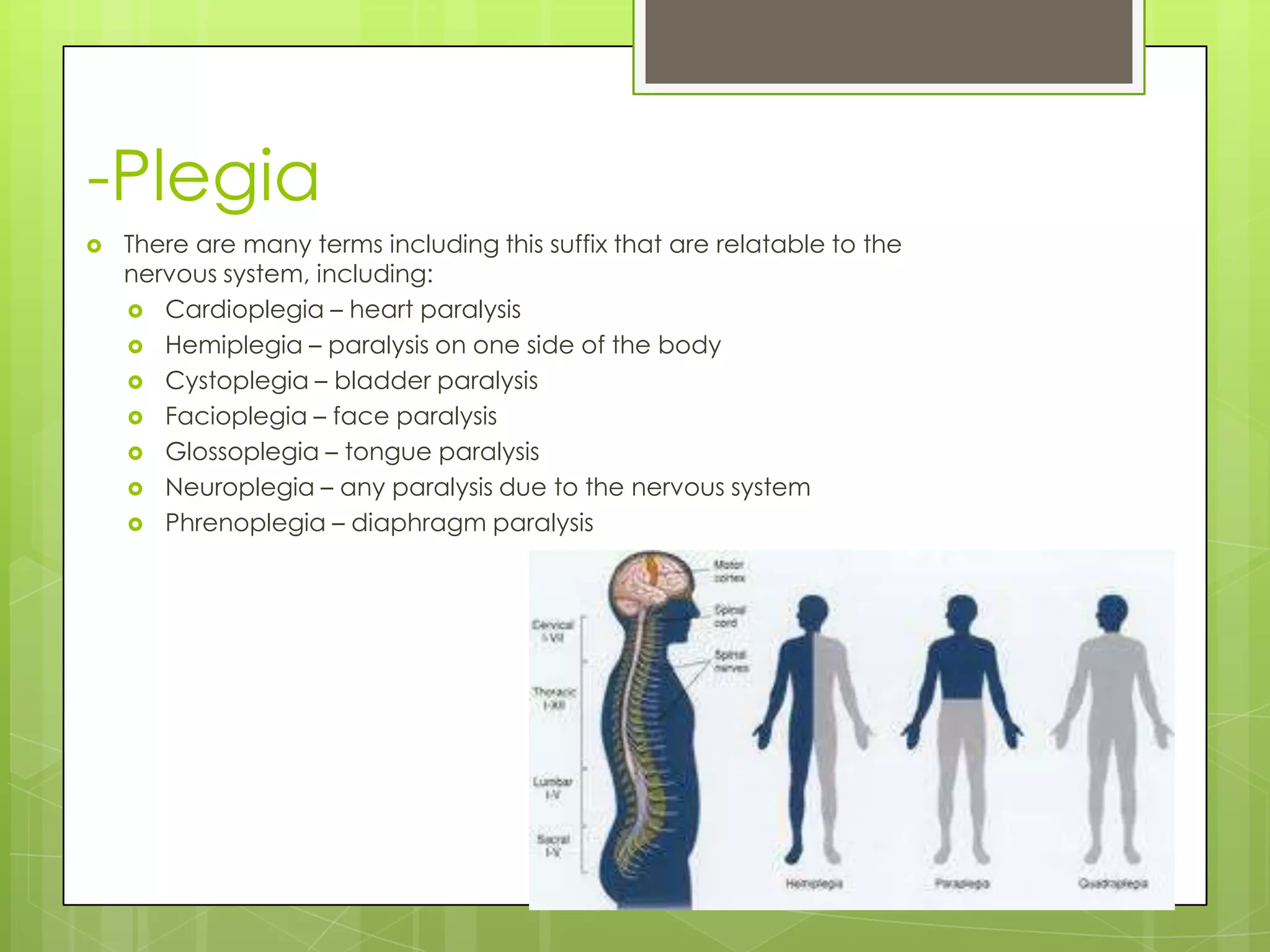
   When a lesion occurs in the patient’s cervical area,
    quadriplegia will result. This is paralysis of all four
    extremities.
   When a lesion occurs in the patient’s thoracic,
    lumbar, or sacral regions, paraplegia will result. This
    is paralysis of the lower extremities.
   Sometimes, paralysis can be caused by diseases
    like Polio, spinal stenosis, or Spina Bifida.
-Plegia
   There are many terms including this suffix that are relatable to the
    nervous system, including:
     Cardioplegia – heart paralysis
     Hemiplegia – paralysis on one side of the body
     Cystoplegia – bladder paralysis
     Facioplegia – face paralysis
     Glossoplegia – tongue paralysis
     Neuroplegia – any paralysis due to the nervous system
     Phrenoplegia – diaphragm paralysis
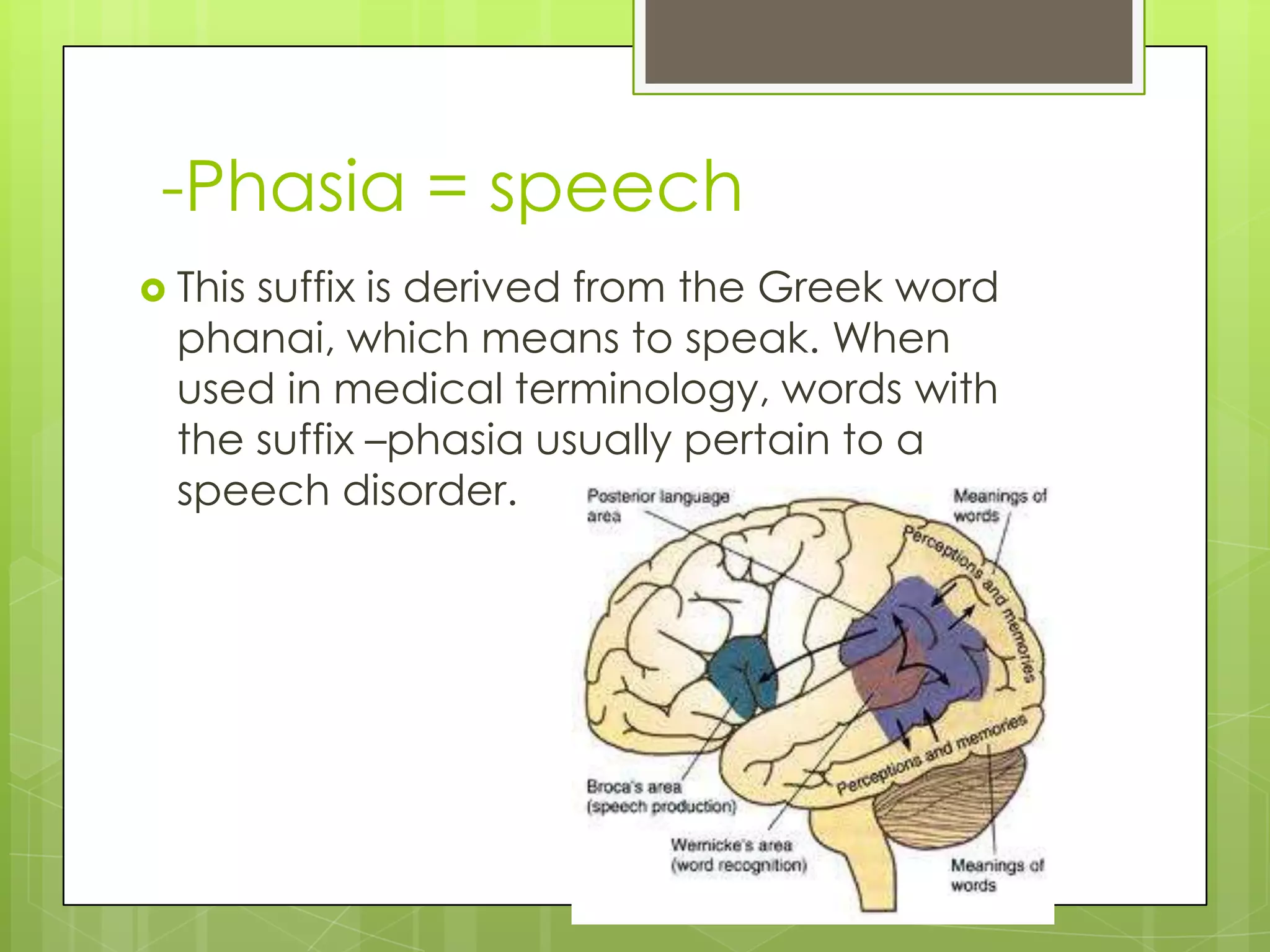
-Phasia = speech
 Thissuffix is derived from the Greek word
  phanai, which means to speak. When
  used in medical terminology, words with
  the suffix –phasia usually pertain to a
  speech disorder.
-Phasia
   There are many terms including this suffix that are relatable to the
    nervous system, including:
     Agitophasia – rapid speech
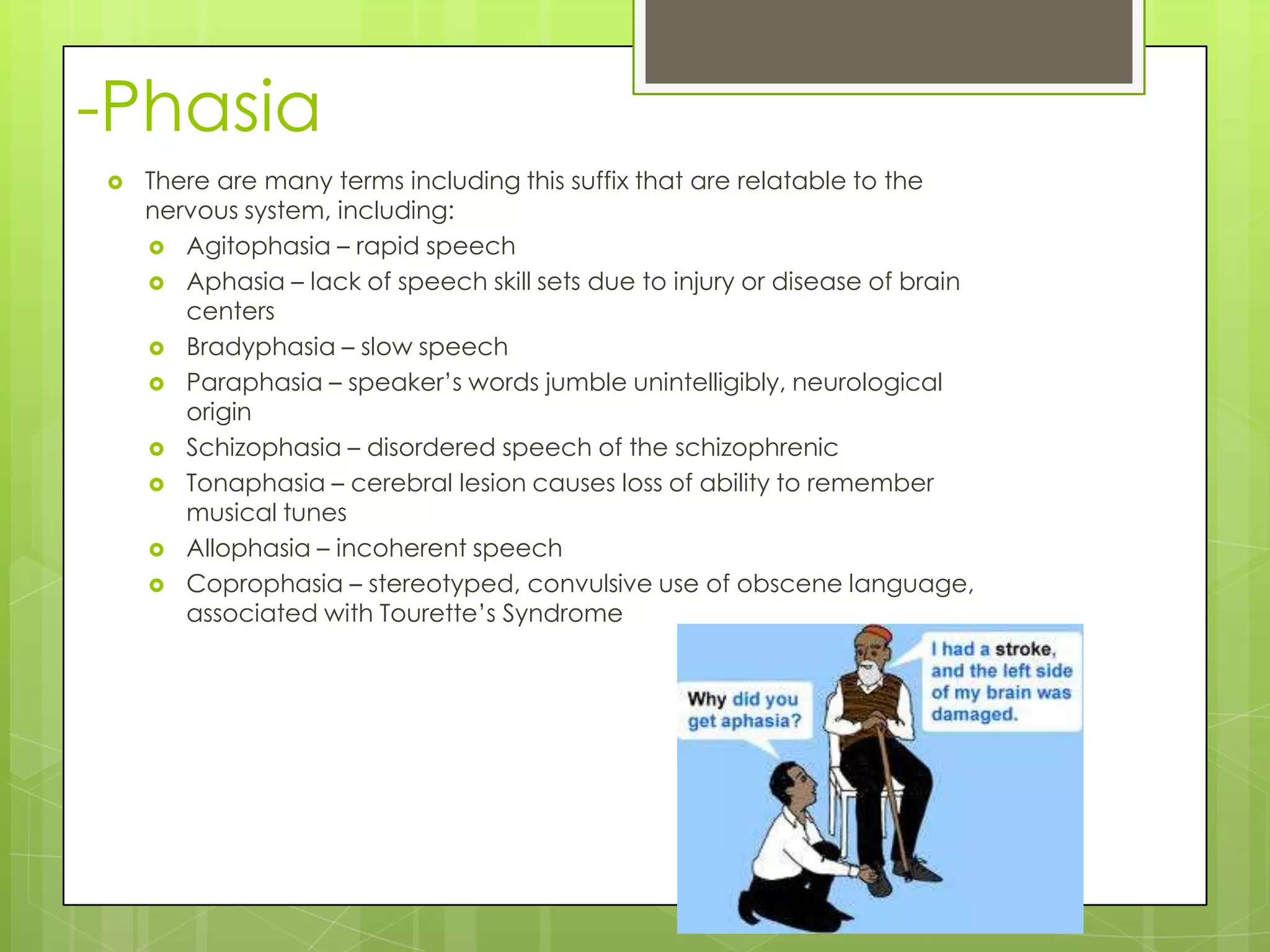
     Aphasia – lack of speech skill sets due to injury or disease of brain
       centers
     Bradyphasia – slow speech
     Paraphasia – speaker’s words jumble unintelligibly, neurological
       origin
     Schizophasia – disordered speech of the schizophrenic
     Tonaphasia – cerebral lesion causes loss of ability to remember
       musical tunes
     Allophasia – incoherent speech
     Coprophasia – stereotyped, convulsive use of obscene language,
       associated with Tourette’s Syndrome

Suffixes associated with the nervous system

  • 1.
  • 2.
    - Plegia =paralysis  The suffix –plegia is derived from the Greek word “plege,” meaning blow or stroke. It literally means cessation of motion.
  • 3.
    -Plegia  Medical problems including this suffix in their terminologies typically result from damage to the spinal cord or brain. Damage to the spinal cord is called a lesion.  When a lesion occurs in the patient’s cervical area, quadriplegia will result. This is paralysis of all four extremities.  When a lesion occurs in the patient’s thoracic, lumbar, or sacral regions, paraplegia will result. This is paralysis of the lower extremities.  Sometimes, paralysis can be caused by diseases like Polio, spinal stenosis, or Spina Bifida.
  • 4.
    -Plegia  There are many terms including this suffix that are relatable to the nervous system, including:  Cardioplegia – heart paralysis  Hemiplegia – paralysis on one side of the body  Cystoplegia – bladder paralysis  Facioplegia – face paralysis  Glossoplegia – tongue paralysis  Neuroplegia – any paralysis due to the nervous system  Phrenoplegia – diaphragm paralysis
  • 5.
    -Phasia = speech Thissuffix is derived from the Greek word phanai, which means to speak. When used in medical terminology, words with the suffix –phasia usually pertain to a speech disorder.
  • 6.
    -Phasia  There are many terms including this suffix that are relatable to the nervous system, including:  Agitophasia – rapid speech  Aphasia – lack of speech skill sets due to injury or disease of brain centers  Bradyphasia – slow speech  Paraphasia – speaker’s words jumble unintelligibly, neurological origin  Schizophasia – disordered speech of the schizophrenic  Tonaphasia – cerebral lesion causes loss of ability to remember musical tunes  Allophasia – incoherent speech  Coprophasia – stereotyped, convulsive use of obscene language, associated with Tourette’s Syndrome