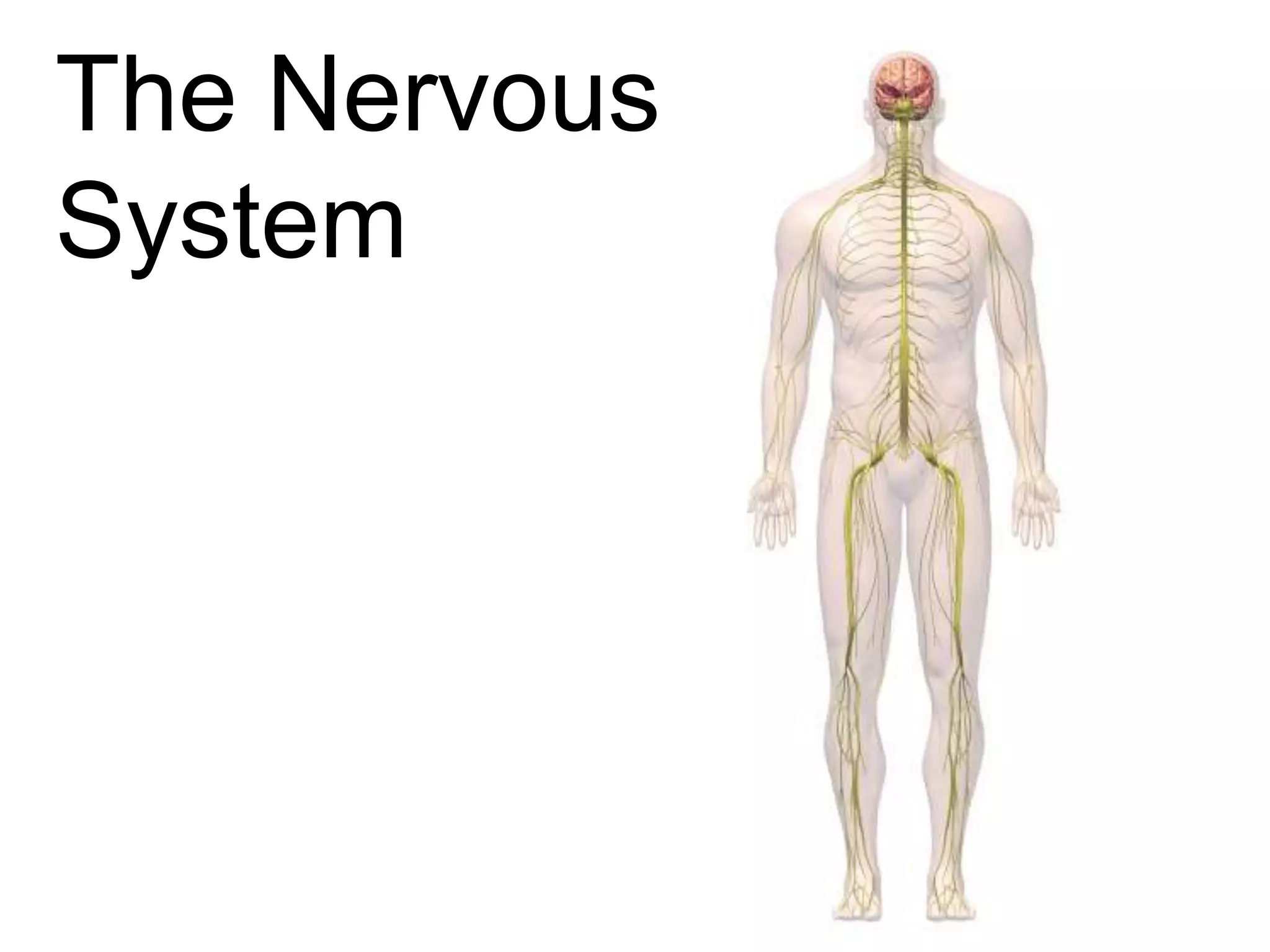
The Nervous
System
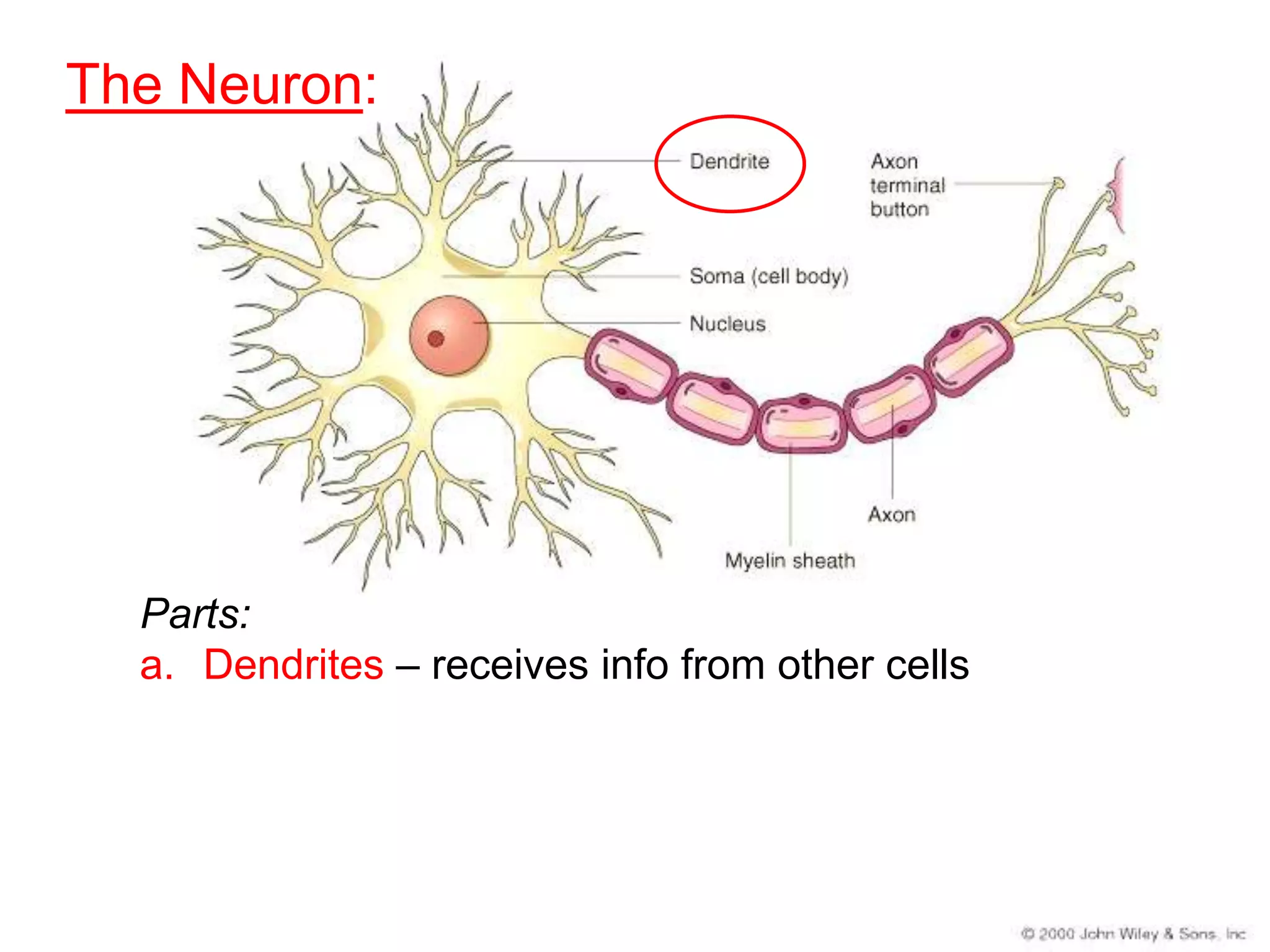
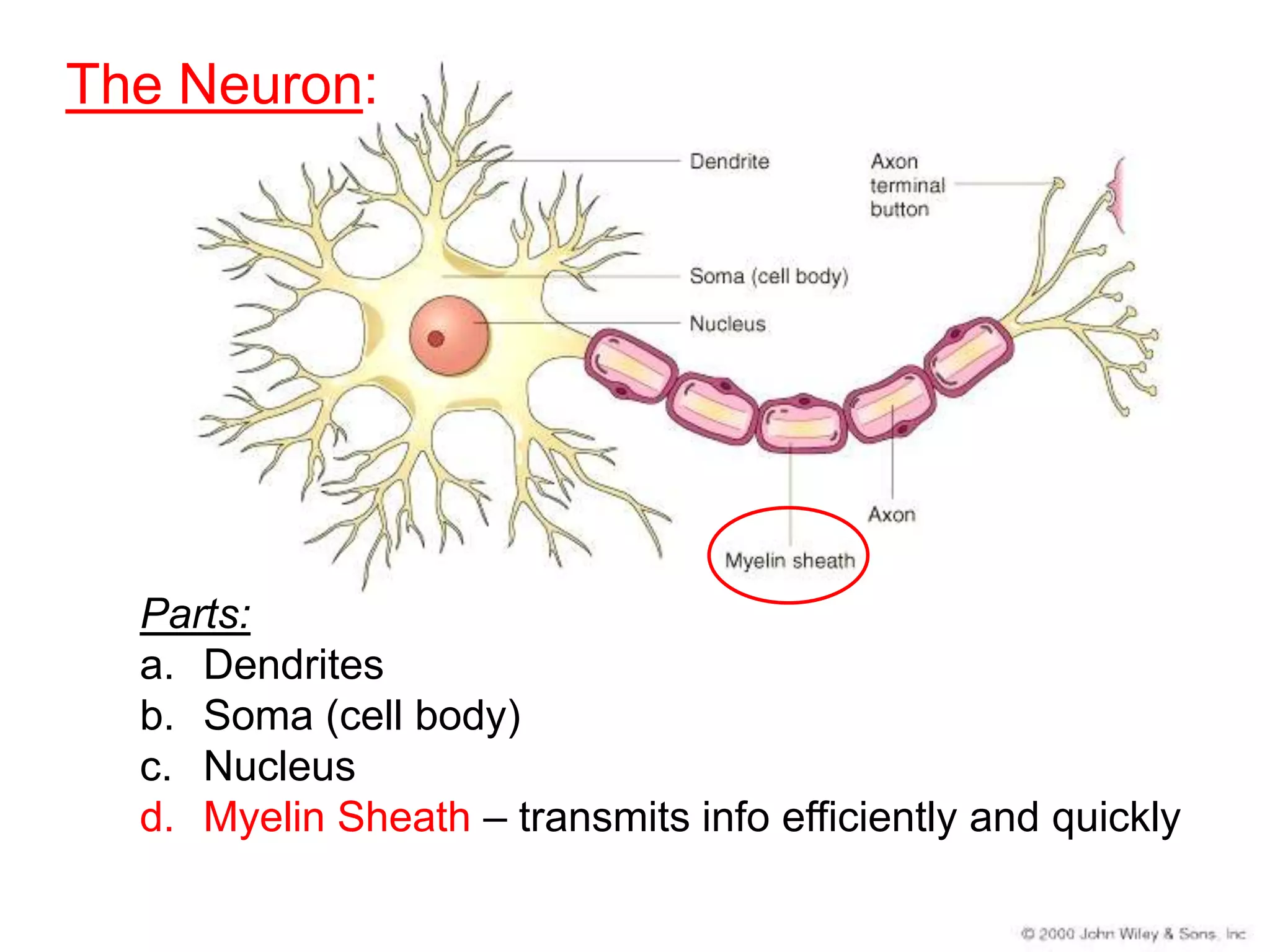
The Neuron:


  Parts:
  a. Dendrites – receives info from other cells
The Neuron:


  Parts:
  a. Dendrites
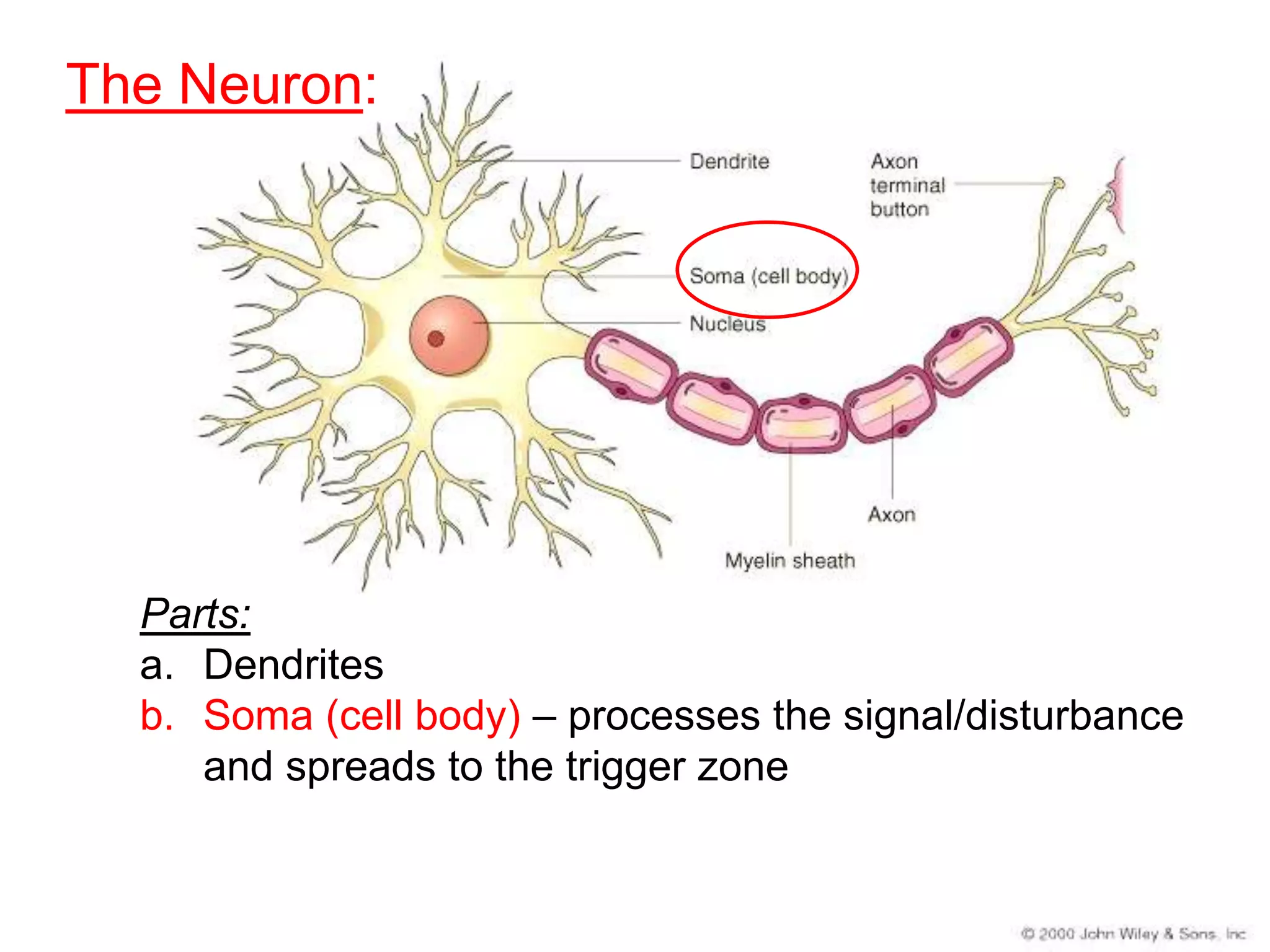
  b. Soma (cell body) – processes the signal/disturbance
     and spreads to the trigger zone
The Neuron:


  Parts:
  a. Dendrites
  b. Soma (cell body)
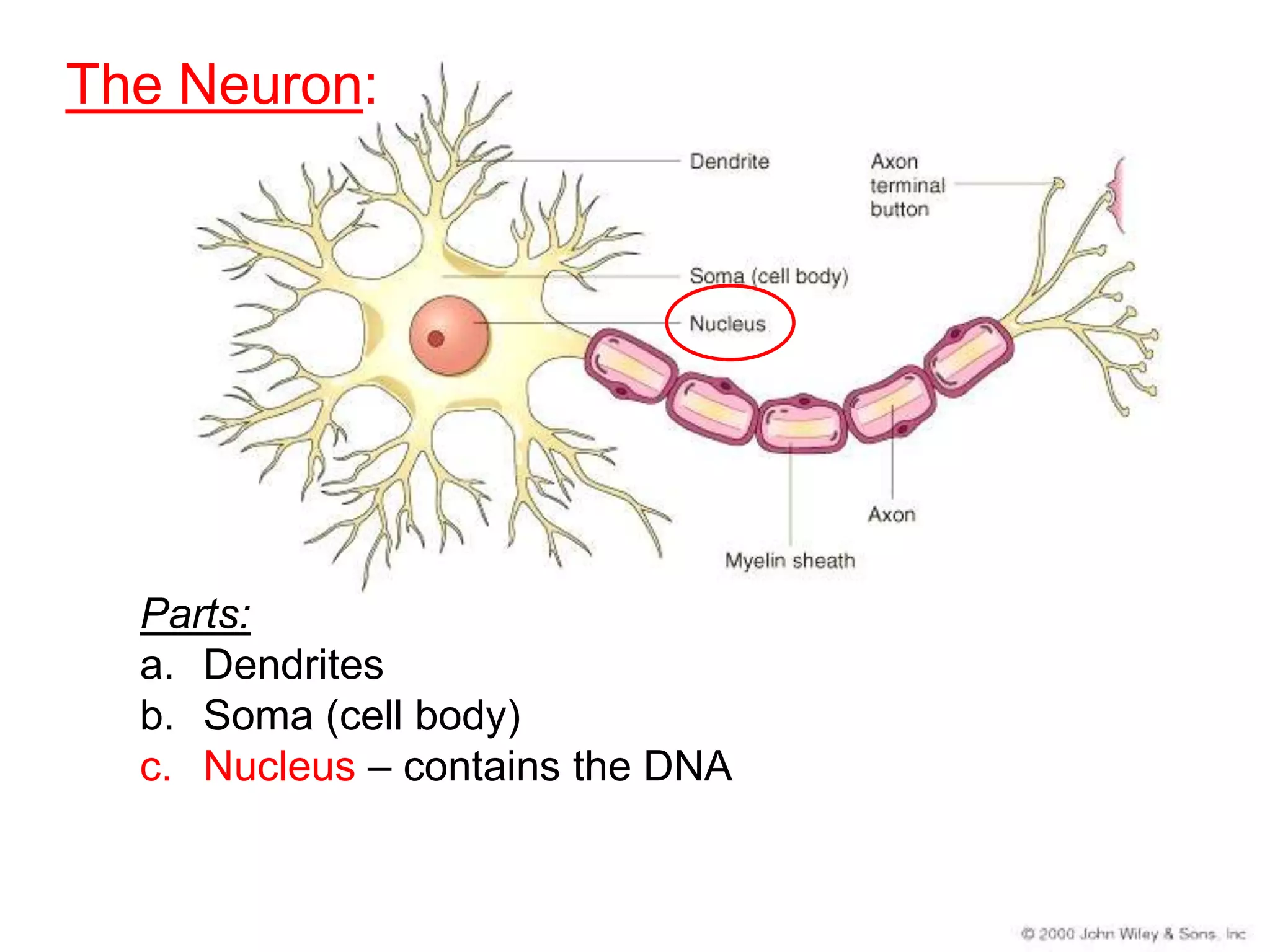
  c. Nucleus – contains the DNA
The Neuron:


  Parts:
  a. Dendrites
  b. Soma (cell body)
  c. Nucleus
  d. Myelin Sheath – transmits info efficiently and quickly
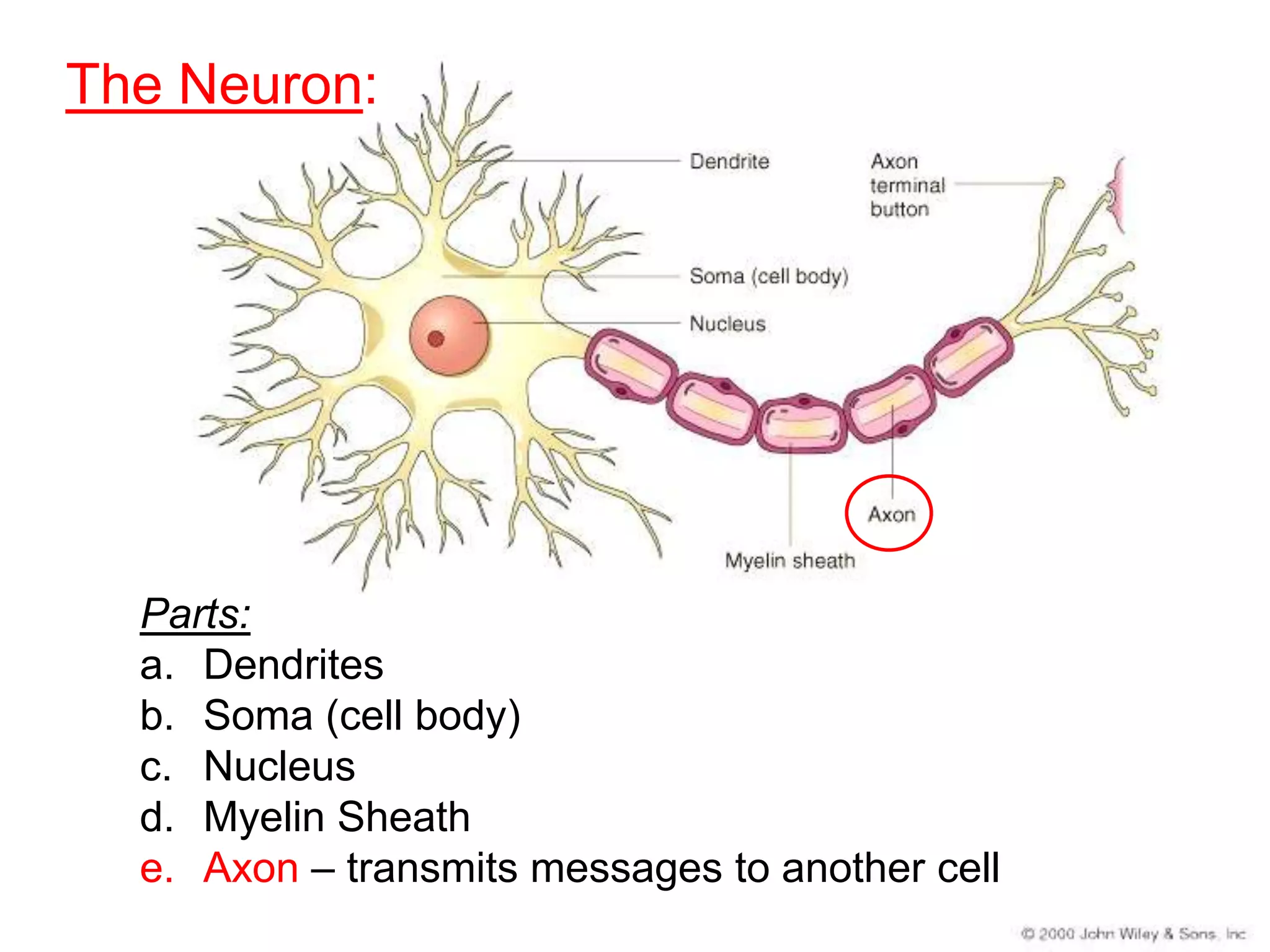
The Neuron:


  Parts:
  a. Dendrites
  b. Soma (cell body)
  c. Nucleus
  d. Myelin Sheath
  e. Axon – transmits messages to another cell
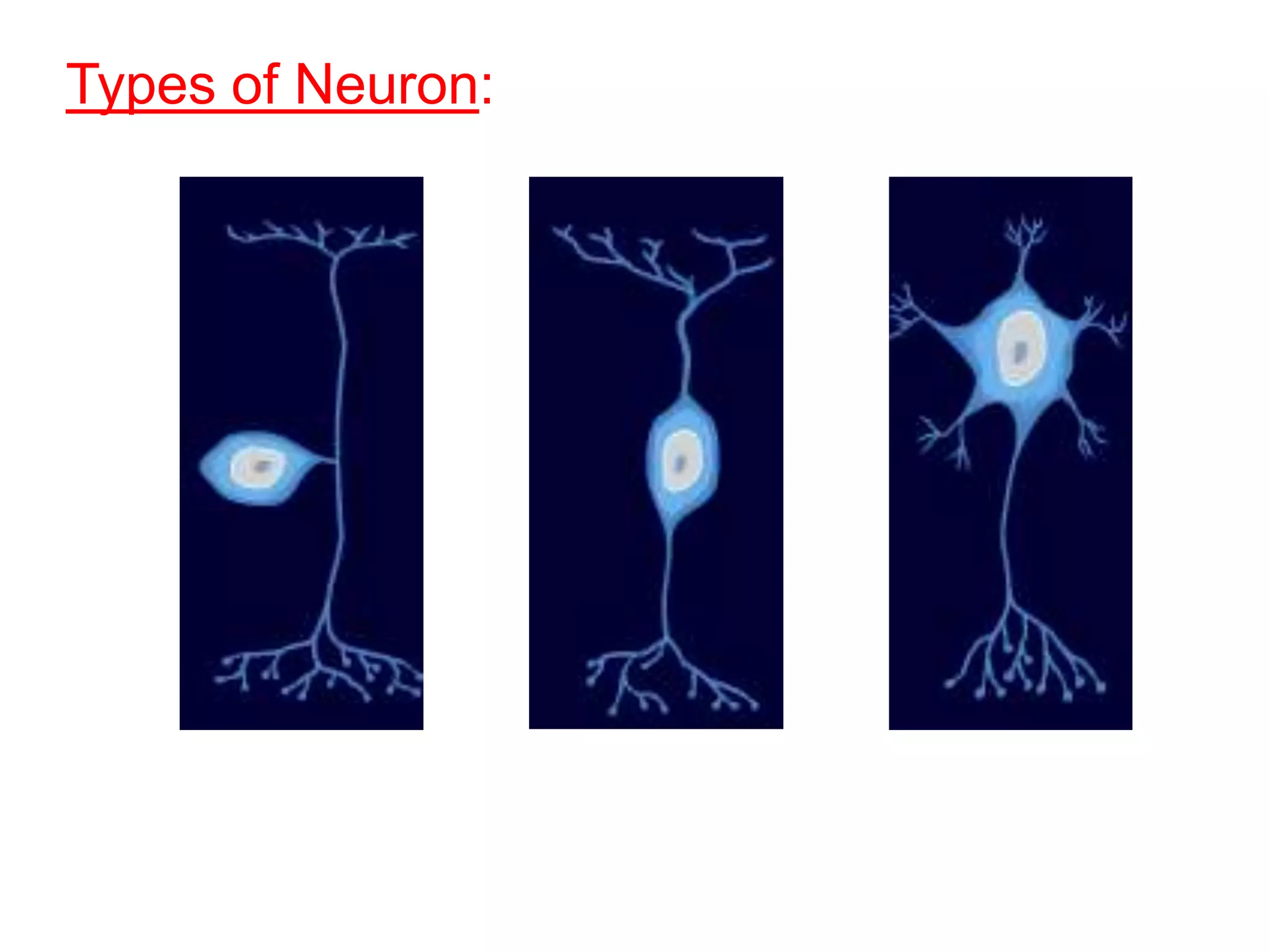
Types of Neuron:
Types of Neuron:


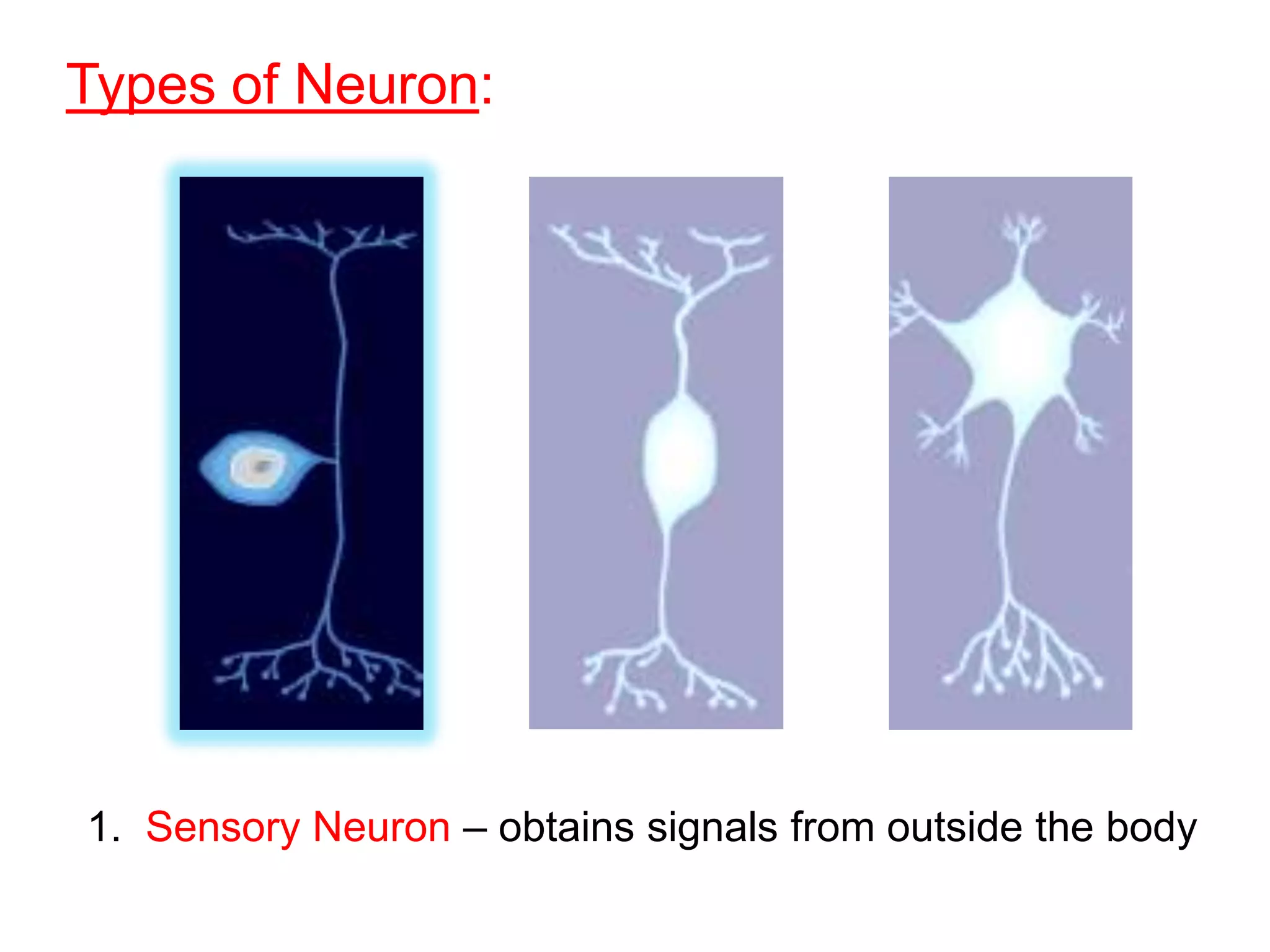
1. Sensory Neuron – obtains signals from outside the body
Types of Neuron:


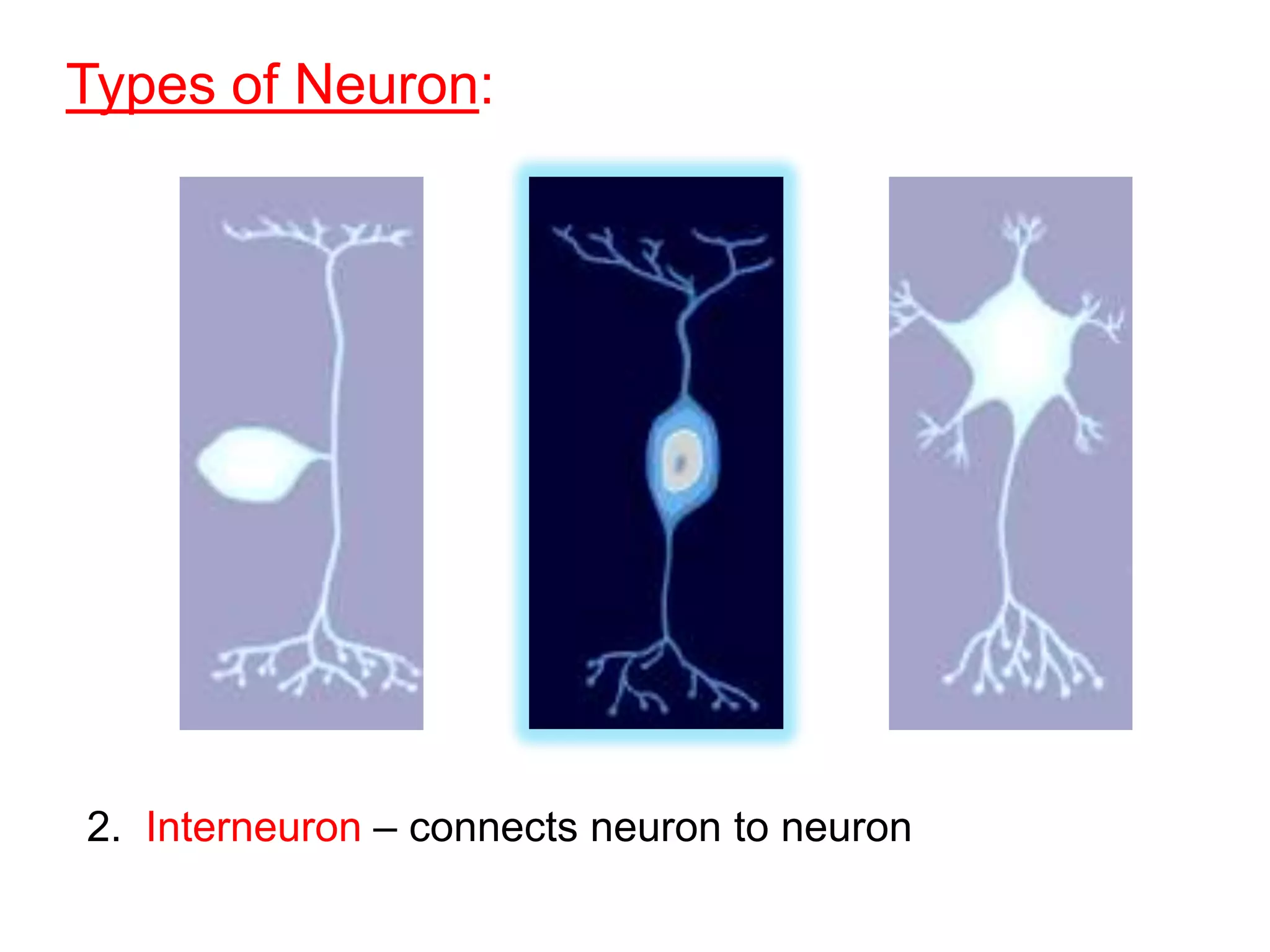
2. Interneuron – connects neuron to neuron
Types of Neuron:


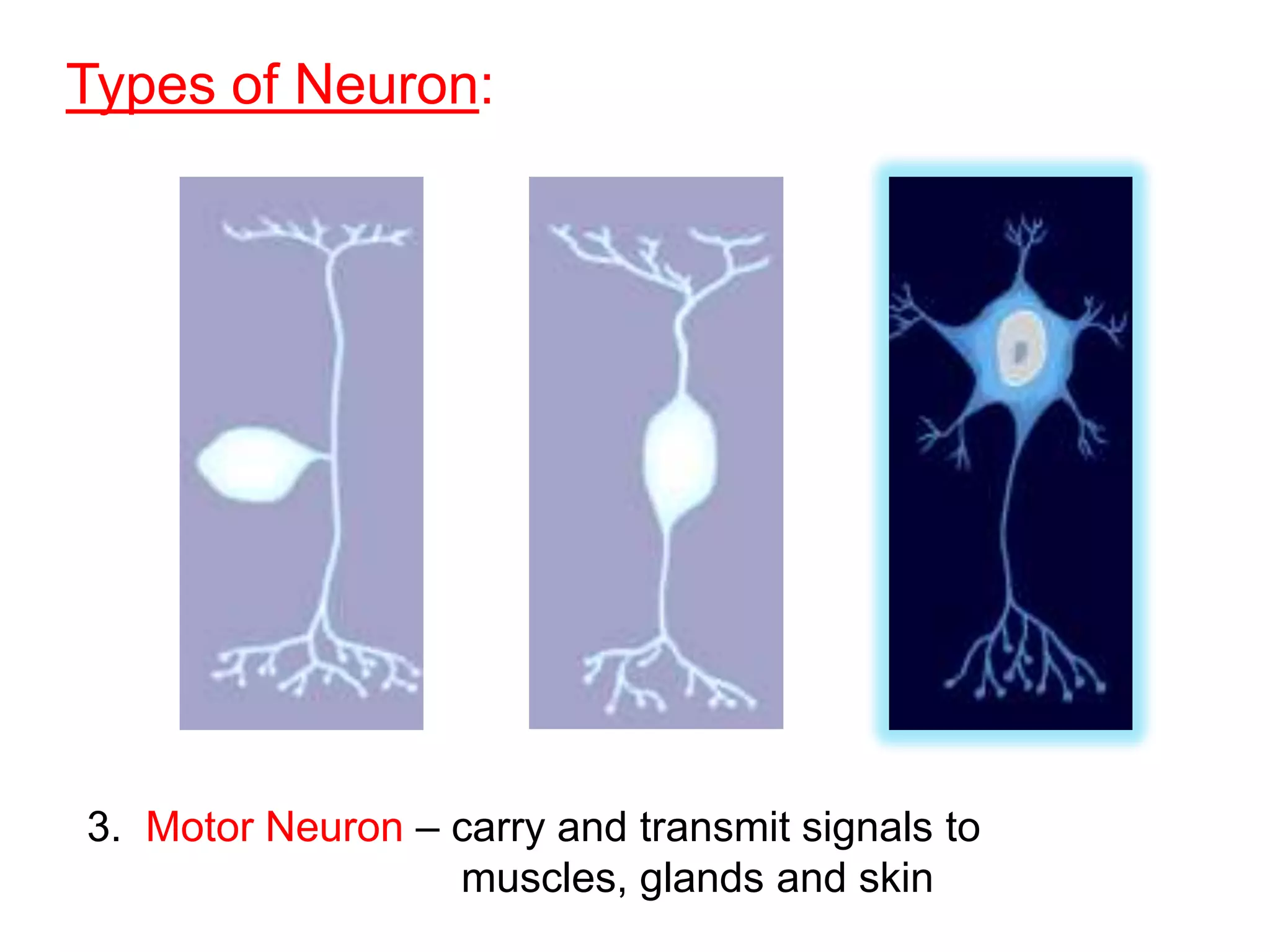
3. Motor Neuron – carry and transmit signals to
                  muscles, glands and skin
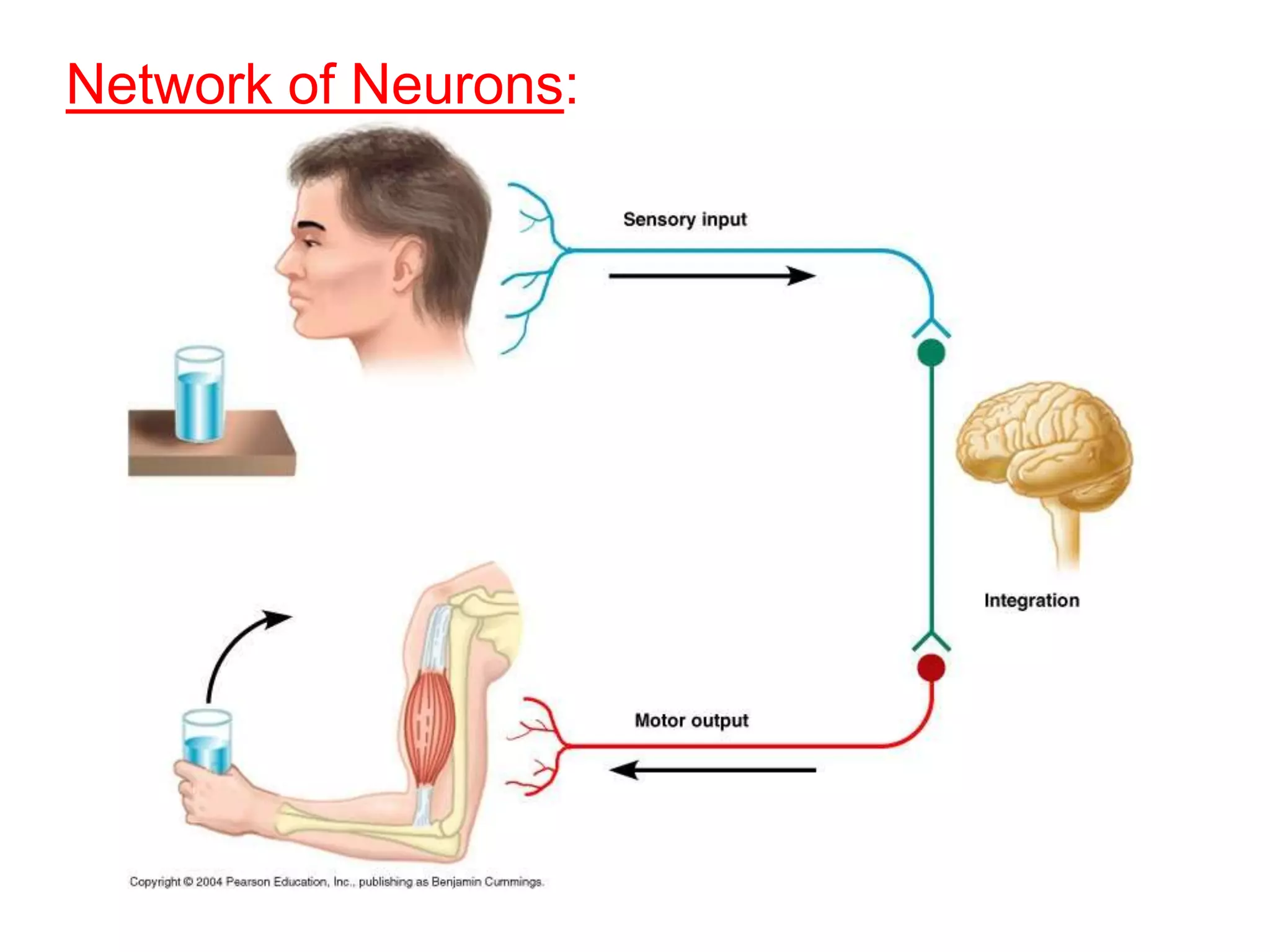
Network of Neurons:
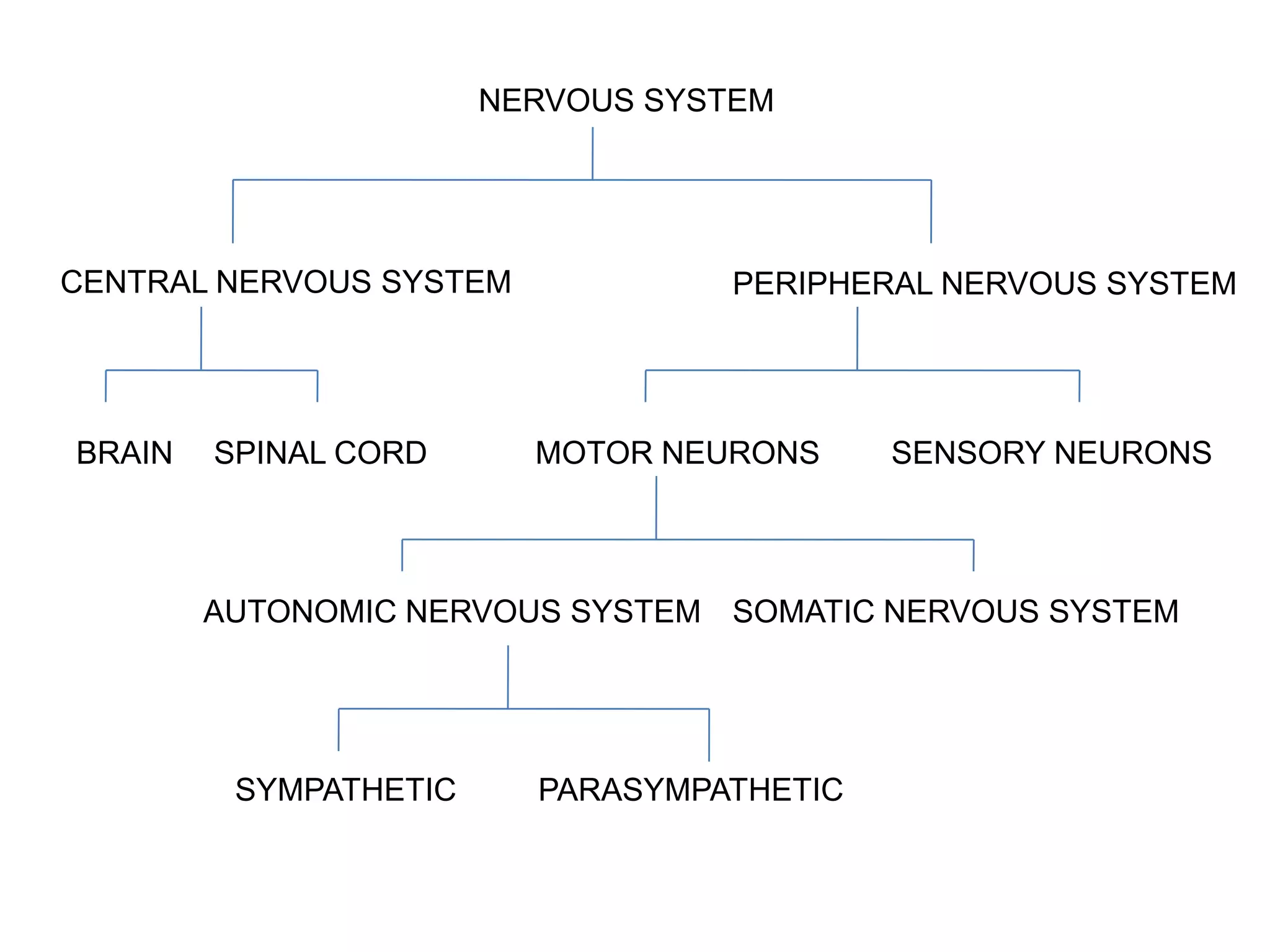
NERVOUS SYSTEM


CENTRAL NERVOUS SYSTEM             PERIPHERAL NERVOUS SYSTEM


BRAIN   SPINAL CORD      MOTOR NEURONS     SENSORY NEURONS


        AUTONOMIC NERVOUS SYSTEM SOMATIC NERVOUS SYSTEM


         SYMPATHETIC     PARASYMPATHETIC
The Central Nervous System:
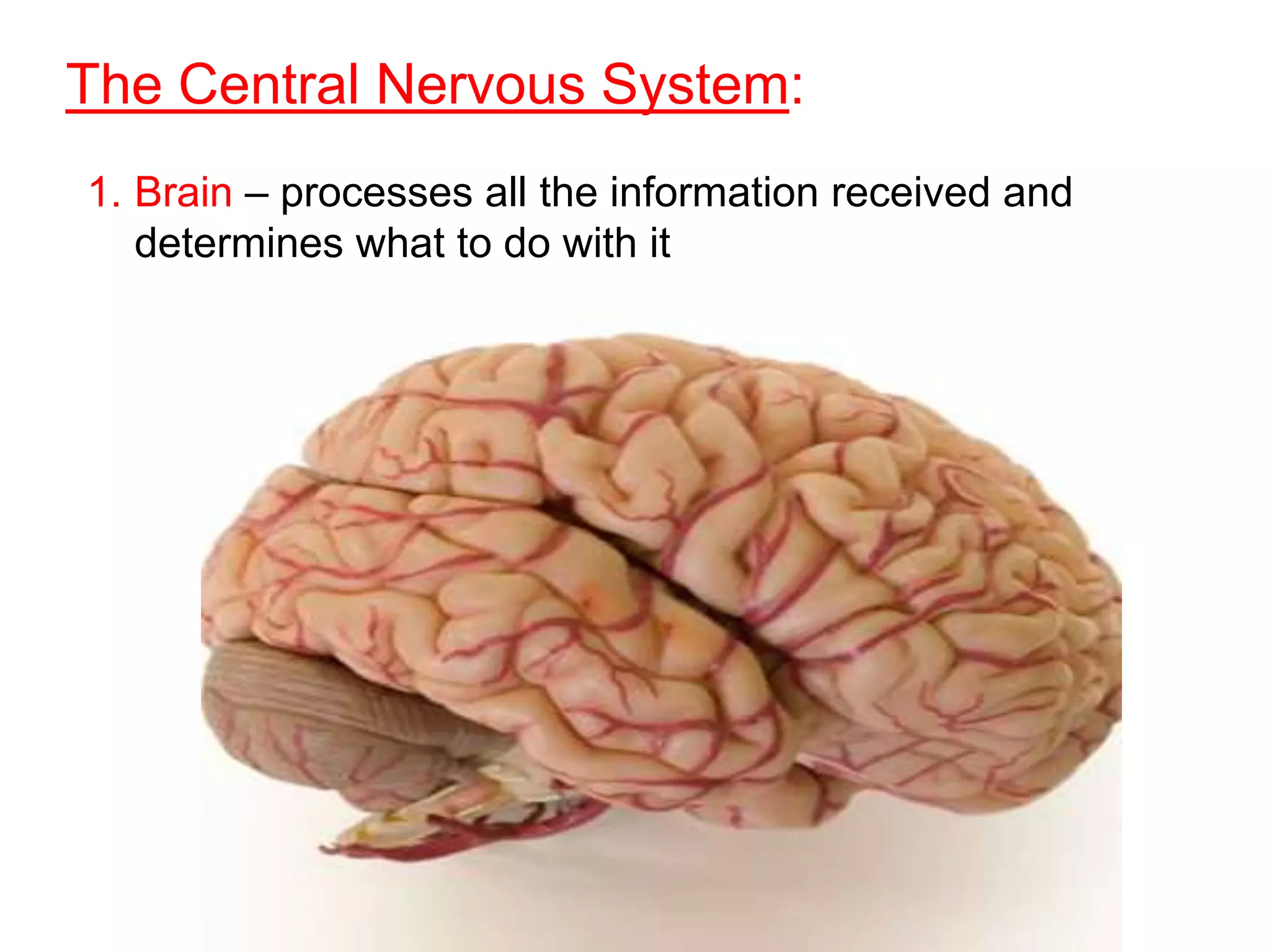
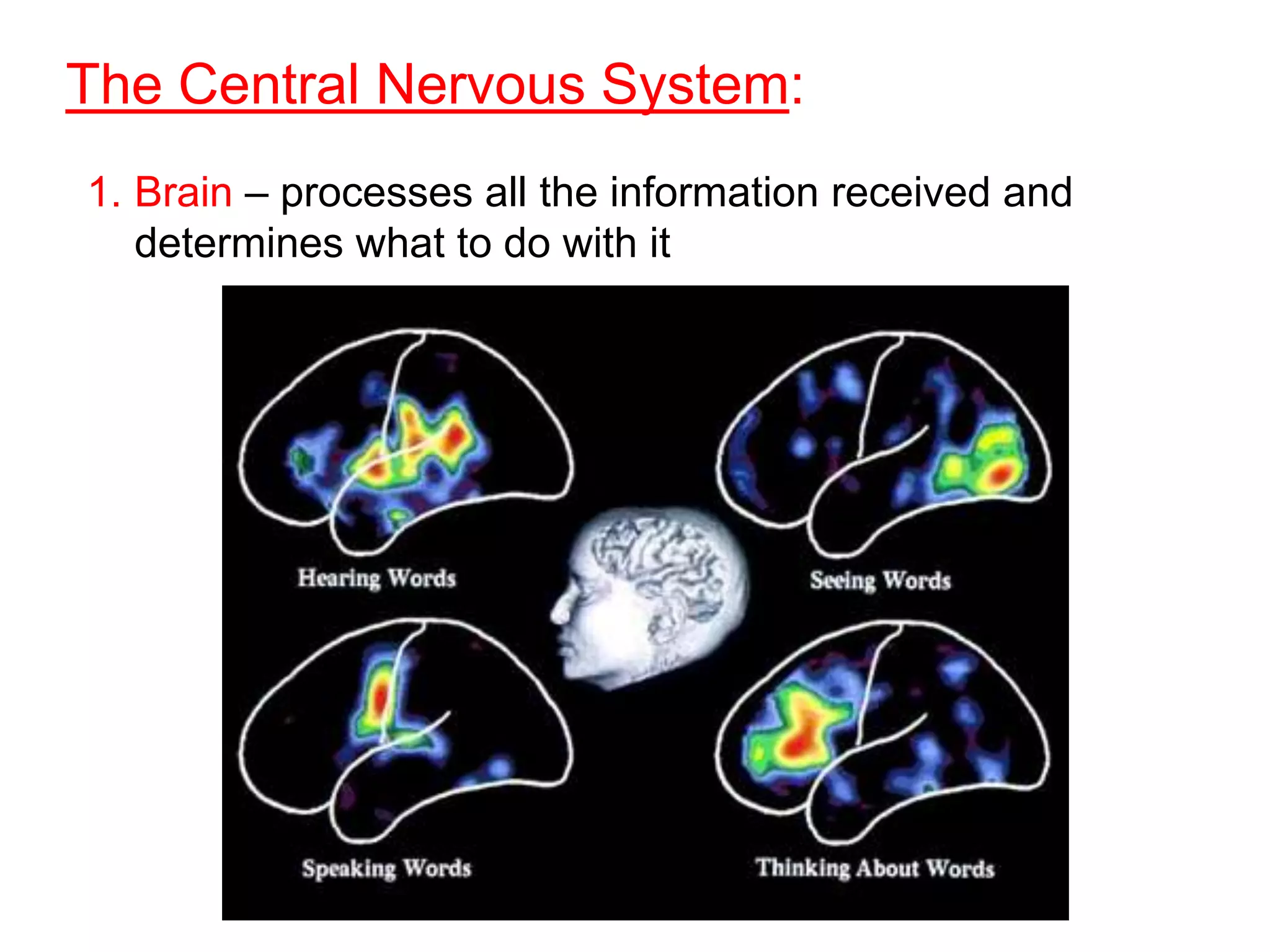
1. Brain – processes all the information received and
   determines what to do with it
The Central Nervous System:
1. Brain – processes all the information received and
   determines what to do with it
The Central Nervous System:
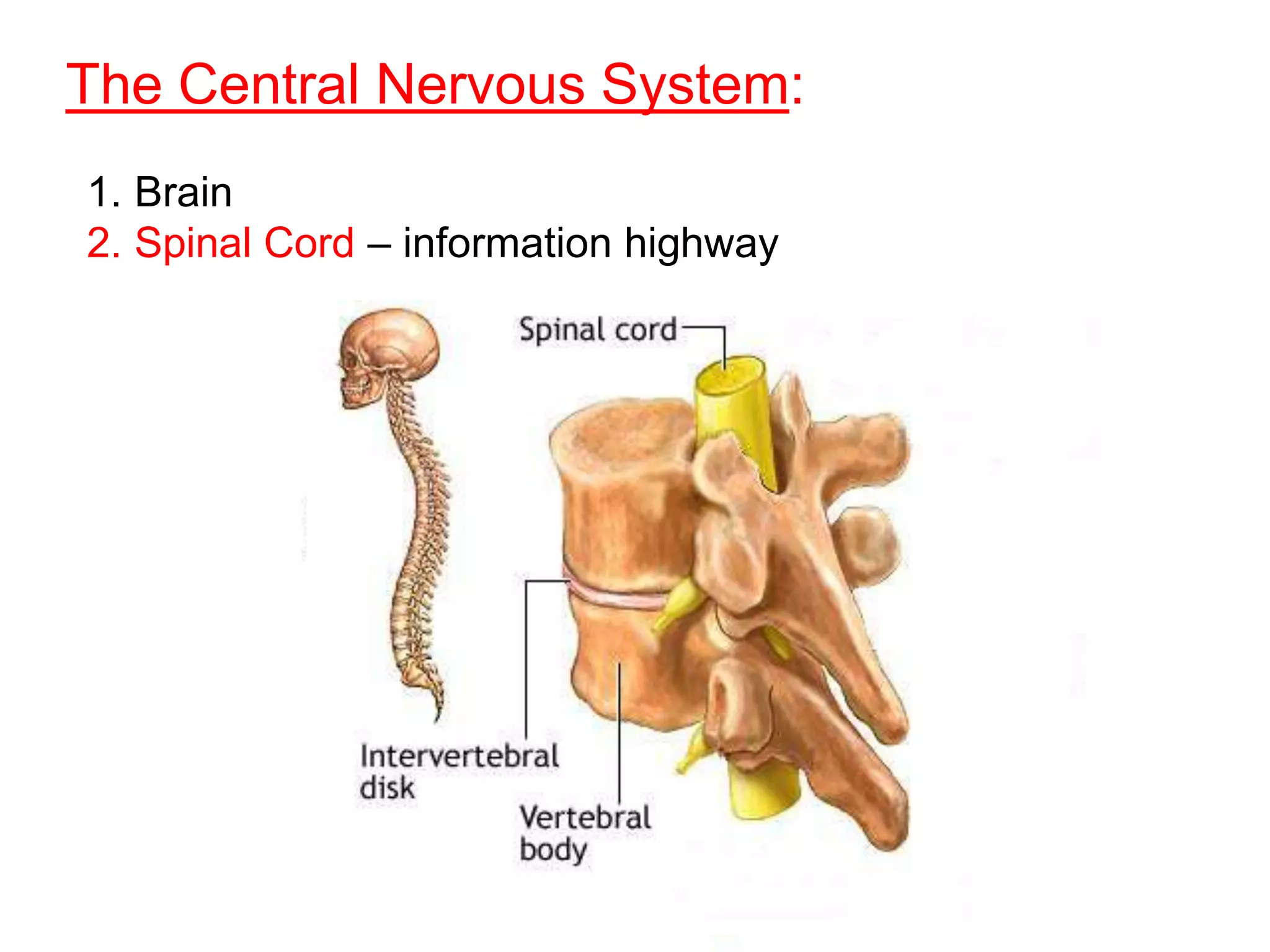
1. Brain
2. Spinal Cord – information highway
The Peripheral Nervous System:
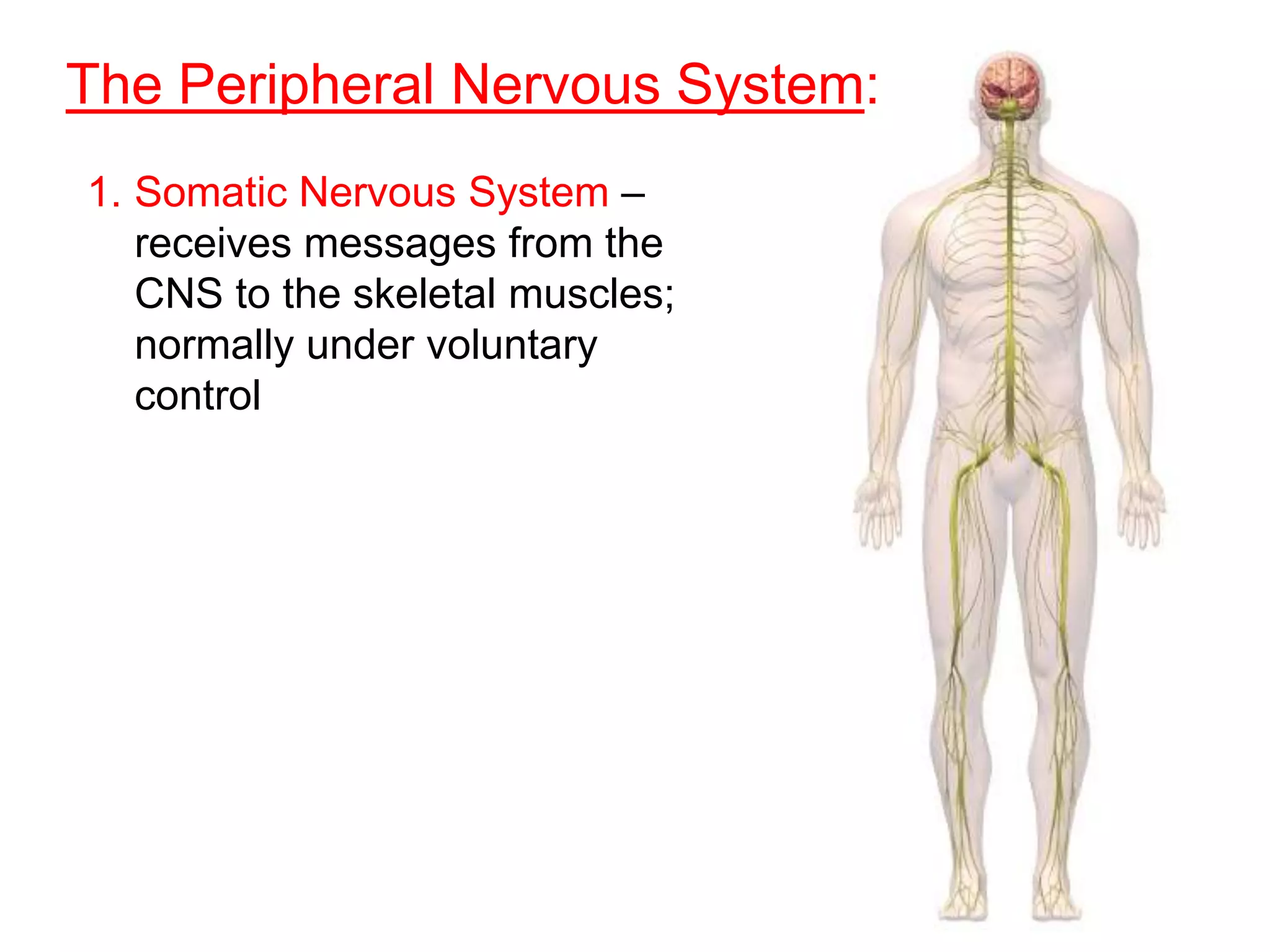
1. Somatic Nervous System –
   receives messages from the
   CNS to the skeletal muscles;
   normally under voluntary
   control
The Peripheral Nervous System:
1. Somatic Nervous System
2. Autonomic Nervous System – concerned with signals
   to and from internal organs and glands

  a. Sympathetic – stress, excitement and danger
  b. Parasympathetic – relaxed mode
Drugs disrupt signaling:
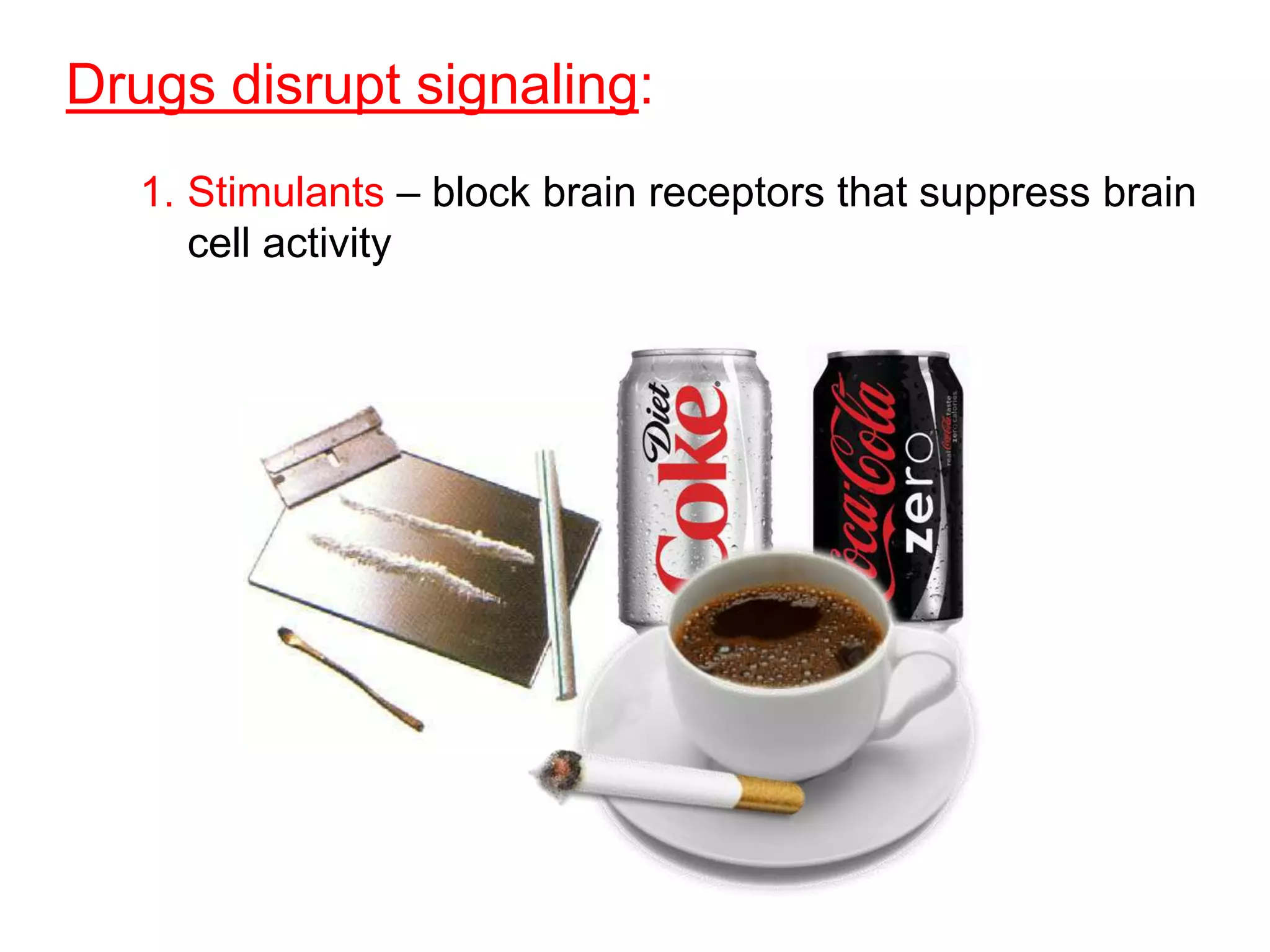
   1. Stimulants – block brain receptors that suppress brain
      cell activity
Drugs disrupt signaling:
   1. Stimulants
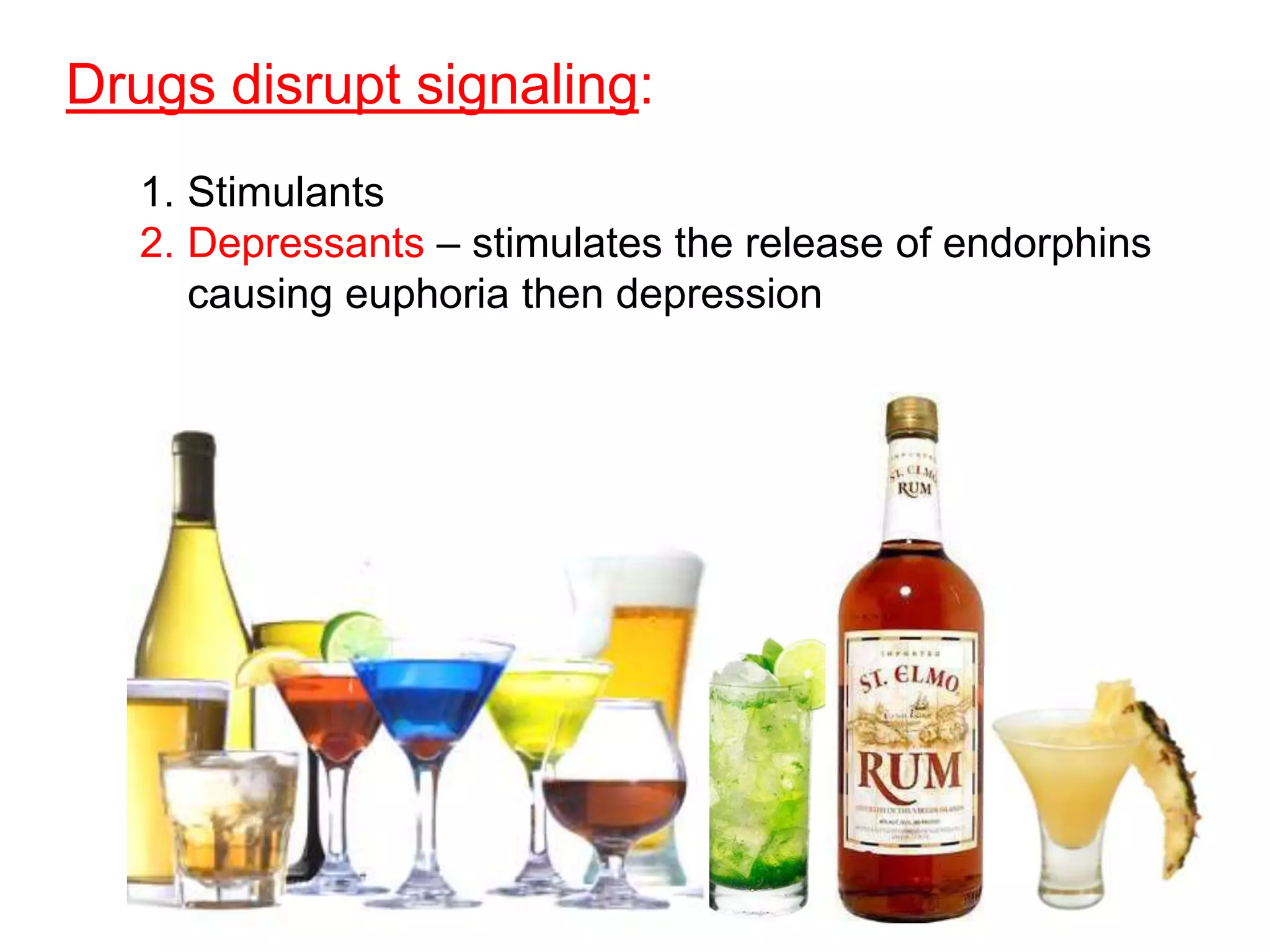
   2. Depressants – stimulates the release of endorphins
      causing euphoria then depression
Drugs disrupt signaling:
   1. Stimulants
   2. Depressants
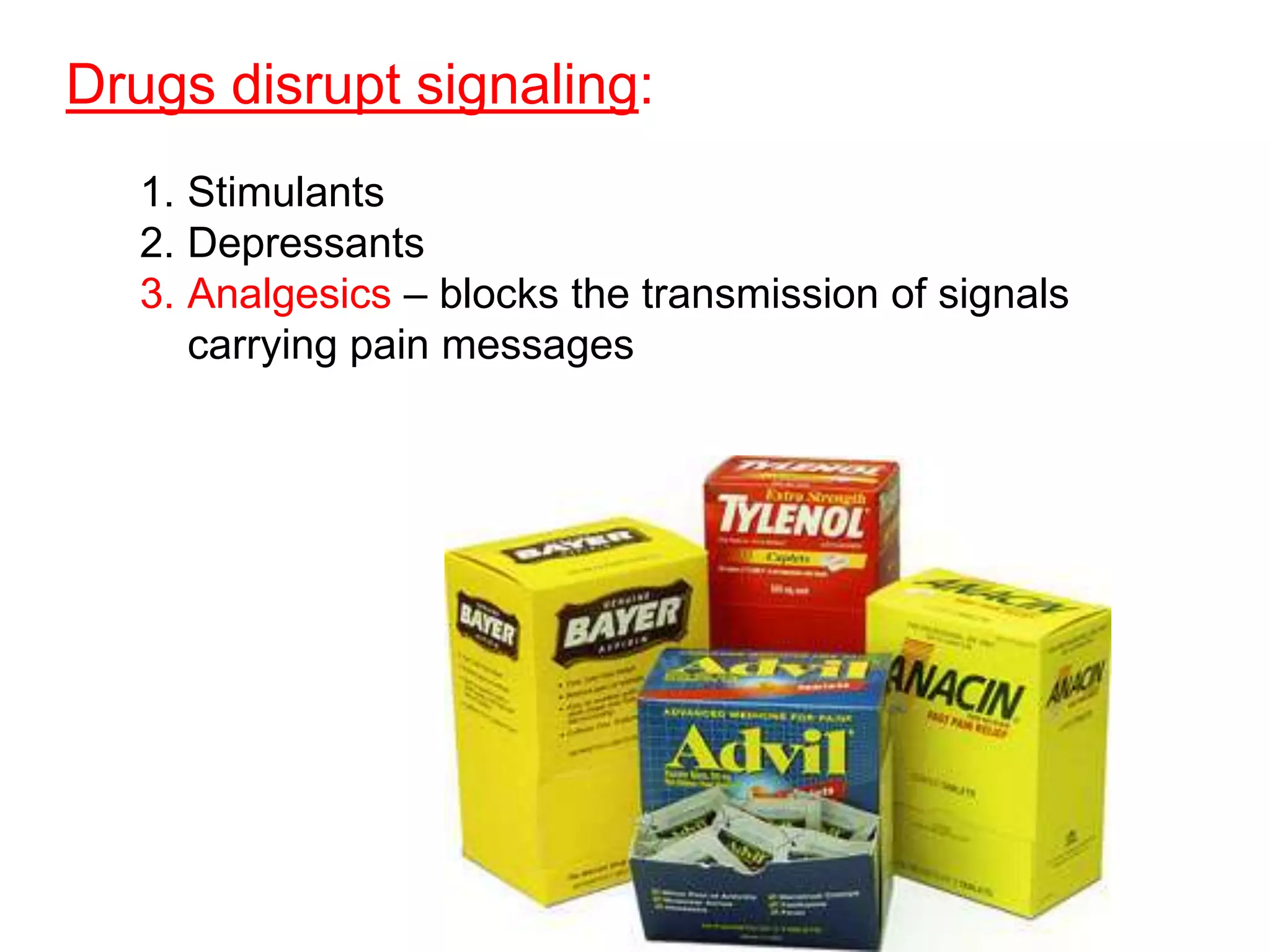
   3. Analgesics – blocks the transmission of signals
      carrying pain messages
Drugs disrupt signaling:
   1. Stimulants
   2. Depressants
   3. Analgesics
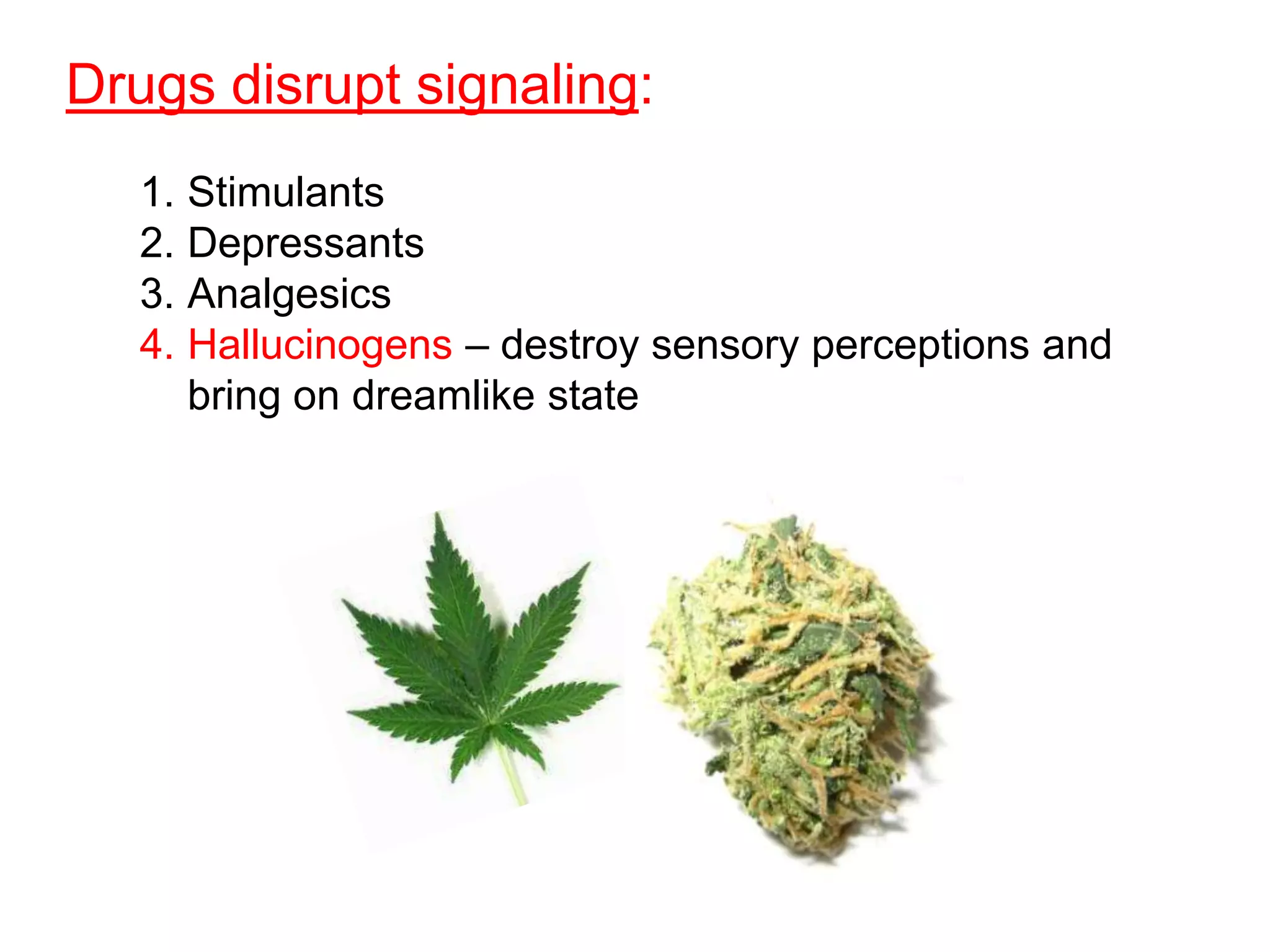
   4. Hallucinogens – destroy sensory perceptions and
      bring on dreamlike state

Nervous system

  • 1.
  • 2.
    The Neuron: Parts: a. Dendrites – receives info from other cells
  • 3.
    The Neuron: Parts: a. Dendrites b. Soma (cell body) – processes the signal/disturbance and spreads to the trigger zone
  • 4.
    The Neuron: Parts: a. Dendrites b. Soma (cell body) c. Nucleus – contains the DNA
  • 5.
    The Neuron: Parts: a. Dendrites b. Soma (cell body) c. Nucleus d. Myelin Sheath – transmits info efficiently and quickly
  • 6.
    The Neuron: Parts: a. Dendrites b. Soma (cell body) c. Nucleus d. Myelin Sheath e. Axon – transmits messages to another cell
  • 7.
  • 8.
    Types of Neuron: 1.Sensory Neuron – obtains signals from outside the body
  • 9.
    Types of Neuron: 2.Interneuron – connects neuron to neuron
  • 10.
    Types of Neuron: 3.Motor Neuron – carry and transmit signals to muscles, glands and skin
  • 11.
  • 12.
    NERVOUS SYSTEM CENTRAL NERVOUSSYSTEM PERIPHERAL NERVOUS SYSTEM BRAIN SPINAL CORD MOTOR NEURONS SENSORY NEURONS AUTONOMIC NERVOUS SYSTEM SOMATIC NERVOUS SYSTEM SYMPATHETIC PARASYMPATHETIC
  • 13.
    The Central NervousSystem: 1. Brain – processes all the information received and determines what to do with it
  • 14.
    The Central NervousSystem: 1. Brain – processes all the information received and determines what to do with it
  • 15.
    The Central NervousSystem: 1. Brain 2. Spinal Cord – information highway
  • 16.
    The Peripheral NervousSystem: 1. Somatic Nervous System – receives messages from the CNS to the skeletal muscles; normally under voluntary control
  • 17.
    The Peripheral NervousSystem: 1. Somatic Nervous System 2. Autonomic Nervous System – concerned with signals to and from internal organs and glands a. Sympathetic – stress, excitement and danger b. Parasympathetic – relaxed mode
  • 18.
    Drugs disrupt signaling: 1. Stimulants – block brain receptors that suppress brain cell activity
  • 19.
    Drugs disrupt signaling: 1. Stimulants 2. Depressants – stimulates the release of endorphins causing euphoria then depression
  • 20.
    Drugs disrupt signaling: 1. Stimulants 2. Depressants 3. Analgesics – blocks the transmission of signals carrying pain messages
  • 21.
    Drugs disrupt signaling: 1. Stimulants 2. Depressants 3. Analgesics 4. Hallucinogens – destroy sensory perceptions and bring on dreamlike state