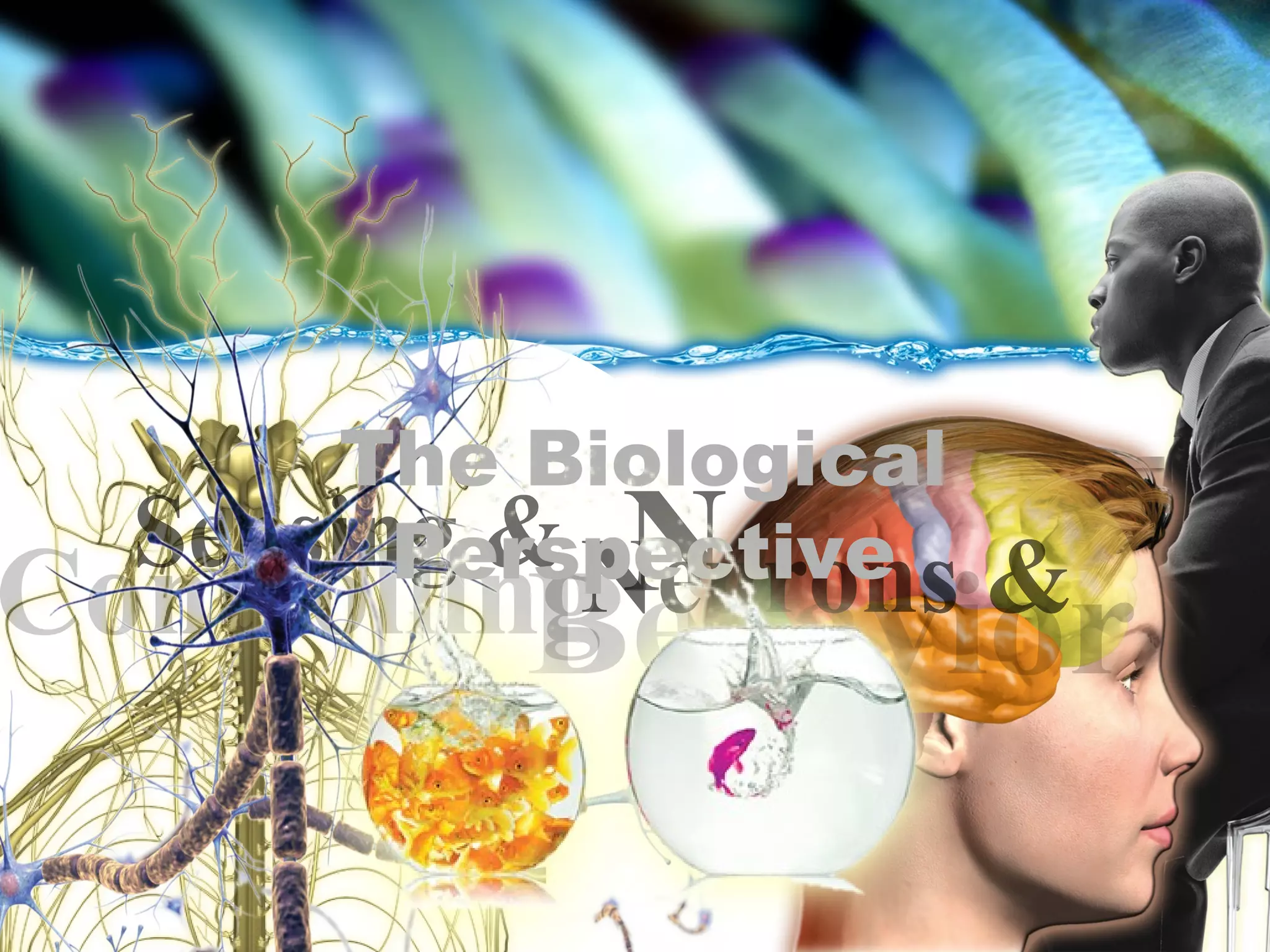
The Biological Perspective The Biological Perspective Nervous System Controlling Sensing & Behavior Neurons & The Biological Perspective
Links to Learning Objectives NS, NEURONS & NERVES LO 2.1  Nervous system, neurons, nerves LO 2.2  Neural communication CENTRAL & PERIPHERAL NS LO 2.3  Brain and spinal cord LO 2.4  Somatic and autonomic systems  STRUCTURES OF THE BRAIN LO 2.5  Studying the brain LO 2.6  Bottom part of the brain LO 2.7  Control of emotion, learning,  memory, & motivation LO 2.8  Control of senses and movement LO 2.9  Higher forms of thought LO 2.10  Left and right sides of the brain  THE CHEMICAL CONNECTION LO 2.11  Hormones & the nervous system
Nervous System, Neurons & Nerves Nervous Svstem. Neurons & Nerves Nervous System, Neurons & Nerves
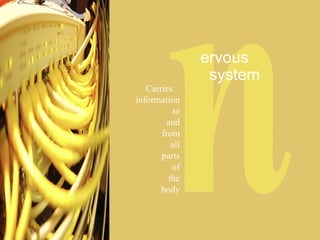
Carries  information to and from all parts of the body ervous system
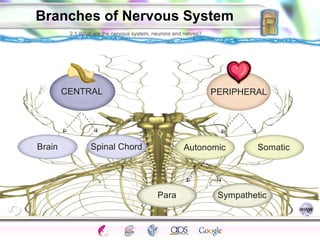
Branches of Nervous System PERIPHERAL Autonomic Somatic Para Sympathetic Brain Spinal Chord 2.1 What are the nervous system, neurons and nerves? CENTRAL
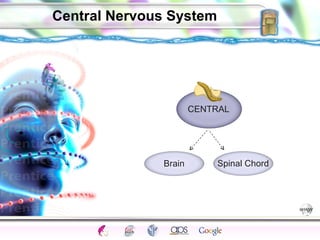
Central Nervous System Brain Spinal Chord CENTRAL
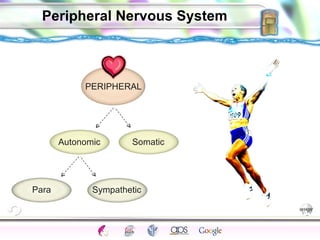
Peripheral Nervous System PERIPHERAL Autonomic Somatic Para Sympathetic
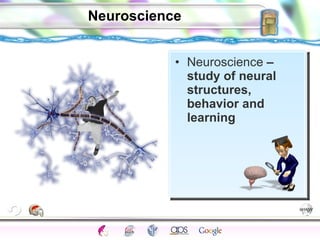
Neuroscience Neuroscience  – study of neural structures, behavior and learning
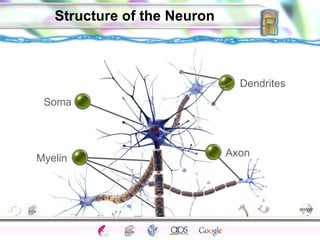
Structure of the Neuron Dendrites Axon Soma Myelin
  Repairing Nerve Fibers “ … axons of neurons found in the body are also coated with a thin membrane called the  neurilemma , or Schwann’s membrane. This membrane, which surrounds the axon  and the myelin sheath, serves as a tunnel through which damaged nerve fibers can repair themselves.”   -Page 50 (Ciccarelli & White)
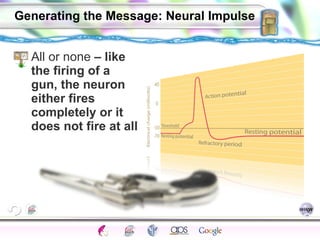
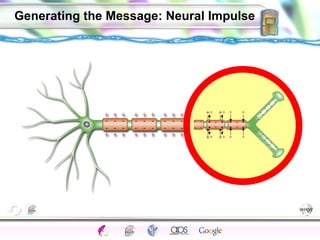
Generating the Message: Neural Impulse All or none  – like the firing of a gun, the neuron either fires completely or it does not fire at all
Generating the Message: Neural Impulse
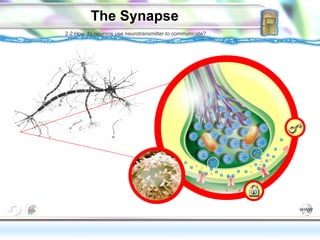
The Synapse 2.2 How do neurons use neurotransmitter to communicate? The neurotransmitter is like a key and the receptor sites are like locks.
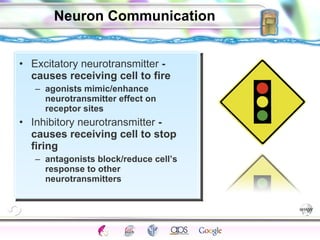
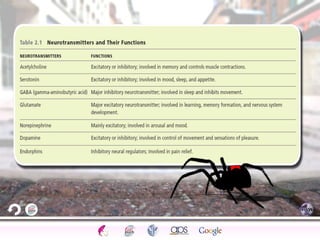
Neuron Communication Excitatory neurotransmitter  - causes receiving cell to fire agonists mimic/enhance  neurotransmitter effect on receptor sites Inhibitory neurotransmitter  - causes receiving cell to stop firing antagonists block/reduce cell’s response to other neurotransmitters
 
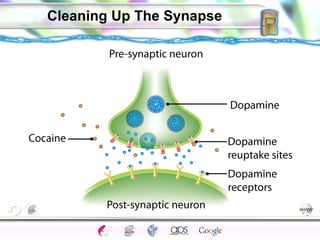
Cleaning Up The Synapse
Central & Peripheral Nervous Systems Nervous Svstems Central & Perioheral Central & Peripheral Nervous Systems
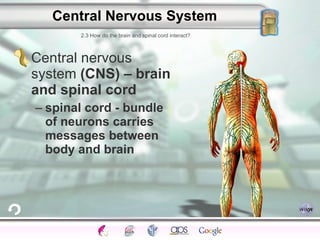
Central Nervous System Central nervous system  (CNS) – brain and spinal cord spinal cord - bundle of neurons carries messages between body and brain 2.3 How do the brain and spinal cord interact?
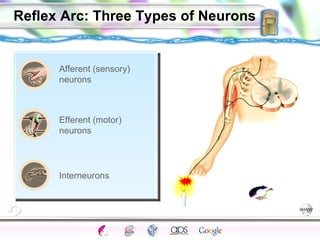
Reflex Arc: Three Types of Neurons Afferent (sensory) neurons Efferent (motor) neurons Interneurons
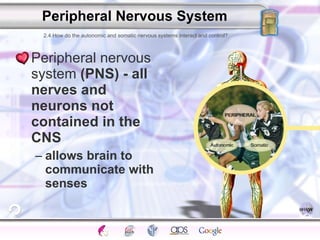
Peripheral Nervous System Peripheral nervous system  (PNS) - all nerves and neurons not contained in the CNS allows brain to communicate with senses 2.4 How do the autonomic and somatic nervous systems interact and control?
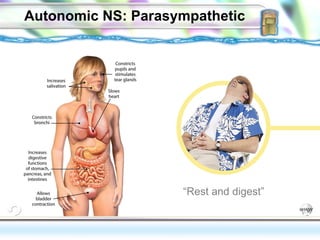
Autonomic NS: Parasympathetic “ Rest and digest” Some psychologists believe that extraverts are seeking to increase naturally low autonomic arousal.
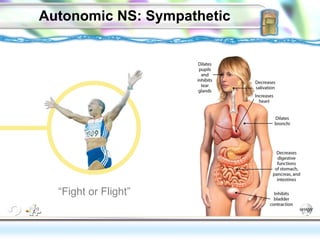
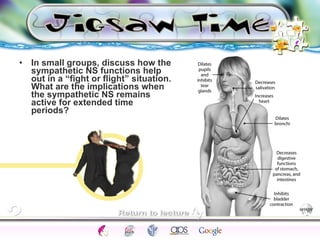
Autonomic NS: Sympathetic “ Fight or Flight” Some psychologists believe that introverts shy away from things in an attempt to lower naturally high autonomic arousal.
END OF FIRST SECTION OF SLIDES Jump to next section
Lecture Activities
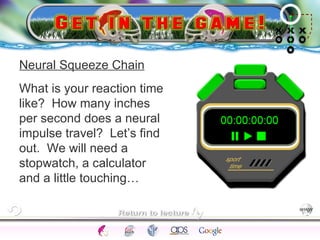
Neural Squeeze Chain What is your reaction time like?  How many inches per second does a neural impulse travel?  Let’s find out.  We will need a stopwatch, a calculator and a little touching…
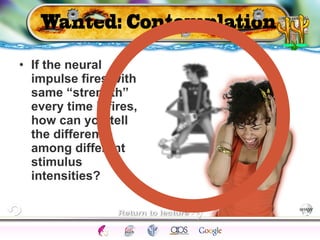
If the neural impulse fires with same “strength” every time it fires, how can you tell the difference among different stimulus intensities?
In small groups, discuss how the sympathetic NS functions help out in a “fight or flight” situation. What are the implications when the sympathetic NS remains active for extended time periods?

The Nervous System

  • 1.
    The Biological PerspectiveThe Biological Perspective Nervous System Controlling Sensing & Behavior Neurons & The Biological Perspective
  • 2.
    Links to LearningObjectives NS, NEURONS & NERVES LO 2.1 Nervous system, neurons, nerves LO 2.2 Neural communication CENTRAL & PERIPHERAL NS LO 2.3 Brain and spinal cord LO 2.4 Somatic and autonomic systems STRUCTURES OF THE BRAIN LO 2.5 Studying the brain LO 2.6 Bottom part of the brain LO 2.7 Control of emotion, learning, memory, & motivation LO 2.8 Control of senses and movement LO 2.9 Higher forms of thought LO 2.10 Left and right sides of the brain THE CHEMICAL CONNECTION LO 2.11 Hormones & the nervous system
  • 3.
    Nervous System, Neurons& Nerves Nervous Svstem. Neurons & Nerves Nervous System, Neurons & Nerves
  • 4.
    Carries informationto and from all parts of the body ervous system
  • 5.
    Branches of NervousSystem PERIPHERAL Autonomic Somatic Para Sympathetic Brain Spinal Chord 2.1 What are the nervous system, neurons and nerves? CENTRAL
  • 6.
    Central Nervous SystemBrain Spinal Chord CENTRAL
  • 7.
    Peripheral Nervous SystemPERIPHERAL Autonomic Somatic Para Sympathetic
  • 8.
    Neuroscience Neuroscience – study of neural structures, behavior and learning
  • 9.
    Structure of theNeuron Dendrites Axon Soma Myelin
  • 10.
    RepairingNerve Fibers “ … axons of neurons found in the body are also coated with a thin membrane called the neurilemma , or Schwann’s membrane. This membrane, which surrounds the axon and the myelin sheath, serves as a tunnel through which damaged nerve fibers can repair themselves.” -Page 50 (Ciccarelli & White)
  • 11.
    Generating the Message:Neural Impulse All or none – like the firing of a gun, the neuron either fires completely or it does not fire at all
  • 12.
  • 13.
    The Synapse 2.2How do neurons use neurotransmitter to communicate? The neurotransmitter is like a key and the receptor sites are like locks.
  • 14.
    Neuron Communication Excitatoryneurotransmitter - causes receiving cell to fire agonists mimic/enhance neurotransmitter effect on receptor sites Inhibitory neurotransmitter - causes receiving cell to stop firing antagonists block/reduce cell’s response to other neurotransmitters
  • 15.
  • 16.
  • 17.
    Central & PeripheralNervous Systems Nervous Svstems Central & Perioheral Central & Peripheral Nervous Systems
  • 18.
    Central Nervous SystemCentral nervous system (CNS) – brain and spinal cord spinal cord - bundle of neurons carries messages between body and brain 2.3 How do the brain and spinal cord interact?
  • 19.
    Reflex Arc: ThreeTypes of Neurons Afferent (sensory) neurons Efferent (motor) neurons Interneurons
  • 20.
    Peripheral Nervous SystemPeripheral nervous system (PNS) - all nerves and neurons not contained in the CNS allows brain to communicate with senses 2.4 How do the autonomic and somatic nervous systems interact and control?
  • 21.
    Autonomic NS: Parasympathetic“ Rest and digest” Some psychologists believe that extraverts are seeking to increase naturally low autonomic arousal.
  • 22.
    Autonomic NS: Sympathetic“ Fight or Flight” Some psychologists believe that introverts shy away from things in an attempt to lower naturally high autonomic arousal.
  • 23.
    END OF FIRSTSECTION OF SLIDES Jump to next section
  • 24.
  • 25.
    Neural Squeeze ChainWhat is your reaction time like? How many inches per second does a neural impulse travel? Let’s find out. We will need a stopwatch, a calculator and a little touching…
  • 26.
    If the neuralimpulse fires with same “strength” every time it fires, how can you tell the difference among different stimulus intensities?
  • 27.
    In small groups,discuss how the sympathetic NS functions help out in a “fight or flight” situation. What are the implications when the sympathetic NS remains active for extended time periods?