Nervous System
Grade 10
What is the Nervous System?
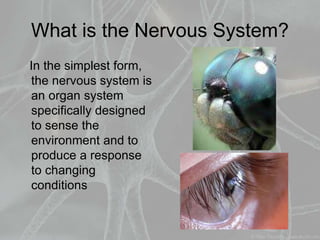
In the simplest form,
the nervous system is
an organ system
specifically designed
to sense the
environment and to
produce a response
to changing
conditions
How Does the Nervous System
Sense its Surroundings?
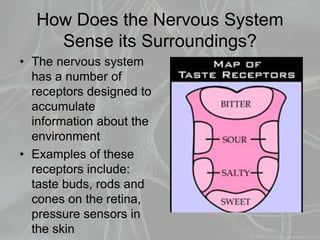
• The nervous system
has a number of
receptors designed to
accumulate
information about the
environment
• Examples of these
receptors include:
taste buds, rods and
cones on the retina,
pressure sensors in
the skin
How Does the Nervous System
Transmit Information from One Part
of the Body to the Next?
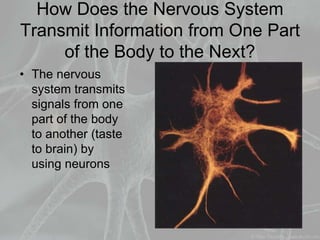
• The nervous
system transmits
signals from one
part of the body
to another (taste
to brain) by
using neurons
How Does the Nervous System
Interpret the Information?
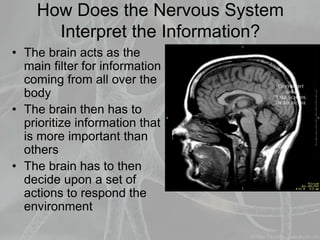
• The brain acts as the
main filter for information
coming from all over the
body
• The brain then has to
prioritize information that
is more important than
others
• The brain has to then
decide upon a set of
actions to respond the
environment
What type of Responses can the
Brain Direct?
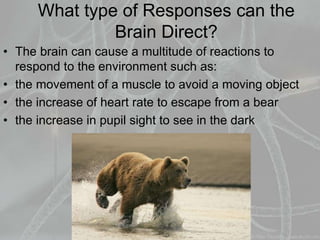
• The brain can cause a multitude of reactions to
respond to the environment such as:
• the movement of a muscle to avoid a moving object
• the increase of heart rate to escape from a bear
• the increase in pupil sight to see in the dark
What is a Neuron?
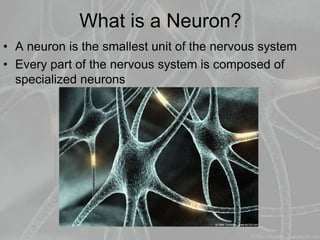
• A neuron is the smallest unit of the nervous system
• Every part of the nervous system is composed of
specialized neurons
Parts of the Neuron
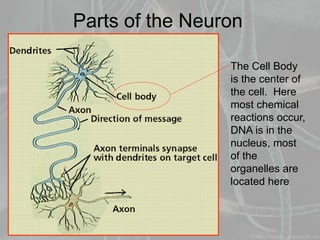
The Cell Body
is the center of
the cell. Here
most chemical
reactions occur,
DNA is in the
nucleus, most
of the
organelles are
located here
Neuron Continued
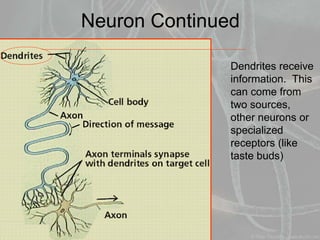
Dendrites receive
information. This
can come from
two sources,
other neurons or
specialized
receptors (like
taste buds)
Neuron Continued
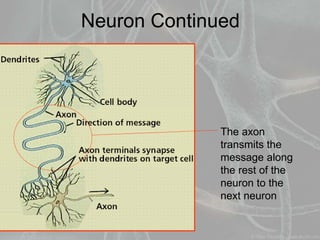
The axon
transmits the
message along
the rest of the
neuron to the
next neuron
Electrical
Impulses
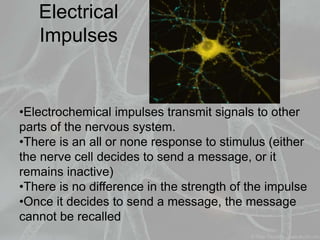
•Electrochemical impulses transmit signals to other
parts of the nervous system.
•There is an all or none response to stimulus (either
the nerve cell decides to send a message, or it
remains inactive)
•There is no difference in the strength of the impulse
•Once it decides to send a message, the message
cannot be recalled
Axon
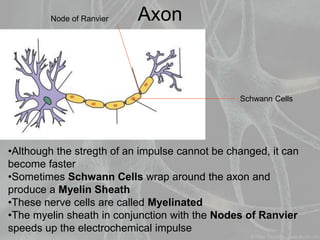
•Although the stregth of an impulse cannot be changed, it can
become faster
•Sometimes Schwann Cells wrap around the axon and
produce a Myelin Sheath
•These nerve cells are called Myelinated
•The myelin sheath in conjunction with the Nodes of Ranvier
speeds up the electrochemical impulse
Schwann Cells
Node of Ranvier
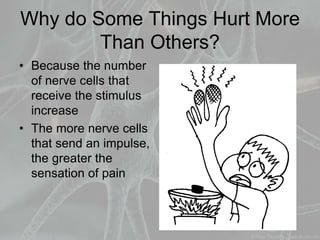
Why do Some Things Hurt More
Than Others?
• Because the number
of nerve cells that
receive the stimulus
increase
• The more nerve cells
that send an impulse,
the greater the
sensation of pain
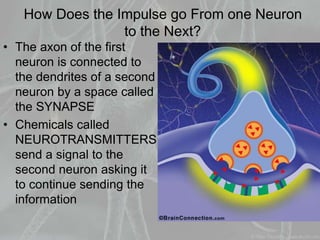
How Does the Impulse go From one Neuron
to the Next?
• The axon of the first
neuron is connected to
the dendrites of a second
neuron by a space called
the SYNAPSE
• Chemicals called
NEUROTRANSMITTERS
send a signal to the
second neuron asking it
to continue sending the
information
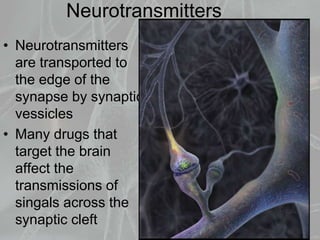
Neurotransmitters
• Neurotransmitters
are transported to
the edge of the
synapse by synaptic
vessicles
• Many drugs that
target the brain
affect the
transmissions of
singals across the
synaptic cleft
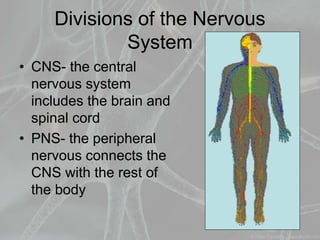
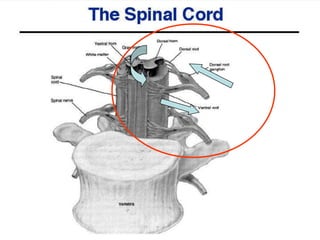
Divisions of the Nervous
System
• CNS- the central
nervous system
includes the brain and
spinal cord
• PNS- the peripheral
nervous connects the
CNS with the rest of
the body
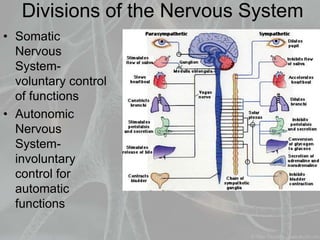
Divisions of the Nervous System
• Somatic
Nervous
System-
voluntary control
of functions
• Autonomic
Nervous
System-
involuntary
control for
automatic
functions
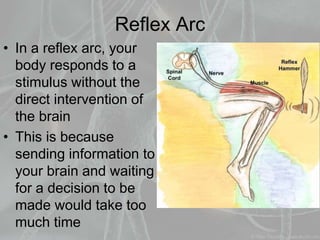
Reflex Arc
• In a reflex arc, your
body responds to a
stimulus without the
direct intervention of
the brain
• This is because
sending information to
your brain and waiting
for a decision to be
made would take too
much time
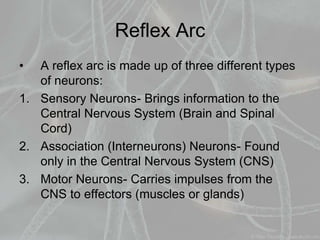
Reflex Arc
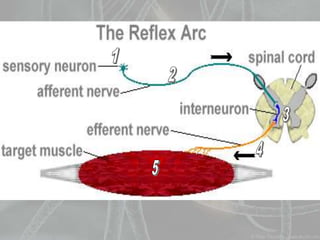
• A reflex arc is made up of three different types
of neurons:
1. Sensory Neurons- Brings information to the
Central Nervous System (Brain and Spinal
Cord)
2. Association (Interneurons) Neurons- Found
only in the Central Nervous System (CNS)
3. Motor Neurons- Carries impulses from the
CNS to effectors (muscles or glands)
Reflex Arc
• A Reflex Arc must always contain the
following:
1. Receptor (ex. pain receptor)
2. Sensory Neuron
3. Interneuron
4. Motor Neuron
5. Effector (Muscles)
Diseases of the Nervous System
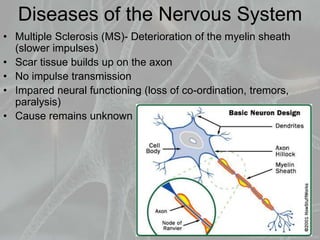
• Multiple Sclerosis (MS)- Deterioration of the myelin sheath
(slower impulses)
• Scar tissue builds up on the axon
• No impulse transmission
• Impared neural functioning (loss of co-ordination, tremors,
paralysis)
• Cause remains unknown
Diseases of the Immune System
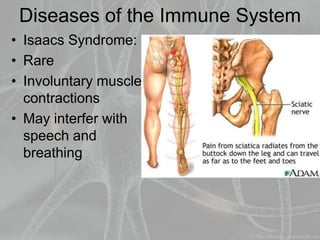
• Isaacs Syndrome:
• Rare
• Involuntary muscle
contractions
• May interfer with
speech and
breathing

9466437.ppt

  • 1.
  • 2.
    What is theNervous System? In the simplest form, the nervous system is an organ system specifically designed to sense the environment and to produce a response to changing conditions
  • 3.
    How Does theNervous System Sense its Surroundings? • The nervous system has a number of receptors designed to accumulate information about the environment • Examples of these receptors include: taste buds, rods and cones on the retina, pressure sensors in the skin
  • 4.
    How Does theNervous System Transmit Information from One Part of the Body to the Next? • The nervous system transmits signals from one part of the body to another (taste to brain) by using neurons
  • 5.
    How Does theNervous System Interpret the Information? • The brain acts as the main filter for information coming from all over the body • The brain then has to prioritize information that is more important than others • The brain has to then decide upon a set of actions to respond the environment
  • 6.
    What type ofResponses can the Brain Direct? • The brain can cause a multitude of reactions to respond to the environment such as: • the movement of a muscle to avoid a moving object • the increase of heart rate to escape from a bear • the increase in pupil sight to see in the dark
  • 7.
    What is aNeuron? • A neuron is the smallest unit of the nervous system • Every part of the nervous system is composed of specialized neurons
  • 8.
    Parts of theNeuron The Cell Body is the center of the cell. Here most chemical reactions occur, DNA is in the nucleus, most of the organelles are located here
  • 9.
    Neuron Continued Dendrites receive information.This can come from two sources, other neurons or specialized receptors (like taste buds)
  • 10.
    Neuron Continued The axon transmitsthe message along the rest of the neuron to the next neuron
  • 11.
    Electrical Impulses •Electrochemical impulses transmitsignals to other parts of the nervous system. •There is an all or none response to stimulus (either the nerve cell decides to send a message, or it remains inactive) •There is no difference in the strength of the impulse •Once it decides to send a message, the message cannot be recalled
  • 12.
    Axon •Although the stregthof an impulse cannot be changed, it can become faster •Sometimes Schwann Cells wrap around the axon and produce a Myelin Sheath •These nerve cells are called Myelinated •The myelin sheath in conjunction with the Nodes of Ranvier speeds up the electrochemical impulse Schwann Cells Node of Ranvier
  • 13.
    Why do SomeThings Hurt More Than Others? • Because the number of nerve cells that receive the stimulus increase • The more nerve cells that send an impulse, the greater the sensation of pain
  • 14.
    How Does theImpulse go From one Neuron to the Next? • The axon of the first neuron is connected to the dendrites of a second neuron by a space called the SYNAPSE • Chemicals called NEUROTRANSMITTERS send a signal to the second neuron asking it to continue sending the information
  • 15.
    Neurotransmitters • Neurotransmitters are transportedto the edge of the synapse by synaptic vessicles • Many drugs that target the brain affect the transmissions of singals across the synaptic cleft
  • 16.
    Divisions of theNervous System • CNS- the central nervous system includes the brain and spinal cord • PNS- the peripheral nervous connects the CNS with the rest of the body
  • 17.
    Divisions of theNervous System • Somatic Nervous System- voluntary control of functions • Autonomic Nervous System- involuntary control for automatic functions
  • 18.
    Reflex Arc • Ina reflex arc, your body responds to a stimulus without the direct intervention of the brain • This is because sending information to your brain and waiting for a decision to be made would take too much time
  • 19.
    Reflex Arc • Areflex arc is made up of three different types of neurons: 1. Sensory Neurons- Brings information to the Central Nervous System (Brain and Spinal Cord) 2. Association (Interneurons) Neurons- Found only in the Central Nervous System (CNS) 3. Motor Neurons- Carries impulses from the CNS to effectors (muscles or glands)
  • 20.
    Reflex Arc • AReflex Arc must always contain the following: 1. Receptor (ex. pain receptor) 2. Sensory Neuron 3. Interneuron 4. Motor Neuron 5. Effector (Muscles)
  • 23.
    Diseases of theNervous System • Multiple Sclerosis (MS)- Deterioration of the myelin sheath (slower impulses) • Scar tissue builds up on the axon • No impulse transmission • Impared neural functioning (loss of co-ordination, tremors, paralysis) • Cause remains unknown
  • 24.
    Diseases of theImmune System • Isaacs Syndrome: • Rare • Involuntary muscle contractions • May interfer with speech and breathing