Nephrectomy 
Jinu Janet Varghese 
Group 4 
TSMU
Definition 
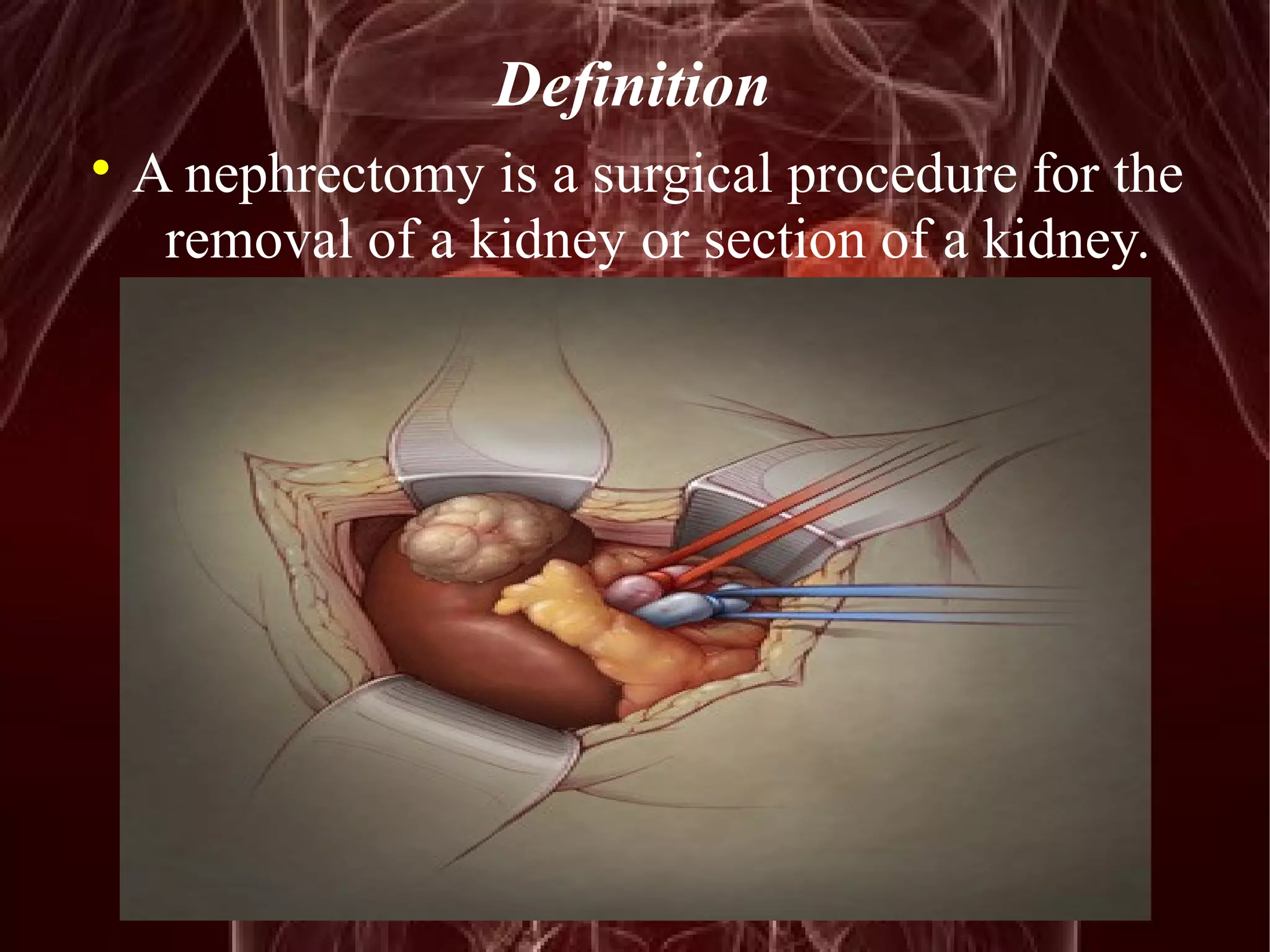
 A nephrectomy is a surgical procedure for the 
removal of a kidney or section of a kidney.
History 
Laparoscopic Nephrectomy was first performed 
in 1990 by Clayman, Kavoussi et al, where 
they removed the Right kidney from a patient 
diagnosed with Renal Oncocytoma 
The first successful nephrectomy was performed 
by the German surgeon Gustav Simon on 
August 2, 1869 in Heidelberg. Simon practiced 
the operation beforehand in animal 
experiments. He proved that one healthy 
kidney can be sufficient for urine excretion in 
humans.
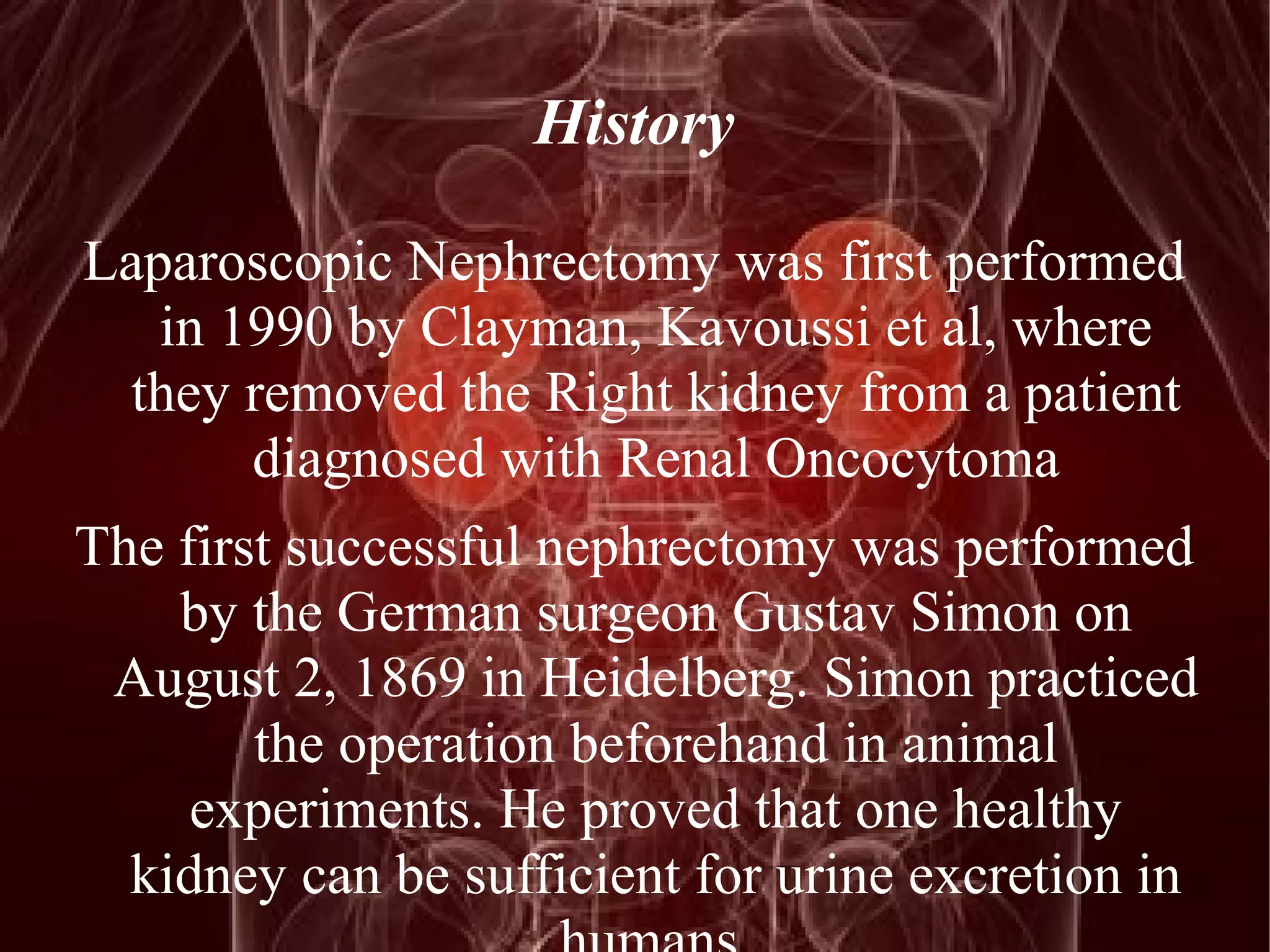
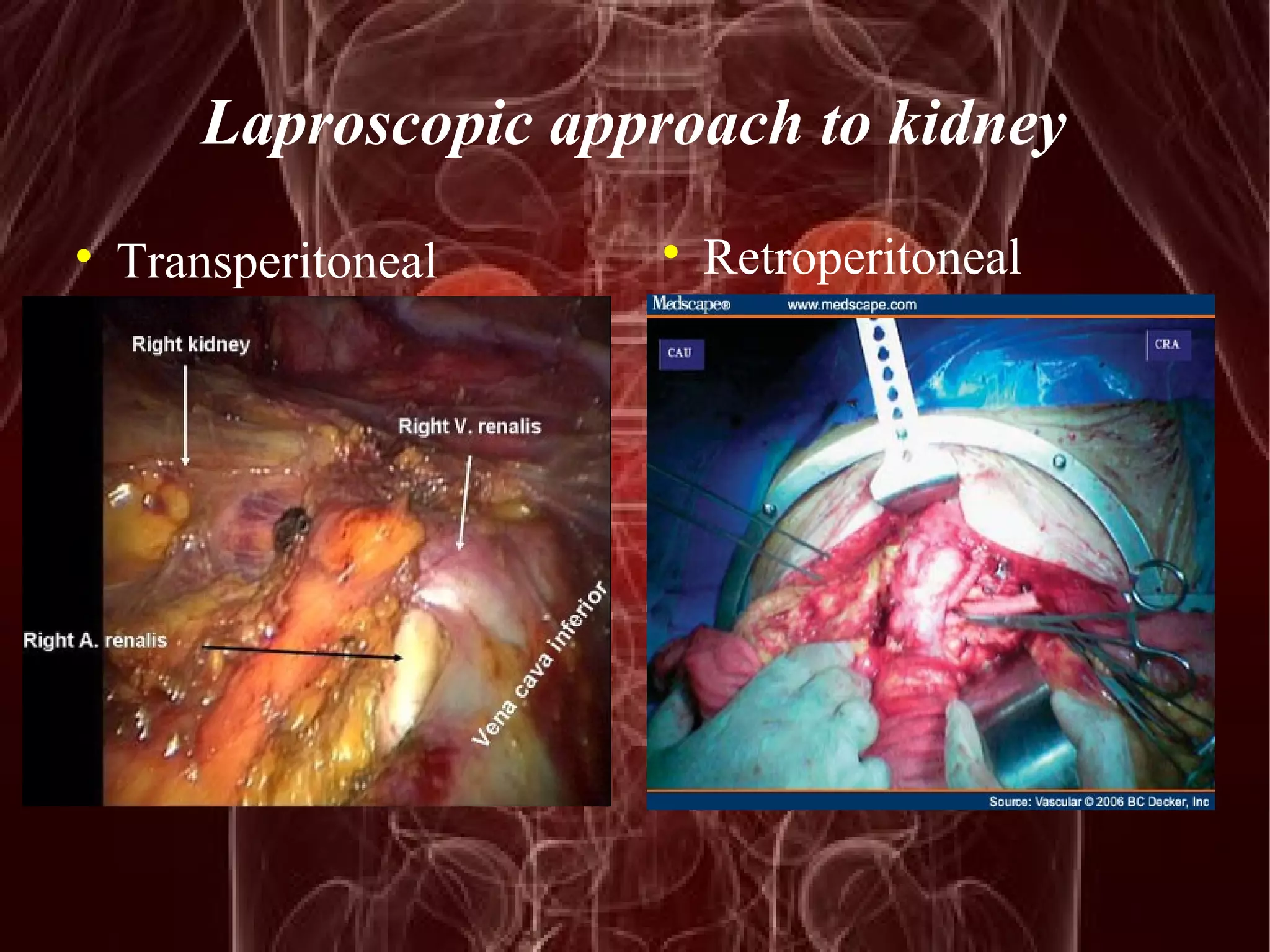
Laproscopic approach to kidney 
 Transperitoneal  Retroperitoneal
Procedure 
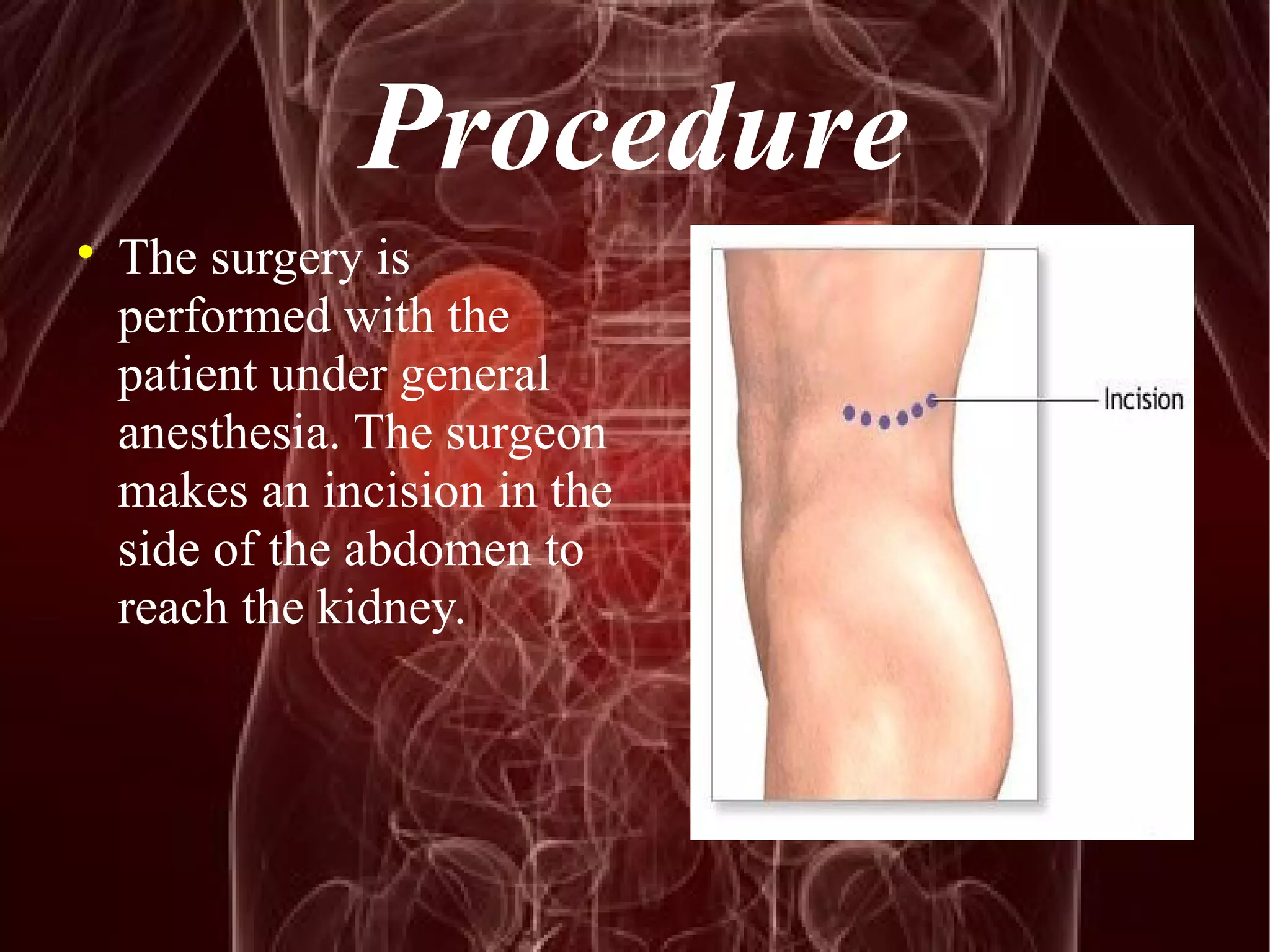
 The surgery is 
performed with the 
patient under general 
anesthesia. The surgeon 
makes an incision in the 
side of the abdomen to 
reach the kidney.
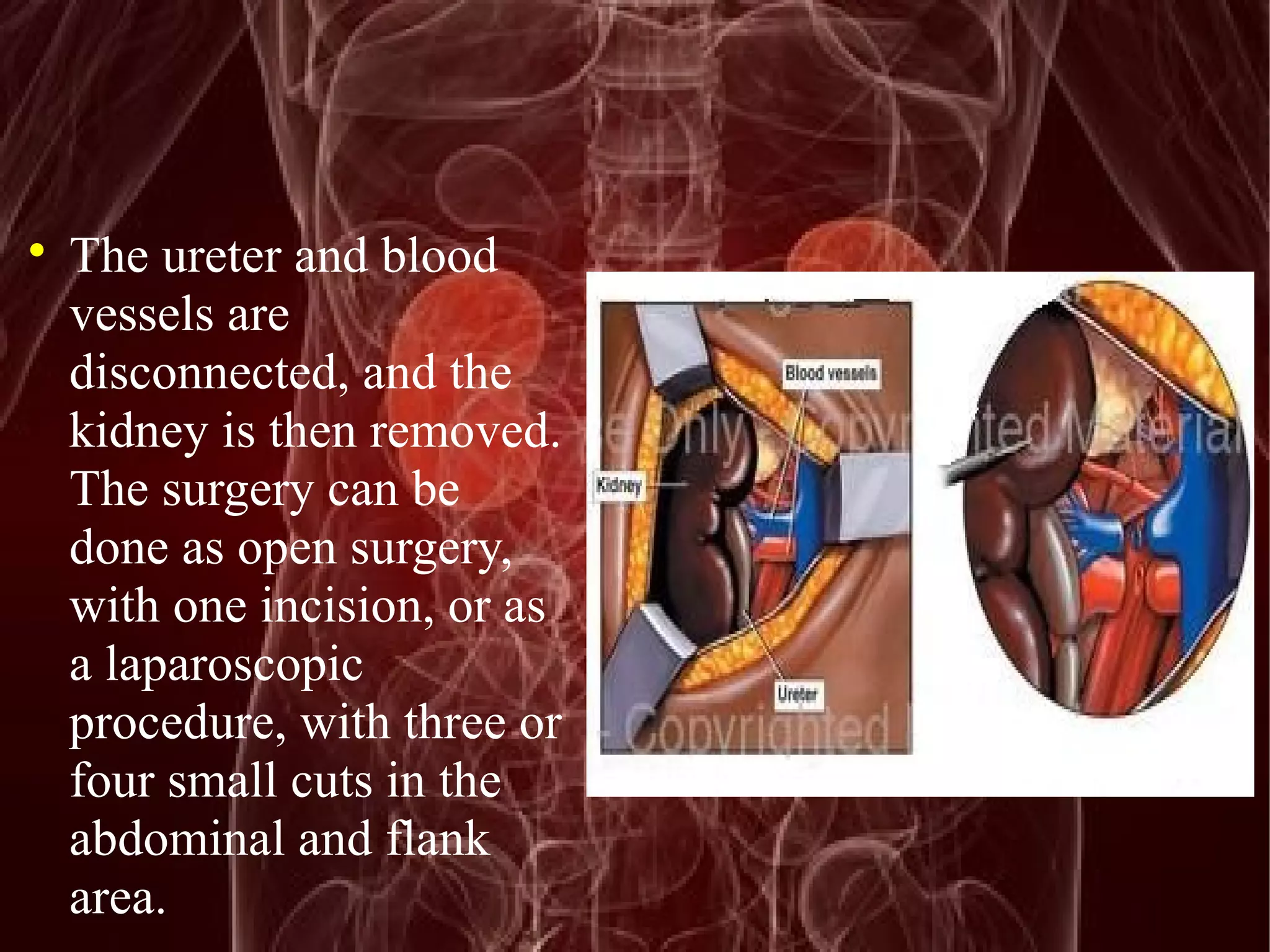
 The ureter and blood 
vessels are 
disconnected, and the 
kidney is then removed. 
The surgery can be 
done as open surgery, 
with one incision, or as 
a laparoscopic 
procedure, with three or 
four small cuts in the 
abdominal and flank 
area.
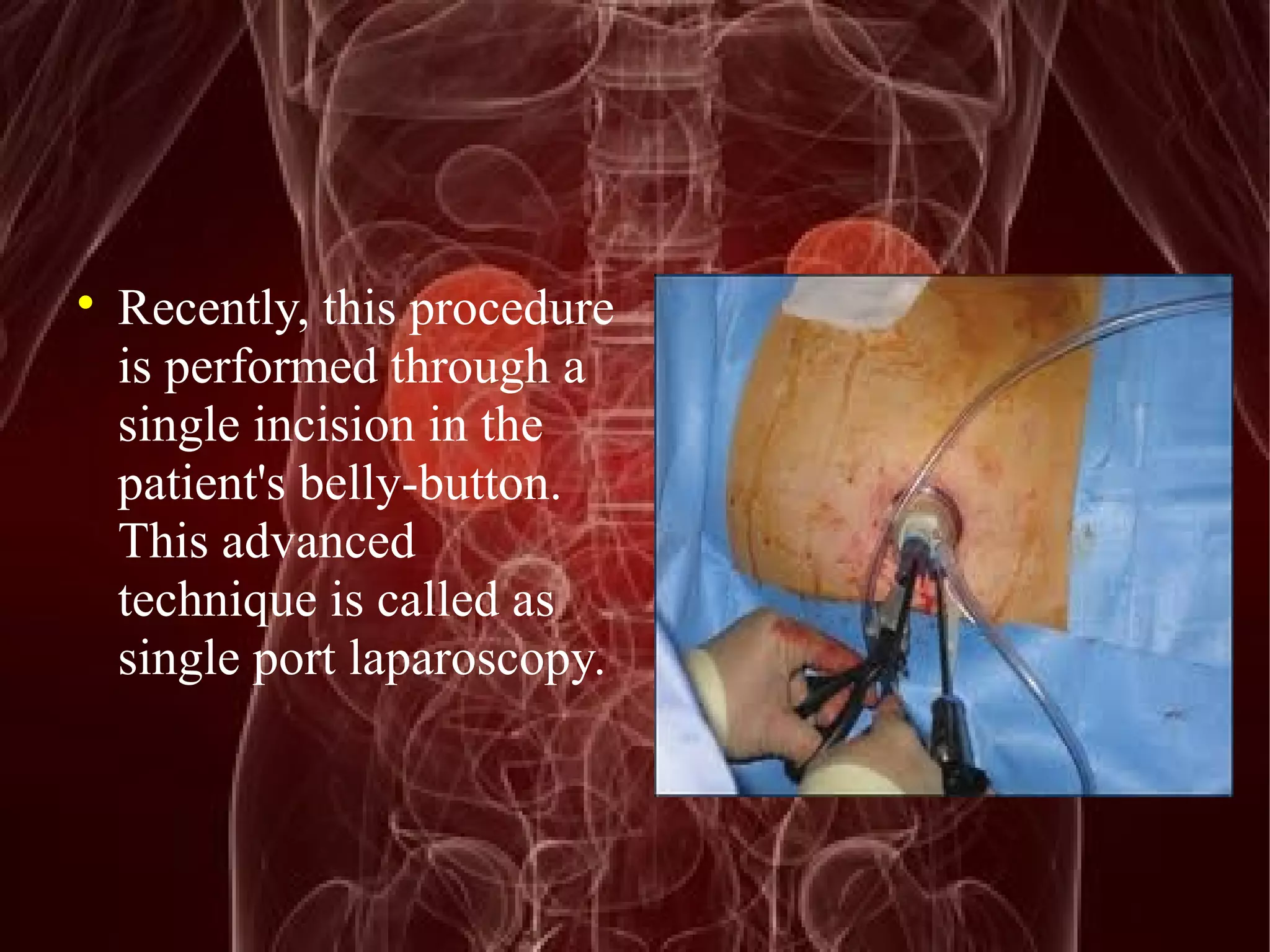
 Recently, this procedure 
is performed through a 
single incision in the 
patient's belly-button. 
This advanced 
technique is called as 
single port laparoscopy.
Purpose 
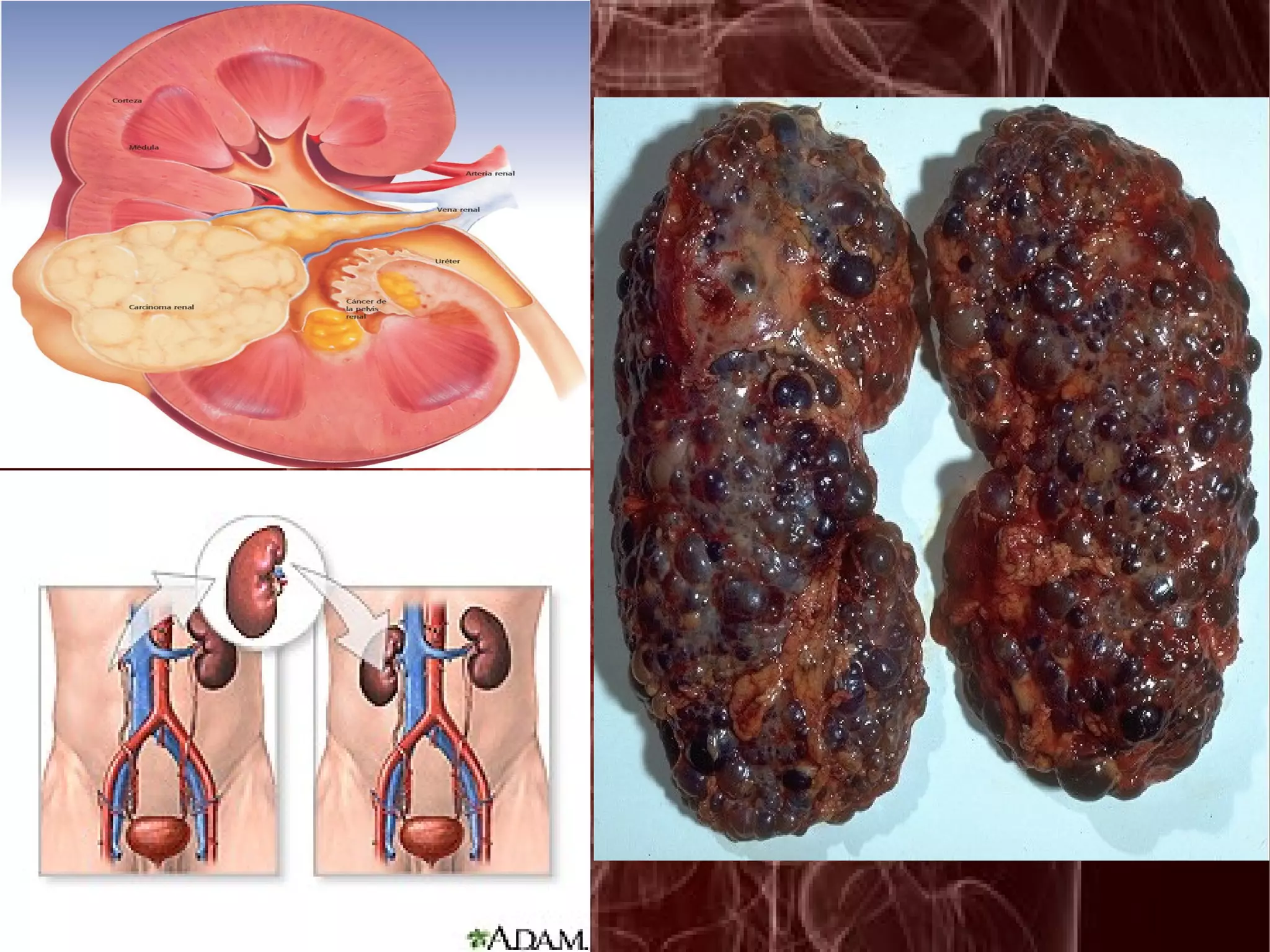
 Nephrectomy, or kidney removal, is performed on 
patients with severe kidney damage from disease, 
injury, or congenital conditions. These include 
cancer of the kidney (renal cell carcinoma); 
polycystic kidney disease (a disease in which cysts, 
or sac-like structures, displace healthy kidney 
tissue); and serious kidney infections. It is also used 
to remove a healthy kidney from a donor for the 
purposes of kidney transplantation
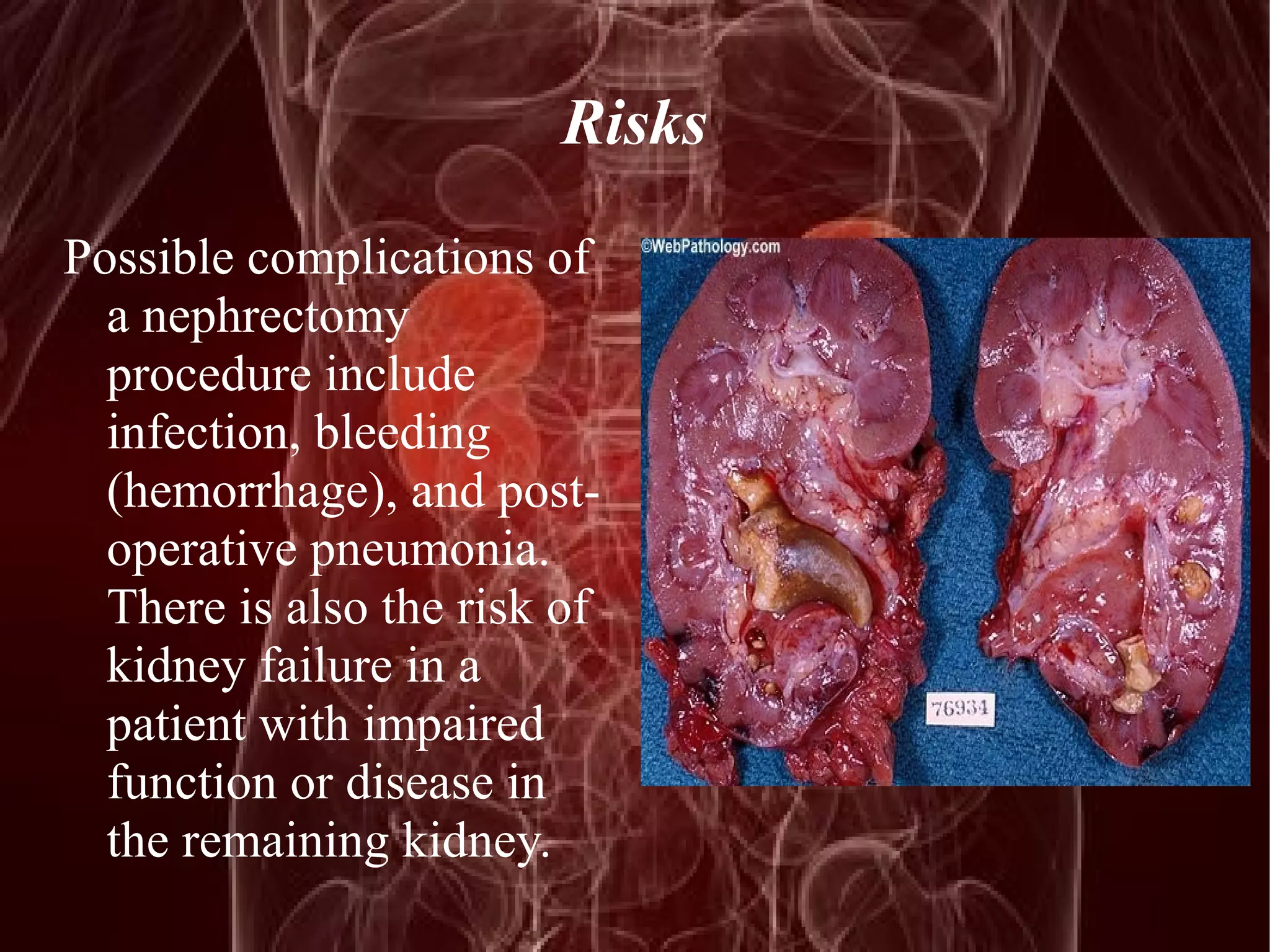
Risks 
Possible complications of 
a nephrectomy 
procedure include 
infection, bleeding 
(hemorrhage), and post-operative 
pneumonia. 
There is also the risk of 
kidney failure in a 
patient with impaired 
function or disease in 
the remaining kidney.
Aftercare 
Nephrectomy patients may experience considerable 
discomfort in the area of the incision. Patients may 
also experience numbness, caused by severed nerves, 
near or on the incision. Pain relievers are 
administered following the surgical procedure and 
during the recovery period on an as-needed basis. 
Although deep breathing and coughing may be 
painful due to the proximity of the incision to the 
diaphragm, breathing exercises are encouraged to 
prevent pneumonia. Patients should not drive an 
automobile for a minimum of two weeks.
Nephrectomy

Nephrectomy

  • 1.
    Nephrectomy Jinu JanetVarghese Group 4 TSMU
  • 2.
    Definition  Anephrectomy is a surgical procedure for the removal of a kidney or section of a kidney.
  • 3.
    History Laparoscopic Nephrectomywas first performed in 1990 by Clayman, Kavoussi et al, where they removed the Right kidney from a patient diagnosed with Renal Oncocytoma The first successful nephrectomy was performed by the German surgeon Gustav Simon on August 2, 1869 in Heidelberg. Simon practiced the operation beforehand in animal experiments. He proved that one healthy kidney can be sufficient for urine excretion in humans.
  • 4.
    Laproscopic approach tokidney  Transperitoneal  Retroperitoneal
  • 5.
    Procedure  Thesurgery is performed with the patient under general anesthesia. The surgeon makes an incision in the side of the abdomen to reach the kidney.
  • 6.
     The ureterand blood vessels are disconnected, and the kidney is then removed. The surgery can be done as open surgery, with one incision, or as a laparoscopic procedure, with three or four small cuts in the abdominal and flank area.
  • 7.
     Recently, thisprocedure is performed through a single incision in the patient's belly-button. This advanced technique is called as single port laparoscopy.
  • 8.
    Purpose  Nephrectomy,or kidney removal, is performed on patients with severe kidney damage from disease, injury, or congenital conditions. These include cancer of the kidney (renal cell carcinoma); polycystic kidney disease (a disease in which cysts, or sac-like structures, displace healthy kidney tissue); and serious kidney infections. It is also used to remove a healthy kidney from a donor for the purposes of kidney transplantation
  • 10.
    Risks Possible complicationsof a nephrectomy procedure include infection, bleeding (hemorrhage), and post-operative pneumonia. There is also the risk of kidney failure in a patient with impaired function or disease in the remaining kidney.
  • 11.
    Aftercare Nephrectomy patientsmay experience considerable discomfort in the area of the incision. Patients may also experience numbness, caused by severed nerves, near or on the incision. Pain relievers are administered following the surgical procedure and during the recovery period on an as-needed basis. Although deep breathing and coughing may be painful due to the proximity of the incision to the diaphragm, breathing exercises are encouraged to prevent pneumonia. Patients should not drive an automobile for a minimum of two weeks.