LECTURER:UMAR TARIQ
MSC OTT/ANAESTHESIA
 Surgical removal of all or part of the
prostate gland. This operation is done for
benign conditions that cause urinary
retention, as well as for prostate cancer and
for other cancers of the pelvis.
 There are two main types of
prostatectomies
1. SIMPLE PROSTATECTOMY
2. RADICAL PROSTATECTOMY
Also known as subtotal
prostatectomy
Involves the removal of only part of
the prostate.
Used only for benign conditions.
 Removal of the entire prostate gland ,
the seminal vessels and the vas
deferens, is performed for malignant
cancer
 There are multiple ways the operation
can be done
1. RADICAL PERINEAL: is a surgical procedure wherein the
prostate gland is removed through an incision in the area
between anus and scrotum(perineum). It is typically
performed to remove early prostate cancer.
2. SUPRA PUBIC PROSTATECTOMY: is a surgical procedure
wherein the prostate gland is removed through an incision
in the lower abdomen , above pubic bone. An incision is
made in the bladder and centre of the prostate gland is
removed.
3. RETRO PUBIC: through an incision made in the wall of the
lower abdomen to remove part or all of the prostate and
some of the tissue around it .Nearby lymph nodes may also
be removed.
4. TURP: is a surgical procedure that involves cutting away a
section of a prostate. Resectoscope is inserted through the
tip of penis and into the urethra. it is used to treat benign
prostatic hyperplasia.
 Judd Masson retractor
 6 –Allis forceps.
 6- Babcock forceps.
 4 – Lahey`s forceps
 2- Needle holders.
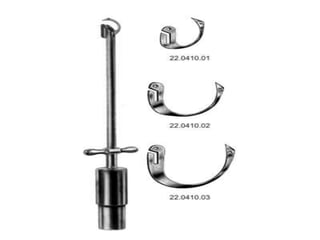
 Boomerang suture passer.
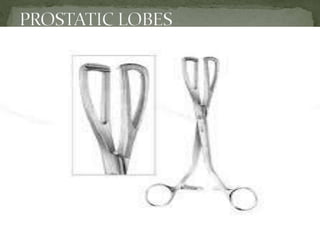
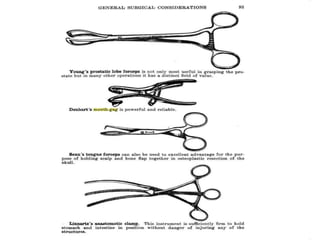
 Prostatic lobe forceps.
 Metzenbaum scissors.
 Jorgenson scissor.
 Hemoclip applier.
 FOR SUPRAPUBIC ADD
Jacobsen bladder retractor
 FOR RETROPUBIC ADD
Millin bacon retropubic prostatic bladder retractor
 FOR PERINEAL
Denis Browne perineal self retaining retractor
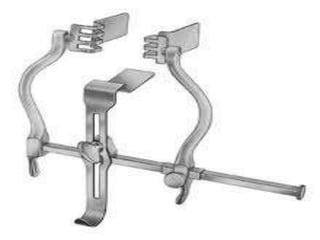
It is self retaining retractor.
Used to widen the surgical field.
Used to retract abdominal organs
like urinary bladder in urology
procedures.
Mainly used in prostatectomy.
Surgical scissor with long handle
and curved blade.
Used for cutting deep tissues
within the body as in hysterectomy
Also used in prostatectomy.
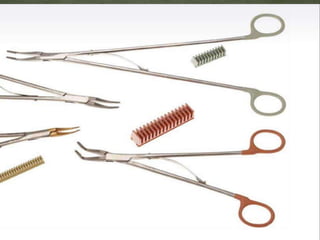
Used to apply metal clips onto blood
vessels and ducts which will remain
occluded .
Ratchet locks are not present
Also called ligating clip appliers.
Hemoclip appliers are available in a
variety of jaw types, applier lengths
and tip angles
Used to hold the needle while
driving suture.
The spring handle allows for
different size needles for suturing.
Available with spare needles in
small , medium and large sizes.
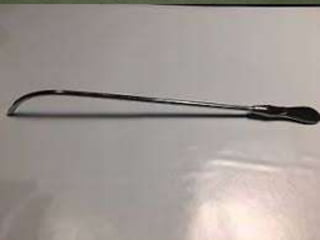
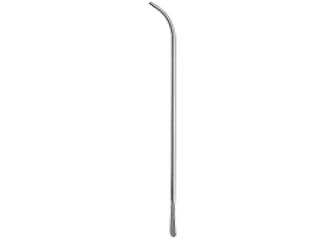
Used to locate the obstructions in
the urethra.
Used in urological surgery for
dilation of strictures or for
obtaining access to the bladder
Open prostatectomy tray

Open prostatectomy tray

  • 1.
  • 2.
     Surgical removalof all or part of the prostate gland. This operation is done for benign conditions that cause urinary retention, as well as for prostate cancer and for other cancers of the pelvis.  There are two main types of prostatectomies 1. SIMPLE PROSTATECTOMY 2. RADICAL PROSTATECTOMY
  • 4.
    Also known assubtotal prostatectomy Involves the removal of only part of the prostate. Used only for benign conditions.
  • 5.
     Removal ofthe entire prostate gland , the seminal vessels and the vas deferens, is performed for malignant cancer  There are multiple ways the operation can be done
  • 6.
    1. RADICAL PERINEAL:is a surgical procedure wherein the prostate gland is removed through an incision in the area between anus and scrotum(perineum). It is typically performed to remove early prostate cancer. 2. SUPRA PUBIC PROSTATECTOMY: is a surgical procedure wherein the prostate gland is removed through an incision in the lower abdomen , above pubic bone. An incision is made in the bladder and centre of the prostate gland is removed. 3. RETRO PUBIC: through an incision made in the wall of the lower abdomen to remove part or all of the prostate and some of the tissue around it .Nearby lymph nodes may also be removed. 4. TURP: is a surgical procedure that involves cutting away a section of a prostate. Resectoscope is inserted through the tip of penis and into the urethra. it is used to treat benign prostatic hyperplasia.
  • 7.
     Judd Massonretractor  6 –Allis forceps.  6- Babcock forceps.  4 – Lahey`s forceps  2- Needle holders.  Boomerang suture passer.  Prostatic lobe forceps.  Metzenbaum scissors.  Jorgenson scissor.  Hemoclip applier.
  • 8.
     FOR SUPRAPUBICADD Jacobsen bladder retractor  FOR RETROPUBIC ADD Millin bacon retropubic prostatic bladder retractor  FOR PERINEAL Denis Browne perineal self retaining retractor
  • 9.
    It is selfretaining retractor. Used to widen the surgical field. Used to retract abdominal organs like urinary bladder in urology procedures. Mainly used in prostatectomy.
  • 11.
    Surgical scissor withlong handle and curved blade. Used for cutting deep tissues within the body as in hysterectomy Also used in prostatectomy.
  • 13.
    Used to applymetal clips onto blood vessels and ducts which will remain occluded . Ratchet locks are not present Also called ligating clip appliers. Hemoclip appliers are available in a variety of jaw types, applier lengths and tip angles
  • 17.
    Used to holdthe needle while driving suture. The spring handle allows for different size needles for suturing. Available with spare needles in small , medium and large sizes.
  • 20.
    Used to locatethe obstructions in the urethra. Used in urological surgery for dilation of strictures or for obtaining access to the bladder