Introduction 
One of agricultural poisons. 
It is a neurotoxic- organochlorine insecticide and acaricide. 
 it is an endocrine disruptor & highly toxic. 
 Effective against a wide range of insects 
Used as a pre-harvest insecticide. Also used on non- food 
crops such as tobacoo & cotton. 
In INDIA, Hindustan Insecticide Lmtd. is the producer of 
Endosulfan. Sold under trade names – THIONEX, ENDOCIL, 
PHASER, BENZOEPIN.
Endosulfan in different forms
Health effects 
Nervous System : Hyperexcitability, tremors, and convulsions 
and death 
Reproductive System & Developmental effects: Puberty 
delayed in boys. Infertility among men. Girls attain menarche 
early. Menstrual disorders are frequent. Has estrogenic effects. 
Birth defects in offspring of animals ingesting endosulfan during 
pregnancy. 
Skin effects: Farm workers with chronic endosulfan exposure are 
at risk of rashes and skin irritation. 
 Other Systemic Effects: Affects the kidneys & liver. It inhibits 
leukocyte & macrophage migration. It damages RBC. It causes 
mutations in mammals & may induce mutations. It is also a 
potential tumor promoter.
Ground Situation in India 
Invented in Germany and in use in global agriculture 
for over 55 years. 
 Used in India for over 40 years 
Third largest selling generic insecticide worldwide 
with global market in excess of 40 million liters valued 
at over US$ 300 million. 
India’s share in global Endosulfan market is over 70%. 
The Indian market of Endosulfan is approximately 12 
million liters valued at US$ 60 million . 
Exports of Endosulfan from India is valued at US$ 40 
million.
It was sprayed in the cashew plantations in 
Kasaragod District sine 1976, till 2001 regularly 
three times every year. The aerial spraying was 
allegedly undertaken to contain the menace of 
the tea mosquito bug. 
Just after three years, the ill effects of Endosulfan 
spraying came to notice. As early as 1979, stunted 
growth and deformed limbs were noticed among 
new born calves.
The ill-effects of endosulfan used in the 
cashew plantations of Kasaragod Dist.
By 1990’s health disorders of very serious nature 
among the human population came to the lime 
light. 
Children were found to be the worst affected with 
congenital anomalies, mental retardation, 
physical deformities, cerebral palsy, epilepsy, 
hydrocephalus etc. 
Men and women were also affected with various 
chronic ailments, many irreversible and difficult 
to treat. There is a high incidence of disorders of 
the central nerves system, Cancer and 
reproductive disorders.
Initiatives by the Community 
From the mid of 1990’s, the community living 
near plantations had been complaining against 
the spraying of Endosulfan. Since then the 
struggle of the local people have been going on in 
the courts, in the corridors of power and 
academies and in the streets. 
The struggle got wide support from many within 
and outside the country. The struggle in 
Kasaragod became a forerunner for many 
initiatives against endosulfan spraying and relief 
measures to the victims.
Initiatives by the Government 
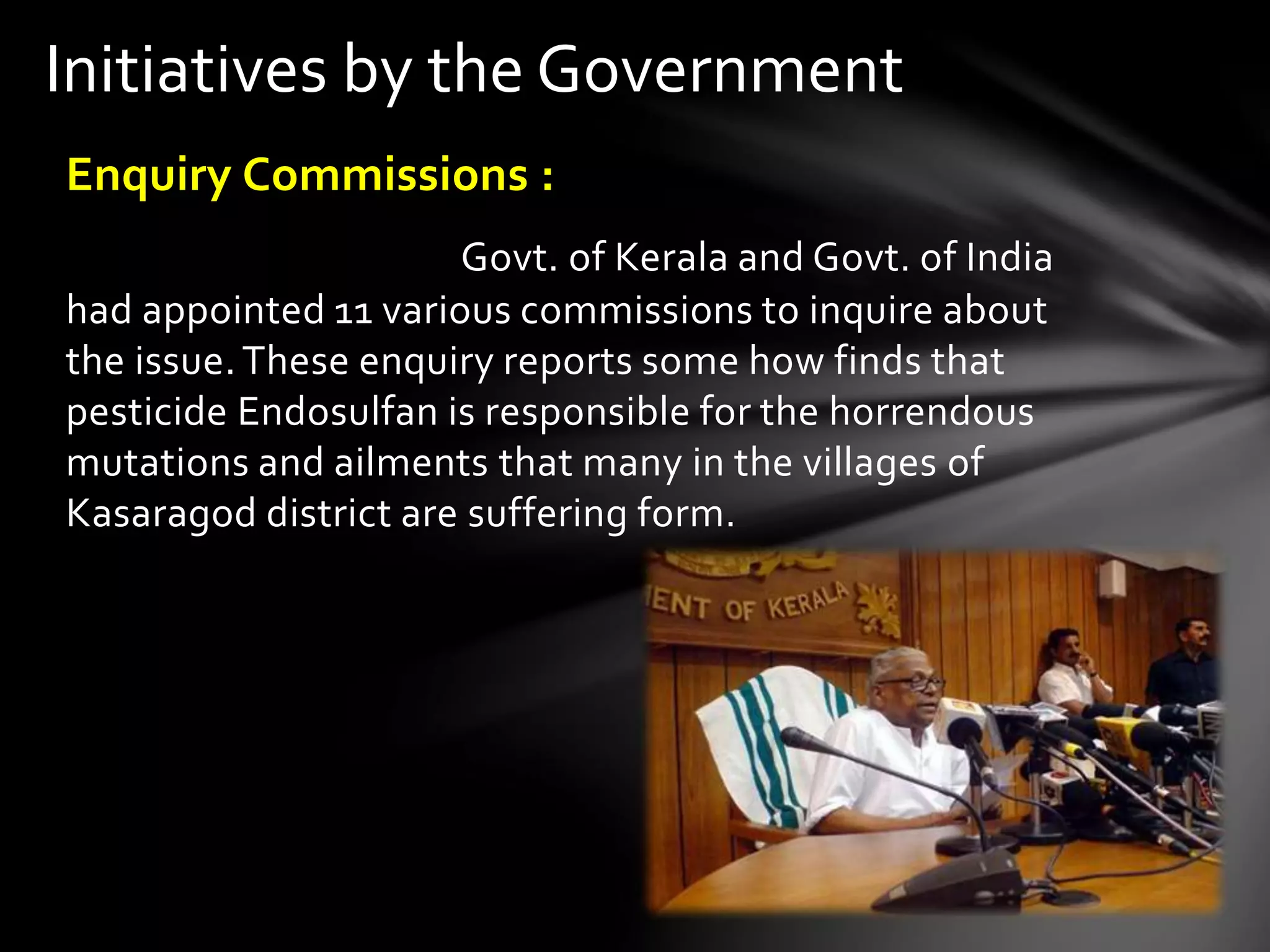
Enquiry Commissions : 
Govt. of Kerala and Govt. of India 
had appointed 11 various commissions to inquire about 
the issue. These enquiry reports some how finds that 
pesticide Endosulfan is responsible for the horrendous 
mutations and ailments that many in the villages of 
Kasaragod district are suffering form.
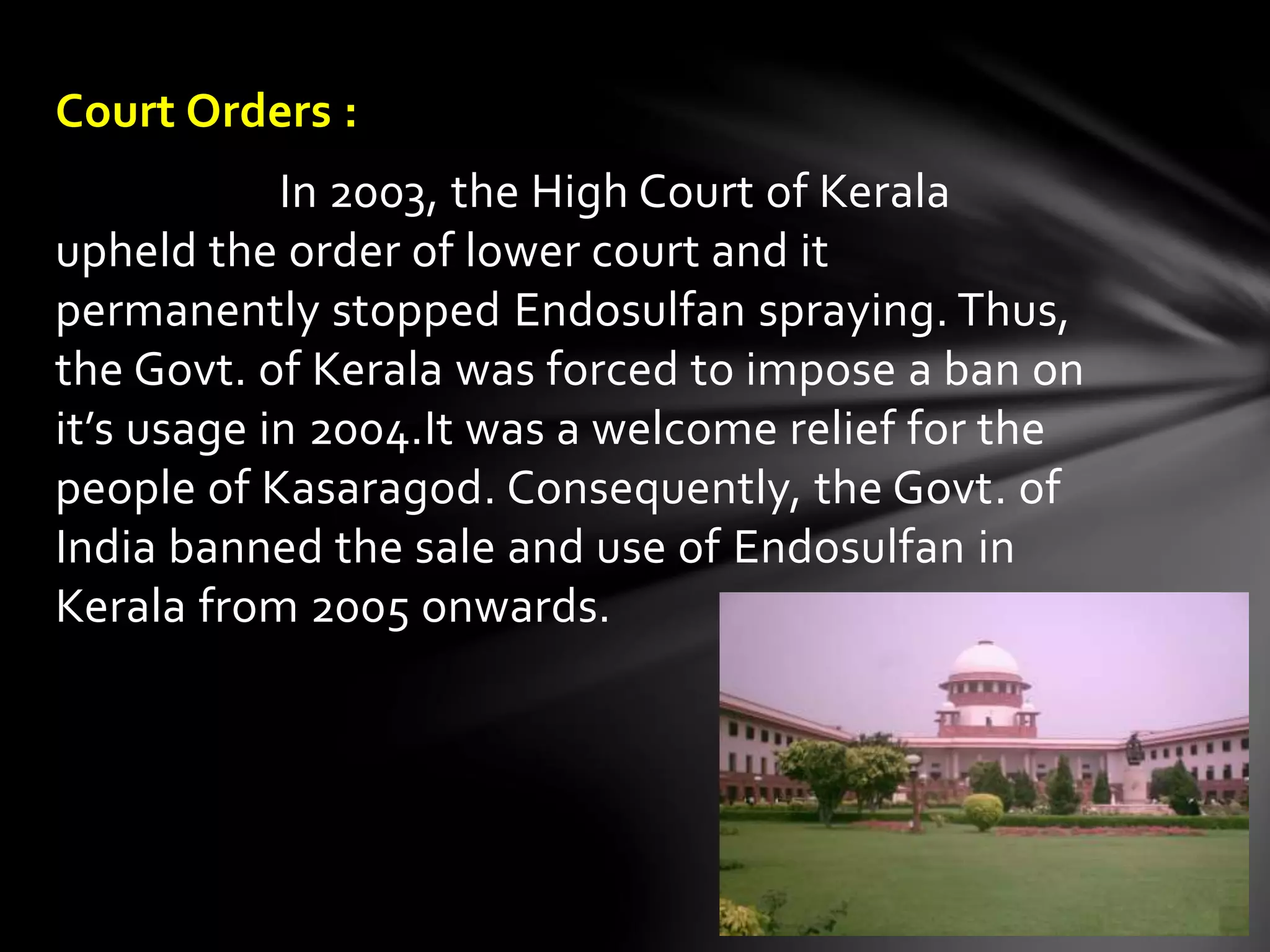
Court Orders : 
In 2003, the High Court of Kerala 
upheld the order of lower court and it 
permanently stopped Endosulfan spraying. Thus, 
the Govt. of Kerala was forced to impose a ban on 
it’s usage in 2004.It was a welcome relief for the 
people of Kasaragod. Consequently, the Govt. of 
India banned the sale and use of Endosulfan in 
Kerala from 2005 onwards.
Agitations : 
A massive movement was arouse as the part 
of struggle in the streets at different stages. A march of 
thousands of protesters was held on August 2004 
demanding EndosulfanQuit – India infront of Kasaragod 
District Collectorate. 
The Kasaragod District Panchayath organised a march 
infront of the Legislative Assemble of Kerala at 
Thiruvananthapuram demanding to provide relief 
measures to the victims.
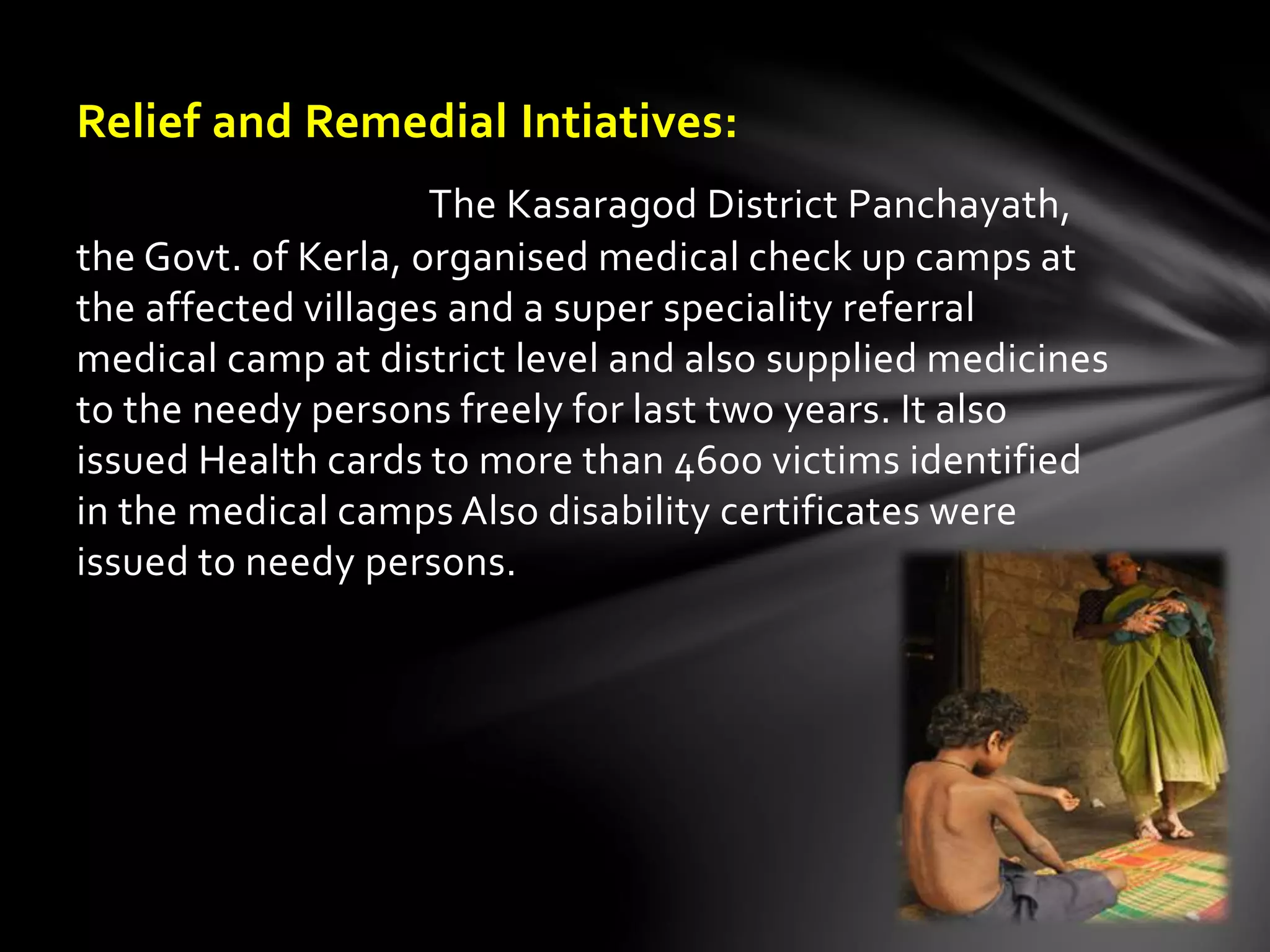
Relief and Remedial Intiatives: 
The Kasaragod District Panchayath, 
the Govt. of Kerla, organised medical check up camps at 
the affected villages and a super speciality referral 
medical camp at district level and also supplied medicines 
to the needy persons freely for last two years. It also 
issued Health cards to more than 4600 victims identified 
in the medical camps Also disability certificates were 
issued to needy persons.
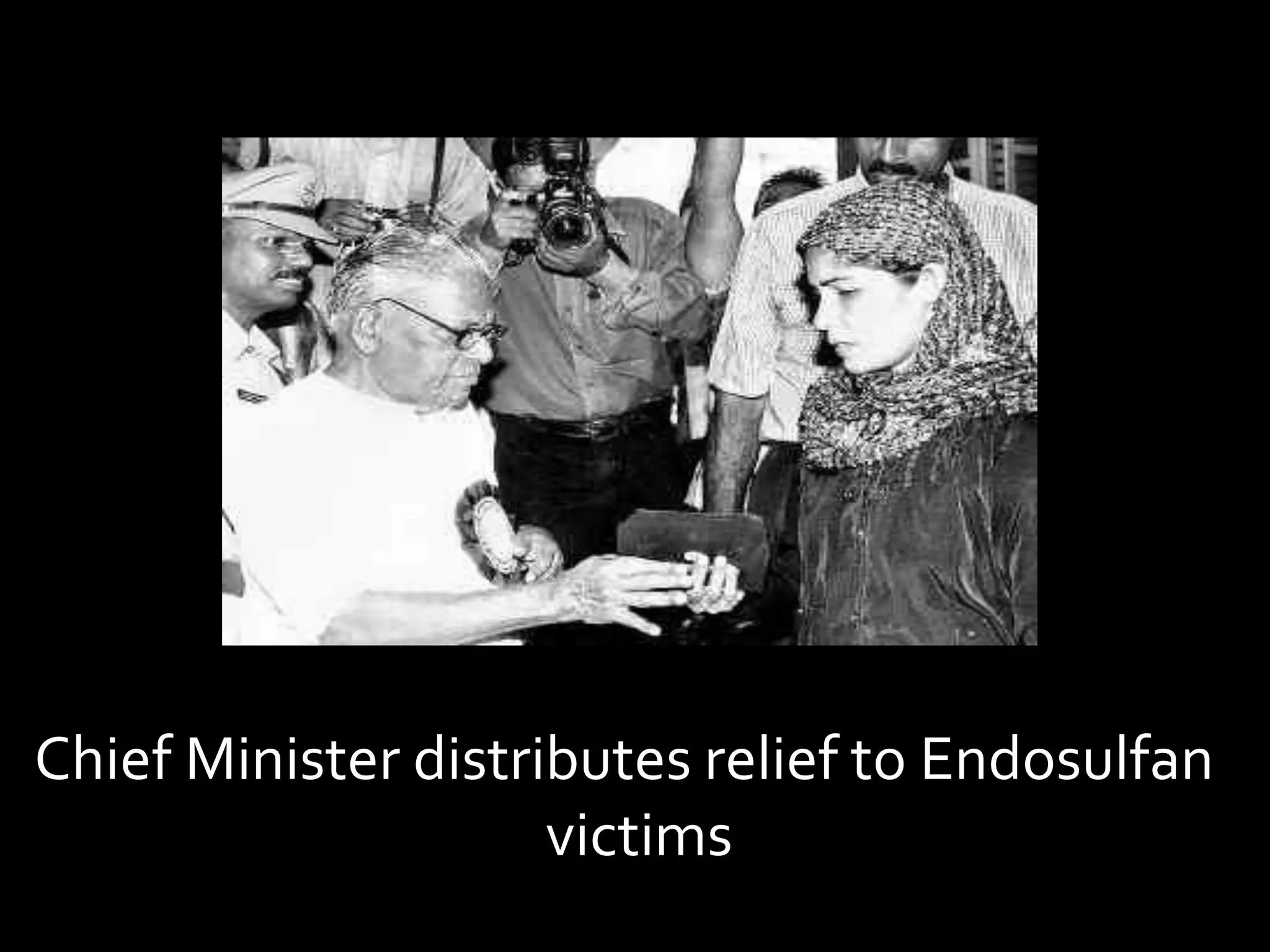
Chief Minister distributes relief to Endosulfan 
victims
The pesticide was banned in the state of Kerala as 
early as 2001 following a report by the National 
Institute of Occupational Health. 
Later, on a petition filed in the Supreme Court of 
India, the production, storage, sale and use of the 
pesticide was temporarily banned on 13 May 2011, 
and later permanently by the end of 2011. 
The pesticide has come under a global ban as a 
conclusion from the Stockholm Convention, even 
though experts say it will take another five years 
to take effect.
Endosulfan
Endosulfan

Endosulfan

  • 2.
    Introduction One ofagricultural poisons. It is a neurotoxic- organochlorine insecticide and acaricide.  it is an endocrine disruptor & highly toxic.  Effective against a wide range of insects Used as a pre-harvest insecticide. Also used on non- food crops such as tobacoo & cotton. In INDIA, Hindustan Insecticide Lmtd. is the producer of Endosulfan. Sold under trade names – THIONEX, ENDOCIL, PHASER, BENZOEPIN.
  • 3.
  • 4.
    Health effects NervousSystem : Hyperexcitability, tremors, and convulsions and death Reproductive System & Developmental effects: Puberty delayed in boys. Infertility among men. Girls attain menarche early. Menstrual disorders are frequent. Has estrogenic effects. Birth defects in offspring of animals ingesting endosulfan during pregnancy. Skin effects: Farm workers with chronic endosulfan exposure are at risk of rashes and skin irritation.  Other Systemic Effects: Affects the kidneys & liver. It inhibits leukocyte & macrophage migration. It damages RBC. It causes mutations in mammals & may induce mutations. It is also a potential tumor promoter.
  • 6.
    Ground Situation inIndia Invented in Germany and in use in global agriculture for over 55 years.  Used in India for over 40 years Third largest selling generic insecticide worldwide with global market in excess of 40 million liters valued at over US$ 300 million. India’s share in global Endosulfan market is over 70%. The Indian market of Endosulfan is approximately 12 million liters valued at US$ 60 million . Exports of Endosulfan from India is valued at US$ 40 million.
  • 9.
    It was sprayedin the cashew plantations in Kasaragod District sine 1976, till 2001 regularly three times every year. The aerial spraying was allegedly undertaken to contain the menace of the tea mosquito bug. Just after three years, the ill effects of Endosulfan spraying came to notice. As early as 1979, stunted growth and deformed limbs were noticed among new born calves.
  • 10.
    The ill-effects ofendosulfan used in the cashew plantations of Kasaragod Dist.
  • 11.
    By 1990’s healthdisorders of very serious nature among the human population came to the lime light. Children were found to be the worst affected with congenital anomalies, mental retardation, physical deformities, cerebral palsy, epilepsy, hydrocephalus etc. Men and women were also affected with various chronic ailments, many irreversible and difficult to treat. There is a high incidence of disorders of the central nerves system, Cancer and reproductive disorders.
  • 12.
    Initiatives by theCommunity From the mid of 1990’s, the community living near plantations had been complaining against the spraying of Endosulfan. Since then the struggle of the local people have been going on in the courts, in the corridors of power and academies and in the streets. The struggle got wide support from many within and outside the country. The struggle in Kasaragod became a forerunner for many initiatives against endosulfan spraying and relief measures to the victims.
  • 13.
    Initiatives by theGovernment Enquiry Commissions : Govt. of Kerala and Govt. of India had appointed 11 various commissions to inquire about the issue. These enquiry reports some how finds that pesticide Endosulfan is responsible for the horrendous mutations and ailments that many in the villages of Kasaragod district are suffering form.
  • 14.
    Court Orders : In 2003, the High Court of Kerala upheld the order of lower court and it permanently stopped Endosulfan spraying. Thus, the Govt. of Kerala was forced to impose a ban on it’s usage in 2004.It was a welcome relief for the people of Kasaragod. Consequently, the Govt. of India banned the sale and use of Endosulfan in Kerala from 2005 onwards.
  • 15.
    Agitations : Amassive movement was arouse as the part of struggle in the streets at different stages. A march of thousands of protesters was held on August 2004 demanding EndosulfanQuit – India infront of Kasaragod District Collectorate. The Kasaragod District Panchayath organised a march infront of the Legislative Assemble of Kerala at Thiruvananthapuram demanding to provide relief measures to the victims.
  • 16.
    Relief and RemedialIntiatives: The Kasaragod District Panchayath, the Govt. of Kerla, organised medical check up camps at the affected villages and a super speciality referral medical camp at district level and also supplied medicines to the needy persons freely for last two years. It also issued Health cards to more than 4600 victims identified in the medical camps Also disability certificates were issued to needy persons.
  • 17.
    Chief Minister distributesrelief to Endosulfan victims
  • 18.
    The pesticide wasbanned in the state of Kerala as early as 2001 following a report by the National Institute of Occupational Health. Later, on a petition filed in the Supreme Court of India, the production, storage, sale and use of the pesticide was temporarily banned on 13 May 2011, and later permanently by the end of 2011. The pesticide has come under a global ban as a conclusion from the Stockholm Convention, even though experts say it will take another five years to take effect.