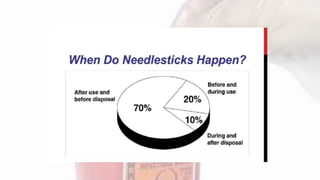
Needle stick injuries
Presented by:
Ms. Zoya Ali Makrani
Department of MSN
WHAT IS NEEDLE STICK INJURY:
• A NEEDLE STICK INJURY is a percutaneous piercing wound
typically set by a needle point, but possibly also by other sharp
instruments or objects.
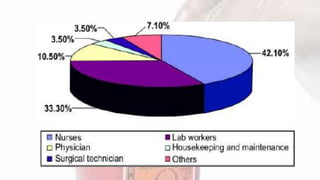
WHO ARE AT RISK FOR BLOOD BORNE
INFECTION DUE TO NSI ?
• Health care worker with frequent blood exposures are nursing
staff, nursing students, physicians, surgeons, emergency care
providers, dentists, interns and medical students, labour and
delivery room personnel, laboratory technicians, health facility
cleaning staff and clinical waste handlers.
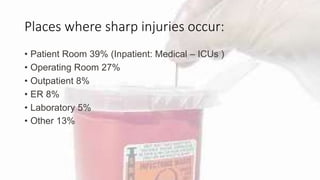
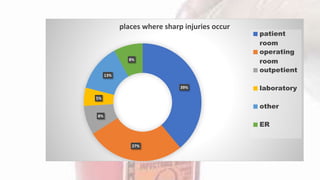
Places where sharp injuries occur:
• Patient Room 39% (Inpatient: Medical – ICUs )
• Operating Room 27%
• Outpatient 8%
• ER 8%
• Laboratory 5%
• Other 13%
39%
27%
8%
5%
13%
8%
places where sharp injuries occur
patient
room
operating
room
outpetient
laboratory
other
ER
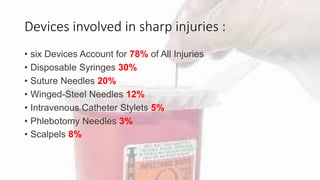
Devices involved in sharp injuries :
• six Devices Account for 78% of All Injuries
• Disposable Syringes 30%
• Suture Needles 20%
• Winged-Steel Needles 12%
• Intravenous Catheter Stylets 5%
• Phlebotomy Needles 3%
• Scalpels 8%
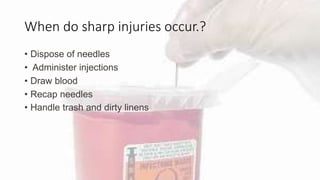
When do sharp injuries occur.?
• Dispose of needles
• Administer injections
• Draw blood
• Recap needles
• Handle trash and dirty linens
FACTORS THAT INFLUENCE RISK FOR
ACQUIRING HIV
• Type and efficacy of exposure
• Depth of injury
• Size and type of needle
• Amount of blood HIV status of source Amount of virus present
in the contaminated fluid 10
Role of nurse in reducing risk of sharp
injuries:
Do’s Don’ts
Use needle cutter/destroyer Handle, empty, or transfer used
sharps between containers.
Separate sharps from other waste Do not recap sharps before
disposal
Use rigid, puncture proof disposal
bins
• Empty sharps containers when
they are ¾ full
How to reduce NSI:
• Avoid use of needles where safe and effective alternatives are
available.
• Avoid recapping of the needles.
• During handling of needles one should be very careful & it
should be promptly disposed of only in sharp disposal
containers.
• Take three doses of hepatitis B vaccine. It gives you life long
protection
• Take Post Exposure Prophylaxis (PEP) in the event of any
occupational exposure
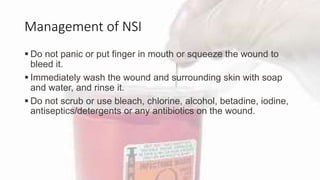
Management of NSI
 Do not panic or put finger in mouth or squeeze the wound to
bleed it.
 Immediately wash the wound and surrounding skin with soap
and water, and rinse it.
 Do not scrub or use bleach, chlorine, alcohol, betadine, iodine,
antiseptics/detergents or any antibiotics on the wound.
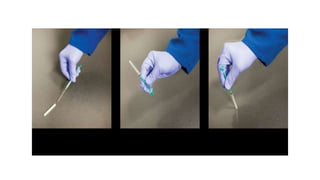
One handed needle recapping technique:
• Definition:
• One-handed needle recapping is a method that place
the cap to needle on clean and safe place such as
inside a big tray
• Purpose: To prevent own finger or another person by
needle from sticking accidentally.
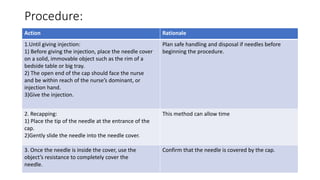
Procedure:
Action Rationale
1.Until giving injection:
1) Before giving the injection, place the needle cover
on a solid, immovable object such as the rim of a
bedside table or big tray.
2) The open end of the cap should face the nurse
and be within reach of the nurse’s dominant, or
injection hand.
3)Give the injection.
Plan safe handling and disposal if needles before
beginning the procedure.
2. Recapping:
1) Place the tip of the needle at the entrance of the
cap.
2)Gently slide the needle into the needle cover.
This method can allow time
3. Once the needle is inside the cover, use the
object’s resistance to completely cover the
needle.
Confirm that the needle is covered by the cap.
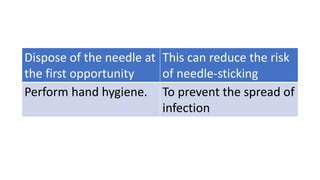
Dispose of the needle at
the first opportunity
This can reduce the risk
of needle-sticking
Perform hand hygiene. To prevent the spread of
infection
Needle stick injuries

Needle stick injuries

  • 1.
    Needle stick injuries Presentedby: Ms. Zoya Ali Makrani Department of MSN
  • 2.
    WHAT IS NEEDLESTICK INJURY: • A NEEDLE STICK INJURY is a percutaneous piercing wound typically set by a needle point, but possibly also by other sharp instruments or objects.
  • 3.
    WHO ARE ATRISK FOR BLOOD BORNE INFECTION DUE TO NSI ? • Health care worker with frequent blood exposures are nursing staff, nursing students, physicians, surgeons, emergency care providers, dentists, interns and medical students, labour and delivery room personnel, laboratory technicians, health facility cleaning staff and clinical waste handlers.
  • 5.
    Places where sharpinjuries occur: • Patient Room 39% (Inpatient: Medical – ICUs ) • Operating Room 27% • Outpatient 8% • ER 8% • Laboratory 5% • Other 13%
  • 6.
    39% 27% 8% 5% 13% 8% places where sharpinjuries occur patient room operating room outpetient laboratory other ER
  • 7.
    Devices involved insharp injuries : • six Devices Account for 78% of All Injuries • Disposable Syringes 30% • Suture Needles 20% • Winged-Steel Needles 12% • Intravenous Catheter Stylets 5% • Phlebotomy Needles 3% • Scalpels 8%
  • 9.
    When do sharpinjuries occur.? • Dispose of needles • Administer injections • Draw blood • Recap needles • Handle trash and dirty linens
  • 10.
    FACTORS THAT INFLUENCERISK FOR ACQUIRING HIV • Type and efficacy of exposure • Depth of injury • Size and type of needle • Amount of blood HIV status of source Amount of virus present in the contaminated fluid 10
  • 11.
    Role of nursein reducing risk of sharp injuries: Do’s Don’ts Use needle cutter/destroyer Handle, empty, or transfer used sharps between containers. Separate sharps from other waste Do not recap sharps before disposal Use rigid, puncture proof disposal bins • Empty sharps containers when they are ¾ full
  • 12.
    How to reduceNSI: • Avoid use of needles where safe and effective alternatives are available. • Avoid recapping of the needles. • During handling of needles one should be very careful & it should be promptly disposed of only in sharp disposal containers. • Take three doses of hepatitis B vaccine. It gives you life long protection • Take Post Exposure Prophylaxis (PEP) in the event of any occupational exposure
  • 13.
    Management of NSI Do not panic or put finger in mouth or squeeze the wound to bleed it.  Immediately wash the wound and surrounding skin with soap and water, and rinse it.  Do not scrub or use bleach, chlorine, alcohol, betadine, iodine, antiseptics/detergents or any antibiotics on the wound.
  • 14.
    One handed needlerecapping technique: • Definition: • One-handed needle recapping is a method that place the cap to needle on clean and safe place such as inside a big tray • Purpose: To prevent own finger or another person by needle from sticking accidentally.
  • 15.
    Procedure: Action Rationale 1.Until givinginjection: 1) Before giving the injection, place the needle cover on a solid, immovable object such as the rim of a bedside table or big tray. 2) The open end of the cap should face the nurse and be within reach of the nurse’s dominant, or injection hand. 3)Give the injection. Plan safe handling and disposal if needles before beginning the procedure. 2. Recapping: 1) Place the tip of the needle at the entrance of the cap. 2)Gently slide the needle into the needle cover. This method can allow time 3. Once the needle is inside the cover, use the object’s resistance to completely cover the needle. Confirm that the needle is covered by the cap.
  • 16.
    Dispose of theneedle at the first opportunity This can reduce the risk of needle-sticking Perform hand hygiene. To prevent the spread of infection