Safe Injection Practice
Infection control Nurse: Meenakshi
Definition
“A safe injection does not harm the recipient, does
not expose the provider to any risks and does not
result in waste that is dangerous for the community”
or
Injection safety includes practices intended to
prevent transmission of infectious diseases between
one patient and another, or between a patient and
healthcare provider, and also to prevent harms such
as needle stick injuries.
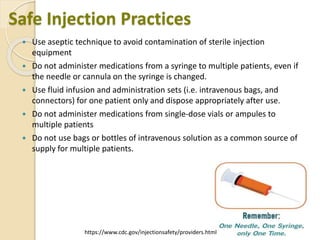
Safe Injection Practices
 Use aseptic technique to avoid contamination of sterile injection
equipment
 Do not administer medications from a syringe to multiple patients, even if
the needle or cannula on the syringe is changed.
 Use fluid infusion and administration sets (i.e. intravenous bags, and
connectors) for one patient only and dispose appropriately after use.
 Do not administer medications from single-dose vials or ampules to
multiple patients
 Do not use bags or bottles of intravenous solution as a common source of
supply for multiple patients.
https://www.cdc.gov/injectionsafety/providers.html
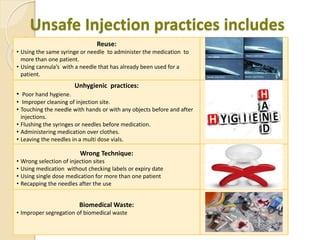
Unsafe Injection practices includes
Reuse:
• Using the same syringe or needle to administer the medication to
more than one patient.
• Using cannula’s with a needle that has already been used for a
patient.
Unhygienic practices:
• Poor hand hygiene.
• Improper cleaning of injection site.
• Touching the needle with hands or with any objects before and after
injections.
• Flushing the syringes or needles before medication.
• Administering medication over clothes.
• Leaving the needles in a multi dose vials.
Wrong Technique:
• Wrong selection of injection sites
• Using medication without checking labels or expiry date
• Using single dose medication for more than one patient
• Recapping the needles after the use
Biomedical Waste:
• Improper segregation of biomedical waste
Why to follow safe infection practices?
 Safe injection practices are a set of measures to perform
injections in an optimally safe manner for patients
 Every year many patients were advised to get tested for
hepatitis B virus (HBV), hepatitis C virus (HCV), and HIV due to
the reuse of syringes and misuse of medication vials.
https://www.cdc.gov/injectionsafety/providers.html
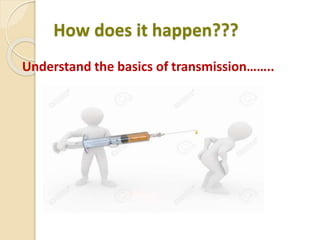
How does it happen???
Understand the basics of transmission……..
How does it happen?
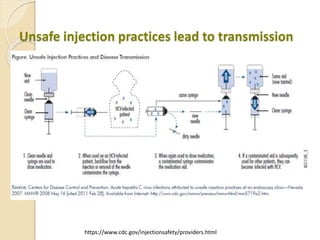
Unsafe injection practices lead to transmission
 Using the same syringe to administer medications to more
than one patient.
 Using a common bag of saline or other IV fluid for more than
one patient.
 Accessing the IV bag with a syringe that has already been
used to flush a patient IV line
 Accessing a shared medication vial with a syringe that has
already been used to administer the medication to a patient
https://www.cdc.gov/injectionsafety/providers.html
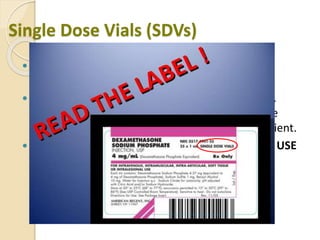
Single Dose Vials (SDVs)
 A single dose vial (SDV) is approved for a single
procedure or injection.
 SDVs typically lack an antimicrobial preservative.
Leftover medications should not kept from these
vials, harmful bacteria can grow and infect a patient.
 DISCARD LEFTOVER MEDICATION AFTER EVERY USE
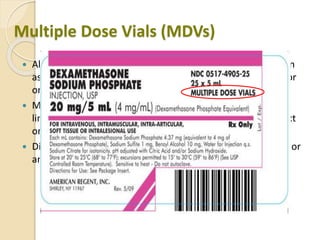
Multiple Dose Vials (MDVs)
 Although MDVs can be used for more than one patient when
aseptic technique is followed, ideally even MDVs are used for
only one patient.
 MDVs typically contain an antimicrobial preservative to help
limit the growth of bacteria. The preservatives have no effect
on blood borne viruses.
 Discard MDVs when the beyond-use date has been reached or
any time the sterility of the vial is in question.
PREVENTION
 Follow standard precautions.
 Healthcare providers should not provide any avenue for
transmission of blood borne viruses.
 Aseptic techniques for handling parenteral medications,
administering injections, and sampling blood.
 Use single-dose vials for parenteral medications, whenever
possible.
 Use a new needle and syringe for every injection
 Be sure to clean your hands immediately before and after
handling any medication
 Disinfect the medication vial by rubbing the top with alcohol
before drawing up medication.
Myths & Facts I
Myth Fact
 Changing the needle makes a
syringe safe for re-use
 Syringes can be reused as long
as injection is given through an
intervening length of tubing
 Once used, both needle and
syringe are contaminated and
must be discarded. Microscopic
backflow into the syringe can
occur when removing the needle.
 Everything from the IV bag to the
patient's IV catheter is a single,
interconnected unit. Distance from
patient, gravity, or infusion
pressure do not ensure syringe
won’t be contaminated
Myths & Facts II
Myth Fact
 No visible blood in IV tubing or
syringe means the equipment is
safe for reuse.
 Single-dose vials with large
volumes that appear to contain
multiple doses can be used for
more than one patient.
 HBV, HCV, and HIV can be present
in sufficient quantities to produce
infections without visible blood.
 Single-dose vials should not be
used for more than one patient
regardless of vial size or volume.
Safe injection practices

Safe injection practices

  • 1.
    Safe Injection Practice Infectioncontrol Nurse: Meenakshi
  • 2.
    Definition “A safe injectiondoes not harm the recipient, does not expose the provider to any risks and does not result in waste that is dangerous for the community” or Injection safety includes practices intended to prevent transmission of infectious diseases between one patient and another, or between a patient and healthcare provider, and also to prevent harms such as needle stick injuries.
  • 3.
    Safe Injection Practices Use aseptic technique to avoid contamination of sterile injection equipment  Do not administer medications from a syringe to multiple patients, even if the needle or cannula on the syringe is changed.  Use fluid infusion and administration sets (i.e. intravenous bags, and connectors) for one patient only and dispose appropriately after use.  Do not administer medications from single-dose vials or ampules to multiple patients  Do not use bags or bottles of intravenous solution as a common source of supply for multiple patients. https://www.cdc.gov/injectionsafety/providers.html
  • 4.
    Unsafe Injection practicesincludes Reuse: • Using the same syringe or needle to administer the medication to more than one patient. • Using cannula’s with a needle that has already been used for a patient. Unhygienic practices: • Poor hand hygiene. • Improper cleaning of injection site. • Touching the needle with hands or with any objects before and after injections. • Flushing the syringes or needles before medication. • Administering medication over clothes. • Leaving the needles in a multi dose vials. Wrong Technique: • Wrong selection of injection sites • Using medication without checking labels or expiry date • Using single dose medication for more than one patient • Recapping the needles after the use Biomedical Waste: • Improper segregation of biomedical waste
  • 5.
    Why to followsafe infection practices?  Safe injection practices are a set of measures to perform injections in an optimally safe manner for patients  Every year many patients were advised to get tested for hepatitis B virus (HBV), hepatitis C virus (HCV), and HIV due to the reuse of syringes and misuse of medication vials. https://www.cdc.gov/injectionsafety/providers.html
  • 6.
    How does ithappen??? Understand the basics of transmission……..
  • 7.
    How does ithappen?
  • 8.
    Unsafe injection practiceslead to transmission  Using the same syringe to administer medications to more than one patient.  Using a common bag of saline or other IV fluid for more than one patient.  Accessing the IV bag with a syringe that has already been used to flush a patient IV line  Accessing a shared medication vial with a syringe that has already been used to administer the medication to a patient https://www.cdc.gov/injectionsafety/providers.html
  • 9.
    Single Dose Vials(SDVs)  A single dose vial (SDV) is approved for a single procedure or injection.  SDVs typically lack an antimicrobial preservative. Leftover medications should not kept from these vials, harmful bacteria can grow and infect a patient.  DISCARD LEFTOVER MEDICATION AFTER EVERY USE
  • 10.
    Multiple Dose Vials(MDVs)  Although MDVs can be used for more than one patient when aseptic technique is followed, ideally even MDVs are used for only one patient.  MDVs typically contain an antimicrobial preservative to help limit the growth of bacteria. The preservatives have no effect on blood borne viruses.  Discard MDVs when the beyond-use date has been reached or any time the sterility of the vial is in question.
  • 11.
    PREVENTION  Follow standardprecautions.  Healthcare providers should not provide any avenue for transmission of blood borne viruses.  Aseptic techniques for handling parenteral medications, administering injections, and sampling blood.  Use single-dose vials for parenteral medications, whenever possible.  Use a new needle and syringe for every injection  Be sure to clean your hands immediately before and after handling any medication  Disinfect the medication vial by rubbing the top with alcohol before drawing up medication.
  • 12.
    Myths & FactsI Myth Fact  Changing the needle makes a syringe safe for re-use  Syringes can be reused as long as injection is given through an intervening length of tubing  Once used, both needle and syringe are contaminated and must be discarded. Microscopic backflow into the syringe can occur when removing the needle.  Everything from the IV bag to the patient's IV catheter is a single, interconnected unit. Distance from patient, gravity, or infusion pressure do not ensure syringe won’t be contaminated
  • 13.
    Myths & FactsII Myth Fact  No visible blood in IV tubing or syringe means the equipment is safe for reuse.  Single-dose vials with large volumes that appear to contain multiple doses can be used for more than one patient.  HBV, HCV, and HIV can be present in sufficient quantities to produce infections without visible blood.  Single-dose vials should not be used for more than one patient regardless of vial size or volume.