PAERENTAL DRUG
ADMINISTRATION
PRESENTED BY :
Ms. Zoya Ali Makrani
Department of MSN
After this lecture you will get to know about…
• Definition
• Principles of parenteral drug administration
• Types of parenteral therapies
• Purpose
• Side effects
• Types of syringes, needles and cannula and infusion sets
Introduction :
• The parenteral route refers to medication that are given by Injection
• In other words, it means giving therapeutic agents outside the alimentary
tract .
• Para= beside , enteron = intestine
• It is the forcing of fluid into cavity, a blood vessel or a body tissue through a
hollow tube or needle.
definition
• Parenteral administration is injection or infusion by means of a
needle or catheter inserted into the body.
• injection : It is an infusion method of putting fluid into the body,
usually with a syringe for the material to be administered into the
body. Syringe is a device made of a hollow tube and a needle that
is used to force fluids into or take fluids out of the body.
Principles of parenteral drug administration:
• The knowledge of anatomy and physiology is essential.
• If carelessly given , injections are means of introducing infections into the body.
• Drugs that change the chemical composition of the blood , will endanger the life of
the client.if not used cautiously.
• Any unfamiliar situation produces anxiety.
• Once drug is administered its irretrievable. Antidote may be available for particular
medications but the best antidote is prevention.
• organization, and planning results in the economy of time, material and comfort.
Types of parenteral therapies.
• Hypodermal/subcutaneous
• Hypospray
• Infusions
• Intradermal.
• Intramuscular
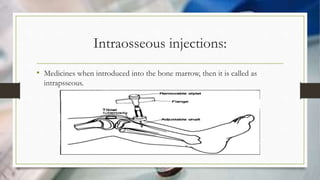
• Intraosseous
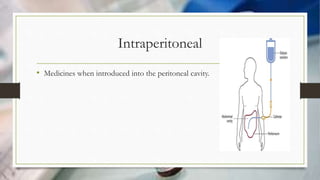
• Intraperitoneal
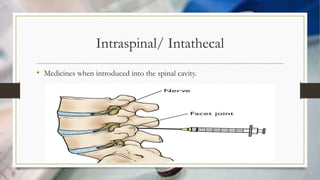
• Intraspinal/intrathecal
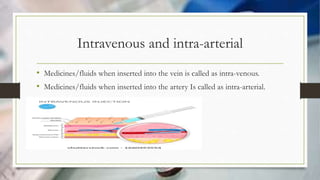
• Intravenous and intra-arterial
• Vensection/cut-down
• transfusions
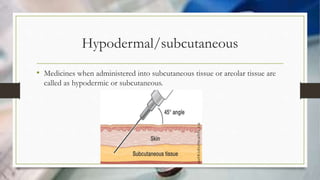
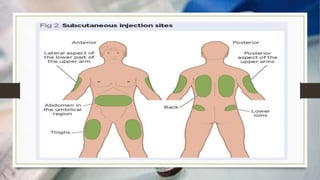
Hypodermal/subcutaneous
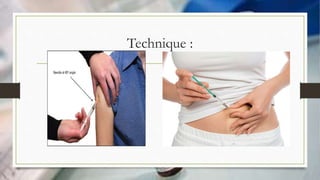
• Medicines when administered into subcutaneous tissue or areolar tissue are
called as hypodermic or subcutaneous.
Technique :
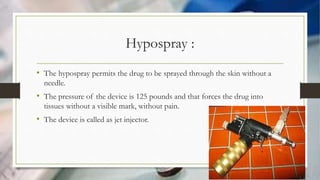
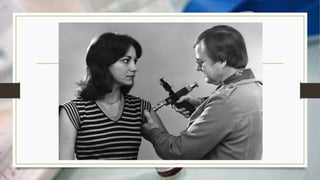
Hypospray :
• The hypospray permits the drug to be sprayed through the skin without a
needle.
• The pressure of the device is 125 pounds and that forces the drug into
tissues without a visible mark, without pain.
• The device is called as jet injector.
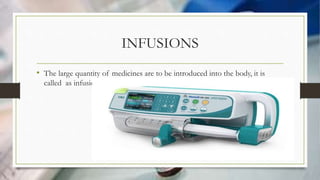
INFUSIONS
• The large quantity of medicines are to be introduced into the body, it is
called as infusions.
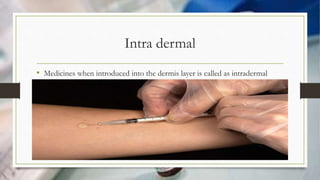
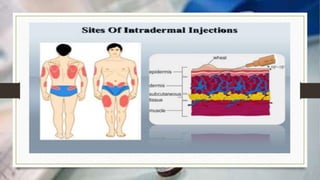
Intra dermal
• Medicines when introduced into the dermis layer is called as intradermal
injection.
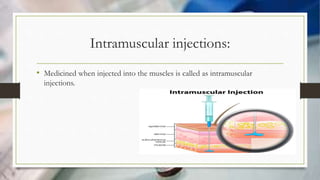
Intramuscular injections:
• Medicined when injected into the muscles is called as intramuscular
injections.
Intraosseous injections:
• Medicines when introduced into the bone marrow, then it is called as
intrapsseous.
Intraperitoneal
• Medicines when introduced into the peritoneal cavity.
Intraspinal/ Intathecal
• Medicines when introduced into the spinal cavity.
Intravenous and intra-arterial
• Medicines/fluids when inserted into the vein is called as intra-venous.
• Medicines/fluids when inserted into the artery Is called as intra-arterial.
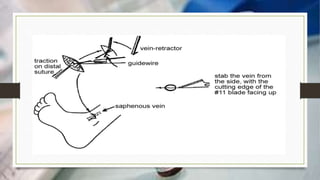
Venesection-cutdown.
• Opening a vein and introducing a tube or wide-bore needle and introducing
medicines and fluids or taking –out blood is called as venesection or cut-
down.
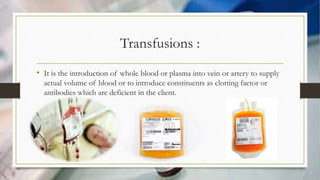
Transfusions :
• It is the introduction of whole blood or plasma into vein or artery to supply
actual volume of blood or to introduce constituents as clotting factor or
antibodies which are deficient in the client.
Purpose of injections:
• To get a rapid and systematic effect of drug.
• To provide the needed effect even when the client Is unconscious.
• Assures that the total dosage will be administered and absorbed by the systemic
action of drug.
• Provides only means of administration of medications that can’t be given orally.
• To obtain a local effect at the site of injection .i.e. Anesthesia
• To restore blood volume by replacing the fluid.
• To give nourishment when it can not be given by mouth.
Factors that favor absorption:
• Blood supply to the area
• The composition of the fluid injected.
• Application of heat
• Massage.
• Circulation time of blood.
• Physical conditions.
Complications of injections:
• Allergic reactions
• Infections
• Pyrogenic reactions.
• Tissue trauma
• Psychic trauma in children
• Pain
• Accidental IV injections.
• Foot droop/ paralysis
• Air embolism
• Overdose / under dose
• Errors.
• Serum hepatitis.
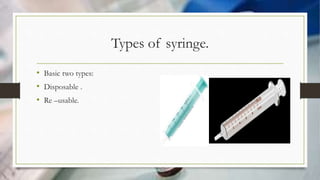
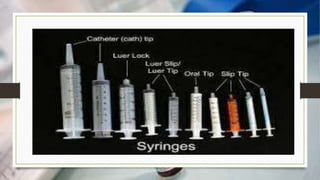
Types of syringe.
• Basic two types:
• Disposable .
• Re –usable.
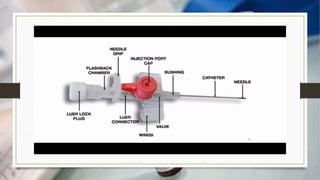
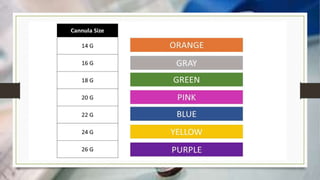
cannula
• intravenous (IV) cannulation is a technique in which a cannula is
placed inside a vein to provide venous access. Venous access
allows sampling of blood, as well as administration of fluids,
medications, parenteral nutrition, chemotherapy, and blood
products.
Selection of the site for injection
It depends upon:
• Route ordered by doctor
• Quantity of medication to be given
• Muscular development and condition of the client.
• Characteristic of the medication to be given
• Knowledge of anatomical location of nerves.
• Expected action of drugs
Criteria for the selection of syringes.
• The route ordered
• Viscosity of medication solution.
• Amount of medication
• Body size
• Amount of fat
Measures to be followed while selecting the
needles
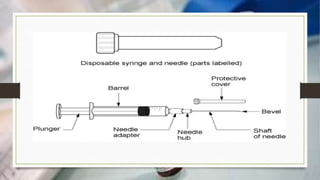
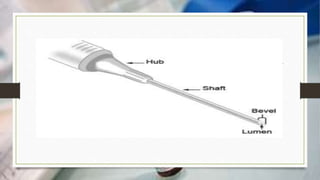
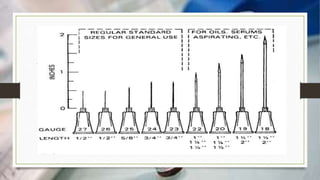
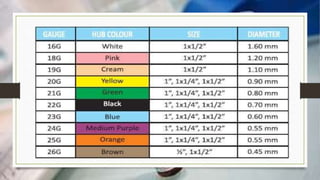
• The bevel should be sharp and without the hooks
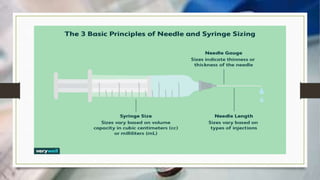
• Needle size should be of smallest gauze appropriate for medication
• Needle length should be appropriate for the site.
• Needle should fit tightly to the syringe
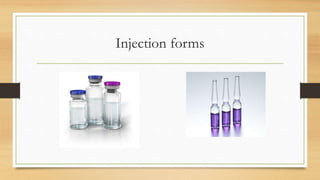
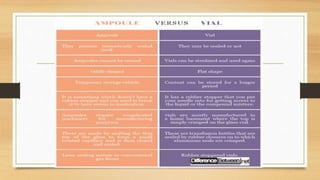
Injection forms
To be continue….

Parentral drug administration

  • 1.
    PAERENTAL DRUG ADMINISTRATION PRESENTED BY: Ms. Zoya Ali Makrani Department of MSN
  • 2.
    After this lectureyou will get to know about… • Definition • Principles of parenteral drug administration • Types of parenteral therapies • Purpose • Side effects • Types of syringes, needles and cannula and infusion sets
  • 3.
    Introduction : • Theparenteral route refers to medication that are given by Injection • In other words, it means giving therapeutic agents outside the alimentary tract . • Para= beside , enteron = intestine • It is the forcing of fluid into cavity, a blood vessel or a body tissue through a hollow tube or needle.
  • 4.
    definition • Parenteral administrationis injection or infusion by means of a needle or catheter inserted into the body. • injection : It is an infusion method of putting fluid into the body, usually with a syringe for the material to be administered into the body. Syringe is a device made of a hollow tube and a needle that is used to force fluids into or take fluids out of the body.
  • 5.
    Principles of parenteraldrug administration: • The knowledge of anatomy and physiology is essential. • If carelessly given , injections are means of introducing infections into the body. • Drugs that change the chemical composition of the blood , will endanger the life of the client.if not used cautiously. • Any unfamiliar situation produces anxiety. • Once drug is administered its irretrievable. Antidote may be available for particular medications but the best antidote is prevention. • organization, and planning results in the economy of time, material and comfort.
  • 6.
    Types of parenteraltherapies. • Hypodermal/subcutaneous • Hypospray • Infusions • Intradermal. • Intramuscular • Intraosseous • Intraperitoneal • Intraspinal/intrathecal • Intravenous and intra-arterial
  • 7.
  • 8.
    Hypodermal/subcutaneous • Medicines whenadministered into subcutaneous tissue or areolar tissue are called as hypodermic or subcutaneous.
  • 10.
  • 11.
    Hypospray : • Thehypospray permits the drug to be sprayed through the skin without a needle. • The pressure of the device is 125 pounds and that forces the drug into tissues without a visible mark, without pain. • The device is called as jet injector.
  • 13.
    INFUSIONS • The largequantity of medicines are to be introduced into the body, it is called as infusions.
  • 14.
    Intra dermal • Medicineswhen introduced into the dermis layer is called as intradermal injection.
  • 16.
    Intramuscular injections: • Medicinedwhen injected into the muscles is called as intramuscular injections.
  • 17.
    Intraosseous injections: • Medicineswhen introduced into the bone marrow, then it is called as intrapsseous.
  • 18.
    Intraperitoneal • Medicines whenintroduced into the peritoneal cavity.
  • 19.
    Intraspinal/ Intathecal • Medicineswhen introduced into the spinal cavity.
  • 20.
    Intravenous and intra-arterial •Medicines/fluids when inserted into the vein is called as intra-venous. • Medicines/fluids when inserted into the artery Is called as intra-arterial.
  • 21.
    Venesection-cutdown. • Opening avein and introducing a tube or wide-bore needle and introducing medicines and fluids or taking –out blood is called as venesection or cut- down.
  • 23.
    Transfusions : • Itis the introduction of whole blood or plasma into vein or artery to supply actual volume of blood or to introduce constituents as clotting factor or antibodies which are deficient in the client.
  • 24.
    Purpose of injections: •To get a rapid and systematic effect of drug. • To provide the needed effect even when the client Is unconscious. • Assures that the total dosage will be administered and absorbed by the systemic action of drug. • Provides only means of administration of medications that can’t be given orally. • To obtain a local effect at the site of injection .i.e. Anesthesia • To restore blood volume by replacing the fluid. • To give nourishment when it can not be given by mouth.
  • 25.
    Factors that favorabsorption: • Blood supply to the area • The composition of the fluid injected. • Application of heat • Massage. • Circulation time of blood. • Physical conditions.
  • 26.
    Complications of injections: •Allergic reactions • Infections • Pyrogenic reactions. • Tissue trauma • Psychic trauma in children • Pain • Accidental IV injections. • Foot droop/ paralysis
  • 27.
    • Air embolism •Overdose / under dose • Errors. • Serum hepatitis.
  • 28.
    Types of syringe. •Basic two types: • Disposable . • Re –usable.
  • 35.
    cannula • intravenous (IV)cannulation is a technique in which a cannula is placed inside a vein to provide venous access. Venous access allows sampling of blood, as well as administration of fluids, medications, parenteral nutrition, chemotherapy, and blood products.
  • 38.
    Selection of thesite for injection It depends upon: • Route ordered by doctor • Quantity of medication to be given • Muscular development and condition of the client. • Characteristic of the medication to be given • Knowledge of anatomical location of nerves. • Expected action of drugs
  • 39.
    Criteria for theselection of syringes. • The route ordered • Viscosity of medication solution. • Amount of medication • Body size • Amount of fat
  • 40.
    Measures to befollowed while selecting the needles • The bevel should be sharp and without the hooks • Needle size should be of smallest gauze appropriate for medication • Needle length should be appropriate for the site. • Needle should fit tightly to the syringe
  • 41.
  • 43.