SPONDYLOLYSIS
PATEL.YASH.GIRISHBHAI
DEFINITION
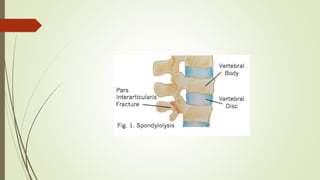
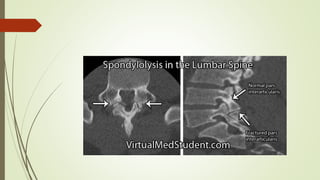
 STRESS FRACTURE OF PARAS INTERARTICULARLS
 Spondylolysis is a unilateral or bilateral bony defect in the
pars interaticulris or isthmus of the vertebra.
 It can cause a slipping of the vertebra, in which case the term spondylitis
spondyloysthesis is used.
ETLOLOEY
 Affects 3-6% of population
 This condition appears in the first or second decade of life;
the frequency of spondyloyis increases with age until 20
years. There is, however, no change in prevalence with
increasing age from 20 to 80 years old.
 Men are affected twice as often as women.
 There is increased prevalence in specific ethnic. Sports and
family groups.
 Sponyloysis occurs more frequently in the young athletic
population.
 There is increased risk in gymnasts, football players,
cricketers, swimmers, divers, weight lifters and wrestlers.
 Spondylolysis is considered to be a stress fracture that result
from mechanical stress at the pars interatcualris
 These stress fractures occur due to repetitive load and
rather then being coursed by a single traumatic event
 Occurs mostly at L5 (80-95%):sue to repetitive
hyperextension, which increases the contact between the
caudal edge of the inferior articular facet of l4 and the pars
interarticularis
CLINICAL FEATURES
 Onset of pain
 Possible history of local trauma
 Intense pain restricts activities of daily or sporting
performance
 Symptoms become aggravated after a stressful event
 Rest usually relieves the symptoms
C/F LUMBAR SPONDYLOYSIS
 Focal low back pain with radiation into the buttock or thigh
with no neurological deficit.
 Children under 13 years old show tenderness or pain on
extension
 Children can present a posture deformity or abnormal gait
pattern.
 Pain throughout limber rang of movement
D/D
 Disc injury
 Lumbosacral discogenic pain syndrome
 Facet joint syndrome
 Acute bone injuries
 Sprain/strain injuries
 Spondylolisthesis
 Myofascial pain in athletes
 Sacroiliac joint injury
 Lumber radiculopathy
 Osteomyelitis
 Spinal stenosis
DIAGNOSTIC PROCEDURE
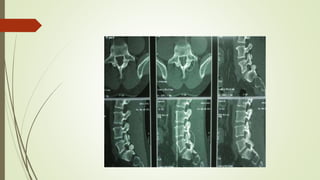
 SPECT (single photon emission computed tomography)
shows area of involvement
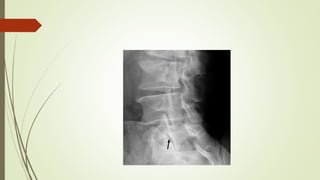
 X-ray shows area of involvement
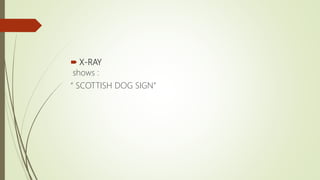
 X-RAY
shows :
“ SCOTTISH DOG SIGN”
ON EXAMINATION
 Hyperlordotic posture
 Low back pain during lumber extension
 Para spinal muscle spasm and hamstring tightness is present
 Neurologic exam is usually normal but neurogenic
symptoms can arise if the condition progresses to
spondylisthesis
STROK TEST
 Performed to assess localised spondyloysis pain
 The patient stands on one leg with other foot resting on one
leg with other foot resting on the weight bearing knee.
 The patient then hyper extends the lower back
 Positive test: reproduction of lower back pain suggest limber
spondyloysis.
MEDICAL MANGMENT
 NSALDS to provide pain relief
 Cessation of aggregating activities
 The use of a spinal brace to prevent motion at the injured
pars and allow bony repair
 Physical therapy
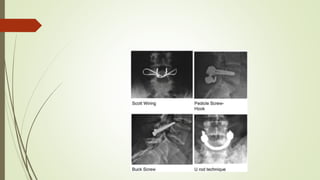
SURGICAL TREATMENT
 May be required.
 This only occurs in some patients and evidence of long-term
benefit is still uncertain.
 Latest procedures attempt a repair of the affected pars with
preservation of the segmental mobility whereas earlier
method sometimes included a spinal fusion procedure.
PHYSICAL THERAPY MANGMENT
GOALS
 Reduce pain
 Promoting normal movement patterns
 Global and specific strengthening exercises
 Optimization of physical function
 A rehabilitation program should progress in four stages:
 Control pain and inflammation
 Strength and flexibility
 Stabilization
 Functional movement
Control pain and inflammation
 Deep heating modalities: for pain relief
 Taking stress off the injured area allows physiological healing
processes to take place.
 It may be necessary to avoid rotational shearing forces and
extension movements by a temporary cessation of sporting
activities / wearing a brace.
Strength and flexibility
 Exercises to improve relaxation and aenral mobility of spine
are initiated first.
 As para spinal muscle spasms and hamstrings tightness are
often seen in patient can be added to the rehabilitation
program.
 Flexibility training is useful in patient with hypermobility of
the spine.
Functional movement
 The main goal of physiotherapy is to increase functional
abilities through a home exercise program.
 As soon as primary pain decreases, patient have to be
encouraged to resume activities as tolerated.
Spondylolysis

Spondylolysis

  • 1.
  • 2.
    DEFINITION  STRESS FRACTUREOF PARAS INTERARTICULARLS  Spondylolysis is a unilateral or bilateral bony defect in the pars interaticulris or isthmus of the vertebra.  It can cause a slipping of the vertebra, in which case the term spondylitis spondyloysthesis is used.
  • 4.
    ETLOLOEY  Affects 3-6%of population  This condition appears in the first or second decade of life; the frequency of spondyloyis increases with age until 20 years. There is, however, no change in prevalence with increasing age from 20 to 80 years old.  Men are affected twice as often as women.
  • 5.
     There isincreased prevalence in specific ethnic. Sports and family groups.  Sponyloysis occurs more frequently in the young athletic population.  There is increased risk in gymnasts, football players, cricketers, swimmers, divers, weight lifters and wrestlers.
  • 6.
     Spondylolysis isconsidered to be a stress fracture that result from mechanical stress at the pars interatcualris  These stress fractures occur due to repetitive load and rather then being coursed by a single traumatic event  Occurs mostly at L5 (80-95%):sue to repetitive hyperextension, which increases the contact between the caudal edge of the inferior articular facet of l4 and the pars interarticularis
  • 7.
    CLINICAL FEATURES  Onsetof pain  Possible history of local trauma  Intense pain restricts activities of daily or sporting performance  Symptoms become aggravated after a stressful event  Rest usually relieves the symptoms
  • 8.
    C/F LUMBAR SPONDYLOYSIS Focal low back pain with radiation into the buttock or thigh with no neurological deficit.  Children under 13 years old show tenderness or pain on extension  Children can present a posture deformity or abnormal gait pattern.  Pain throughout limber rang of movement
  • 9.
    D/D  Disc injury Lumbosacral discogenic pain syndrome  Facet joint syndrome  Acute bone injuries  Sprain/strain injuries  Spondylolisthesis  Myofascial pain in athletes
  • 10.
     Sacroiliac jointinjury  Lumber radiculopathy  Osteomyelitis  Spinal stenosis
  • 11.
    DIAGNOSTIC PROCEDURE  SPECT(single photon emission computed tomography) shows area of involvement  X-ray shows area of involvement
  • 15.
     X-RAY shows : “SCOTTISH DOG SIGN”
  • 16.
    ON EXAMINATION  Hyperlordoticposture  Low back pain during lumber extension  Para spinal muscle spasm and hamstring tightness is present  Neurologic exam is usually normal but neurogenic symptoms can arise if the condition progresses to spondylisthesis
  • 17.
    STROK TEST  Performedto assess localised spondyloysis pain  The patient stands on one leg with other foot resting on one leg with other foot resting on the weight bearing knee.  The patient then hyper extends the lower back  Positive test: reproduction of lower back pain suggest limber spondyloysis.
  • 18.
    MEDICAL MANGMENT  NSALDSto provide pain relief  Cessation of aggregating activities  The use of a spinal brace to prevent motion at the injured pars and allow bony repair  Physical therapy
  • 19.
    SURGICAL TREATMENT  Maybe required.  This only occurs in some patients and evidence of long-term benefit is still uncertain.  Latest procedures attempt a repair of the affected pars with preservation of the segmental mobility whereas earlier method sometimes included a spinal fusion procedure.
  • 21.
    PHYSICAL THERAPY MANGMENT GOALS Reduce pain  Promoting normal movement patterns  Global and specific strengthening exercises  Optimization of physical function
  • 22.
     A rehabilitationprogram should progress in four stages:  Control pain and inflammation  Strength and flexibility  Stabilization  Functional movement
  • 23.
    Control pain andinflammation  Deep heating modalities: for pain relief  Taking stress off the injured area allows physiological healing processes to take place.  It may be necessary to avoid rotational shearing forces and extension movements by a temporary cessation of sporting activities / wearing a brace.
  • 24.
    Strength and flexibility Exercises to improve relaxation and aenral mobility of spine are initiated first.  As para spinal muscle spasms and hamstrings tightness are often seen in patient can be added to the rehabilitation program.  Flexibility training is useful in patient with hypermobility of the spine.
  • 25.
    Functional movement  Themain goal of physiotherapy is to increase functional abilities through a home exercise program.  As soon as primary pain decreases, patient have to be encouraged to resume activities as tolerated.