
Business Practice 2
Module 4
Organise yourself in the
workplace
Outcomes
After completing this module, you will be able to:
• Maintain personal hygiene, grooming and dress code
• Know how to interact with people when absent due
to illness
• Identify possible unforeseen circumstances to plan
alternative action in advance
• Evaluate own skills and areas for development
• Set measurable, achievable objectives for own skills
development
• Prioritise objectives and plan activities for personal
skills development
Maintain personal hygiene,
grooming and dress code
After completing this module, you will be able to:
• Understand the importance of a professional
appearance in the workplace
• Maintain personal hygiene, grooming and dress
code in a work environment
• Understand the importance of workplace
cleanliness and personal hygiene.
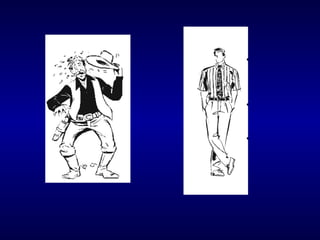
Examples of poor personal
grooming
• Hands with chewed or badly cut fingernails.
• A beard or moustache that is not kept tidy and neatly
trimmed.
• Uncombed hair looking like a bird’s nest, although it
seems to be fashionable to have uncombed hair these
days!
• Inappropriate make-up could make a woman look less
attractive or unprofessional.
• A person may look very ‘scruffy’ if he or she does not
take pride in how they dress.
Interaction with people when
absent due to illness
After completing this outcome, you will be able
to:
1. Given a range of illness (contagious diseases
or virus infections, such as flu, chicken pox,
measles and so on), decide whether to interact
with people
2. Follow company procedure (report absence,
obtain doctor’s certificate, complete leave
form) when absent due to illness
Interaction between people
who are ill
• Do you go home if you have a cold or flu?
• Do you feel under pressure to attend work /
college if you are ill?
• How do you react to sharing the room with
someone who is ill?
• Do you know which illnesses require isolations?
• Should a sick person be at college?
• At what point do you decide to stay at home
and get better
Sick Leave
• Report your absence
• Obtain a doctor’s certificate
• Complete a leave form
Evaluate own skills and areas
for development
After completing this outcome, you will be able
to:
1. Evaluate your own skills and areas for
development on current work requirements.
2. Evaluate likely future work requirements to
identify needs for skills development.
Functions in a business
• Marketing and sales
• Finance and administration
• Human resources
• Management information systems
• Production
• Purchasing
• Distribution
• General management
Personal job description
• The job title
• Who the person reports to
• Who the person has to work with
• The objectives or results to be achieved in the
job
• The main duties or tasks in the job
• The resources (equipment, money, stock and so
on) for which the person is responsible
• The physical working conditions of the job
• The types of decisions to be made
Job specification
• Experience needed to do the job
• Education qualification necessary for the job
• The type of personality needed to succeed in
the job
• Skills and knowledge needed
• Physical attributes, such as strength
Assessing work performance
• Take the following three factors into account:
– You need to know what to do
– You need to know how to do the job
– You need to have a willingness to do the job.
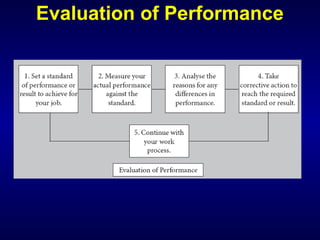
Evaluation of Performance
Meetings with supervisors
• How was your performance in the past six to
12 months? What results did you achieve?
• How is your present performance? How well
are you doing now?
• What must you achieve in the next six to 12
months? What will be changing in your job
and what should your results be? What
training do you need?
Performance review meetings
• The performance that is being measured.
• Your view of your performance.
• How (and why) you think the job has changed over the review period.
• Factors, both positive and negative, you think affect your
performance.
• Ideas on how to improve your performance.
• How your supervisor contributes to your performance.
• How you influence other people’s performance.
• Likely future changes in your job.
• Growth and promotion prospects in the business. What job would
you like to be doing in 3 years’ time? How are you going to get
there? What skills will you need to acquire?
• What development activities you need. What does your organisation
provide?
• What do you do well in your job? (These are your strengths).
• What could you do better in your job? (These are ‘areas for
improvement’ in your job performance).
Career development
• The final responsibility for career development
rests with you!
• You must think very carefully about your
career ambitions, because self-development
happens over a period of time.
• Many organisations have a culture of learning,
where they encourage employees to learn and
improve their own skills
Set measurable, achievable
objectives for own skills
development
After completing this outcome, you will be able to:
1. Set measurable, achievable objectives for own
skills development
Setting objectives
• Your short term objective may be completing your studies
• Longer term, you would look to find a job
• You will continue to learn in your job
• When you plan training, you need to enhance your own
skills at the same time benefiting the organisation
• Develop a time line to address both your own and your
job’s needs.
• The human resources staff can also help with this process
since they are aware of the training and development
activities available
• The training department will select appropriate training
providers
Specific Objectives
• What course will I study?
• Where will you study?
• What subjects/unit standards will I take each year?
• How much will it cost?
• When do I start learning and how much time must I
spend on learning each day and month?
• What may prevent me studying according to my plan?
• How will I know that I am successful?
• Whose help will I need and when?

NCV 2 Business Practice Hands-On Support - Module 4

  • 1.
  • 2.
    Organise yourself inthe workplace
  • 3.
    Outcomes After completing thismodule, you will be able to: • Maintain personal hygiene, grooming and dress code • Know how to interact with people when absent due to illness • Identify possible unforeseen circumstances to plan alternative action in advance • Evaluate own skills and areas for development • Set measurable, achievable objectives for own skills development • Prioritise objectives and plan activities for personal skills development
  • 4.
    Maintain personal hygiene, groomingand dress code After completing this module, you will be able to: • Understand the importance of a professional appearance in the workplace • Maintain personal hygiene, grooming and dress code in a work environment • Understand the importance of workplace cleanliness and personal hygiene.
  • 5.
    Examples of poorpersonal grooming • Hands with chewed or badly cut fingernails. • A beard or moustache that is not kept tidy and neatly trimmed. • Uncombed hair looking like a bird’s nest, although it seems to be fashionable to have uncombed hair these days! • Inappropriate make-up could make a woman look less attractive or unprofessional. • A person may look very ‘scruffy’ if he or she does not take pride in how they dress.
  • 7.
    Interaction with peoplewhen absent due to illness After completing this outcome, you will be able to: 1. Given a range of illness (contagious diseases or virus infections, such as flu, chicken pox, measles and so on), decide whether to interact with people 2. Follow company procedure (report absence, obtain doctor’s certificate, complete leave form) when absent due to illness
  • 8.
    Interaction between people whoare ill • Do you go home if you have a cold or flu? • Do you feel under pressure to attend work / college if you are ill? • How do you react to sharing the room with someone who is ill? • Do you know which illnesses require isolations? • Should a sick person be at college? • At what point do you decide to stay at home and get better
  • 9.
    Sick Leave • Reportyour absence • Obtain a doctor’s certificate • Complete a leave form
  • 10.
    Evaluate own skillsand areas for development After completing this outcome, you will be able to: 1. Evaluate your own skills and areas for development on current work requirements. 2. Evaluate likely future work requirements to identify needs for skills development.
  • 11.
    Functions in abusiness • Marketing and sales • Finance and administration • Human resources • Management information systems • Production • Purchasing • Distribution • General management
  • 12.
    Personal job description •The job title • Who the person reports to • Who the person has to work with • The objectives or results to be achieved in the job • The main duties or tasks in the job • The resources (equipment, money, stock and so on) for which the person is responsible • The physical working conditions of the job • The types of decisions to be made
  • 13.
    Job specification • Experienceneeded to do the job • Education qualification necessary for the job • The type of personality needed to succeed in the job • Skills and knowledge needed • Physical attributes, such as strength
  • 14.
    Assessing work performance •Take the following three factors into account: – You need to know what to do – You need to know how to do the job – You need to have a willingness to do the job.
  • 15.
  • 16.
    Meetings with supervisors •How was your performance in the past six to 12 months? What results did you achieve? • How is your present performance? How well are you doing now? • What must you achieve in the next six to 12 months? What will be changing in your job and what should your results be? What training do you need?
  • 17.
    Performance review meetings •The performance that is being measured. • Your view of your performance. • How (and why) you think the job has changed over the review period. • Factors, both positive and negative, you think affect your performance. • Ideas on how to improve your performance. • How your supervisor contributes to your performance. • How you influence other people’s performance. • Likely future changes in your job. • Growth and promotion prospects in the business. What job would you like to be doing in 3 years’ time? How are you going to get there? What skills will you need to acquire? • What development activities you need. What does your organisation provide? • What do you do well in your job? (These are your strengths). • What could you do better in your job? (These are ‘areas for improvement’ in your job performance).
  • 18.
    Career development • Thefinal responsibility for career development rests with you! • You must think very carefully about your career ambitions, because self-development happens over a period of time. • Many organisations have a culture of learning, where they encourage employees to learn and improve their own skills
  • 19.
    Set measurable, achievable objectivesfor own skills development After completing this outcome, you will be able to: 1. Set measurable, achievable objectives for own skills development
  • 20.
    Setting objectives • Yourshort term objective may be completing your studies • Longer term, you would look to find a job • You will continue to learn in your job • When you plan training, you need to enhance your own skills at the same time benefiting the organisation • Develop a time line to address both your own and your job’s needs. • The human resources staff can also help with this process since they are aware of the training and development activities available • The training department will select appropriate training providers
  • 21.
    Specific Objectives • Whatcourse will I study? • Where will you study? • What subjects/unit standards will I take each year? • How much will it cost? • When do I start learning and how much time must I spend on learning each day and month? • What may prevent me studying according to my plan? • How will I know that I am successful? • Whose help will I need and when?