Professional development and CPD
What does
continuing
professional
development
(CPD) mean?
Professional development and CPD
• The process of tracking
and documenting the
skills, knowledge and
experience that are
gained, both formally and
informally, through work,
beyond any initial training.
• A record of what is
experienced, learned and
then applied.
Benefits of CPD – to you
• Manage your own learning and growth.
• Develop your skills and knowledge.
• Build confidence and credibility.
• Earn more money by showcasing achievements.
• Achieve your career goals by focusing on training and
development.
• Cope positively with change by constantly updating your skills set.
• Be more productive and efficient by reflecting on learning and
highlighting gaps in knowledge and experience.
Benefits of CPD – to your organisation
CPD helps your organisation by:
• Helping to maximise staff potential by linking learning to actions and
theory to practice.
• Helping employees to set SMART (specific, measurable, achievable,
realistic and time-bound) objectives.
• Linking training activities to business needs.
• Promoting staff development, leading to better staff morale and
motivation, and helps give a positive image/brand to other
organisations.
• Adding value: helps staff to consciously apply learning to their role
and the organisation’s development.
• Linking to appraisals: CPD is a good tool to help employees identify
their achievements throughout the year.
• Improving learning and other skills over time.
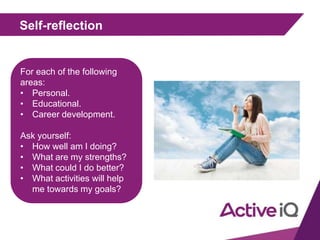
Self-reflection
For each of the following
areas:
• Personal.
• Educational.
• Career development.
Ask yourself:
• How well am I doing?
• What are my strengths?
• What could I do better?
• What activities will help
me towards my goals?
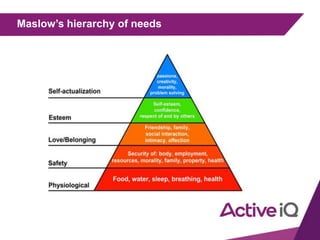
Maslow’s hierarchy of needs
In order to be truly motivated, some progressive needs must be
satisfied. Each level needs to be met before moving to the next.
• Physiological – the need for sleep and sustenance.
• Security and safety – the need for a place to live, a secure
environment and freedom from hostility.
• Love – the need to be accepted by colleagues, friends and loved
ones.
• Esteem – the need for self-belief, self-confidence and self-esteem.
• Self-actualisation – if all the above are met, the individual will be
motivated to achieve ‘self-actualisation’. This is the point at which the
person arrives at his/her set goal and where he/she begins to feel
fulfilled, successful and truly motivated.
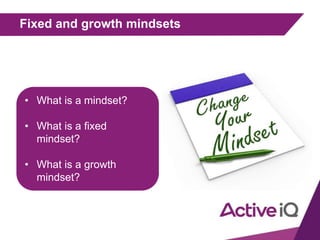
Fixed and growth mindsets
• What is a mindset?
• What is a fixed
mindset?
• What is a growth
mindset?
What is a mindset?
• Our mindset is the
attitude we choose to
adopt, and it can be
changed.
• It is to do with what we
think we are capable of
achieving. Our mindset is
about our attitude to life
and all its challenges.
• People either have a fixed
mindset or a growth
mindset.
‘Just because some people
can do something with little
or no training, it doesn’t
mean that others can’t do it
(and sometimes do it even
better) with training.’
Carol Dweck, Mindset: The
New Psychology of
Success
Growth mindset
People with a growth mindset believe that most things can be achieved
through hard work, practice and by not giving up when things get
difficult. They know that some people might be particularly talented at
certain things but recognise that for them this is just a starting point and
that even these people need to work hard in order to improve on their
talent.
People who have a growth mindset achieve more in life, whether in
sport, music, acting, business or exam results. They achieve more
because they have resilience. When things get hard they don’t give up;
they hang in there, keep practising and give it another shot until they get
it right.
Fixed mindset
People with a fixed mindset believe that their basic skills and qualities
are more or less set from birth and there is not a lot they can do about it.
They adopt the attitude of ‘It’s okay for her, she’s brainy’, ‘He’s artistic’,
‘He’s sporty’ or ‘She’s musical’.
If they are not good at something from the word go, then they don’t see
the point in putting in the effort to learn it.
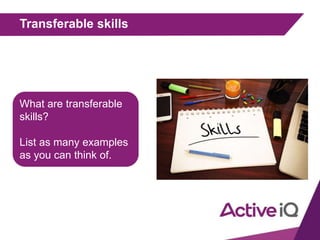
Transferable skills
What are transferable
skills?
List as many examples
as you can think of.
Transferable skills
Transferable skills are:
Skills and abilities that are relevant and helpful across
different areas of life, for example, socially, professionally
and at school/college/university.
Transferable skills include:
• Personal motivation.
• Organisation.
• Time-management.
• Teamwork.
• Leadership skills.
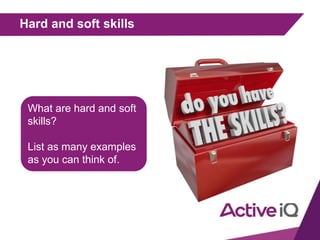
Hard and soft skills
What are hard and soft
skills?
List as many examples
as you can think of.
Hard skills
Hard skills are quantifiable, often technical and learned at
school/college/university, or by doing particular work over a period of time.
Knowing a particular hard skill makes you in demand. Hard skills may be
the difference between getting or not getting a particular job over other
candidates.
For example:
• Fluency in a foreign language may enable you to apply and secure a
role requiring international travel for work.
• Skill or knowledge of particular software will enable you to seek a role
specifically working on that software package.
Soft skills
Soft skills (also known as employability skills) are the skills and attitudes
that enable you to get along with colleagues, to make critical decisions,
solve problems, develop respect and ultimately become strong
ambassadors for an organisation.
For example – good interpersonal and communication skills will enable you
to:
• Participate effectively as a member of a team.
• Satisfy customer expectations.
• Negotiate.
• Make decisions.
• Manage your time efficiently.
• Take responsibility.
• Work effectively with other employees…
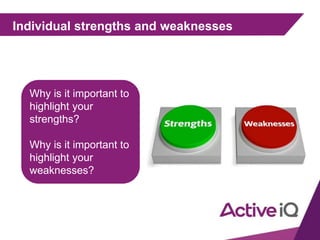
Individual strengths and weaknesses
Why is it important to
highlight your
strengths?
Why is it important to
highlight your
weaknesses?
Strengths and weaknesses
Exploring strengths will give an indication of the following:
• What skills and experience do you already possess?
• What are you able to do well already?
• What do others see as your strengths?
Exploring weaknesses will give an indication of the following:
• What areas of development could you improve on?
• Is there a lack of experience that may be needed for a long-term career?
• What areas are done badly?
• What should be avoided?
• Do friends or family think there are weaknesses that you do not agree
with?
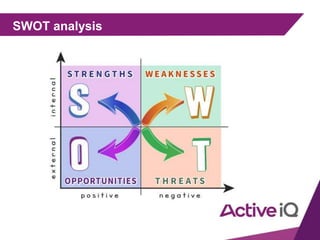
SWOT analysis
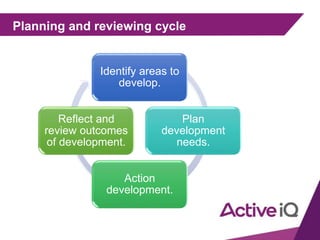
Planning and reviewing cycle
Identify areas to
develop.
Plan
development
needs.
Action
development.
Reflect and
review outcomes
of development.
Planning and reviewing cycles
Why are planning and
reviewing cycles important
within personal and
professional development?
Planning and reviewing cycles – benefits
• They provide the opportunity
for self-reflection.
• Ensure SMART goals are put
in place to ensure
development is measurable.
• Encourage significant others
to support, for example,
managers.
• Ensure you keep up to date
with industry standards and
new opportunities.
Can you now:
• Explain the importance of the planning and reviewing cycle within personal and
continuing professional development?
• Define continuing professional development?
• Explain the benefits of continuing professional development (CPD) for self, clients
and organisations?
• Explain how to reflect on your work and highlight ways of improving skills,
knowledge and practice?
• Describe how to work with others to evaluate your skills, knowledge and practice?
• Explain how to plan your continuing professional development?
• Explain the contribution that a workplace’s performance appraisal and
development processes can make to your continuing professional development?
• Outline the roles and support available from the national governing body and
professional associations to support continuing professional development?
Learning review
#BeginWithBetter

Professional development.pptx

  • 1.
    Professional development andCPD What does continuing professional development (CPD) mean?
  • 2.
    Professional development andCPD • The process of tracking and documenting the skills, knowledge and experience that are gained, both formally and informally, through work, beyond any initial training. • A record of what is experienced, learned and then applied.
  • 3.
    Benefits of CPD– to you • Manage your own learning and growth. • Develop your skills and knowledge. • Build confidence and credibility. • Earn more money by showcasing achievements. • Achieve your career goals by focusing on training and development. • Cope positively with change by constantly updating your skills set. • Be more productive and efficient by reflecting on learning and highlighting gaps in knowledge and experience.
  • 4.
    Benefits of CPD– to your organisation CPD helps your organisation by: • Helping to maximise staff potential by linking learning to actions and theory to practice. • Helping employees to set SMART (specific, measurable, achievable, realistic and time-bound) objectives. • Linking training activities to business needs. • Promoting staff development, leading to better staff morale and motivation, and helps give a positive image/brand to other organisations. • Adding value: helps staff to consciously apply learning to their role and the organisation’s development. • Linking to appraisals: CPD is a good tool to help employees identify their achievements throughout the year. • Improving learning and other skills over time.
  • 5.
    Self-reflection For each ofthe following areas: • Personal. • Educational. • Career development. Ask yourself: • How well am I doing? • What are my strengths? • What could I do better? • What activities will help me towards my goals?
  • 6.
  • 7.
    Maslow’s hierarchy ofneeds In order to be truly motivated, some progressive needs must be satisfied. Each level needs to be met before moving to the next. • Physiological – the need for sleep and sustenance. • Security and safety – the need for a place to live, a secure environment and freedom from hostility. • Love – the need to be accepted by colleagues, friends and loved ones. • Esteem – the need for self-belief, self-confidence and self-esteem. • Self-actualisation – if all the above are met, the individual will be motivated to achieve ‘self-actualisation’. This is the point at which the person arrives at his/her set goal and where he/she begins to feel fulfilled, successful and truly motivated.
  • 8.
    Fixed and growthmindsets • What is a mindset? • What is a fixed mindset? • What is a growth mindset?
  • 9.
    What is amindset? • Our mindset is the attitude we choose to adopt, and it can be changed. • It is to do with what we think we are capable of achieving. Our mindset is about our attitude to life and all its challenges. • People either have a fixed mindset or a growth mindset. ‘Just because some people can do something with little or no training, it doesn’t mean that others can’t do it (and sometimes do it even better) with training.’ Carol Dweck, Mindset: The New Psychology of Success
  • 10.
    Growth mindset People witha growth mindset believe that most things can be achieved through hard work, practice and by not giving up when things get difficult. They know that some people might be particularly talented at certain things but recognise that for them this is just a starting point and that even these people need to work hard in order to improve on their talent. People who have a growth mindset achieve more in life, whether in sport, music, acting, business or exam results. They achieve more because they have resilience. When things get hard they don’t give up; they hang in there, keep practising and give it another shot until they get it right.
  • 11.
    Fixed mindset People witha fixed mindset believe that their basic skills and qualities are more or less set from birth and there is not a lot they can do about it. They adopt the attitude of ‘It’s okay for her, she’s brainy’, ‘He’s artistic’, ‘He’s sporty’ or ‘She’s musical’. If they are not good at something from the word go, then they don’t see the point in putting in the effort to learn it.
  • 12.
    Transferable skills What aretransferable skills? List as many examples as you can think of.
  • 13.
    Transferable skills Transferable skillsare: Skills and abilities that are relevant and helpful across different areas of life, for example, socially, professionally and at school/college/university. Transferable skills include: • Personal motivation. • Organisation. • Time-management. • Teamwork. • Leadership skills.
  • 14.
    Hard and softskills What are hard and soft skills? List as many examples as you can think of.
  • 15.
    Hard skills Hard skillsare quantifiable, often technical and learned at school/college/university, or by doing particular work over a period of time. Knowing a particular hard skill makes you in demand. Hard skills may be the difference between getting or not getting a particular job over other candidates. For example: • Fluency in a foreign language may enable you to apply and secure a role requiring international travel for work. • Skill or knowledge of particular software will enable you to seek a role specifically working on that software package.
  • 16.
    Soft skills Soft skills(also known as employability skills) are the skills and attitudes that enable you to get along with colleagues, to make critical decisions, solve problems, develop respect and ultimately become strong ambassadors for an organisation. For example – good interpersonal and communication skills will enable you to: • Participate effectively as a member of a team. • Satisfy customer expectations. • Negotiate. • Make decisions. • Manage your time efficiently. • Take responsibility. • Work effectively with other employees…
  • 17.
    Individual strengths andweaknesses Why is it important to highlight your strengths? Why is it important to highlight your weaknesses?
  • 18.
    Strengths and weaknesses Exploringstrengths will give an indication of the following: • What skills and experience do you already possess? • What are you able to do well already? • What do others see as your strengths? Exploring weaknesses will give an indication of the following: • What areas of development could you improve on? • Is there a lack of experience that may be needed for a long-term career? • What areas are done badly? • What should be avoided? • Do friends or family think there are weaknesses that you do not agree with?
  • 19.
  • 20.
    Planning and reviewingcycle Identify areas to develop. Plan development needs. Action development. Reflect and review outcomes of development.
  • 21.
    Planning and reviewingcycles Why are planning and reviewing cycles important within personal and professional development?
  • 22.
    Planning and reviewingcycles – benefits • They provide the opportunity for self-reflection. • Ensure SMART goals are put in place to ensure development is measurable. • Encourage significant others to support, for example, managers. • Ensure you keep up to date with industry standards and new opportunities.
  • 23.
    Can you now: •Explain the importance of the planning and reviewing cycle within personal and continuing professional development? • Define continuing professional development? • Explain the benefits of continuing professional development (CPD) for self, clients and organisations? • Explain how to reflect on your work and highlight ways of improving skills, knowledge and practice? • Describe how to work with others to evaluate your skills, knowledge and practice? • Explain how to plan your continuing professional development? • Explain the contribution that a workplace’s performance appraisal and development processes can make to your continuing professional development? • Outline the roles and support available from the national governing body and professional associations to support continuing professional development? Learning review
  • 24.