Image-guided surgery has gained acceptance since the 1970s, enhancing surgical procedures through improved navigation, planning, and patient outcomes. Techniques such as 'surgical navigation' allow for more accurate diagnoses and minimally invasive operations, resulting in shorter recovery times. However, while advancements in technology have made significant progress, evidence of clinical benefits for certain applications in spine surgery remains limited.
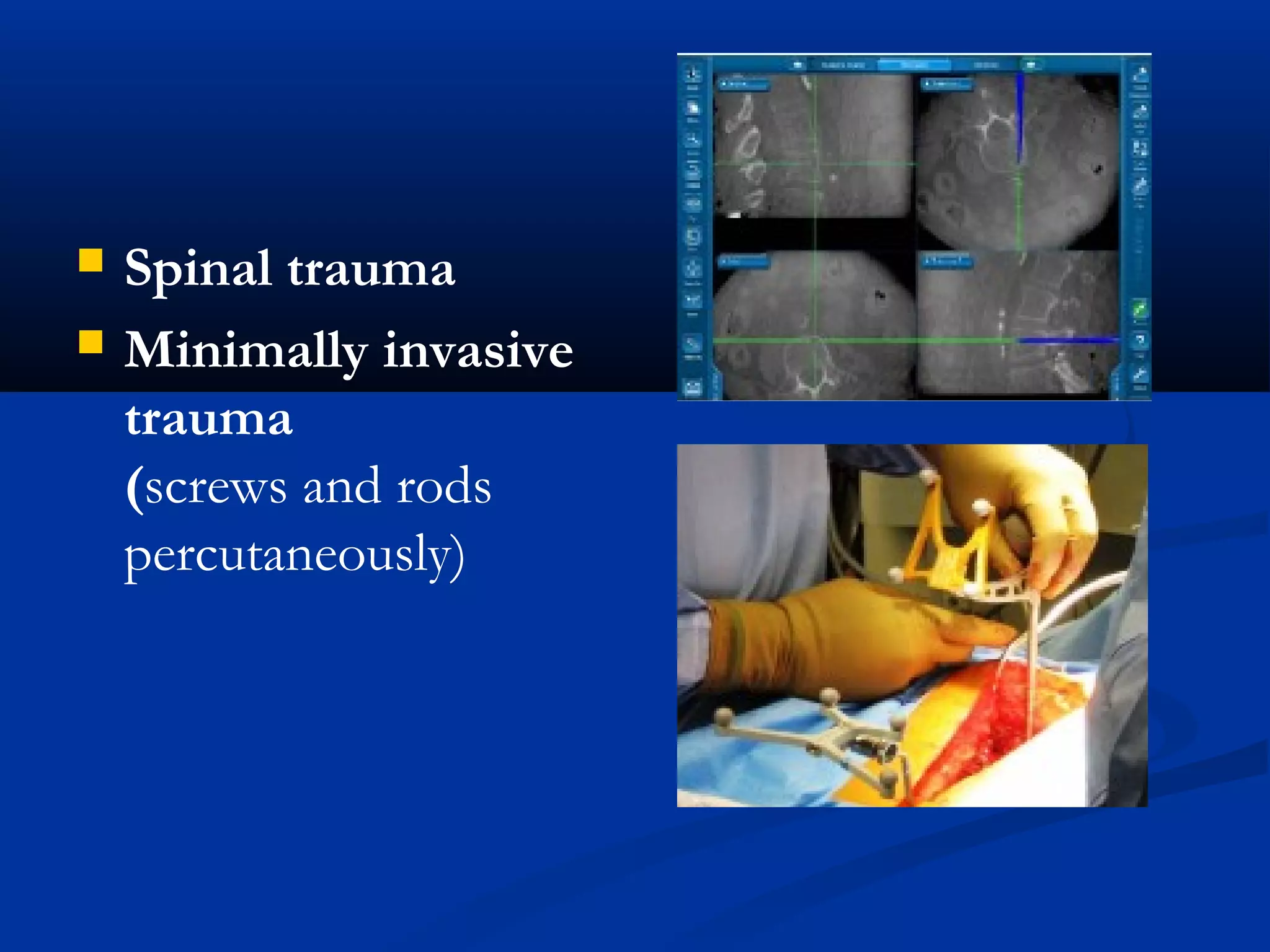
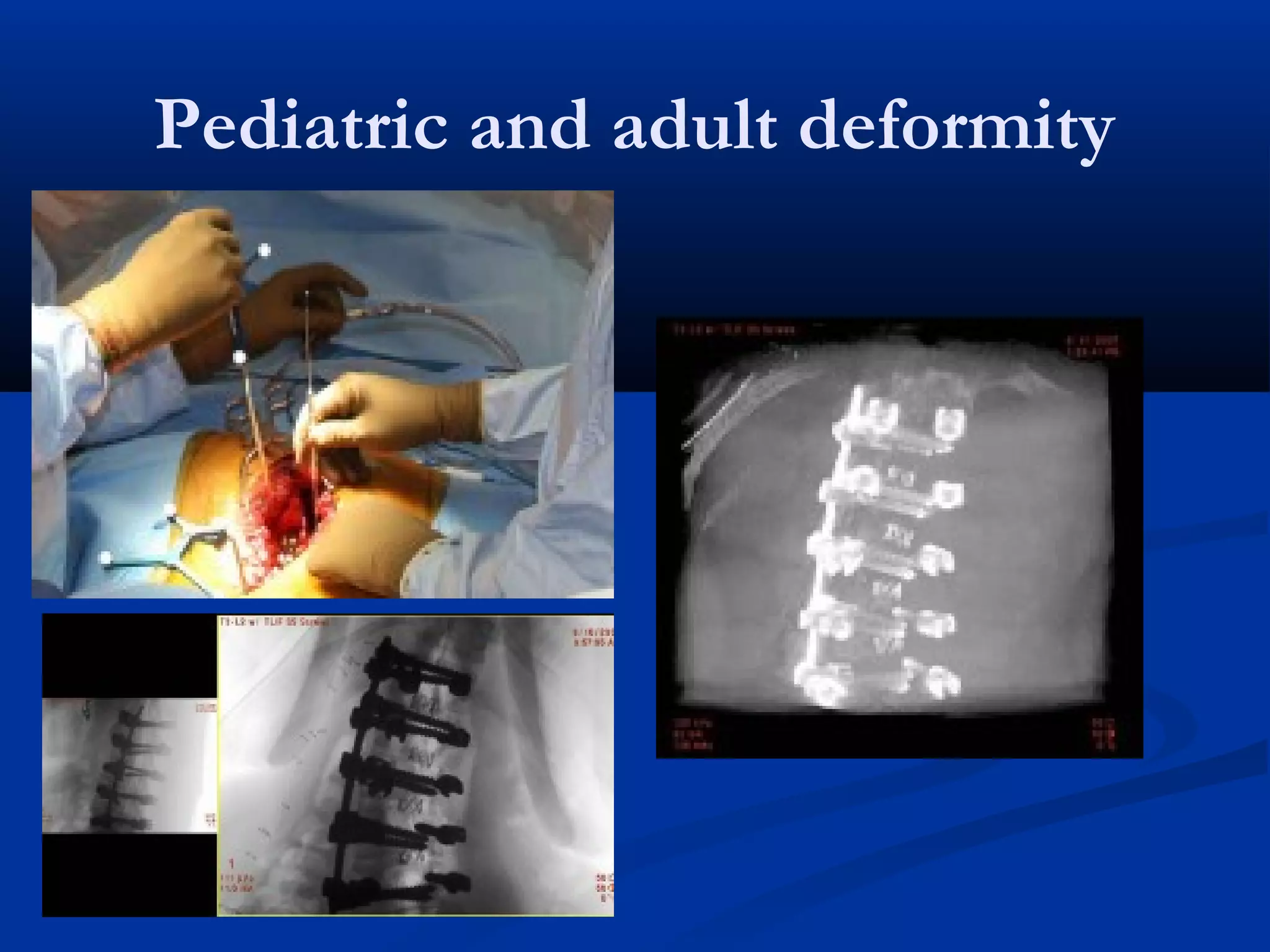
Overview of spinal navigation in key procedures like cervical and lumbar fusions, addressing challenges faced in traditional spine surgery techniques.
Discussion of research findings, including publication counts and the current evidence regarding clinical benefits and applications of image-guided approaches in spinal surgery.
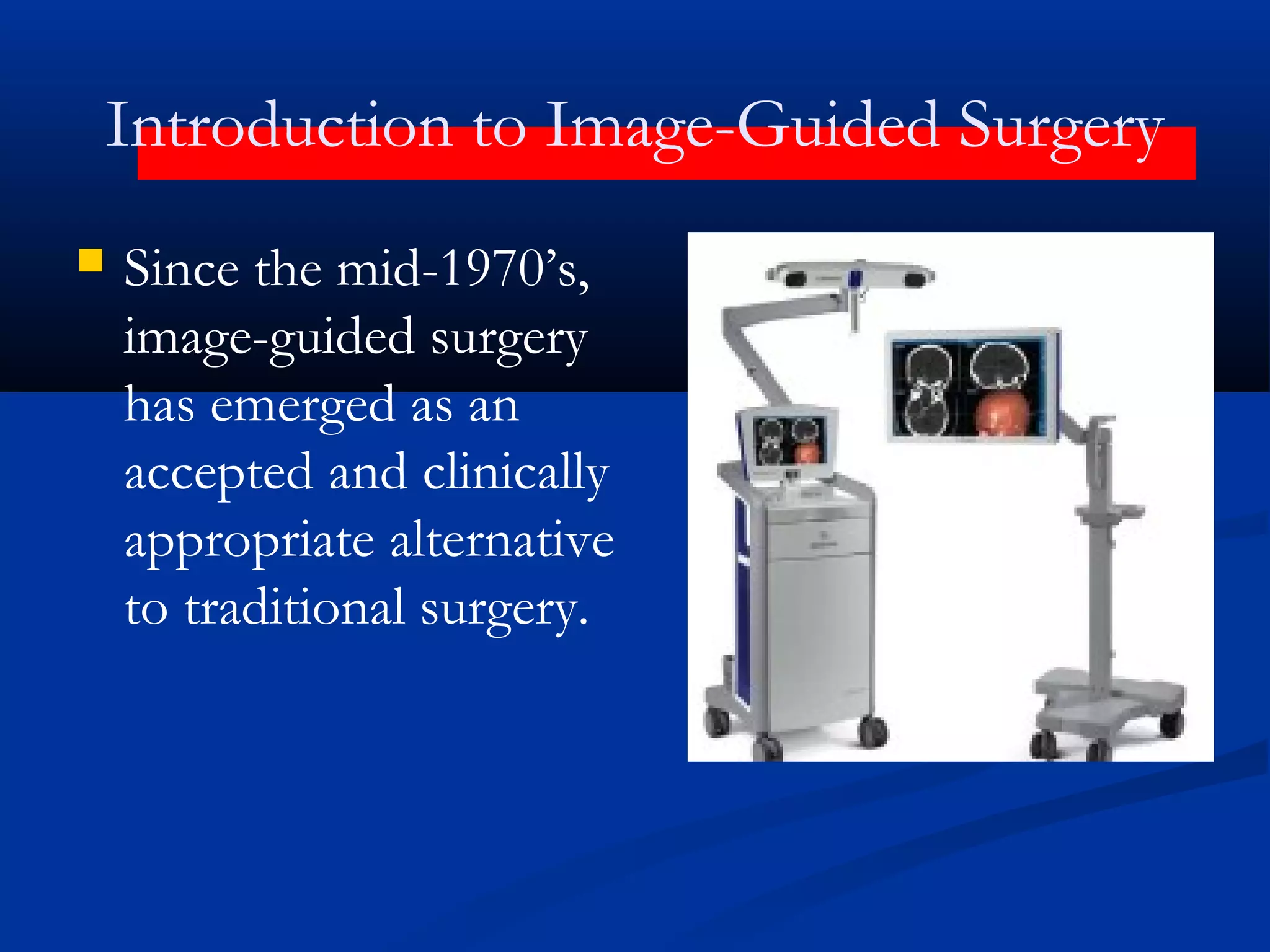
Introduction to Image-GuidedSurgery
Since the mid-1970’s,
image-guided surgery
has emerged as an
accepted and clinically
appropriate alternative
to traditional surgery.
3.
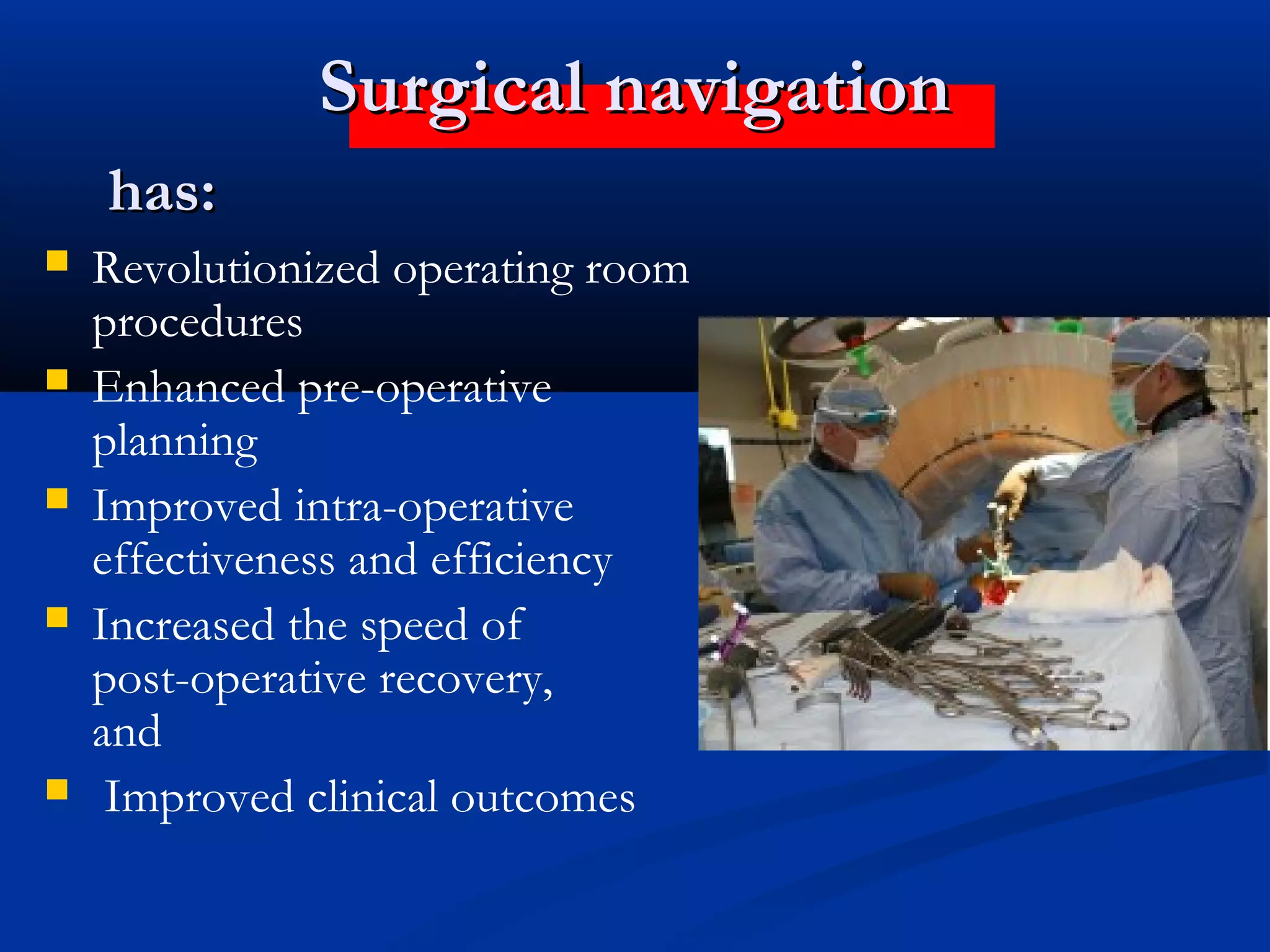
Surgical navigationSurgical navigation
Revolutionized operating room
procedures
Enhanced pre-operative
planning
Improved intra-operative
effectiveness and efficiency
Increased the speed of
post-operative recovery,
and
Improved clinical outcomes
has:has:
4.
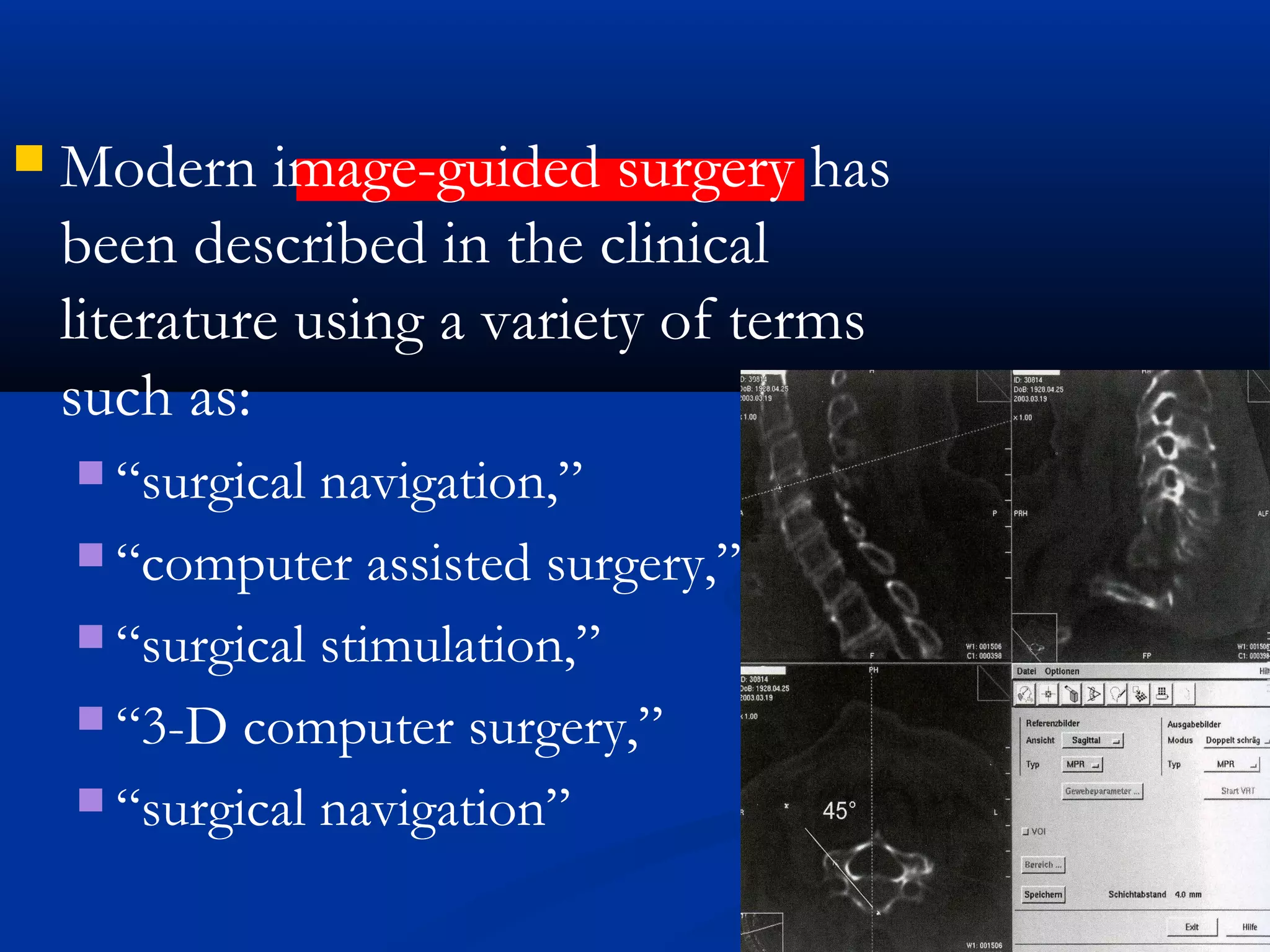
Modern image-guidedsurgery has
been described in the clinical
literature using a variety of terms
such as:
“surgical navigation,”
“computer assisted surgery,”
“surgical stimulation,”
“3-D computer surgery,”
“surgical navigation”
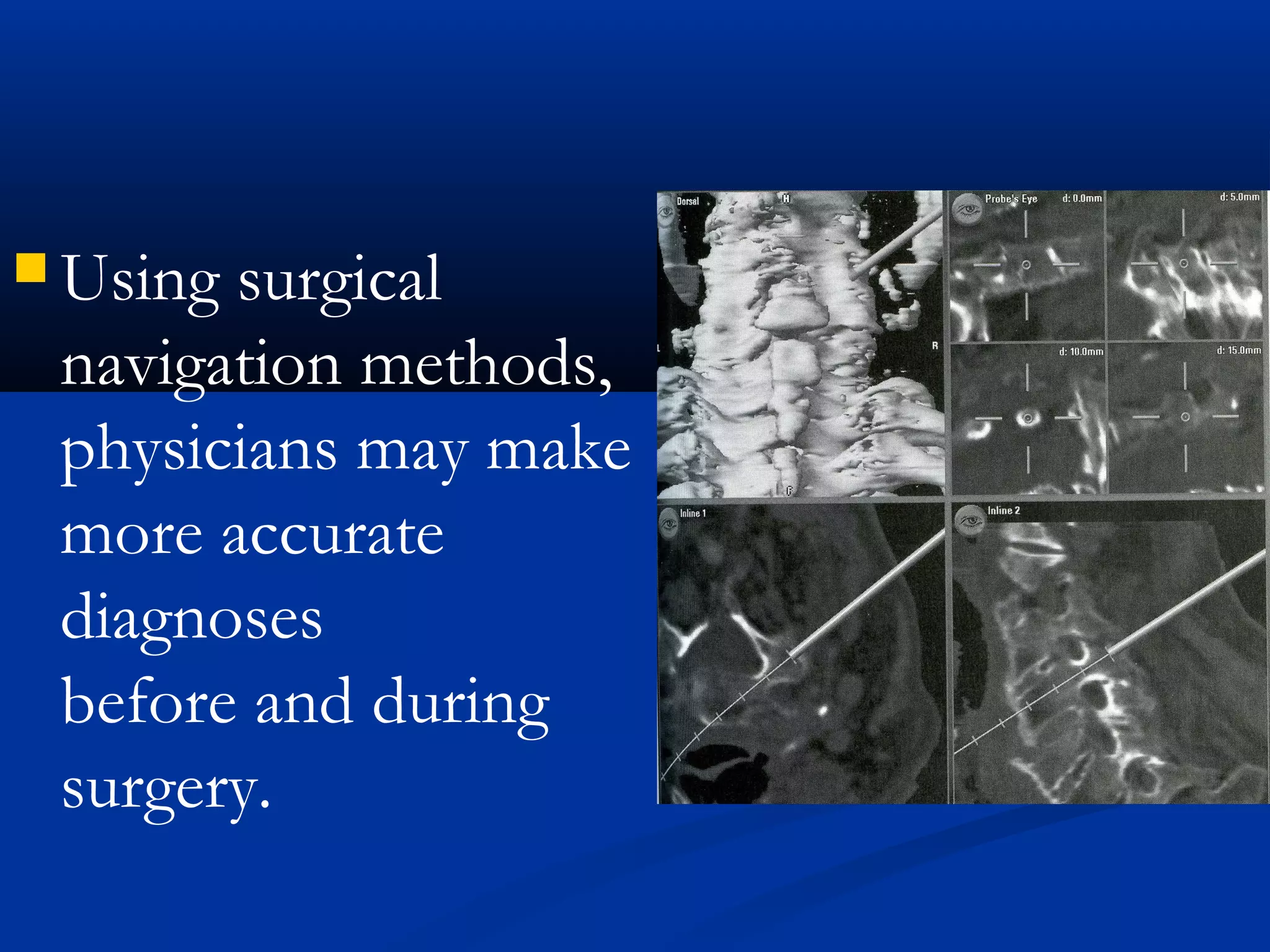
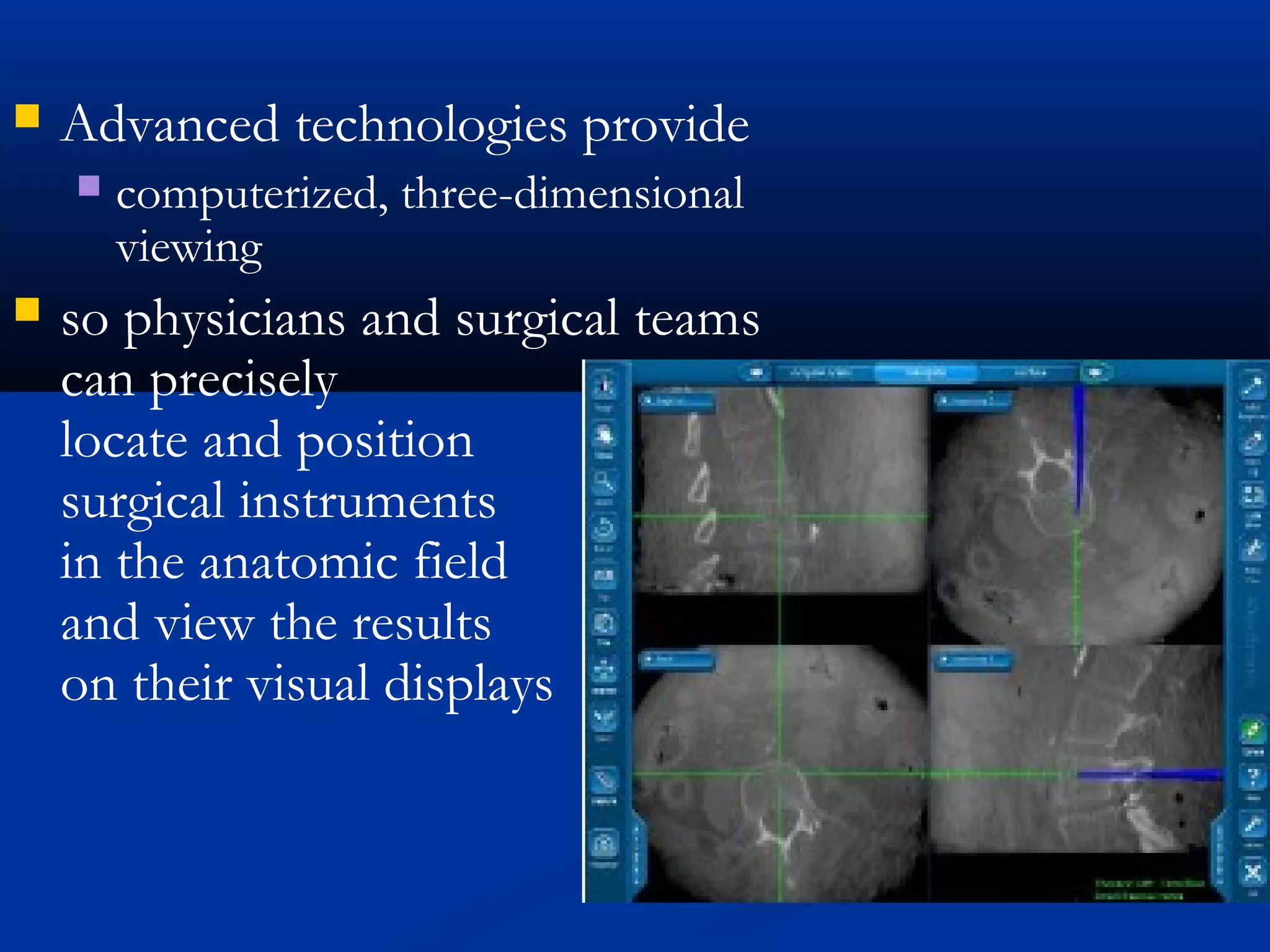
Advanced technologiesprovide
computerized, three-dimensional
viewing
so physicians and surgical teams
can precisely
locate and position
surgical instruments
in the anatomic field
and view the results
on their visual displays
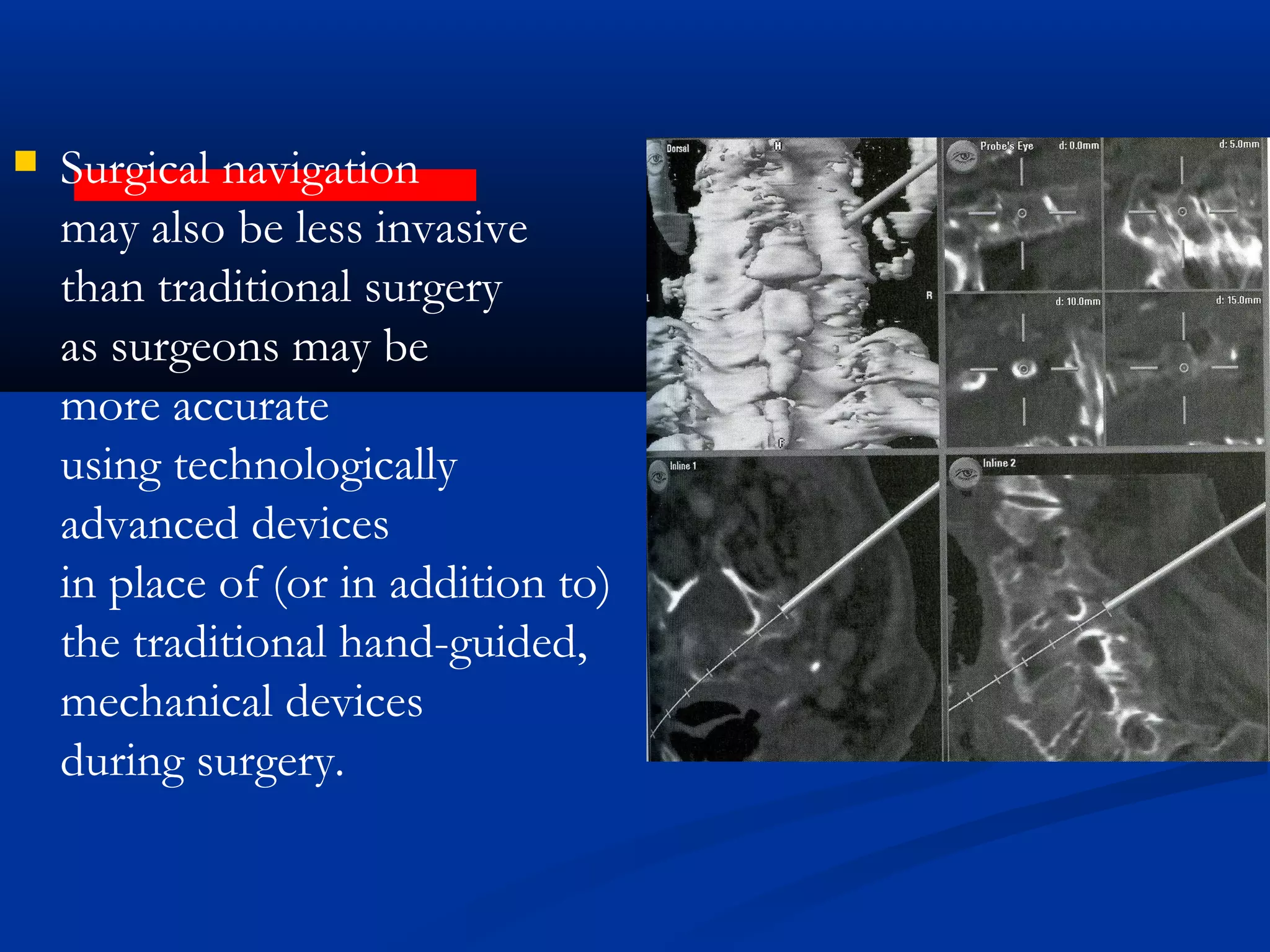
Surgical navigation
mayalso be less invasive
than traditional surgery
as surgeons may be
more accurate
using technologically
advanced devices
in place of (or in addition to)
the traditional hand-guided,
mechanical devices
during surgery.
9.
This allowsfor
an increased level
of patient safety
and
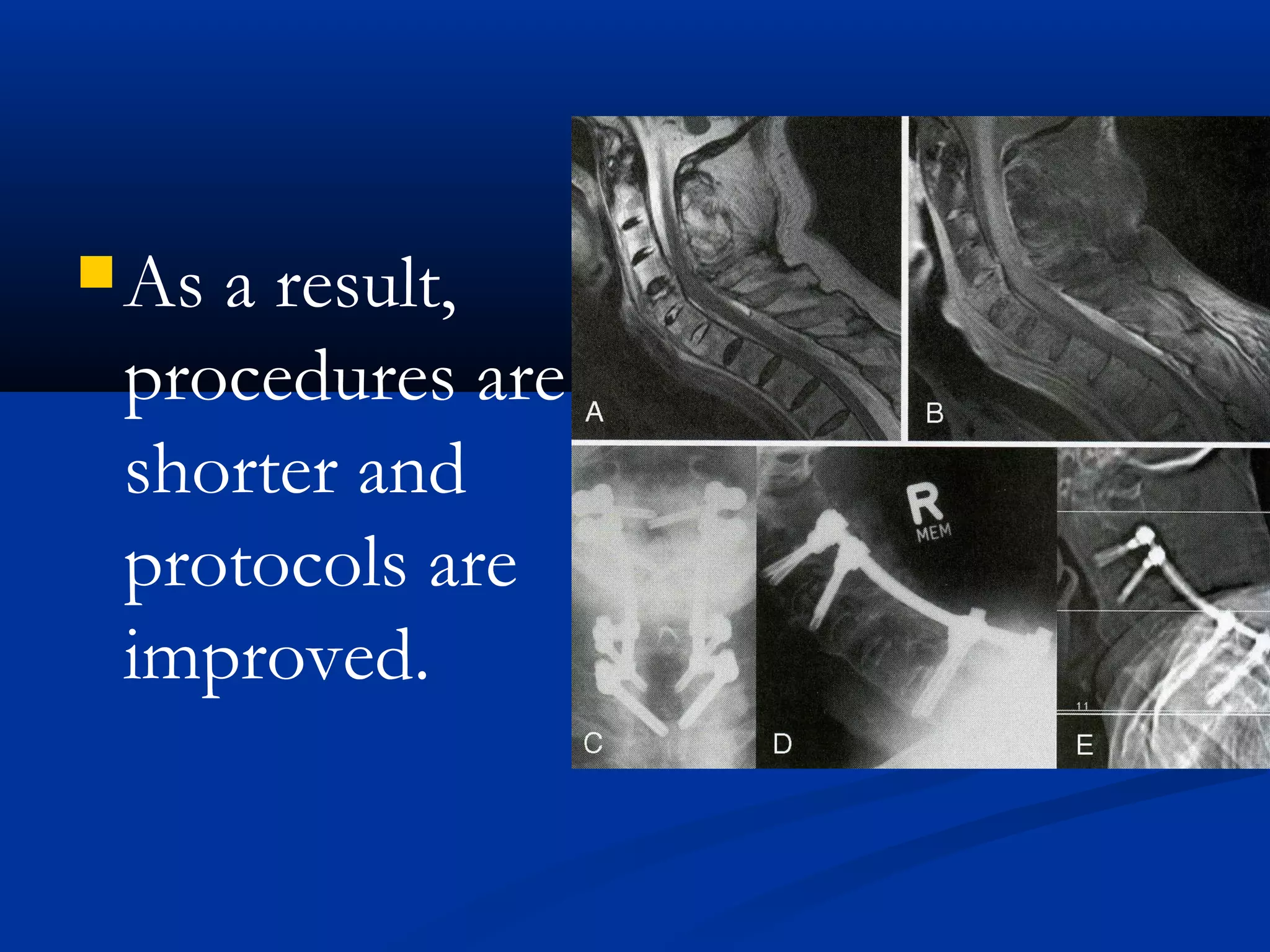
an overall reduction
in patient morbidity.
10.
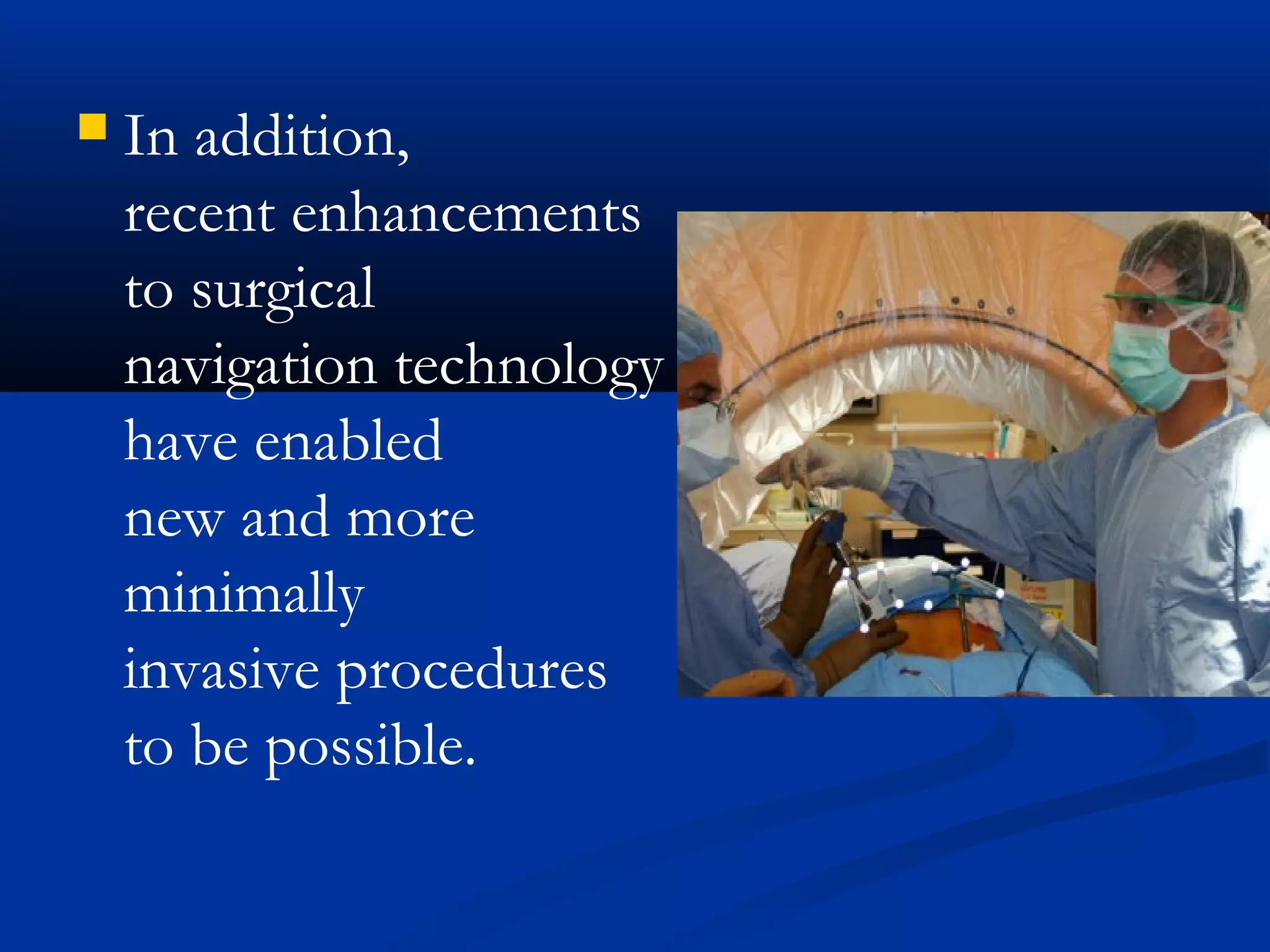
In addition,
recentenhancements
to surgical
navigation technology
have enabled
new and more
minimally
invasive procedures
to be possible.
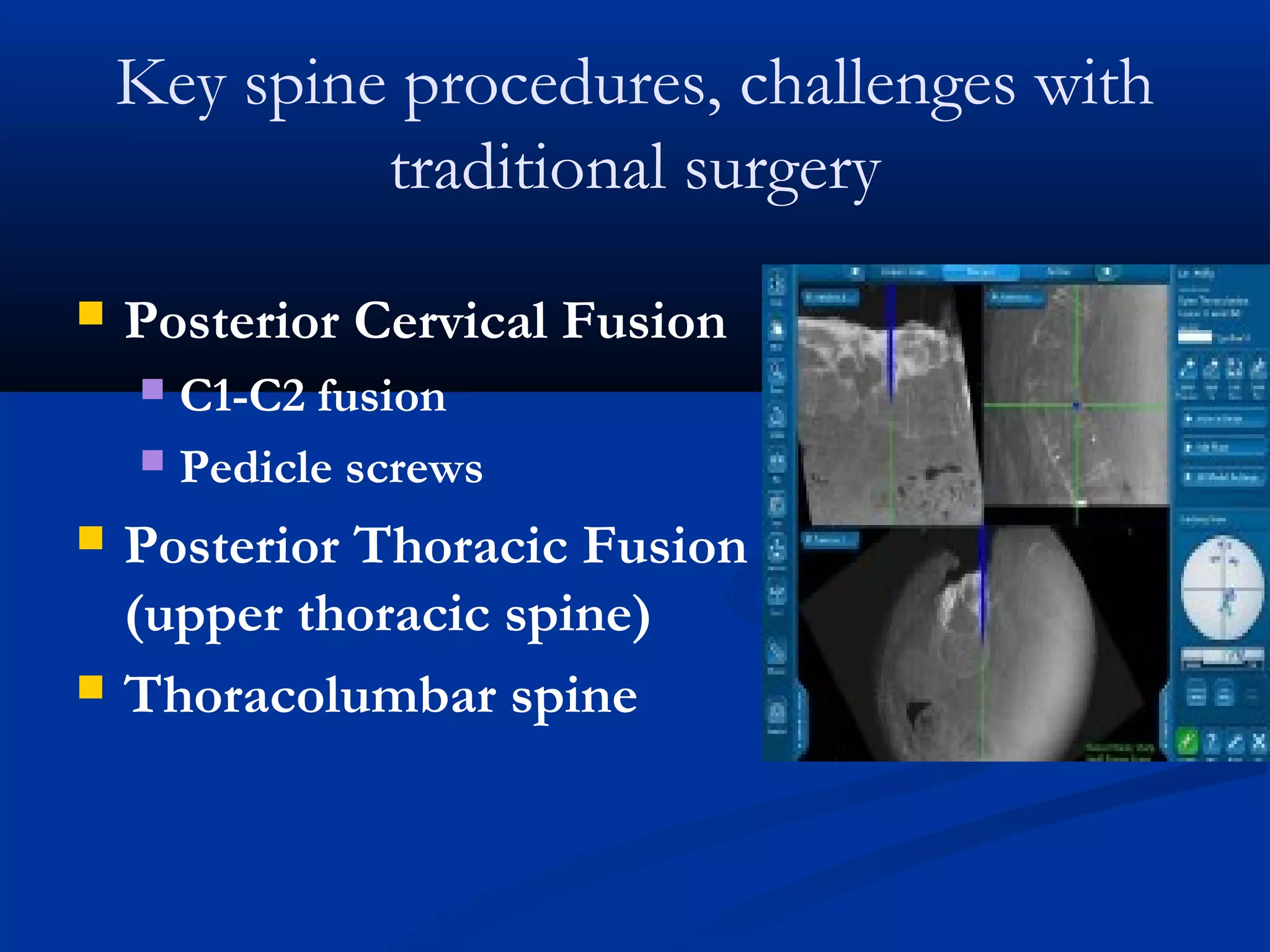
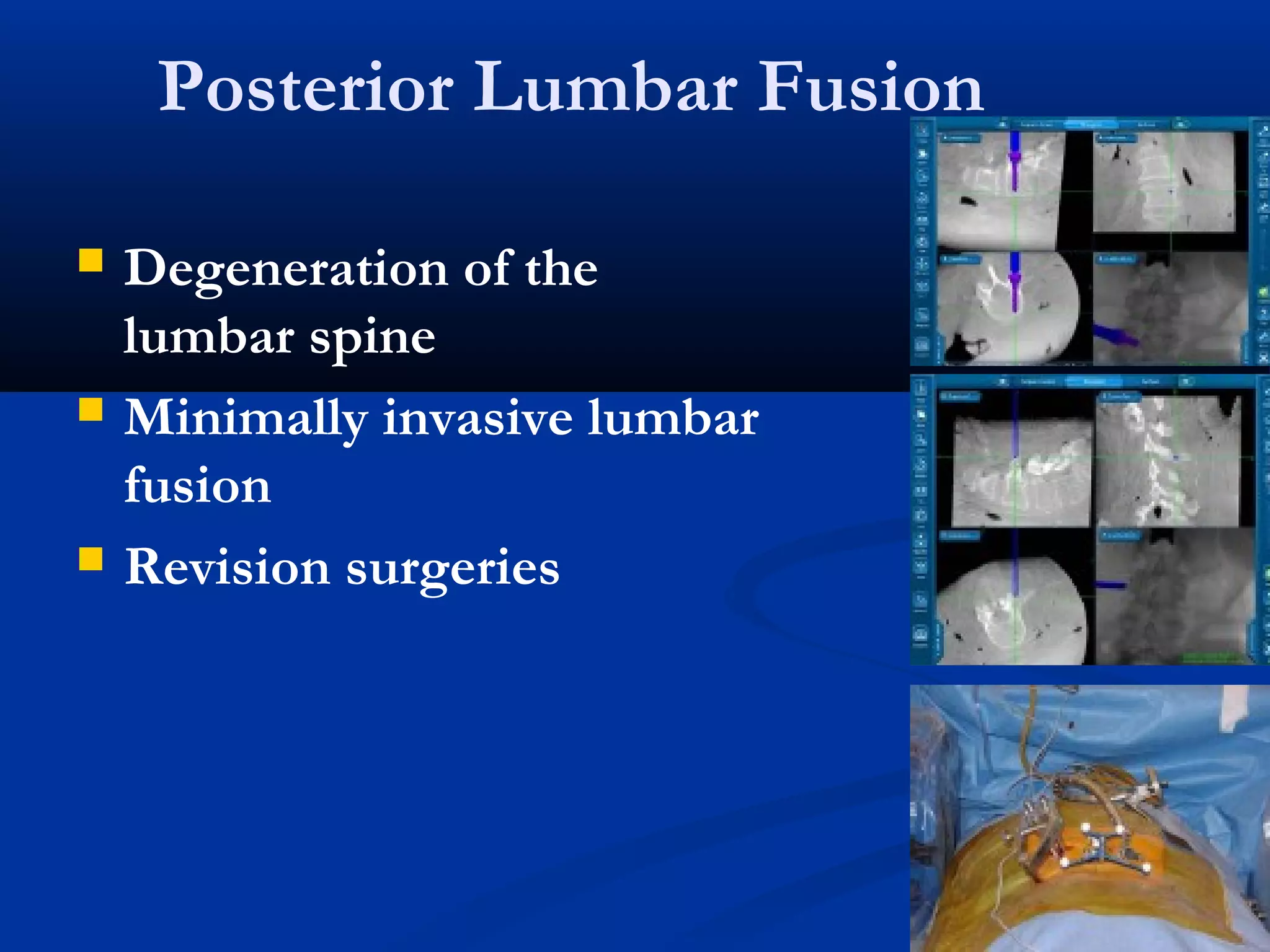
Posterior Lumbar Fusion
Degeneration of the
lumbar spine
Minimally invasive lumbar
fusion
Revision surgeries
16.
Image guided spineImageguided spine
surgery: state of the artsurgery: state of the art
and future directionsand future directions
Thorsten T. et al, Eur. Spine 2010
Review article
17.
Based ona medline search totalBased on a medline search total
of 1.462 publications publishedof 1.462 publications published
until October 2008 wereuntil October 2008 were
retrievedretrieved
276 papers were included in the276 papers were included in the
analysisanalysis
Only two RCTs and oneOnly two RCTs and one
meta-analysis have beenmeta-analysis have been
retrievedretrieved
18.
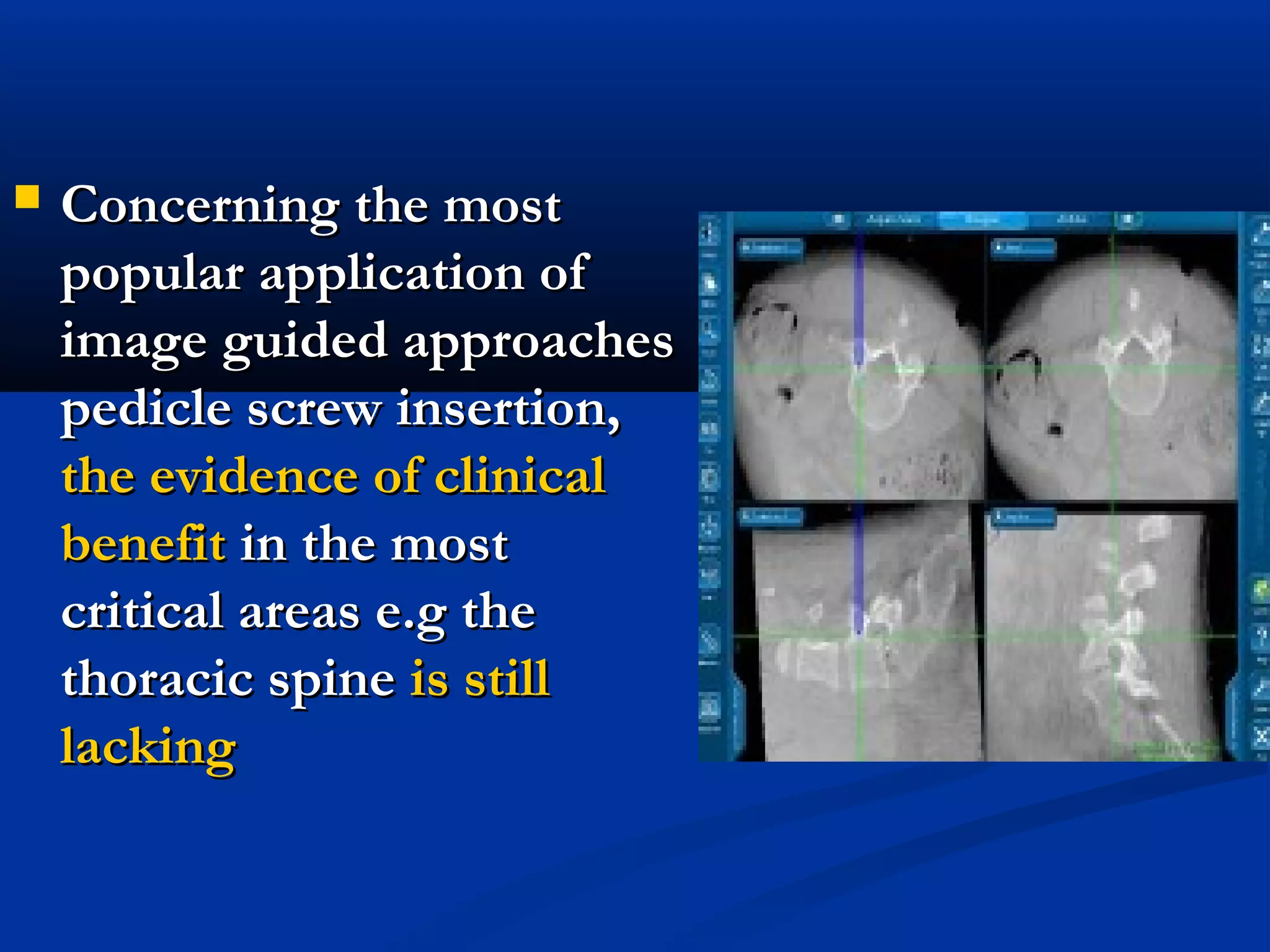
Concerning themostConcerning the most
popular application ofpopular application of
image guided approachesimage guided approaches
pedicle screw insertion,pedicle screw insertion,
the evidence of clinicalthe evidence of clinical
benefitbenefit in the mostin the most
critical areas e.g thecritical areas e.g the
thoracic spinethoracic spine is stillis still
lackinglacking
19.
In manyother areasIn many other areas
of spine surgery e.g.of spine surgery e.g.
ventral spine surgeryventral spine surgery
or tumor surgeryor tumor surgery,,
image guidedimage guided
approaches are stillapproaches are still
in experimentalin experimental
stagesstages
20.
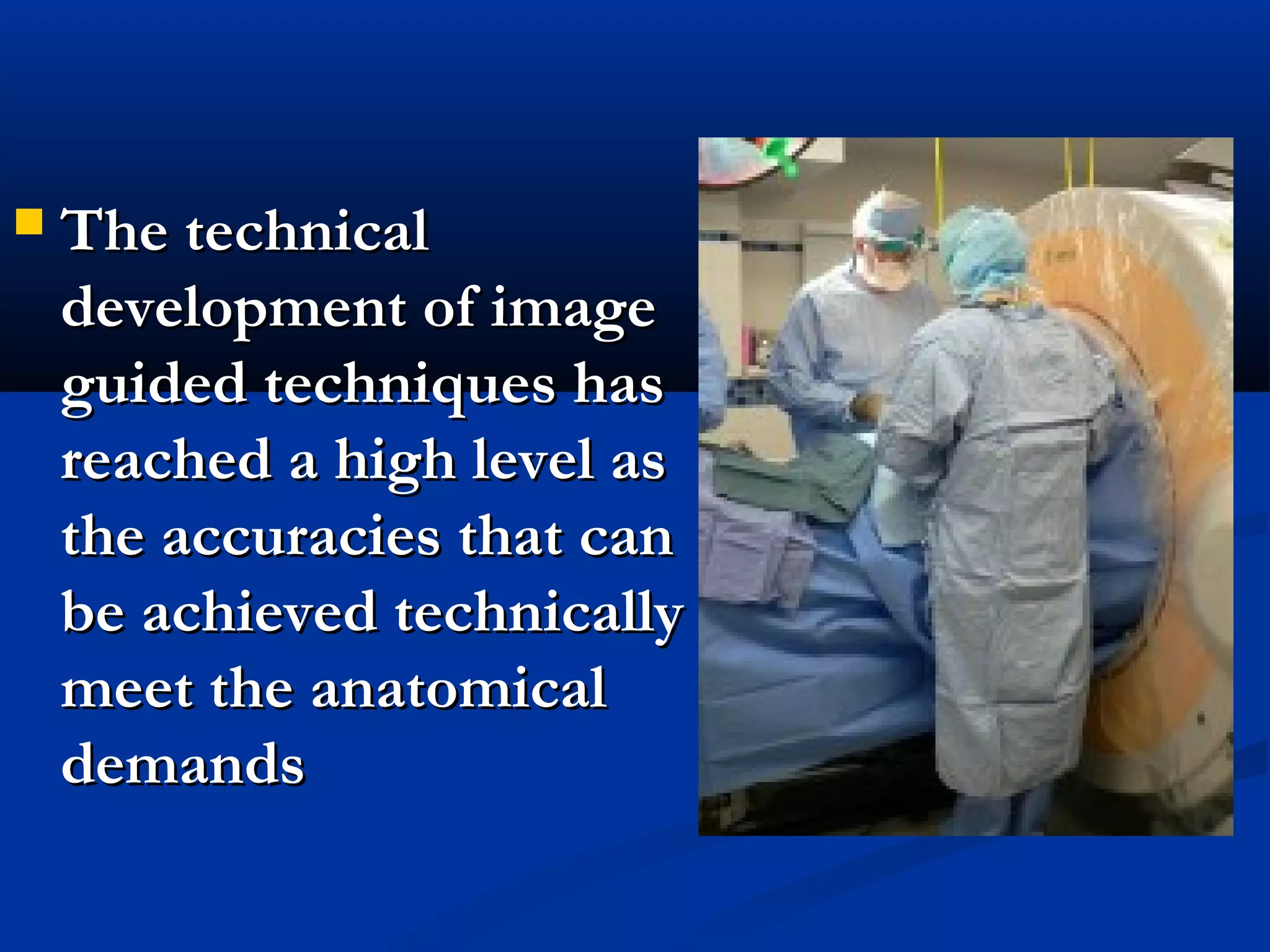
The technicalThetechnical
development of imagedevelopment of image
guided techniques hasguided techniques has
reached a high level asreached a high level as
the accuracies that canthe accuracies that can
be achieved technicallybe achieved technically
meet the anatomicalmeet the anatomical
demandsdemands
21.
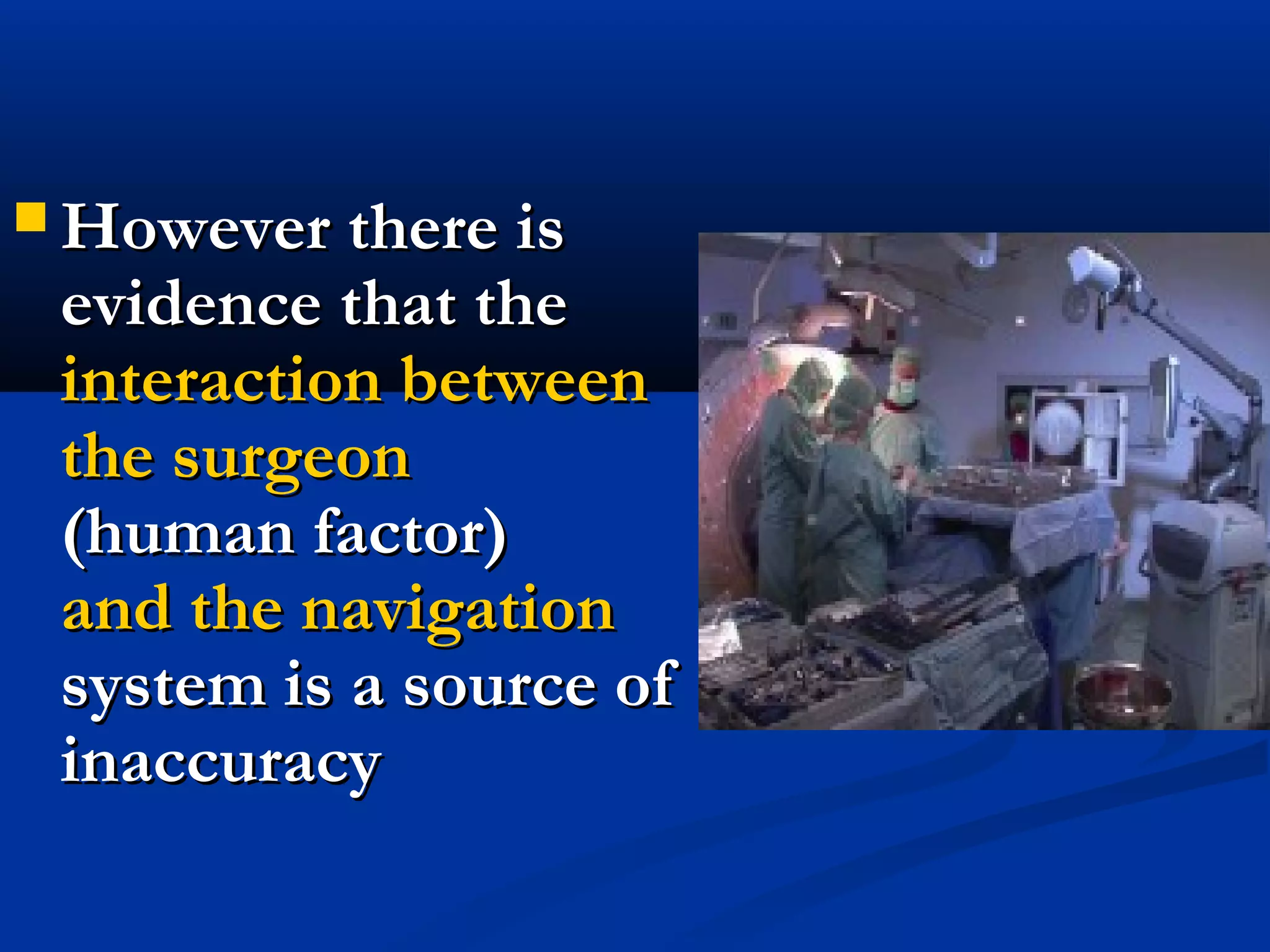
However thereisHowever there is
evidence that theevidence that the
interaction betweeninteraction between
the surgeonthe surgeon
(human factor)(human factor)
and the navigationand the navigation
system is a source ofsystem is a source of
inaccuracyinaccuracy


![COMPUTER ASSISTED ORTHOPAEDICS SURGERY [Autosaved] (1).pptx](https://cdn.slidesharecdn.com/ss_thumbnails/computerassistedorthopaedicssurgeryautosaved1-250211145313-9f76e6d8-thumbnail.jpg?width=640&height=640&fit=bounds)


