NATURAL
DIASATERS
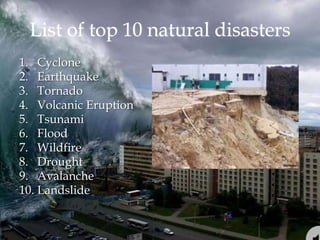
List of top 10 natural disasters
1. Cyclone
2. Earthquake
3. Tornado
4. Volcanic Eruption
5. Tsunami
6. Flood
7. Wildfire
8. Drought
9. Avalanche
10. Landslide
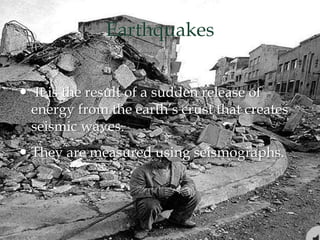
Earthquakes
 It is the result of a sudden release of
energy from the earth’s crust that creates
seismic waves.
 They are measured using seismographs.
Earthquakes
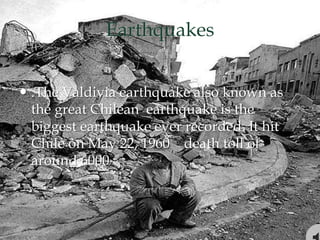
 .The Valdivia earthquake also known as
the great Chilean earthquake is the
biggest earthquake ever recorded. It hit
Chile on May 22, 1960 death toll of
around 6000
Tornados (Twisters)
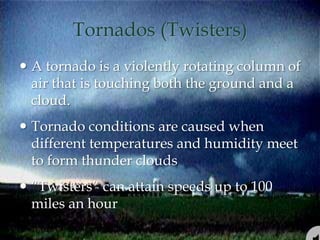
 A tornado is a violently rotating column of
air that is touching both the ground and a
cloud.
 Tornado conditions are caused when
different temperatures and humidity meet
to form thunder clouds
 “Twisters” can attain speeds up to 100
miles an hour
Tornados
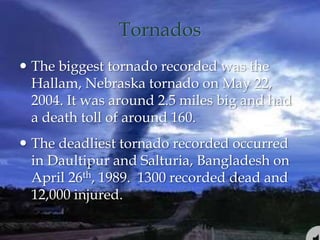
 The biggest tornado recorded was the
Hallam, Nebraska tornado on May 22,
2004. It was around 2.5 miles big and had
a death toll of around 160.
 The deadliest tornado recorded occurred
in Daultipur and Salturia, Bangladesh on
April 26th, 1989. 1300 recorded dead and
12,000 injured.
Volcanic Eruption
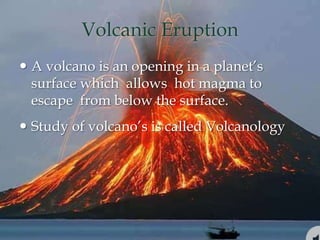
 A volcano is an opening in a planet’s
surface which allows hot magma to
escape from below the surface.
 Study of volcano’s is called Volcanology
Volcanic Eruption
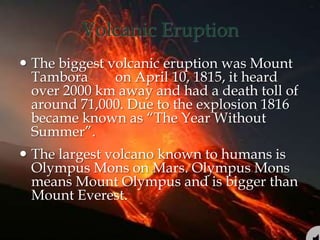
 The biggest volcanic eruption was Mount
Tambora on April 10, 1815, it heard
over 2000 km away and had a death toll of
around 71,000. Due to the explosion 1816
became known as “The Year Without
Summer”.
 The largest volcano known to humans is
Olympus Mons on Mars. Olympus Mons
means Mount Olympus and is bigger than
Mount Everest.
Tsunami’s
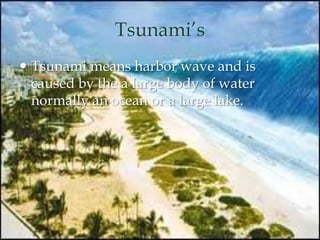
 Tsunami means harbor wave and is
caused by the a large body of water
normally an ocean or a large lake.
Tsunami’s
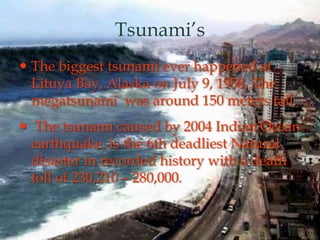
 The biggest tsunami ever happened at
Lituya Bay, Alaska on July 9, 1958. The
megatsunami was around 150 meters tall.
 The tsunami caused by 2004 Indian Ocean
earthquake, is the 6th deadliest Natural
disaster in recorded history with a death
toll of 230,210 – 280,000.
Floods
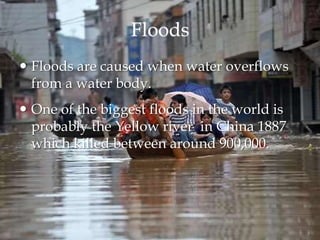
 Floods are caused when water overflows
from a water body.
 One of the biggest floods in the world is
probably the Yellow river in China 1887
which killed between around 900,000.
Wildfire
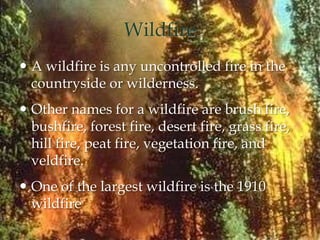
 A wildfire is any uncontrolled fire in the
countryside or wilderness.
 Other names for a wildfire are brush fire,
bushfire, forest fire, desert fire, grass fire,
hill fire, peat fire, vegetation fire, and
veldfire.
 One of the largest wildfire is the 1910
wildfire
Droughts
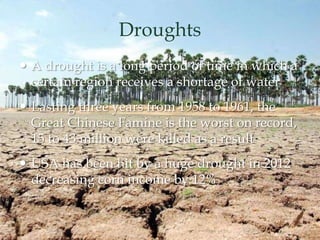
 A drought is a long period of time in which a
certain region receives a shortage of water
 Lasting three years from 1958 to 1961, the
Great Chinese Famine is the worst on record,
15 to 43 million were killed as a result
 USA has been hit by a huge drought in 2012
decreasing corn income by 12%
Avalanches
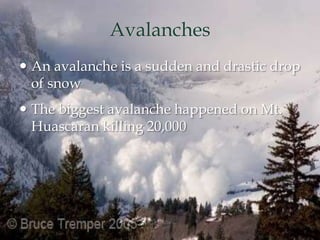
 An avalanche is a sudden and drastic drop
of snow
 The biggest avalanche happened on Mt.
Huascaran killing 20,000
Landslides
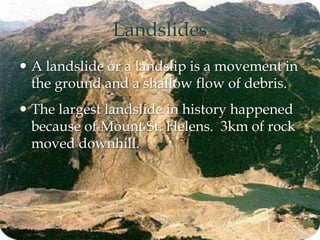
 A landslide or a landslip is a movement in
the ground and a shallow flow of debris.
 The largest landslide in history happened
because of Mount St. Helens. 3km of rock
moved downhill.
Unusual Natural Disasters
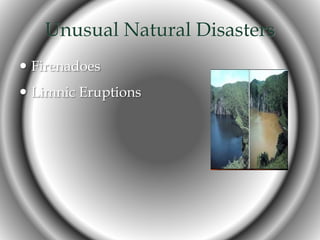
 Firenadoes
 Limnic Eruptions
MAN MADE
DISASTERS
List of few man made
disasters
• The nuclear bombing
• Terrorism
• Oil spill
The atomic bombing
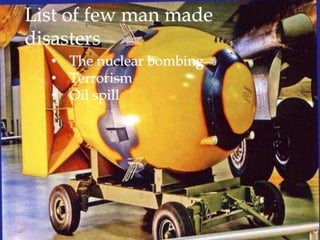
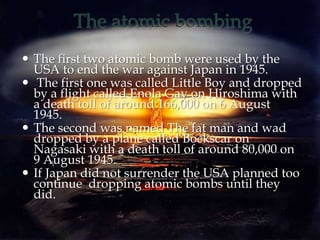
 The first two atomic bomb were used by the
USA to end the war against Japan in 1945.
 The first one was called Little Boy and dropped
by a flight called Enola Gay on Hiroshima with
a death toll of around 166,000 on 6 August
1945.
 The second was named The fat man and wad
dropped by a plane called Bockscar on
Nagasaki with a death toll of around 80,000 on
9 August 1945.
 If Japan did not surrender the USA planned too
continue dropping atomic bombs until they
did.
Terrorism
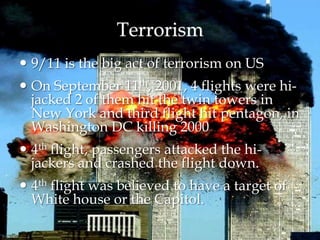
 9/11 is the big act of terrorism on US
 On September 11th, 2001, 4 flights were hi-
jacked 2 of them hit the twin towers in
New York and third flight hit pentagon, in
Washington DC killing 2000
 4th flight, passengers attacked the hi-
jackers and crashed the flight down.
 4th flight was believed to have a target of
White house or the Capitol.
Deepwater Horizon oil spill
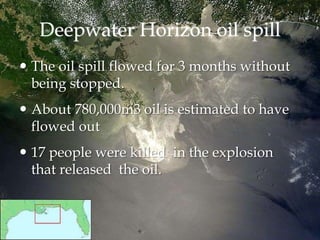
 The oil spill flowed for 3 months without
being stopped.
 About 780,000m3 oil is estimated to have
flowed out
 17 people were killed in the explosion
that released the oil.

NATURAL AND MAN MADE DISASTERS

  • 1.
  • 2.
    List of top10 natural disasters 1. Cyclone 2. Earthquake 3. Tornado 4. Volcanic Eruption 5. Tsunami 6. Flood 7. Wildfire 8. Drought 9. Avalanche 10. Landslide
  • 3.
    Earthquakes  It isthe result of a sudden release of energy from the earth’s crust that creates seismic waves.  They are measured using seismographs.
  • 4.
    Earthquakes  .The Valdiviaearthquake also known as the great Chilean earthquake is the biggest earthquake ever recorded. It hit Chile on May 22, 1960 death toll of around 6000
  • 5.
    Tornados (Twisters)  Atornado is a violently rotating column of air that is touching both the ground and a cloud.  Tornado conditions are caused when different temperatures and humidity meet to form thunder clouds  “Twisters” can attain speeds up to 100 miles an hour
  • 6.
    Tornados  The biggesttornado recorded was the Hallam, Nebraska tornado on May 22, 2004. It was around 2.5 miles big and had a death toll of around 160.  The deadliest tornado recorded occurred in Daultipur and Salturia, Bangladesh on April 26th, 1989. 1300 recorded dead and 12,000 injured.
  • 7.
    Volcanic Eruption  Avolcano is an opening in a planet’s surface which allows hot magma to escape from below the surface.  Study of volcano’s is called Volcanology
  • 8.
    Volcanic Eruption  Thebiggest volcanic eruption was Mount Tambora on April 10, 1815, it heard over 2000 km away and had a death toll of around 71,000. Due to the explosion 1816 became known as “The Year Without Summer”.  The largest volcano known to humans is Olympus Mons on Mars. Olympus Mons means Mount Olympus and is bigger than Mount Everest.
  • 9.
    Tsunami’s  Tsunami meansharbor wave and is caused by the a large body of water normally an ocean or a large lake.
  • 10.
    Tsunami’s  The biggesttsunami ever happened at Lituya Bay, Alaska on July 9, 1958. The megatsunami was around 150 meters tall.  The tsunami caused by 2004 Indian Ocean earthquake, is the 6th deadliest Natural disaster in recorded history with a death toll of 230,210 – 280,000.
  • 11.
    Floods  Floods arecaused when water overflows from a water body.  One of the biggest floods in the world is probably the Yellow river in China 1887 which killed between around 900,000.
  • 12.
    Wildfire  A wildfireis any uncontrolled fire in the countryside or wilderness.  Other names for a wildfire are brush fire, bushfire, forest fire, desert fire, grass fire, hill fire, peat fire, vegetation fire, and veldfire.  One of the largest wildfire is the 1910 wildfire
  • 13.
    Droughts  A droughtis a long period of time in which a certain region receives a shortage of water  Lasting three years from 1958 to 1961, the Great Chinese Famine is the worst on record, 15 to 43 million were killed as a result  USA has been hit by a huge drought in 2012 decreasing corn income by 12%
  • 14.
    Avalanches  An avalancheis a sudden and drastic drop of snow  The biggest avalanche happened on Mt. Huascaran killing 20,000
  • 15.
    Landslides  A landslideor a landslip is a movement in the ground and a shallow flow of debris.  The largest landslide in history happened because of Mount St. Helens. 3km of rock moved downhill.
  • 16.
    Unusual Natural Disasters Firenadoes  Limnic Eruptions
  • 17.
  • 18.
    List of fewman made disasters • The nuclear bombing • Terrorism • Oil spill
  • 19.
    The atomic bombing The first two atomic bomb were used by the USA to end the war against Japan in 1945.  The first one was called Little Boy and dropped by a flight called Enola Gay on Hiroshima with a death toll of around 166,000 on 6 August 1945.  The second was named The fat man and wad dropped by a plane called Bockscar on Nagasaki with a death toll of around 80,000 on 9 August 1945.  If Japan did not surrender the USA planned too continue dropping atomic bombs until they did.
  • 20.
    Terrorism  9/11 isthe big act of terrorism on US  On September 11th, 2001, 4 flights were hi- jacked 2 of them hit the twin towers in New York and third flight hit pentagon, in Washington DC killing 2000  4th flight, passengers attacked the hi- jackers and crashed the flight down.  4th flight was believed to have a target of White house or the Capitol.
  • 21.
    Deepwater Horizon oilspill  The oil spill flowed for 3 months without being stopped.  About 780,000m3 oil is estimated to have flowed out  17 people were killed in the explosion that released the oil.