A. MELENDEZ
Interfaith Housing Assistance Corp
Earthquake Terminology
 a sudden slipping or
movement of a
portion of the Earth’s
crust, followed by a
series of vibrations.
 an earthquake of
less intensity that
follows the main
earthquake
Earthquake: Aftershock:
* As defined by FEMA
Associated Hazards
Collapsing of buildings & bridges
Disruption of gas, electricity & phone services
Landslides & Avalanches
Flash Floods
Fires
Tsunamis
Since 1984 earthquake activity in San
Diego County has doubled over that of
the preceding 50 years!
(Not So) Fun Fact:
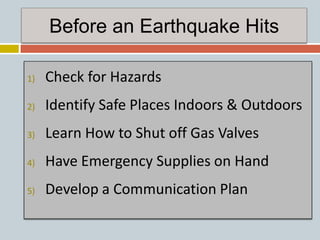
Before an Earthquake Hits
1) Check for Hazards
2) Identify Safe Places Indoors & Outdoors
3) Learn How to Shut off Gas Valves
4) Have Emergency Supplies on Hand
5) Develop a Communication Plan
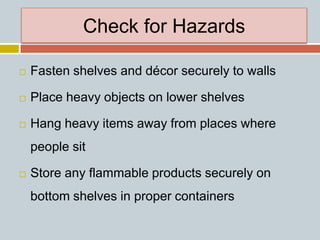
Check for Hazards
 Fasten shelves and décor securely to walls
 Place heavy objects on lower shelves
 Hang heavy items away from places where
people sit
 Store any flammable products securely on
bottom shelves in proper containers
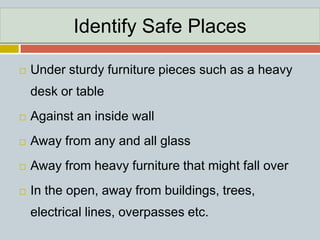
Identify Safe Places
 Under sturdy furniture pieces such as a heavy
desk or table
 Against an inside wall
 Away from any and all glass
 Away from heavy furniture that might fall over
 In the open, away from buildings, trees,
electrical lines, overpasses etc.
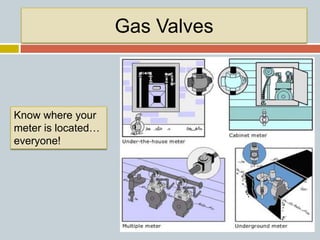
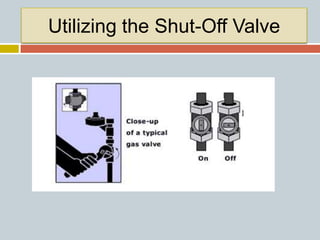
Gas Valves
Know where your
meter is located…
everyone!
Utilizing the Shut-Off Valve
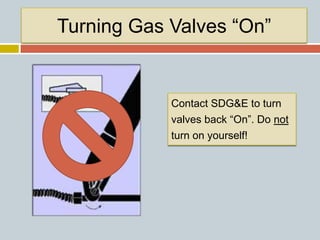
Turning Gas Valves “On”
Contact SDG&E to turn
valves back “On”. Do not
turn on yourself!
Workplace Disaster Supplies
 Flashlight & extra batteries
 Battery-operated radio
 Emergency food and water
 Nonelectric can opener
 Medication
 First Aid kit and manual
 Tools & Supplies
Communication Plan
 Persons to identify after earthquake ceases:
 Emergency Contact (family member/friend)
 Your buddy property
 Out of town contact
What to do During a Quake
Two Vital Tips
 If you’re indoors, stay there!
 Steer clear of:
 Bookshelves
 Storage racks
 Windows
 Glass and Mirrors
 Light Fixtures
 Any other heavy objects
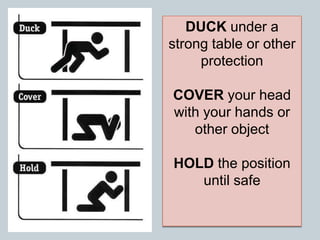
DUCK under a
strong table or other
protection
COVER your head
with your hands or
other object
HOLD the position
until safe
After the Quake
After the Quake
 Move very carefully
 Use caution when exiting or entering buildings
 Check for injured or trapped persons
 Do not move unless in immediate danger
 Check water supplies
 Salvage canned goods
 Turn-on battery-operated radio for latest safety
reports
Immediately check for fires
 Fires start from broken gas line and appliance connections
 Use a flashlight when looking for gas leaks or fire hazards,
do not use a lighted match or lantern!
 Don’t use electrical switches or appliances if gas leaks are
suspected because sparks can ignite gas from broken
lines
 Never touch downed powerlines or objects in contact with
downed powerlines
Utilize your Communication Plan
 Contact:
 Emergency Contact (family member/friend)
 Your buddy property
 Out of town contact (if quake is severe)
Test Your Knowledge
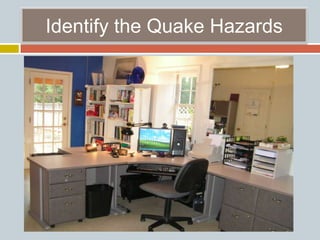
Identify the Quake Hazards
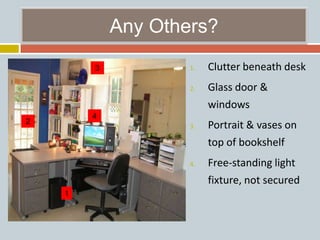
Any Others?
1. Clutter beneath desk
2. Glass door &
windows
3. Portrait & vases on
top of bookshelf
4. Free-standing light
fixture, not secured
1
2
3
4
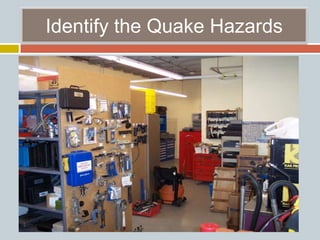
Identify the Quake Hazards
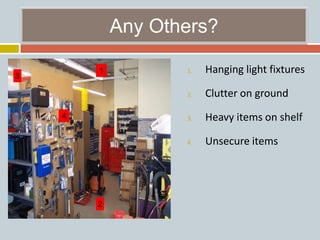
Any Others?
1. Hanging light fixtures
2. Clutter on ground
3. Heavy items on shelf
4. Unsecure items
1
2
3
4
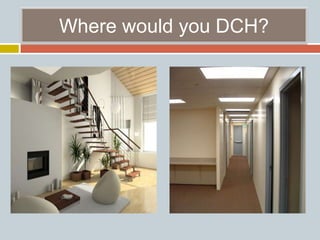
Where would you DCH?
Time for Practical Application

Earthquake preparedness ppt

  • 1.
  • 2.
    Earthquake Terminology  asudden slipping or movement of a portion of the Earth’s crust, followed by a series of vibrations.  an earthquake of less intensity that follows the main earthquake Earthquake: Aftershock: * As defined by FEMA
  • 3.
    Associated Hazards Collapsing ofbuildings & bridges Disruption of gas, electricity & phone services Landslides & Avalanches Flash Floods Fires Tsunamis
  • 4.
    Since 1984 earthquakeactivity in San Diego County has doubled over that of the preceding 50 years! (Not So) Fun Fact:
  • 5.
    Before an EarthquakeHits 1) Check for Hazards 2) Identify Safe Places Indoors & Outdoors 3) Learn How to Shut off Gas Valves 4) Have Emergency Supplies on Hand 5) Develop a Communication Plan
  • 6.
    Check for Hazards Fasten shelves and décor securely to walls  Place heavy objects on lower shelves  Hang heavy items away from places where people sit  Store any flammable products securely on bottom shelves in proper containers
  • 7.
    Identify Safe Places Under sturdy furniture pieces such as a heavy desk or table  Against an inside wall  Away from any and all glass  Away from heavy furniture that might fall over  In the open, away from buildings, trees, electrical lines, overpasses etc.
  • 8.
    Gas Valves Know whereyour meter is located… everyone!
  • 9.
  • 10.
    Turning Gas Valves“On” Contact SDG&E to turn valves back “On”. Do not turn on yourself!
  • 11.
    Workplace Disaster Supplies Flashlight & extra batteries  Battery-operated radio  Emergency food and water  Nonelectric can opener  Medication  First Aid kit and manual  Tools & Supplies
  • 12.
    Communication Plan  Personsto identify after earthquake ceases:  Emergency Contact (family member/friend)  Your buddy property  Out of town contact
  • 13.
    What to doDuring a Quake
  • 14.
    Two Vital Tips If you’re indoors, stay there!  Steer clear of:  Bookshelves  Storage racks  Windows  Glass and Mirrors  Light Fixtures  Any other heavy objects
  • 15.
    DUCK under a strongtable or other protection COVER your head with your hands or other object HOLD the position until safe
  • 16.
  • 17.
    After the Quake Move very carefully  Use caution when exiting or entering buildings  Check for injured or trapped persons  Do not move unless in immediate danger  Check water supplies  Salvage canned goods  Turn-on battery-operated radio for latest safety reports
  • 18.
    Immediately check forfires  Fires start from broken gas line and appliance connections  Use a flashlight when looking for gas leaks or fire hazards, do not use a lighted match or lantern!  Don’t use electrical switches or appliances if gas leaks are suspected because sparks can ignite gas from broken lines  Never touch downed powerlines or objects in contact with downed powerlines
  • 19.
    Utilize your CommunicationPlan  Contact:  Emergency Contact (family member/friend)  Your buddy property  Out of town contact (if quake is severe)
  • 20.
  • 21.
  • 22.
    Any Others? 1. Clutterbeneath desk 2. Glass door & windows 3. Portrait & vases on top of bookshelf 4. Free-standing light fixture, not secured 1 2 3 4
  • 23.
  • 24.
    Any Others? 1. Hanginglight fixtures 2. Clutter on ground 3. Heavy items on shelf 4. Unsecure items 1 2 3 4
  • 25.
  • 26.
    Time for PracticalApplication

Editor's Notes

  • #16 Simulate earthquake with flickering lights