ROBOTS
IN
NANOELECTRONICS
by
Mrs.R.Chitra,
Assistant Professor(SS)
Department of ECE,
School of Engineering,
Avinashilingam Institute, Coimbatore.
• Nanotechnology robots are quintessential NEMS (nano
electromechanical systems) and raise all the important issues
like sensing, actuation, control, communications, power, and
interfacing across spatial scales and between organic and
inorganic materials.
• Due to their size, comparable to biological cells, nanorobots
have a vast array of potential applications in fields such as
environmental monitoring or medicine.
Nanorobotics
• Nanorobotics is the technology of creating machines or
robots at or close to the scale of a nanometre (10-9 metres).
• Nanorobots (nanobots or nanoids) are typically devices
ranging in size from 0.1-10 micrometres and constructed of
nanoscale or molecular components.
Components of nano robots
The various components in nanorobot includes:
• Power supply.
• Fuel buffer tank.
• Sensors.
• Motors.
• Pumps
• Pressure tanks
• Structural support.
Substructures in a nanorobot
• Payload - This void section holds a small dose of
drug/medicine. The nanorobots could transverse in the blood
and release the drug to the site of infection/injury.
• Micro Camera - The nanorobot may include a miniature
camera. The operator can steer the nanorobot when
navigating through the body manually.
• Electrodes - The electrode mounted on the nanorobot could
form the battery using the electrolytes in the blood. These
protruding electrodes could also kill the cancer cells by
generating an electric current, and heating the cells up to
death.
• Lasers - These lasers could burn the harmful material like
arterial plaque, blood clots or cancer cells .
Components of nano robots
• Ultra sonic signal generators - These generators are used
when the nanorobots are used to target and destroy kidney
stones.
• Swimming tail - The nanorobot will require a means of
propulsion to get into the body as they travel against the flow
of blood in the body.
Motors in nano robots
• The nanorobot will have motors for movement and
manipulator arms or mechanical leg for mobility.
• The two main approaches followed in construction of
nanorobots are Positional assembly and Self assembly.
• In self assembly, the arm of a miniature robot or a
microscopic set is used to pick the molecules and assemble
manually.
• In positional assembly, the investigators will put billions of
molecules together and let them automatically assemble
based on their natural affinities into the desired configuration.
Swarm intelligence
• The nanorobots are provided with swarm intelligence for
decentralization activity.
• Swarm intelligence techniques are the algorithms designed
for artificial intelligence of the nanorobot.
• The swarm intelligence technique is been inspired by the
behaviour of social animals such as ants, bees and termites
which work collaboratively without a centralized control.
Types of swarm intelligence
The three main types of swarm intelligence techniques deigned
are
• Ant Colony Optimization (ACO)
• Artificial Bee Colony (ABC)
• Particle Swarm Optimization (PSO)
Types of Nanorobots
There are three types of nanorobots namely:
• Respirocytes
• Microbivores
• Clottocytes
Respirocytes
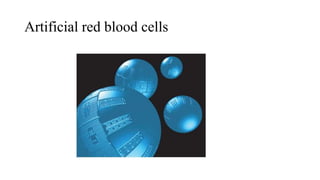
• Respirocytes are the nanorobots designed as artificial
mechanical red blood cells which are blood borne spherical 1
µm diameter sized.
• Respirocytes carry oxygen and carbon dioxide molecules
throughout the body.
• The respirocyte is constructed of 18 billion atoms which are
precisely arranged in a diamondoid pressure tanks that can
store up to 3 billion oxygen and carbon dioxide molecules .
• The respirocyte would deliver 236 times more oxygen to the
body tissues when compared to natural red blood cells.
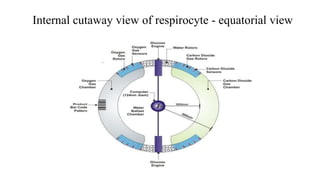
• The stored gases are released from the tank in a
controlled manner through molecular pumps. The
respirocytes exchange gases via molecular rotors
• Each respirocyte consists of 3 types of rotors.
• One rotor releases the stored oxygen while travelling
through the body.
• The second type of rotor captures all the carbon dioxide
in the blood stream and release at the lungs while the
third rotor takes in the glucose from blood stream as fuel
source.
Respirocytes
Artificial red blood cells
Internal cutaway view of respirocyte - equatorial view
Microbivores
• Microbivores are the nanorobot which functions as artificial
white blood cell and also known as nanorobotic phagocytes.
• The microbivore is a spheroid device made up of diamond
and sapphire. It traps in the pathogens present in the blood
stream and break down to smaller molecules.
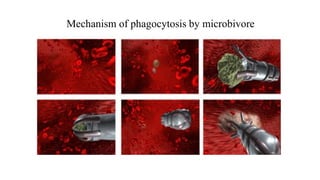
• The main function of microbivore is to absorb and digest the
pathogens in the blood stream by the process of phagocytosis.
The microbivore consist of 4 fundamental components:
• An array of reversible binding sites.
• An array of telescoping grapples.
• A morcellation chamber.
• Digestion chamber
Microbivores
Operation
• An entire cycle of phagocytosis by microbivore will be
completed in 30 seconds.
• There are no chances of septic shock or sepsis as the bacterial
components are internalized and digested into non-antigenic
biomolecules
• They can also be used to clear respiratory, cerebrospinal
bacterial infection or infections in urinary fluids and synovial
fluids
Mechanism of phagocytosis by microbivore
Clottocytes
• The whole process of natural blood clotting can take 2-5
minutes.
• The nanotechnology has shown the capabilities of reducing
the clotting time and reducing the blood loss.
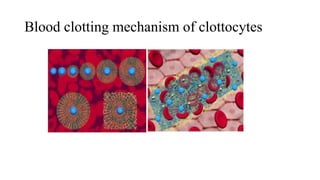
• The theoretically designed clottocyte describes artificial
mechanical platelet or clottocyte that would complete
hemostasis in approximately 1 sec .
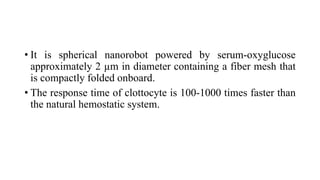
• It is spherical nanorobot powered by serum-oxyglucose
approximately 2 µm in diameter containing a fiber mesh that
is compactly folded onboard.
• The response time of clottocyte is 100-1000 times faster than
the natural hemostatic system.
Blood clotting mechanism of clottocytes
Functions controlled by Onboard Computers of
Nanorobots
• Pumping
• Sensing
• Configuration
• Energy
• Communication
• Navigation
• Manipulation
• Locomotion
Applications
• Drug delivery-Pharmacytes are the nanorobots designed
for the action of drug delivery.
• Body surveillance- Monitoring continuously of vitals and
wireless transmission could be possible using nanorobots.
• Dentistry- The nanorobots designed for dental treatment.
• In surgery.
• Cancer detection and treatment-The nanorobots are
made with a mixture of polymer and a protein known as
transferrin which is capable of detecting tumor cells.
Applications
• Diagnosis and treatment of diabetes - The glucose
molecules are carried through the blood stream to maintain
the human metabolism.
• Delicate surgeries - Nanorobots could be soon used for
performing micro surgery of the eye as well as surgeries of
the retina and surrounding membranes.
• Gene therapy - The medical nanorobot can treat genetic
diseases by comparing the molecular structure of both DNA
and proteins found in the cell.
THANK YOU

Nano Robots

  • 1.
    ROBOTS IN NANOELECTRONICS by Mrs.R.Chitra, Assistant Professor(SS) Department ofECE, School of Engineering, Avinashilingam Institute, Coimbatore.
  • 2.
    • Nanotechnology robotsare quintessential NEMS (nano electromechanical systems) and raise all the important issues like sensing, actuation, control, communications, power, and interfacing across spatial scales and between organic and inorganic materials. • Due to their size, comparable to biological cells, nanorobots have a vast array of potential applications in fields such as environmental monitoring or medicine.
  • 3.
    Nanorobotics • Nanorobotics isthe technology of creating machines or robots at or close to the scale of a nanometre (10-9 metres). • Nanorobots (nanobots or nanoids) are typically devices ranging in size from 0.1-10 micrometres and constructed of nanoscale or molecular components.
  • 4.
    Components of nanorobots The various components in nanorobot includes: • Power supply. • Fuel buffer tank. • Sensors. • Motors. • Pumps • Pressure tanks • Structural support.
  • 5.
    Substructures in ananorobot • Payload - This void section holds a small dose of drug/medicine. The nanorobots could transverse in the blood and release the drug to the site of infection/injury. • Micro Camera - The nanorobot may include a miniature camera. The operator can steer the nanorobot when navigating through the body manually.
  • 6.
    • Electrodes -The electrode mounted on the nanorobot could form the battery using the electrolytes in the blood. These protruding electrodes could also kill the cancer cells by generating an electric current, and heating the cells up to death. • Lasers - These lasers could burn the harmful material like arterial plaque, blood clots or cancer cells . Components of nano robots
  • 7.
    • Ultra sonicsignal generators - These generators are used when the nanorobots are used to target and destroy kidney stones. • Swimming tail - The nanorobot will require a means of propulsion to get into the body as they travel against the flow of blood in the body.
  • 8.
    Motors in nanorobots • The nanorobot will have motors for movement and manipulator arms or mechanical leg for mobility. • The two main approaches followed in construction of nanorobots are Positional assembly and Self assembly. • In self assembly, the arm of a miniature robot or a microscopic set is used to pick the molecules and assemble manually. • In positional assembly, the investigators will put billions of molecules together and let them automatically assemble based on their natural affinities into the desired configuration.
  • 9.
    Swarm intelligence • Thenanorobots are provided with swarm intelligence for decentralization activity. • Swarm intelligence techniques are the algorithms designed for artificial intelligence of the nanorobot. • The swarm intelligence technique is been inspired by the behaviour of social animals such as ants, bees and termites which work collaboratively without a centralized control.
  • 10.
    Types of swarmintelligence The three main types of swarm intelligence techniques deigned are • Ant Colony Optimization (ACO) • Artificial Bee Colony (ABC) • Particle Swarm Optimization (PSO)
  • 11.
    Types of Nanorobots Thereare three types of nanorobots namely: • Respirocytes • Microbivores • Clottocytes
  • 12.
    Respirocytes • Respirocytes arethe nanorobots designed as artificial mechanical red blood cells which are blood borne spherical 1 µm diameter sized. • Respirocytes carry oxygen and carbon dioxide molecules throughout the body. • The respirocyte is constructed of 18 billion atoms which are precisely arranged in a diamondoid pressure tanks that can store up to 3 billion oxygen and carbon dioxide molecules . • The respirocyte would deliver 236 times more oxygen to the body tissues when compared to natural red blood cells.
  • 13.
    • The storedgases are released from the tank in a controlled manner through molecular pumps. The respirocytes exchange gases via molecular rotors • Each respirocyte consists of 3 types of rotors. • One rotor releases the stored oxygen while travelling through the body. • The second type of rotor captures all the carbon dioxide in the blood stream and release at the lungs while the third rotor takes in the glucose from blood stream as fuel source. Respirocytes
  • 14.
  • 15.
    Internal cutaway viewof respirocyte - equatorial view
  • 16.
    Microbivores • Microbivores arethe nanorobot which functions as artificial white blood cell and also known as nanorobotic phagocytes. • The microbivore is a spheroid device made up of diamond and sapphire. It traps in the pathogens present in the blood stream and break down to smaller molecules. • The main function of microbivore is to absorb and digest the pathogens in the blood stream by the process of phagocytosis.
  • 17.
    The microbivore consistof 4 fundamental components: • An array of reversible binding sites. • An array of telescoping grapples. • A morcellation chamber. • Digestion chamber Microbivores
  • 18.
    Operation • An entirecycle of phagocytosis by microbivore will be completed in 30 seconds. • There are no chances of septic shock or sepsis as the bacterial components are internalized and digested into non-antigenic biomolecules • They can also be used to clear respiratory, cerebrospinal bacterial infection or infections in urinary fluids and synovial fluids
  • 19.
  • 20.
    Clottocytes • The wholeprocess of natural blood clotting can take 2-5 minutes. • The nanotechnology has shown the capabilities of reducing the clotting time and reducing the blood loss. • The theoretically designed clottocyte describes artificial mechanical platelet or clottocyte that would complete hemostasis in approximately 1 sec .
  • 21.
    • It isspherical nanorobot powered by serum-oxyglucose approximately 2 µm in diameter containing a fiber mesh that is compactly folded onboard. • The response time of clottocyte is 100-1000 times faster than the natural hemostatic system.
  • 22.
  • 23.
    Functions controlled byOnboard Computers of Nanorobots • Pumping • Sensing • Configuration • Energy • Communication • Navigation • Manipulation • Locomotion
  • 24.
    Applications • Drug delivery-Pharmacytesare the nanorobots designed for the action of drug delivery. • Body surveillance- Monitoring continuously of vitals and wireless transmission could be possible using nanorobots. • Dentistry- The nanorobots designed for dental treatment. • In surgery. • Cancer detection and treatment-The nanorobots are made with a mixture of polymer and a protein known as transferrin which is capable of detecting tumor cells.
  • 25.
    Applications • Diagnosis andtreatment of diabetes - The glucose molecules are carried through the blood stream to maintain the human metabolism. • Delicate surgeries - Nanorobots could be soon used for performing micro surgery of the eye as well as surgeries of the retina and surrounding membranes. • Gene therapy - The medical nanorobot can treat genetic diseases by comparing the molecular structure of both DNA and proteins found in the cell.
  • 26.