Microbiology:Chapter 14
        WINTER
         Template


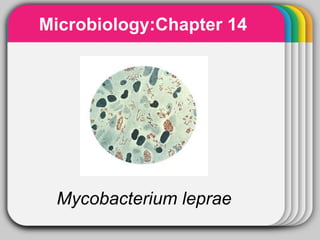
 Mycobacterium leprae
01

    Acid-fast rod

    Impossible to grow on artificial media
•   (Grown in the foot pads of mice,
    armadillos, and monkeys)

    Nonmotile

    Facultative intracellular growth
Metabolism                       02


 Catalase-positive

 Grows best at low temperature

 Phenolase-positive
03

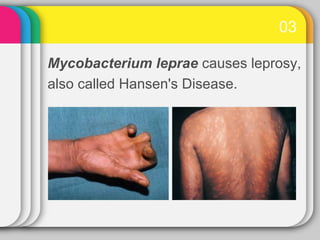
Mycobacterium leprae causes leprosy,
also called Hansen's Disease.
04

- Infection occurs when a person is exposed
to the respiratory secretions or skin lesions
          of an infected individual.


- Cell-mediated immunity (cellular immunity)
limits the spread of the bacteria. However,
  it causes inflammation and granulomas.
05
           WINTER
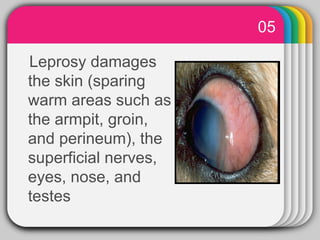
Leprosy damages
              Template
the skin (sparing
warm areas such as
the armpit, groin,
and perineum), the
superficial nerves,
eyes, nose, and
testes
5 Subdivisions based on the level
of cellular immunity                06
•   Lepromatous leprosy (LL)

    Tuberculoid leprosy (TL)

    Borderline lepromatous (BL)

    Borderline (BB)

    Borderline tuberculoid (BT)
Lepromatous leprosy (LL)
  Severest form of leprosy
   - Patients with LL cannot mount a
  delayed hypersensitivity reaction.
  - Very low cellular immunity

  Involves skin, nerves, eyes, and testes

  Acid-fast bacilli are found everywhere

  LL will lead to death if untreated
Tuberculoid leprosy (TL)
 Milder and self-limiting disease
     - Patients with TL can mount a cell-
     mediated defense
   - Delayed hypersensitivity reaction
    is intact.
   - Patients demonstrate localized
 superficial, unilateral skin and nerve
 involvement; non-infectious and
 spontaneously recover.
 Bacilli are difficult to find in lesions or
 blood
BL, BB, and BT                      09

Borderline lepromatous (BL). Borderline
(BB), and Borderline Tuberculoid (BT)
Represent a continuum between LL
and TL

** The skin lesions of BL will be more
numerous and have a greater diversity
  of shape than those of BT
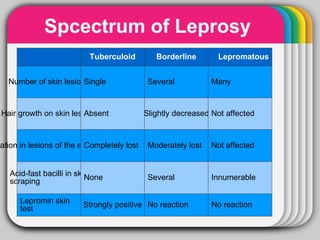
Spcectrum of Leprosy
                                  WINTER
                           Tuberculoid

                                   Template
                                               Borderline       Lepromatous


   Number of skin lesions
                        Single        Several                  Many


 Hair growth on skin lesions
                         Absent             Slightly decreased Not affected


sation in lesions of the extremities lost
                           Completely        Moderately lost   Not affected


   Acid-fast bacilli in skin
                           None              Several           Innumerable
   scraping

      Lepromin skin      Strongly positive No reaction         No reaction
      test

Mycobacterium leprae

  • 1.
    Microbiology:Chapter 14 WINTER Template Mycobacterium leprae
  • 2.
    01 Acid-fast rod Impossible to grow on artificial media • (Grown in the foot pads of mice, armadillos, and monkeys) Nonmotile Facultative intracellular growth
  • 3.
    Metabolism 02 Catalase-positive Grows best at low temperature Phenolase-positive
  • 4.
    03 Mycobacterium leprae causesleprosy, also called Hansen's Disease.
  • 5.
    04 - Infection occurswhen a person is exposed to the respiratory secretions or skin lesions of an infected individual. - Cell-mediated immunity (cellular immunity) limits the spread of the bacteria. However, it causes inflammation and granulomas.
  • 6.
    05 WINTER Leprosy damages Template the skin (sparing warm areas such as the armpit, groin, and perineum), the superficial nerves, eyes, nose, and testes
  • 7.
    5 Subdivisions basedon the level of cellular immunity 06 • Lepromatous leprosy (LL) Tuberculoid leprosy (TL) Borderline lepromatous (BL) Borderline (BB) Borderline tuberculoid (BT)
  • 8.
    Lepromatous leprosy (LL) Severest form of leprosy - Patients with LL cannot mount a delayed hypersensitivity reaction. - Very low cellular immunity Involves skin, nerves, eyes, and testes Acid-fast bacilli are found everywhere LL will lead to death if untreated
  • 9.
    Tuberculoid leprosy (TL) Milder and self-limiting disease - Patients with TL can mount a cell- mediated defense - Delayed hypersensitivity reaction is intact. - Patients demonstrate localized superficial, unilateral skin and nerve involvement; non-infectious and spontaneously recover. Bacilli are difficult to find in lesions or blood
  • 10.
    BL, BB, andBT 09 Borderline lepromatous (BL). Borderline (BB), and Borderline Tuberculoid (BT) Represent a continuum between LL and TL ** The skin lesions of BL will be more numerous and have a greater diversity of shape than those of BT
  • 11.
    Spcectrum of Leprosy WINTER Tuberculoid Template Borderline Lepromatous Number of skin lesions Single Several Many Hair growth on skin lesions Absent Slightly decreased Not affected sation in lesions of the extremities lost Completely Moderately lost Not affected Acid-fast bacilli in skin None Several Innumerable scraping Lepromin skin Strongly positive No reaction No reaction test