Overview
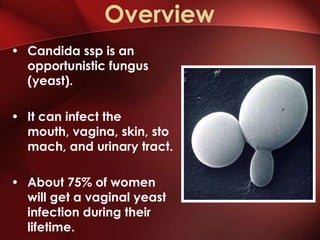
• Candida ssp is an
  opportunistic fungus
  (yeast).

• It can infect the
  mouth, vagina, skin, sto
  mach, and urinary tract.

• About 75% of women
  will get a vaginal yeast
  infection during their
  lifetime.
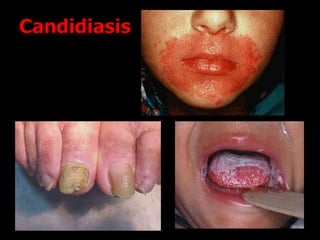
Candidiasis
• A yeast infection results from an
  overgrowth of yeast anywhere in the
  body.
• Candidiasis is by far the most common
  type of yeast infection.
• There are more than 20 species of
  Candida, the most common being
  Candida albicans.
Classification

Kingdom:                    Fungi

  Phylum:                   Ascomycota

     Subphylum:             Saccharomycotina

       Class:               Saccharomycetes

            Order:          Saccharomycetales

                Family:     Saccharomycetaceae

                   Genus:   Candida
Candidiasis
• These fungi live on all surfaces of our
  bodies. Under certain conditions, they can
  become so numerous they cause
  infections, particularly in warm and moist
  areas.
• Candidiasis encompasses infections that
  range from superficial, such as oral thrush
  and vaginitis, to systemic and potentially
  life-threatening diseases.
Yeast
Signs and symptoms
• Most candidial infections are treatable and result in
  minimal complications such as redness, itching and
  discomfort, though complication may be severe or fatal
  if left untreated in certain populations.

• Thrush is commonly seen in infants.

• Children, mostly between the ages of three and nine
  years of age, can be affected by chronic mouth yeast
  infections, normally seen around the mouth as white
  patches. However, this is not a common condition.
Causes
• A weakened or undeveloped immune
  system or metabolic illnesses such as
  diabetes are significant predisposing factors
  of candidiasis.

• Candida yeasts are commonly present in
  humans, and their growth is normally limited
  by the human immune system and by other
  microorganisms, such as bacteria occupying
  the same locations in the human body.
Conditions
• Candida infection more likely to develop
  in some cases, including:
  -Diabetes,
  -HIV infection,
  -Cancer,
  -Dry mouth, and
  -Pregnancy.
Candidiasis
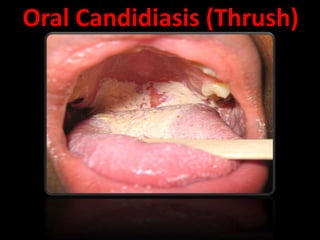
Oral Candidiasis (Thrush)
Thrush
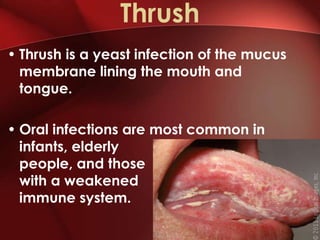
• Thrush is a yeast infection of the mucus
  membrane lining the mouth and
  tongue.

• Oral infections are most common in
  infants, elderly
  people, and those
  with a weakened
  immune system.
Causes
• Thrush is caused by forms of a fungus called
  Candida. A small amount of this fungus lives in
  your mouth most of the time. It is usually kept in
  check by your immune system and other types
  of germs that also normally live in your mouth.
• However, when your immune system is weak,
  the fungus can grow.
• Thrush is commonly seen in infants. It is not
  considered abnormal in infants unless it lasts
  longer than a couple of weeks.
Symptoms
• Thrush usually develops suddenly, but it may
  become chronic, persisting over a long period
  of time.

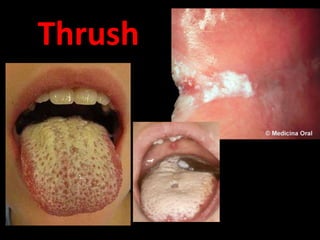
• A common sign of thrush is the presence of
  creamy white, slightly raised lesions in your
  mouth -usually on your tongue-.

• The lesions, can be painful and may bleed
  slightly when you scrape them or brush your
  teeth.
Symptoms
• In severe cases, the lesions may
  spread into your esophagus, or
  swallowing tube, causing pain or
  difficulty swallowing.

• Thrush can spread to other parts of
  the body, including the lungs, liver,
  and skin.
Thrush
Treatment
• Medications that inhibit the
  growth of fungi (antifungals) are
  the standard treatment for thrush.
  These medications are either
  applied directly to the affected
  area (topical) or swallowed (oral).
Cutaneous candidiasis
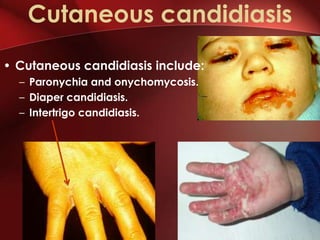
• Cutaneous candidiasis include:
  – Paronychia and onychomycosis.
  – Diaper candidiasis.
  – Intertrigo candidiasis.
Cutaneous candidiasis
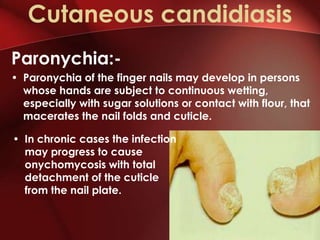
Paronychia:-
• Paronychia of the finger nails may develop in persons
  whose hands are subject to continuous wetting,
  especially with sugar solutions or contact with flour, that
  macerates the nail folds and cuticle.

• In chronic cases the infection
  may progress to cause
  onychomycosis with total
  detachment of the cuticle
  from the nail plate.
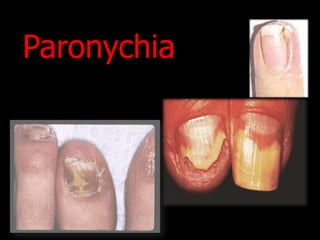
Paronychia
Cutaneous candidiasis
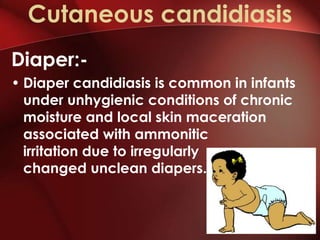
Diaper:-
• Diaper candidiasis is common in infants
  under unhygienic conditions of chronic
  moisture and local skin maceration
  associated with ammonitic
  irritation due to irregularly
  changed unclean diapers.
• References
• http://www.emedicinehealth.com/slideshow_skin_problems
  /article_em.htm
• http://www.umm.edu/altmed/articles/candidiasis-
  000030.htm
• http://www.mycology.adelaide.edu.au/Mycoses/Cutaneous
  /Candidiasis/
• http://www.emedicinehealth.com/candidiasis_yeast_infecti
  on/article_em.htm
• http://en.wikipedia.org/wiki/Candidiasis
• http://en.wikipedia.org/wiki/Oral_candidiasis
• http://www.skinsight.com/adult/oralCandidiasisThrush.htm
Candidiasis

Candidiasis

  • 2.
    Overview • Candida sspis an opportunistic fungus (yeast). • It can infect the mouth, vagina, skin, sto mach, and urinary tract. • About 75% of women will get a vaginal yeast infection during their lifetime.
  • 3.
    Candidiasis • A yeastinfection results from an overgrowth of yeast anywhere in the body. • Candidiasis is by far the most common type of yeast infection. • There are more than 20 species of Candida, the most common being Candida albicans.
  • 4.
    Classification Kingdom: Fungi Phylum: Ascomycota Subphylum: Saccharomycotina Class: Saccharomycetes Order: Saccharomycetales Family: Saccharomycetaceae Genus: Candida
  • 5.
    Candidiasis • These fungilive on all surfaces of our bodies. Under certain conditions, they can become so numerous they cause infections, particularly in warm and moist areas. • Candidiasis encompasses infections that range from superficial, such as oral thrush and vaginitis, to systemic and potentially life-threatening diseases.
  • 6.
  • 7.
    Signs and symptoms •Most candidial infections are treatable and result in minimal complications such as redness, itching and discomfort, though complication may be severe or fatal if left untreated in certain populations. • Thrush is commonly seen in infants. • Children, mostly between the ages of three and nine years of age, can be affected by chronic mouth yeast infections, normally seen around the mouth as white patches. However, this is not a common condition.
  • 8.
    Causes • A weakenedor undeveloped immune system or metabolic illnesses such as diabetes are significant predisposing factors of candidiasis. • Candida yeasts are commonly present in humans, and their growth is normally limited by the human immune system and by other microorganisms, such as bacteria occupying the same locations in the human body.
  • 9.
    Conditions • Candida infectionmore likely to develop in some cases, including: -Diabetes, -HIV infection, -Cancer, -Dry mouth, and -Pregnancy.
  • 10.
  • 11.
  • 12.
    Thrush • Thrush isa yeast infection of the mucus membrane lining the mouth and tongue. • Oral infections are most common in infants, elderly people, and those with a weakened immune system.
  • 13.
    Causes • Thrush iscaused by forms of a fungus called Candida. A small amount of this fungus lives in your mouth most of the time. It is usually kept in check by your immune system and other types of germs that also normally live in your mouth. • However, when your immune system is weak, the fungus can grow. • Thrush is commonly seen in infants. It is not considered abnormal in infants unless it lasts longer than a couple of weeks.
  • 14.
    Symptoms • Thrush usuallydevelops suddenly, but it may become chronic, persisting over a long period of time. • A common sign of thrush is the presence of creamy white, slightly raised lesions in your mouth -usually on your tongue-. • The lesions, can be painful and may bleed slightly when you scrape them or brush your teeth.
  • 15.
    Symptoms • In severecases, the lesions may spread into your esophagus, or swallowing tube, causing pain or difficulty swallowing. • Thrush can spread to other parts of the body, including the lungs, liver, and skin.
  • 16.
  • 17.
    Treatment • Medications thatinhibit the growth of fungi (antifungals) are the standard treatment for thrush. These medications are either applied directly to the affected area (topical) or swallowed (oral).
  • 18.
    Cutaneous candidiasis • Cutaneouscandidiasis include: – Paronychia and onychomycosis. – Diaper candidiasis. – Intertrigo candidiasis.
  • 19.
    Cutaneous candidiasis Paronychia:- • Paronychiaof the finger nails may develop in persons whose hands are subject to continuous wetting, especially with sugar solutions or contact with flour, that macerates the nail folds and cuticle. • In chronic cases the infection may progress to cause onychomycosis with total detachment of the cuticle from the nail plate.
  • 20.
  • 21.
    Cutaneous candidiasis Diaper:- • Diapercandidiasis is common in infants under unhygienic conditions of chronic moisture and local skin maceration associated with ammonitic irritation due to irregularly changed unclean diapers.
  • 22.
    • References • http://www.emedicinehealth.com/slideshow_skin_problems /article_em.htm • http://www.umm.edu/altmed/articles/candidiasis- 000030.htm • http://www.mycology.adelaide.edu.au/Mycoses/Cutaneous /Candidiasis/ • http://www.emedicinehealth.com/candidiasis_yeast_infecti on/article_em.htm • http://en.wikipedia.org/wiki/Candidiasis • http://en.wikipedia.org/wiki/Oral_candidiasis • http://www.skinsight.com/adult/oralCandidiasisThrush.htm