Muscular System
Cilia and flagella, however, are composed of different proteins, and thus are exceptions
to the rule.
Animal Movement
Movement is an important characteristic of animals.
Animal movement occurs in many forms in animal tissues, ranging from barely
discernible streaming of cytoplasm to extensive movements of powerful striated
muscles.
Most animal movement depends on a single fundamental mechanism: contractile
proteins, which can change their form to elongate or contract.
This contractile machinery is always composed of ultrafine fibrils— fine filaments,
striated fibrils, or tubular fibrils (microtubules) arranged to contract when powered by
ATP.
By far the most important protein contractile system is the actomyosin system,
composed of two proteins, actin and myosin.
Three principal kinds of animal movement: ameboid, ciliary, and muscular.
-a form of movement especially characteristic of amebas and other unicellular forms.
Ameboid Movement
- it is also found in many wandering cells of metazoans, such as white blood cells,
embryonic mesenchyme, and numerous other mobile cells that move through the
tissue spaces.
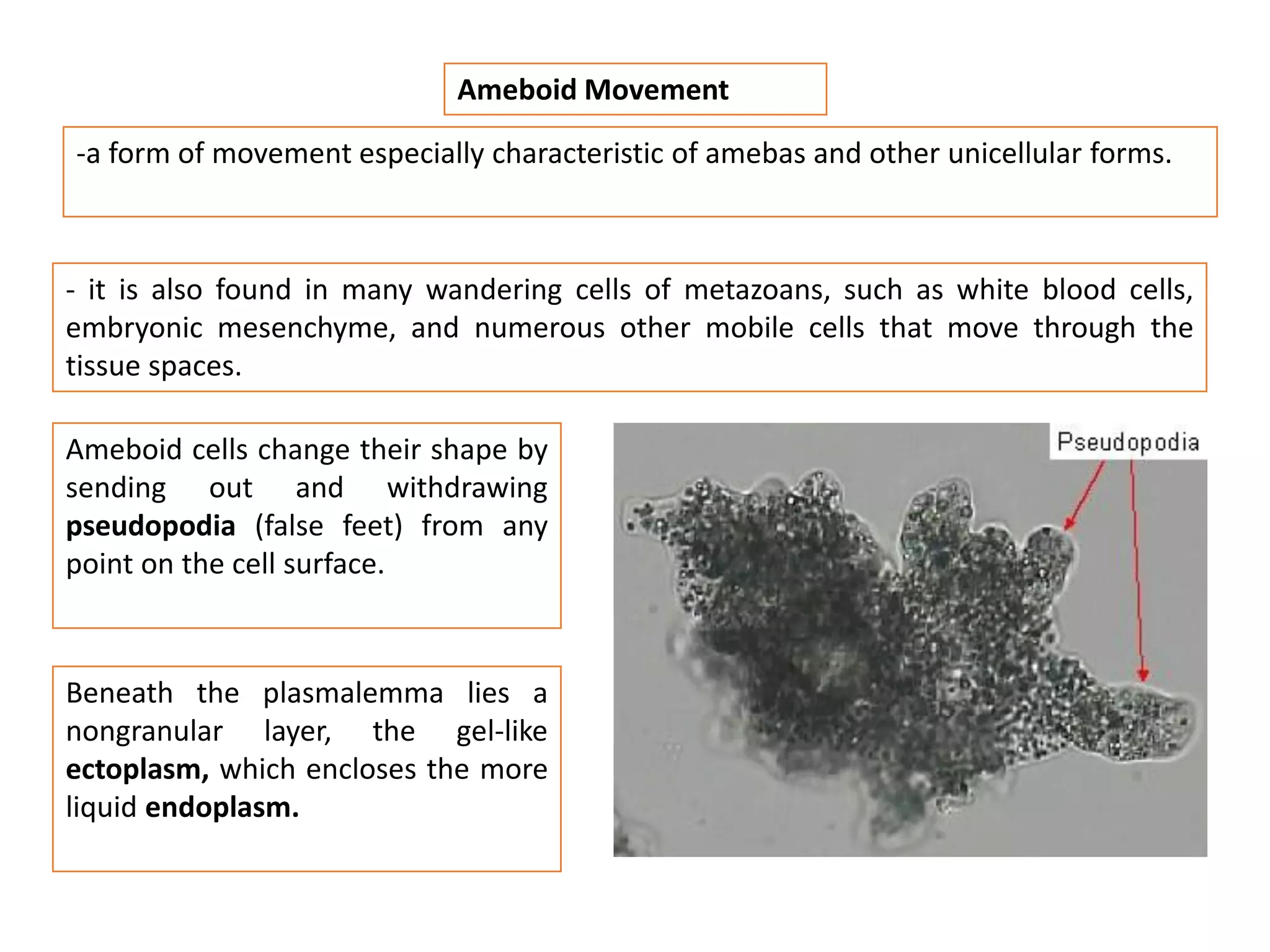
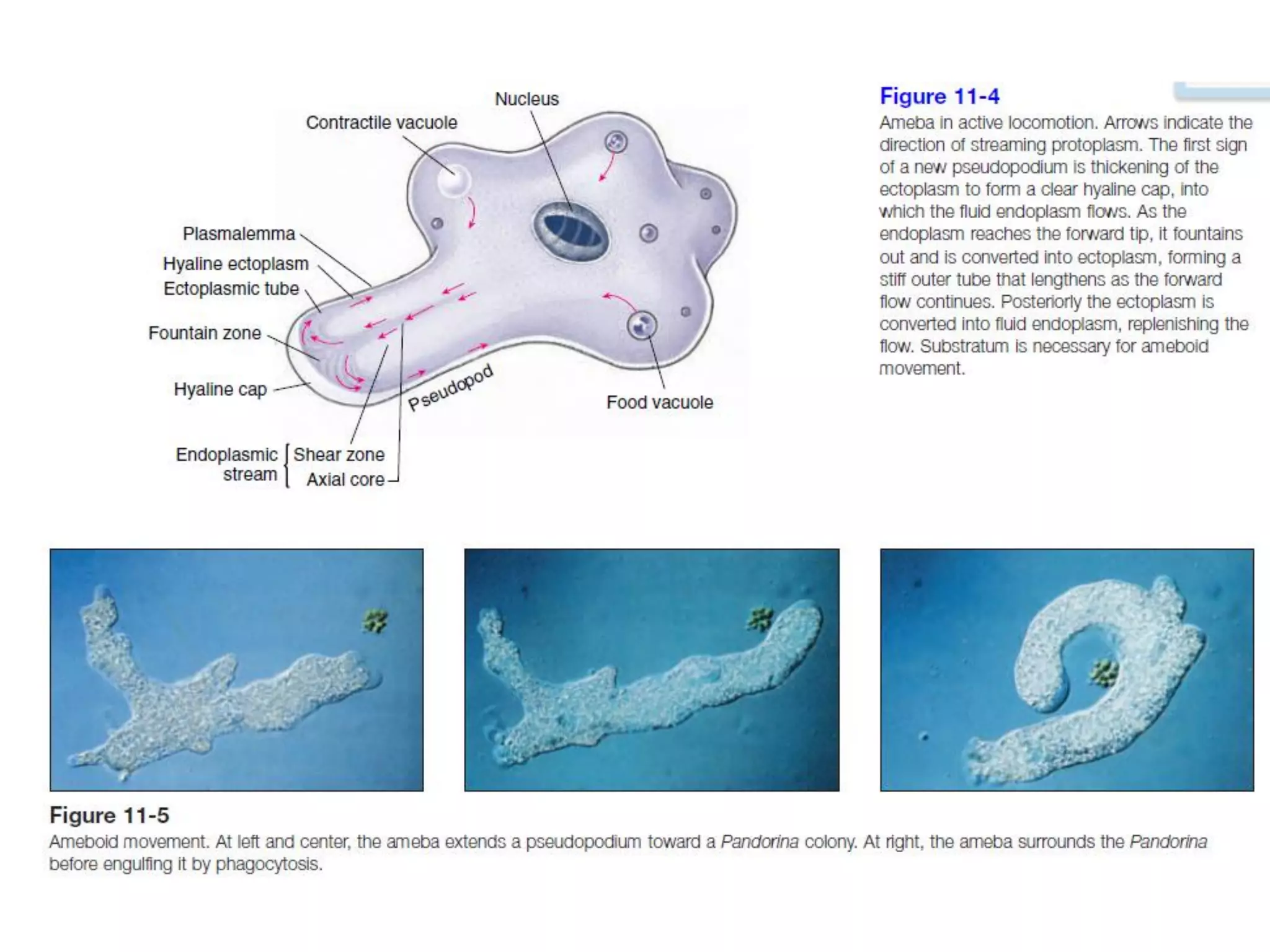
Ameboid cells change their shape by
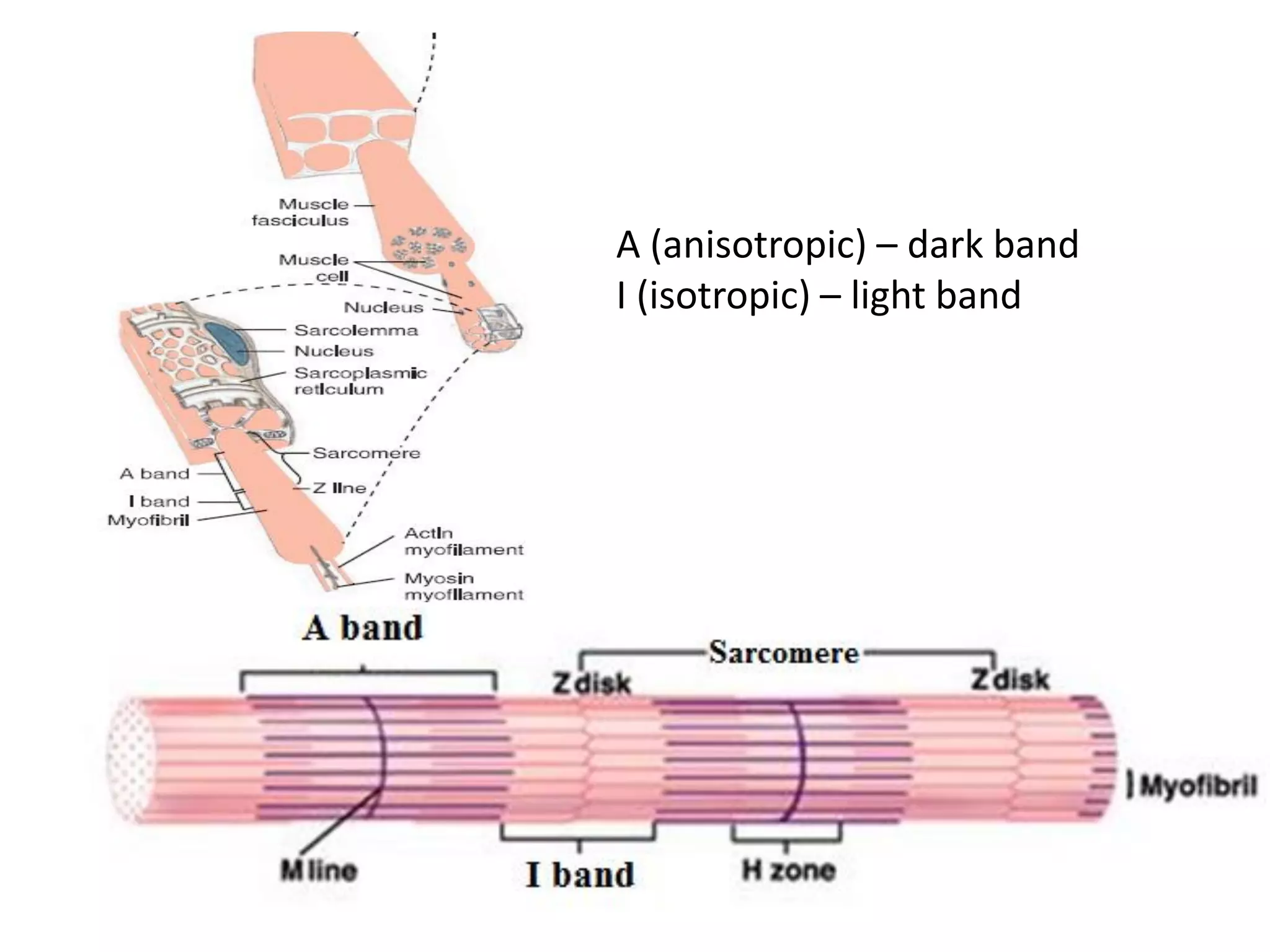
sending out and withdrawing
pseudopodia (false feet) from any
point on the cell surface.
Beneath the plasmalemma lies a
nongranular layer, the gel-like
ectoplasm, which encloses the more
liquid endoplasm.
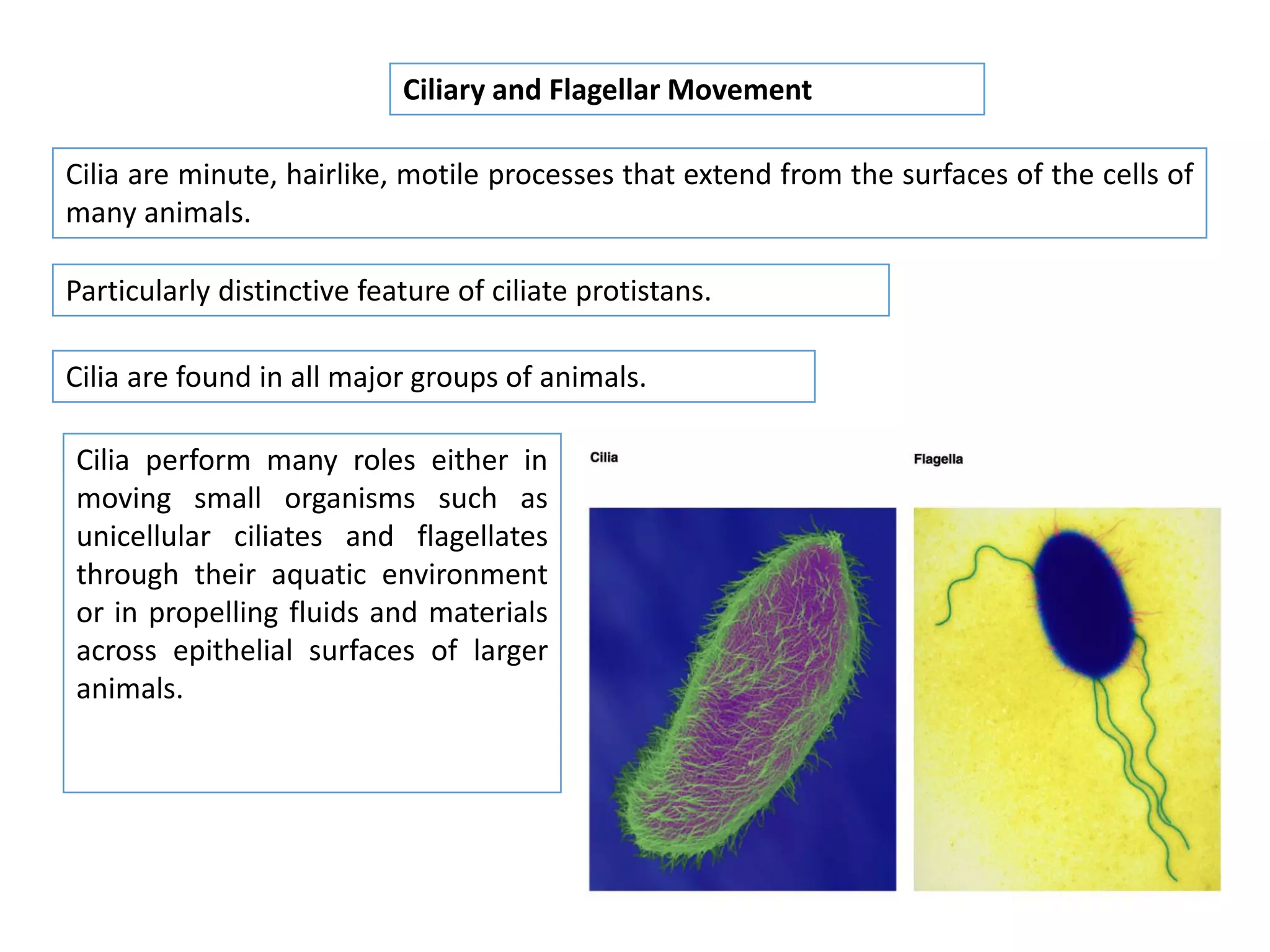
Cilia are minute, hairlike, motile processes that extend from the surfaces of the cells of
many animals.
Ciliary and Flagellar Movement
Particularly distinctive feature of ciliate protistans.
Cilia are found in all major groups of animals.
Cilia perform many roles either in
moving small organisms such as
unicellular ciliates and flagellates
through their aquatic environment
or in propelling fluids and materials
across epithelial surfaces of larger
animals.
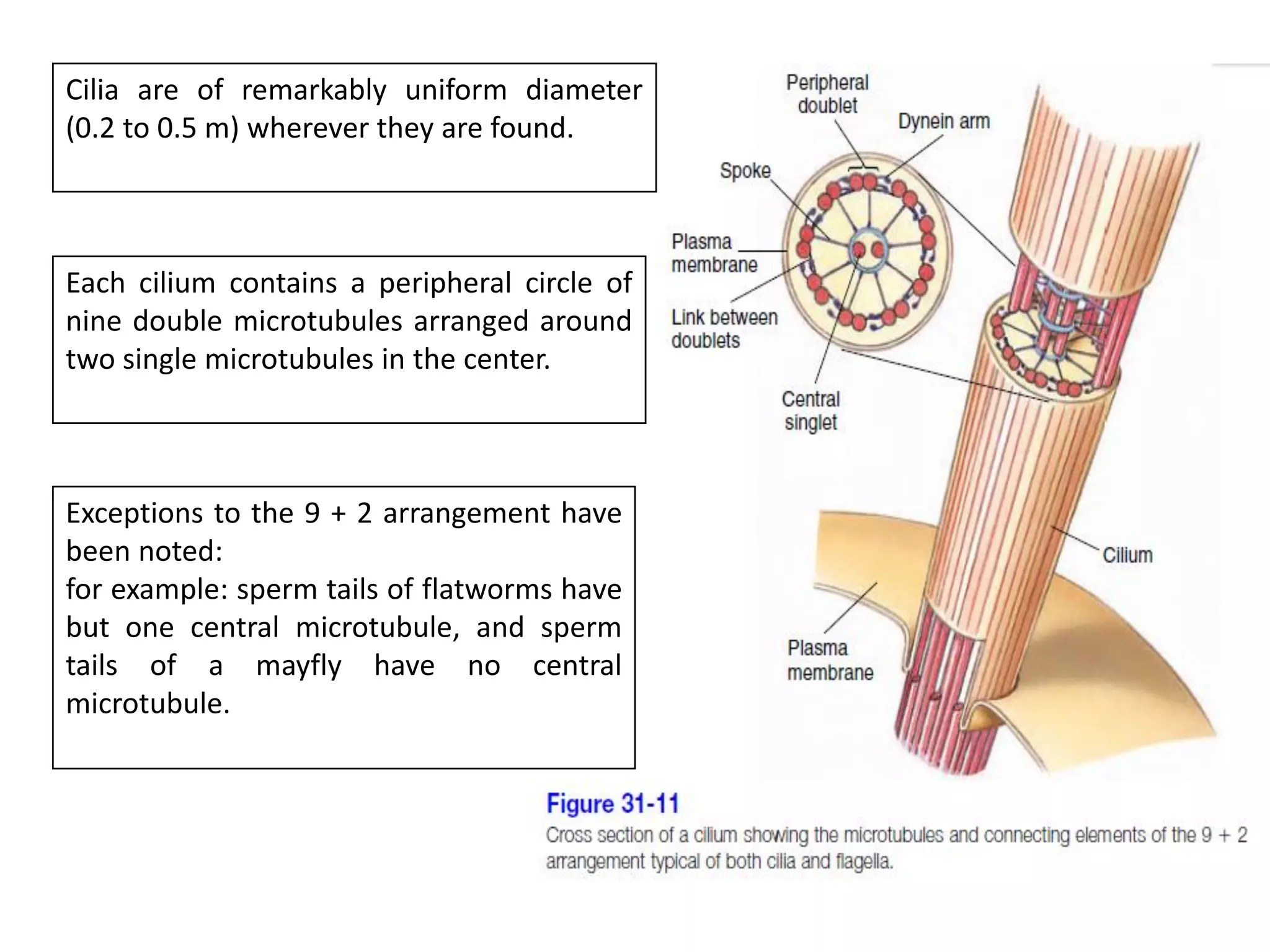
Cilia are of remarkably uniform diameter
(0.2 to 0.5 m) wherever they are found.
Each cilium contains a peripheral circle of
nine double microtubules arranged around
two single microtubules in the center.
Exceptions to the 9 + 2 arrangement have
been noted:
for example: sperm tails of flatworms have
but one central microtubule, and sperm
tails of a mayfly have no central
microtubule.
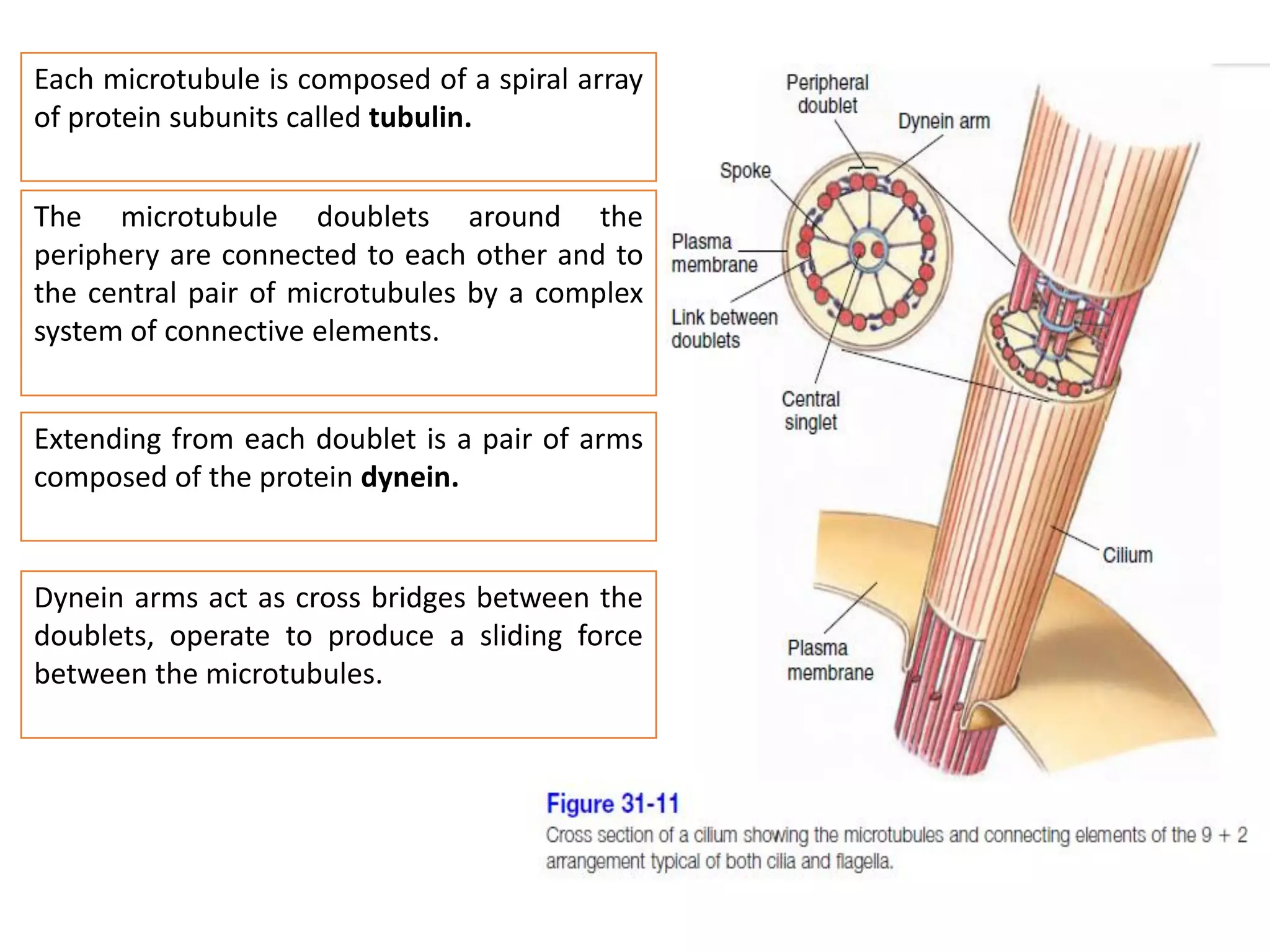
Each microtubule is composed of a spiral array
of protein subunits called tubulin.
The microtubule doublets around the
periphery are connected to each other and to
the central pair of microtubules by a complex
system of connective elements.
Extending from each doublet is a pair of arms
composed of the protein dynein.
Dynein arms act as cross bridges between the
doublets, operate to produce a sliding force
between the microtubules.
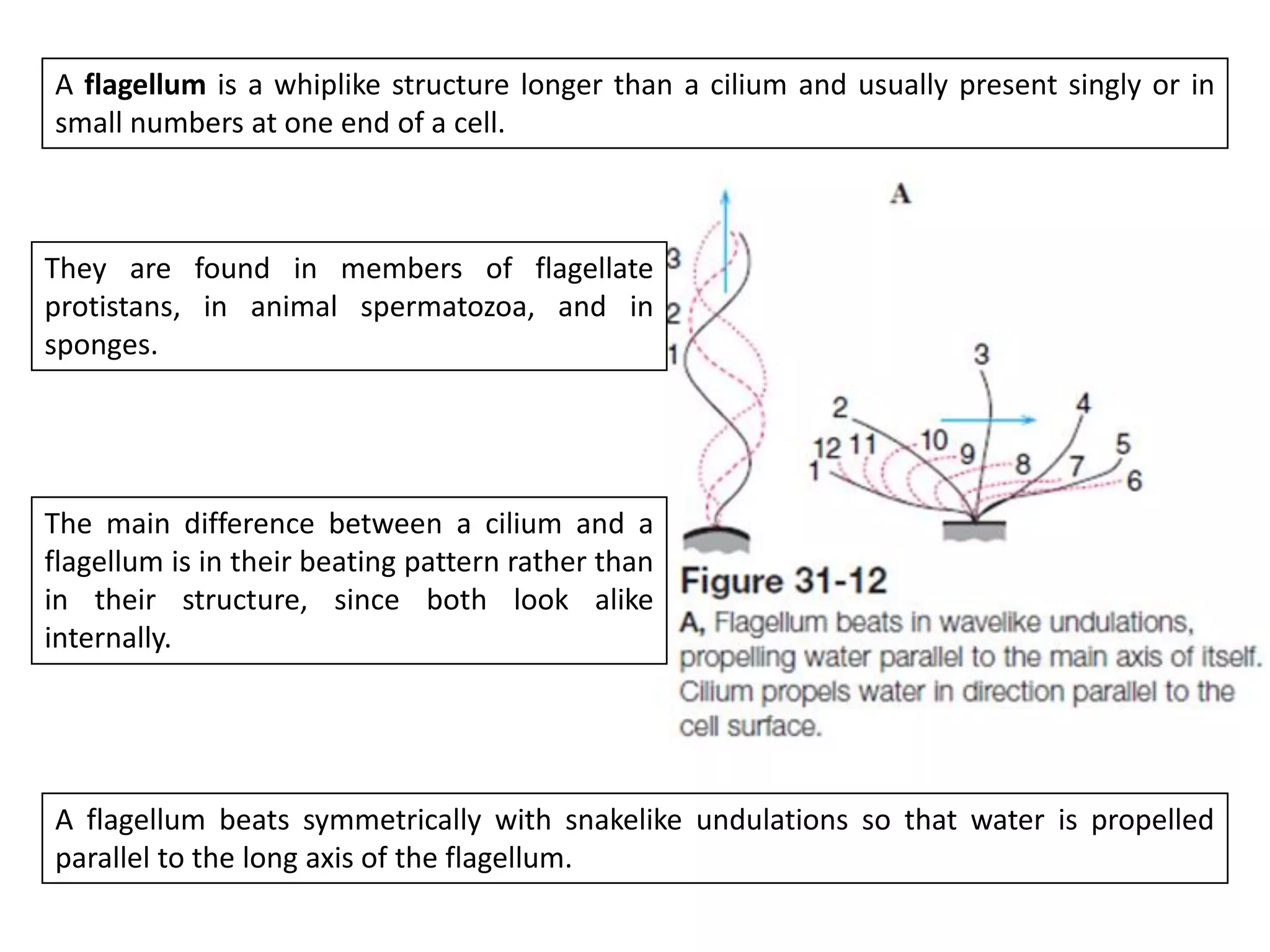
A flagellum is a whiplike structure longer than a cilium and usually present singly or in
small numbers at one end of a cell.
They are found in members of flagellate
protistans, in animal spermatozoa, and in
sponges.
The main difference between a cilium and a
flagellum is in their beating pattern rather than
in their structure, since both look alike
internally.
A flagellum beats symmetrically with snakelike undulations so that water is propelled
parallel to the long axis of the flagellum.
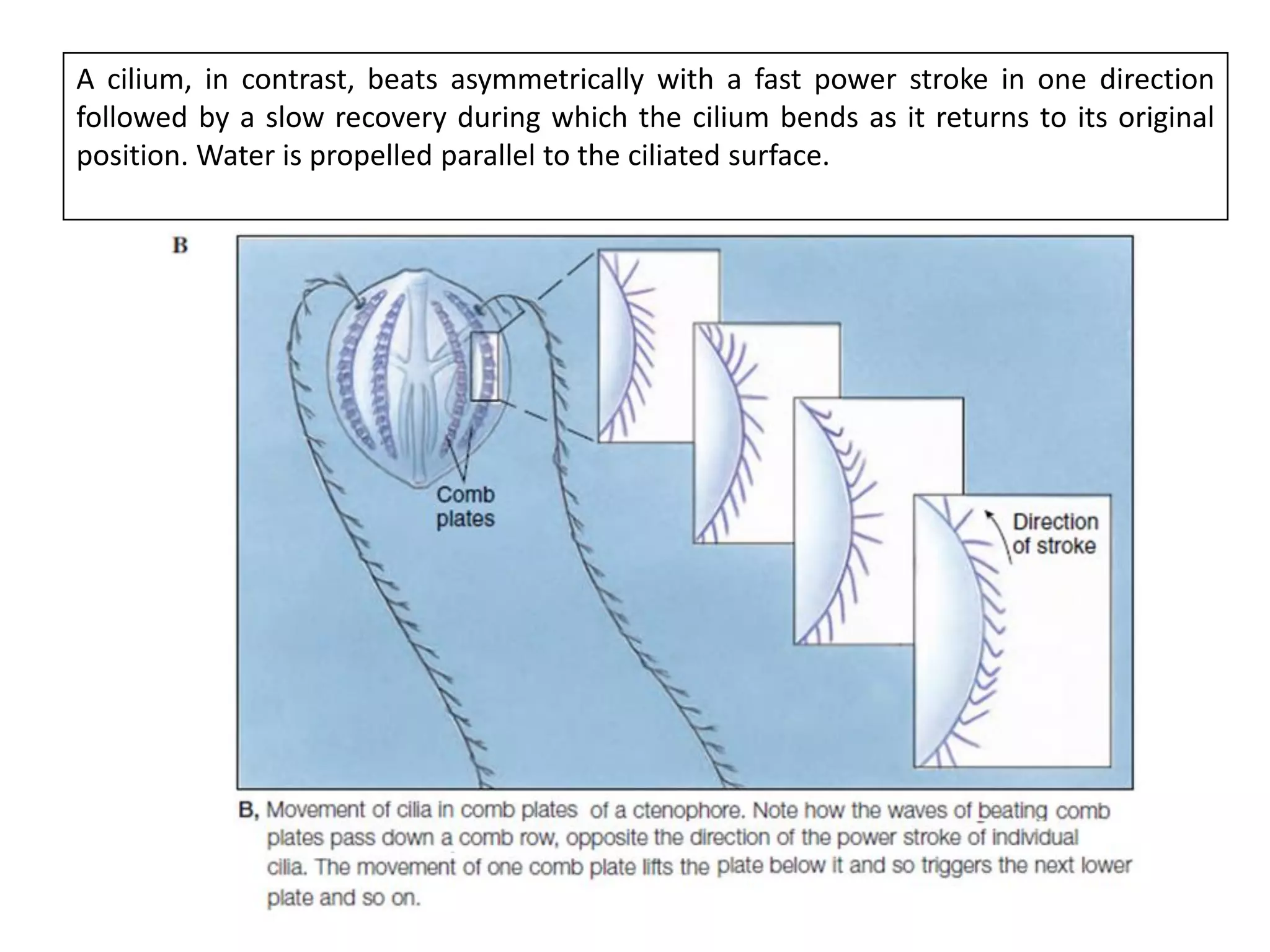
A cilium, in contrast, beats asymmetrically with a fast power stroke in one direction
followed by a slow recovery during which the cilium bends as it returns to its original
position. Water is propelled parallel to the ciliated surface.
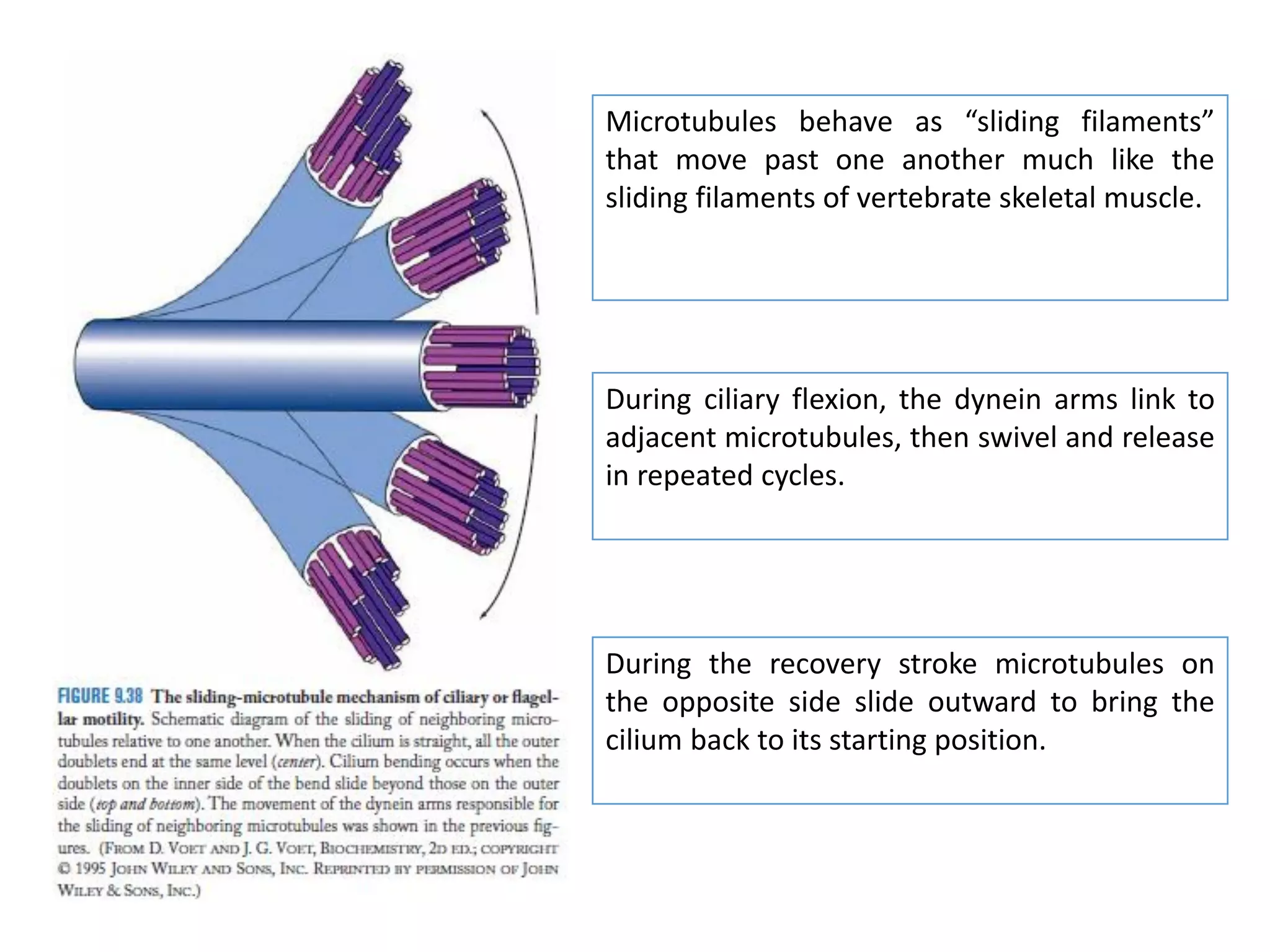
Microtubules behave as “sliding filaments”
that move past one another much like the
sliding filaments of vertebrate skeletal muscle.
During ciliary flexion, the dynein arms link to
adjacent microtubules, then swivel and release
in repeated cycles.
During the recovery stroke microtubules on
the opposite side slide outward to bring the
cilium back to its starting position.
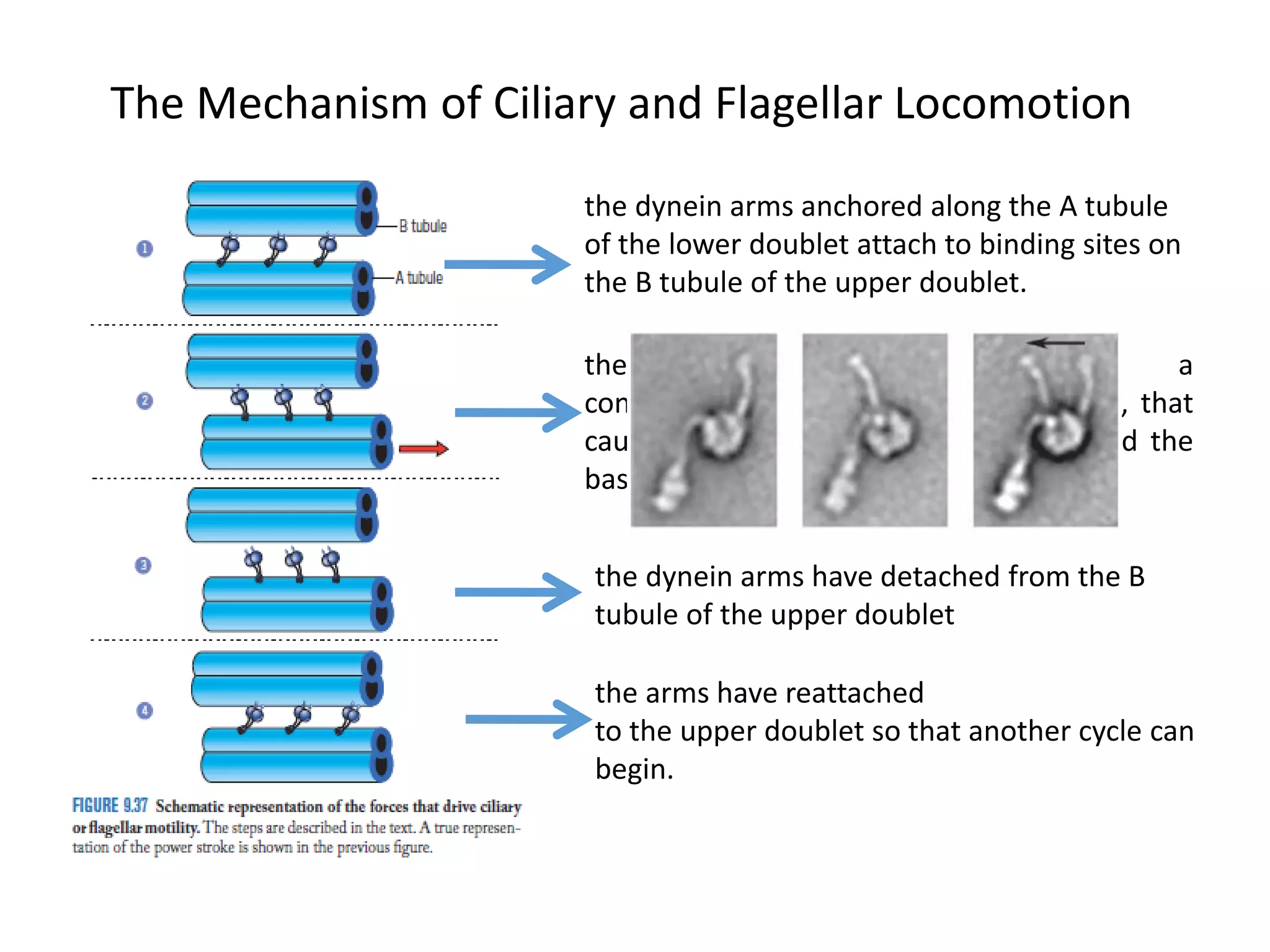
The Mechanism of Ciliary and Flagellar Locomotion
the dynein arms anchored along the A tubule
of the lower doublet attach to binding sites on
the B tubule of the upper doublet.
the dynein molecules undergo a
conformational change, or power stroke, that
causes the lower doublet to slide toward the
basal end of the upper doublet.
the dynein arms have detached from the B
tubule of the upper doublet
the arms have reattached
to the upper doublet so that another cycle can
begin.
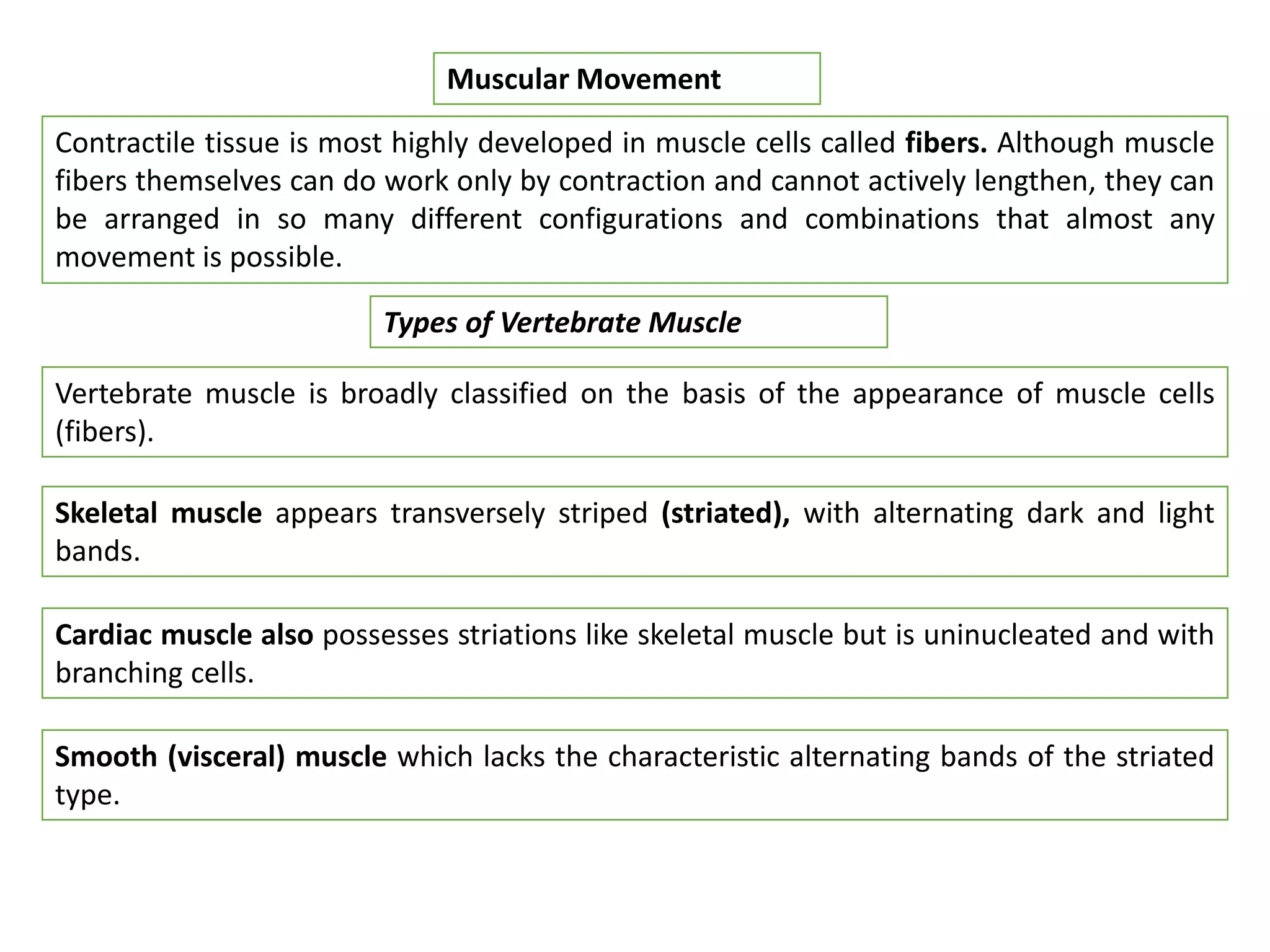
Contractile tissue is most highly developed in muscle cells called fibers. Although muscle
fibers themselves can do work only by contraction and cannot actively lengthen, they can
be arranged in so many different configurations and combinations that almost any
movement is possible.
Muscular Movement
Vertebrate muscle is broadly classified on the basis of the appearance of muscle cells
(fibers).
Types of Vertebrate Muscle
Skeletal muscle appears transversely striped (striated), with alternating dark and light
bands.
Cardiac muscle also possesses striations like skeletal muscle but is uninucleated and with
branching cells.
Smooth (visceral) muscle which lacks the characteristic alternating bands of the striated
type.
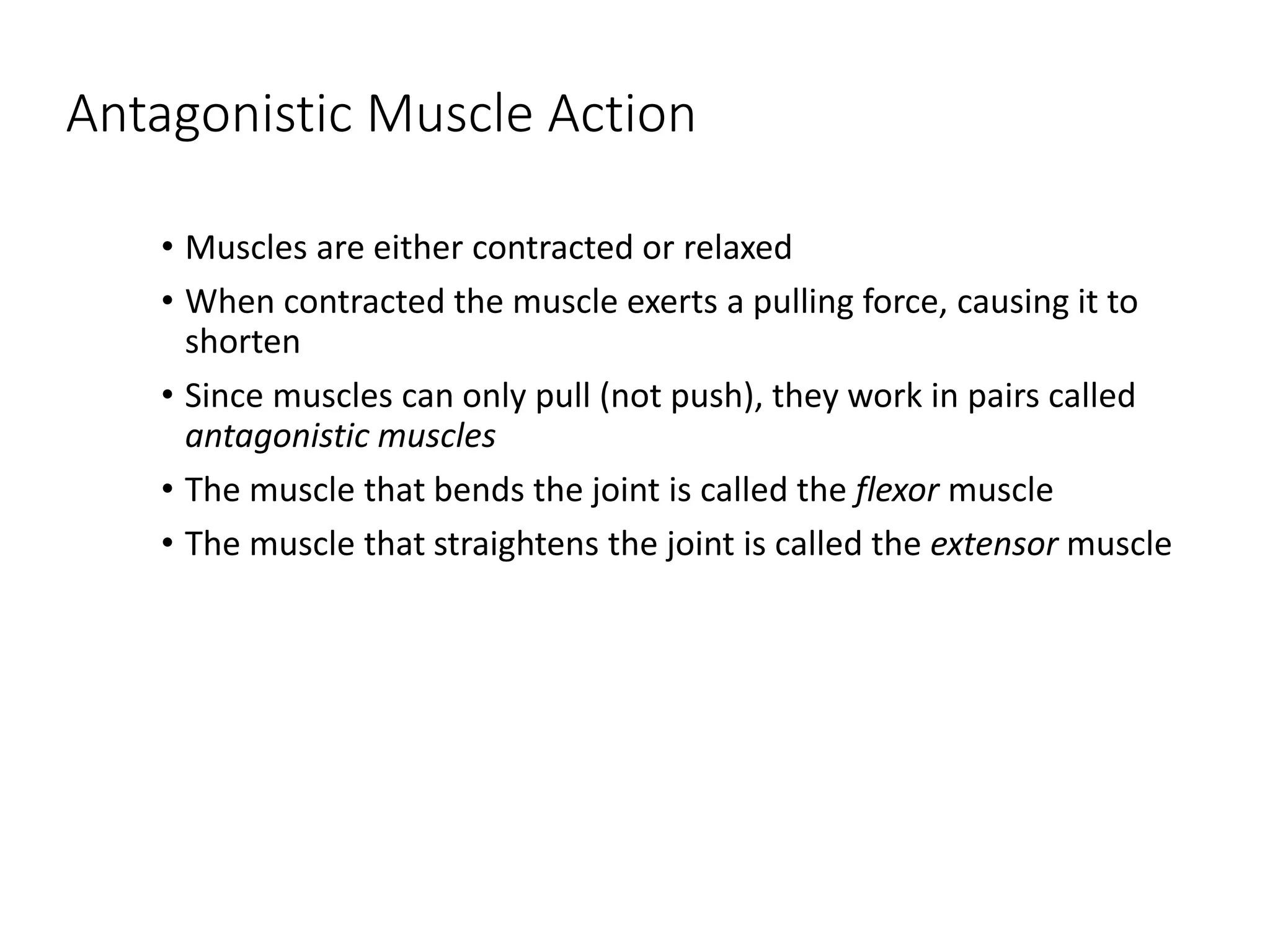
Antagonistic Muscle Action
• Muscles are either contracted or relaxed
• When contracted the muscle exerts a pulling force, causing it to
shorten
• Since muscles can only pull (not push), they work in pairs called
antagonistic muscles
• The muscle that bends the joint is called the flexor muscle
• The muscle that straightens the joint is called the extensor muscle
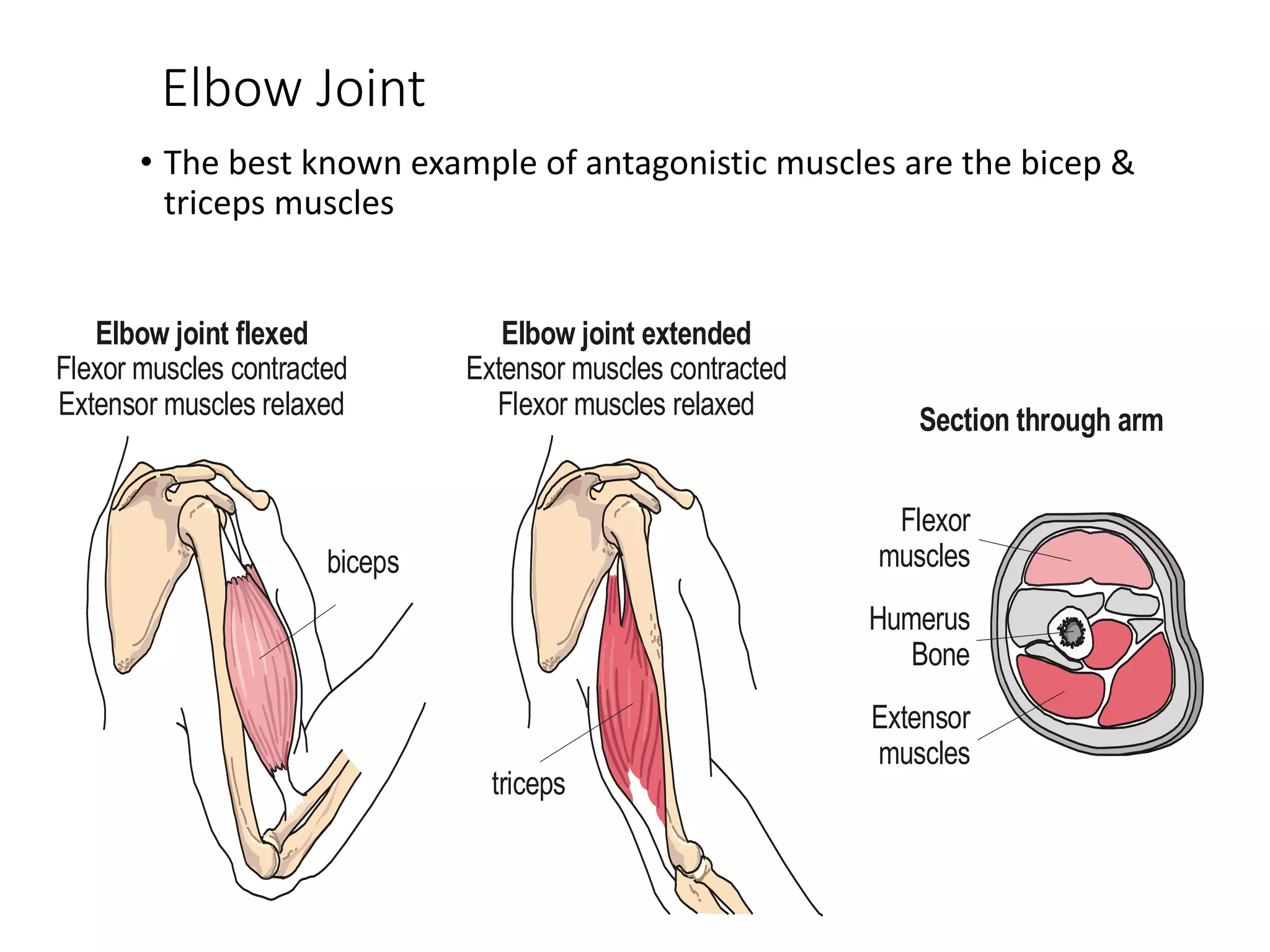
Elbow Joint
• The best known example of antagonistic muscles are the bicep &
triceps muscles
Elbow joint flexed
Flexor muscles contracted
Extensor muscles relaxed
Elbow joint extended
Extensor muscles contracted
Flexor muscles relaxed
biceps
triceps
Section through arm
Flexor
muscles
Extensor
muscles
Humerus
Bone
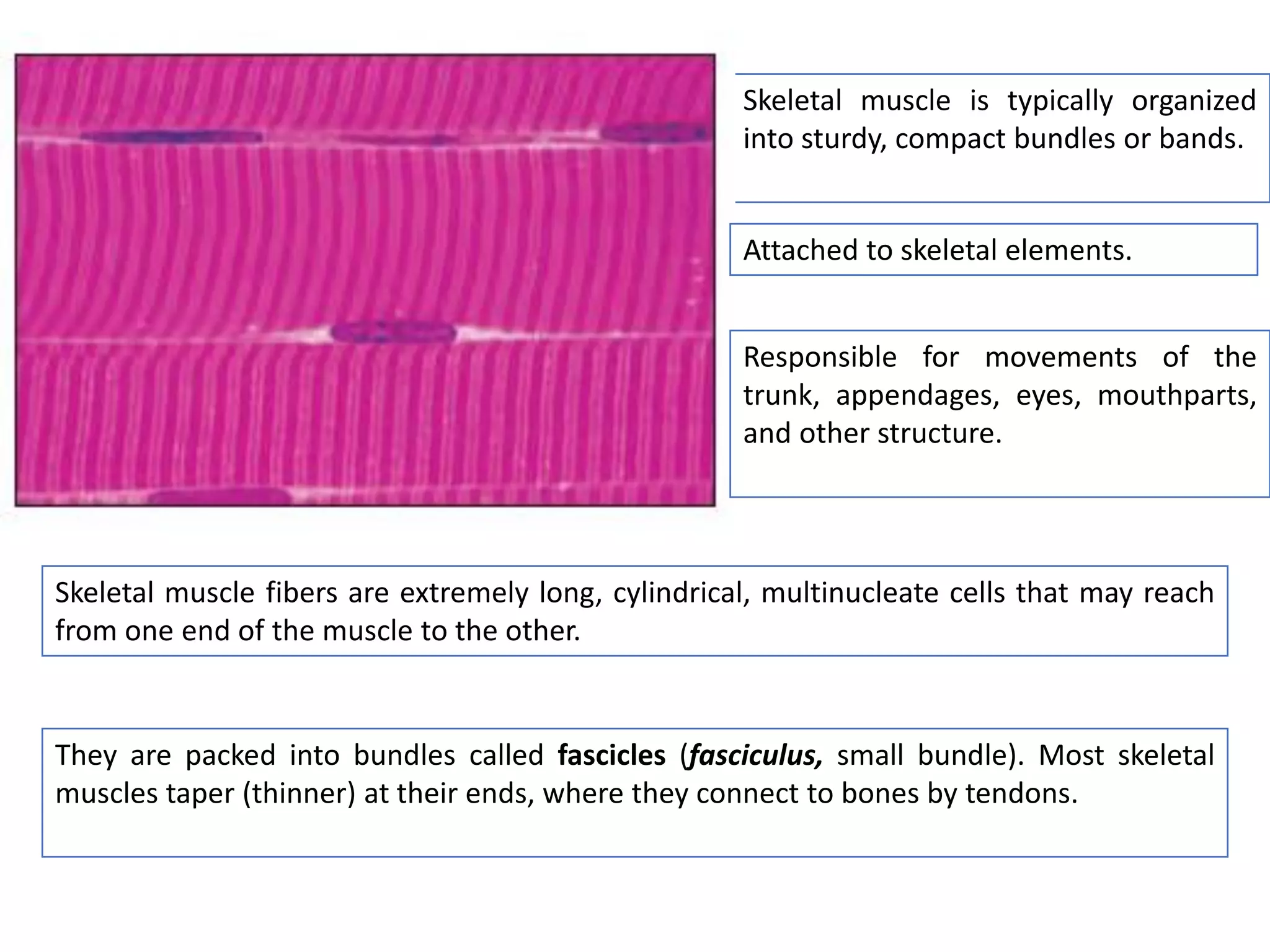
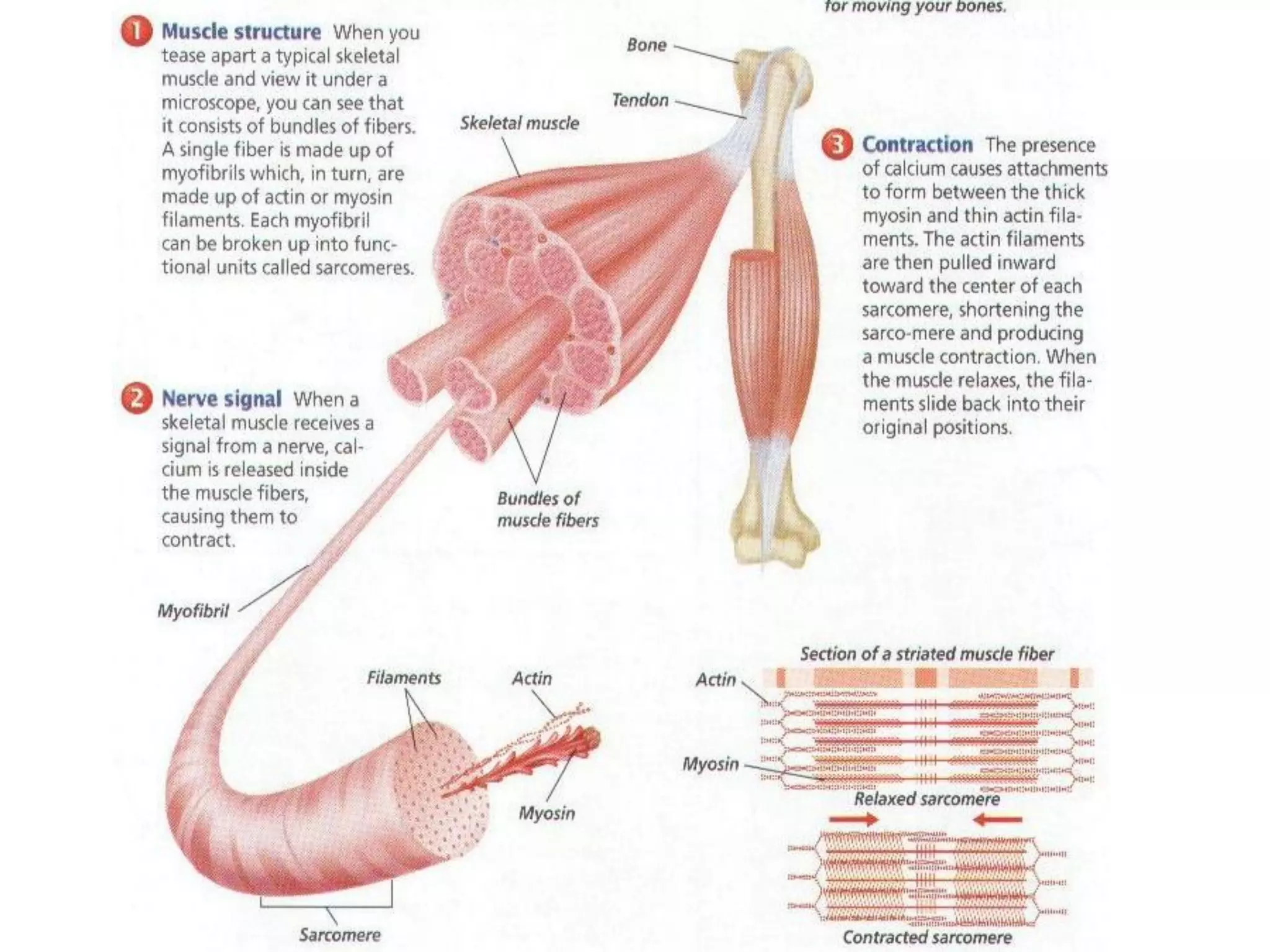
Skeletal muscle is typically organized
into sturdy, compact bundles or bands.
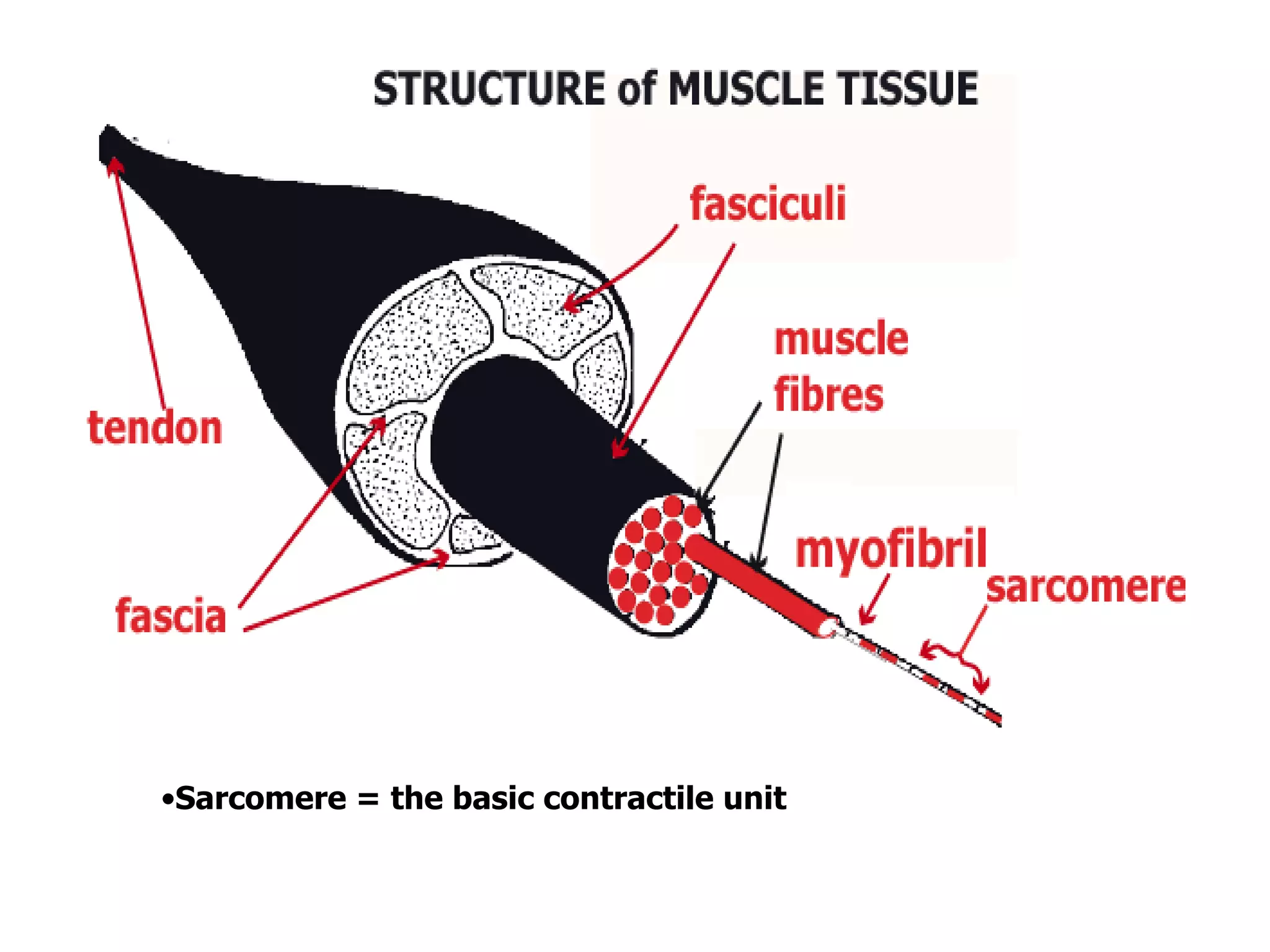
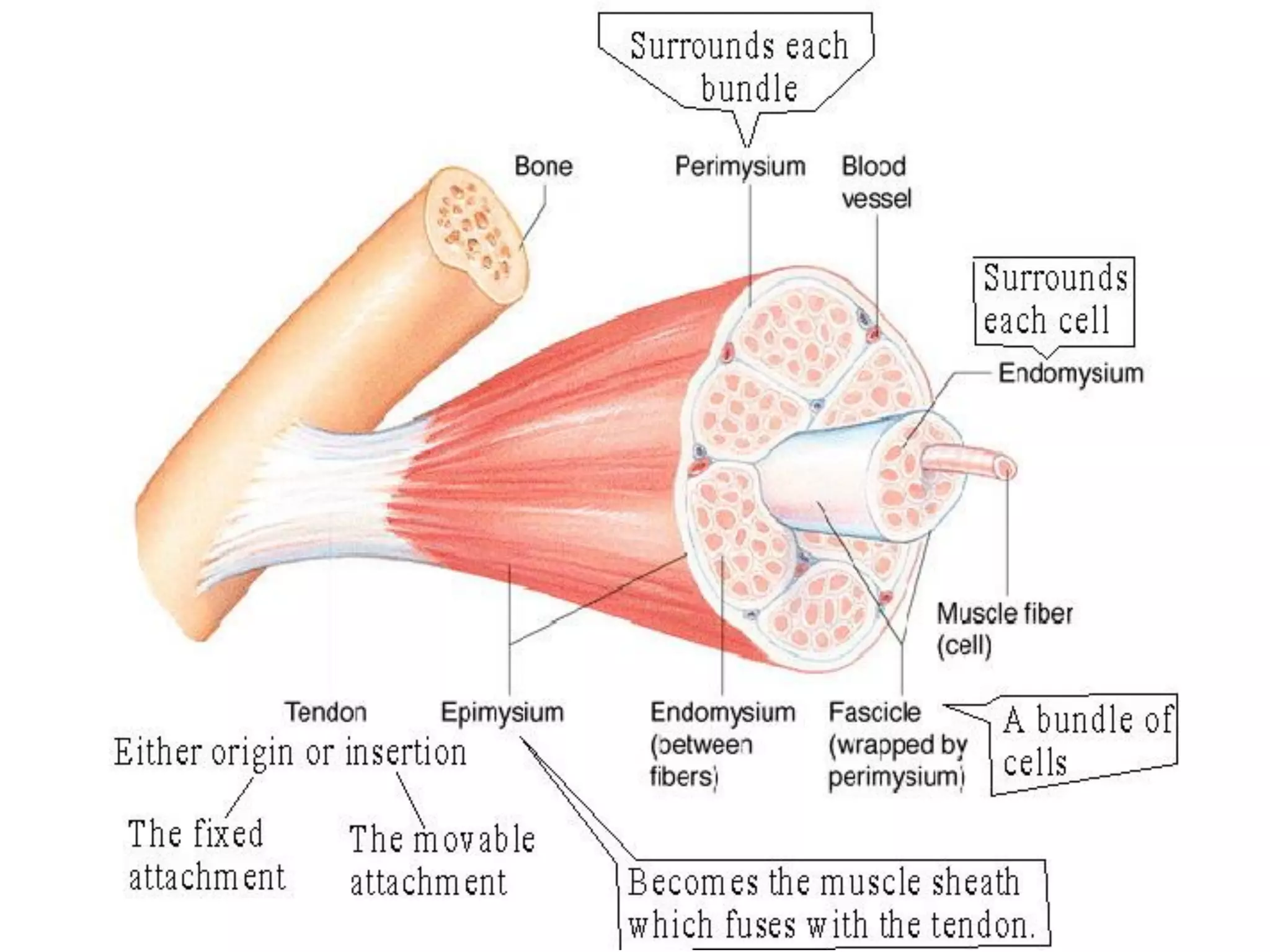
They are packed into bundles called fascicles (fasciculus, small bundle). Most skeletal
muscles taper (thinner) at their ends, where they connect to bones by tendons.
Attached to skeletal elements.
Responsible for movements of the
trunk, appendages, eyes, mouthparts,
and other structure.
Skeletal muscle fibers are extremely long, cylindrical, multinucleate cells that may reach
from one end of the muscle to the other.
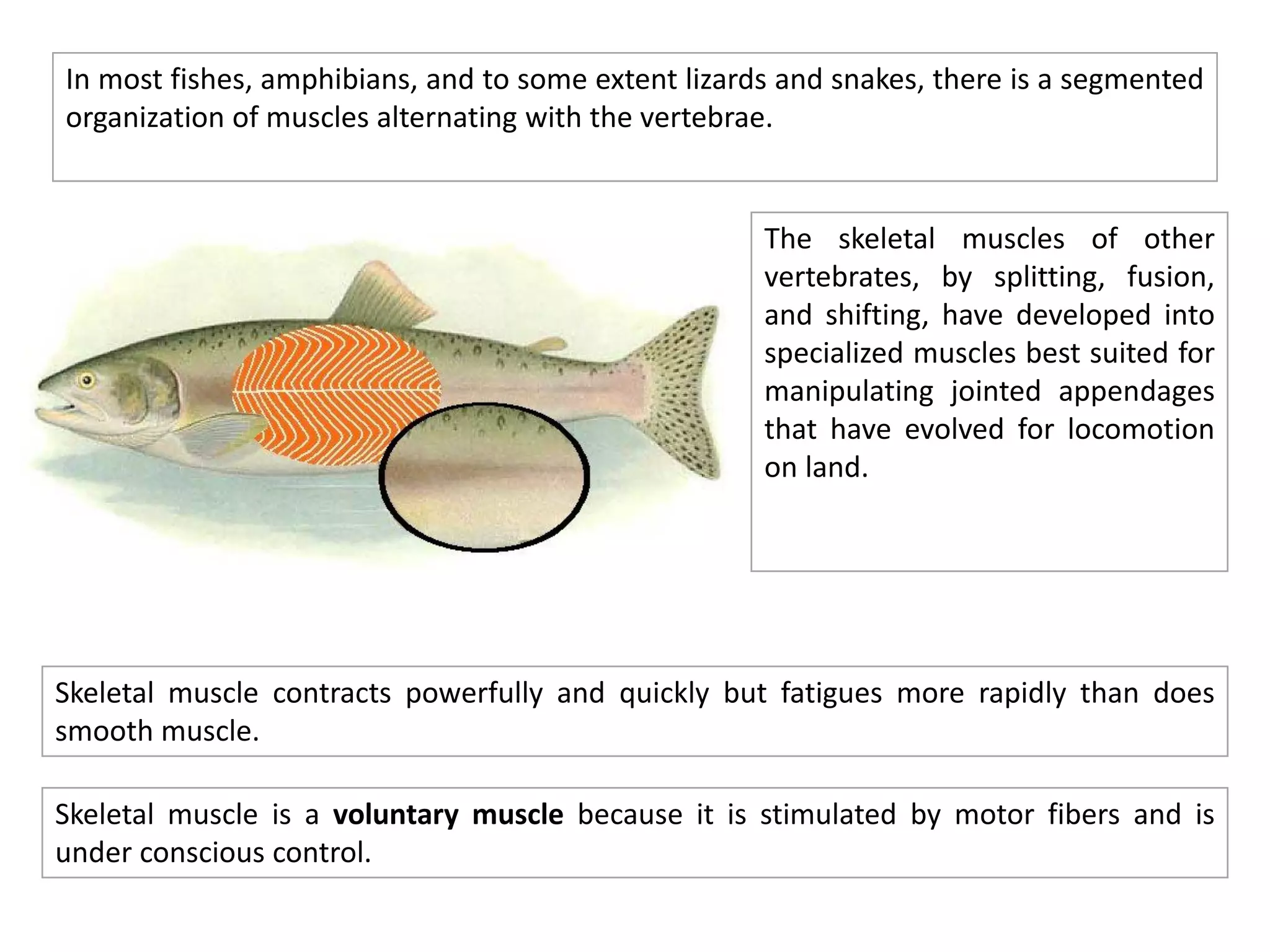
In most fishes, amphibians, and to some extent lizards and snakes, there is a segmented
organization of muscles alternating with the vertebrae.
The skeletal muscles of other
vertebrates, by splitting, fusion,
and shifting, have developed into
specialized muscles best suited for
manipulating jointed appendages
that have evolved for locomotion
on land.
Skeletal muscle contracts powerfully and quickly but fatigues more rapidly than does
smooth muscle.
Skeletal muscle is a voluntary muscle because it is stimulated by motor fibers and is
under conscious control.
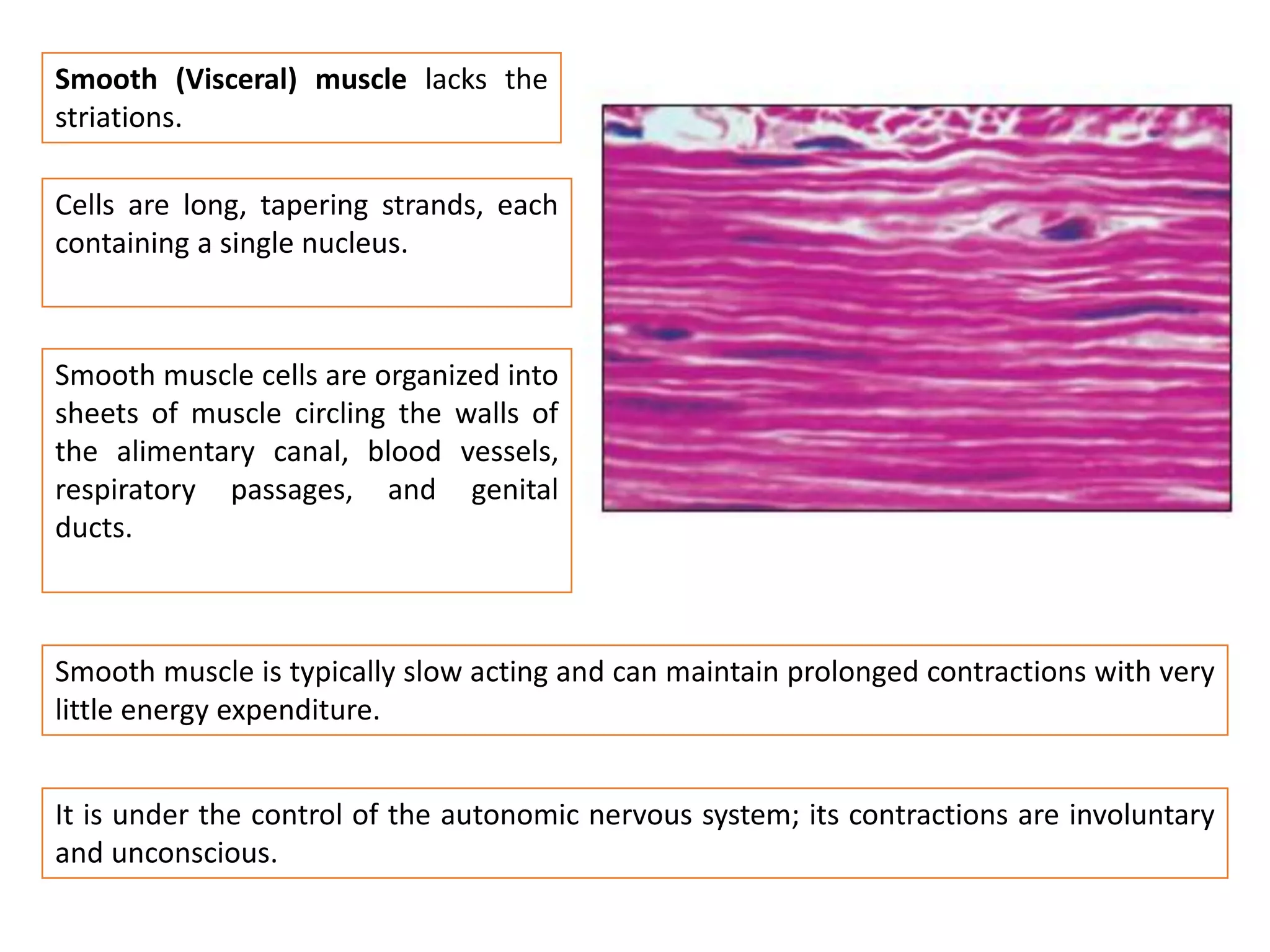
Smooth (Visceral) muscle lacks the
striations.
Cells are long, tapering strands, each
containing a single nucleus.
Smooth muscle cells are organized into
sheets of muscle circling the walls of
the alimentary canal, blood vessels,
respiratory passages, and genital
ducts.
Smooth muscle is typically slow acting and can maintain prolonged contractions with very
little energy expenditure.
It is under the control of the autonomic nervous system; its contractions are involuntary
and unconscious.
Cardiac muscle, the seemingly tireless muscle of the vertebrate heart, combines certain
characteristics of both skeletal and smooth muscle.
It is fast acting and striated, but contraction is under involuntary autonomic control.
Actually the autonomic nerves serving the heart can only speed up or slow down the rate
of contraction; the heartbeat originates within specialized cardiac muscle, and the heart
continues to beat even after all autonomic nerves are severed.
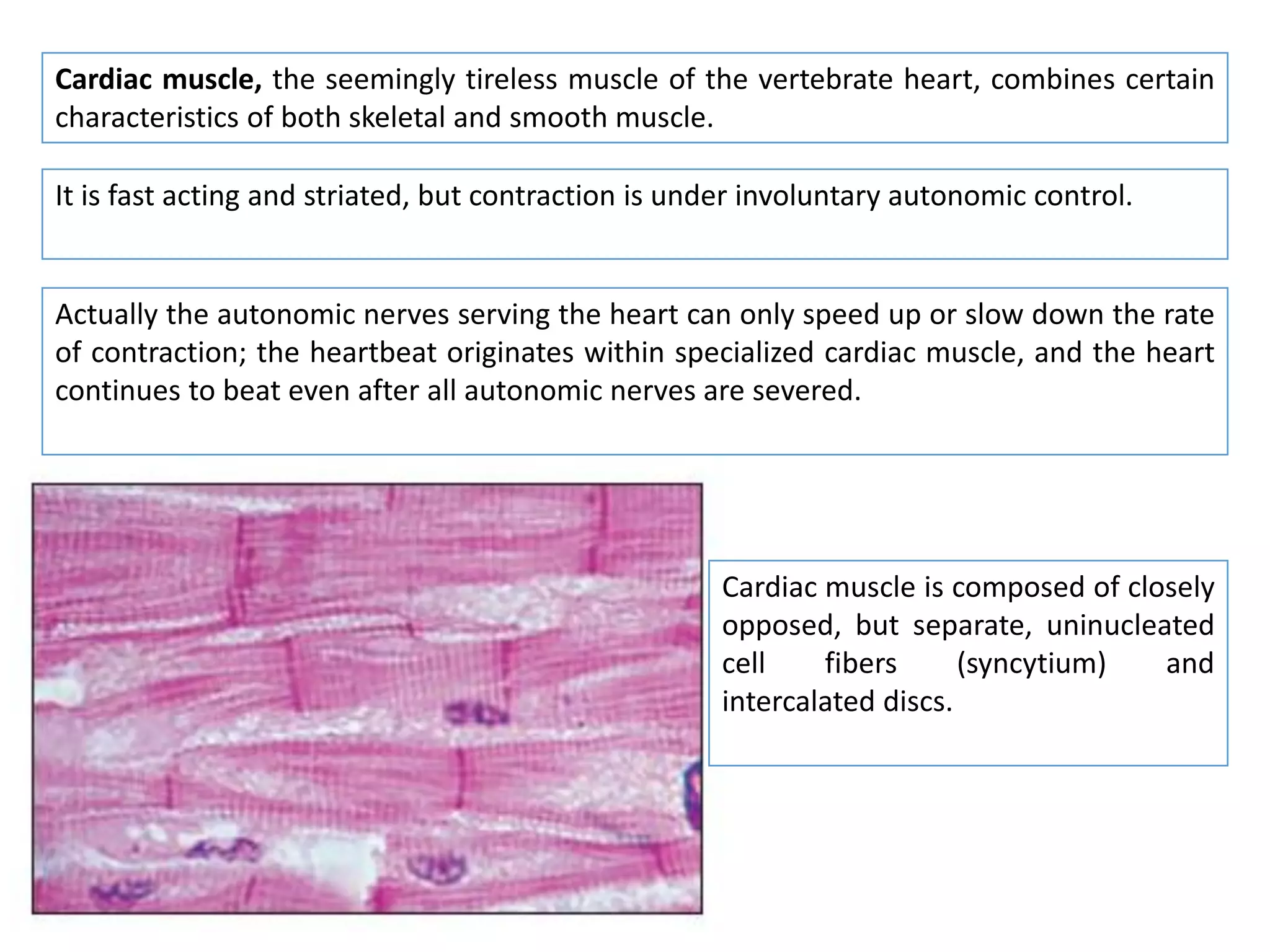
Cardiac muscle is composed of closely
opposed, but separate, uninucleated
cell fibers (syncytium) and
intercalated discs.
Smooth and striated muscles are also characteristic of invertebrate animals, but there are
many variations of both types and even instances in structural and functional features.
Types of Invertebrate Muscle
Striated muscle appears in invertebrate groups as diverse as cnidarians and arthropods.
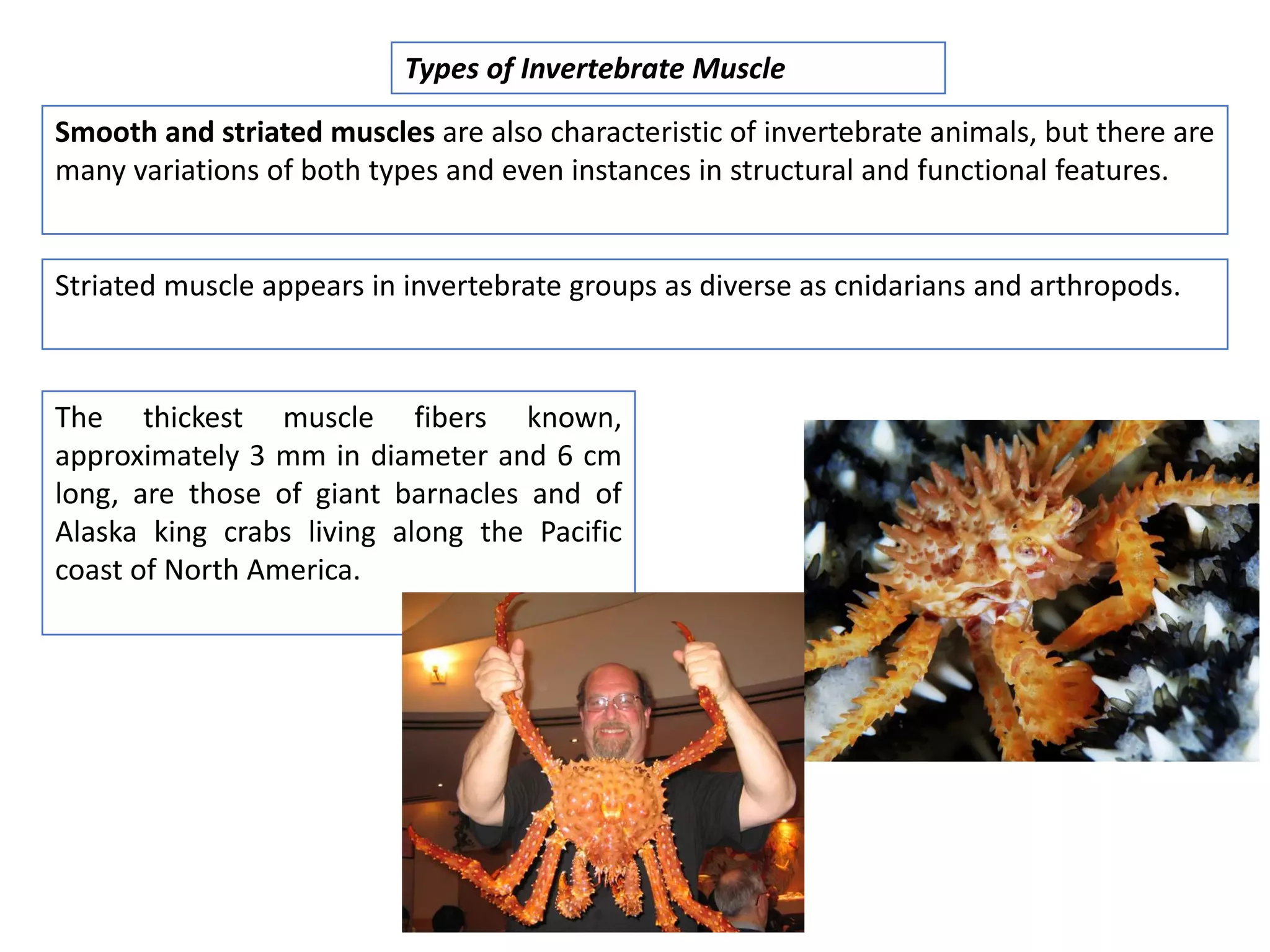
The thickest muscle fibers known,
approximately 3 mm in diameter and 6 cm
long, are those of giant barnacles and of
Alaska king crabs living along the Pacific
coast of North America.
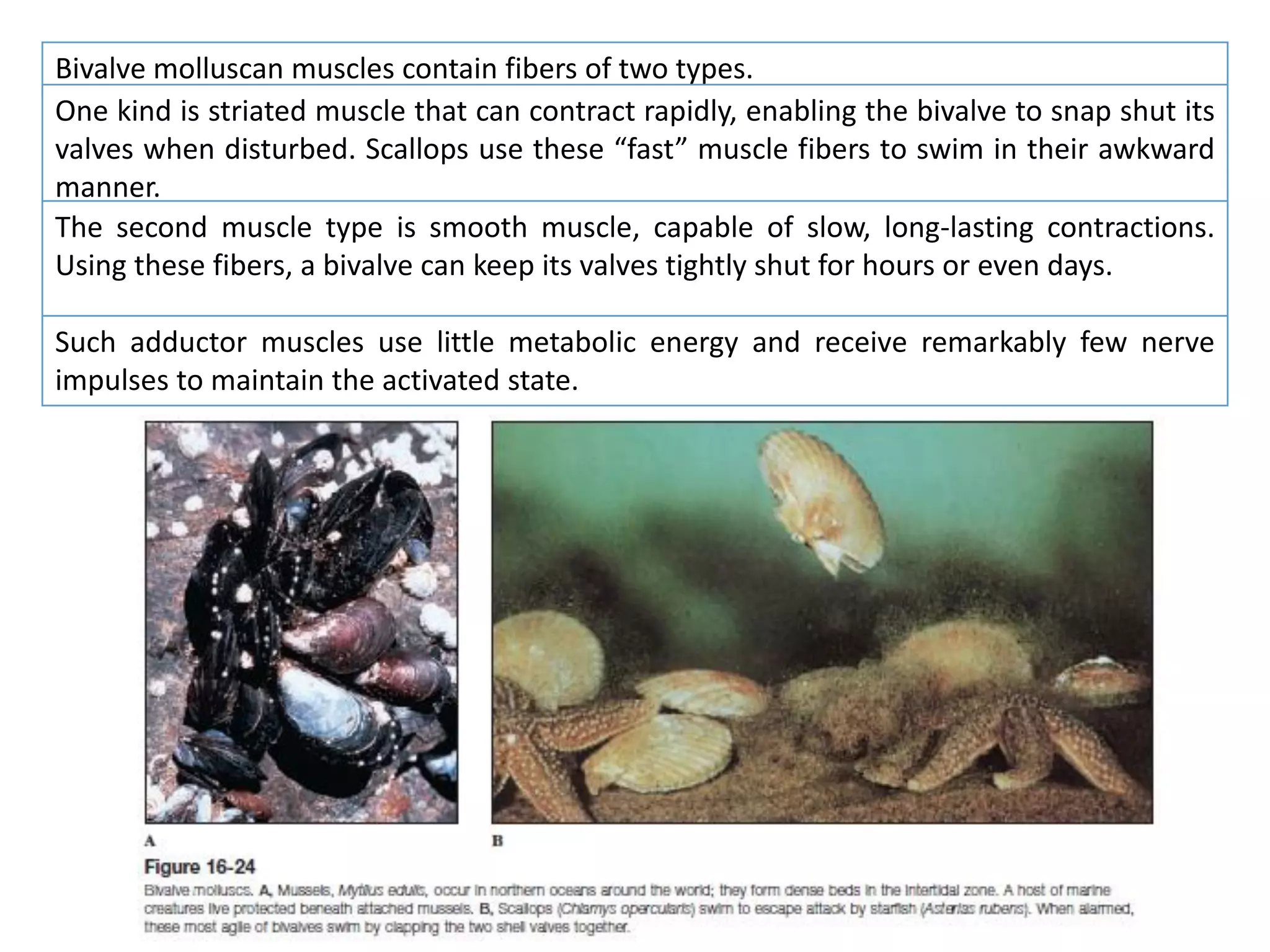
Bivalve molluscan muscles contain fibers of two types.
One kind is striated muscle that can contract rapidly, enabling the bivalve to snap shut its
valves when disturbed. Scallops use these “fast” muscle fibers to swim in their awkward
manner.
The second muscle type is smooth muscle, capable of slow, long-lasting contractions.
Using these fibers, a bivalve can keep its valves tightly shut for hours or even days.
Such adductor muscles use little metabolic energy and receive remarkably few nerve
impulses to maintain the activated state.
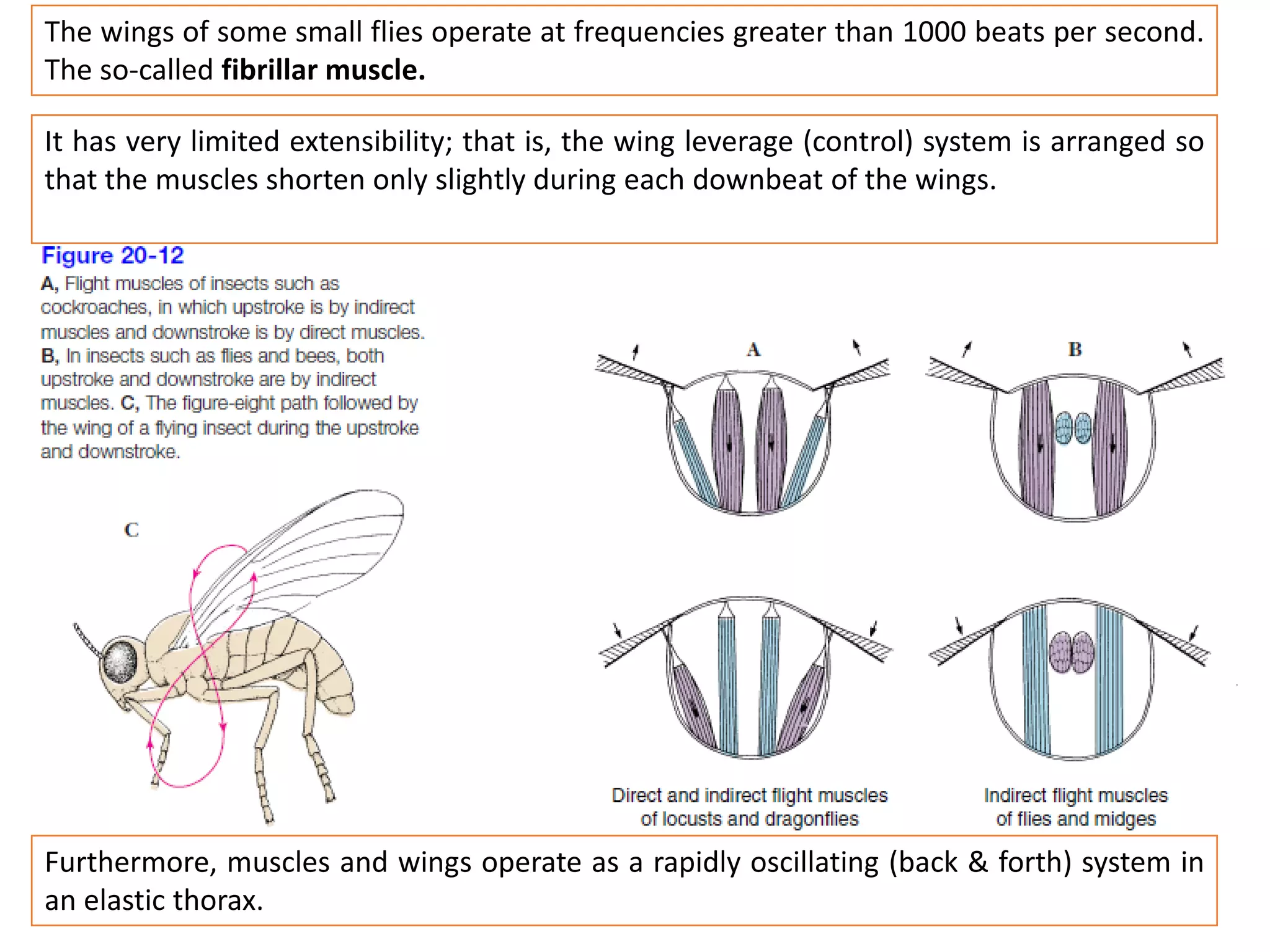
The wings of some small flies operate at frequencies greater than 1000 beats per second.
The so-called fibrillar muscle.
It has very limited extensibility; that is, the wing leverage (control) system is arranged so
that the muscles shorten only slightly during each downbeat of the wings.
Furthermore, muscles and wings operate as a rapidly oscillating (back & forth) system in
an elastic thorax.
Each cell, or fiber, is a multinucleated tube
containing numerous myofibrils, packed
together and invested by the cell membrane,
the sarcolemma.
Structure of Striated Muscle
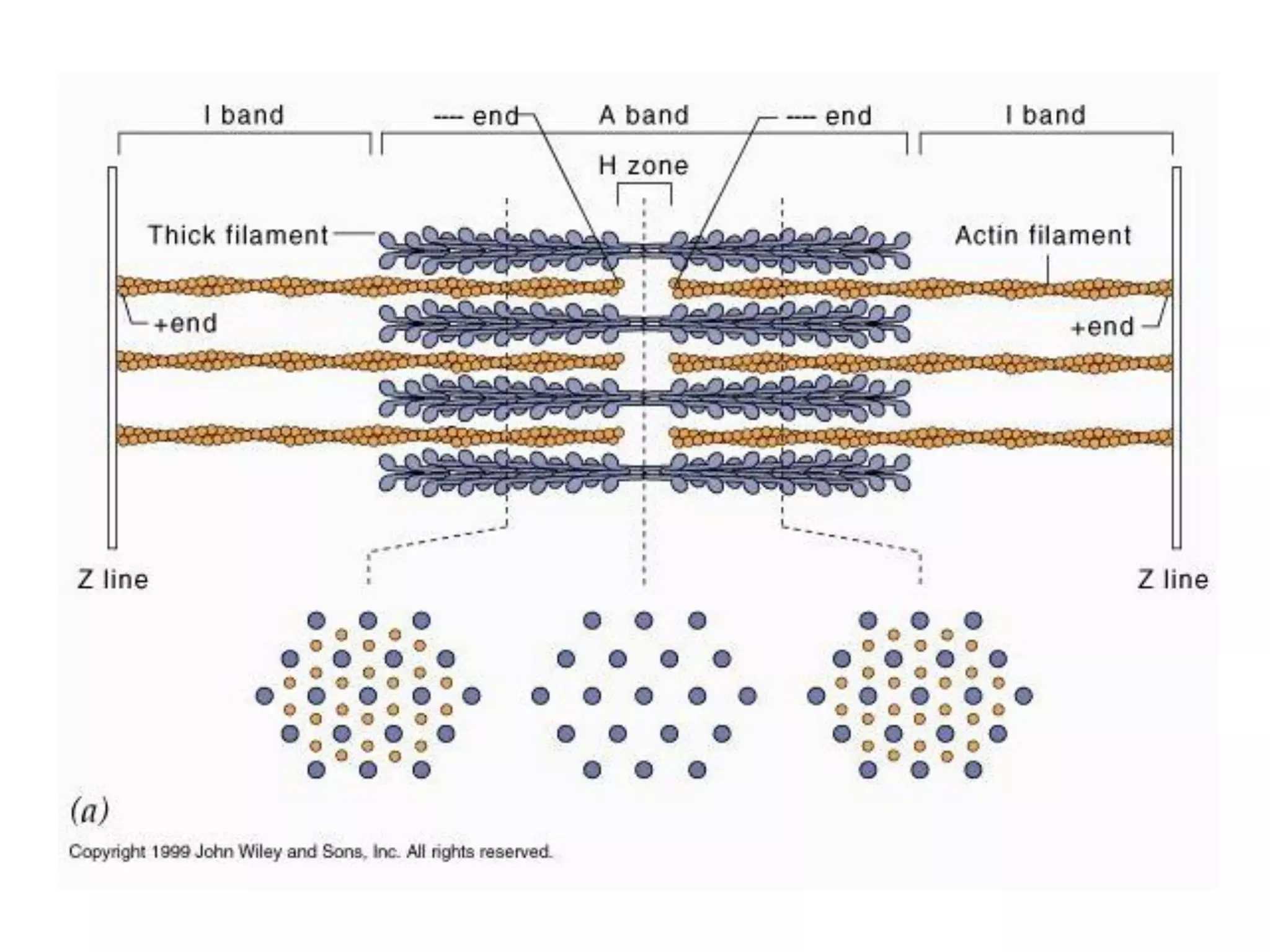
The myofibril contains two types of
myofilaments: thick filaments composed of
the protein myosin, and thin filaments,
composed of the protein actin.
These are the actual contractile proteins of the
muscle.
Thin filaments are held together by a dense
structure called the Z line.
The functional unit of the myofibril, the
sarcomere, extends between successive Z
lines.
•Sarcomere = the basic contractile unit
A (anisotropic) – dark band
I (isotropic) – light band
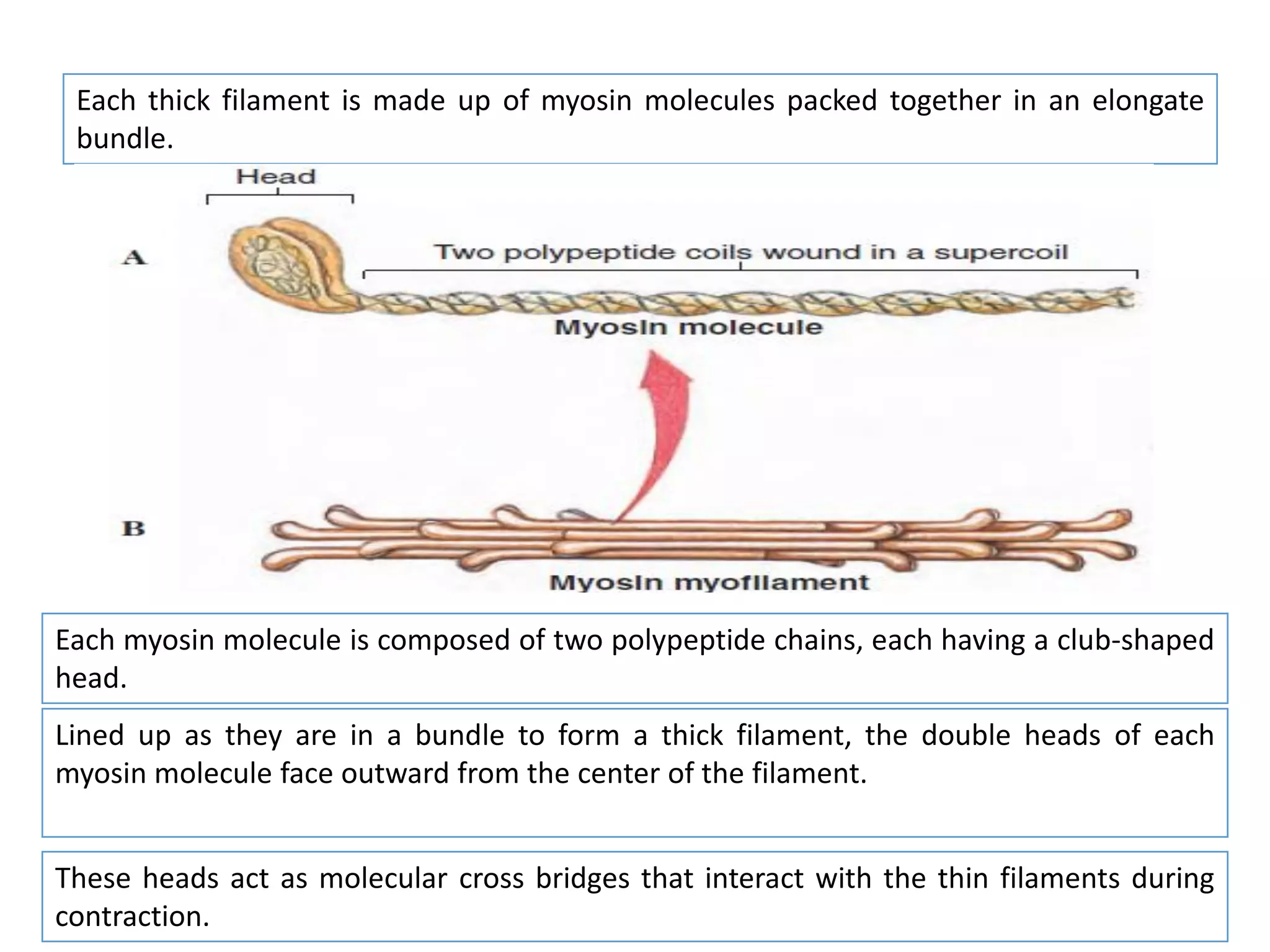
Each myosin molecule is composed of two polypeptide chains, each having a club-shaped
head.
Each thick filament is made up of myosin molecules packed together in an elongate
bundle.
Lined up as they are in a bundle to form a thick filament, the double heads of each
myosin molecule face outward from the center of the filament.
These heads act as molecular cross bridges that interact with the thin filaments during
contraction.
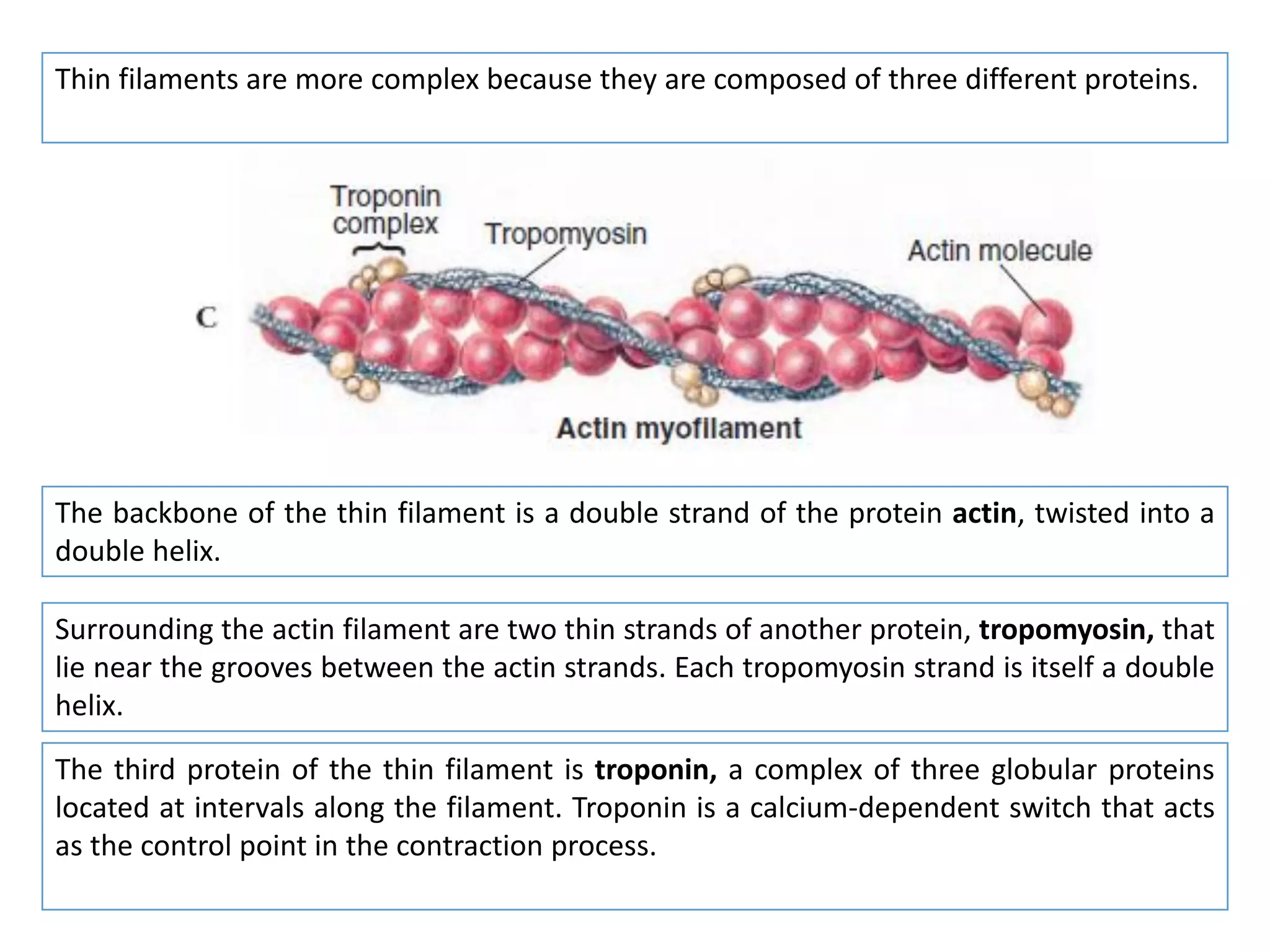
Thin filaments are more complex because they are composed of three different proteins.
The backbone of the thin filament is a double strand of the protein actin, twisted into a
double helix.
Surrounding the actin filament are two thin strands of another protein, tropomyosin, that
lie near the grooves between the actin strands. Each tropomyosin strand is itself a double
helix.
The third protein of the thin filament is troponin, a complex of three globular proteins
located at intervals along the filament. Troponin is a calcium-dependent switch that acts
as the control point in the contraction process.
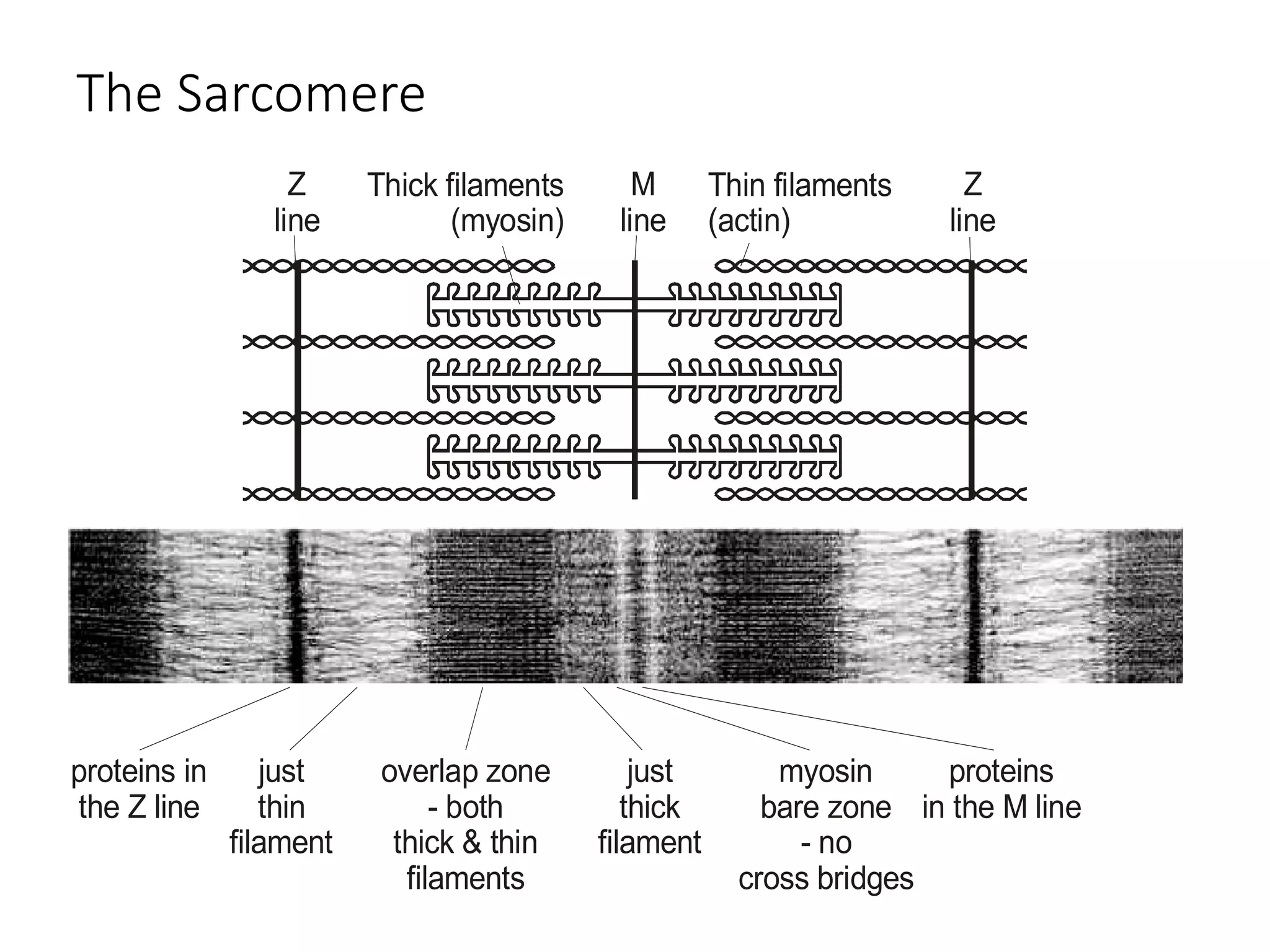
The Sarcomere
Thick filaments
(myosin)
Thin filaments
(actin)
M
line
Z
line
Z
line
proteins in
the Z line
just
thin
filament
overlap zone
- both
thick & thin
filaments
just
thick
filament
myosin
bare zone
- no
cross bridges
proteins
in the M line
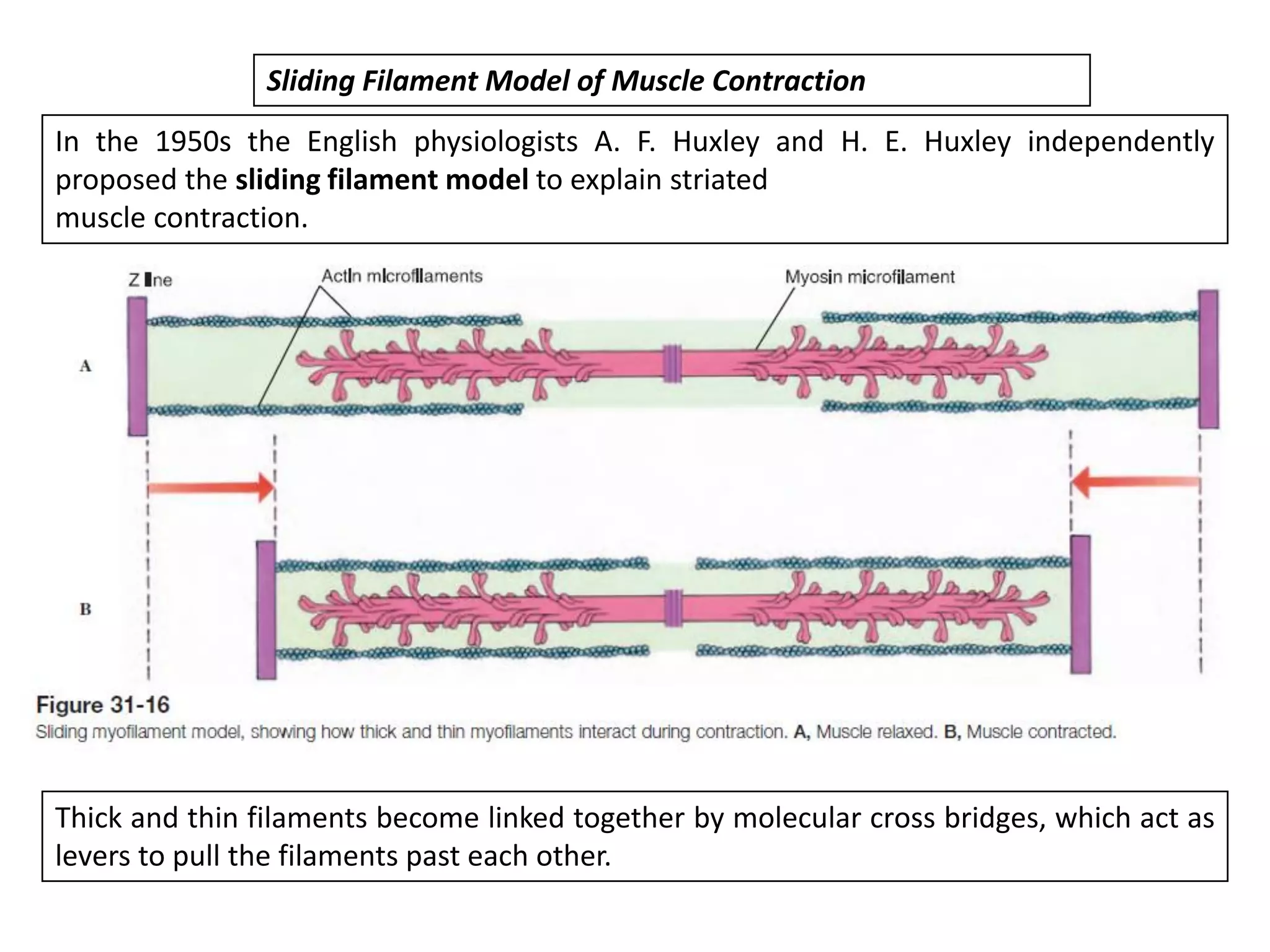
In the 1950s the English physiologists A. F. Huxley and H. E. Huxley independently
proposed the sliding filament model to explain striated
muscle contraction.
Sliding Filament Model of Muscle Contraction
Thick and thin filaments become linked together by molecular cross bridges, which act as
levers to pull the filaments past each other.
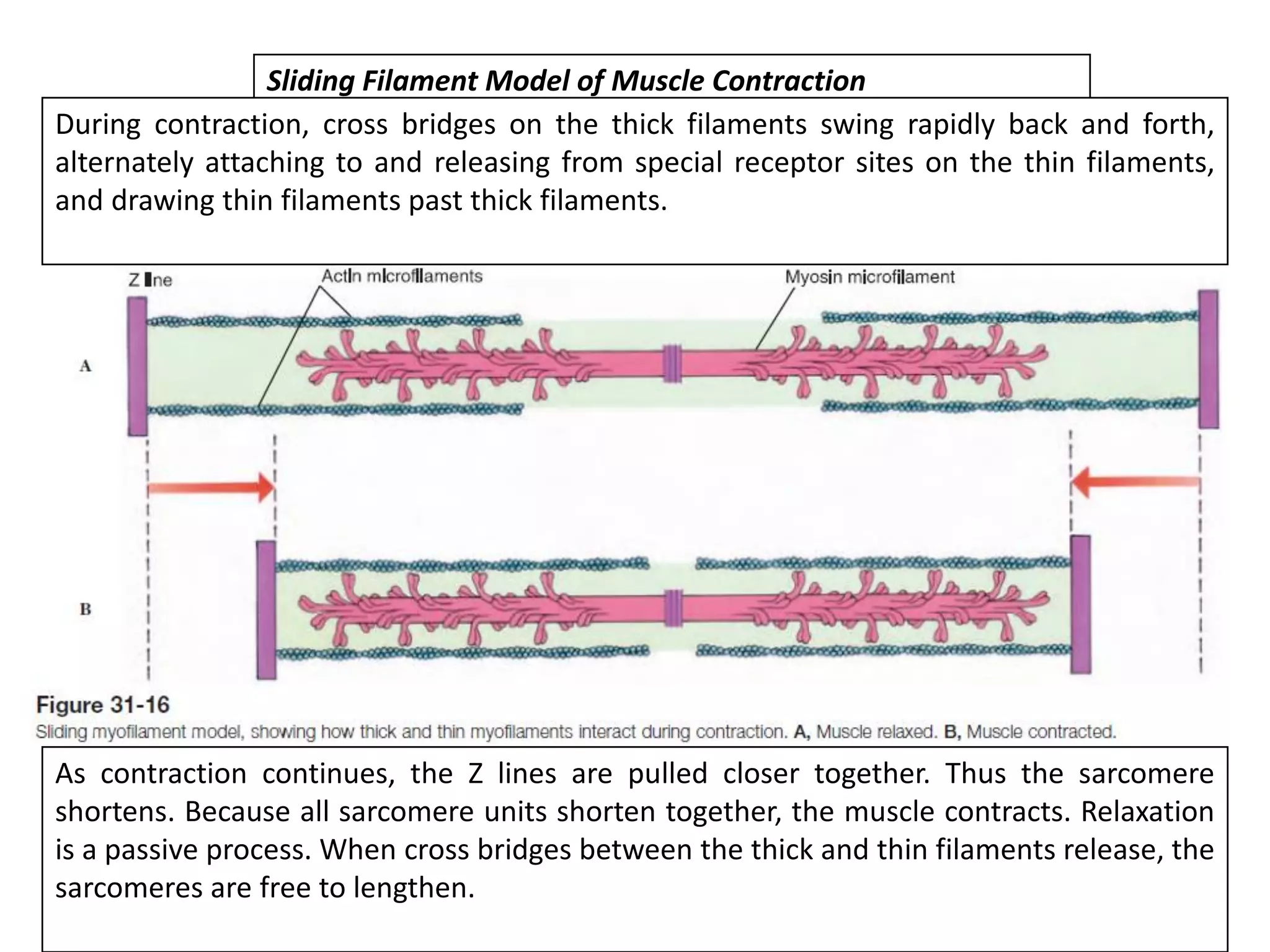
Sliding Filament Model of Muscle Contraction
During contraction, cross bridges on the thick filaments swing rapidly back and forth,
alternately attaching to and releasing from special receptor sites on the thin filaments,
and drawing thin filaments past thick filaments.
As contraction continues, the Z lines are pulled closer together. Thus the sarcomere
shortens. Because all sarcomere units shorten together, the muscle contracts. Relaxation
is a passive process. When cross bridges between the thick and thin filaments release, the
sarcomeres are free to lengthen.
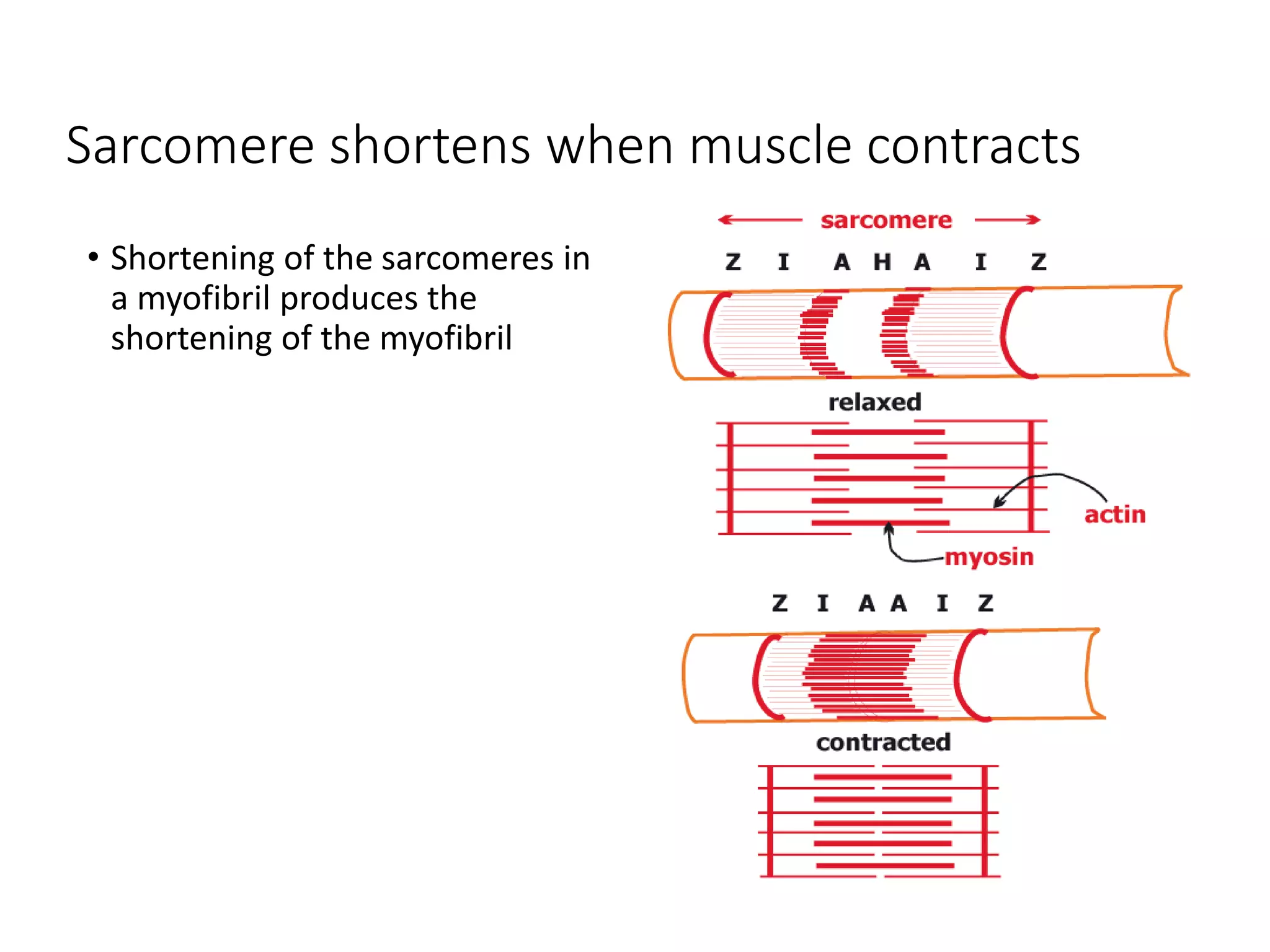
Sarcomere shortens when muscle contracts
• Shortening of the sarcomeres in
a myofibril produces the
shortening of the myofibril
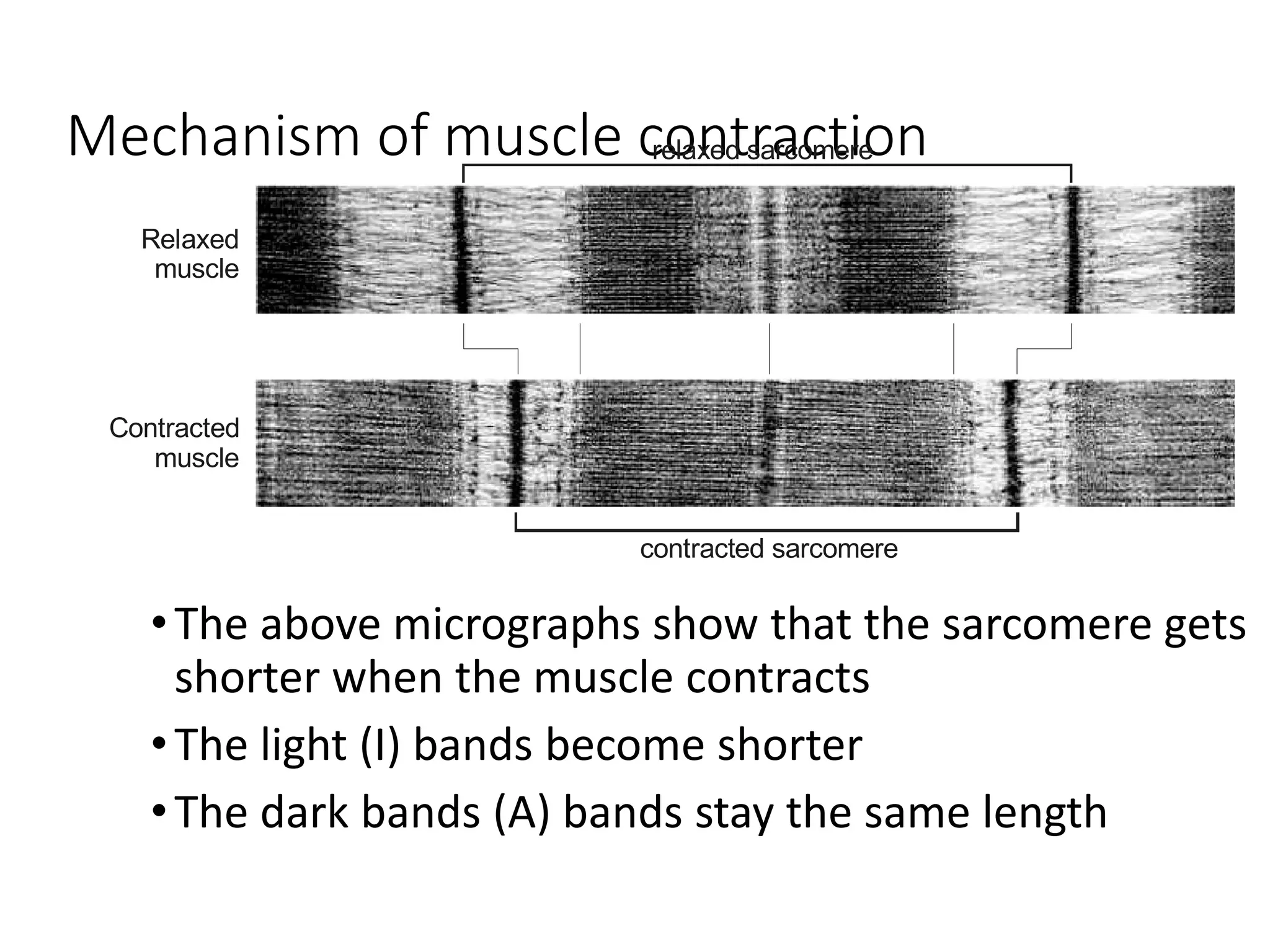
Mechanism of muscle contraction
•The above micrographs show that the sarcomere gets
shorter when the muscle contracts
•The light (I) bands become shorter
•The dark bands (A) bands stay the same length
Relaxed
muscle
Contracted
muscle
relaxed sarcomere
contracted sarcomere
The Sliding Filament Theory
• So, when the muscle contracts, sarcomeres become smaller
• However the filaments do not change in length.
• Instead they slide past each other (overlap)
• So actin filaments slide between myosin filaments
• and the zone of overlap is larger
Muscle contracts in response to nerve stimulation.
Control of Contraction
If the nerve supply to a muscle is severed, the muscle atrophies (weaken).
Skeletal muscle fibers are innervated by motor neurons whose cell bodies are located in
the spinal cord.
Each cell body gives rise to a motor axon that leaves the spinal cord to travel by way of a
peripheral nerve trunk to a muscle where it branches repeatedly into many terminal
branches.
Each terminal branch innervates a single muscle fiber.
Depending on the type of muscle, a single motor axon may innervate as few as three or
four muscle fibers (where very precise control is needed, such as the muscles that control
eye movement) or as many as 2000 muscle fibers (where precise control is not required,
such as large leg muscles).
The motor neuron and all muscle fibers it innervates is called a motor unit.
Control of Contraction
The motor unit is the functional unit of skeletal muscle.
When a motor neuron fires, the action potential passes to all fibers of the motor unit and
each is stimulated to contract simultaneously.
Total force exerted by a muscle depends on the number of motor units activated.
Precise control of movement is achieved by varying the number of motor units activated
at any one time.
A smooth and steady increase in muscle tension is produced by increasing the number of
motor units brought into play; this is called motor unit recruitment.
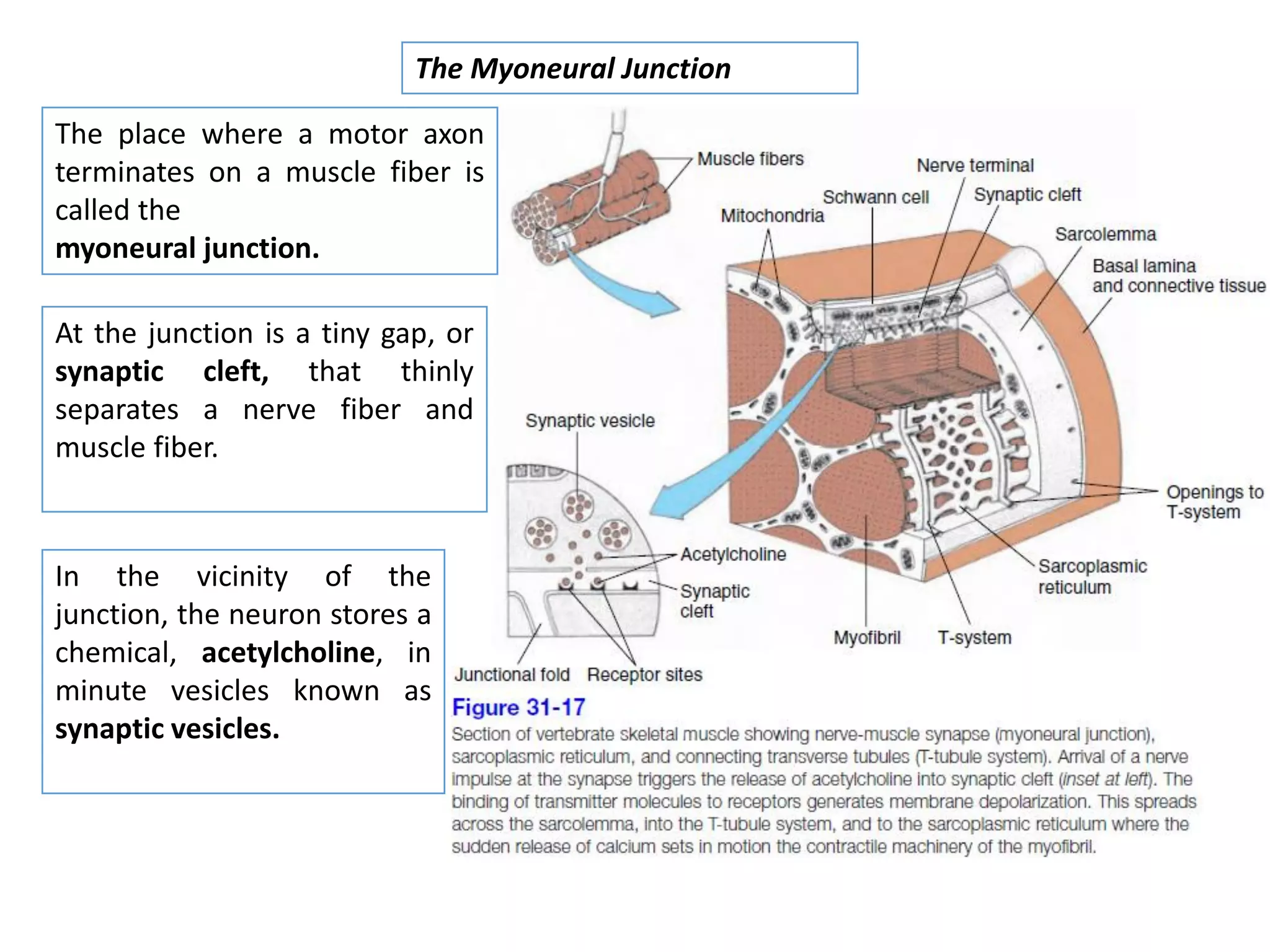
The place where a motor axon
terminates on a muscle fiber is
called the
myoneural junction.
The Myoneural Junction
At the junction is a tiny gap, or
synaptic cleft, that thinly
separates a nerve fiber and
muscle fiber.
In the vicinity of the
junction, the neuron stores a
chemical, acetylcholine, in
minute vesicles known as
synaptic vesicles.
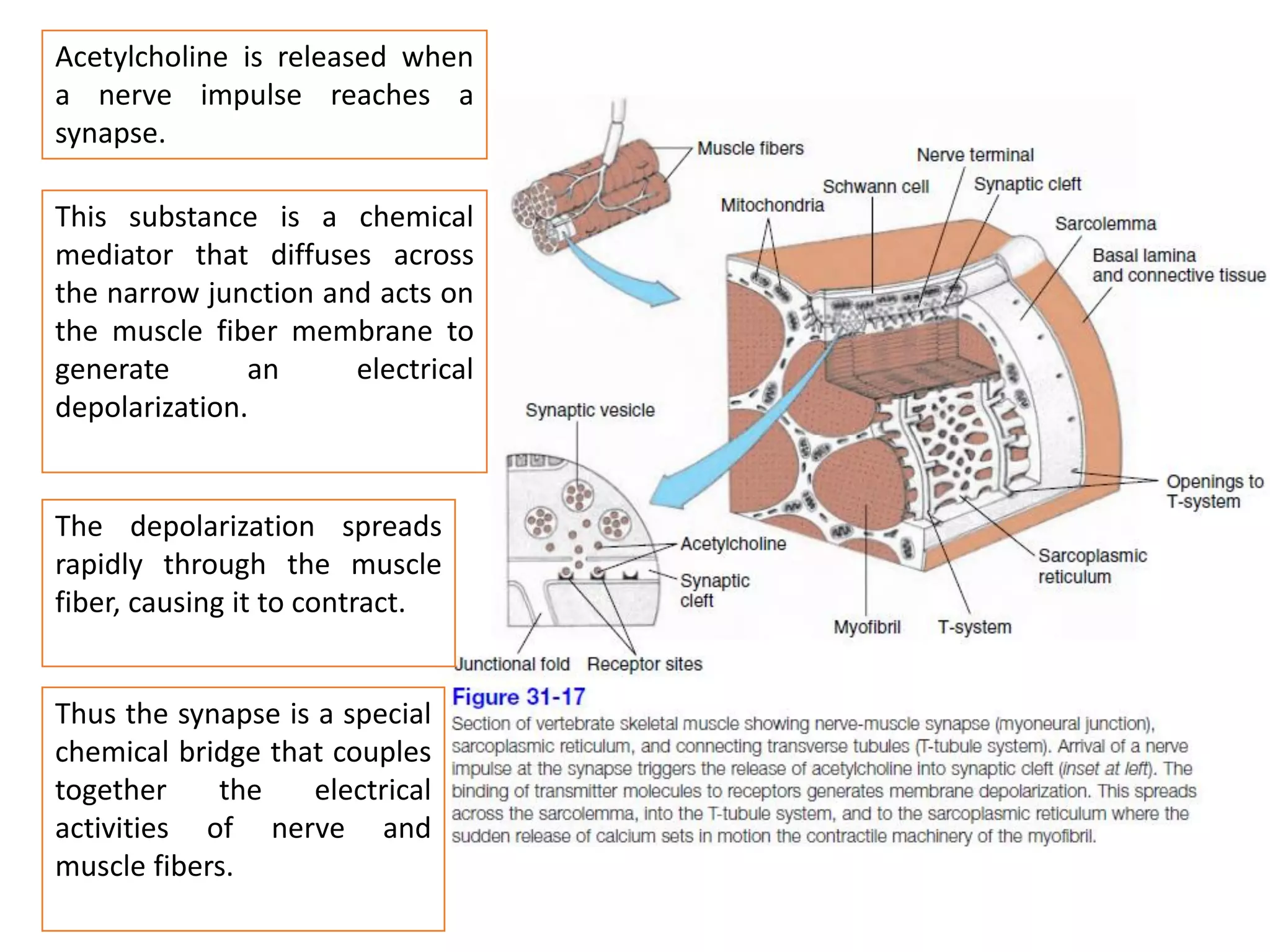
Acetylcholine is released when
a nerve impulse reaches a
synapse.
This substance is a chemical
mediator that diffuses across
the narrow junction and acts on
the muscle fiber membrane to
generate an electrical
depolarization.
The depolarization spreads
rapidly through the muscle
fiber, causing it to contract.
Thus the synapse is a special
chemical bridge that couples
together the electrical
activities of nerve and
muscle fibers.
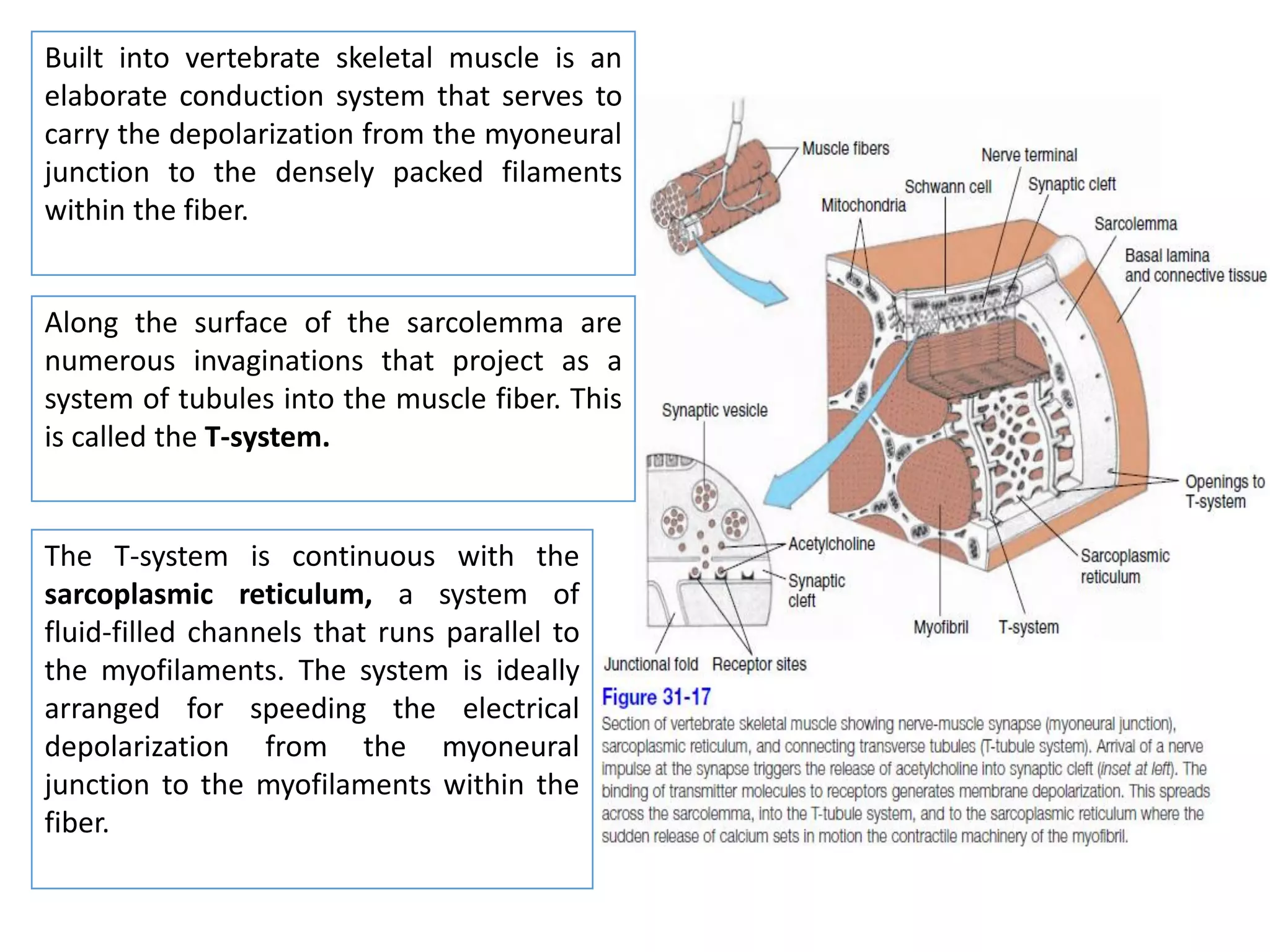
Built into vertebrate skeletal muscle is an
elaborate conduction system that serves to
carry the depolarization from the myoneural
junction to the densely packed filaments
within the fiber.
Along the surface of the sarcolemma are
numerous invaginations that project as a
system of tubules into the muscle fiber. This
is called the T-system.
The T-system is continuous with the
sarcoplasmic reticulum, a system of
fluid-filled channels that runs parallel to
the myofilaments. The system is ideally
arranged for speeding the electrical
depolarization from the myoneural
junction to the myofilaments within the
fiber.
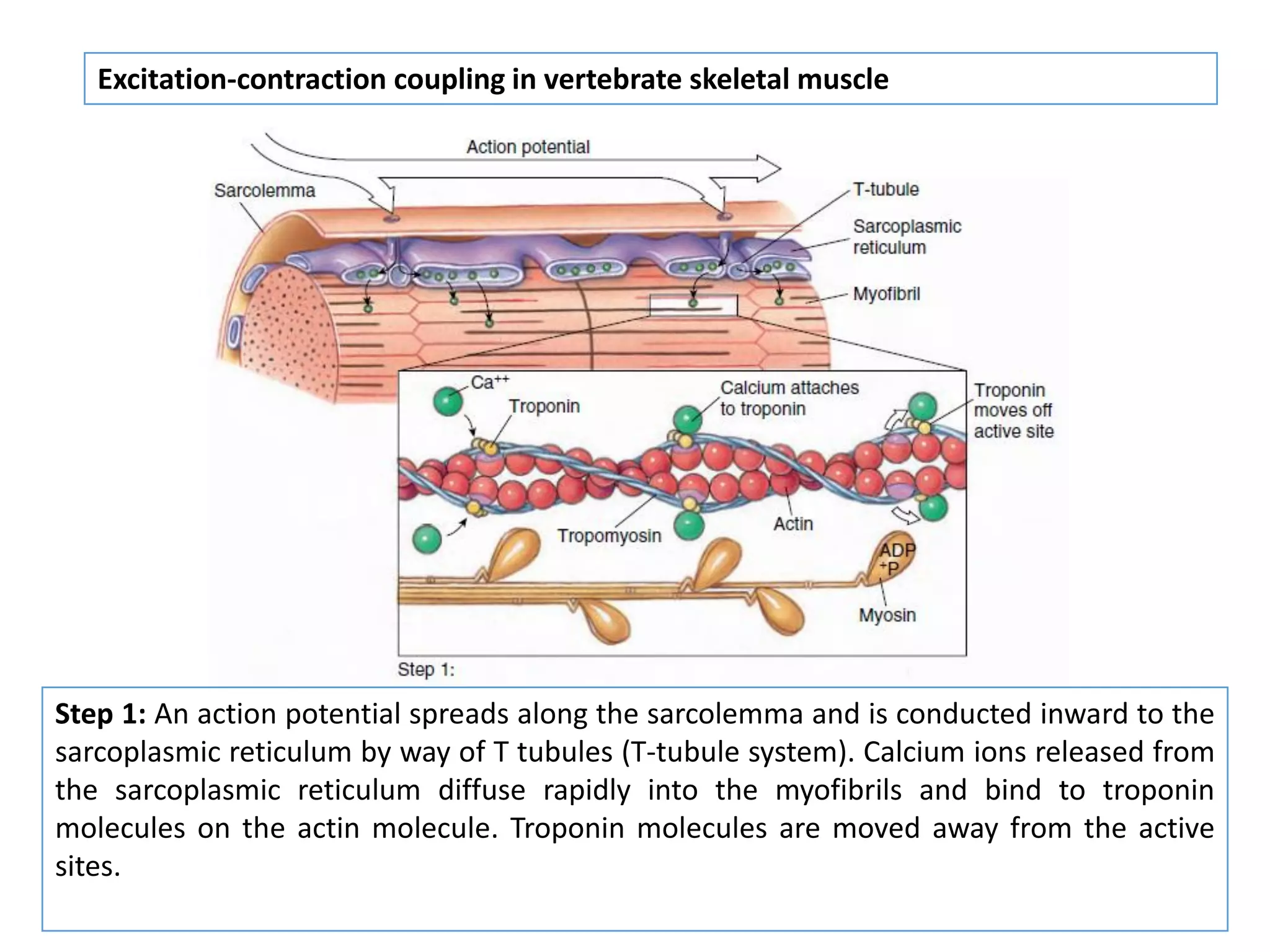
Step 1: An action potential spreads along the sarcolemma and is conducted inward to the
sarcoplasmic reticulum by way of T tubules (T-tubule system). Calcium ions released from
the sarcoplasmic reticulum diffuse rapidly into the myofibrils and bind to troponin
molecules on the actin molecule. Troponin molecules are moved away from the active
sites.
Excitation-contraction coupling in vertebrate skeletal muscle
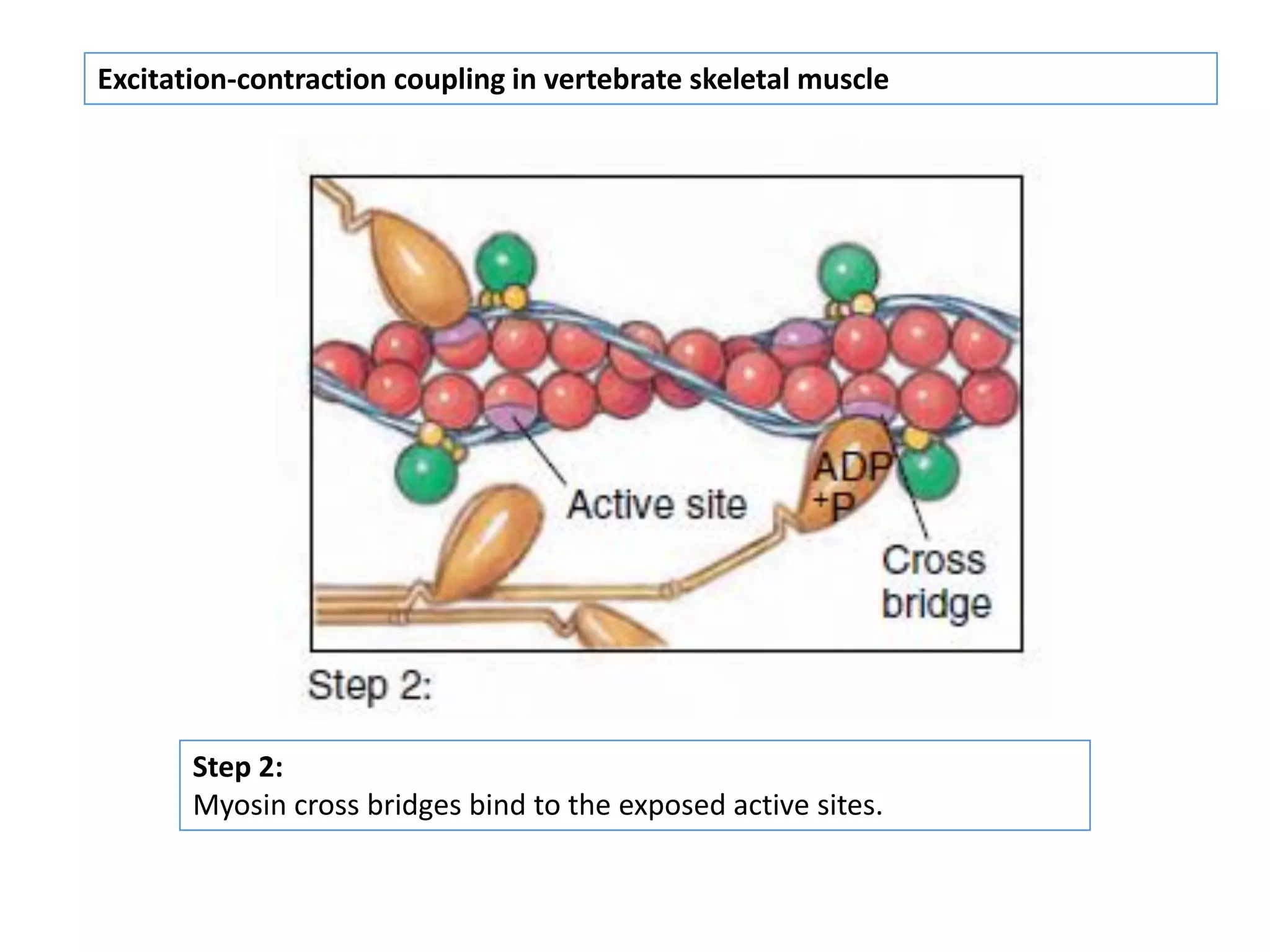
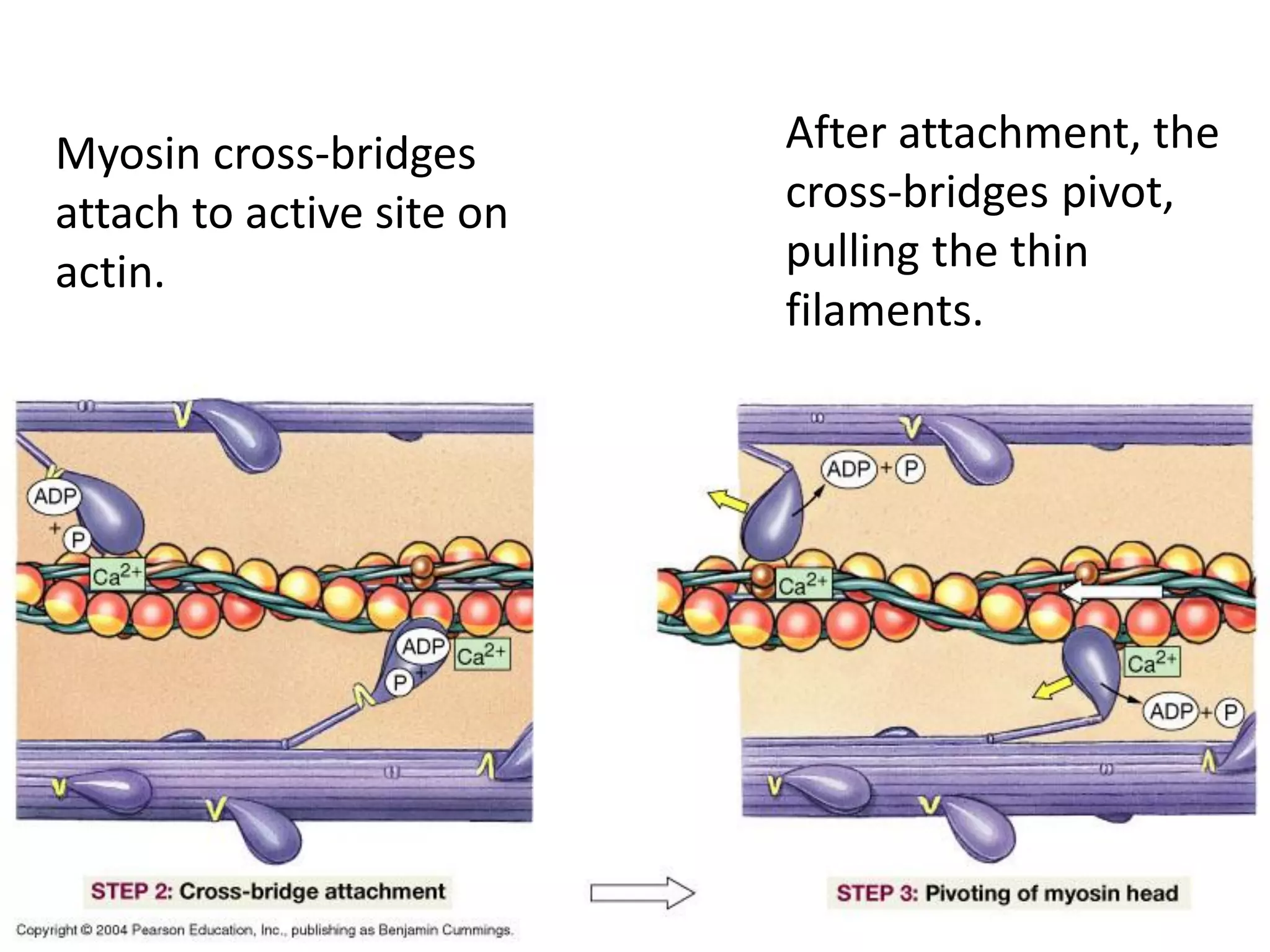
Step 2:
Myosin cross bridges bind to the exposed active sites.
Excitation-contraction coupling in vertebrate skeletal muscle
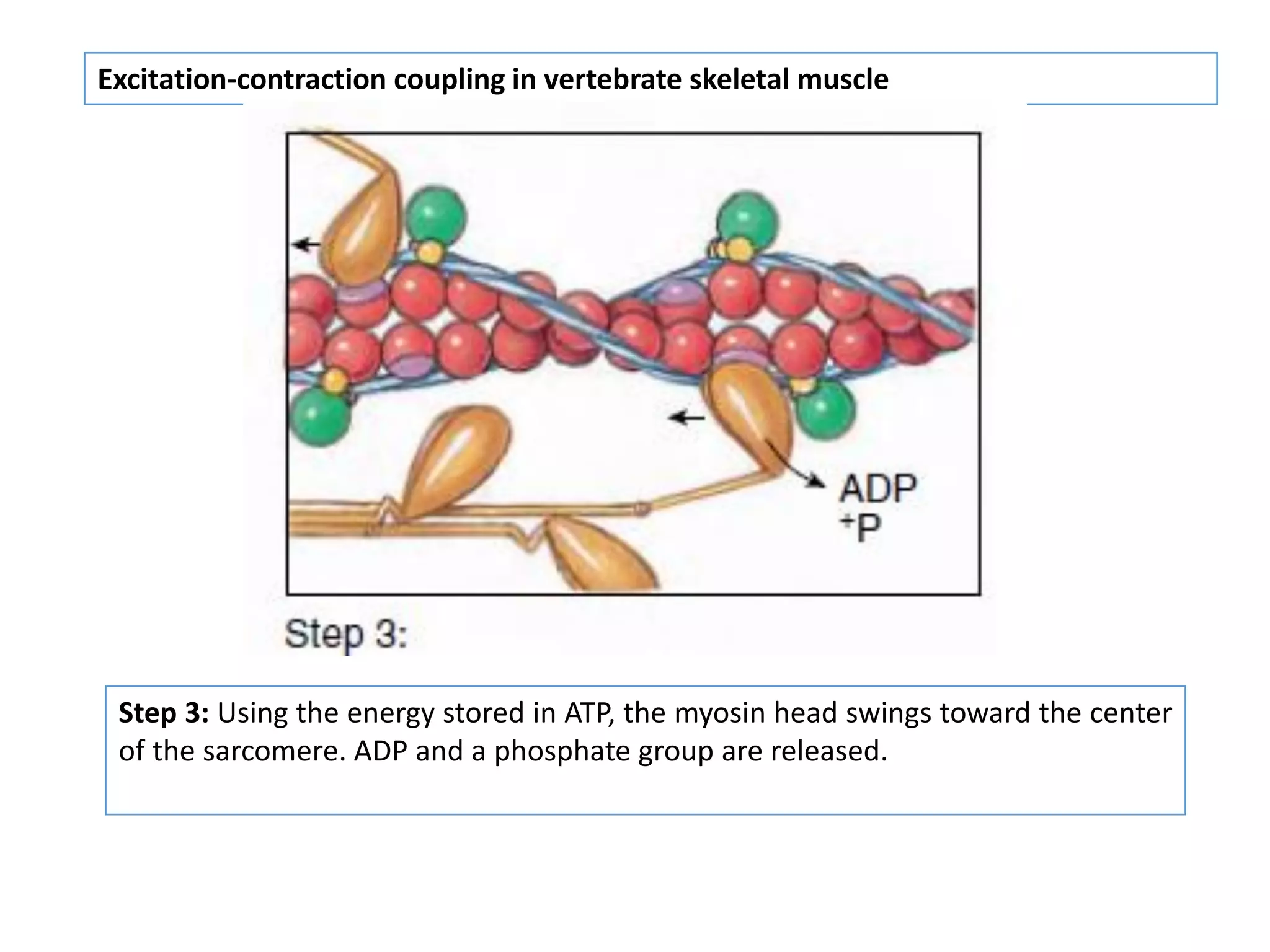
Step 3: Using the energy stored in ATP, the myosin head swings toward the center
of the sarcomere. ADP and a phosphate group are released.
Excitation-contraction coupling in vertebrate skeletal muscle
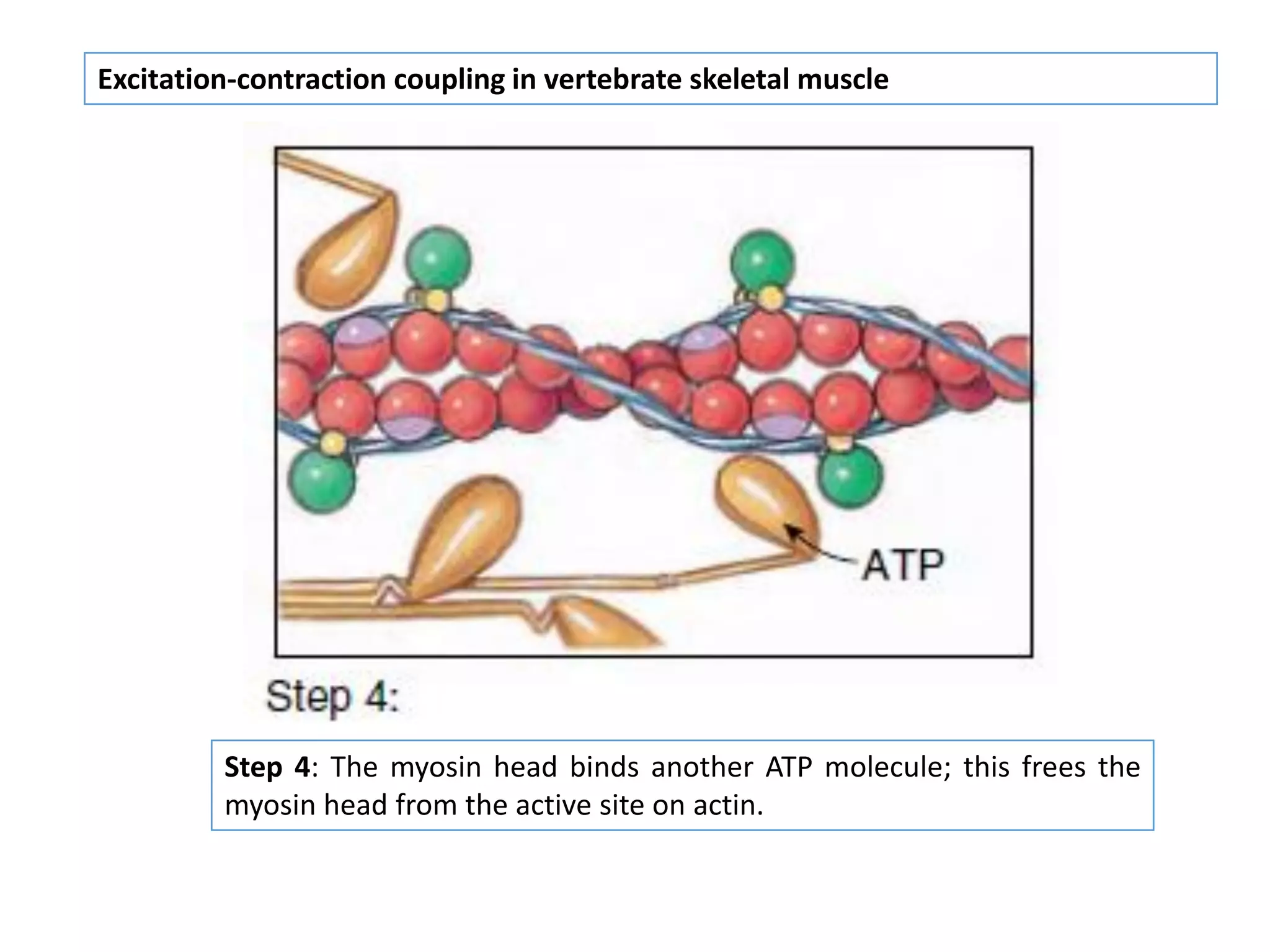
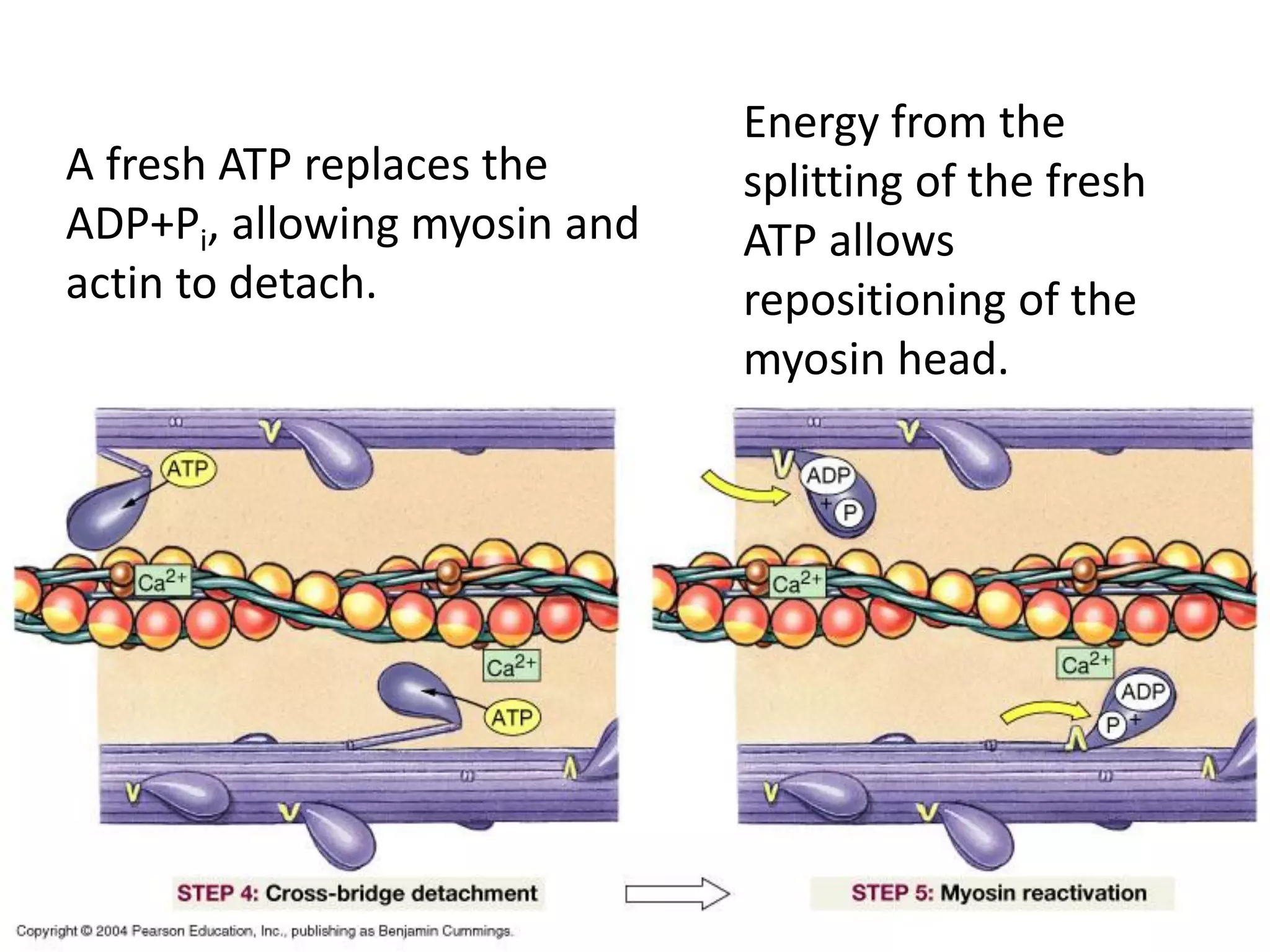
Step 4: The myosin head binds another ATP molecule; this frees the
myosin head from the active site on actin.
Excitation-contraction coupling in vertebrate skeletal muscle
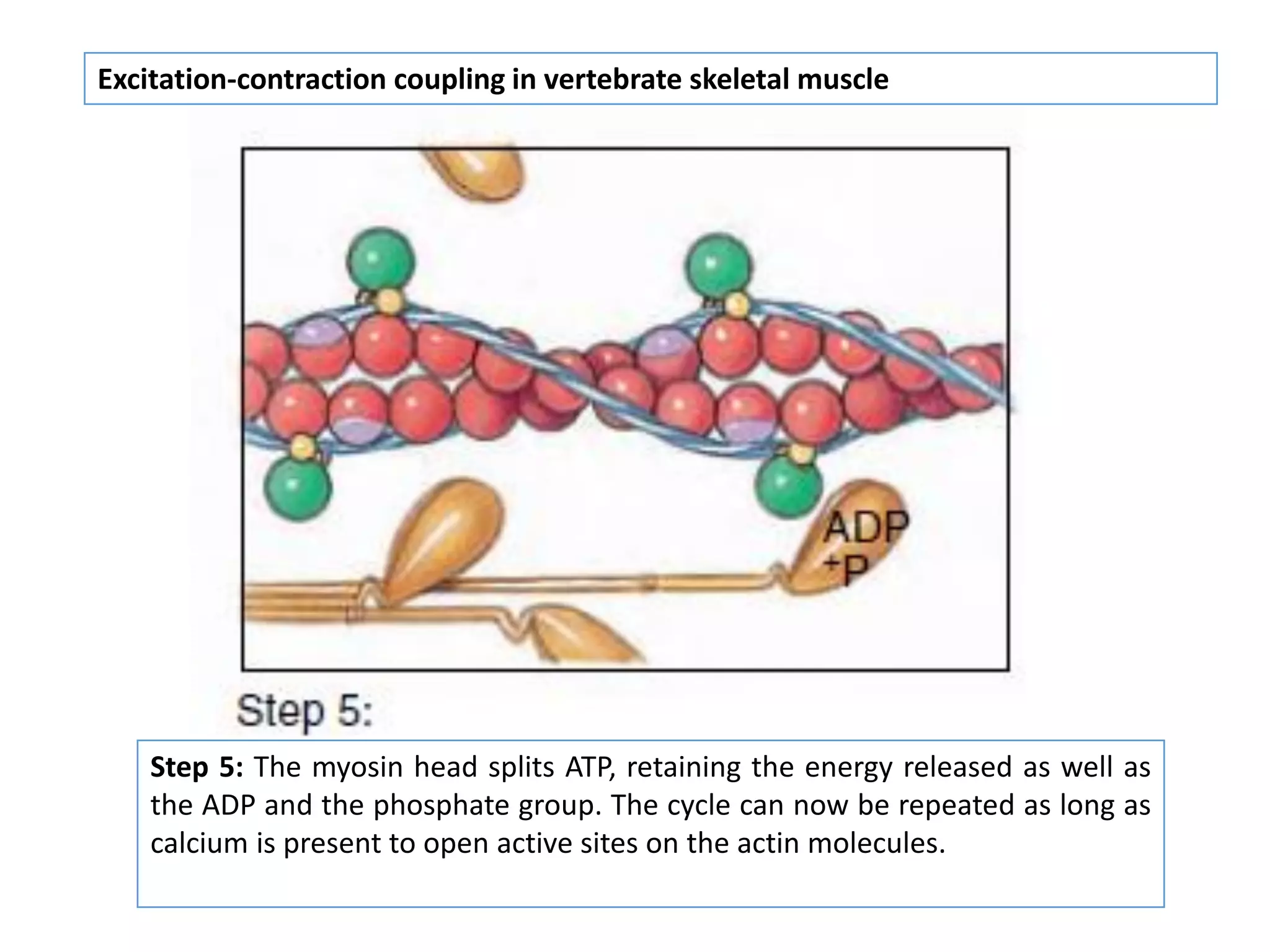
Step 5: The myosin head splits ATP, retaining the energy released as well as
the ADP and the phosphate group. The cycle can now be repeated as long as
calcium is present to open active sites on the actin molecules.
Muscle contraction requires large amounts of energy. ATP is the immediate source of
energy, but the amount present will sustain contraction for only a second or two.
Muscle cells immediately call on the second level of energy reserve, creatine phosphate.
Creatine phosphate is a high-energy phosphate compound that stores bond energy
during periods of rest.
As ADP is produced during contraction, creatine phosphate releases its stored bond
energy to convert ADP to ATP.
This reaction can be summarized as:
Creatine phosphate ADP → ATP Creatine
Within a few seconds—perhaps as long as 30 seconds depending on the rapidity of
muscle contraction—the reserves of creatine phosphate are depleted.
The contracting muscle now must be fueled from its third and largest store of energy,
glycogen.
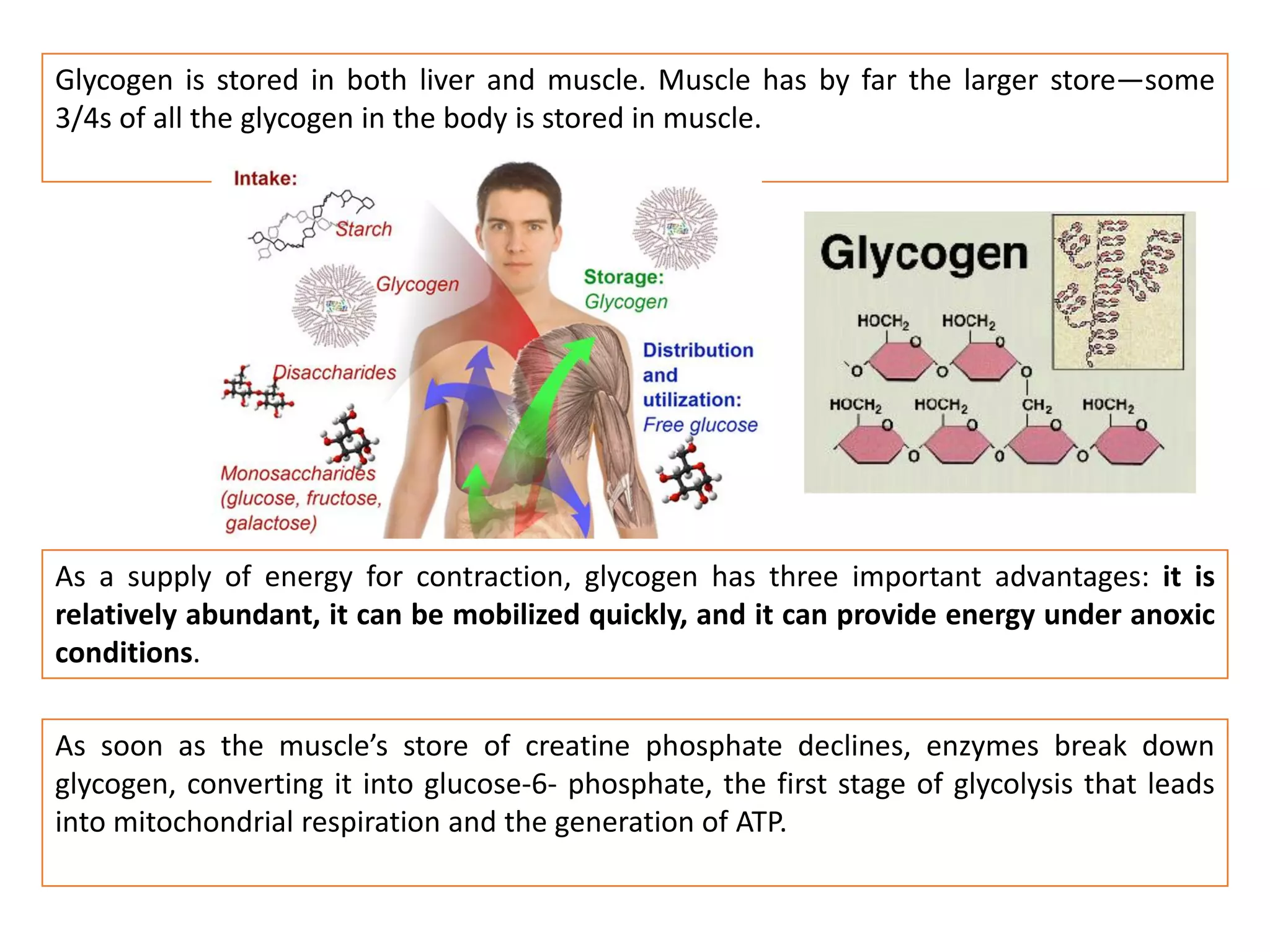
Glycogen is stored in both liver and muscle. Muscle has by far the larger store—some
3/4s of all the glycogen in the body is stored in muscle.
As a supply of energy for contraction, glycogen has three important advantages: it is
relatively abundant, it can be mobilized quickly, and it can provide energy under anoxic
conditions.
As soon as the muscle’s store of creatine phosphate declines, enzymes break down
glycogen, converting it into glucose-6- phosphate, the first stage of glycolysis that leads
into mitochondrial respiration and the generation of ATP.
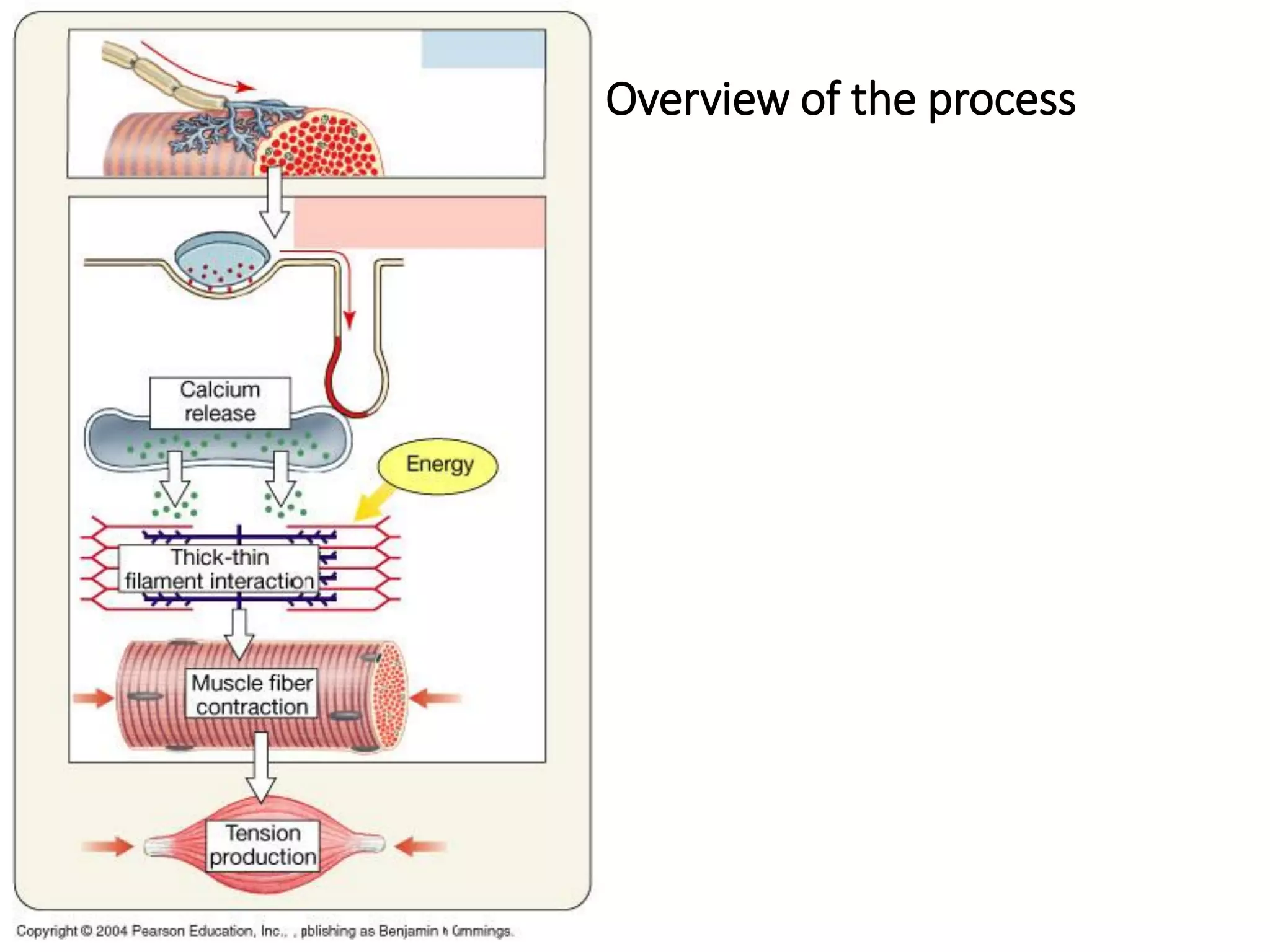
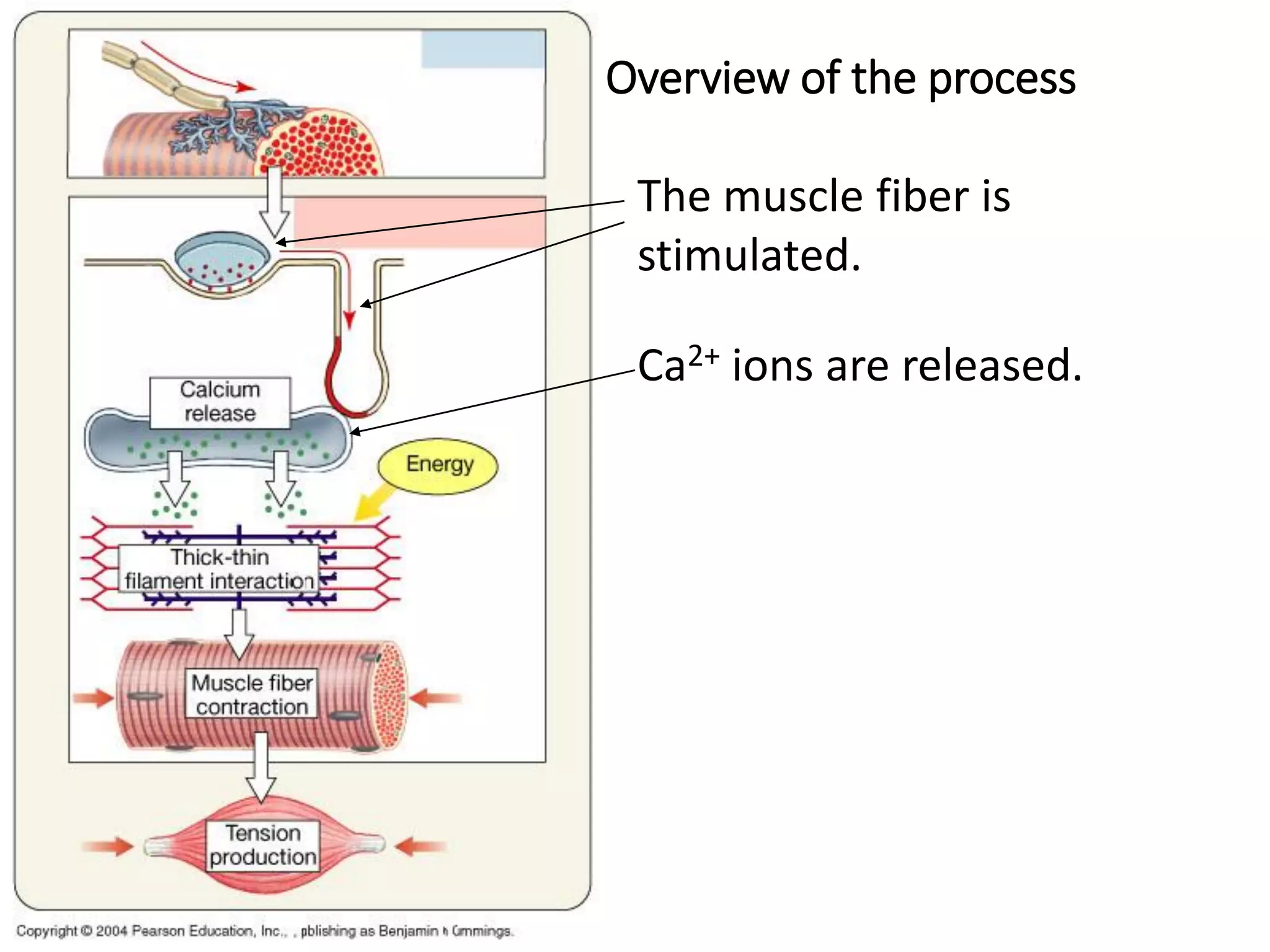
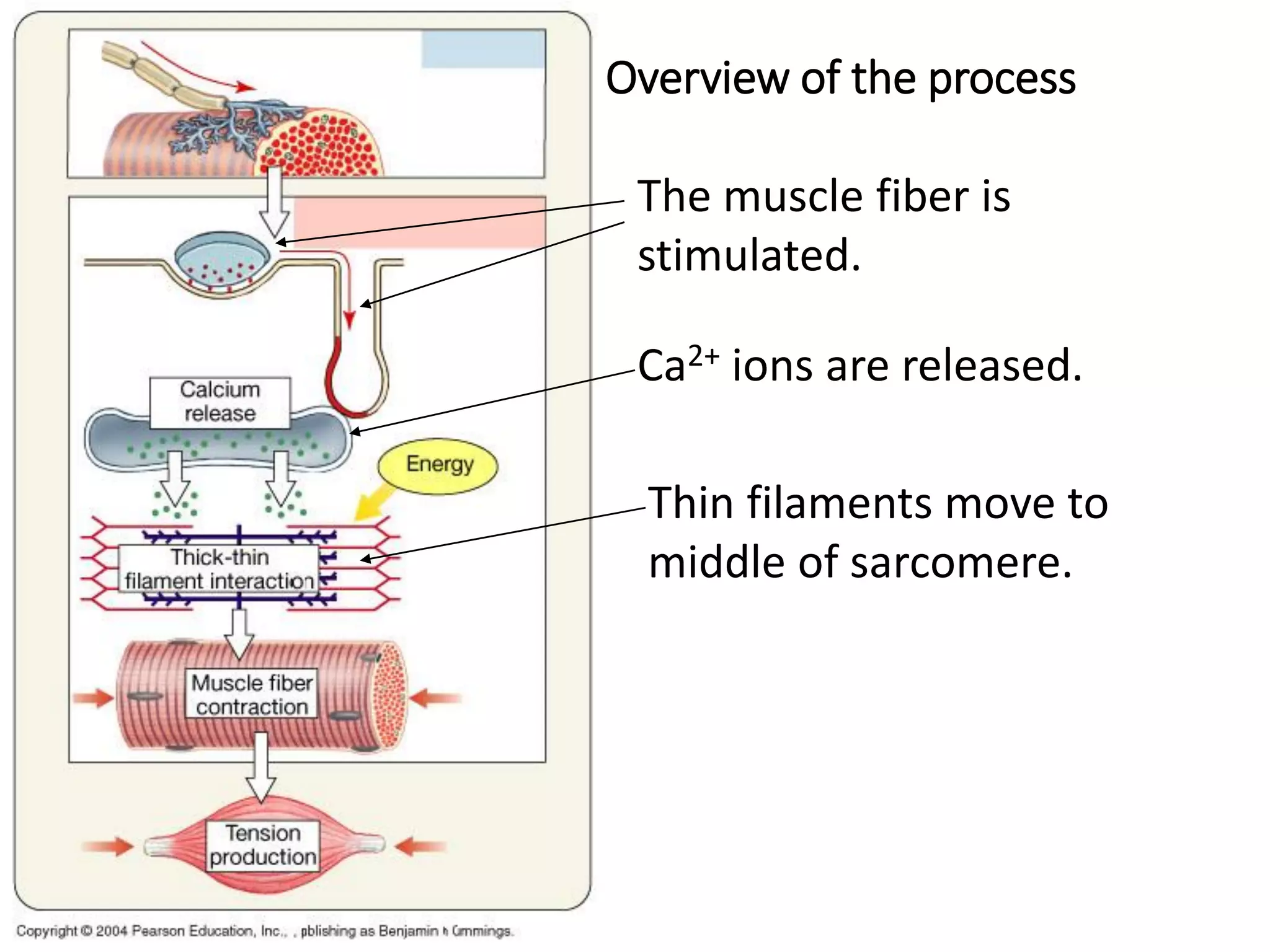
Overview of the process
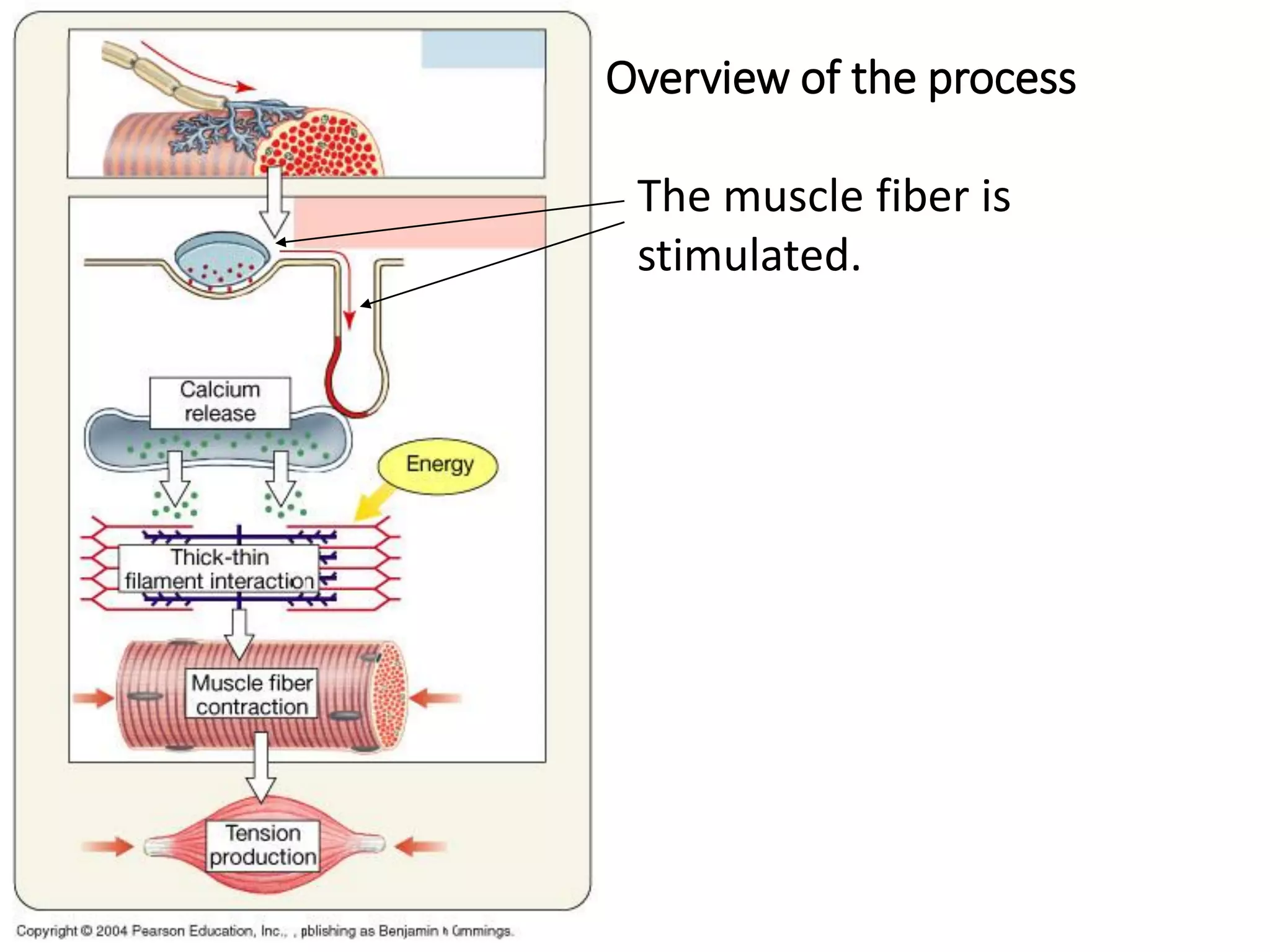
The muscle fiber is
stimulated.
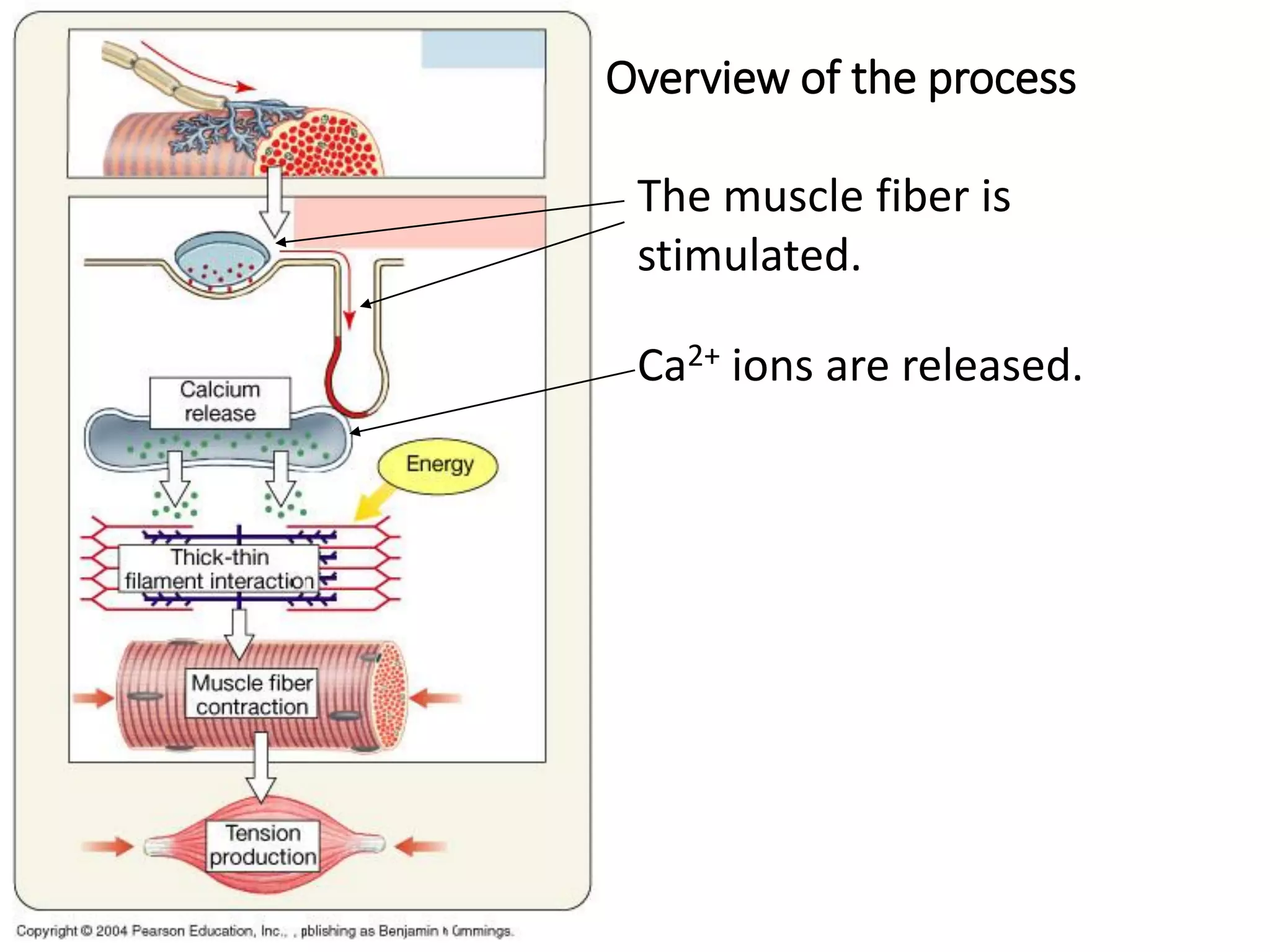
Overview of the process
The muscle fiber is
stimulated.
Ca2+ ions are released.
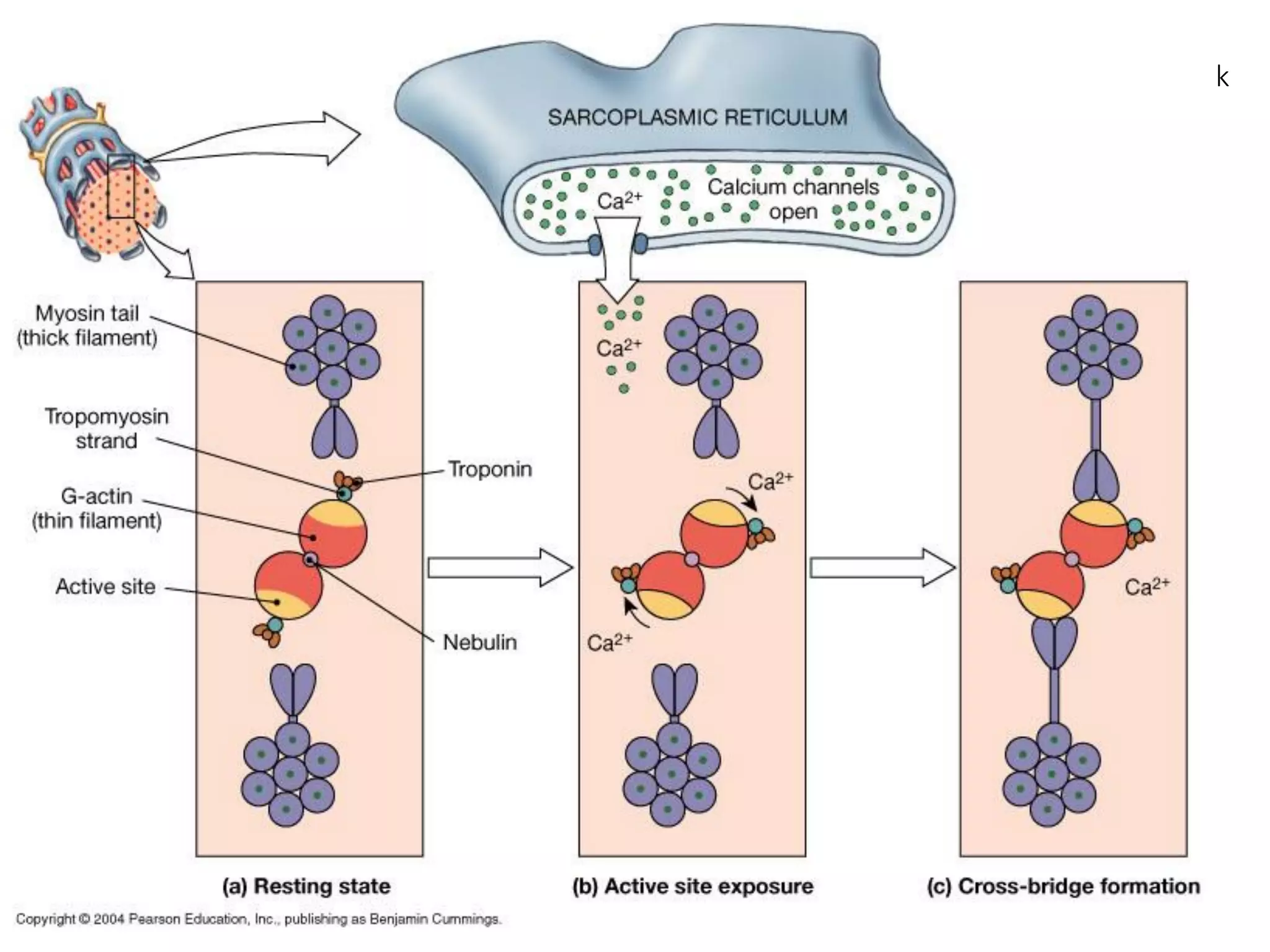
“End-on” view of thick
& thin filaments,
showing the effect of
calcium ions after
release from the S.R.
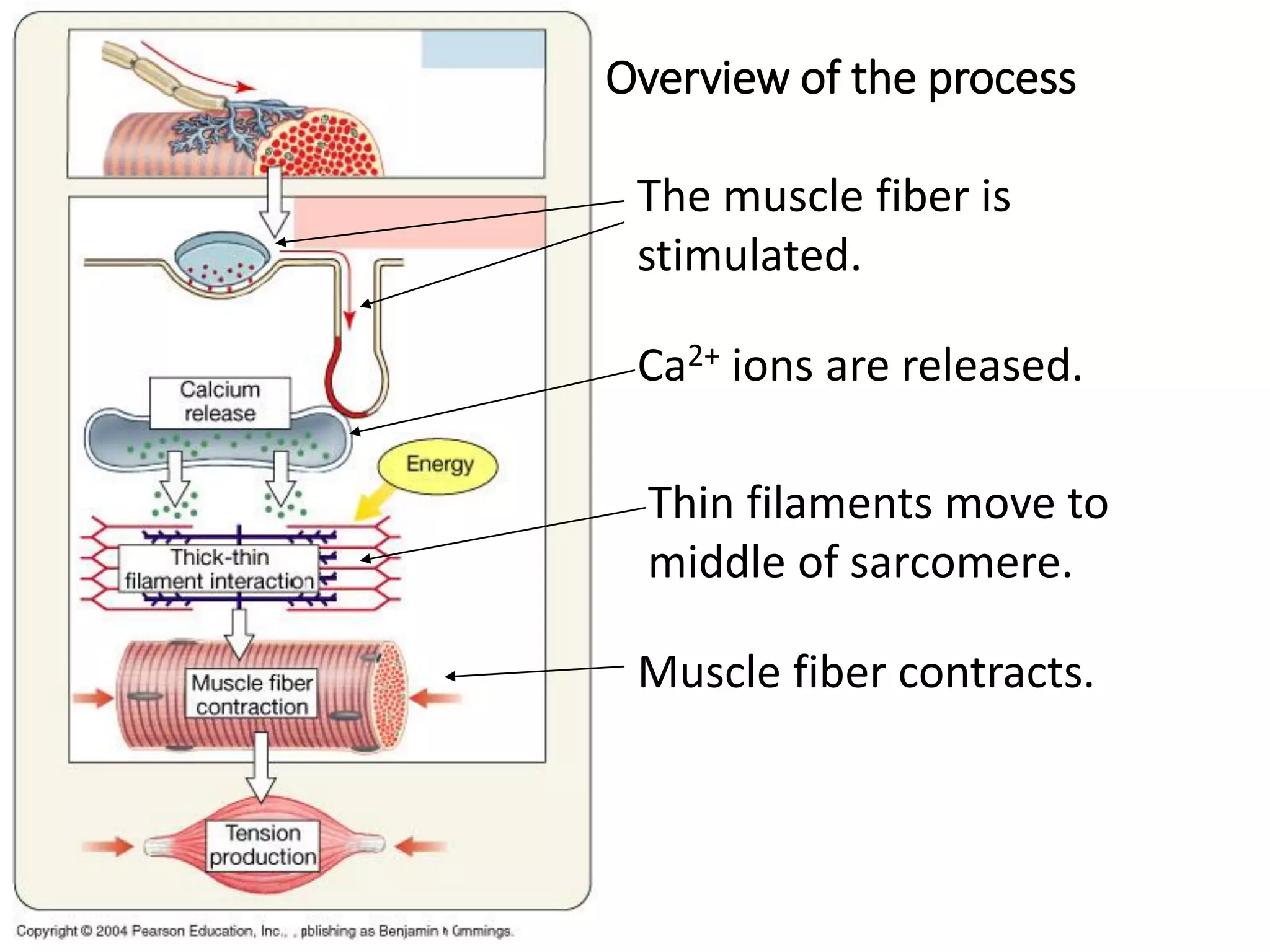
Overview of the process
The muscle fiber is
stimulated.
Ca2+ ions are released.
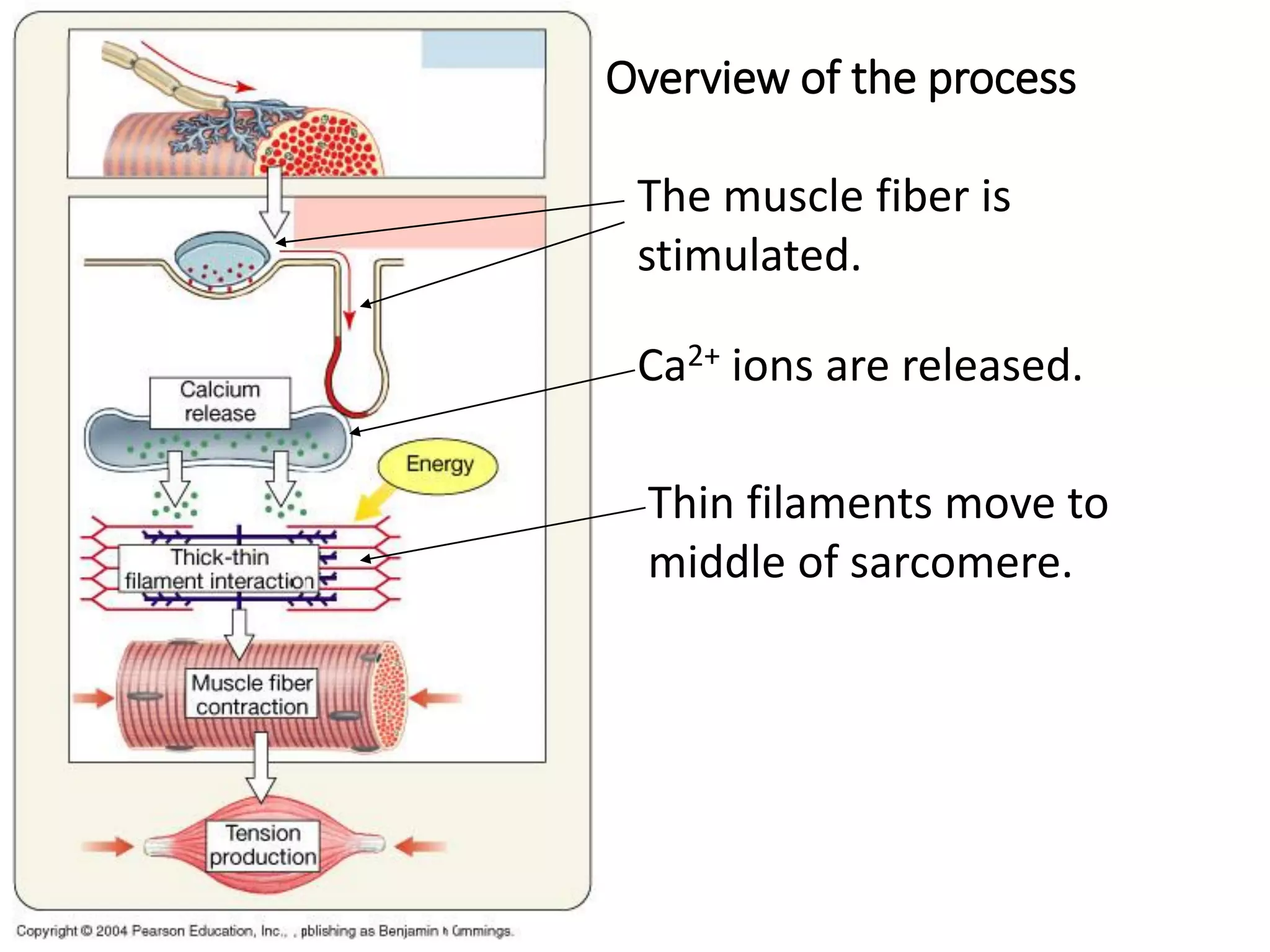
Overview of the process
The muscle fiber is
stimulated.
Ca2+ ions are released.
Thin filaments move to
middle of sarcomere.
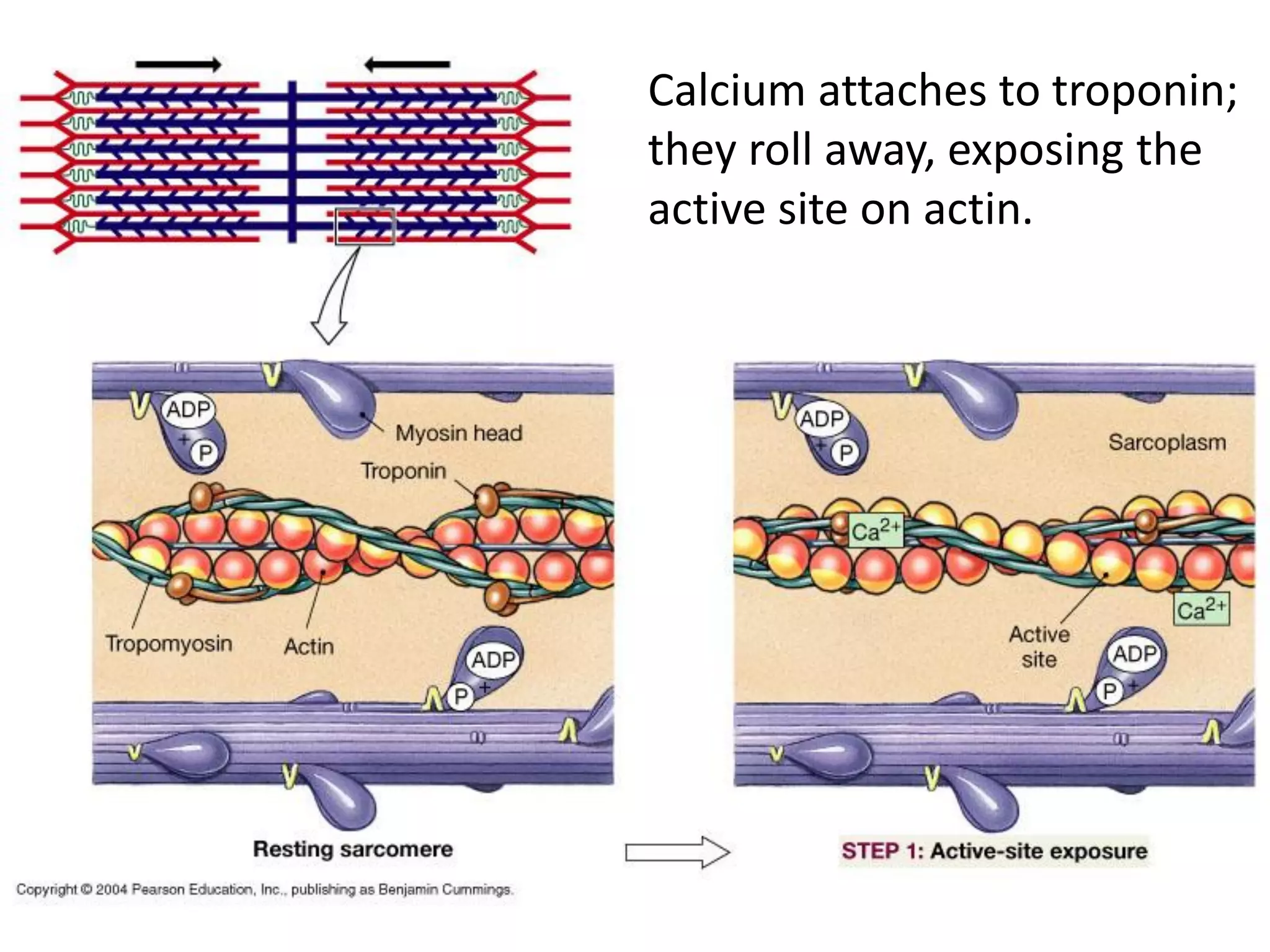
Calcium attaches to troponin;
they roll away, exposing the
active site on actin.
Myosin cross-bridges
attach to active site on
actin.
After attachment, the
cross-bridges pivot,
pulling the thin
filaments.
A fresh ATP replaces the
ADP+Pi, allowing myosin and
actin to detach.
Energy from the
splitting of the fresh
ATP allows
repositioning of the
myosin head.
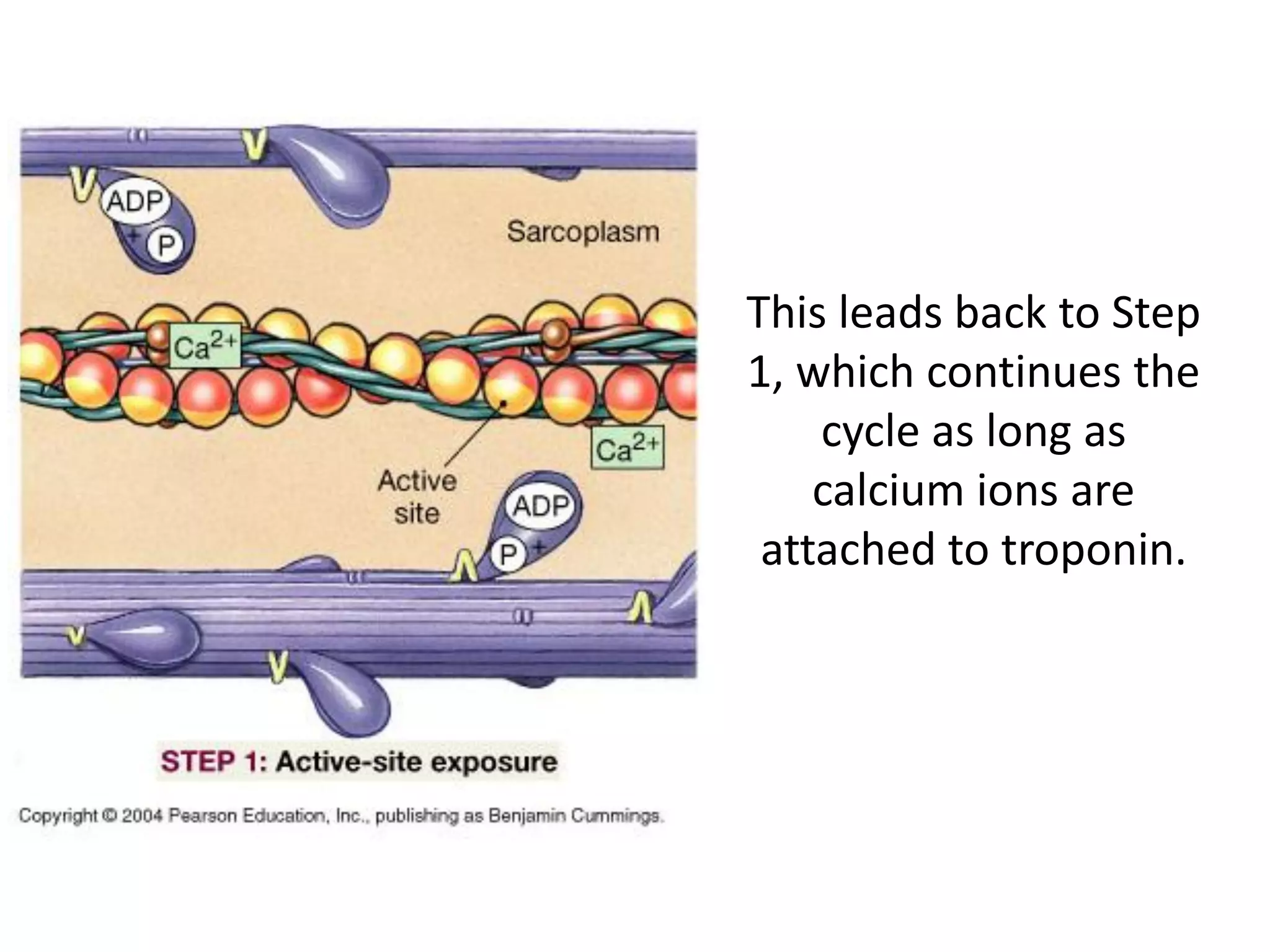
This leads back to Step
1, which continues the
cycle as long as
calcium ions are
attached to troponin.
Overview of the process
The muscle fiber is
stimulated.
Ca2+ ions are released.
Thin filaments move to
middle of sarcomere.
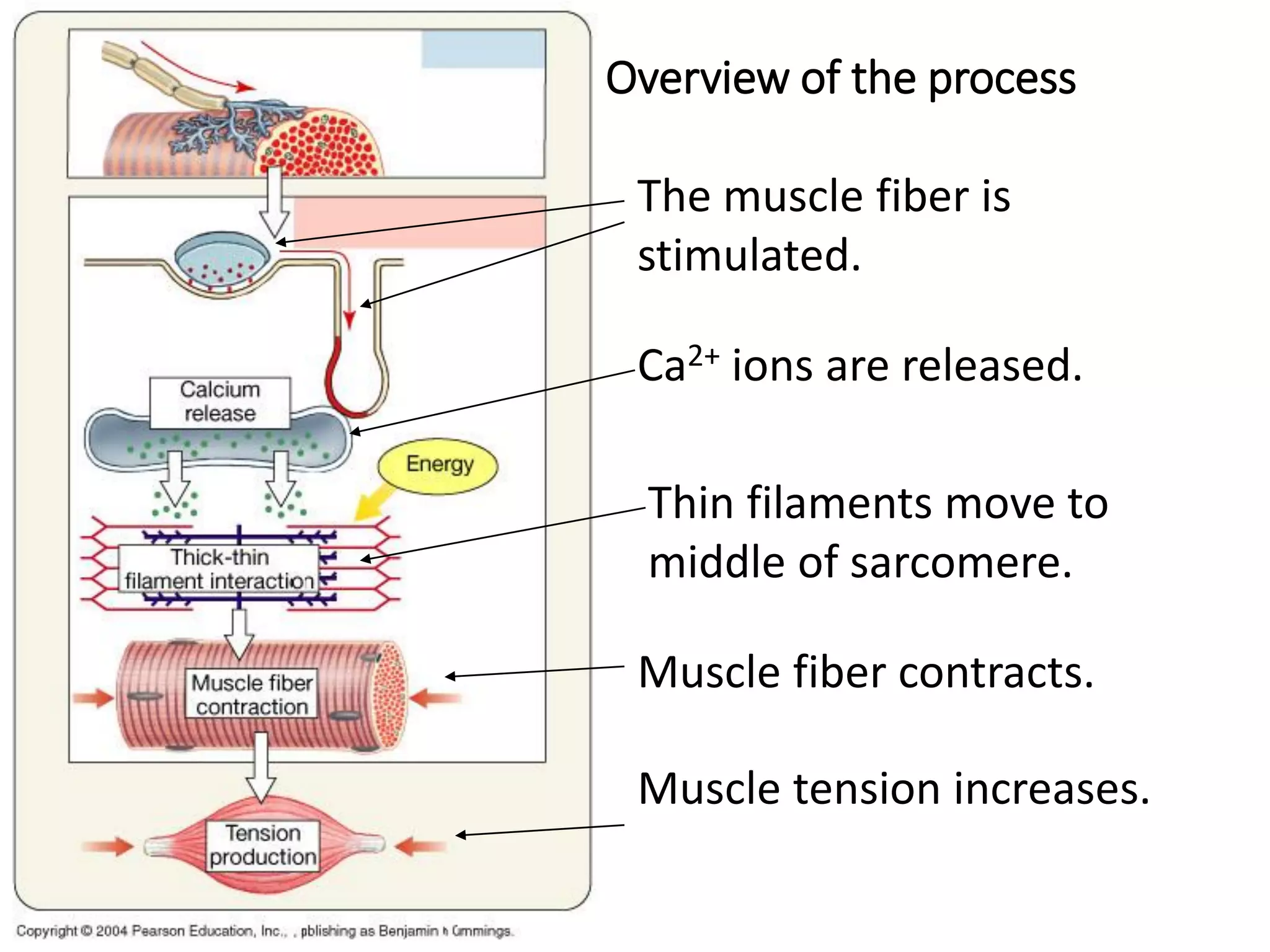
Overview of the process
The muscle fiber is
stimulated.
Ca2+ ions are released.
Thin filaments move to
middle of sarcomere.
Muscle fiber contracts.
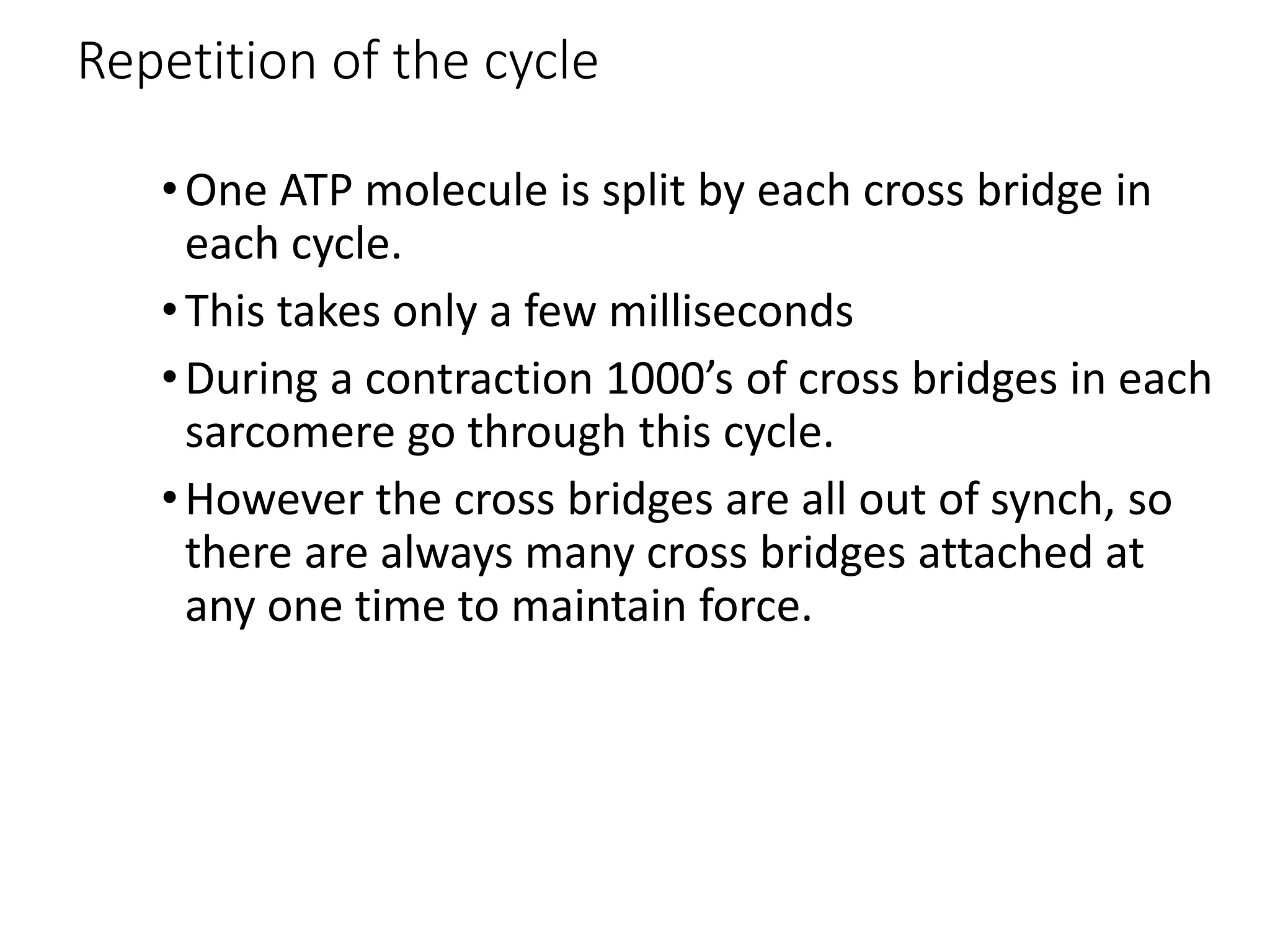
Overview of the process
The muscle fiber is
stimulated.
Ca2+ ions are released.
Thin filaments move to
middle of sarcomere.
Muscle fiber contracts.
Muscle tension increases.
Repetition of the cycle
•One ATP molecule is split by each cross bridge in
each cycle.
•This takes only a few milliseconds
•During a contraction 1000’s of cross bridges in each
sarcomere go through this cycle.
•However the cross bridges are all out of synch, so
there are always many cross bridges attached at
any one time to maintain force.
Thank You for Listening!

Muscular system

  • 1.
  • 2.
    Cilia and flagella,however, are composed of different proteins, and thus are exceptions to the rule. Animal Movement Movement is an important characteristic of animals. Animal movement occurs in many forms in animal tissues, ranging from barely discernible streaming of cytoplasm to extensive movements of powerful striated muscles. Most animal movement depends on a single fundamental mechanism: contractile proteins, which can change their form to elongate or contract. This contractile machinery is always composed of ultrafine fibrils— fine filaments, striated fibrils, or tubular fibrils (microtubules) arranged to contract when powered by ATP. By far the most important protein contractile system is the actomyosin system, composed of two proteins, actin and myosin. Three principal kinds of animal movement: ameboid, ciliary, and muscular.
  • 3.
    -a form ofmovement especially characteristic of amebas and other unicellular forms. Ameboid Movement - it is also found in many wandering cells of metazoans, such as white blood cells, embryonic mesenchyme, and numerous other mobile cells that move through the tissue spaces. Ameboid cells change their shape by sending out and withdrawing pseudopodia (false feet) from any point on the cell surface. Beneath the plasmalemma lies a nongranular layer, the gel-like ectoplasm, which encloses the more liquid endoplasm.
  • 5.
    Cilia are minute,hairlike, motile processes that extend from the surfaces of the cells of many animals. Ciliary and Flagellar Movement Particularly distinctive feature of ciliate protistans. Cilia are found in all major groups of animals. Cilia perform many roles either in moving small organisms such as unicellular ciliates and flagellates through their aquatic environment or in propelling fluids and materials across epithelial surfaces of larger animals.
  • 6.
    Cilia are ofremarkably uniform diameter (0.2 to 0.5 m) wherever they are found. Each cilium contains a peripheral circle of nine double microtubules arranged around two single microtubules in the center. Exceptions to the 9 + 2 arrangement have been noted: for example: sperm tails of flatworms have but one central microtubule, and sperm tails of a mayfly have no central microtubule.
  • 7.
    Each microtubule iscomposed of a spiral array of protein subunits called tubulin. The microtubule doublets around the periphery are connected to each other and to the central pair of microtubules by a complex system of connective elements. Extending from each doublet is a pair of arms composed of the protein dynein. Dynein arms act as cross bridges between the doublets, operate to produce a sliding force between the microtubules.
  • 8.
    A flagellum isa whiplike structure longer than a cilium and usually present singly or in small numbers at one end of a cell. They are found in members of flagellate protistans, in animal spermatozoa, and in sponges. The main difference between a cilium and a flagellum is in their beating pattern rather than in their structure, since both look alike internally. A flagellum beats symmetrically with snakelike undulations so that water is propelled parallel to the long axis of the flagellum.
  • 9.
    A cilium, incontrast, beats asymmetrically with a fast power stroke in one direction followed by a slow recovery during which the cilium bends as it returns to its original position. Water is propelled parallel to the ciliated surface.
  • 10.
    Microtubules behave as“sliding filaments” that move past one another much like the sliding filaments of vertebrate skeletal muscle. During ciliary flexion, the dynein arms link to adjacent microtubules, then swivel and release in repeated cycles. During the recovery stroke microtubules on the opposite side slide outward to bring the cilium back to its starting position.
  • 11.
    The Mechanism ofCiliary and Flagellar Locomotion the dynein arms anchored along the A tubule of the lower doublet attach to binding sites on the B tubule of the upper doublet. the dynein molecules undergo a conformational change, or power stroke, that causes the lower doublet to slide toward the basal end of the upper doublet. the dynein arms have detached from the B tubule of the upper doublet the arms have reattached to the upper doublet so that another cycle can begin.
  • 12.
    Contractile tissue ismost highly developed in muscle cells called fibers. Although muscle fibers themselves can do work only by contraction and cannot actively lengthen, they can be arranged in so many different configurations and combinations that almost any movement is possible. Muscular Movement Vertebrate muscle is broadly classified on the basis of the appearance of muscle cells (fibers). Types of Vertebrate Muscle Skeletal muscle appears transversely striped (striated), with alternating dark and light bands. Cardiac muscle also possesses striations like skeletal muscle but is uninucleated and with branching cells. Smooth (visceral) muscle which lacks the characteristic alternating bands of the striated type.
  • 13.
    Antagonistic Muscle Action •Muscles are either contracted or relaxed • When contracted the muscle exerts a pulling force, causing it to shorten • Since muscles can only pull (not push), they work in pairs called antagonistic muscles • The muscle that bends the joint is called the flexor muscle • The muscle that straightens the joint is called the extensor muscle
  • 14.
    Elbow Joint • Thebest known example of antagonistic muscles are the bicep & triceps muscles Elbow joint flexed Flexor muscles contracted Extensor muscles relaxed Elbow joint extended Extensor muscles contracted Flexor muscles relaxed biceps triceps Section through arm Flexor muscles Extensor muscles Humerus Bone
  • 15.
    Skeletal muscle istypically organized into sturdy, compact bundles or bands. They are packed into bundles called fascicles (fasciculus, small bundle). Most skeletal muscles taper (thinner) at their ends, where they connect to bones by tendons. Attached to skeletal elements. Responsible for movements of the trunk, appendages, eyes, mouthparts, and other structure. Skeletal muscle fibers are extremely long, cylindrical, multinucleate cells that may reach from one end of the muscle to the other.
  • 16.
    In most fishes,amphibians, and to some extent lizards and snakes, there is a segmented organization of muscles alternating with the vertebrae. The skeletal muscles of other vertebrates, by splitting, fusion, and shifting, have developed into specialized muscles best suited for manipulating jointed appendages that have evolved for locomotion on land. Skeletal muscle contracts powerfully and quickly but fatigues more rapidly than does smooth muscle. Skeletal muscle is a voluntary muscle because it is stimulated by motor fibers and is under conscious control.
  • 17.
    Smooth (Visceral) musclelacks the striations. Cells are long, tapering strands, each containing a single nucleus. Smooth muscle cells are organized into sheets of muscle circling the walls of the alimentary canal, blood vessels, respiratory passages, and genital ducts. Smooth muscle is typically slow acting and can maintain prolonged contractions with very little energy expenditure. It is under the control of the autonomic nervous system; its contractions are involuntary and unconscious.
  • 18.
    Cardiac muscle, theseemingly tireless muscle of the vertebrate heart, combines certain characteristics of both skeletal and smooth muscle. It is fast acting and striated, but contraction is under involuntary autonomic control. Actually the autonomic nerves serving the heart can only speed up or slow down the rate of contraction; the heartbeat originates within specialized cardiac muscle, and the heart continues to beat even after all autonomic nerves are severed. Cardiac muscle is composed of closely opposed, but separate, uninucleated cell fibers (syncytium) and intercalated discs.
  • 19.
    Smooth and striatedmuscles are also characteristic of invertebrate animals, but there are many variations of both types and even instances in structural and functional features. Types of Invertebrate Muscle Striated muscle appears in invertebrate groups as diverse as cnidarians and arthropods. The thickest muscle fibers known, approximately 3 mm in diameter and 6 cm long, are those of giant barnacles and of Alaska king crabs living along the Pacific coast of North America.
  • 20.
    Bivalve molluscan musclescontain fibers of two types. One kind is striated muscle that can contract rapidly, enabling the bivalve to snap shut its valves when disturbed. Scallops use these “fast” muscle fibers to swim in their awkward manner. The second muscle type is smooth muscle, capable of slow, long-lasting contractions. Using these fibers, a bivalve can keep its valves tightly shut for hours or even days. Such adductor muscles use little metabolic energy and receive remarkably few nerve impulses to maintain the activated state.
  • 21.
    The wings ofsome small flies operate at frequencies greater than 1000 beats per second. The so-called fibrillar muscle. It has very limited extensibility; that is, the wing leverage (control) system is arranged so that the muscles shorten only slightly during each downbeat of the wings. Furthermore, muscles and wings operate as a rapidly oscillating (back & forth) system in an elastic thorax.
  • 22.
    Each cell, orfiber, is a multinucleated tube containing numerous myofibrils, packed together and invested by the cell membrane, the sarcolemma. Structure of Striated Muscle The myofibril contains two types of myofilaments: thick filaments composed of the protein myosin, and thin filaments, composed of the protein actin. These are the actual contractile proteins of the muscle. Thin filaments are held together by a dense structure called the Z line. The functional unit of the myofibril, the sarcomere, extends between successive Z lines.
  • 23.
    •Sarcomere = thebasic contractile unit
  • 26.
    A (anisotropic) –dark band I (isotropic) – light band
  • 27.
    Each myosin moleculeis composed of two polypeptide chains, each having a club-shaped head. Each thick filament is made up of myosin molecules packed together in an elongate bundle. Lined up as they are in a bundle to form a thick filament, the double heads of each myosin molecule face outward from the center of the filament. These heads act as molecular cross bridges that interact with the thin filaments during contraction.
  • 28.
    Thin filaments aremore complex because they are composed of three different proteins. The backbone of the thin filament is a double strand of the protein actin, twisted into a double helix. Surrounding the actin filament are two thin strands of another protein, tropomyosin, that lie near the grooves between the actin strands. Each tropomyosin strand is itself a double helix. The third protein of the thin filament is troponin, a complex of three globular proteins located at intervals along the filament. Troponin is a calcium-dependent switch that acts as the control point in the contraction process.
  • 29.
    The Sarcomere Thick filaments (myosin) Thinfilaments (actin) M line Z line Z line proteins in the Z line just thin filament overlap zone - both thick & thin filaments just thick filament myosin bare zone - no cross bridges proteins in the M line
  • 31.
    In the 1950sthe English physiologists A. F. Huxley and H. E. Huxley independently proposed the sliding filament model to explain striated muscle contraction. Sliding Filament Model of Muscle Contraction Thick and thin filaments become linked together by molecular cross bridges, which act as levers to pull the filaments past each other.
  • 32.
    Sliding Filament Modelof Muscle Contraction During contraction, cross bridges on the thick filaments swing rapidly back and forth, alternately attaching to and releasing from special receptor sites on the thin filaments, and drawing thin filaments past thick filaments. As contraction continues, the Z lines are pulled closer together. Thus the sarcomere shortens. Because all sarcomere units shorten together, the muscle contracts. Relaxation is a passive process. When cross bridges between the thick and thin filaments release, the sarcomeres are free to lengthen.
  • 33.
    Sarcomere shortens whenmuscle contracts • Shortening of the sarcomeres in a myofibril produces the shortening of the myofibril
  • 34.
    Mechanism of musclecontraction •The above micrographs show that the sarcomere gets shorter when the muscle contracts •The light (I) bands become shorter •The dark bands (A) bands stay the same length Relaxed muscle Contracted muscle relaxed sarcomere contracted sarcomere
  • 35.
    The Sliding FilamentTheory • So, when the muscle contracts, sarcomeres become smaller • However the filaments do not change in length. • Instead they slide past each other (overlap) • So actin filaments slide between myosin filaments • and the zone of overlap is larger
  • 36.
    Muscle contracts inresponse to nerve stimulation. Control of Contraction If the nerve supply to a muscle is severed, the muscle atrophies (weaken). Skeletal muscle fibers are innervated by motor neurons whose cell bodies are located in the spinal cord. Each cell body gives rise to a motor axon that leaves the spinal cord to travel by way of a peripheral nerve trunk to a muscle where it branches repeatedly into many terminal branches. Each terminal branch innervates a single muscle fiber. Depending on the type of muscle, a single motor axon may innervate as few as three or four muscle fibers (where very precise control is needed, such as the muscles that control eye movement) or as many as 2000 muscle fibers (where precise control is not required, such as large leg muscles).
  • 37.
    The motor neuronand all muscle fibers it innervates is called a motor unit. Control of Contraction The motor unit is the functional unit of skeletal muscle. When a motor neuron fires, the action potential passes to all fibers of the motor unit and each is stimulated to contract simultaneously. Total force exerted by a muscle depends on the number of motor units activated. Precise control of movement is achieved by varying the number of motor units activated at any one time. A smooth and steady increase in muscle tension is produced by increasing the number of motor units brought into play; this is called motor unit recruitment.
  • 38.
    The place wherea motor axon terminates on a muscle fiber is called the myoneural junction. The Myoneural Junction At the junction is a tiny gap, or synaptic cleft, that thinly separates a nerve fiber and muscle fiber. In the vicinity of the junction, the neuron stores a chemical, acetylcholine, in minute vesicles known as synaptic vesicles.
  • 39.
    Acetylcholine is releasedwhen a nerve impulse reaches a synapse. This substance is a chemical mediator that diffuses across the narrow junction and acts on the muscle fiber membrane to generate an electrical depolarization. The depolarization spreads rapidly through the muscle fiber, causing it to contract. Thus the synapse is a special chemical bridge that couples together the electrical activities of nerve and muscle fibers.
  • 40.
    Built into vertebrateskeletal muscle is an elaborate conduction system that serves to carry the depolarization from the myoneural junction to the densely packed filaments within the fiber. Along the surface of the sarcolemma are numerous invaginations that project as a system of tubules into the muscle fiber. This is called the T-system. The T-system is continuous with the sarcoplasmic reticulum, a system of fluid-filled channels that runs parallel to the myofilaments. The system is ideally arranged for speeding the electrical depolarization from the myoneural junction to the myofilaments within the fiber.
  • 41.
    Step 1: Anaction potential spreads along the sarcolemma and is conducted inward to the sarcoplasmic reticulum by way of T tubules (T-tubule system). Calcium ions released from the sarcoplasmic reticulum diffuse rapidly into the myofibrils and bind to troponin molecules on the actin molecule. Troponin molecules are moved away from the active sites. Excitation-contraction coupling in vertebrate skeletal muscle
  • 42.
    Excitation-contraction coupling invertebrate skeletal muscle Step 2: Myosin cross bridges bind to the exposed active sites.
  • 43.
    Excitation-contraction coupling invertebrate skeletal muscle Step 3: Using the energy stored in ATP, the myosin head swings toward the center of the sarcomere. ADP and a phosphate group are released.
  • 44.
    Excitation-contraction coupling invertebrate skeletal muscle Step 4: The myosin head binds another ATP molecule; this frees the myosin head from the active site on actin.
  • 45.
    Excitation-contraction coupling invertebrate skeletal muscle Step 5: The myosin head splits ATP, retaining the energy released as well as the ADP and the phosphate group. The cycle can now be repeated as long as calcium is present to open active sites on the actin molecules.
  • 46.
    Muscle contraction requireslarge amounts of energy. ATP is the immediate source of energy, but the amount present will sustain contraction for only a second or two. Muscle cells immediately call on the second level of energy reserve, creatine phosphate. Creatine phosphate is a high-energy phosphate compound that stores bond energy during periods of rest. As ADP is produced during contraction, creatine phosphate releases its stored bond energy to convert ADP to ATP. This reaction can be summarized as: Creatine phosphate ADP → ATP Creatine Within a few seconds—perhaps as long as 30 seconds depending on the rapidity of muscle contraction—the reserves of creatine phosphate are depleted. The contracting muscle now must be fueled from its third and largest store of energy, glycogen.
  • 47.
    Glycogen is storedin both liver and muscle. Muscle has by far the larger store—some 3/4s of all the glycogen in the body is stored in muscle. As a supply of energy for contraction, glycogen has three important advantages: it is relatively abundant, it can be mobilized quickly, and it can provide energy under anoxic conditions. As soon as the muscle’s store of creatine phosphate declines, enzymes break down glycogen, converting it into glucose-6- phosphate, the first stage of glycolysis that leads into mitochondrial respiration and the generation of ATP.
  • 48.
  • 49.
    Overview of theprocess The muscle fiber is stimulated.
  • 50.
    Overview of theprocess The muscle fiber is stimulated. Ca2+ ions are released.
  • 51.
    “End-on” view ofthick & thin filaments, showing the effect of calcium ions after release from the S.R.
  • 52.
    Overview of theprocess The muscle fiber is stimulated. Ca2+ ions are released.
  • 53.
    Overview of theprocess The muscle fiber is stimulated. Ca2+ ions are released. Thin filaments move to middle of sarcomere.
  • 54.
    Calcium attaches totroponin; they roll away, exposing the active site on actin.
  • 55.
    Myosin cross-bridges attach toactive site on actin. After attachment, the cross-bridges pivot, pulling the thin filaments.
  • 56.
    A fresh ATPreplaces the ADP+Pi, allowing myosin and actin to detach. Energy from the splitting of the fresh ATP allows repositioning of the myosin head.
  • 57.
    This leads backto Step 1, which continues the cycle as long as calcium ions are attached to troponin.
  • 58.
    Overview of theprocess The muscle fiber is stimulated. Ca2+ ions are released. Thin filaments move to middle of sarcomere.
  • 59.
    Overview of theprocess The muscle fiber is stimulated. Ca2+ ions are released. Thin filaments move to middle of sarcomere. Muscle fiber contracts.
  • 60.
    Overview of theprocess The muscle fiber is stimulated. Ca2+ ions are released. Thin filaments move to middle of sarcomere. Muscle fiber contracts. Muscle tension increases.
  • 61.
    Repetition of thecycle •One ATP molecule is split by each cross bridge in each cycle. •This takes only a few milliseconds •During a contraction 1000’s of cross bridges in each sarcomere go through this cycle. •However the cross bridges are all out of synch, so there are always many cross bridges attached at any one time to maintain force.
  • 62.
    Thank You forListening!