Structure and Movement 
The Muscular System
Figure 6.2 
Slide 6.1 
The Muscular System
The Muscular System 
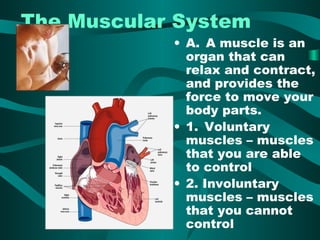
• A. A muscle is an 
organ that can 
relax and contract, 
and provides the 
force to move your 
body parts. 
• 1. Voluntary 
muscles – muscles 
that you are able 
to control 
• 2. Involuntary 
muscles – muscles 
that you cannot 
control
The Muscular System 
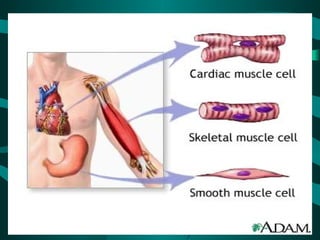
• B. There are 3 types of 
muscle tissue 
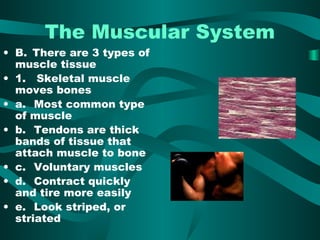
• 1. Skeletal muscle 
moves bones 
• a. Most common type 
of muscle 
• b. Tendons are thick 
bands of tissue that 
attach muscle to bone 
• c. Voluntary muscles 
• d. Contract quickly 
and tire more easily 
• e. Look striped, or 
striated
The Muscular System 
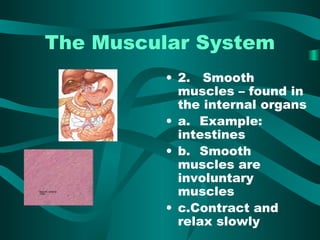
• 2. Smooth 
muscles – found in 
the internal organs 
• a. Example: 
intestines 
• b. Smooth 
muscles are 
involuntary 
muscles 
• c.Contract and 
relax slowly
The Muscular System 
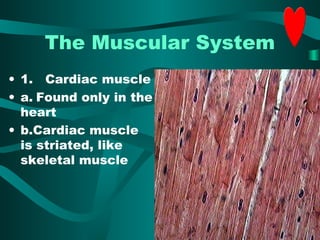
• 1. Cardiac muscle 
• a. Found only in the 
heart 
• b.Cardiac muscle 
is striated, like 
skeletal muscle
MUSCLE FACTS 
• Smallest muscle in the body? 
Stapedius: the muscle that activates the stirrup, 
the small bone that sends vibrations from the 
eardrum to the inner ear. It measures just 0.05 
inch (0.13 centimeter) in length. 
• Largest muscle in the body? 
Latissimus dorsi: the large, flat muscle pair that 
covers the middle and lower back. 
• Longest muscle in the body? 
Sartorius: the straplike muscle that runs 
diagonally from the waist down across the front 
of the thigh to the knee.
• Strongest muscle in the body? 
Gluteus maximus: the muscle pair of the 
hip that form most of the flesh of the 
buttocks. 
• Fastest-reacting muscle in the body? 
Orbicularis oculi: the muscle that encircles 
the eye and closes the eyelid. It contracts 
in less than 0.01 second. 
• Number of muscles used to make a 
smile? 
Seventeen. 
• Number of muscles used to make a 
frown? 
Forty-three.
• There are more than 630 muscles in 
your body. On average, your body 
weight is 40% muscle. Out of the 630 
muscles, 30 of them are facial muscles, 
which help you create all those 
different faces of happiness, surprise, 
joy, sorrow, sadness, fright, etc.
• The muscles surrounding your eye are 
the busiest muscles in your body. 
Research indicates that you probably 
blink them more than 100,000 times a 
day. 
• And the biggest muscle in your body 
is the gluteus maximus (your butt).
The Arms 
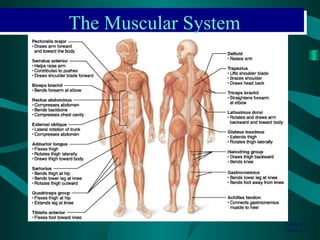
1. Deltoid 
abducts arm 
2. Biceps brachii 
flexes forearm 
supinates forearm from neutral 
3. Triceps brachii 
extends forearm
The Legs 
4. Sartorius 
flexes hip and knee 
5. Rectus femoris 
extends knee 
6. Gluteus maximus 
extensor of hip 
rotates thigh
7. Biceps femoris 
flexes knee 
8. Gastrocnemius 
flexes ankle 
stabilizes ankle and knee when 
standing
The Trunk 
9. Pectoralis major 
adducts humerus 
10. Rectus Abdominus 
produces trunk motions
11. Trapezius 
elevates and rotates scapula 
12. Latissimus dorsi 
rotates humerus
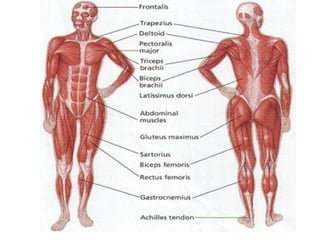
• Head Muscles 
• frontalis 
• orbicularis oculi 
• orbicularis oris 
• Etc.

7. muscular system copy

  • 1.
    Structure and Movement The Muscular System
  • 2.
    Figure 6.2 Slide6.1 The Muscular System
  • 5.
    The Muscular System • A. A muscle is an organ that can relax and contract, and provides the force to move your body parts. • 1. Voluntary muscles – muscles that you are able to control • 2. Involuntary muscles – muscles that you cannot control
  • 7.
    The Muscular System • B. There are 3 types of muscle tissue • 1. Skeletal muscle moves bones • a. Most common type of muscle • b. Tendons are thick bands of tissue that attach muscle to bone • c. Voluntary muscles • d. Contract quickly and tire more easily • e. Look striped, or striated
  • 8.
    The Muscular System • 2. Smooth muscles – found in the internal organs • a. Example: intestines • b. Smooth muscles are involuntary muscles • c.Contract and relax slowly
  • 9.
    The Muscular System • 1. Cardiac muscle • a. Found only in the heart • b.Cardiac muscle is striated, like skeletal muscle
  • 10.
    MUSCLE FACTS •Smallest muscle in the body? Stapedius: the muscle that activates the stirrup, the small bone that sends vibrations from the eardrum to the inner ear. It measures just 0.05 inch (0.13 centimeter) in length. • Largest muscle in the body? Latissimus dorsi: the large, flat muscle pair that covers the middle and lower back. • Longest muscle in the body? Sartorius: the straplike muscle that runs diagonally from the waist down across the front of the thigh to the knee.
  • 11.
    • Strongest musclein the body? Gluteus maximus: the muscle pair of the hip that form most of the flesh of the buttocks. • Fastest-reacting muscle in the body? Orbicularis oculi: the muscle that encircles the eye and closes the eyelid. It contracts in less than 0.01 second. • Number of muscles used to make a smile? Seventeen. • Number of muscles used to make a frown? Forty-three.
  • 12.
    • There aremore than 630 muscles in your body. On average, your body weight is 40% muscle. Out of the 630 muscles, 30 of them are facial muscles, which help you create all those different faces of happiness, surprise, joy, sorrow, sadness, fright, etc.
  • 13.
    • The musclessurrounding your eye are the busiest muscles in your body. Research indicates that you probably blink them more than 100,000 times a day. • And the biggest muscle in your body is the gluteus maximus (your butt).
  • 14.
    The Arms 1.Deltoid abducts arm 2. Biceps brachii flexes forearm supinates forearm from neutral 3. Triceps brachii extends forearm
  • 15.
    The Legs 4.Sartorius flexes hip and knee 5. Rectus femoris extends knee 6. Gluteus maximus extensor of hip rotates thigh
  • 16.
    7. Biceps femoris flexes knee 8. Gastrocnemius flexes ankle stabilizes ankle and knee when standing
  • 17.
    The Trunk 9.Pectoralis major adducts humerus 10. Rectus Abdominus produces trunk motions
  • 18.
    11. Trapezius elevatesand rotates scapula 12. Latissimus dorsi rotates humerus
  • 19.
    • Head Muscles • frontalis • orbicularis oculi • orbicularis oris • Etc.