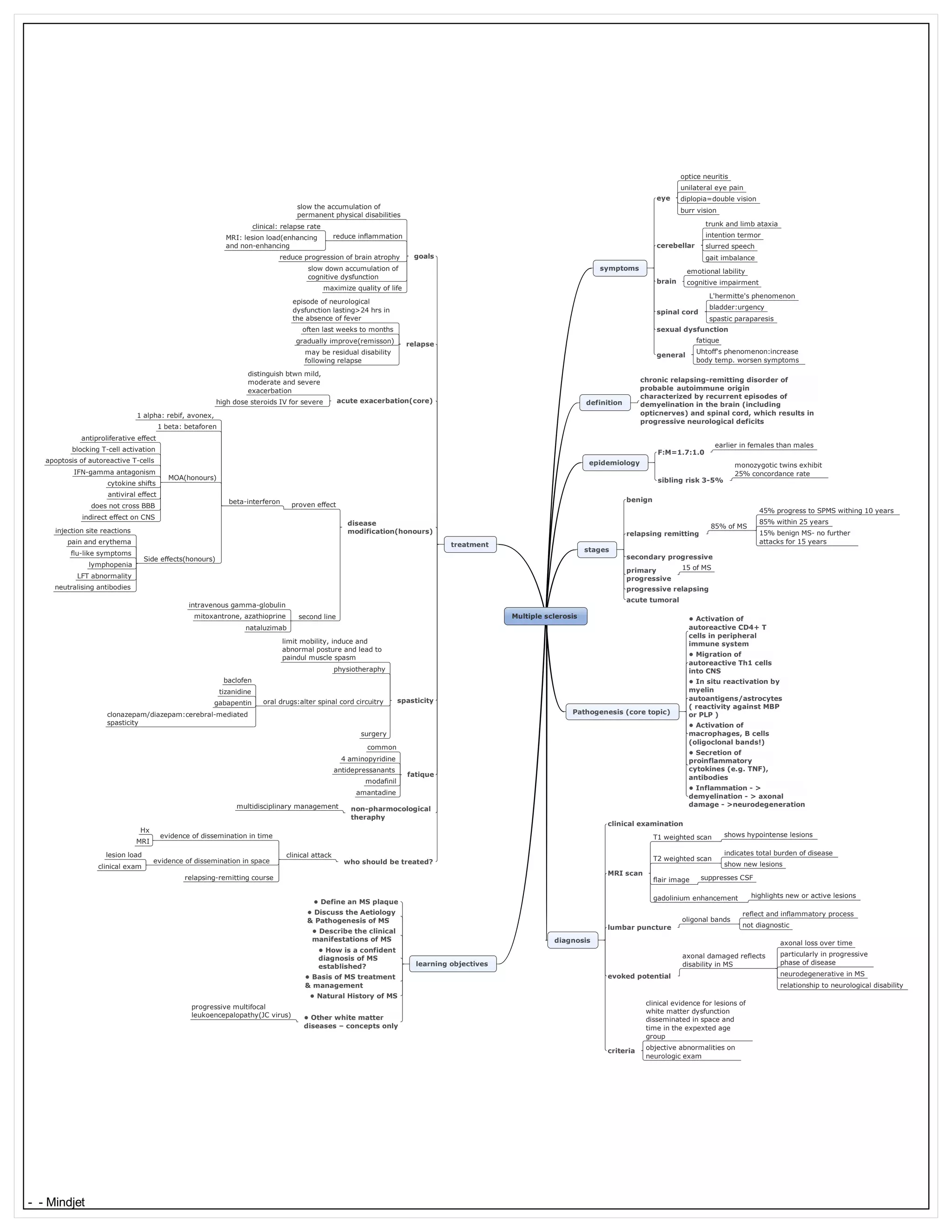
Multiple sclerosis
symptoms
eye
optice neuritis
unilateral eye pain
diplopia=double vision
burr vision
cerebellar
trunk and limb ataxia
intention termor
slurred speech
gait imbalance
brain
emotional lability
cognitive impairment
spinal cord
L'hermitte's phenomenon
bladder:urgency
spastic paraparesis
sexual dysfunction
general
fatique
Uhtoff's phenomenon:increase
body temp. worsen symptoms
definition
chronic relapsing-remitting disorder of
probable autoimmune origin
characterized by recurrent episodes of
demyelination in the brain (including
opticnerves) and spinal cord, which results in
progressive neurological deficits
epidemiology
F:M=1.7:1.0
earlier in females than males
sibling risk 3-5%
monozygotic twins exhibit
25% concordance rate
stages
benign
relapsing remitting
85% of MS
45% progress to SPMS withing 10 years
85% within 25 years
15% benign MS- no further
attacks for 15 years
secondary progressive
primary
progressive
15 of MS
progressive relapsing
acute tumoral
Pathogenesis (core topic)
• Activation of
autoreactive CD4+ T
cells in peripheral
immune system
• Migration of
autoreactive Th1 cells
into CNS
• In situ reactivation by
myelin
autoantigens/astrocytes
( reactivity against MBP
or PLP )
• Activation of
macrophages, B cells
(oligoclonal bands!)
• Secretion of
proinflammatory
cytokines (e.g. TNF),
antibodies
• Inflammation - >
demyelination - > axonal
damage - >neurodegeneration
diagnosis
clinical examination
MRI scan
T1 weighted scan shows hypointense lesions
T2 weighted scan
indicates total burden of disease
show new lesions
flair image suppresses CSF
gadolinium enhancement highlights new or active lesions
lumbar puncture
oligonal bands
reflect and inflammatory process
not diagnostic
evoked potential
axonal damaged reflects
disability in MS
axonal loss over time
particularly in progressive
phase of disease
neurodegenerative in MS
relationship to neurological disability
criteria
clinical evidence for lesions of
white matter dysfunction
disseminated in space and
time in the expexted age
group
objective abnormalities on
neurologic exam
learning objectives
• Define an MS plaque
• Discuss the Aetiology
& Pathogenesis of MS
• Describe the clinical
manifestations of MS
• How is a confident
diagnosis of MS
established?
• Basis of MS treatment
& management
• Natural History of MS
• Other white matter
diseases – concepts only
progressive multifocal
leukoencepalopathy(JC virus)
treatment
goals
slow the accumulation of
permanent physical disabilities
reduce inflammation
clinical: relapse rate
MRI: lesion load(enhancing
and non-enhancing
reduce progression of brain atrophy
slow down accumulation of
cognitive dysfunction
maximize quality of life
relapse
episode of neurological
dysfunction lasting>24 hrs in
the absence of fever
often last weeks to months
gradually improve(remisson)
may be residual disability
following relapse
acute exacerbation(core)
distinguish btwn mild,
moderate and severe
exacerbation
high dose steroids IV for severe
disease
modification(honours)
proven effectbeta-interferon
1 alpha: rebif, avonex,
1 beta: betaforen
MOA(honours)
antiproliferative effect
blocking T-cell activation
apoptosis of autoreactive T-cells
IFN-gamma antagonism
cytokine shifts
antiviral effect
does not cross BBB
indirect effect on CNS
Side effects(honours)
injection site reactions
pain and erythema
flu-like symptoms
lymphopenia
LFT abnormality
neutralising antibodies
second line
intravenous gamma-globulin
mitoxantrone, azathioprine
nataluzimab
spasticity
limit mobility, induce and
abnormal posture and lead to
paindul muscle spasm
physiotheraphy
oral drugs:alter spinal cord circuitry
baclofen
tizanidine
gabapentin
clonazepam/diazepam:cerebral-mediated
spasticity
surgery
fatique
common
4 aminopyridine
antidepressanants
modafinil
amantadine
non-pharmocological
theraphy
multidisciplinary management
who should be treated?
clinical attack
evidence of dissemination in time
Hx
MRI
evidence of dissemination in space
lesion load
clinical exam
relapsing-remitting course
- - Mindjet

Multiple sclerosis

  • 1.
    Multiple sclerosis symptoms eye optice neuritis unilateraleye pain diplopia=double vision burr vision cerebellar trunk and limb ataxia intention termor slurred speech gait imbalance brain emotional lability cognitive impairment spinal cord L'hermitte's phenomenon bladder:urgency spastic paraparesis sexual dysfunction general fatique Uhtoff's phenomenon:increase body temp. worsen symptoms definition chronic relapsing-remitting disorder of probable autoimmune origin characterized by recurrent episodes of demyelination in the brain (including opticnerves) and spinal cord, which results in progressive neurological deficits epidemiology F:M=1.7:1.0 earlier in females than males sibling risk 3-5% monozygotic twins exhibit 25% concordance rate stages benign relapsing remitting 85% of MS 45% progress to SPMS withing 10 years 85% within 25 years 15% benign MS- no further attacks for 15 years secondary progressive primary progressive 15 of MS progressive relapsing acute tumoral Pathogenesis (core topic) • Activation of autoreactive CD4+ T cells in peripheral immune system • Migration of autoreactive Th1 cells into CNS • In situ reactivation by myelin autoantigens/astrocytes ( reactivity against MBP or PLP ) • Activation of macrophages, B cells (oligoclonal bands!) • Secretion of proinflammatory cytokines (e.g. TNF), antibodies • Inflammation - > demyelination - > axonal damage - >neurodegeneration diagnosis clinical examination MRI scan T1 weighted scan shows hypointense lesions T2 weighted scan indicates total burden of disease show new lesions flair image suppresses CSF gadolinium enhancement highlights new or active lesions lumbar puncture oligonal bands reflect and inflammatory process not diagnostic evoked potential axonal damaged reflects disability in MS axonal loss over time particularly in progressive phase of disease neurodegenerative in MS relationship to neurological disability criteria clinical evidence for lesions of white matter dysfunction disseminated in space and time in the expexted age group objective abnormalities on neurologic exam learning objectives • Define an MS plaque • Discuss the Aetiology & Pathogenesis of MS • Describe the clinical manifestations of MS • How is a confident diagnosis of MS established? • Basis of MS treatment & management • Natural History of MS • Other white matter diseases – concepts only progressive multifocal leukoencepalopathy(JC virus) treatment goals slow the accumulation of permanent physical disabilities reduce inflammation clinical: relapse rate MRI: lesion load(enhancing and non-enhancing reduce progression of brain atrophy slow down accumulation of cognitive dysfunction maximize quality of life relapse episode of neurological dysfunction lasting>24 hrs in the absence of fever often last weeks to months gradually improve(remisson) may be residual disability following relapse acute exacerbation(core) distinguish btwn mild, moderate and severe exacerbation high dose steroids IV for severe disease modification(honours) proven effectbeta-interferon 1 alpha: rebif, avonex, 1 beta: betaforen MOA(honours) antiproliferative effect blocking T-cell activation apoptosis of autoreactive T-cells IFN-gamma antagonism cytokine shifts antiviral effect does not cross BBB indirect effect on CNS Side effects(honours) injection site reactions pain and erythema flu-like symptoms lymphopenia LFT abnormality neutralising antibodies second line intravenous gamma-globulin mitoxantrone, azathioprine nataluzimab spasticity limit mobility, induce and abnormal posture and lead to paindul muscle spasm physiotheraphy oral drugs:alter spinal cord circuitry baclofen tizanidine gabapentin clonazepam/diazepam:cerebral-mediated spasticity surgery fatique common 4 aminopyridine antidepressanants modafinil amantadine non-pharmocological theraphy multidisciplinary management who should be treated? clinical attack evidence of dissemination in time Hx MRI evidence of dissemination in space lesion load clinical exam relapsing-remitting course - - Mindjet