Multiple Sclerosis Diagnostic Issues Christopher Bourque
Acknowledgements American Academy of Neurology Continuum series Multiple Sclerosis Vol 10, #6, Dec. 2004 Elsevier Saunders Neurologic Clinics Multiple Sclerosis Vol 23 # 1 Feb. 2005
MS in 1 Slide Manifestations due to CNS  Slowing or failure of transmission Inflammatory demyelination Axonal damage Mostly damage of white matter tracts Optic neuritis, weakness, sensory loss, ataxia nystagmus, bladder dysfunction, cognitive impairment Diagnosis based on clinical and laboratory evidence of Dissemination in time Dissemination in space
Patterns of MS Relapsing - remitting Attacks with complete/incomplete recovery Stable between attacks Secondary - progressive Initially relapsing-remitting Then progression +/- attacks Progressive - relapsing Initial gradual detioriation Subsequent episodes Primary progressive Gradual decline No attacks
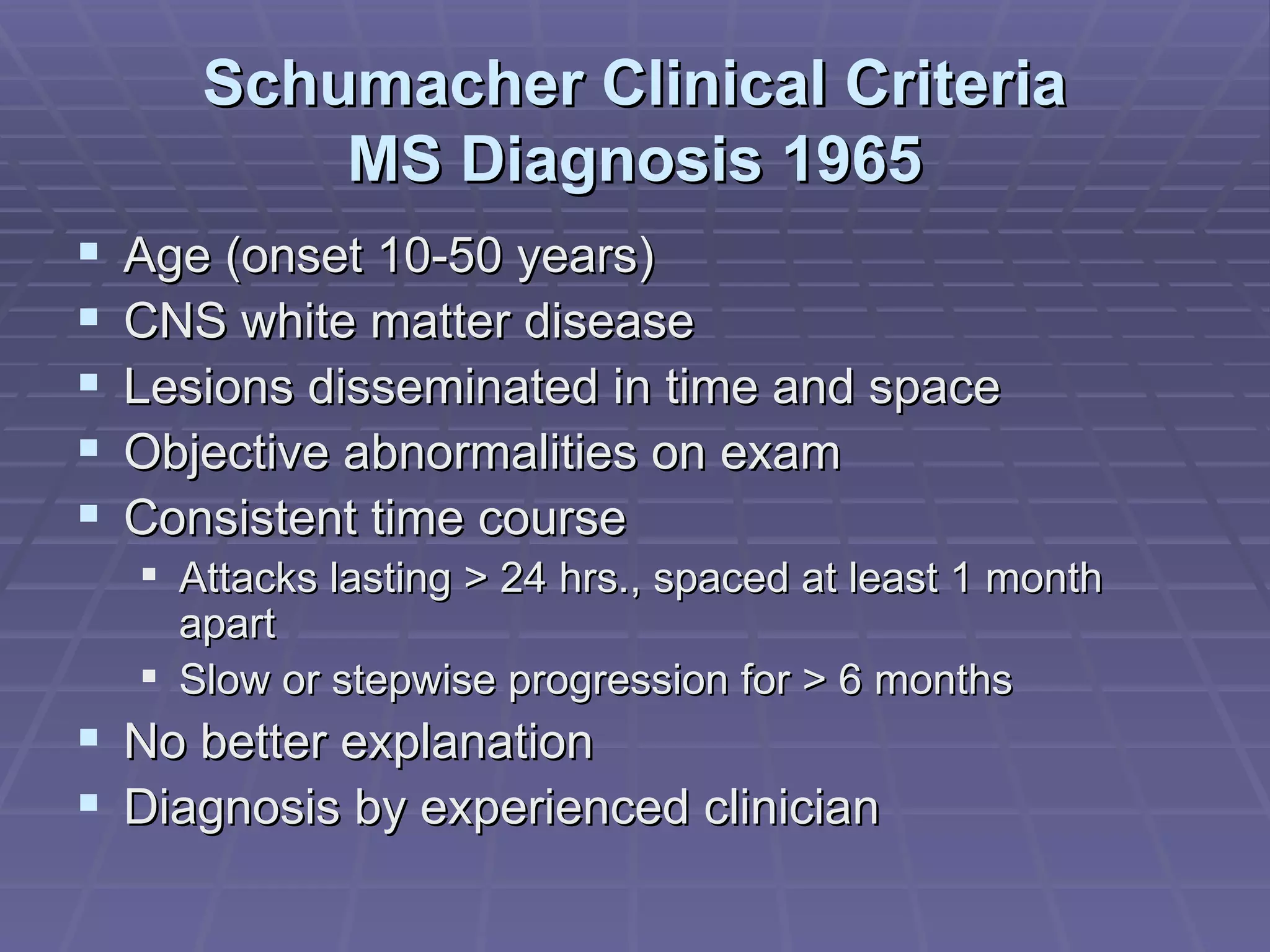
Schumacher Clinical Criteria MS Diagnosis 1965 Age (onset 10-50 years) CNS white matter disease Lesions disseminated in time and space Objective abnormalities on exam Consistent time course Attacks lasting > 24 hrs., spaced at least 1 month apart Slow or stepwise progression for > 6 months No better explanation Diagnosis by experienced clinician
Poser Criteria for the Diagnosis of MS 1983 Widely used for last 20 years Definite or probable Laboratory supported MS Replaced by McDonald criteria 2001 Technical advances enable quicker dx. Controversial
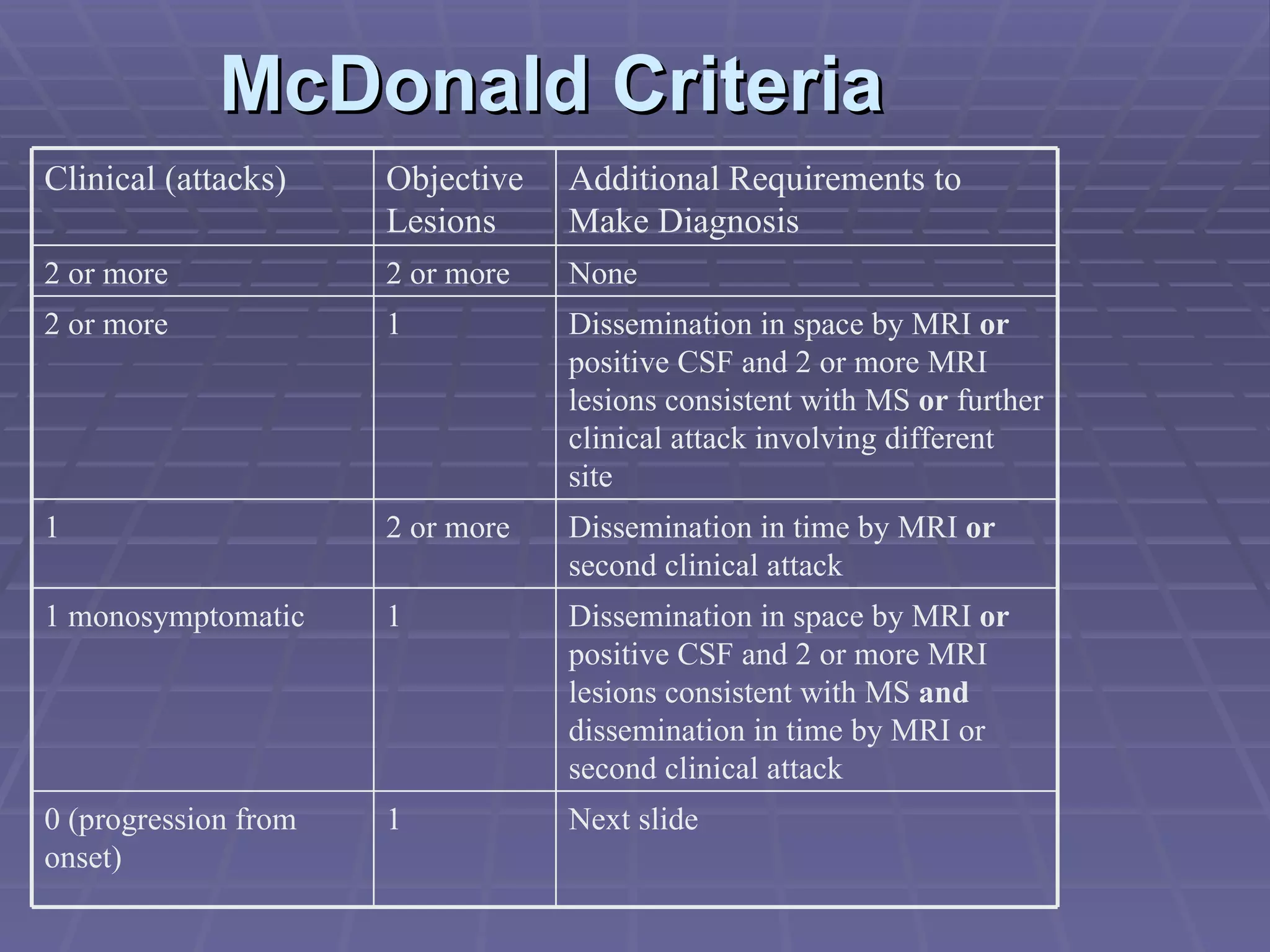
McDonald Criteria Next slide 1 0 (progression from onset) Dissemination in space by MRI  or  positive CSF and 2 or more MRI lesions consistent with MS  and  dissemination in time by MRI or second clinical attack 1 1 monosymptomatic Dissemination in time by MRI  or  second clinical attack 2 or more 1 Dissemination in space by MRI  or  positive CSF and 2 or more MRI lesions consistent with MS  or  further clinical attack involving different site 1 2 or more None 2 or more 2 or more Additional Requirements to Make Diagnosis Objective Lesions Clinical (attacks)
McDonald Criteria Positive CSF  and  Dissemination in space by MRI evidence of 9 or more T2 brain lesions or  2 or more cord lesions  or  4-8 brain and 1 cord lesion or  positive VEP with 4-8 MRI lesions or  positive VEP with less than 4 brain lesions plus 1 cord lesion and Dissemination in time by MRI  or  continued progression for 1 year 1 0 (progression from onset) Additional Requirements to Make Diagnosis Objective Lesions Clinical (attacks)
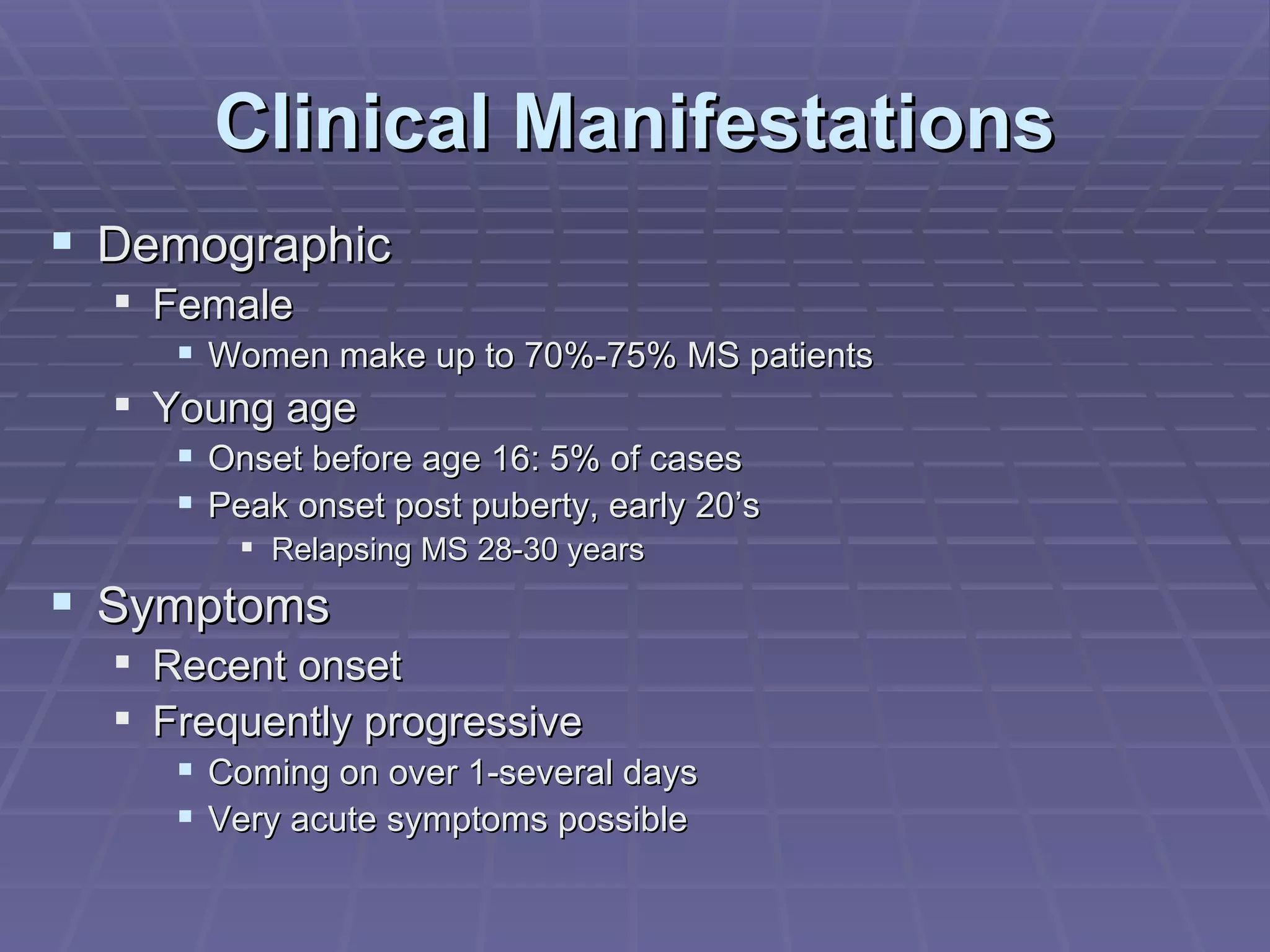
Clinical Manifestations Demographic Female Women make up to 70%-75% MS patients Young age Onset before age 16: 5% of cases Peak onset post puberty, early 20’s Relapsing MS 28-30 years Symptoms Recent onset Frequently progressive Coming on over 1-several days Very acute symptoms possible
The MS Event Attack/relapse/exacerbation Acute episode of CNS dysfunction Lasting at least 24 hours In absence of fever or metabolic derangement All events within 30 days are unitary
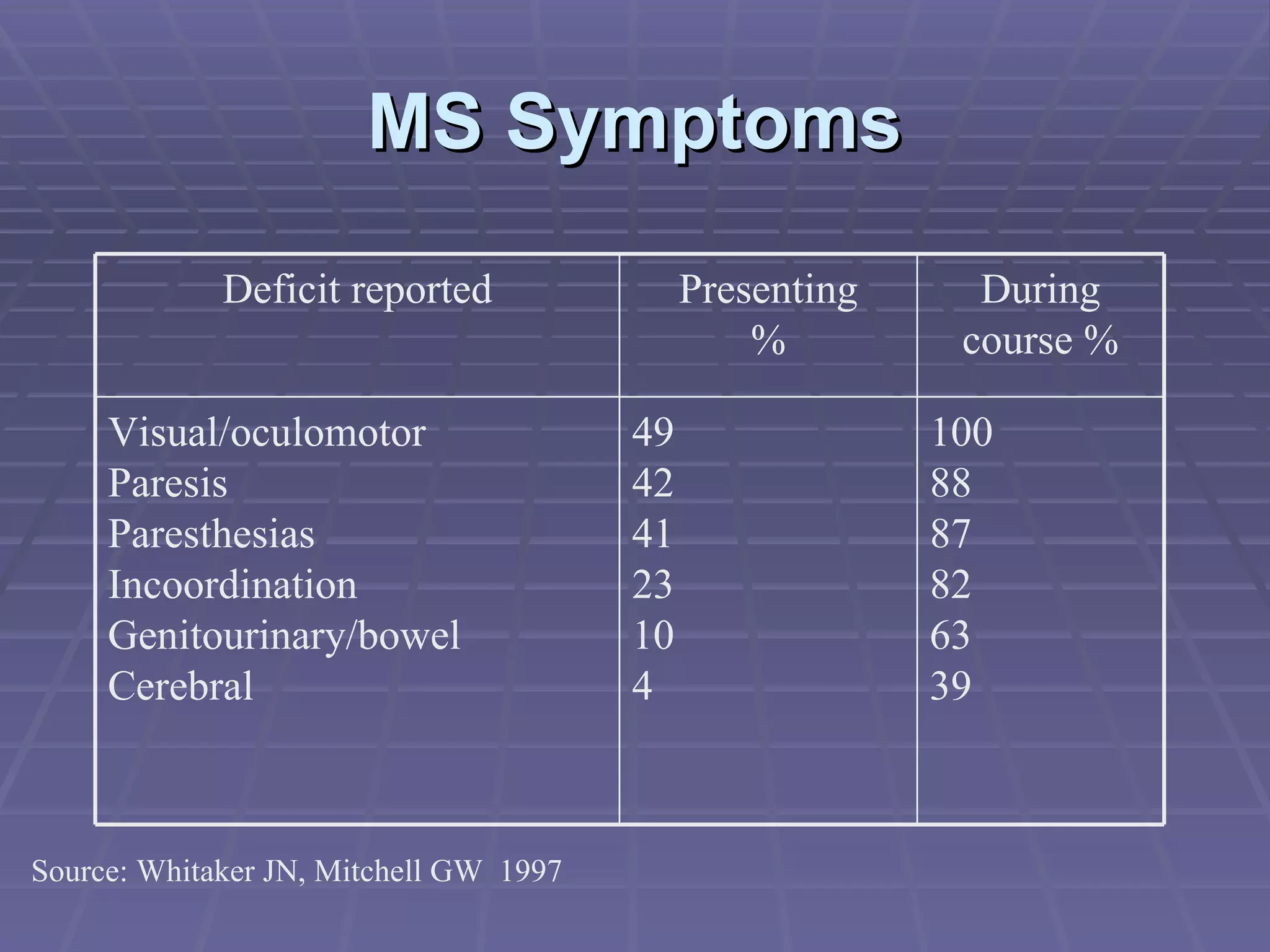
MS Symptoms Source: Whitaker JN, Mitchell GW  1997 100 88 87 82 63 39 49 42 41 23 10 4 Visual/oculomotor Paresis Paresthesias Incoordination Genitourinary/bowel Cerebral During course % Presenting % Deficit reported
Clinical Manifestations Motor Weakness, spasticity, ataxia Rarely radicular lesion ant. horn, root entry zone painful atrophy Somatosensory 1st sx. in 43% patients Includes visual Any anatomic distribution Any combination Loss pain, temp, light touch, vbn, position Positive sx. common Paresthesiae, hyperpathia, allodynia, dysesthesias
Nonspecific Associated Features That Suggest MS Excessive unexplained fatigue Temperature sensitivity Hot, humid weather Relatively recent symptoms History of Lhermitte’s sign History of bandlike sensation around the waist Uhthoff’s phenomenon eg, blurry vision with exercise or heat exposure
Clinical Manifestations Fatigue One of the most important causes of disability Several sources Handicap fatigue Increased effort to perform routine tasks Secondary fatigue Depression, sleep disturbances, medication side-effects, other conditions Systemic fatigue Chronic lack of energy, tirdness, malaise Etiology unknown
Clinical Manifestations Cognitive Disturbances Common, frequently overlooked Estimated 50-75% Most common Impaired attention, slow info processing, short term memory loss, reduced visuospatial skills, impaired executive function Impaired driving skills Important impact QoL, ADL Can occur independent of disease course other manifestations
MRI in MS Brain lesions Character Large  >  3 mm Ovoid Oriented perpendicular to ventricles Enhancing Open-ring enhancement Multifocal homogeneous Location Multiple white matter Brainstem, infratentorial Juxtacortical Corpus callosum Pointing away Moth eaten Callosal atrophy
Evoked Potentials Visual evoked potentials Not auditory or somatosensory May point to subclinical involvement of optic nerve Quality control issues
Principal  Differential Diagnosis of Multiple Sclerosis Infection Lyme, Syphilis, Progressive Multifocal Leukoencephalopathy, HIV, HTLV-1 Inflammatory SLE, Sjogren syndrome, vasculitis, Sarcoidosis, Bechet’s disease Metabolic B12 deficiency, lysosomal disorders, adrenoleukodystrophy, mitochondrial disorders,  other genetic diseases Neoplastic CNS lymphoma Spine disease Vascular malformations, degenerative spine disease
Cerebrospinal Fluid Useful, not diagnostic Other conditions Chronic CNS infections, viral syndromes, neuropathies Immunoglobulin abnormalities Production of immunoglobulin By plasma or B cells in CNS Oligoclonal bands of immunoglobulin (IgG) (OCB) In CSF, not serum Isoelectric focusing technique Elevated IgG index Ratio of IgG/protein in serum and CSF index =  (csf IgG/csf albumin)   (serum IgG/serum albumin)
Cerebrospinal Fluid First event - chance of progression to MS In 3 years OCB +ve: 25% OCB -ve: 9% CIS:clinically isolated syndrome 62.5% cases +ve OCB Clinically definite MS 90% +OCB
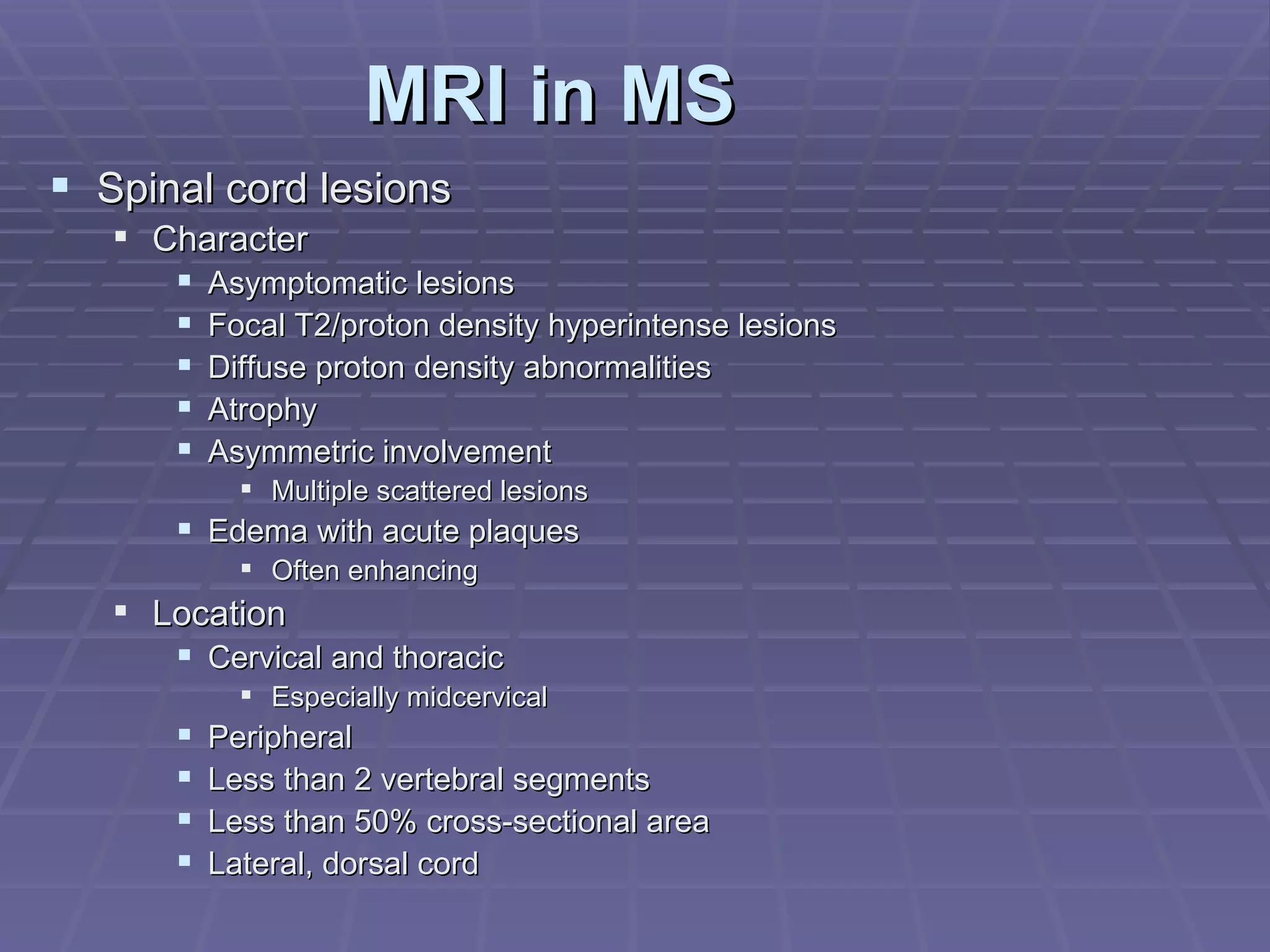
MRI in MS Spinal cord lesions Character Asymptomatic lesions Focal T2/proton density hyperintense lesions Diffuse proton density abnormalities Atrophy Asymmetric involvement Multiple scattered lesions Edema with acute plaques Often enhancing Location Cervical and thoracic Especially midcervical Peripheral Less than 2 vertebral segments Less than 50% cross-sectional area Lateral, dorsal cord
Paroxysmal Symptoms in MS Trigeminal neuralgia (and others) Tonic “seizures” Paroxysmal dysarthria Hemifacial spasm Paroxysmal itching Abrupt loss of muscle tone Paroxysmal aphasia Paroxysmal kinesogenic choreoathetosis Lhermitte’s sign
MS Symptoms Source: Whitaker JN, Mitchell GW  1997 100 88 87 82 63 39 49 42 41 23 10 4 Visual/oculomotor Paresis Paresthesias Incoordination Genitourinary/bowel Cerebral During course % Presenting % Deficit reported
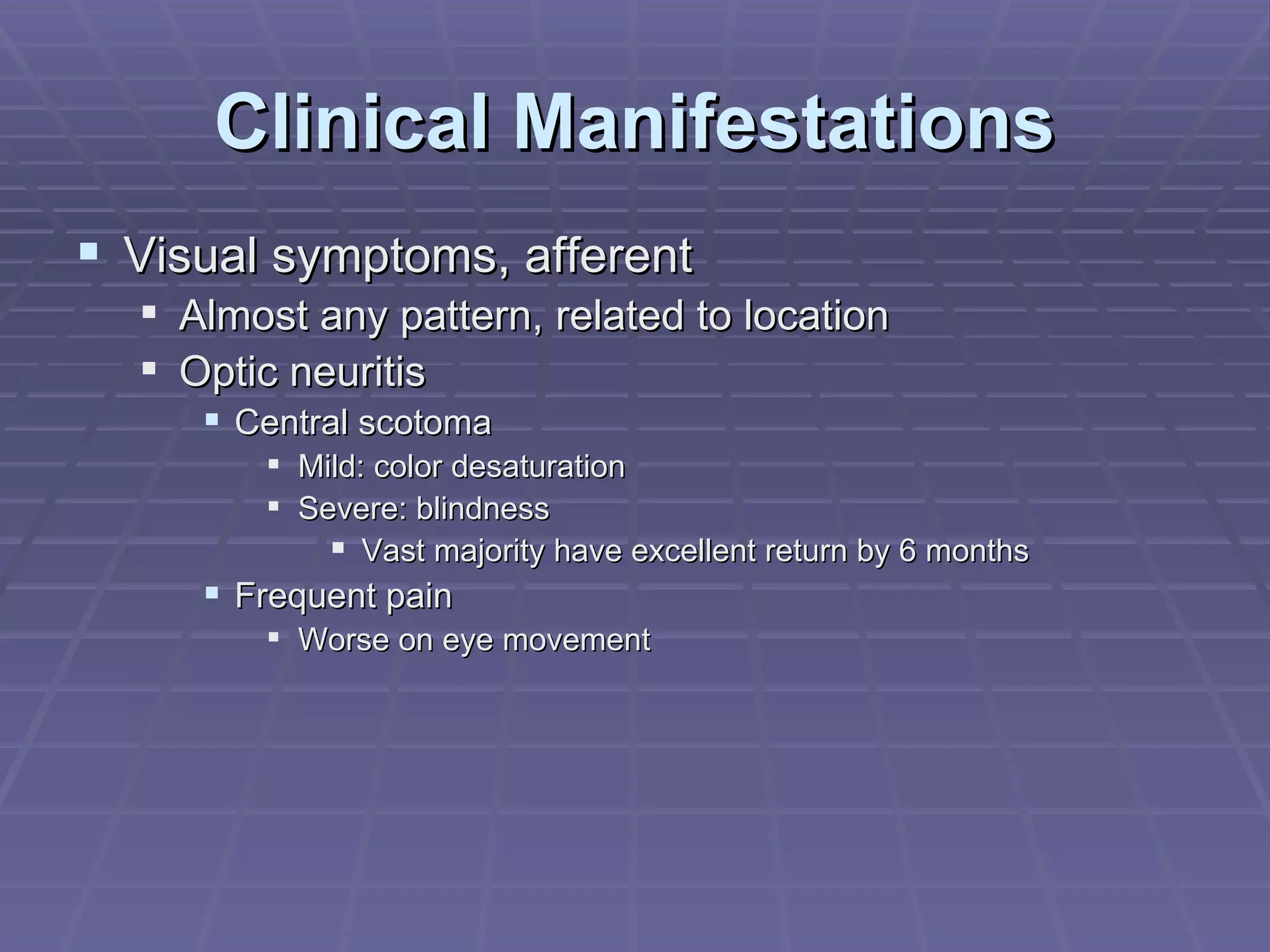
Clinical Manifestations Visual symptoms, afferent Almost any pattern, related to location Optic neuritis Central scotoma Mild: color desaturation Severe: blindness Vast majority have excellent return by 6 months Frequent pain Worse on eye movement
Optic Neuritis Risk of Subsequent MS Higher Risk Young adult (26-40 years) Venous sheathing Recurrent optic neuritis Female sex History of minor neurologic symptoms Brain MRI lesions CSF oligoclonal bands or intrathecal IgG production Lower Risk Age < 10 Macular star/exudates Retinal or disc hemorrhage Severe disc edema No brain MRI lesions Normal CSF
Clinical Manifestations Visual symptoms, efferent Any eye movement abnormality INO Internuclear ophthalmoplegia Adductor weakness Abduction nystagmus In young adult strongly suggests MS Nystagmus Many types
Clinical Manifestations Other Brain Stem Structures Facial weakness Vertigo Loss of hearing, taste Dysarthria, dysphagia Bulbar muscles Weakness, ataxia, spasticity
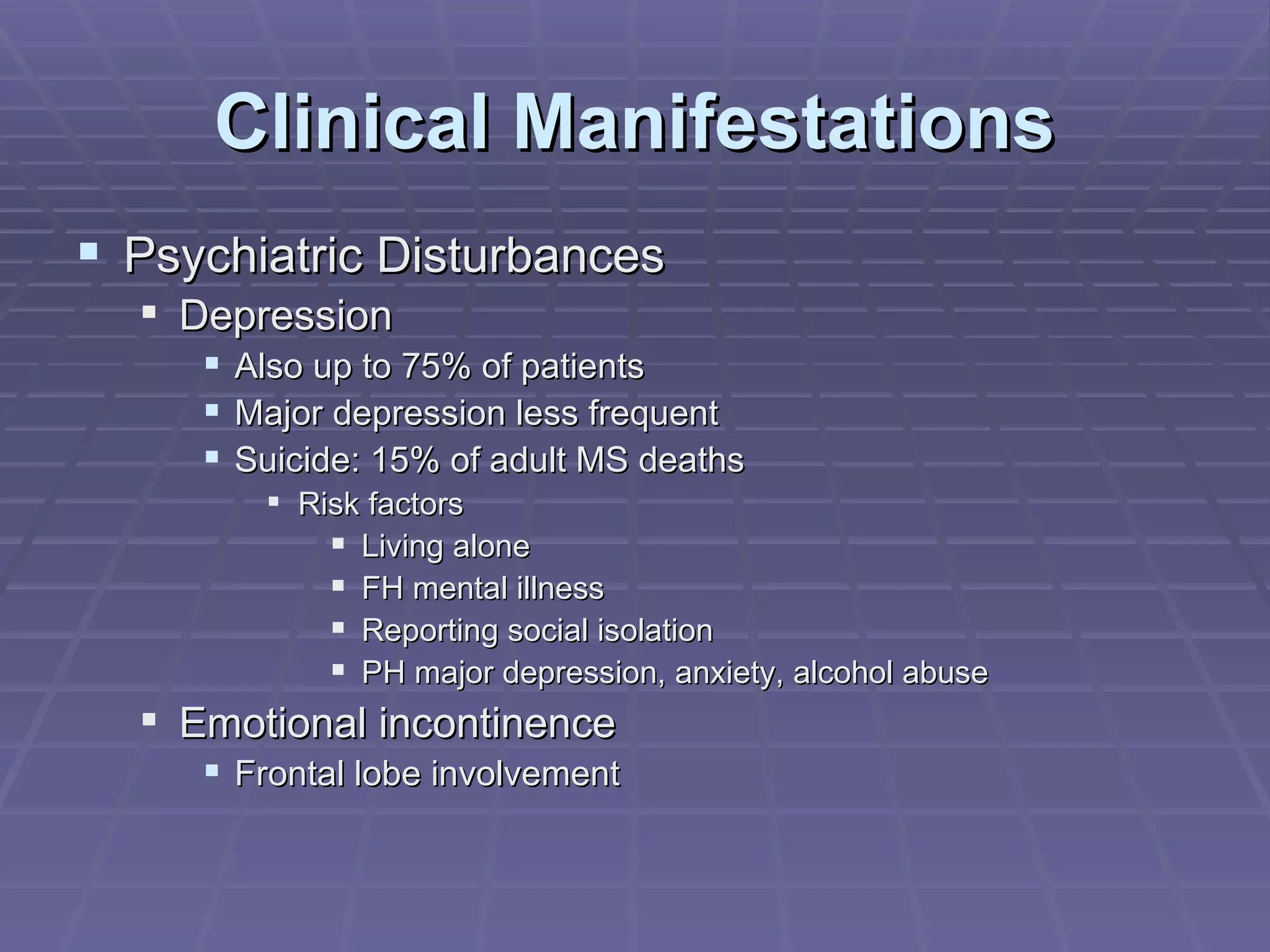
Clinical Manifestations Psychiatric Disturbances Depression Also up to 75% of patients Major depression less frequent Suicide: 15% of adult MS deaths Risk factors Living alone FH mental illness Reporting social isolation PH major depression, anxiety, alcohol abuse Emotional incontinence Frontal lobe involvement
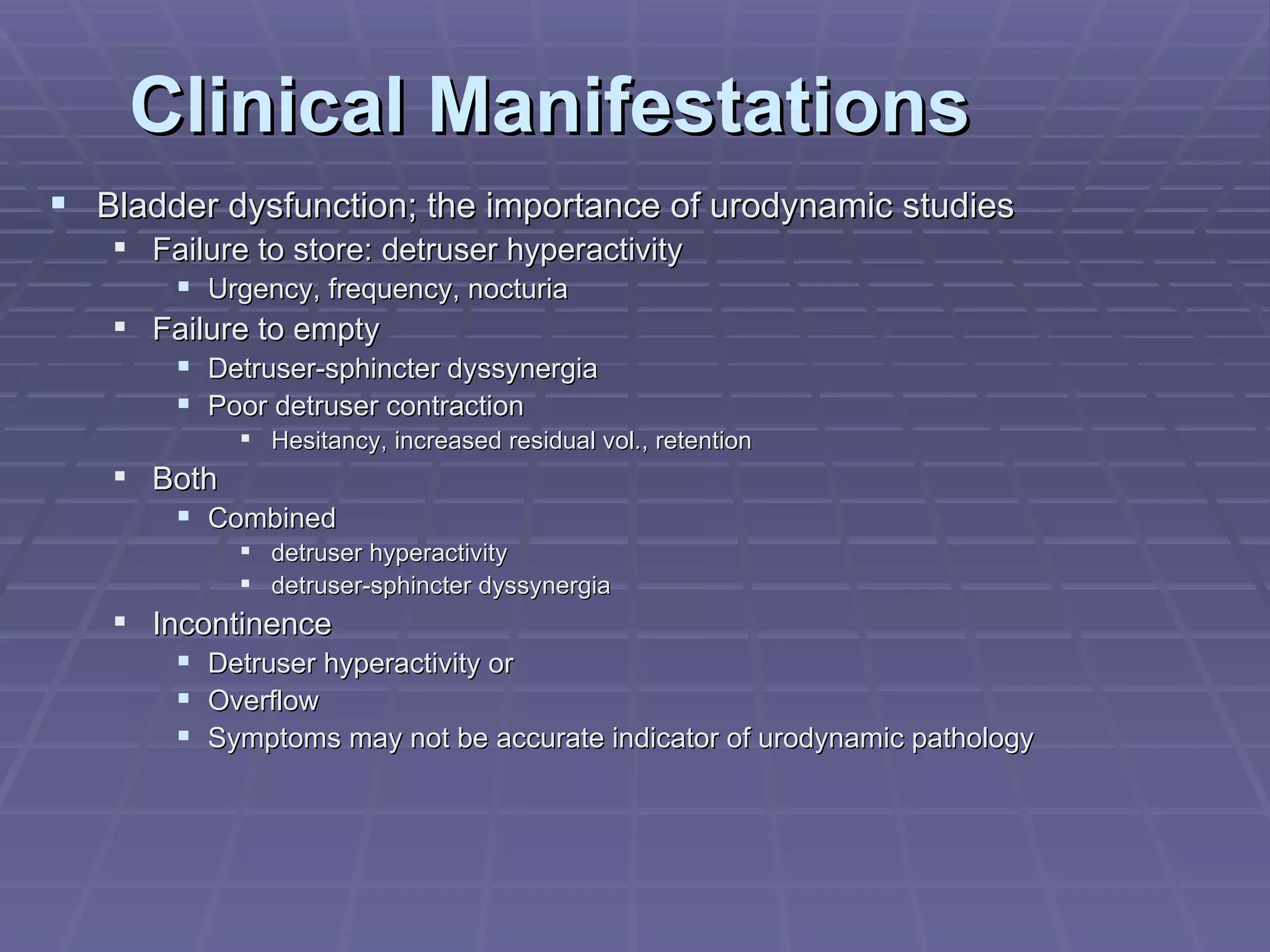
Clinical Manifestations Bladder dysfunction; the importance of urodynamic studies Failure to store: detruser hyperactivity Urgency, frequency, nocturia Failure to empty Detruser-sphincter dyssynergia Poor detruser contraction Hesitancy, increased residual vol., retention Both Combined  detruser hyperactivity detruser-sphincter dyssynergia Incontinence Detruser hyperactivity or Overflow Symptoms may not be accurate indicator of urodynamic pathology
Clinical Manifestations Bowel dysfunction Constipation Can be aggrevated by  fluid restriction Anticholinergic medications Urgency and incontinence Sexual dysfunction Erectile dysfunction Women: loss of libido, anorgasmia Both sexes Loss of perineal sensation Neuropathic pain Spasticity Incontinence Depression, fatigue
Pain Syndromes in MS Primary pain Neuralgic Trigeminal neuralgia Other neuralgias Dysesthetic pain Most often burning (legs) Other dysesthesias Radicular pain Tonic seizures Spasticity Flexor spasms Extensor spasms Secondary pain Low back pain Osteoporosis with fractures
Neurologic Syndromes Likely for MS  Optic neuritis Unilateral eye involvement Retrobulbar rather than papillitis Eye pain Partial vision loss, with at least some recovery No retinal exudates, disc hemorrhages, macular star 10 years follow-up: 38% develop MS MRI other lesions: risk 56% MRI normal: risk 22% 20 years follow-up: 70% develop MS
Neurologic Syndromes Likely for MS Transverse Myelitis Incomplete Sensory > motor Associated Lhermitte’s sign Bandlike abdominal or chest pressure  Internuclear Ophthalmoplegia Trigeminal Neuralgia Hemifacial Spasm
Neurologic Syndromes Likely for MS Paroxysmal symptoms Last seconds to minutes Occur multiple times daily Tonic spasms Dysarthria, ataxia Hemiparesis, hypesthesia Polysymptomatic Syndrome Without Mental Status Changes
Clues to a Misdiagnosis; MS Historical No dissemination Onset < 10 yrs. or > 55 yrs. Genetic red flags +ve FH However about 20% of MS patients have FH Early-age onset Unexplained non-CNS disease Progressive course starting before age 35 Localized disease
Clues to a Misdiagnosis; MS Examination Prominent  fever, headache, uveitis, pain Abrupt  hemiparesis, hearing loss No optic nerve/ocular involvement bowel/bladder involvement Progressive myelopathy Without bowel/bladder involvement Impaired level of consciousness Nonscotomatous visual field defects Grey matter features Early dementia, aphasia Fasciculations Extrapyramidal features
Clues to a Misdiagnosis; MS MRI Brain Normal Small lesions < 3 mm. Subcortical location (internal capsule) Prominent infratentorial involvement Prominent grey matter involvement (basal ganglia) Symmetric, confluent hemispheric white matter involvement Hydrocephalus Severe cerebellar/brain stem atrophy No callosal/periventricular lesions
Clues to a Misdiagnosis; MS MRI Spinal cord Large lesion, multiple segments (>2) Severe swelling Full thickness lesions Leptomenengial enhancement T1 hypointense lesions
Clues to a Misdiagnosis; MS CSF Normal Disappearance of oligoclonal bands Normalization of IgG index Cell count > 50 wbc/cubic mm. Protein > 100 mg/dl
MS Diagnosis; 1 Final Slide Manifestations due to CNS  Slowing or failure of transmission Mostly damage of white matter tracts Recent appreciation of axonal/grey matter involvement Diagnosis based on clinical and laboratory evidence of Dissemination in time Dissemination in space Recent appreciation of role of MRI in assisting diagnosis In-office pattern recognition Appropriate demographic Appropriate clinical event

Multiple Sclerosis Diagnostics Dr C Bourque

  • 1.
    Multiple Sclerosis DiagnosticIssues Christopher Bourque
  • 2.
    Acknowledgements American Academyof Neurology Continuum series Multiple Sclerosis Vol 10, #6, Dec. 2004 Elsevier Saunders Neurologic Clinics Multiple Sclerosis Vol 23 # 1 Feb. 2005
  • 3.
    MS in 1Slide Manifestations due to CNS Slowing or failure of transmission Inflammatory demyelination Axonal damage Mostly damage of white matter tracts Optic neuritis, weakness, sensory loss, ataxia nystagmus, bladder dysfunction, cognitive impairment Diagnosis based on clinical and laboratory evidence of Dissemination in time Dissemination in space
  • 4.
    Patterns of MSRelapsing - remitting Attacks with complete/incomplete recovery Stable between attacks Secondary - progressive Initially relapsing-remitting Then progression +/- attacks Progressive - relapsing Initial gradual detioriation Subsequent episodes Primary progressive Gradual decline No attacks
  • 5.
    Schumacher Clinical CriteriaMS Diagnosis 1965 Age (onset 10-50 years) CNS white matter disease Lesions disseminated in time and space Objective abnormalities on exam Consistent time course Attacks lasting > 24 hrs., spaced at least 1 month apart Slow or stepwise progression for > 6 months No better explanation Diagnosis by experienced clinician
  • 6.
    Poser Criteria forthe Diagnosis of MS 1983 Widely used for last 20 years Definite or probable Laboratory supported MS Replaced by McDonald criteria 2001 Technical advances enable quicker dx. Controversial
  • 7.
    McDonald Criteria Nextslide 1 0 (progression from onset) Dissemination in space by MRI or positive CSF and 2 or more MRI lesions consistent with MS and dissemination in time by MRI or second clinical attack 1 1 monosymptomatic Dissemination in time by MRI or second clinical attack 2 or more 1 Dissemination in space by MRI or positive CSF and 2 or more MRI lesions consistent with MS or further clinical attack involving different site 1 2 or more None 2 or more 2 or more Additional Requirements to Make Diagnosis Objective Lesions Clinical (attacks)
  • 8.
    McDonald Criteria PositiveCSF and Dissemination in space by MRI evidence of 9 or more T2 brain lesions or 2 or more cord lesions or 4-8 brain and 1 cord lesion or positive VEP with 4-8 MRI lesions or positive VEP with less than 4 brain lesions plus 1 cord lesion and Dissemination in time by MRI or continued progression for 1 year 1 0 (progression from onset) Additional Requirements to Make Diagnosis Objective Lesions Clinical (attacks)
  • 9.
    Clinical Manifestations DemographicFemale Women make up to 70%-75% MS patients Young age Onset before age 16: 5% of cases Peak onset post puberty, early 20’s Relapsing MS 28-30 years Symptoms Recent onset Frequently progressive Coming on over 1-several days Very acute symptoms possible
  • 10.
    The MS EventAttack/relapse/exacerbation Acute episode of CNS dysfunction Lasting at least 24 hours In absence of fever or metabolic derangement All events within 30 days are unitary
  • 11.
    MS Symptoms Source:Whitaker JN, Mitchell GW 1997 100 88 87 82 63 39 49 42 41 23 10 4 Visual/oculomotor Paresis Paresthesias Incoordination Genitourinary/bowel Cerebral During course % Presenting % Deficit reported
  • 12.
    Clinical Manifestations MotorWeakness, spasticity, ataxia Rarely radicular lesion ant. horn, root entry zone painful atrophy Somatosensory 1st sx. in 43% patients Includes visual Any anatomic distribution Any combination Loss pain, temp, light touch, vbn, position Positive sx. common Paresthesiae, hyperpathia, allodynia, dysesthesias
  • 13.
    Nonspecific Associated FeaturesThat Suggest MS Excessive unexplained fatigue Temperature sensitivity Hot, humid weather Relatively recent symptoms History of Lhermitte’s sign History of bandlike sensation around the waist Uhthoff’s phenomenon eg, blurry vision with exercise or heat exposure
  • 14.
    Clinical Manifestations FatigueOne of the most important causes of disability Several sources Handicap fatigue Increased effort to perform routine tasks Secondary fatigue Depression, sleep disturbances, medication side-effects, other conditions Systemic fatigue Chronic lack of energy, tirdness, malaise Etiology unknown
  • 15.
    Clinical Manifestations CognitiveDisturbances Common, frequently overlooked Estimated 50-75% Most common Impaired attention, slow info processing, short term memory loss, reduced visuospatial skills, impaired executive function Impaired driving skills Important impact QoL, ADL Can occur independent of disease course other manifestations
  • 16.
    MRI in MSBrain lesions Character Large > 3 mm Ovoid Oriented perpendicular to ventricles Enhancing Open-ring enhancement Multifocal homogeneous Location Multiple white matter Brainstem, infratentorial Juxtacortical Corpus callosum Pointing away Moth eaten Callosal atrophy
  • 17.
    Evoked Potentials Visualevoked potentials Not auditory or somatosensory May point to subclinical involvement of optic nerve Quality control issues
  • 18.
    Principal DifferentialDiagnosis of Multiple Sclerosis Infection Lyme, Syphilis, Progressive Multifocal Leukoencephalopathy, HIV, HTLV-1 Inflammatory SLE, Sjogren syndrome, vasculitis, Sarcoidosis, Bechet’s disease Metabolic B12 deficiency, lysosomal disorders, adrenoleukodystrophy, mitochondrial disorders, other genetic diseases Neoplastic CNS lymphoma Spine disease Vascular malformations, degenerative spine disease
  • 19.
    Cerebrospinal Fluid Useful,not diagnostic Other conditions Chronic CNS infections, viral syndromes, neuropathies Immunoglobulin abnormalities Production of immunoglobulin By plasma or B cells in CNS Oligoclonal bands of immunoglobulin (IgG) (OCB) In CSF, not serum Isoelectric focusing technique Elevated IgG index Ratio of IgG/protein in serum and CSF index = (csf IgG/csf albumin) (serum IgG/serum albumin)
  • 20.
    Cerebrospinal Fluid Firstevent - chance of progression to MS In 3 years OCB +ve: 25% OCB -ve: 9% CIS:clinically isolated syndrome 62.5% cases +ve OCB Clinically definite MS 90% +OCB
  • 21.
    MRI in MSSpinal cord lesions Character Asymptomatic lesions Focal T2/proton density hyperintense lesions Diffuse proton density abnormalities Atrophy Asymmetric involvement Multiple scattered lesions Edema with acute plaques Often enhancing Location Cervical and thoracic Especially midcervical Peripheral Less than 2 vertebral segments Less than 50% cross-sectional area Lateral, dorsal cord
  • 22.
    Paroxysmal Symptoms inMS Trigeminal neuralgia (and others) Tonic “seizures” Paroxysmal dysarthria Hemifacial spasm Paroxysmal itching Abrupt loss of muscle tone Paroxysmal aphasia Paroxysmal kinesogenic choreoathetosis Lhermitte’s sign
  • 23.
    MS Symptoms Source:Whitaker JN, Mitchell GW 1997 100 88 87 82 63 39 49 42 41 23 10 4 Visual/oculomotor Paresis Paresthesias Incoordination Genitourinary/bowel Cerebral During course % Presenting % Deficit reported
  • 24.
    Clinical Manifestations Visualsymptoms, afferent Almost any pattern, related to location Optic neuritis Central scotoma Mild: color desaturation Severe: blindness Vast majority have excellent return by 6 months Frequent pain Worse on eye movement
  • 25.
    Optic Neuritis Riskof Subsequent MS Higher Risk Young adult (26-40 years) Venous sheathing Recurrent optic neuritis Female sex History of minor neurologic symptoms Brain MRI lesions CSF oligoclonal bands or intrathecal IgG production Lower Risk Age < 10 Macular star/exudates Retinal or disc hemorrhage Severe disc edema No brain MRI lesions Normal CSF
  • 26.
    Clinical Manifestations Visualsymptoms, efferent Any eye movement abnormality INO Internuclear ophthalmoplegia Adductor weakness Abduction nystagmus In young adult strongly suggests MS Nystagmus Many types
  • 27.
    Clinical Manifestations OtherBrain Stem Structures Facial weakness Vertigo Loss of hearing, taste Dysarthria, dysphagia Bulbar muscles Weakness, ataxia, spasticity
  • 28.
    Clinical Manifestations PsychiatricDisturbances Depression Also up to 75% of patients Major depression less frequent Suicide: 15% of adult MS deaths Risk factors Living alone FH mental illness Reporting social isolation PH major depression, anxiety, alcohol abuse Emotional incontinence Frontal lobe involvement
  • 29.
    Clinical Manifestations Bladderdysfunction; the importance of urodynamic studies Failure to store: detruser hyperactivity Urgency, frequency, nocturia Failure to empty Detruser-sphincter dyssynergia Poor detruser contraction Hesitancy, increased residual vol., retention Both Combined detruser hyperactivity detruser-sphincter dyssynergia Incontinence Detruser hyperactivity or Overflow Symptoms may not be accurate indicator of urodynamic pathology
  • 30.
    Clinical Manifestations Boweldysfunction Constipation Can be aggrevated by fluid restriction Anticholinergic medications Urgency and incontinence Sexual dysfunction Erectile dysfunction Women: loss of libido, anorgasmia Both sexes Loss of perineal sensation Neuropathic pain Spasticity Incontinence Depression, fatigue
  • 31.
    Pain Syndromes inMS Primary pain Neuralgic Trigeminal neuralgia Other neuralgias Dysesthetic pain Most often burning (legs) Other dysesthesias Radicular pain Tonic seizures Spasticity Flexor spasms Extensor spasms Secondary pain Low back pain Osteoporosis with fractures
  • 32.
    Neurologic Syndromes Likelyfor MS Optic neuritis Unilateral eye involvement Retrobulbar rather than papillitis Eye pain Partial vision loss, with at least some recovery No retinal exudates, disc hemorrhages, macular star 10 years follow-up: 38% develop MS MRI other lesions: risk 56% MRI normal: risk 22% 20 years follow-up: 70% develop MS
  • 33.
    Neurologic Syndromes Likelyfor MS Transverse Myelitis Incomplete Sensory > motor Associated Lhermitte’s sign Bandlike abdominal or chest pressure Internuclear Ophthalmoplegia Trigeminal Neuralgia Hemifacial Spasm
  • 34.
    Neurologic Syndromes Likelyfor MS Paroxysmal symptoms Last seconds to minutes Occur multiple times daily Tonic spasms Dysarthria, ataxia Hemiparesis, hypesthesia Polysymptomatic Syndrome Without Mental Status Changes
  • 35.
    Clues to aMisdiagnosis; MS Historical No dissemination Onset < 10 yrs. or > 55 yrs. Genetic red flags +ve FH However about 20% of MS patients have FH Early-age onset Unexplained non-CNS disease Progressive course starting before age 35 Localized disease
  • 36.
    Clues to aMisdiagnosis; MS Examination Prominent fever, headache, uveitis, pain Abrupt hemiparesis, hearing loss No optic nerve/ocular involvement bowel/bladder involvement Progressive myelopathy Without bowel/bladder involvement Impaired level of consciousness Nonscotomatous visual field defects Grey matter features Early dementia, aphasia Fasciculations Extrapyramidal features
  • 37.
    Clues to aMisdiagnosis; MS MRI Brain Normal Small lesions < 3 mm. Subcortical location (internal capsule) Prominent infratentorial involvement Prominent grey matter involvement (basal ganglia) Symmetric, confluent hemispheric white matter involvement Hydrocephalus Severe cerebellar/brain stem atrophy No callosal/periventricular lesions
  • 38.
    Clues to aMisdiagnosis; MS MRI Spinal cord Large lesion, multiple segments (>2) Severe swelling Full thickness lesions Leptomenengial enhancement T1 hypointense lesions
  • 39.
    Clues to aMisdiagnosis; MS CSF Normal Disappearance of oligoclonal bands Normalization of IgG index Cell count > 50 wbc/cubic mm. Protein > 100 mg/dl
  • 40.
    MS Diagnosis; 1Final Slide Manifestations due to CNS Slowing or failure of transmission Mostly damage of white matter tracts Recent appreciation of axonal/grey matter involvement Diagnosis based on clinical and laboratory evidence of Dissemination in time Dissemination in space Recent appreciation of role of MRI in assisting diagnosis In-office pattern recognition Appropriate demographic Appropriate clinical event