Dr. Anzil Mani Singh Maharjan 
Resident Phase- B 
Department of Neurology 
BSMMU
Myelin 
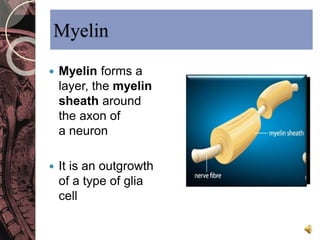
 Myelin forms a 
layer, the myelin 
sheath around 
the axon of 
a neuron 
 It is an outgrowth 
of a type of glia 
cell
Myelin composition 
 Cholesterol is an essential constituent of myelin 
 Myelinated axons appear white, hence the the 
term "white matter" of the brain 
 Some of the proteins are myelin basic 
protein, myelin oligodendrocyte glycoprotein, 
and proteolipid protein 
 The intertwining hydrocarbon chains 
of sphingomyelin serve to strengthen the myelin 
sheath
Myelination 
 The production of the myelin sheath is called 
myelination 
 In humans, myelination begins in the 14th week of 
fetal development 
 During infancy, myelination occurs quickly and 
continues through the adolescent stages of life 
 Schwann cells supply the myelin for peripheral 
neurons 
 Oligodendrocytes myelinate the axons of the CNS 
neurons
Myelin Function 
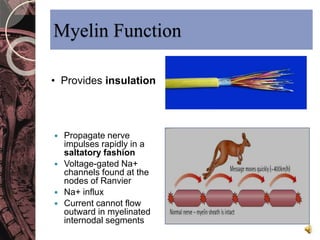
• Provides insulation 
 Propagate nerve 
impulses rapidly in a 
saltatory fashion 
 Voltage-gated Na+ 
channels found at the 
nodes of Ranvier 
 Na+ influx 
 Current cannot flow 
outward in myelinated 
internodal segments
Myelin Diseases 
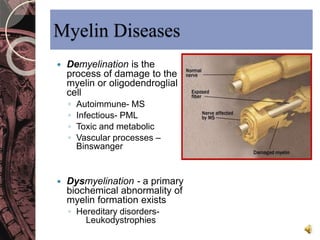
 Demyelination is the 
process of damage to the 
myelin or oligodendroglial 
cell 
◦ Autoimmune- MS 
◦ Infectious- PML 
◦ Toxic and metabolic 
◦ Vascular processes – 
Binswanger 
 Dysmyelination - a primary 
biochemical abnormality of 
myelin formation exists 
◦ Hereditary disorders- 
Leukodystrophies
Classification of the Inflammatory 
Demyelinative Diseases 
I. Multiple sclerosis 
Chronic relapsing encephalomyelopathic form 
Acute multiple sclerosis (Marburg disease) 
Primary and secondary progressive types 
Diffuse cerebral sclerosis (Schilder disease 
and concentric sclerosis of Balo
Classification of the Inflammatory 
Demyelinative Diseases 
II.Acute disseminated encephalomyelitis 
A.Postinfectious: Following measles, chickenpox, smallpox, 
mumps, rubella, influenza,Mycoplasma 
B.Postvaccinal : Following rabies or smallpox 
III. Neuromyelitis optica (Devic disease) 
IV. Acute and subacute necrotizing 
hemorrhagic encephalitis 
A. Acute encephalopathic form 
B. Subacute encephalitis
Introduction 
 British as “disseminated sclerosis” 
 French as “sclérose en plaques” 
 MS is a chronic condition characterized clinically 
by episodes of focal disorders of the: 
◦ Optic nerves 
◦ Spinal cord 
◦ Brain 
 remit to a varying extent and recur over a period of 
many years
Pathology
Pathology 
 Hallmark of MS is the cerebral or spinal 
plaque, which consists of a discrete region 
of demyelination 
 Relative preservation of axons 
 Atrophy and ventricular dilatation 
 Disruption of BBB but vessel wall is 
preserved
Pathology (Gross) 
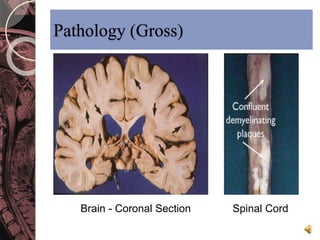
 Active plaques appear whitish 
yellow or pink with somewhat indistinct borders 
 Older plaques appear translucent with a blue-gray 
discoloration and sharply demarcated margins 
 Plaques are small (1-2 cm) but may become confluent, 
generating large plaques 
 Develop in a perivenular distribution 
 Most frequently in the periventricular white matter, 
brainstem, and spinal cord
Pathology (Gross) 
Brain - Coronal Section Spinal Cord
Histopathology 
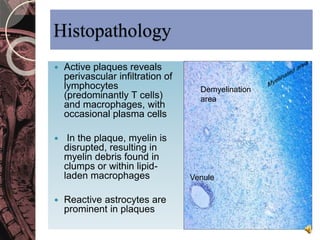
 Active plaques reveals 
perivascular infiltration of 
lymphocytes 
(predominantly T cells) 
and macrophages, with 
occasional plasma cells 
 In the plaque, myelin is 
disrupted, resulting in 
myelin debris found in 
clumps or within lipid-laden 
macrophages 
 Reactive astrocytes are 
prominent in plaques 
Demyelination 
area 
Venule
EPIDEMIOLOGY
Epidemiology 
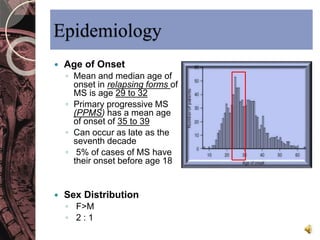
 Age of Onset 
◦ Mean and median age of 
onset in relapsing forms of 
MS is age 29 to 32 
◦ Primary progressive MS 
(PPMS) has a mean age 
of onset of 35 to 39 
◦ Can occur as late as the 
seventh decade 
◦ 5% of cases of MS have 
their onset before age 18 
 Sex Distribution 
◦ F>M 
◦ 2 : 1
Epidemiology 
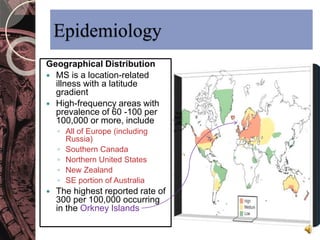
Geographical Distribution 
 MS is a location-related 
illness with a latitude 
gradient 
 High-frequency areas with 
prevalence of 60 -100 per 
100,000 or more, include 
◦ All of Europe (including 
Russia) 
◦ Southern Canada 
◦ Northern United States 
◦ New Zealand 
◦ SE portion of Australia 
 The highest reported rate of 
300 per 100,000 occurring 
in the Orkney Islands
Epidemiology 
Race 
 Determinant of MS risk 
 White extraction, especially from Northern Europe are 
the most susceptible 
 People of Asian, African, or Amerindian origin have the 
lowest risk 
 Other groups are variably intermediate 
 Migration after puberty no increased risk 
 Migration before childhood increased risk
Pathogenesis
Pathogenesis 
 The cause of MS remains undetermined 
 Possible Etiologies include 
◦ Infection 
◦ Enviromental factors 
◦ Autoimmunity 
◦ Genetic Susceptibility
Pathogenesis 
Infection 
 Little direct evidence supports the concept of a 
role for viral infection 
 Human T-cell lymphotropic virus type 1 [HTLV1] 
 Human herpesvirus 6 (HHV6) 
 Epstein-Barr virus (EBV) 
 Chlamydia pneumoniae 
Environmental Factors 
 Sunlight exposure during growth 
 Vitamin D 
 Epidemiological data supportive
Pathogenesis 
Autoimmunity 
 Break down of tolerance (unresponsiveness of the 
immune system) 
 By means of molecular mimicry between self-antigens 
and foreign antigens 
 Myelin basic protein (MBP), the target for 
autoimmune attack 
 T cells that respond to MBP are found in the 
peripheral blood possibly at higher levels in MS 
patients with active disease
Pathogenesis 
Genetic susceptibility 
 The risk of familial recurrence in MS is 15% 
 Highest risk in first-degree relatives (age-adjusted risk): 
4–5% for siblings and 
2–3% for parents or offspring 
 Monozygotic twins have a concordance rate of 30% 
 The genes that predispose to MS are incompletely defined 
 Inheritance appears to be polygenic, with influences from 
◦ Genes for human leucocyte antigen (HLA) typing 
◦ Interleukin receptors 
◦ CLEC16A (C-type lectin domain family 16 member A) 
◦ CD226 genes
CLINICAL 
PRESENTATION
Clinical Manifestations 
 Multiple sclerosis is classically described as a relapsing 
remitting disorder 
 MS may display marked clinical heterogeneity. This 
variability includes 
◦ age of onset 
◦ mode of initial manifestation 
◦ frequency 
◦ severity 
◦ sequelae of relapses 
◦ extent of progression 
◦ Cumulative deficit over time 
 High degree of variability and the difficulty in predicting 
the course and severity make MS one of the most 
puzzling CNS disease
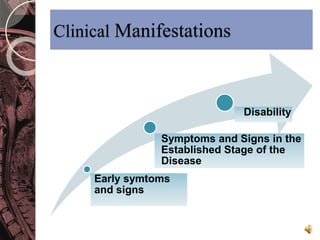
Clinical Manifestations 
Symptoms and Signs in the 
Established Stage of the 
Disease 
Early symtoms 
and signs 
Disability
Clinical Manifestations 
Early Symptoms 
 Onset over hours or days 
 Motor or sensory system involvement in 50 % of 
patients 
 Symptoms of tingling of the extremities and tight band-like 
sensations around the trunk 
 Dragging or poor control of one or both legs to a spastic 
or ataxic paraparesis 
Early Signs 
 The tendon reflexes are retained and later become 
hyperactive 
 Extensor plantar reflexes 
 Disappearance of the abdominal reflexes 
 Varying degrees of deep and superficial sensory loss 
may be associated
Clinical Manifestations 
 The patient will complain of weakness, 
incoordination, or numbness and tingling in one 
lower limb 
 But the examination will reveal 
◦ Bilateral Babinski signs 
◦ Bilateral corticospinal tract signs 
◦ Posterior column disease
Clinical Manifestations 
Several syndromes typical of MS and may 
be the initial manifestation : 
(1) Optic neuritis 
(2) Transverse myelitis 
(3) Cerebellar ataxia - nystagmus and ataxia 
(4) Various brainstem syndromes (vertigo, facial 
pain or numbness, dysarthria, diplopia) 
◦ These syndromes may pose a diagnostic 
dilemma as these do occur in other diseases 
too
Clinical Manifestations 
 Paresthesia or numbness of an entire arm or leg 
 Facial pain often simulating tic douloureux 
 Disorders of micturition 
 Cervical myelopathy- slowly progressive with 
weakness and ataxia
Clinical Manifestations 
Diplopia 
◦ Medial longitudinal fasciculi 
◦ Internuclear ophthalmoplegia 
◦ Paresis of the medial rectus on attempted lateral 
gaze, with a coarse nystagmus in the abducting 
eye 
◦ Usually bilateral 
The presence of bilateral internuclear 
ophthalmoplegia in a young adult is 
virtually diagnostic of MS
Clinical Manifestations 
 Myokymia or paralysis of facial muscles 
 Deafness, tinnitus, unformed auditory hallucinations 
(because of involvement of cochlear connections) 
 Vomiting (vestibular connections), and, rarely, stupor 
and coma 
 Vertigo of central type 
 Dull, aching low back pain 
 Sharp, burning, poorly localized, or lancinating radicular 
pain, localized to a limb or discrete part of the trunk
Clinical Manifestations 
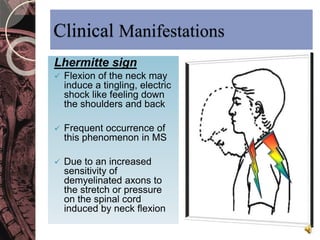
Lhermitte sign 
 Flexion of the neck may 
induce a tingling, electric 
shock like feeling down 
the shoulders and back 
 Frequent occurrence of 
this phenomenon in MS 
 Due to an increased 
sensitivity of 
demyelinated axons to 
the stretch or pressure 
on the spinal cord 
induced by neck flexion
Clinical Manifestations 
Uhthoff phenomenon 
 Transient worsening of function with 
increased body temperature 
 Due to a drop below the safety threshold for 
conduction because of physiological 
changes involving the partially 
demyelinated axon
Clinical Manifestations 
Established Stage of the Disease 
 50 % will manifest a clinical picture of mixed or 
generalized type with signs pointing to involvement of 
the optic nerves, brainstem, cerebellum, and spinal cord 
 30 to 40 % will exhibit only varying degrees of spastic 
ataxia and deep sensory changes in the extremities, 
i.e., essentially a spinal form of the disease 
 5 % have a predominantly cerebellar or brainstem– 
cerebellar form occurs
Clinical Manifestations 
Cognitive impairment 
 Progressive decline, is present in perhaps one-half 
of patients with long-standing MS 
 Reduced attention 
 Diminished processing speed and executive 
skills 
 Memory decline 
 Language skills and other intellectual functions 
are preserved
Clinical Manifestations 
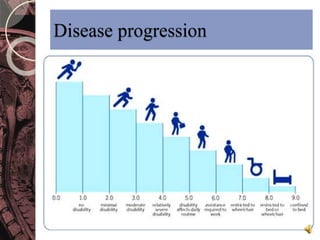
 The most characteristic clinical course of MS 
is the occurrence of relapses 
 Relapses can be defined as 
◦ acute or subacute onset of clinical dysfunction 
◦ that usually reaches its peak from days to 
several weeks, 
◦ followed by a remission during which the 
symptoms and signs usually resolve partially or 
completely 
 The minimum duration for a relapse has been 
arbitrarily established at 24 hours
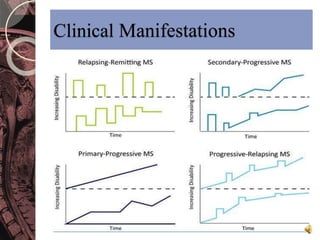
Clinical Manifestations (Course) 
1. Relapsing-remitting (RRMS): 
Clearly defined relapses with full recovery or with sequelae and 
residual deficit on recovery 
The periods between disease relapses are characterized by a 
lack of disease progression 
2. Secondary progressive (SPMS): 
Initial relapsing remitting disease course followed by progression 
with or without occasional relapses, minor remissions, and plateaus 
3. Primary progressive (PPMS): 
Disease progression from onset, with occasional plateaus and 
temporary minor improvements allowed 
4. Progressive relapsing (PRMS): 
Progressive disease from onset, with clear acute relapses with or 
without full recovery 
The periods between relapses are characterized by continuing 
progression
Clinical Manifestations
Disease progression
INVESTIGATIONS
CSF ANALYSIS 
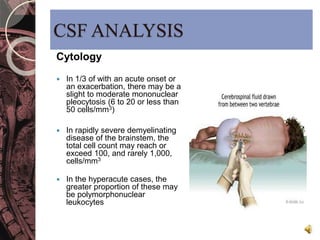
Cytology 
 In 1/3 of with an acute onset or 
an exacerbation, there may be a 
slight to moderate mononuclear 
pleocytosis (6 to 20 or less than 
50 cells/mm3) 
 In rapidly severe demyelinating 
disease of the brainstem, the 
total cell count may reach or 
exceed 100, and rarely 1,000, 
cells/mm3 
 In the hyperacute cases, the 
greater proportion of these may 
be polymorphonuclear 
leukocytes
CSF ANALYSIS 
Protein 
 40 % of patients, the total protein content of the 
CSF is increased slightly 
 Not more than 100 mg/dL 
 In two-thirds of patients, the proportion of gamma 
globulin (mainly IgG) is increased (greater than 
12 percent of the total protein) 
 IgG index obtained by measuring albumin and 
gamma globulin in both the serum and CSF
CSF ANALYSIS 
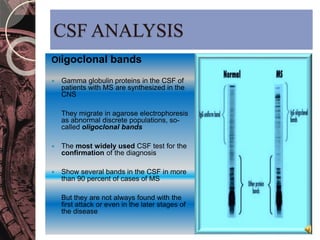
Oligoclonal bands 
 Gamma globulin proteins in the CSF of 
patients with MS are synthesized in the 
CNS 
 They migrate in agarose electrophoresis 
as abnormal discrete populations, so-called 
oligoclonal bands 
 The most widely used CSF test for the 
confirmation of the diagnosis 
 Show several bands in the CSF in more 
than 90 percent of cases of MS 
 But they are not always found with the 
first attack or even in the later stages of 
the disease
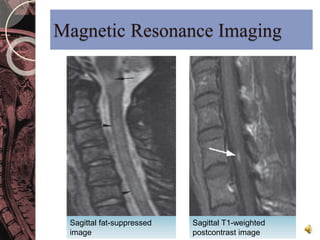
Magnetic Resonance Imaging 
 MRI is the most helpful ancillary examination 
in the diagnosis of MS 
 Reveal asymptomatic plaques in the 
cerebrum, brainstem, optic nerves, and spinal 
cord 
 T2-weighted images show : 
◦ Hyperintense well-demarcated lesions 
◦ Multiple and asymmetrical 
◦ Periventricular surface in location
Magnetic Resonance Imaging 
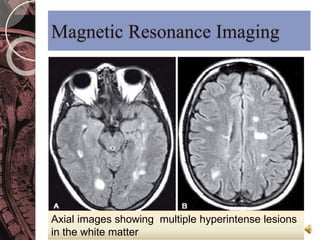
Axial images showing multiple hyperintense lesions 
in the white matter
Magnetic Resonance Imaging 
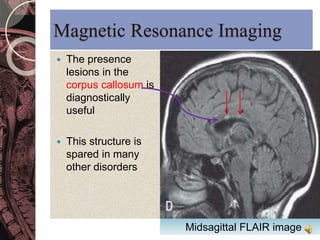
 The presence 
lesions in the 
corpus callosum is 
diagnostically 
useful 
 This structure is 
spared in many 
other disorders 
Midsagittal FLAIR image
Magnetic Resonance Imaging 
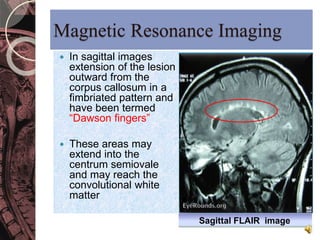
 In sagittal images 
extension of the lesion 
outward from the 
corpus callosum in a 
fimbriated pattern and 
have been termed 
“Dawson fingers” 
 These areas may 
extend into the 
centrum semiovale 
and may reach the 
convolutional white 
matter 
Sagittal FLAIR image
Magnetic Resonance Imaging 
Sagittal fat-suppressed 
image 
Sagittal T1-weighted 
postcontrast image
Newer Imaging Tecniques 
 MAGNETIC RESONANCE SPECTROSCOPY 
◦ a tool that derives MRI signal from 
multiple metabolites 
◦ A high choline (Cho) peak is indicative of 
an increase in membrane turnover, as can 
be seen in demyelination and 
remyelination 
 DIFFUSION TENSOR IMAGING 
 HIGH-FIELD-STRENGTH MRI
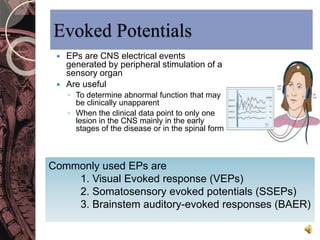
Evoked Potentials 
 EPs are CNS electrical events 
generated by peripheral stimulation of a 
sensory organ 
 Are useful 
◦ To determine abnormal function that may 
be clinically unapparent 
◦ When the clinical data point to only one 
lesion in the CNS mainly in the early 
stages of the disease or in the spinal form 
Commonly used EPs are 
1. Visual Evoked response (VEPs) 
2. Somatosensory evoked potentials (SSEPs) 
3. Brainstem auditory-evoked responses (BAER)
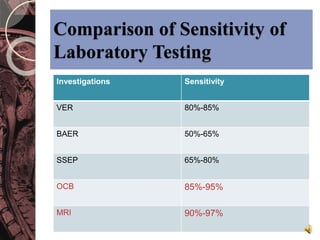
Comparison of Sensitivity of 
Laboratory Testing 
Investigations Sensitivity 
VER 80%-85% 
BAER 50%-65% 
SSEP 65%-80% 
OCB 85%-95% 
MRI 90%-97%
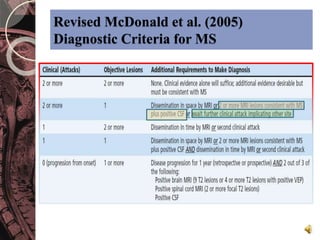
Revised McDonald et al. (2005) 
Diagnostic Criteria for MS
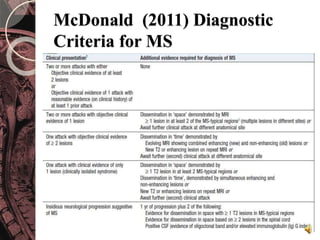
McDonald (2011) Diagnostic 
Criteria for MS
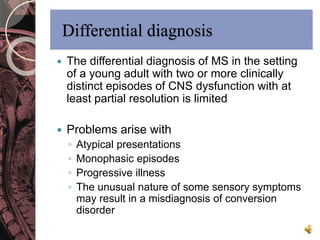
Differential diagnosis 
 The differential diagnosis of MS in the setting 
of a young adult with two or more clinically 
distinct episodes of CNS dysfunction with at 
least partial resolution is limited 
 Problems arise with 
◦ Atypical presentations 
◦ Monophasic episodes 
◦ Progressive illness 
◦ The unusual nature of some sensory symptoms 
may result in a misdiagnosis of conversion 
disorder
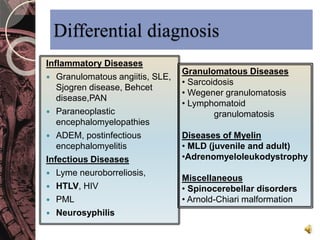
Differential diagnosis 
Inflammatory Diseases 
 Granulomatous angiitis, SLE, 
Sjogren disease, Behcet 
disease,PAN 
 Paraneoplastic 
encephalomyelopathies 
 ADEM, postinfectious 
encephalomyelitis 
Infectious Diseases 
 Lyme neuroborreliosis, 
 HTLV, HIV 
 PML 
 Neurosyphilis 
Granulomatous Diseases 
• Sarcoidosis 
• Wegener granulomatosis 
• Lymphomatoid 
granulomatosis 
Diseases of Myelin 
• MLD (juvenile and adult) 
•Adrenomyeloleukodystrophy 
Miscellaneous 
• Spinocerebellar disorders 
• Arnold-Chiari malformation
TREATMENT
Treatment 
Treatment of the MS patient should be directed toward these 
basic goals: 
 Relief or modification of symptoms 
 Shortening the duration or limiting the residual effects of an 
acute relapse 
 Reducing the frequency of relapses 
 Preventing disability progression or slowing its pace 
 Supporting family and patient, alleviating social and economic 
effects, and advocating for the disabled or handicapped
Symptomatic Treatment 
Spasticity 
 Baclofen a GABA agonist Daily divided doses of 20 to 120 mg and 
occasionally .Intrathecal baclofen via an implanted pump 
 Tizanidine a centrally active α2-noradrenergic agonist, gradually 
increased starting with 2 mg at bedtime 
 Benzodiazepines 
 Dantrolene sodium rarely 
 4-Aminopyridine and 3,4-diaminopyridine (3,4-DAP) block 
potassium channels in the axolemma 
 Botulinum toxin type A (Botox) injections into spastic or 
contracted muscles may also be effective in selective cases
Symptomatic Treatment 
Tremor 
 Weighted wrist bracelets and specially adapted utensils are 
nonpharmaceutical options 
 Most attempts at pharmacological amelioration of tremor fail 
 Isoniazid 
 Primidone 
 Carbamazepine 
 Gabapentin 
 Topiramate 
 Clonazepam 
 Propranolol 
 Ondansetron
Symptomatic Treatment 
Fatigue 
 Amantadine 100 mg twice a day 
 Modafinil - a wakefulness promoting agent 
 Methylphenidate 10 to 60 mg/day in 2 to 3 divided dose 
 SSRIs 
 Fluoxetine 10 to 20 mg once twice daily 
 Bupropion
Symptomatic Treatment 
Bladder Dysfunction 
 Initial steps in managing bladder dysfunction include 
◦ fluid management, 
◦ timed voiding 
◦ use of a bedside commode 
 Hyperreflexic bladder without outlet obstruction 
◦ Oxybutynin,Tolterodine,Trospium,Darifenacin,solifenacin, 
Desmopressin 
 Imipramine for enuresis 
 Detrusor hyperreflexia with outlet obstruction may respond 
Credé maneuvers terazosin hydrochloride 
 Intermittent catheterization 
 Chronic indwelling catheterization may be required 
 Surgical correction-augmentation of bladder capacity with an 
exteriorized loop of bowel
Symptomatic Treatment 
Depression 
 SSRIs are the medications of choice 
 Fluoxetine 
 Amitriptyline, 25 to 100 mg daily 
Sexual Dysfunction 
 Sildenafil 25 to 100 mg 1 hour before sexual 
intercourse for erectile dysfunction
Symptomatic Treatment 
Cognitive Impairment 
 Interferon beta-1a SC 
 L-amphetamine 
 Modafinil 
 Donepezil 
 Cognitive-behavioral therapy 
 Family and individual counseling 
 Strategies to improve day-to-day function 
 Job modifications and accommodations
Treatment of Acute Attacks 
 Acute attacks are typically treated with corticosteroids 
 Indications for treatment of a relapse include 
functionally disabling symptoms with objective evidence 
of neurological impairment 
 Short courses of IV methylprednisolone – 500 to 1000 
mg daily for 3 to 5 days 
◦ With or without a short prednisone 
 S/Es include psychiatric changes, predilection for 
infections,GI disturbances,anaphylactoid reactions, 
Increased incidence of fracture
Disease-Modifying Treatments 
 INTERFERONS 
◦ A recombinant interferon beta-1b SC 
◦ interferon beta-1a IM injections 
 SYNTHETIC POLYMER 
◦ Glatiramer acetate (GA) - a synthetic 
polypeptide SC 
 MONOCLONAL ANTIBODY 
◦ Natalizumab 
◦ Fingolimod (FTY720)
Disease-Modifying Treatments 
Emerging Therapies 
 Laquinimod 
Orally active synthetic immunoregulator 
 Oral fumarate/BG-12 
Induces apotosis of activated T cells 
 Teriflunomide 
Is a metabolite of leflunomide 
 Alemtuzumab 
Humanized monoclonal anti-body against CD52 antigen expressed in all 
lymphocytes 
 Rituximab 
A chimeri murine-human monoclonal antibody directed against CD30 
antigen on B lymphocytes
Treatment-Rehabilitation 
 Referral to 
physical,occupational and 
speech therapists 
1.Physical therapy 
 Evaluate and train the patient 
in appropriate exercise 
programs to : 
◦ decrease spasticity 
◦ maintain range of motion 
◦ strengthen muscles 
◦ improve coordination 
 Mechanical aids, such as 
ankle-foot orthoses, also can 
be useful in spasticity 
management.
Treatment-Rehabilitation 
2. Speech therapy 
3.Occupational therapy 
• Assessment of the patient's 
functional abilities in completing 
activities of daily living 
•Evaluate for adaptive equipment 
and assistive technology needs
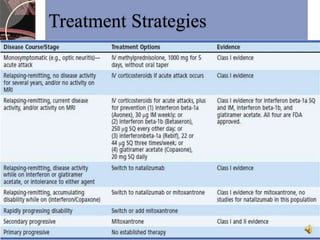
Treatment Strategies
Prognosis 
Prognostic indicators: 
 MS appears to follow a more benign course in women than in men 
 Onset at an early age is a favorable factor, whereas onset at a later 
age carries a less favorable prognosis 
RRMS is more common in younger patients, and PPMS and SPMS 
are more common in the older age group 
 Relapsing form of the disease is associated with a better prognosis 
than progressive disease 
 Among initial symptoms, impairment of sensory pathways or ON has 
a favorable prognostic feature 
 Pyramidal and particularly brainstem and cerebellar symptoms carry 
a poor prognosis 
 Devic disease, Baló concentric sclerosis, and particularly Marburg 
disease are more fulminant variants of MS, with early disability and 
even death
1.multiple sclerosis

1.multiple sclerosis

  • 1.
    Dr. Anzil ManiSingh Maharjan Resident Phase- B Department of Neurology BSMMU
  • 2.
    Myelin  Myelinforms a layer, the myelin sheath around the axon of a neuron  It is an outgrowth of a type of glia cell
  • 3.
    Myelin composition Cholesterol is an essential constituent of myelin  Myelinated axons appear white, hence the the term "white matter" of the brain  Some of the proteins are myelin basic protein, myelin oligodendrocyte glycoprotein, and proteolipid protein  The intertwining hydrocarbon chains of sphingomyelin serve to strengthen the myelin sheath
  • 4.
    Myelination  Theproduction of the myelin sheath is called myelination  In humans, myelination begins in the 14th week of fetal development  During infancy, myelination occurs quickly and continues through the adolescent stages of life  Schwann cells supply the myelin for peripheral neurons  Oligodendrocytes myelinate the axons of the CNS neurons
  • 5.
    Myelin Function •Provides insulation  Propagate nerve impulses rapidly in a saltatory fashion  Voltage-gated Na+ channels found at the nodes of Ranvier  Na+ influx  Current cannot flow outward in myelinated internodal segments
  • 6.
    Myelin Diseases Demyelination is the process of damage to the myelin or oligodendroglial cell ◦ Autoimmune- MS ◦ Infectious- PML ◦ Toxic and metabolic ◦ Vascular processes – Binswanger  Dysmyelination - a primary biochemical abnormality of myelin formation exists ◦ Hereditary disorders- Leukodystrophies
  • 7.
    Classification of theInflammatory Demyelinative Diseases I. Multiple sclerosis Chronic relapsing encephalomyelopathic form Acute multiple sclerosis (Marburg disease) Primary and secondary progressive types Diffuse cerebral sclerosis (Schilder disease and concentric sclerosis of Balo
  • 8.
    Classification of theInflammatory Demyelinative Diseases II.Acute disseminated encephalomyelitis A.Postinfectious: Following measles, chickenpox, smallpox, mumps, rubella, influenza,Mycoplasma B.Postvaccinal : Following rabies or smallpox III. Neuromyelitis optica (Devic disease) IV. Acute and subacute necrotizing hemorrhagic encephalitis A. Acute encephalopathic form B. Subacute encephalitis
  • 10.
    Introduction  Britishas “disseminated sclerosis”  French as “sclérose en plaques”  MS is a chronic condition characterized clinically by episodes of focal disorders of the: ◦ Optic nerves ◦ Spinal cord ◦ Brain  remit to a varying extent and recur over a period of many years
  • 11.
  • 12.
    Pathology  Hallmarkof MS is the cerebral or spinal plaque, which consists of a discrete region of demyelination  Relative preservation of axons  Atrophy and ventricular dilatation  Disruption of BBB but vessel wall is preserved
  • 13.
    Pathology (Gross) Active plaques appear whitish yellow or pink with somewhat indistinct borders  Older plaques appear translucent with a blue-gray discoloration and sharply demarcated margins  Plaques are small (1-2 cm) but may become confluent, generating large plaques  Develop in a perivenular distribution  Most frequently in the periventricular white matter, brainstem, and spinal cord
  • 14.
    Pathology (Gross) Brain- Coronal Section Spinal Cord
  • 15.
    Histopathology  Activeplaques reveals perivascular infiltration of lymphocytes (predominantly T cells) and macrophages, with occasional plasma cells  In the plaque, myelin is disrupted, resulting in myelin debris found in clumps or within lipid-laden macrophages  Reactive astrocytes are prominent in plaques Demyelination area Venule
  • 16.
  • 17.
    Epidemiology  Ageof Onset ◦ Mean and median age of onset in relapsing forms of MS is age 29 to 32 ◦ Primary progressive MS (PPMS) has a mean age of onset of 35 to 39 ◦ Can occur as late as the seventh decade ◦ 5% of cases of MS have their onset before age 18  Sex Distribution ◦ F>M ◦ 2 : 1
  • 18.
    Epidemiology Geographical Distribution  MS is a location-related illness with a latitude gradient  High-frequency areas with prevalence of 60 -100 per 100,000 or more, include ◦ All of Europe (including Russia) ◦ Southern Canada ◦ Northern United States ◦ New Zealand ◦ SE portion of Australia  The highest reported rate of 300 per 100,000 occurring in the Orkney Islands
  • 19.
    Epidemiology Race Determinant of MS risk  White extraction, especially from Northern Europe are the most susceptible  People of Asian, African, or Amerindian origin have the lowest risk  Other groups are variably intermediate  Migration after puberty no increased risk  Migration before childhood increased risk
  • 20.
  • 21.
    Pathogenesis  Thecause of MS remains undetermined  Possible Etiologies include ◦ Infection ◦ Enviromental factors ◦ Autoimmunity ◦ Genetic Susceptibility
  • 22.
    Pathogenesis Infection Little direct evidence supports the concept of a role for viral infection  Human T-cell lymphotropic virus type 1 [HTLV1]  Human herpesvirus 6 (HHV6)  Epstein-Barr virus (EBV)  Chlamydia pneumoniae Environmental Factors  Sunlight exposure during growth  Vitamin D  Epidemiological data supportive
  • 23.
    Pathogenesis Autoimmunity Break down of tolerance (unresponsiveness of the immune system)  By means of molecular mimicry between self-antigens and foreign antigens  Myelin basic protein (MBP), the target for autoimmune attack  T cells that respond to MBP are found in the peripheral blood possibly at higher levels in MS patients with active disease
  • 24.
    Pathogenesis Genetic susceptibility  The risk of familial recurrence in MS is 15%  Highest risk in first-degree relatives (age-adjusted risk): 4–5% for siblings and 2–3% for parents or offspring  Monozygotic twins have a concordance rate of 30%  The genes that predispose to MS are incompletely defined  Inheritance appears to be polygenic, with influences from ◦ Genes for human leucocyte antigen (HLA) typing ◦ Interleukin receptors ◦ CLEC16A (C-type lectin domain family 16 member A) ◦ CD226 genes
  • 25.
  • 26.
    Clinical Manifestations Multiple sclerosis is classically described as a relapsing remitting disorder  MS may display marked clinical heterogeneity. This variability includes ◦ age of onset ◦ mode of initial manifestation ◦ frequency ◦ severity ◦ sequelae of relapses ◦ extent of progression ◦ Cumulative deficit over time  High degree of variability and the difficulty in predicting the course and severity make MS one of the most puzzling CNS disease
  • 27.
    Clinical Manifestations Symptomsand Signs in the Established Stage of the Disease Early symtoms and signs Disability
  • 28.
    Clinical Manifestations EarlySymptoms  Onset over hours or days  Motor or sensory system involvement in 50 % of patients  Symptoms of tingling of the extremities and tight band-like sensations around the trunk  Dragging or poor control of one or both legs to a spastic or ataxic paraparesis Early Signs  The tendon reflexes are retained and later become hyperactive  Extensor plantar reflexes  Disappearance of the abdominal reflexes  Varying degrees of deep and superficial sensory loss may be associated
  • 29.
    Clinical Manifestations The patient will complain of weakness, incoordination, or numbness and tingling in one lower limb  But the examination will reveal ◦ Bilateral Babinski signs ◦ Bilateral corticospinal tract signs ◦ Posterior column disease
  • 30.
    Clinical Manifestations Severalsyndromes typical of MS and may be the initial manifestation : (1) Optic neuritis (2) Transverse myelitis (3) Cerebellar ataxia - nystagmus and ataxia (4) Various brainstem syndromes (vertigo, facial pain or numbness, dysarthria, diplopia) ◦ These syndromes may pose a diagnostic dilemma as these do occur in other diseases too
  • 31.
    Clinical Manifestations Paresthesia or numbness of an entire arm or leg  Facial pain often simulating tic douloureux  Disorders of micturition  Cervical myelopathy- slowly progressive with weakness and ataxia
  • 32.
    Clinical Manifestations Diplopia ◦ Medial longitudinal fasciculi ◦ Internuclear ophthalmoplegia ◦ Paresis of the medial rectus on attempted lateral gaze, with a coarse nystagmus in the abducting eye ◦ Usually bilateral The presence of bilateral internuclear ophthalmoplegia in a young adult is virtually diagnostic of MS
  • 33.
    Clinical Manifestations Myokymia or paralysis of facial muscles  Deafness, tinnitus, unformed auditory hallucinations (because of involvement of cochlear connections)  Vomiting (vestibular connections), and, rarely, stupor and coma  Vertigo of central type  Dull, aching low back pain  Sharp, burning, poorly localized, or lancinating radicular pain, localized to a limb or discrete part of the trunk
  • 34.
    Clinical Manifestations Lhermittesign  Flexion of the neck may induce a tingling, electric shock like feeling down the shoulders and back  Frequent occurrence of this phenomenon in MS  Due to an increased sensitivity of demyelinated axons to the stretch or pressure on the spinal cord induced by neck flexion
  • 35.
    Clinical Manifestations Uhthoffphenomenon  Transient worsening of function with increased body temperature  Due to a drop below the safety threshold for conduction because of physiological changes involving the partially demyelinated axon
  • 36.
    Clinical Manifestations EstablishedStage of the Disease  50 % will manifest a clinical picture of mixed or generalized type with signs pointing to involvement of the optic nerves, brainstem, cerebellum, and spinal cord  30 to 40 % will exhibit only varying degrees of spastic ataxia and deep sensory changes in the extremities, i.e., essentially a spinal form of the disease  5 % have a predominantly cerebellar or brainstem– cerebellar form occurs
  • 37.
    Clinical Manifestations Cognitiveimpairment  Progressive decline, is present in perhaps one-half of patients with long-standing MS  Reduced attention  Diminished processing speed and executive skills  Memory decline  Language skills and other intellectual functions are preserved
  • 38.
    Clinical Manifestations The most characteristic clinical course of MS is the occurrence of relapses  Relapses can be defined as ◦ acute or subacute onset of clinical dysfunction ◦ that usually reaches its peak from days to several weeks, ◦ followed by a remission during which the symptoms and signs usually resolve partially or completely  The minimum duration for a relapse has been arbitrarily established at 24 hours
  • 39.
    Clinical Manifestations (Course) 1. Relapsing-remitting (RRMS): Clearly defined relapses with full recovery or with sequelae and residual deficit on recovery The periods between disease relapses are characterized by a lack of disease progression 2. Secondary progressive (SPMS): Initial relapsing remitting disease course followed by progression with or without occasional relapses, minor remissions, and plateaus 3. Primary progressive (PPMS): Disease progression from onset, with occasional plateaus and temporary minor improvements allowed 4. Progressive relapsing (PRMS): Progressive disease from onset, with clear acute relapses with or without full recovery The periods between relapses are characterized by continuing progression
  • 40.
  • 41.
  • 42.
  • 43.
    CSF ANALYSIS Cytology  In 1/3 of with an acute onset or an exacerbation, there may be a slight to moderate mononuclear pleocytosis (6 to 20 or less than 50 cells/mm3)  In rapidly severe demyelinating disease of the brainstem, the total cell count may reach or exceed 100, and rarely 1,000, cells/mm3  In the hyperacute cases, the greater proportion of these may be polymorphonuclear leukocytes
  • 44.
    CSF ANALYSIS Protein  40 % of patients, the total protein content of the CSF is increased slightly  Not more than 100 mg/dL  In two-thirds of patients, the proportion of gamma globulin (mainly IgG) is increased (greater than 12 percent of the total protein)  IgG index obtained by measuring albumin and gamma globulin in both the serum and CSF
  • 45.
    CSF ANALYSIS Oligoclonalbands  Gamma globulin proteins in the CSF of patients with MS are synthesized in the CNS  They migrate in agarose electrophoresis as abnormal discrete populations, so-called oligoclonal bands  The most widely used CSF test for the confirmation of the diagnosis  Show several bands in the CSF in more than 90 percent of cases of MS  But they are not always found with the first attack or even in the later stages of the disease
  • 46.
    Magnetic Resonance Imaging  MRI is the most helpful ancillary examination in the diagnosis of MS  Reveal asymptomatic plaques in the cerebrum, brainstem, optic nerves, and spinal cord  T2-weighted images show : ◦ Hyperintense well-demarcated lesions ◦ Multiple and asymmetrical ◦ Periventricular surface in location
  • 47.
    Magnetic Resonance Imaging Axial images showing multiple hyperintense lesions in the white matter
  • 48.
    Magnetic Resonance Imaging  The presence lesions in the corpus callosum is diagnostically useful  This structure is spared in many other disorders Midsagittal FLAIR image
  • 49.
    Magnetic Resonance Imaging  In sagittal images extension of the lesion outward from the corpus callosum in a fimbriated pattern and have been termed “Dawson fingers”  These areas may extend into the centrum semiovale and may reach the convolutional white matter Sagittal FLAIR image
  • 50.
    Magnetic Resonance Imaging Sagittal fat-suppressed image Sagittal T1-weighted postcontrast image
  • 51.
    Newer Imaging Tecniques  MAGNETIC RESONANCE SPECTROSCOPY ◦ a tool that derives MRI signal from multiple metabolites ◦ A high choline (Cho) peak is indicative of an increase in membrane turnover, as can be seen in demyelination and remyelination  DIFFUSION TENSOR IMAGING  HIGH-FIELD-STRENGTH MRI
  • 52.
    Evoked Potentials EPs are CNS electrical events generated by peripheral stimulation of a sensory organ  Are useful ◦ To determine abnormal function that may be clinically unapparent ◦ When the clinical data point to only one lesion in the CNS mainly in the early stages of the disease or in the spinal form Commonly used EPs are 1. Visual Evoked response (VEPs) 2. Somatosensory evoked potentials (SSEPs) 3. Brainstem auditory-evoked responses (BAER)
  • 53.
    Comparison of Sensitivityof Laboratory Testing Investigations Sensitivity VER 80%-85% BAER 50%-65% SSEP 65%-80% OCB 85%-95% MRI 90%-97%
  • 54.
    Revised McDonald etal. (2005) Diagnostic Criteria for MS
  • 55.
  • 56.
    Differential diagnosis The differential diagnosis of MS in the setting of a young adult with two or more clinically distinct episodes of CNS dysfunction with at least partial resolution is limited  Problems arise with ◦ Atypical presentations ◦ Monophasic episodes ◦ Progressive illness ◦ The unusual nature of some sensory symptoms may result in a misdiagnosis of conversion disorder
  • 57.
    Differential diagnosis InflammatoryDiseases  Granulomatous angiitis, SLE, Sjogren disease, Behcet disease,PAN  Paraneoplastic encephalomyelopathies  ADEM, postinfectious encephalomyelitis Infectious Diseases  Lyme neuroborreliosis,  HTLV, HIV  PML  Neurosyphilis Granulomatous Diseases • Sarcoidosis • Wegener granulomatosis • Lymphomatoid granulomatosis Diseases of Myelin • MLD (juvenile and adult) •Adrenomyeloleukodystrophy Miscellaneous • Spinocerebellar disorders • Arnold-Chiari malformation
  • 58.
  • 59.
    Treatment Treatment ofthe MS patient should be directed toward these basic goals:  Relief or modification of symptoms  Shortening the duration or limiting the residual effects of an acute relapse  Reducing the frequency of relapses  Preventing disability progression or slowing its pace  Supporting family and patient, alleviating social and economic effects, and advocating for the disabled or handicapped
  • 60.
    Symptomatic Treatment Spasticity  Baclofen a GABA agonist Daily divided doses of 20 to 120 mg and occasionally .Intrathecal baclofen via an implanted pump  Tizanidine a centrally active α2-noradrenergic agonist, gradually increased starting with 2 mg at bedtime  Benzodiazepines  Dantrolene sodium rarely  4-Aminopyridine and 3,4-diaminopyridine (3,4-DAP) block potassium channels in the axolemma  Botulinum toxin type A (Botox) injections into spastic or contracted muscles may also be effective in selective cases
  • 61.
    Symptomatic Treatment Tremor  Weighted wrist bracelets and specially adapted utensils are nonpharmaceutical options  Most attempts at pharmacological amelioration of tremor fail  Isoniazid  Primidone  Carbamazepine  Gabapentin  Topiramate  Clonazepam  Propranolol  Ondansetron
  • 62.
    Symptomatic Treatment Fatigue  Amantadine 100 mg twice a day  Modafinil - a wakefulness promoting agent  Methylphenidate 10 to 60 mg/day in 2 to 3 divided dose  SSRIs  Fluoxetine 10 to 20 mg once twice daily  Bupropion
  • 63.
    Symptomatic Treatment BladderDysfunction  Initial steps in managing bladder dysfunction include ◦ fluid management, ◦ timed voiding ◦ use of a bedside commode  Hyperreflexic bladder without outlet obstruction ◦ Oxybutynin,Tolterodine,Trospium,Darifenacin,solifenacin, Desmopressin  Imipramine for enuresis  Detrusor hyperreflexia with outlet obstruction may respond Credé maneuvers terazosin hydrochloride  Intermittent catheterization  Chronic indwelling catheterization may be required  Surgical correction-augmentation of bladder capacity with an exteriorized loop of bowel
  • 64.
    Symptomatic Treatment Depression  SSRIs are the medications of choice  Fluoxetine  Amitriptyline, 25 to 100 mg daily Sexual Dysfunction  Sildenafil 25 to 100 mg 1 hour before sexual intercourse for erectile dysfunction
  • 65.
    Symptomatic Treatment CognitiveImpairment  Interferon beta-1a SC  L-amphetamine  Modafinil  Donepezil  Cognitive-behavioral therapy  Family and individual counseling  Strategies to improve day-to-day function  Job modifications and accommodations
  • 66.
    Treatment of AcuteAttacks  Acute attacks are typically treated with corticosteroids  Indications for treatment of a relapse include functionally disabling symptoms with objective evidence of neurological impairment  Short courses of IV methylprednisolone – 500 to 1000 mg daily for 3 to 5 days ◦ With or without a short prednisone  S/Es include psychiatric changes, predilection for infections,GI disturbances,anaphylactoid reactions, Increased incidence of fracture
  • 67.
    Disease-Modifying Treatments INTERFERONS ◦ A recombinant interferon beta-1b SC ◦ interferon beta-1a IM injections  SYNTHETIC POLYMER ◦ Glatiramer acetate (GA) - a synthetic polypeptide SC  MONOCLONAL ANTIBODY ◦ Natalizumab ◦ Fingolimod (FTY720)
  • 68.
    Disease-Modifying Treatments EmergingTherapies  Laquinimod Orally active synthetic immunoregulator  Oral fumarate/BG-12 Induces apotosis of activated T cells  Teriflunomide Is a metabolite of leflunomide  Alemtuzumab Humanized monoclonal anti-body against CD52 antigen expressed in all lymphocytes  Rituximab A chimeri murine-human monoclonal antibody directed against CD30 antigen on B lymphocytes
  • 69.
    Treatment-Rehabilitation  Referralto physical,occupational and speech therapists 1.Physical therapy  Evaluate and train the patient in appropriate exercise programs to : ◦ decrease spasticity ◦ maintain range of motion ◦ strengthen muscles ◦ improve coordination  Mechanical aids, such as ankle-foot orthoses, also can be useful in spasticity management.
  • 70.
    Treatment-Rehabilitation 2. Speechtherapy 3.Occupational therapy • Assessment of the patient's functional abilities in completing activities of daily living •Evaluate for adaptive equipment and assistive technology needs
  • 71.
  • 72.
    Prognosis Prognostic indicators:  MS appears to follow a more benign course in women than in men  Onset at an early age is a favorable factor, whereas onset at a later age carries a less favorable prognosis RRMS is more common in younger patients, and PPMS and SPMS are more common in the older age group  Relapsing form of the disease is associated with a better prognosis than progressive disease  Among initial symptoms, impairment of sensory pathways or ON has a favorable prognostic feature  Pyramidal and particularly brainstem and cerebellar symptoms carry a poor prognosis  Devic disease, Baló concentric sclerosis, and particularly Marburg disease are more fulminant variants of MS, with early disability and even death