DEVELOPING A CANCER SURVIVORSHIP
RESEARCH AGENDA:
CHALLENGES & OPPORTUNITIES
Patricia A. Ganz, MD
UCLA Schools of Medicine & Public Health
Jonsson Comprehensive Cancer Center
Survivorship Research Day
Dublin, September 19, 2013
“Three More Months” by
Sharon Gough RN and Paul Roseingrave CCA
Treatments are over, healing established.
Physically easy, mentally challenging.
A fresh beginning; a new normal begins.
Unusual aches and pains…same worries and concerns.
Blood work and scans along with doctor appointments.
Life continues with no evidence of disease.
Goal achieved for another three months.
Oncology Times, Poetry by Cancer Caregivers, July 25, 2013; authors
are also cancer survivors
Overview
 The changing face of cancer: the
challenge of an aging population
 Limited resources for delivery of health
care; increased fragmentation of care—
how do we respond?
 What are the research opportunities?
 Where to start?
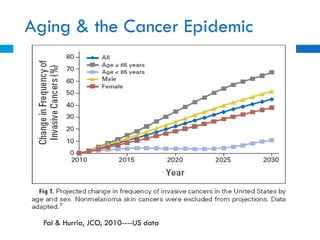
Pal & Hurria, JCO, 2010----US data
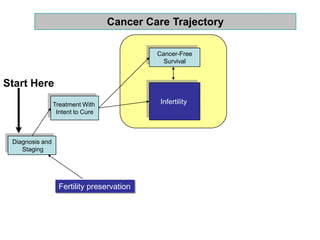
Aging & the Cancer Epidemic
 From 2010-30, total cancer
incidence will increase from 1.6 to
2.3 million
 Increase is driven by the aging of
the population (67% increase from
older adults vs. 11% in younger
adults)
 A 99% increase is anticipated for
minorities, compared with 33% for
whites
 Percentage of all cancers
diagnosed in minorities will
increase from 21% to 28%
Smith et al, JCO, 2009
Who are the Cancer Survivors?
 More than 1 in 3 Americans will be diagnosed with
cancer in their lifetime
 Almost 14 million Americans have a personal
history of cancer; 4% of US population
 More than 25 million people are survivors world
wide
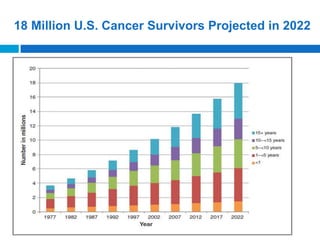
 The number of cancer survivors will increase
sharply during the next 25 yrs with aging of the
population
18 Million U.S. Cancer Survivors Projected in 2022
U.S. Cancer Survivor Facts
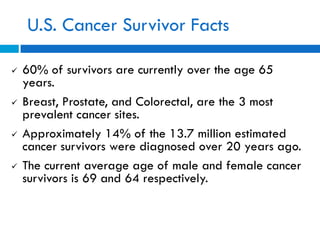
 60% of survivors are currently over the age 65
years.
 Breast, Prostate, and Colorectal, are the 3 most
prevalent cancer sites.
 Approximately 14% of the 13.7 million estimated
cancer survivors were diagnosed over 20 years ago.
 The current average age of male and female cancer
survivors is 69 and 64 respectively.
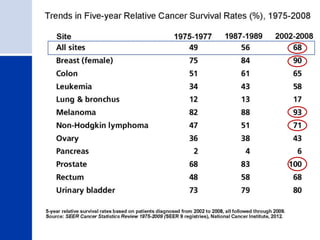
Trends in Five-year Relative Cancer Survival Rates (%), 1975-2008
Irish Cancer Statistics- courtesy A. O’Connor
 30,000 new cases every year, with >40,000
expected in 2020
 1in 3 men and 1 in 4 women (U.S. 1 in 2 men, 1 in 3
women)
 5 yr cancer survival: 60% of men, 62% of women
 280,000 people diagnosed between 1995-2009
have survived their cancer
 Comparison of cancer survivors and age-matched
individuals from the National Health Interview
Survey (NHIS) in 2000
 Multiple measures of burden embedded within the
survey
JNCI 96:1322, 2004
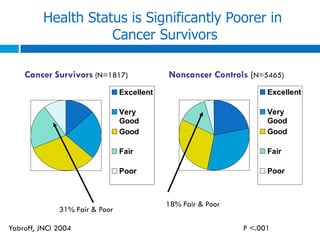
Health Status is Significantly Poorer in
Cancer Survivors
Excellent
Very
Good
Good
Fair
Poor
Excellent
Very
Good
Good
Fair
Poor
Yabroff, JNCI 2004
Cancer Survivors (N=1817) Noncancer Controls (N=5465)
P <.001
18% Fair & Poor
31% Fair & Poor
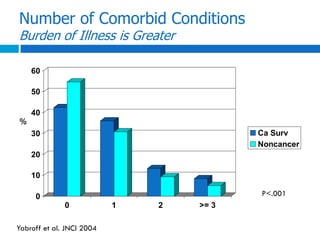
Number of Comorbid Conditions
Burden of Illness is Greater
0
10
20
30
40
50
60
0 1 2 >= 3
Ca Surv
Noncancer
P<.001
%
Yabroff et al. JNCI 2004
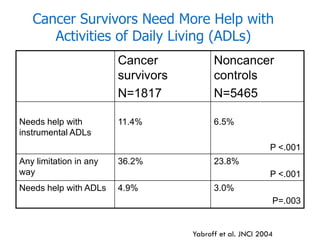
Cancer
survivors
N=1817
Noncancer
controls
N=5465
Needs help with
instrumental ADLs
11.4% 6.5%
P <.001
Any limitation in any
way
36.2% 23.8%
P <.001
Needs help with ADLs 4.9% 3.0%
P=.003
Yabroff et al. JNCI 2004
Cancer Survivors Need More Help with
Activities of Daily Living (ADLs)
Comorbid Conditions Causing
Limitation in Cancer Survivors
Condition causing limitation, % CA Survivor Control P-value
Arthritis/rheumatism 21.9 18.4 .005
Back/neck problem 12.0 9.5 .01
Fracture/bone/joint injury 7.0 5.3 .03
Heart problem 5.8 4.8 .17
Stroke 2.1 1.8 .50
Hypertension 3.6 2.6 .02
Diabetes 2.6 2.3 .57
Lung/breath problem 4.8 3.6 .03
Depression/anxiety/emotional problem 2.5 1.9 .21
Weight problem 1.9 1.5 .34
Musculoskeletal problem 4.3 3.5 .18
Yabroff et al. JNCI 2004
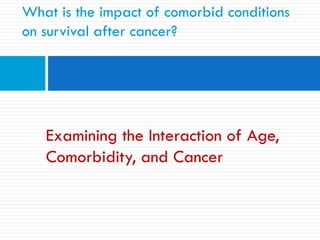
Examining the Interaction of Age,
Comorbidity, and Cancer
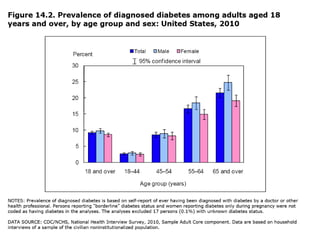
What is the impact of comorbid conditions
on survival after cancer?
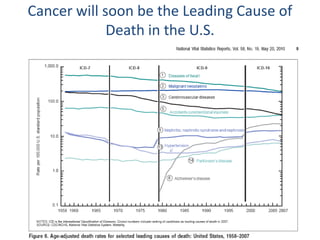
Cancer will soon be the Leading Cause of
Death in the U.S.
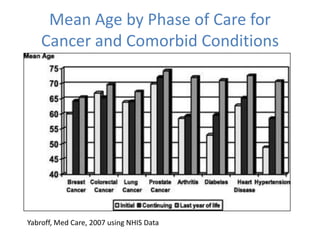
Mean Age by Phase of Care for
Cancer and Comorbid Conditions
Yabroff, Med Care, 2007 using NHIS Data
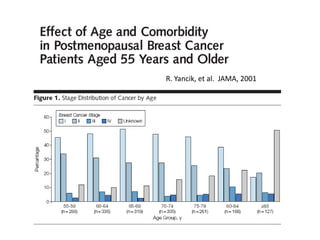
R. Yancik, et al. JAMA, 2001
Comorbid Conditions & Breast Ca
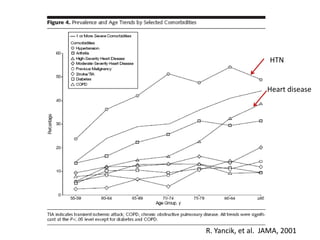
R. Yancik, et al. JAMA, 2001
HTN
Heart disease
R. Yancik, et al. JAMA, 2001
About half of all deaths are due to causes other
than breast cancer!
Survivorship research….
 A requirement for development of treatments to
improve quality of life for cancer survivors
 Necessary for prevention of late effects, through
understanding of biological mechanisms and
modification of cancer treatments
 Need to attend to comorbid conditions as well
Opportunities…
 Need for translational teams of researchers—move
the observations from the clinic and population back
to the lab—to understand biological mechanisms
 Focus on primary, secondary and tertiary
prevention of long-term and late effects
 Assume each patient you treat will be a
survivor—treat for cure AND treat for
long-term survivorship!
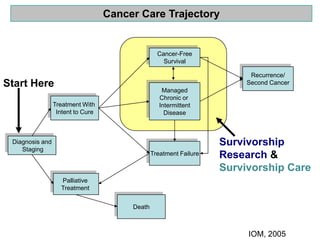
Diagnosis and
Staging
Palliative
Treatment
Treatment With
Intent to Cure
Cancer-Free
Survival
Managed
Chronic or
Intermittent
Disease
Recurrence/
Second Cancer
Cancer Care Trajectory
Death
Treatment Failure
Start Here
IOM, 2005
Survivorship
Research &
Survivorship Care
Why is cancer different from other chronic
diseases?
 Cancer treatment is….
 Complex
 Multi-modal
 Multi-disciplinary
 Toxic
 Expensive
 And often poorly coordinated
 Cancer treatment usually occurs in isolation
from primary health care delivery
Other Challenges
 Limited systematic study of the late effects of
cancer therapy
 Follow-up care plans have been ad hoc, with focus
on surveillance for recurrence
 When should health promotion and chronic disease
prevention become the focus?
 Infertility? “Dear, you should just be happy to be
alive.”
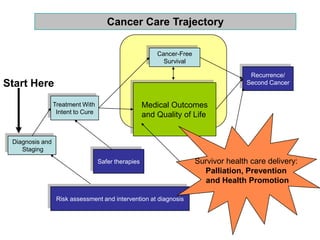
Survivorship Health Care Delivery:
A need for systematic research
 The Three P’s of Survivor Care
Palliation
Prevention
Health Promotion
Ganz, P A. (2011). The 'three Ps' of cancer survivorship
care. BMC medicine, 9, 14-14.
Symptom Management/Palliative Care:
An Integral Part of Survivorship Care
 Definition of Palliative Care:
 Medical care or treatment that concentrates on
reducing the severity of disease symptoms (particularly
if there is not a curative medical treatment)
 Goal is to prevent and relieve suffering and to improve
QOL for people facing complex illness
 Focus on the most severe and prolonged symptoms
Common Palliative Care Concerns
 Pain
 Fatigue
 Depression
 Physical limitations
 Cognitive changes
 Lymphedema
 Sexual dysfunction
 Menopause related symptoms
 Body Image
Why is it important to understand
biological mechanisms of symptoms?
 Identification of underlying biology provides
support/validity for complaints
 Leads to possible interventions (pharmacological or
behavioral)
 Potential for prevention, if at-risk individuals
identified
 Possible relationship to tumor biology and progression
Antoni et al. Nature Reviews Cancer 6, 240–248 (March 2006) | doi:10.1038/nrc1820
A Biobehavioral Model of Cancer
Prevention
 Systematic ongoing follow-up required for screening
 Goal: early detection and early intervention for
potentially serious late-onset complications e.g.,
cataracts, osteoporosis, cardiac disease
 Chemoprevention when available
 Life style modification to prevent second cancers
Health Promotion
 Health promotion counseling
 Goal: promote risk reduction for health problems that
commonly present during adulthood ( esp. for childhood
cancer survivors)
 Avoid weight gain
 Increase physical activity
 Avoidance of exposures that are harmful
 Decrease risk of other chronic diseases, e.g. diabetes,
heart disease
How to deliver the 3 P’s?
 New research is needed on models of care delivery
 One size will not fit all; different settings and
different patients will have different requirements
 What is right for Ireland may not be right in other
settings
Diagnosis and
Staging
Palliative
Treatment
Treatment With
Intent to Cure
Cancer-Free
Survival
Managed
Chronic or
Intermittent
Disease
Recurrence/
Second Cancer
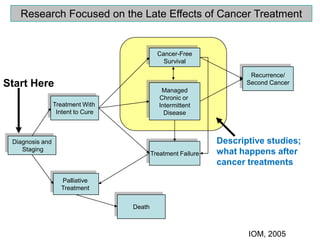
Research Focused on the Late Effects of Cancer Treatment
Death
Treatment Failure
Descriptive studies;
what happens after
cancer treatments
Start Here
IOM, 2005
Diagnosis and
Staging
Treatment With
Intent to Cure
Cancer-Free
Survival
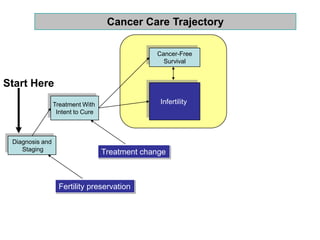
Infertility
Cancer Care Trajectory
Start Here
Diagnosis and
Staging
Treatment With
Intent to Cure
Cancer-Free
Survival
Infertility
Cancer Care Trajectory
Start Here
Fertility preservation
Diagnosis and
Staging
Treatment With
Intent to Cure
Cancer-Free
Survival
Infertility
Cancer Care Trajectory
Start Here
Fertility preservation
Treatment change
Diagnosis and
Staging
Treatment With
Intent to Cure
Cancer-Free
Survival
Infertility
Cancer Care Trajectory
Start Here
Fertility preservation
Treatment change Infertility “Treatment”
Diagnosis and
Staging
Treatment With
Intent to Cure
Cancer-Free
Survival
Managed
Chronic or
Intermittent
Disease
Recurrence/
Second Cancer
Cancer Care Trajectory
Start Here
Risk assessment and intervention at diagnosis
Safer or more targeted
therapies
Diagnosis and
Staging
Treatment With
Intent to Cure
Cancer-Free
Survival
Medical Outcomes
and Quality of Life
Recurrence/
Second Cancer
Cancer Care Trajectory
Start Here
Risk assessment and intervention at diagnosis
Safer
therapies
Diagnosis and
Staging
Treatment With
Intent to Cure
Cancer-Free
Survival
Medical Outcomes
and Quality of Life
Recurrence/
Second Cancer
Cancer Care Trajectory
Start Here
Risk assessment and intervention at diagnosis
Safer therapies Survivor health care delivery:
Palliation, Prevention
and Health Promotion
Where to start?
 What populations do you have access to?
 What is the setting of care?
 What existing expertise can be applied
to the cancer survivorship research
agenda?
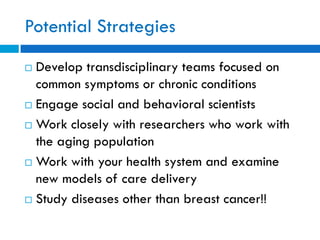
Potential Strategies
 Develop transdisciplinary teams focused on
common symptoms or chronic conditions
 Engage social and behavioral scientists
 Work closely with researchers who work with
the aging population
 Work with your health system and examine
new models of care delivery
 Study diseases other than breast cancer!!
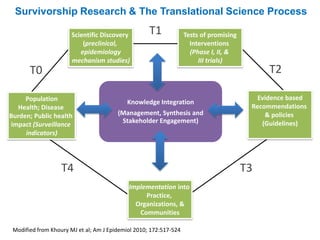
T1
T2
T3T4
T0
Survivorship Research & The Translational Science Process
Modified from Khoury MJ et al; Am J Epidemiol 2010; 172:517-524
Population
Health; Disease
Burden; Public health
impact (Surveillance
indicators)
Scientific Discovery
(preclinical,
epidemiology
mechanism studies)
Evidence based
Recommendations
& policies
(Guidelines)
Tests of promising
Interventions
(Phase I, II, &
III trials)
Implementation into
Practice,
Organizations, &
Communities
Knowledge Integration
(Management, Synthesis and
Stakeholder Engagement)

Developing a cancer survivorship research agenda - Prof Patricia Ganz

  • 1.
    DEVELOPING A CANCERSURVIVORSHIP RESEARCH AGENDA: CHALLENGES & OPPORTUNITIES Patricia A. Ganz, MD UCLA Schools of Medicine & Public Health Jonsson Comprehensive Cancer Center Survivorship Research Day Dublin, September 19, 2013
  • 2.
    “Three More Months”by Sharon Gough RN and Paul Roseingrave CCA Treatments are over, healing established. Physically easy, mentally challenging. A fresh beginning; a new normal begins. Unusual aches and pains…same worries and concerns. Blood work and scans along with doctor appointments. Life continues with no evidence of disease. Goal achieved for another three months. Oncology Times, Poetry by Cancer Caregivers, July 25, 2013; authors are also cancer survivors
  • 3.
    Overview  The changingface of cancer: the challenge of an aging population  Limited resources for delivery of health care; increased fragmentation of care— how do we respond?  What are the research opportunities?  Where to start?
  • 4.
    Pal & Hurria,JCO, 2010----US data Aging & the Cancer Epidemic
  • 5.
     From 2010-30,total cancer incidence will increase from 1.6 to 2.3 million  Increase is driven by the aging of the population (67% increase from older adults vs. 11% in younger adults)  A 99% increase is anticipated for minorities, compared with 33% for whites  Percentage of all cancers diagnosed in minorities will increase from 21% to 28% Smith et al, JCO, 2009
  • 6.
    Who are theCancer Survivors?  More than 1 in 3 Americans will be diagnosed with cancer in their lifetime  Almost 14 million Americans have a personal history of cancer; 4% of US population  More than 25 million people are survivors world wide  The number of cancer survivors will increase sharply during the next 25 yrs with aging of the population
  • 7.
    18 Million U.S.Cancer Survivors Projected in 2022
  • 8.
    U.S. Cancer SurvivorFacts  60% of survivors are currently over the age 65 years.  Breast, Prostate, and Colorectal, are the 3 most prevalent cancer sites.  Approximately 14% of the 13.7 million estimated cancer survivors were diagnosed over 20 years ago.  The current average age of male and female cancer survivors is 69 and 64 respectively.
  • 9.
    Trends in Five-yearRelative Cancer Survival Rates (%), 1975-2008
  • 10.
    Irish Cancer Statistics-courtesy A. O’Connor  30,000 new cases every year, with >40,000 expected in 2020  1in 3 men and 1 in 4 women (U.S. 1 in 2 men, 1 in 3 women)  5 yr cancer survival: 60% of men, 62% of women  280,000 people diagnosed between 1995-2009 have survived their cancer
  • 11.
     Comparison ofcancer survivors and age-matched individuals from the National Health Interview Survey (NHIS) in 2000  Multiple measures of burden embedded within the survey JNCI 96:1322, 2004
  • 12.
    Health Status isSignificantly Poorer in Cancer Survivors Excellent Very Good Good Fair Poor Excellent Very Good Good Fair Poor Yabroff, JNCI 2004 Cancer Survivors (N=1817) Noncancer Controls (N=5465) P <.001 18% Fair & Poor 31% Fair & Poor
  • 13.
    Number of ComorbidConditions Burden of Illness is Greater 0 10 20 30 40 50 60 0 1 2 >= 3 Ca Surv Noncancer P<.001 % Yabroff et al. JNCI 2004
  • 14.
    Cancer survivors N=1817 Noncancer controls N=5465 Needs help with instrumentalADLs 11.4% 6.5% P <.001 Any limitation in any way 36.2% 23.8% P <.001 Needs help with ADLs 4.9% 3.0% P=.003 Yabroff et al. JNCI 2004 Cancer Survivors Need More Help with Activities of Daily Living (ADLs)
  • 15.
    Comorbid Conditions Causing Limitationin Cancer Survivors Condition causing limitation, % CA Survivor Control P-value Arthritis/rheumatism 21.9 18.4 .005 Back/neck problem 12.0 9.5 .01 Fracture/bone/joint injury 7.0 5.3 .03 Heart problem 5.8 4.8 .17 Stroke 2.1 1.8 .50 Hypertension 3.6 2.6 .02 Diabetes 2.6 2.3 .57 Lung/breath problem 4.8 3.6 .03 Depression/anxiety/emotional problem 2.5 1.9 .21 Weight problem 1.9 1.5 .34 Musculoskeletal problem 4.3 3.5 .18 Yabroff et al. JNCI 2004
  • 16.
    Examining the Interactionof Age, Comorbidity, and Cancer What is the impact of comorbid conditions on survival after cancer?
  • 17.
    Cancer will soonbe the Leading Cause of Death in the U.S.
  • 18.
    Mean Age byPhase of Care for Cancer and Comorbid Conditions Yabroff, Med Care, 2007 using NHIS Data
  • 20.
    R. Yancik, etal. JAMA, 2001
  • 21.
    R. Yancik, etal. JAMA, 2001 Comorbid Conditions & Breast Ca
  • 22.
    R. Yancik, etal. JAMA, 2001 HTN Heart disease
  • 23.
    R. Yancik, etal. JAMA, 2001 About half of all deaths are due to causes other than breast cancer!
  • 24.
    Survivorship research….  Arequirement for development of treatments to improve quality of life for cancer survivors  Necessary for prevention of late effects, through understanding of biological mechanisms and modification of cancer treatments  Need to attend to comorbid conditions as well
  • 25.
    Opportunities…  Need fortranslational teams of researchers—move the observations from the clinic and population back to the lab—to understand biological mechanisms  Focus on primary, secondary and tertiary prevention of long-term and late effects  Assume each patient you treat will be a survivor—treat for cure AND treat for long-term survivorship!
  • 26.
    Diagnosis and Staging Palliative Treatment Treatment With Intentto Cure Cancer-Free Survival Managed Chronic or Intermittent Disease Recurrence/ Second Cancer Cancer Care Trajectory Death Treatment Failure Start Here IOM, 2005 Survivorship Research & Survivorship Care
  • 27.
    Why is cancerdifferent from other chronic diseases?  Cancer treatment is….  Complex  Multi-modal  Multi-disciplinary  Toxic  Expensive  And often poorly coordinated  Cancer treatment usually occurs in isolation from primary health care delivery
  • 28.
    Other Challenges  Limitedsystematic study of the late effects of cancer therapy  Follow-up care plans have been ad hoc, with focus on surveillance for recurrence  When should health promotion and chronic disease prevention become the focus?  Infertility? “Dear, you should just be happy to be alive.”
  • 29.
    Survivorship Health CareDelivery: A need for systematic research  The Three P’s of Survivor Care Palliation Prevention Health Promotion Ganz, P A. (2011). The 'three Ps' of cancer survivorship care. BMC medicine, 9, 14-14.
  • 30.
    Symptom Management/Palliative Care: AnIntegral Part of Survivorship Care  Definition of Palliative Care:  Medical care or treatment that concentrates on reducing the severity of disease symptoms (particularly if there is not a curative medical treatment)  Goal is to prevent and relieve suffering and to improve QOL for people facing complex illness  Focus on the most severe and prolonged symptoms
  • 31.
    Common Palliative CareConcerns  Pain  Fatigue  Depression  Physical limitations  Cognitive changes  Lymphedema  Sexual dysfunction  Menopause related symptoms  Body Image
  • 32.
    Why is itimportant to understand biological mechanisms of symptoms?  Identification of underlying biology provides support/validity for complaints  Leads to possible interventions (pharmacological or behavioral)  Potential for prevention, if at-risk individuals identified  Possible relationship to tumor biology and progression
  • 33.
    Antoni et al.Nature Reviews Cancer 6, 240–248 (March 2006) | doi:10.1038/nrc1820 A Biobehavioral Model of Cancer
  • 34.
    Prevention  Systematic ongoingfollow-up required for screening  Goal: early detection and early intervention for potentially serious late-onset complications e.g., cataracts, osteoporosis, cardiac disease  Chemoprevention when available  Life style modification to prevent second cancers
  • 35.
    Health Promotion  Healthpromotion counseling  Goal: promote risk reduction for health problems that commonly present during adulthood ( esp. for childhood cancer survivors)  Avoid weight gain  Increase physical activity  Avoidance of exposures that are harmful  Decrease risk of other chronic diseases, e.g. diabetes, heart disease
  • 36.
    How to deliverthe 3 P’s?  New research is needed on models of care delivery  One size will not fit all; different settings and different patients will have different requirements  What is right for Ireland may not be right in other settings
  • 37.
    Diagnosis and Staging Palliative Treatment Treatment With Intentto Cure Cancer-Free Survival Managed Chronic or Intermittent Disease Recurrence/ Second Cancer Research Focused on the Late Effects of Cancer Treatment Death Treatment Failure Descriptive studies; what happens after cancer treatments Start Here IOM, 2005
  • 38.
    Diagnosis and Staging Treatment With Intentto Cure Cancer-Free Survival Infertility Cancer Care Trajectory Start Here
  • 39.
    Diagnosis and Staging Treatment With Intentto Cure Cancer-Free Survival Infertility Cancer Care Trajectory Start Here Fertility preservation
  • 40.
    Diagnosis and Staging Treatment With Intentto Cure Cancer-Free Survival Infertility Cancer Care Trajectory Start Here Fertility preservation Treatment change
  • 41.
    Diagnosis and Staging Treatment With Intentto Cure Cancer-Free Survival Infertility Cancer Care Trajectory Start Here Fertility preservation Treatment change Infertility “Treatment”
  • 42.
    Diagnosis and Staging Treatment With Intentto Cure Cancer-Free Survival Managed Chronic or Intermittent Disease Recurrence/ Second Cancer Cancer Care Trajectory Start Here Risk assessment and intervention at diagnosis Safer or more targeted therapies
  • 43.
    Diagnosis and Staging Treatment With Intentto Cure Cancer-Free Survival Medical Outcomes and Quality of Life Recurrence/ Second Cancer Cancer Care Trajectory Start Here Risk assessment and intervention at diagnosis Safer therapies
  • 44.
    Diagnosis and Staging Treatment With Intentto Cure Cancer-Free Survival Medical Outcomes and Quality of Life Recurrence/ Second Cancer Cancer Care Trajectory Start Here Risk assessment and intervention at diagnosis Safer therapies Survivor health care delivery: Palliation, Prevention and Health Promotion
  • 45.
    Where to start? What populations do you have access to?  What is the setting of care?  What existing expertise can be applied to the cancer survivorship research agenda?
  • 46.
    Potential Strategies  Developtransdisciplinary teams focused on common symptoms or chronic conditions  Engage social and behavioral scientists  Work closely with researchers who work with the aging population  Work with your health system and examine new models of care delivery  Study diseases other than breast cancer!!
  • 47.
    T1 T2 T3T4 T0 Survivorship Research &The Translational Science Process Modified from Khoury MJ et al; Am J Epidemiol 2010; 172:517-524 Population Health; Disease Burden; Public health impact (Surveillance indicators) Scientific Discovery (preclinical, epidemiology mechanism studies) Evidence based Recommendations & policies (Guidelines) Tests of promising Interventions (Phase I, II, & III trials) Implementation into Practice, Organizations, & Communities Knowledge Integration (Management, Synthesis and Stakeholder Engagement)

Editor's Notes