SHEET METAL PROCESSES
UNIT-4
Introduction
 The working of metal thickness from 3mm to 5mm
with hand tools and simple machines into various
forms is known as sheet metal work.
Sheet metals
 Black iron
 Galvanized iron
 Stainless steel
 Brass
 Copper
 Zinc , Aluminium, tin plate and lead.
SHEET METAL CHARACTERISTICS
-Roll Forming
-Stretch Forming
-Drawing
-Stamping
-Rubber Forming
-Spinning
-Super Plastic Forming
-Peen Forming
-Explosive Forming
-Magnetic Pulse Forming
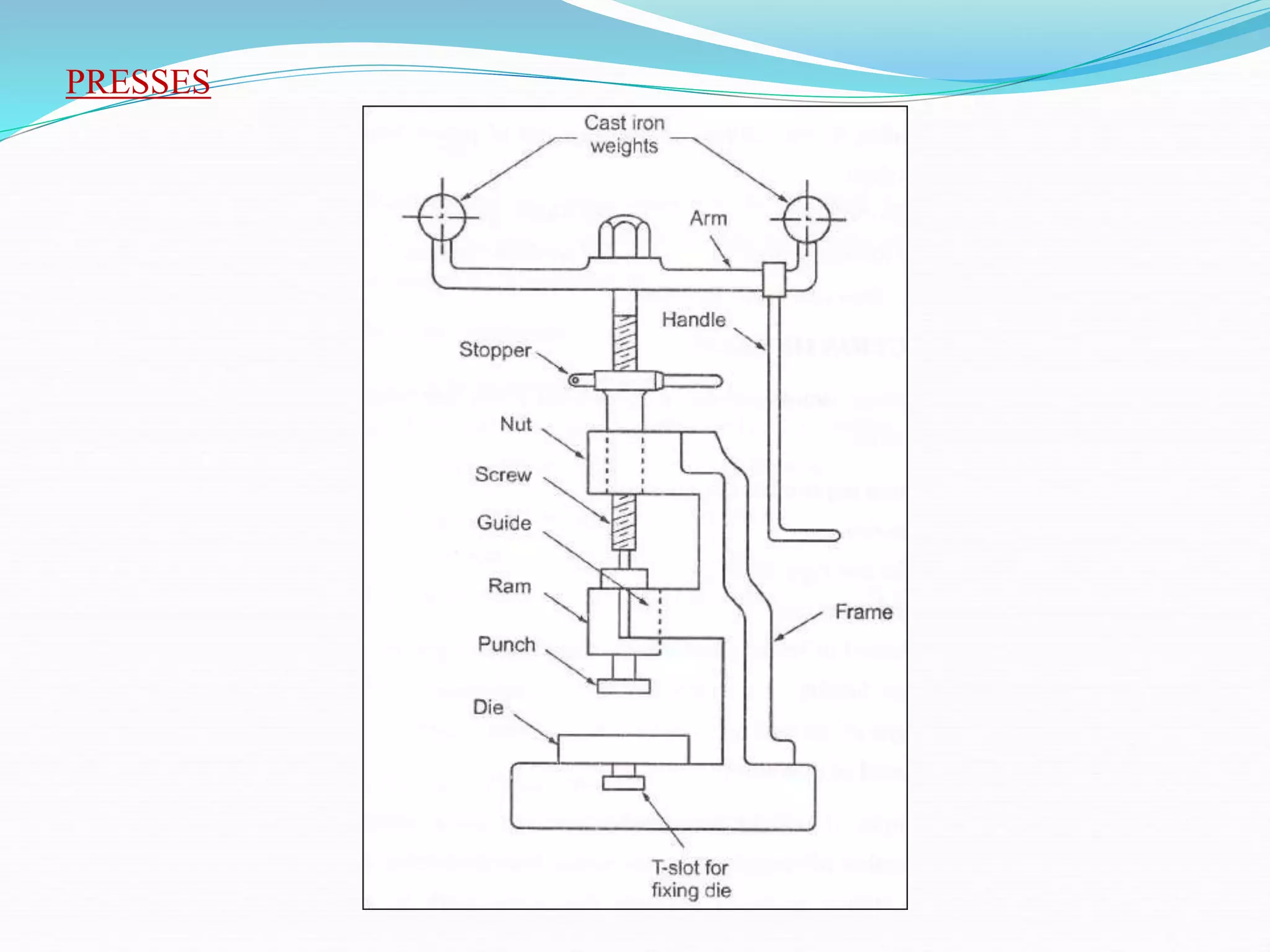
PRESSES
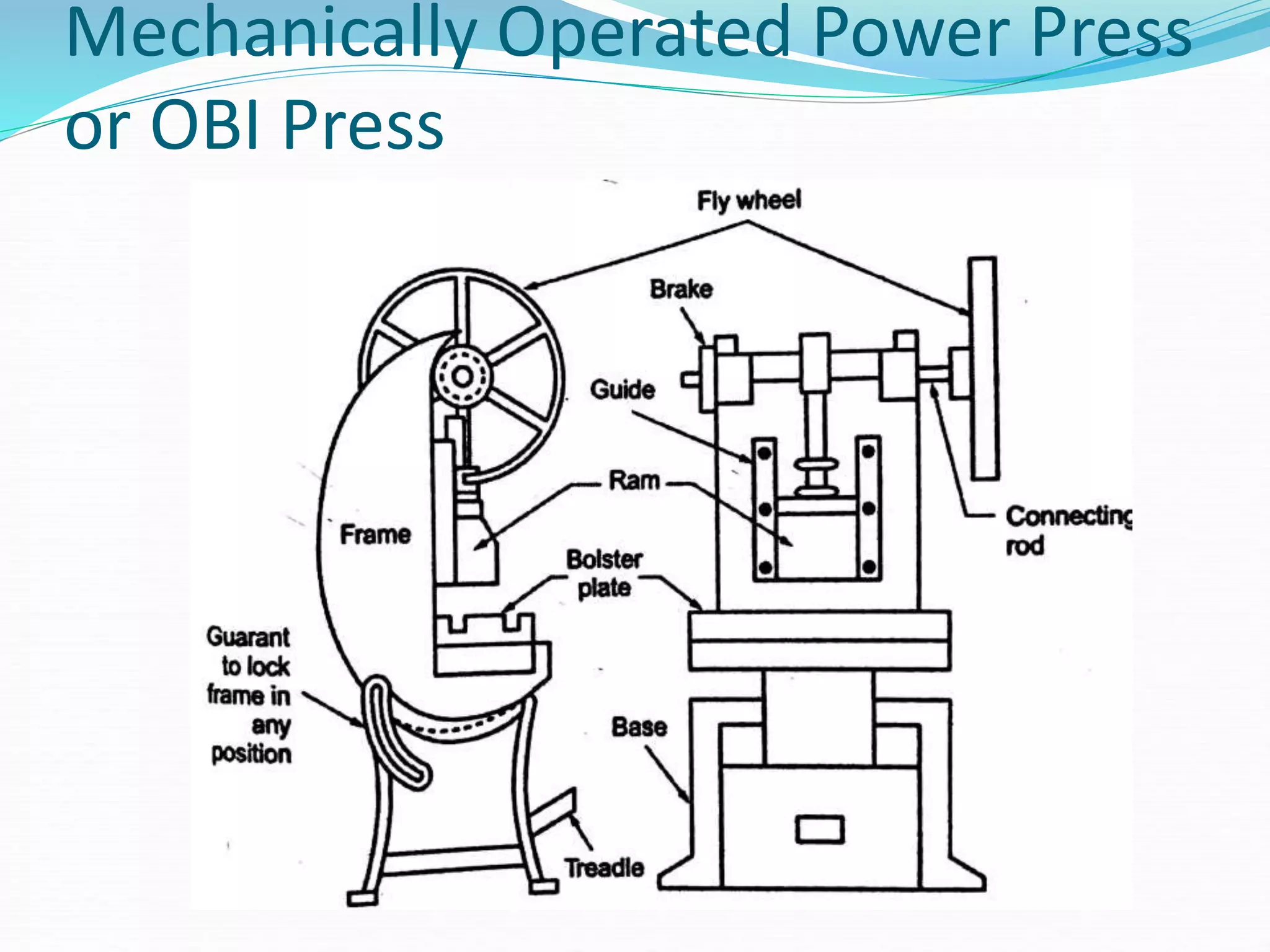
Mechanically Operated Power Press
or OBI Press
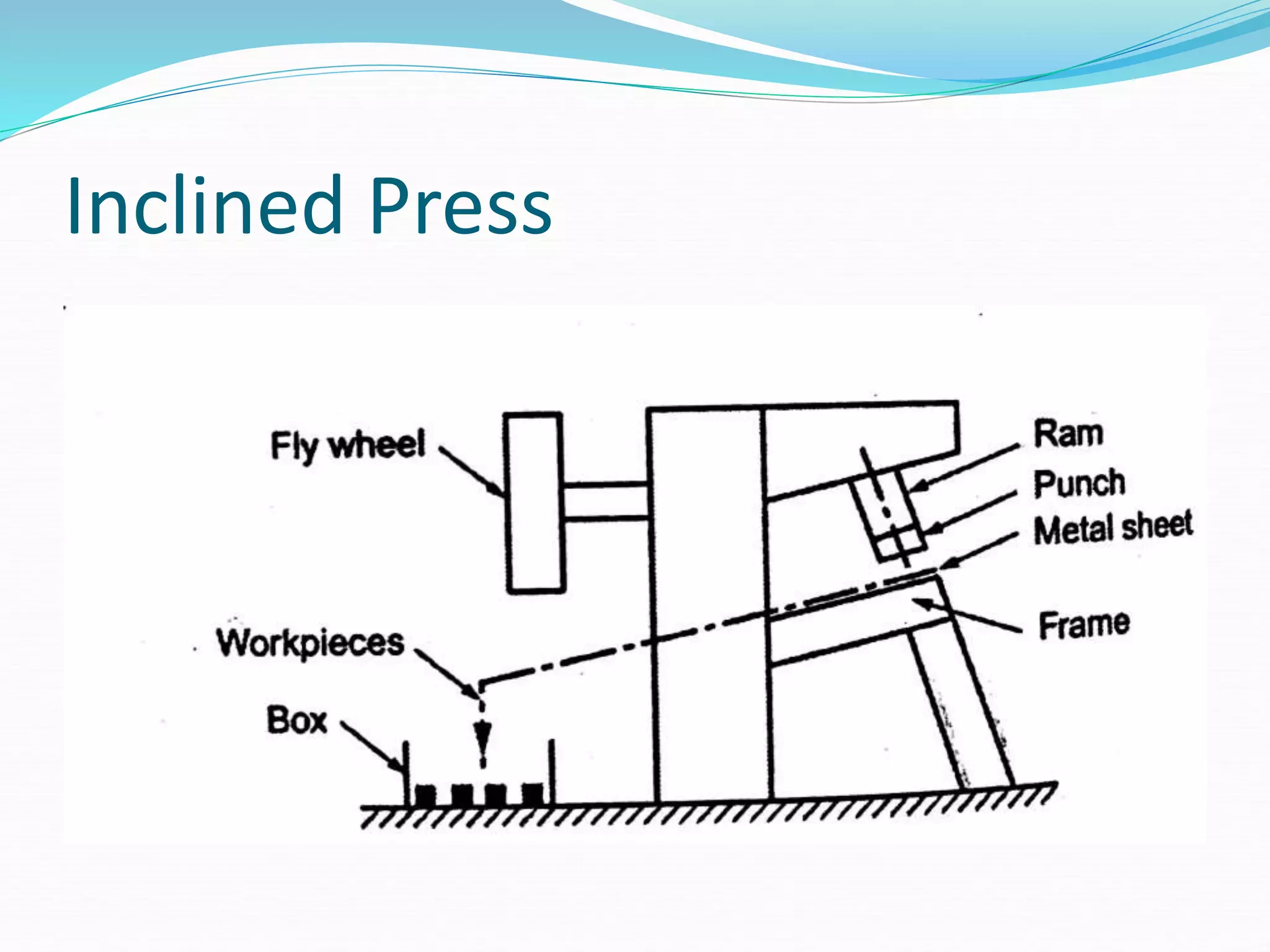
Inclined Press
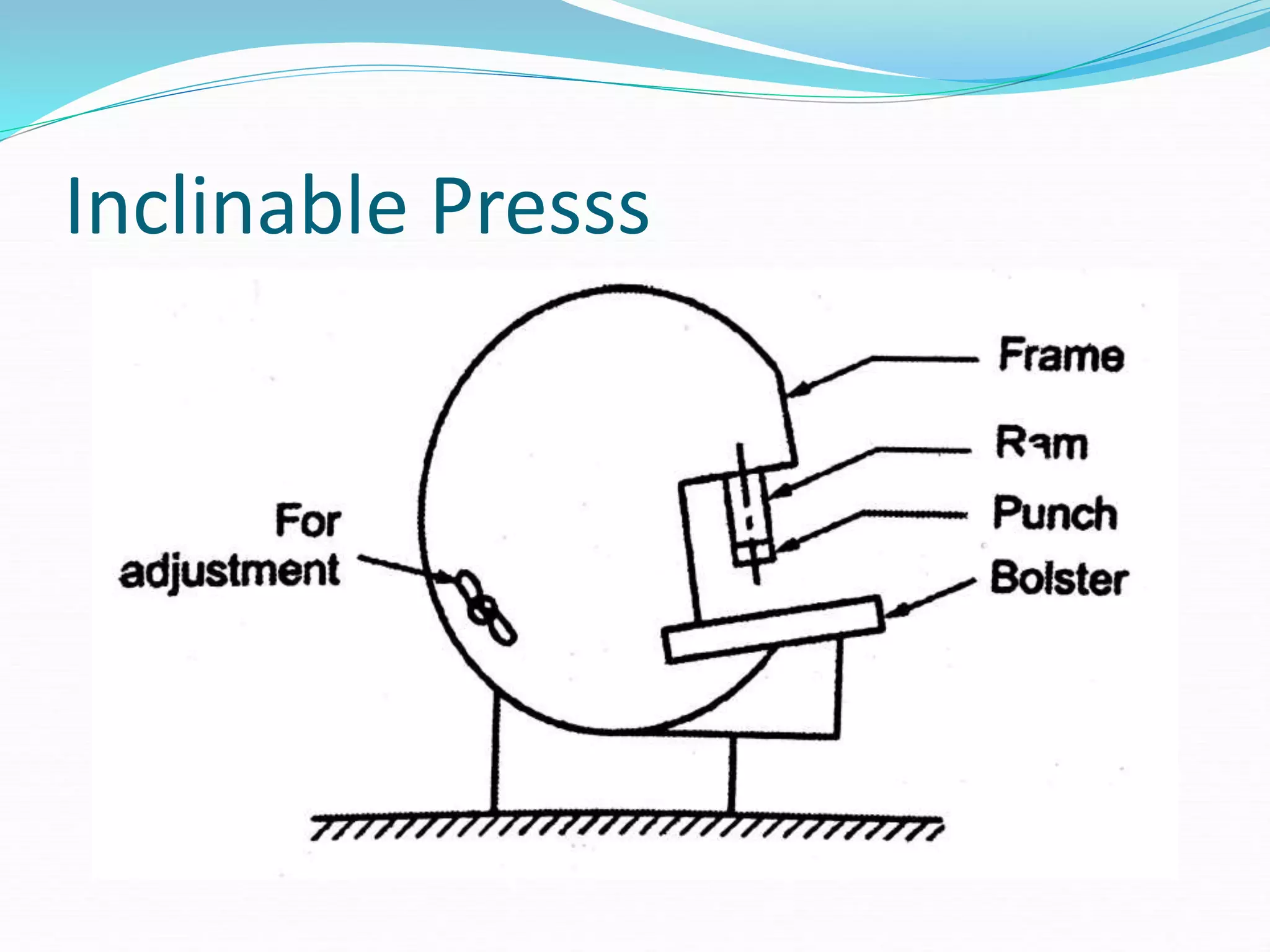
Inclinable Presss
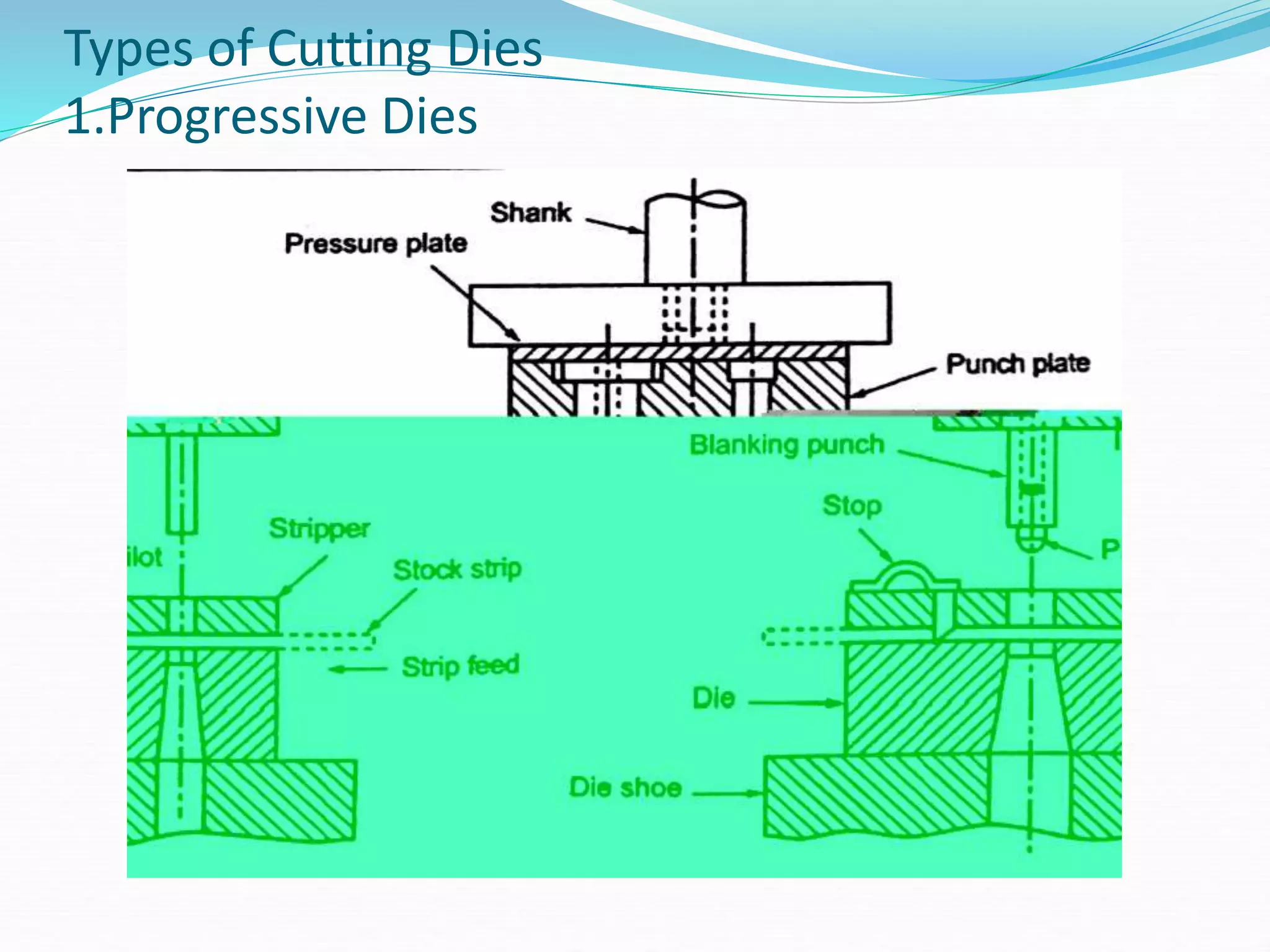
Types of Cutting Dies
1.Progressive Dies
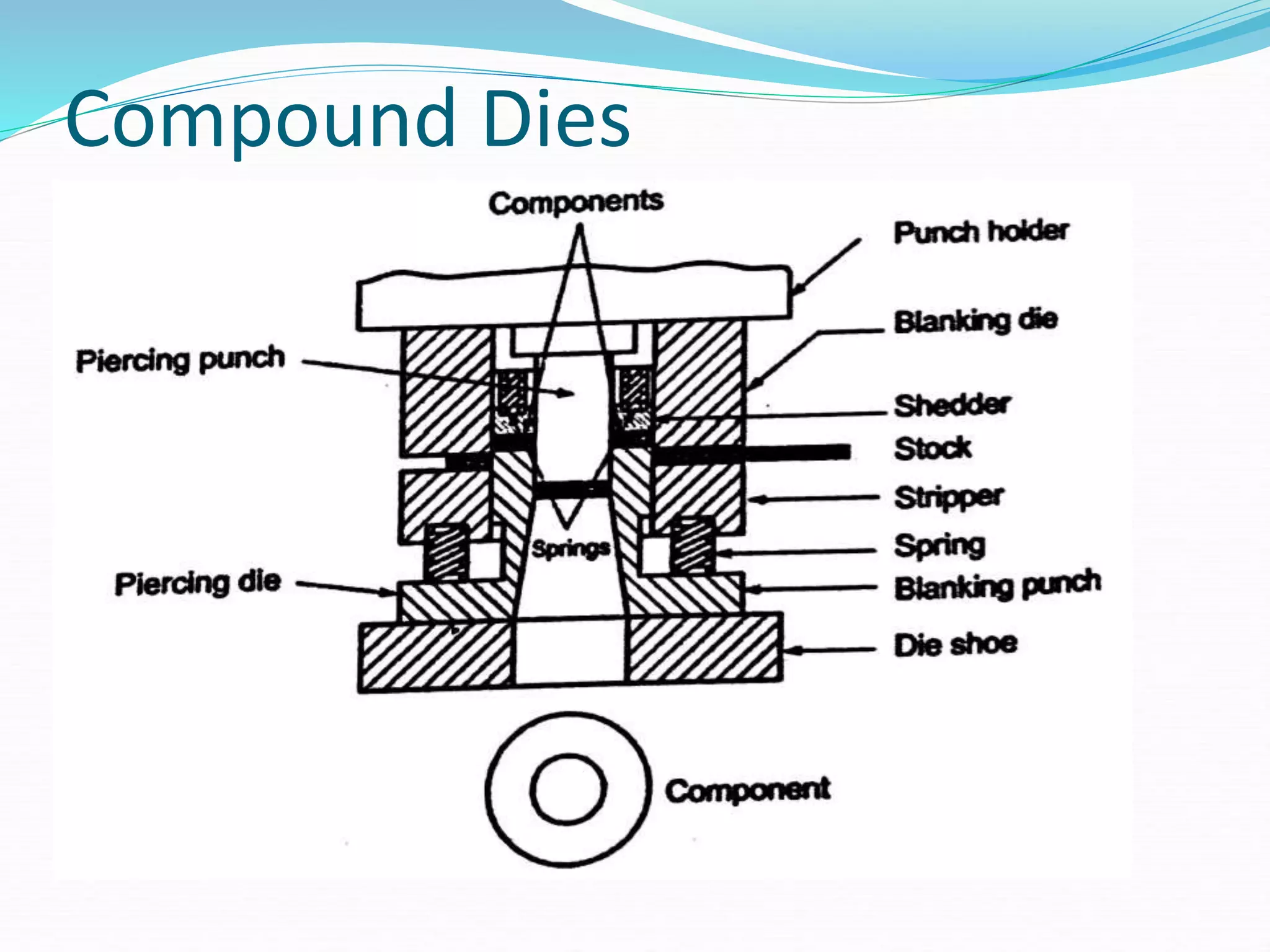
Compound Dies
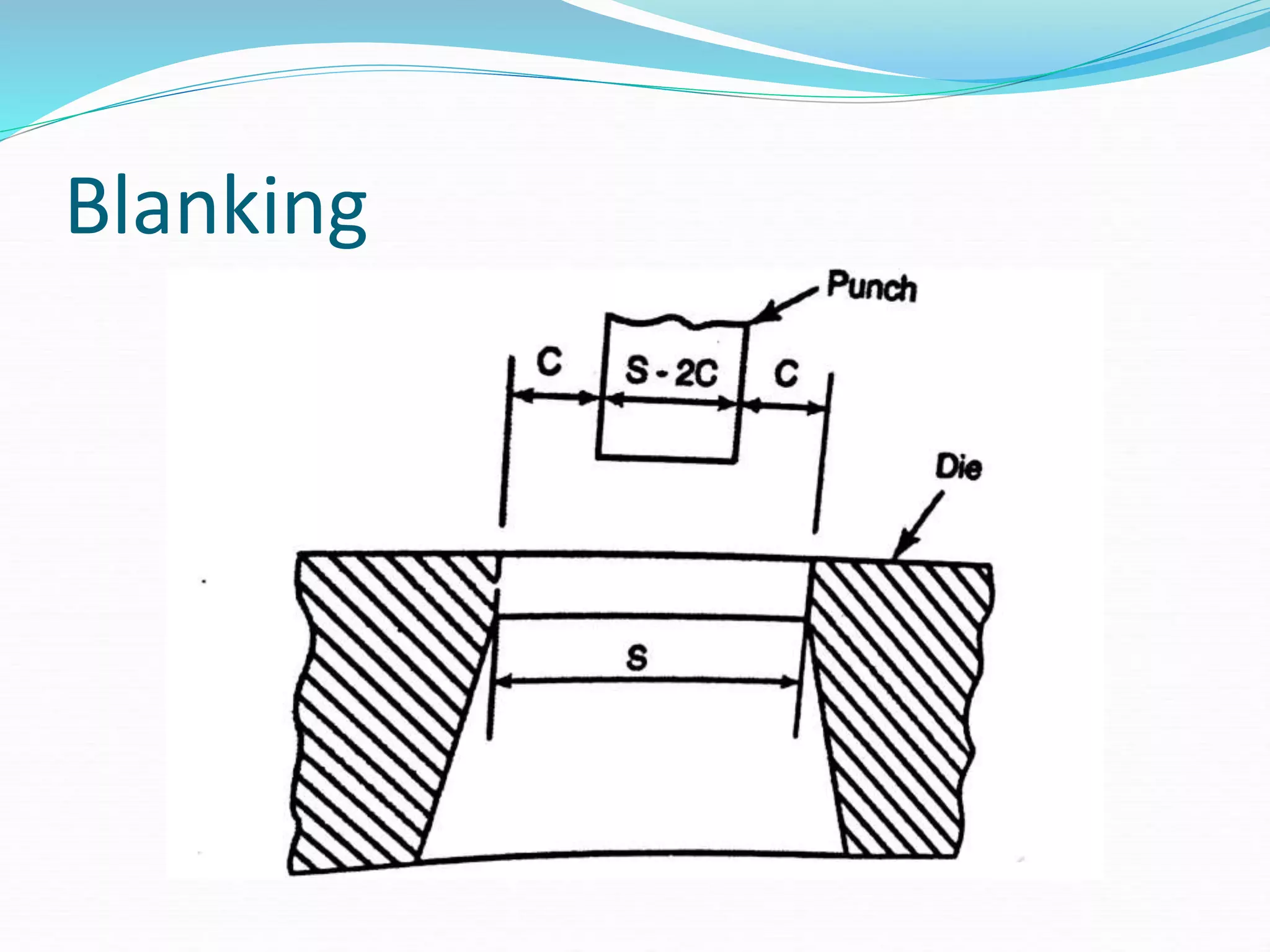
Blanking
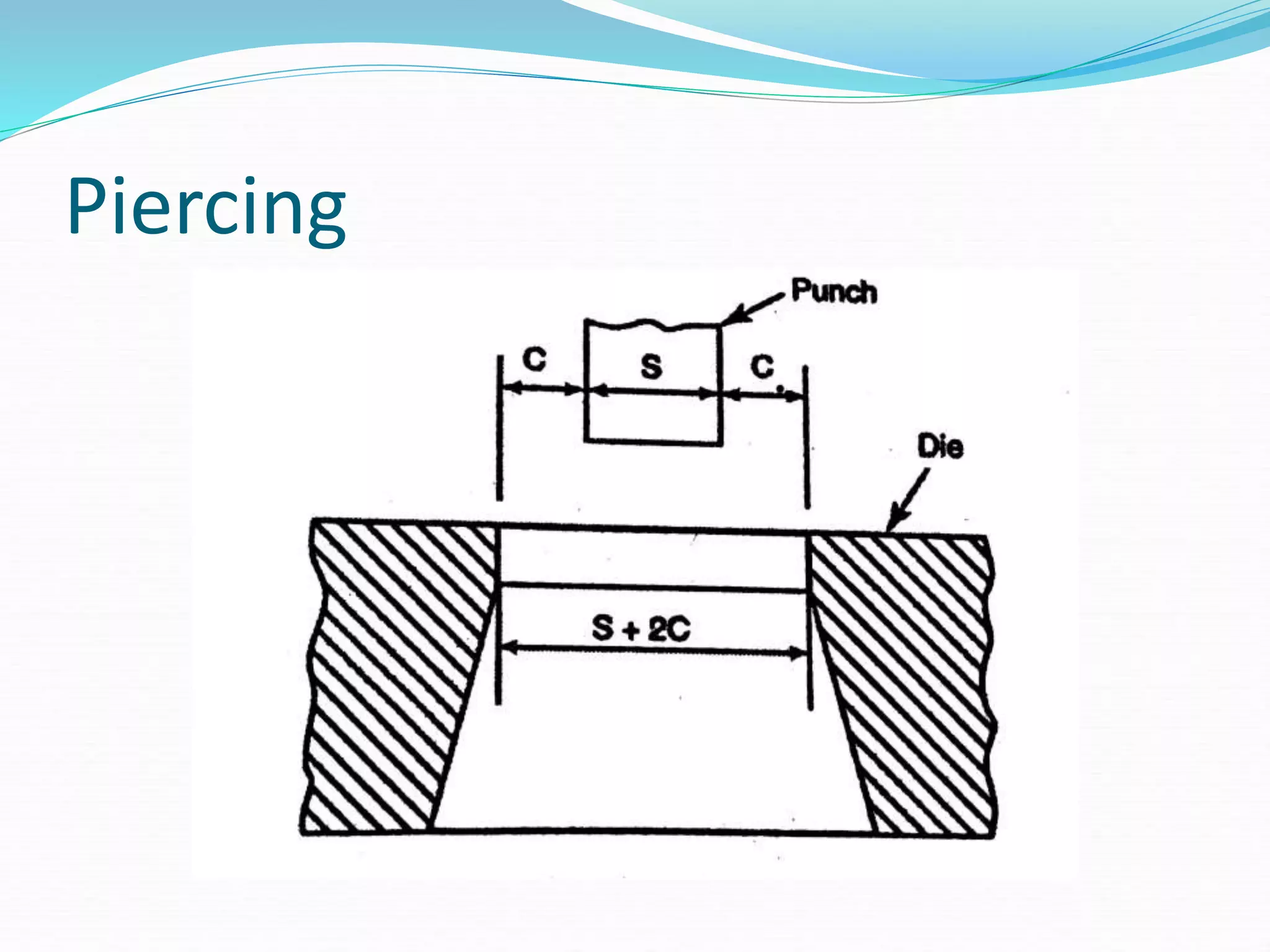
Piercing
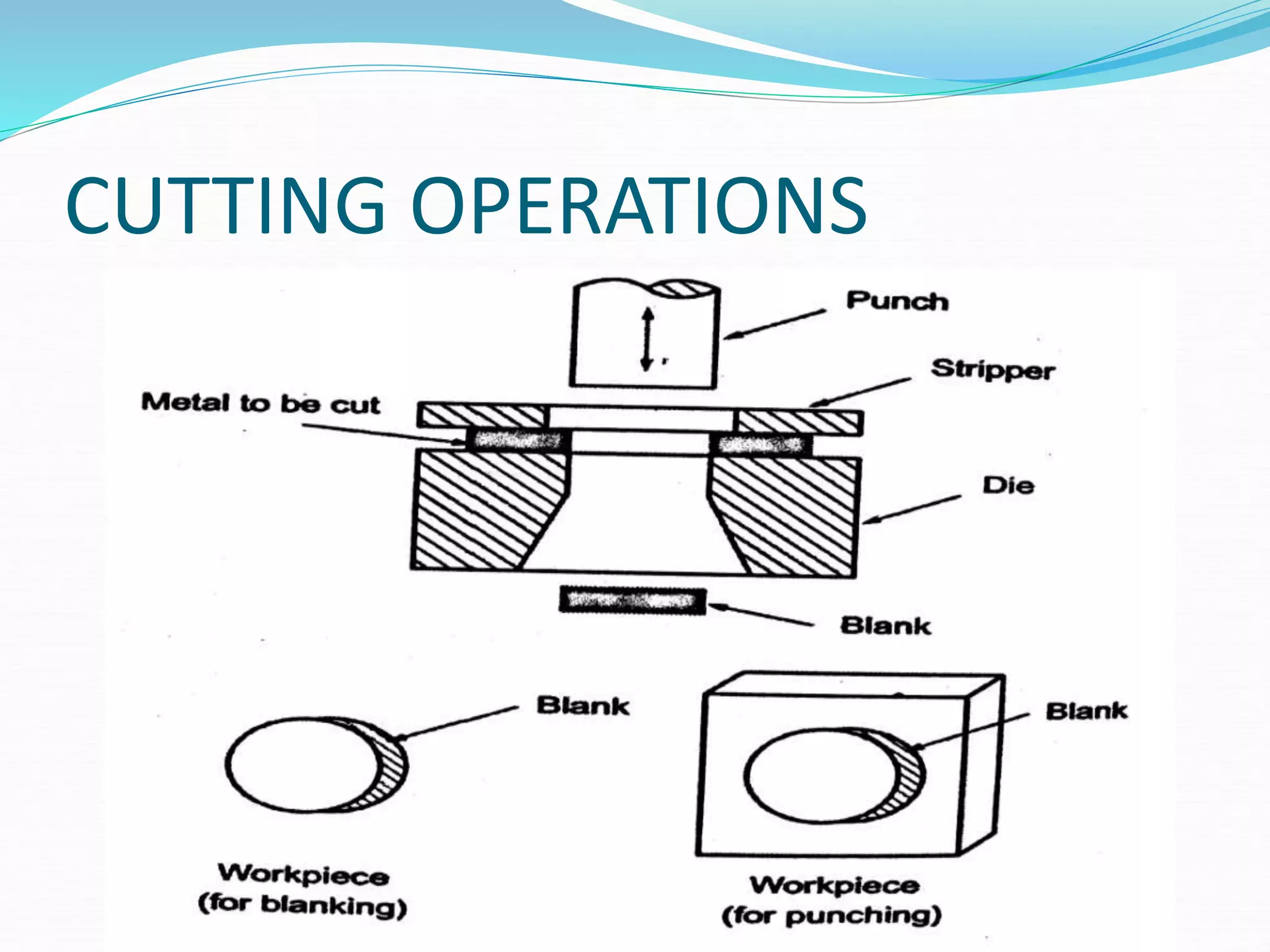
CUTTING OPERATIONS
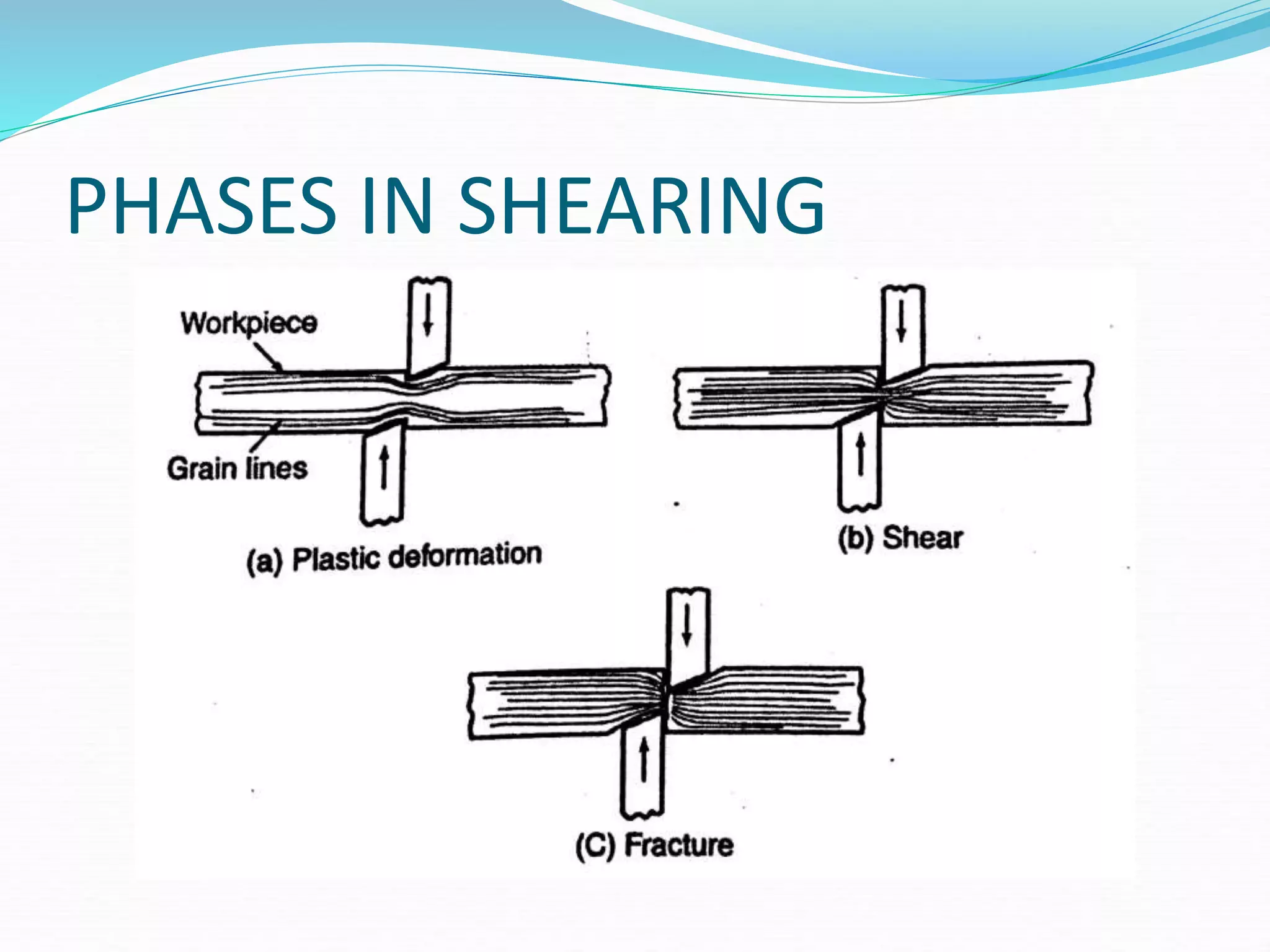
PHASES IN SHEARING
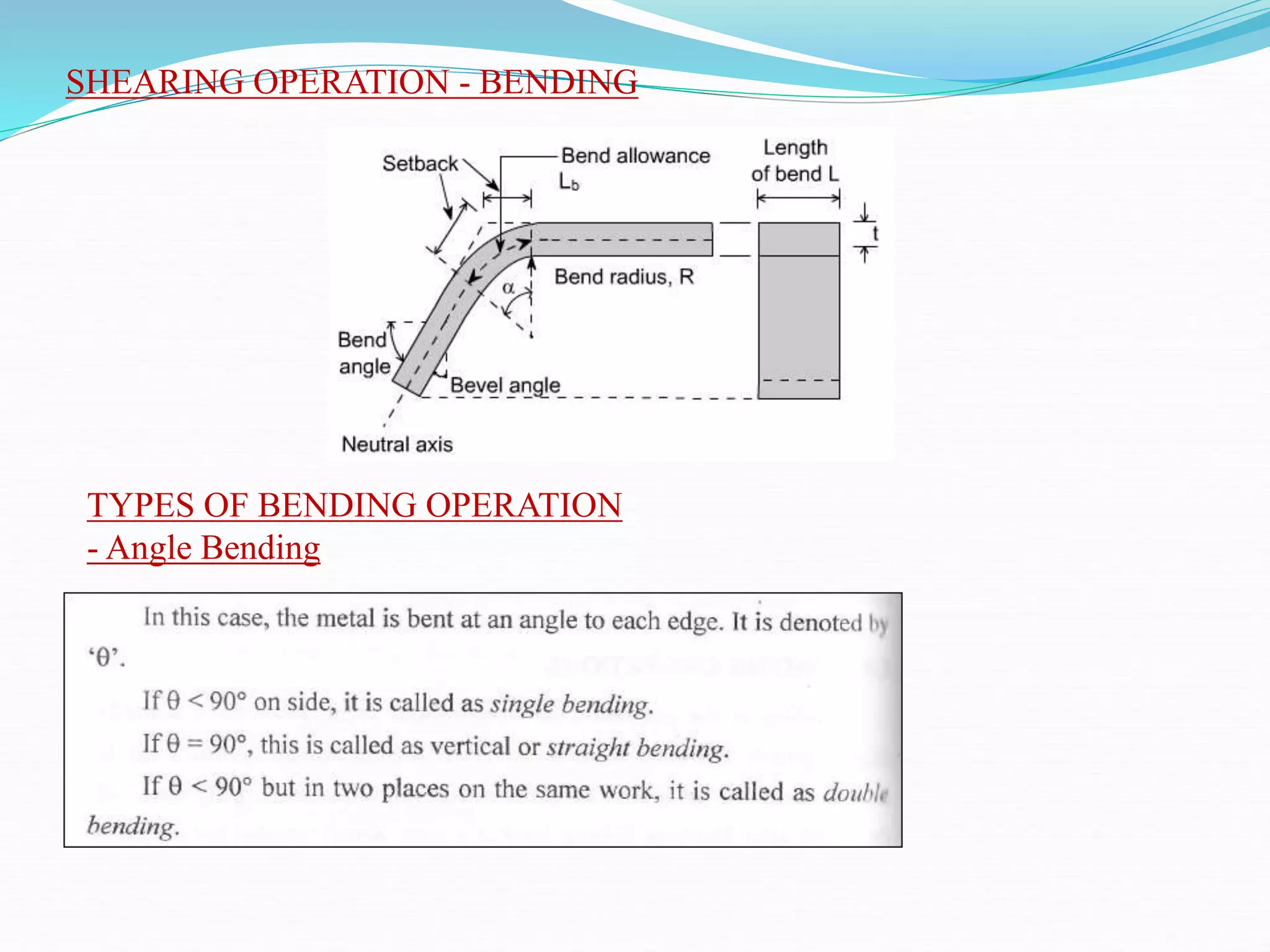
SHEARING OPERATION - BENDING
TYPES OF BENDING OPERATION
- Angle Bending
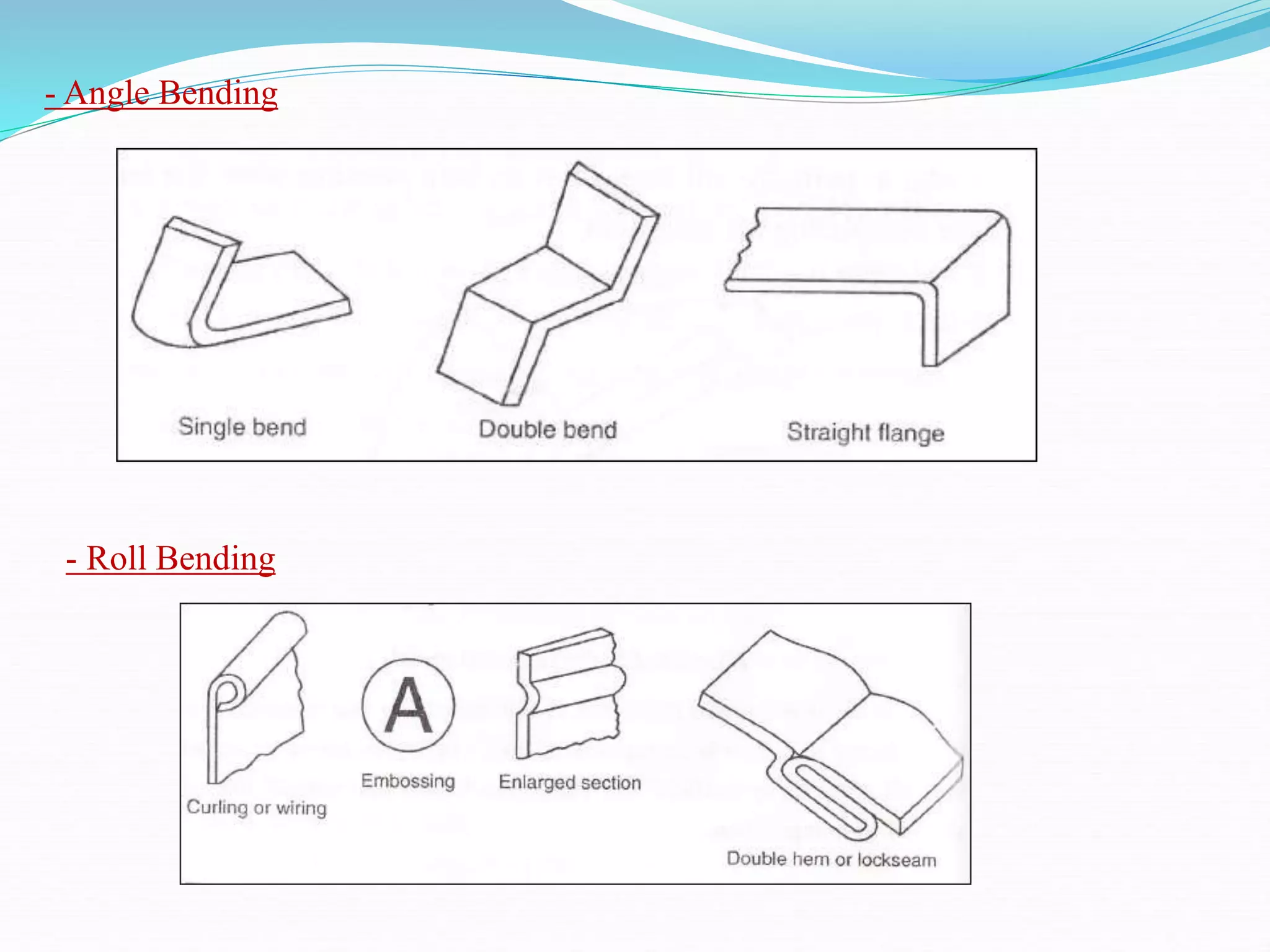
- Angle Bending
- Roll Bending
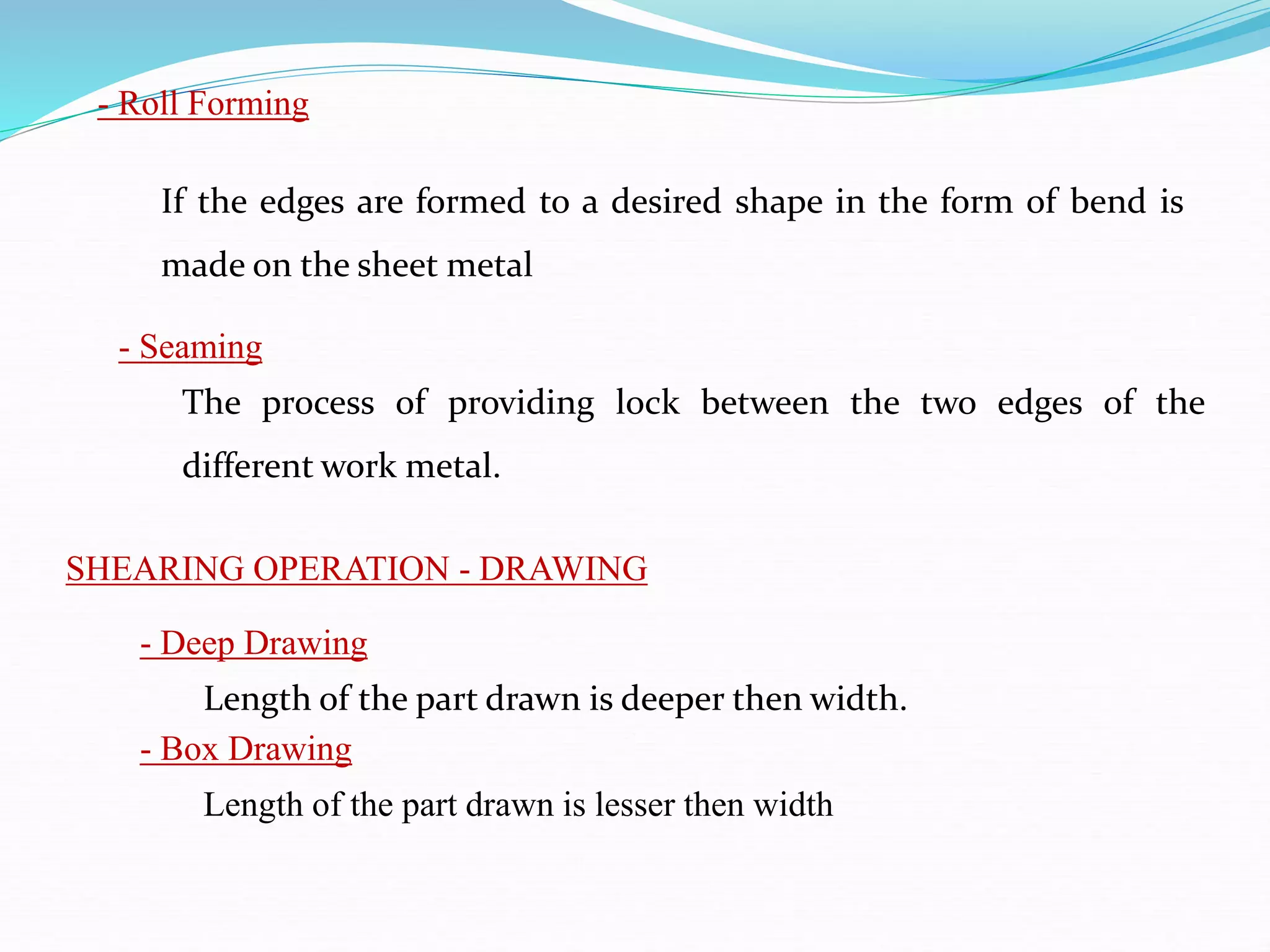
- Roll Forming
If the edges are formed to a desired shape in the form of bend is
made on the sheet metal
- Seaming
The process of providing lock between the two edges of the
different work metal.
SHEARING OPERATION - DRAWING
- Deep Drawing
Length of the part drawn is deeper then width.
- Box Drawing
Length of the part drawn is lesser then width
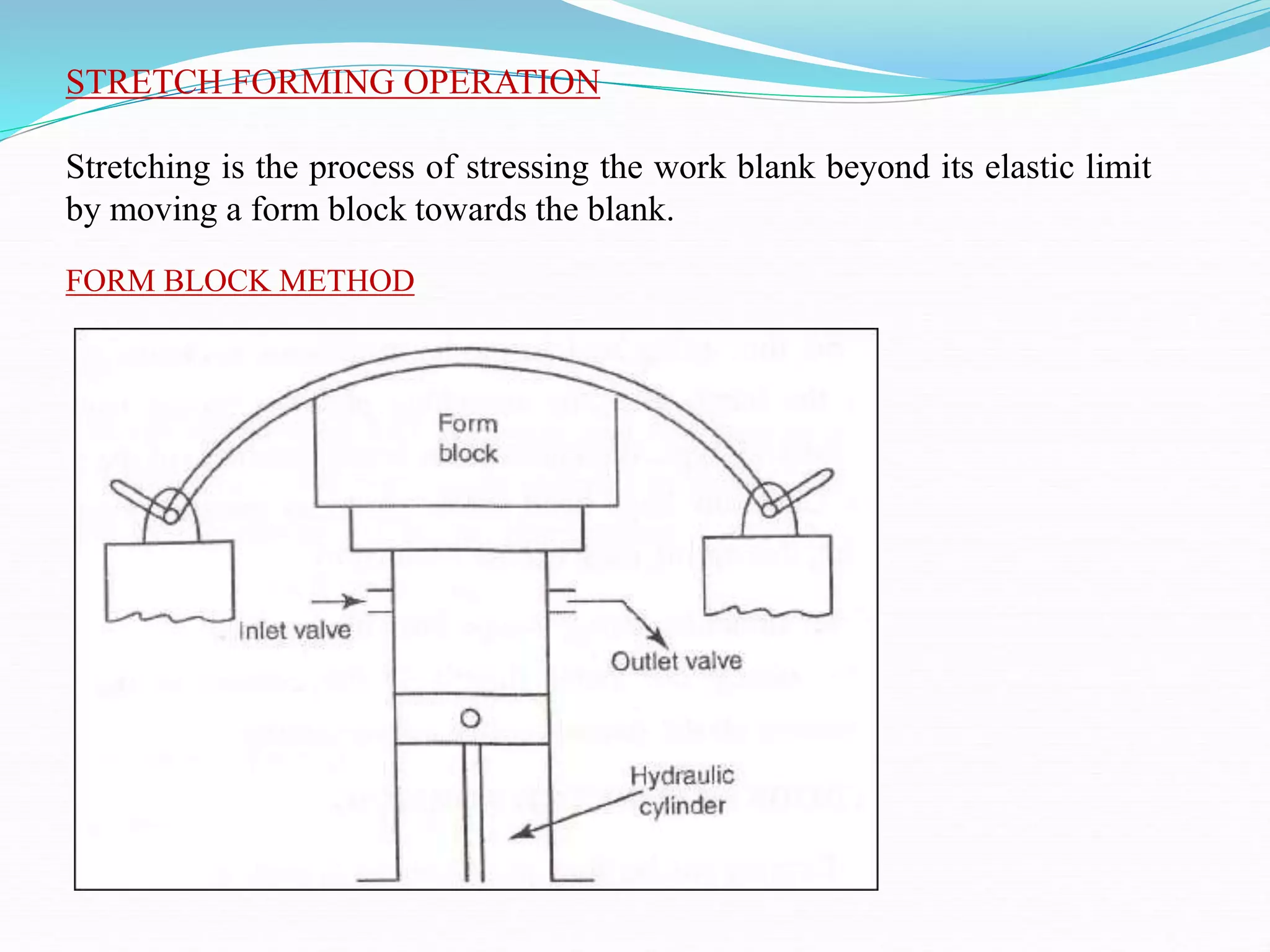
STRETCH FORMING OPERATION
Stretching is the process of stressing the work blank beyond its elastic limit
by moving a form block towards the blank.
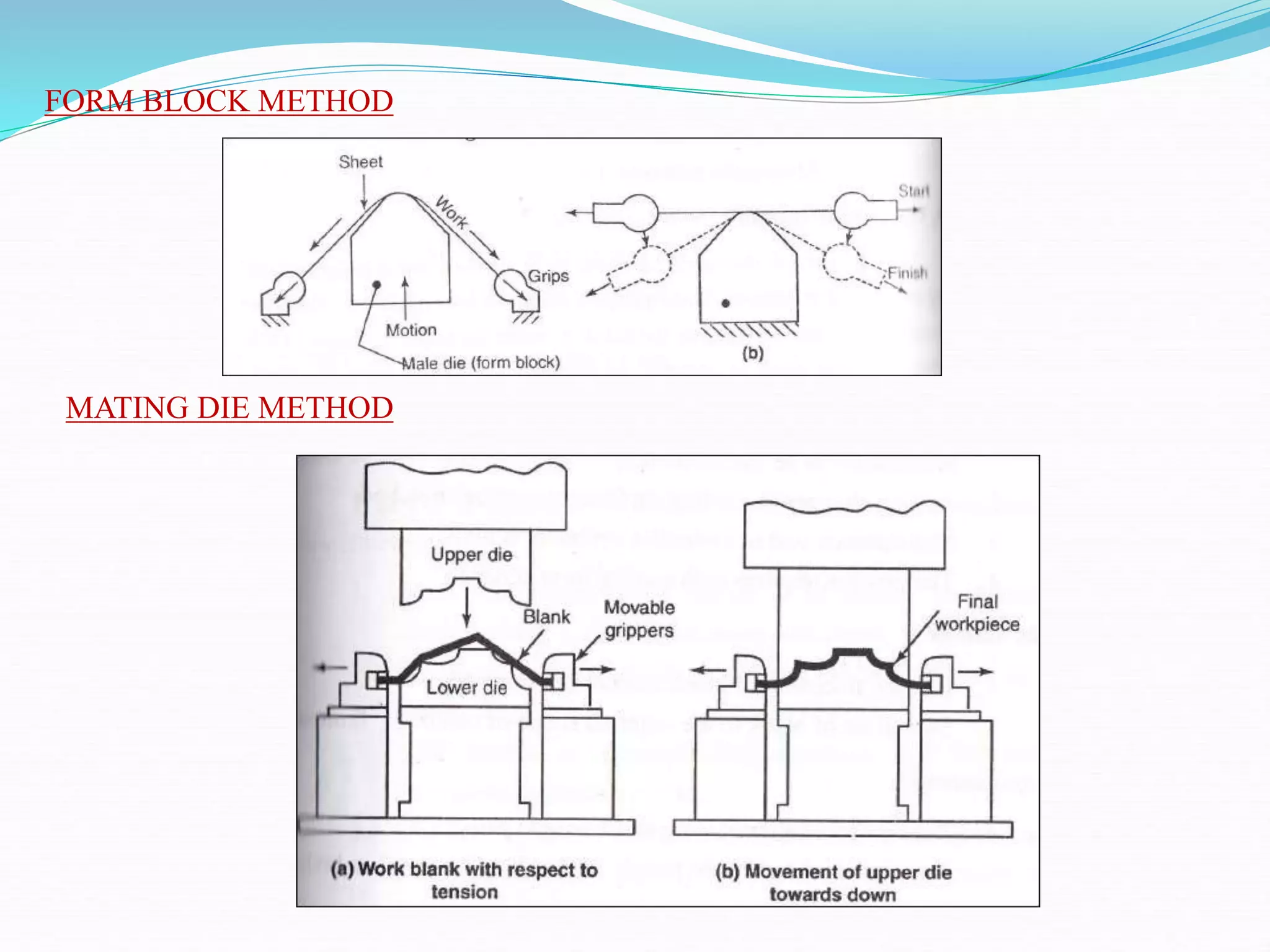
FORM BLOCK METHOD
FORM BLOCK METHOD
MATING DIE METHOD
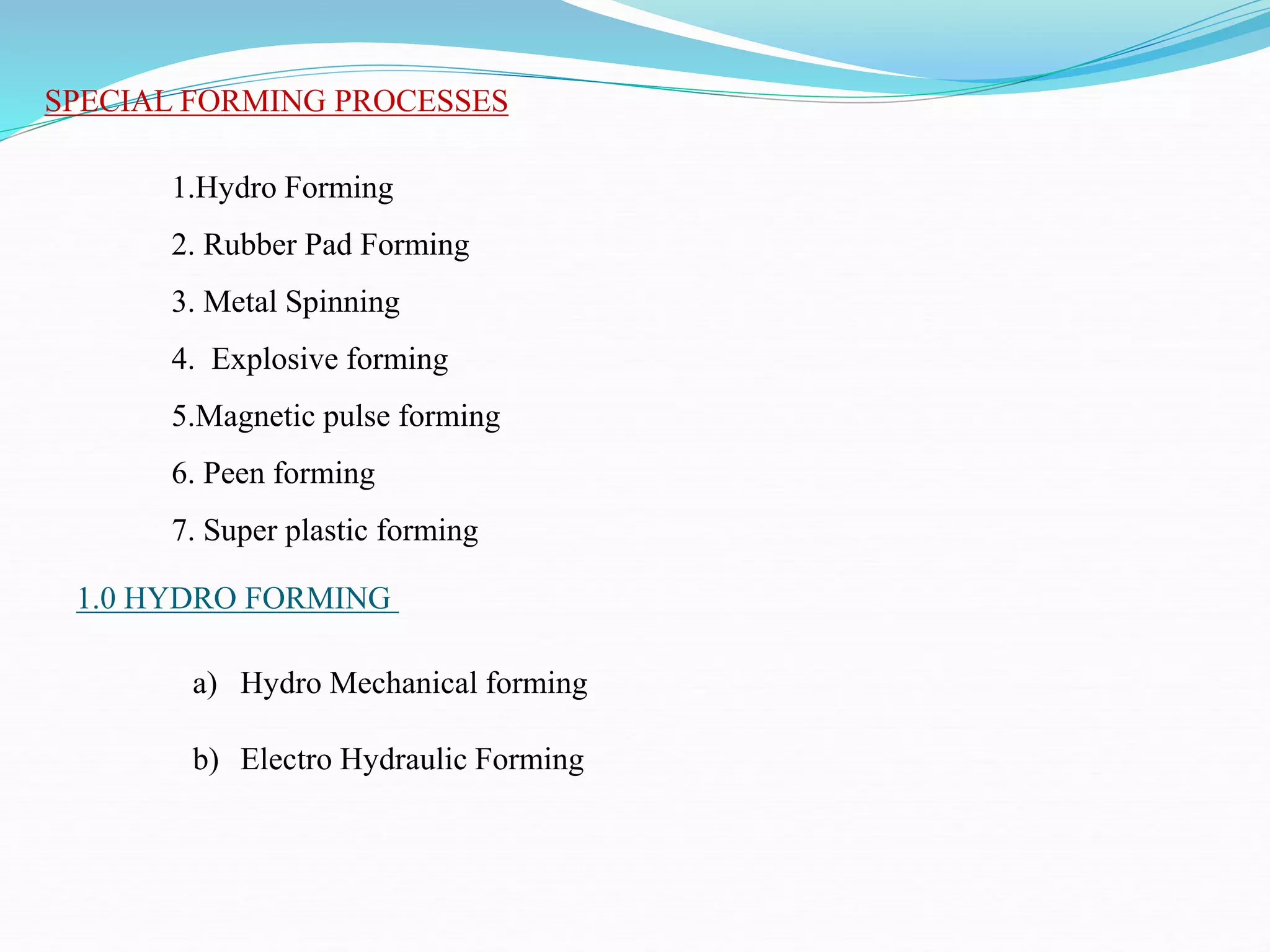
SPECIAL FORMING PROCESSES
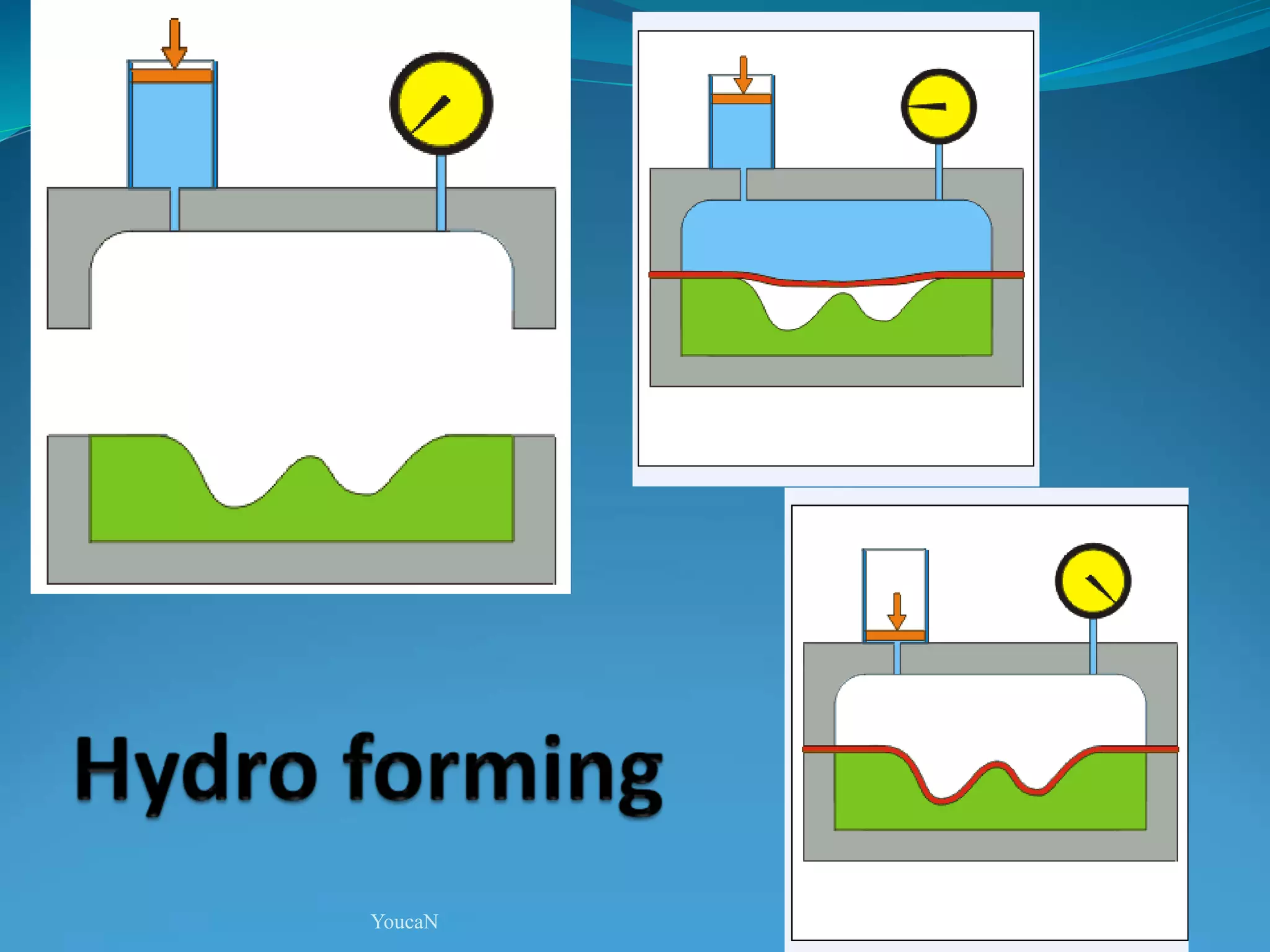
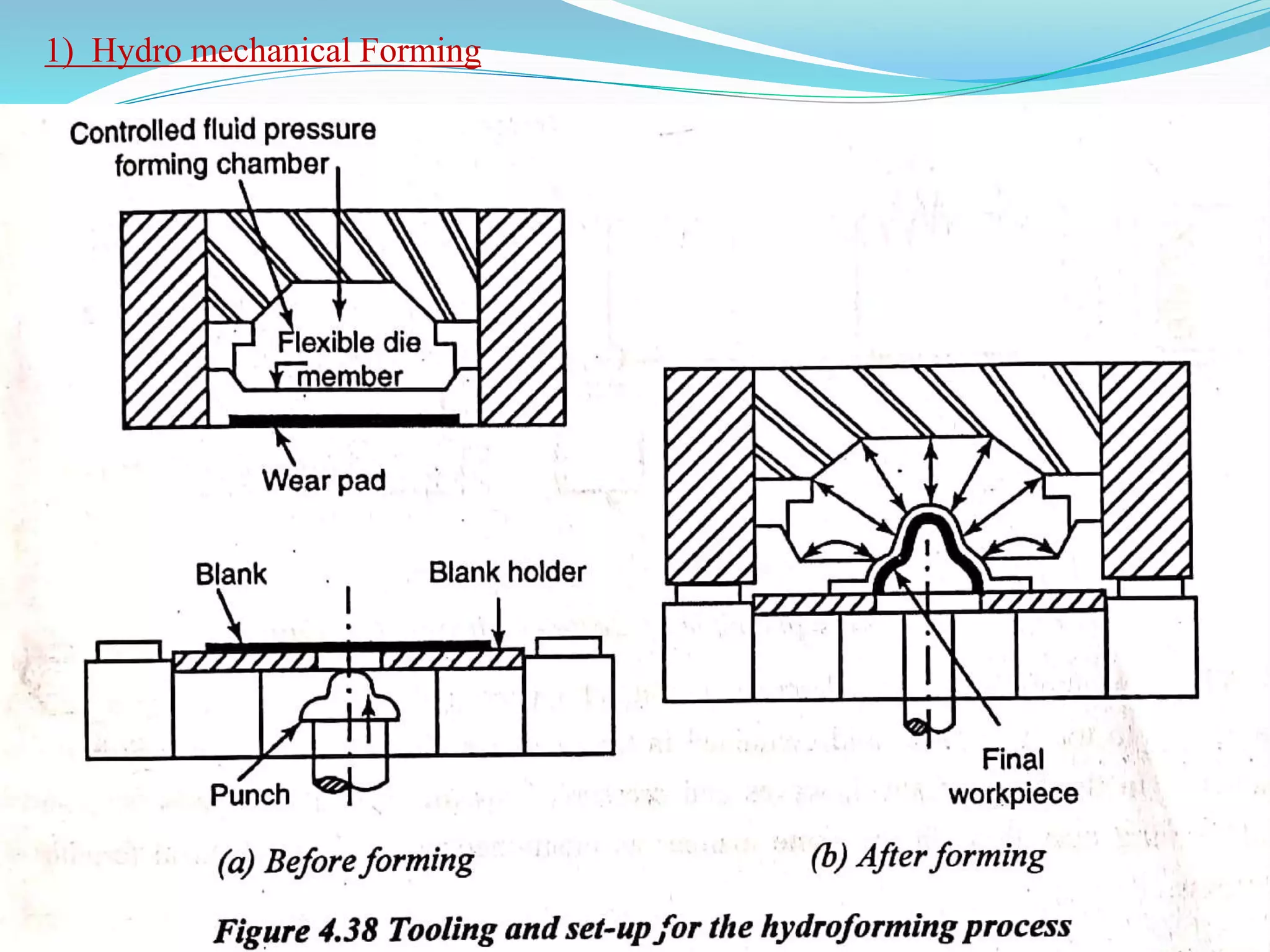
1.0 HYDRO FORMING
1.Hydro Forming
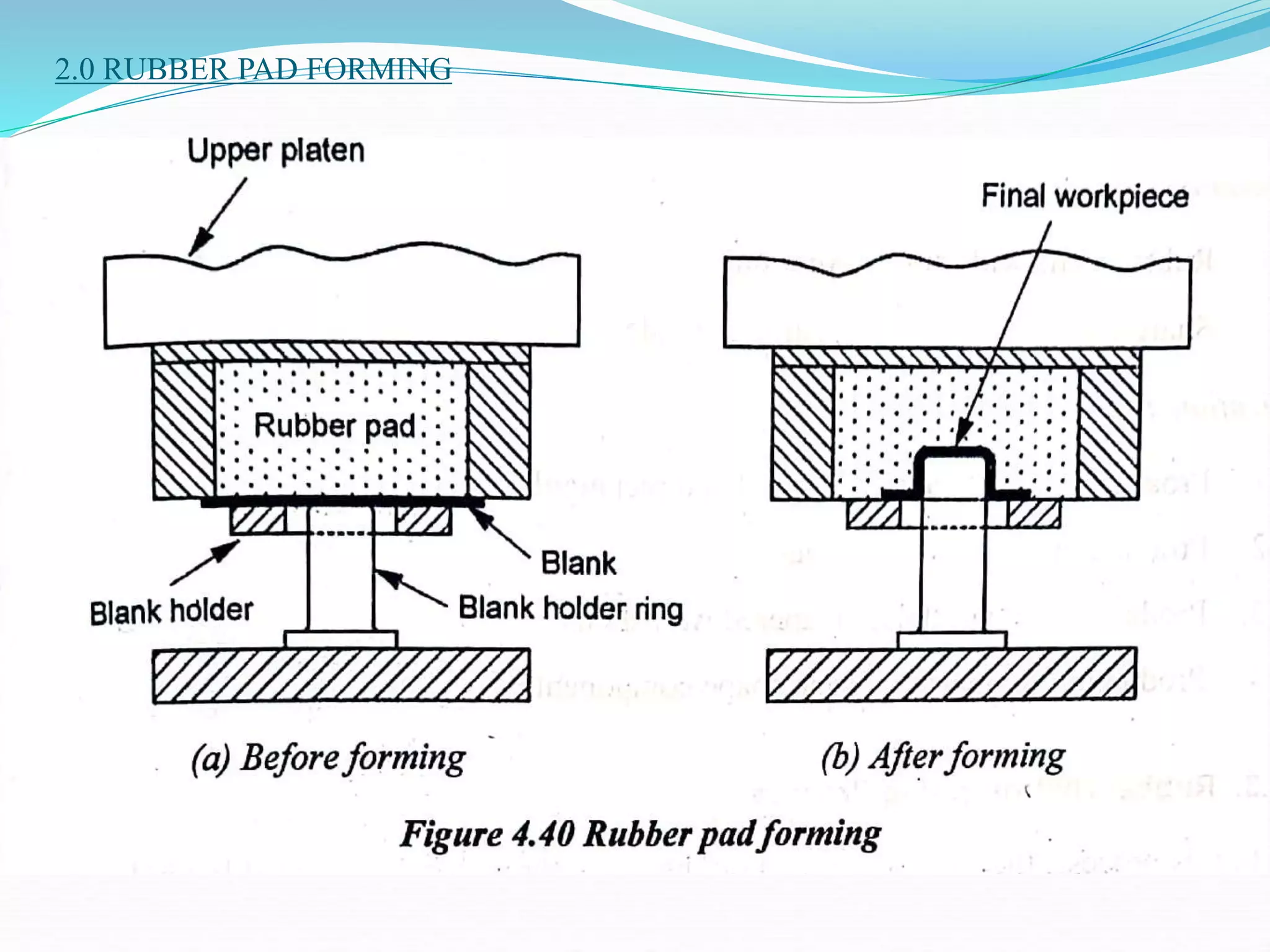
2. Rubber Pad Forming
3. Metal Spinning
4. Explosive forming
5.Magnetic pulse forming
6. Peen forming
7. Super plastic forming
a) Hydro Mechanical forming
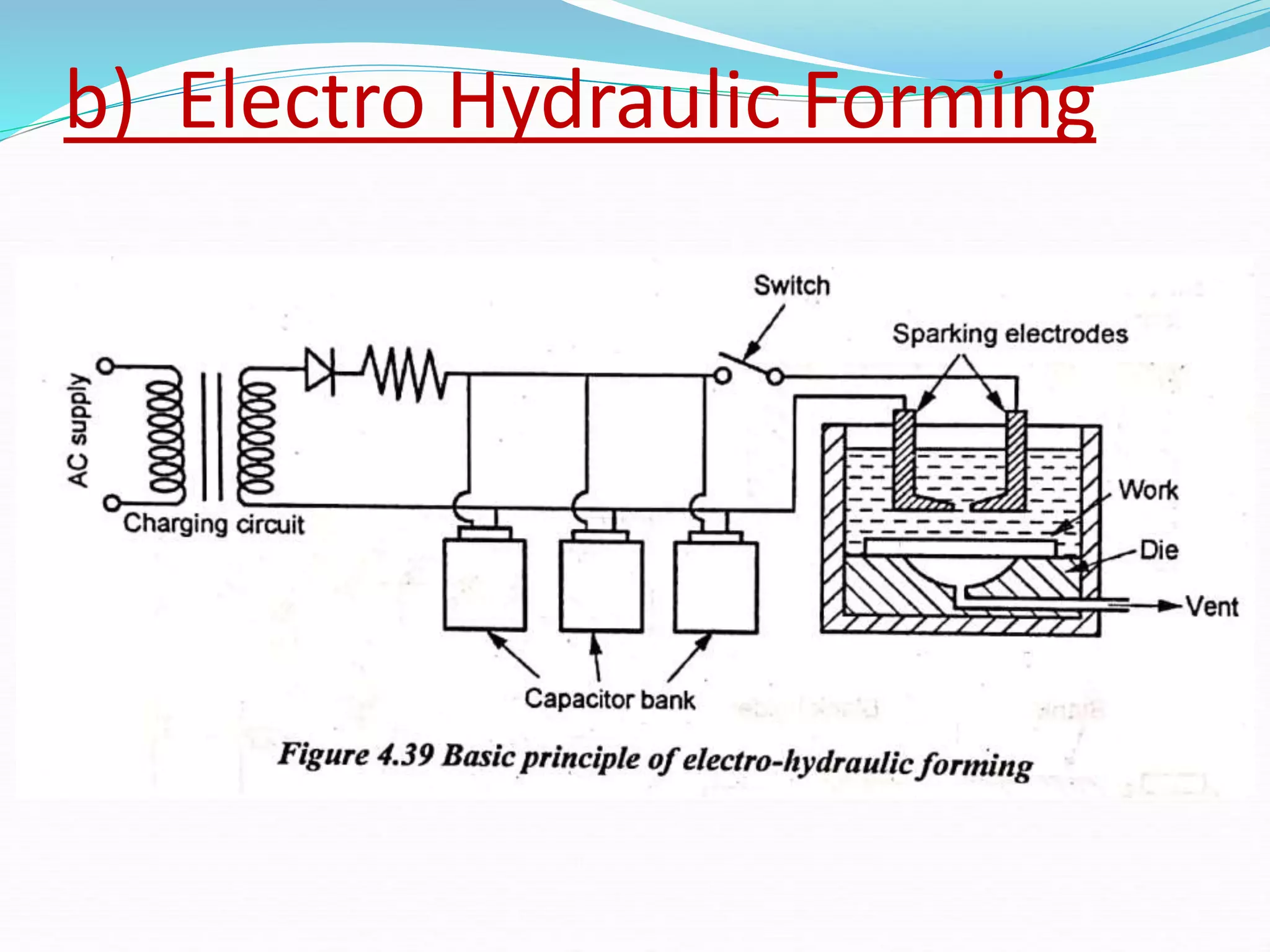
b) Electro Hydraulic Forming
YoucaN
1) Hydro mechanical Forming
b) Electro Hydraulic Forming
2.0 RUBBER PAD FORMING
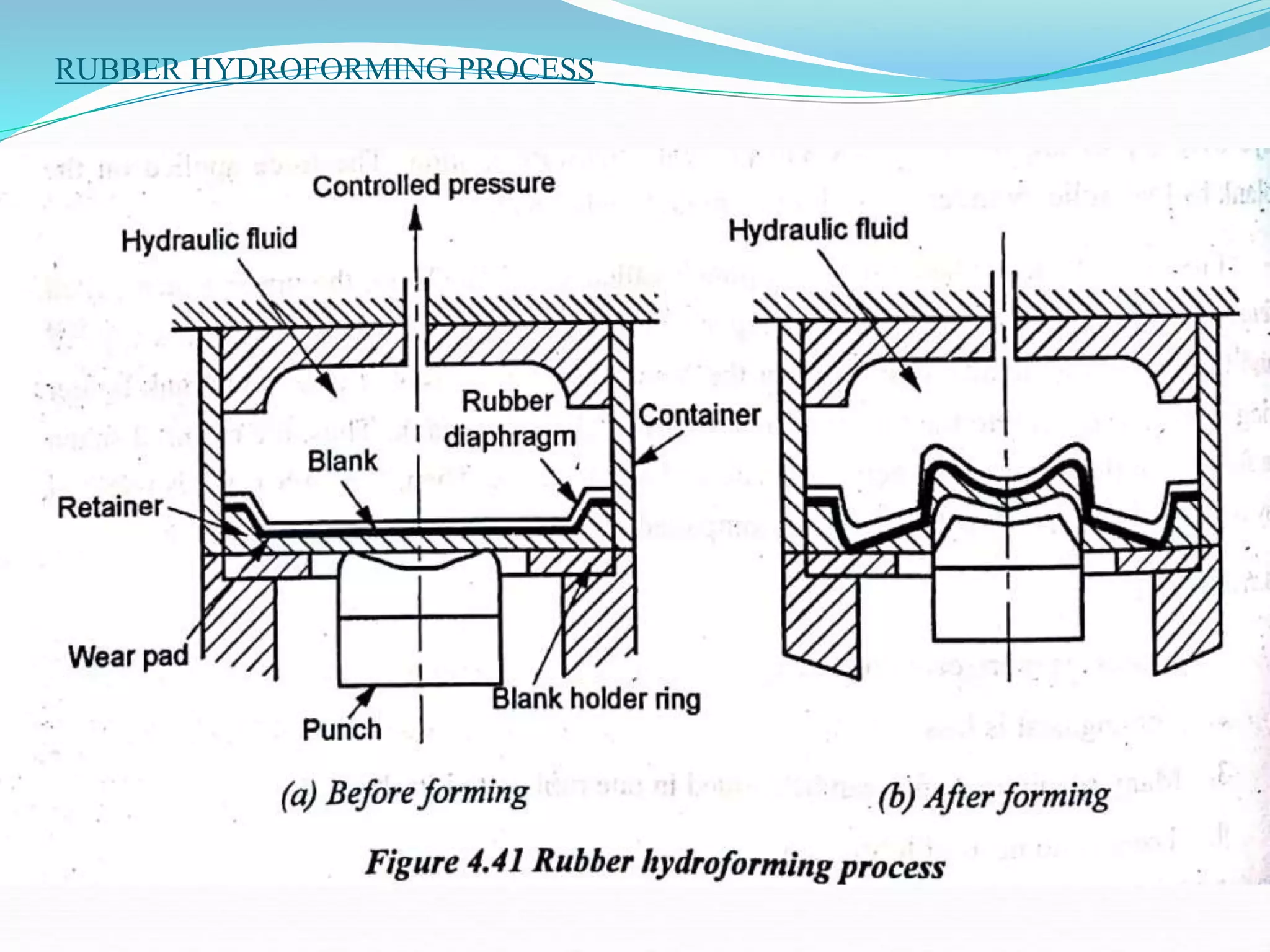
RUBBER HYDROFORMING PROCESS
YoucaN
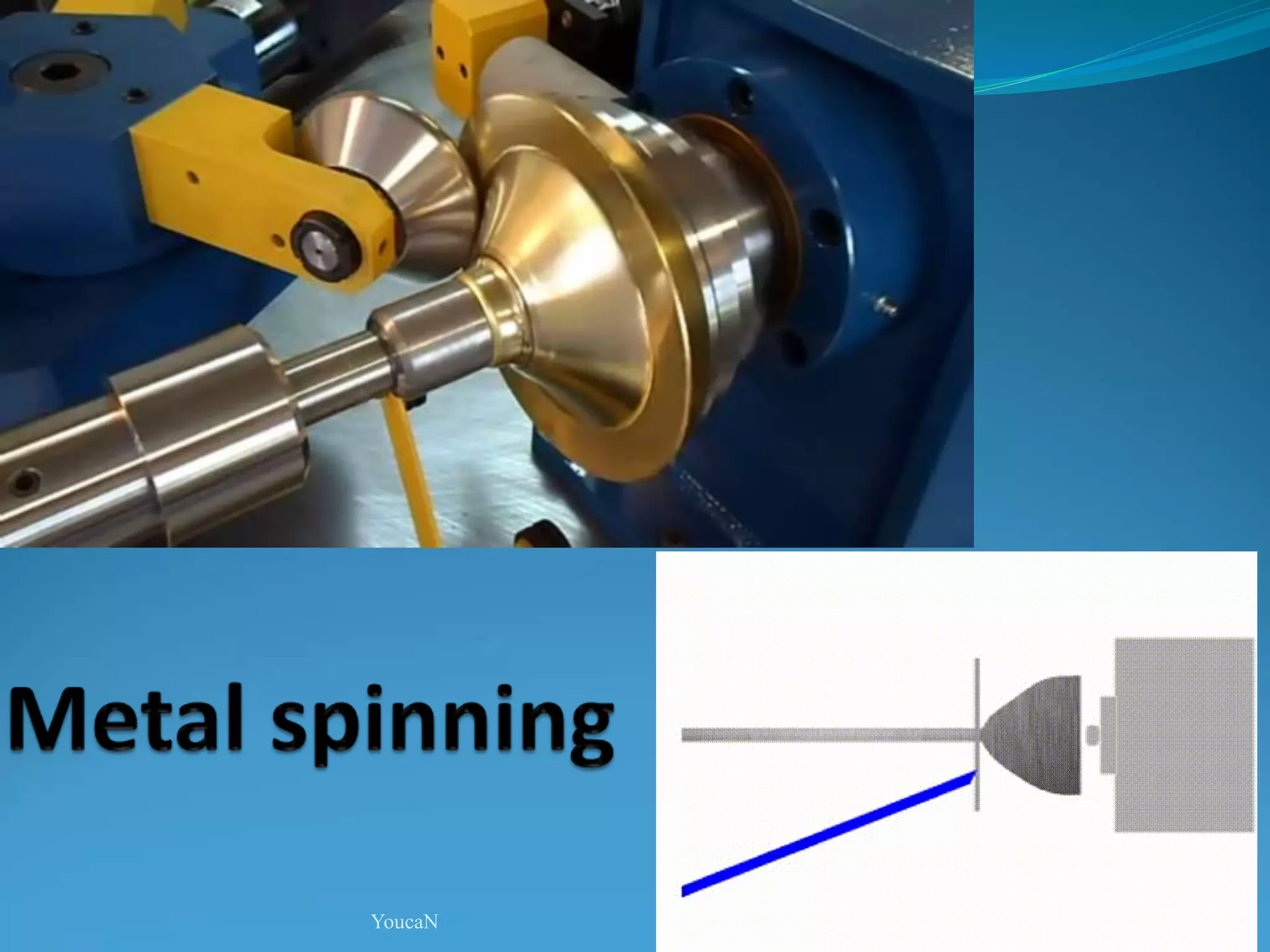
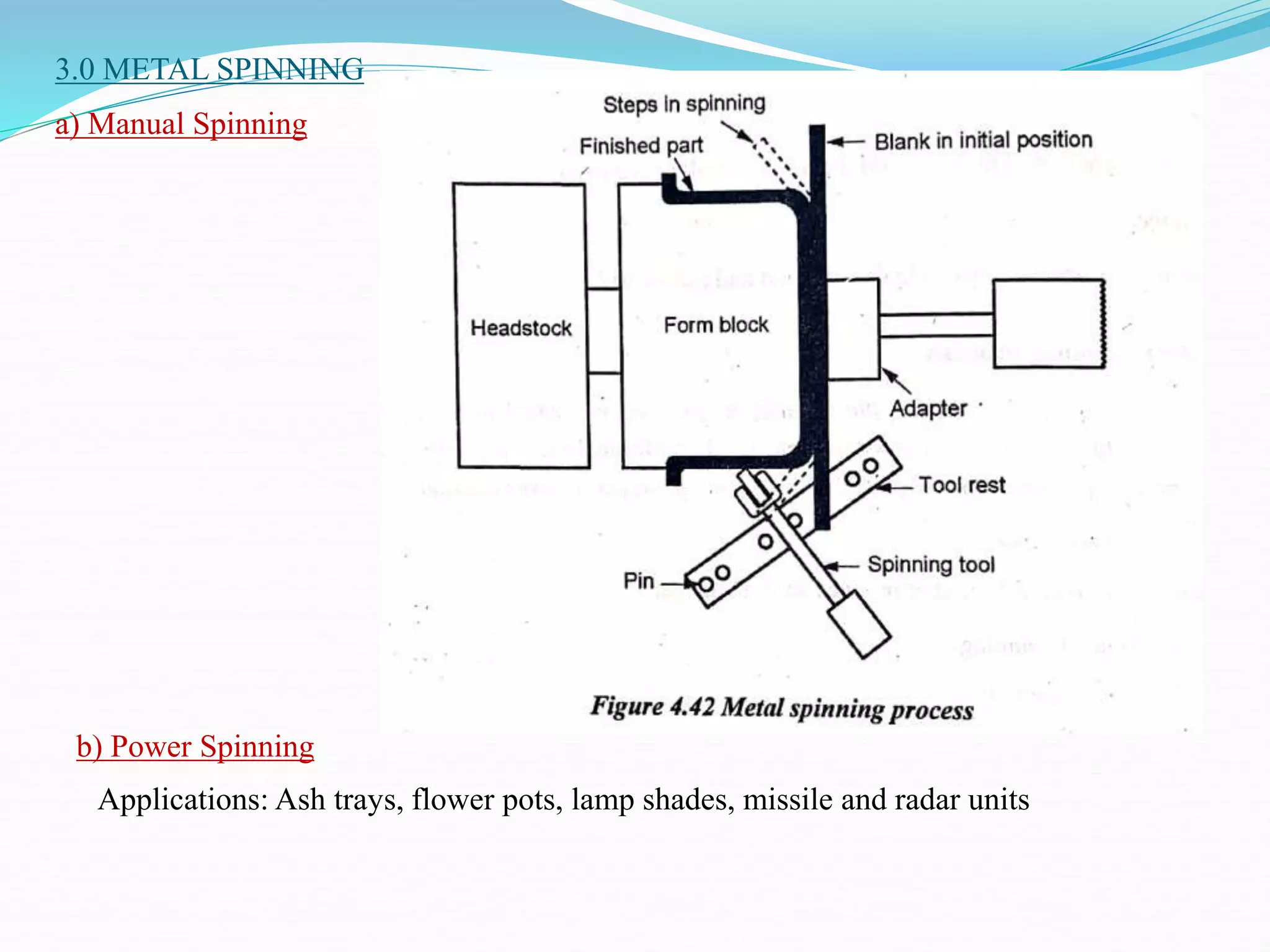
3.0 METAL SPINNING
a) Manual Spinning
b) Power Spinning
Applications: Ash trays, flower pots, lamp shades, missile and radar units
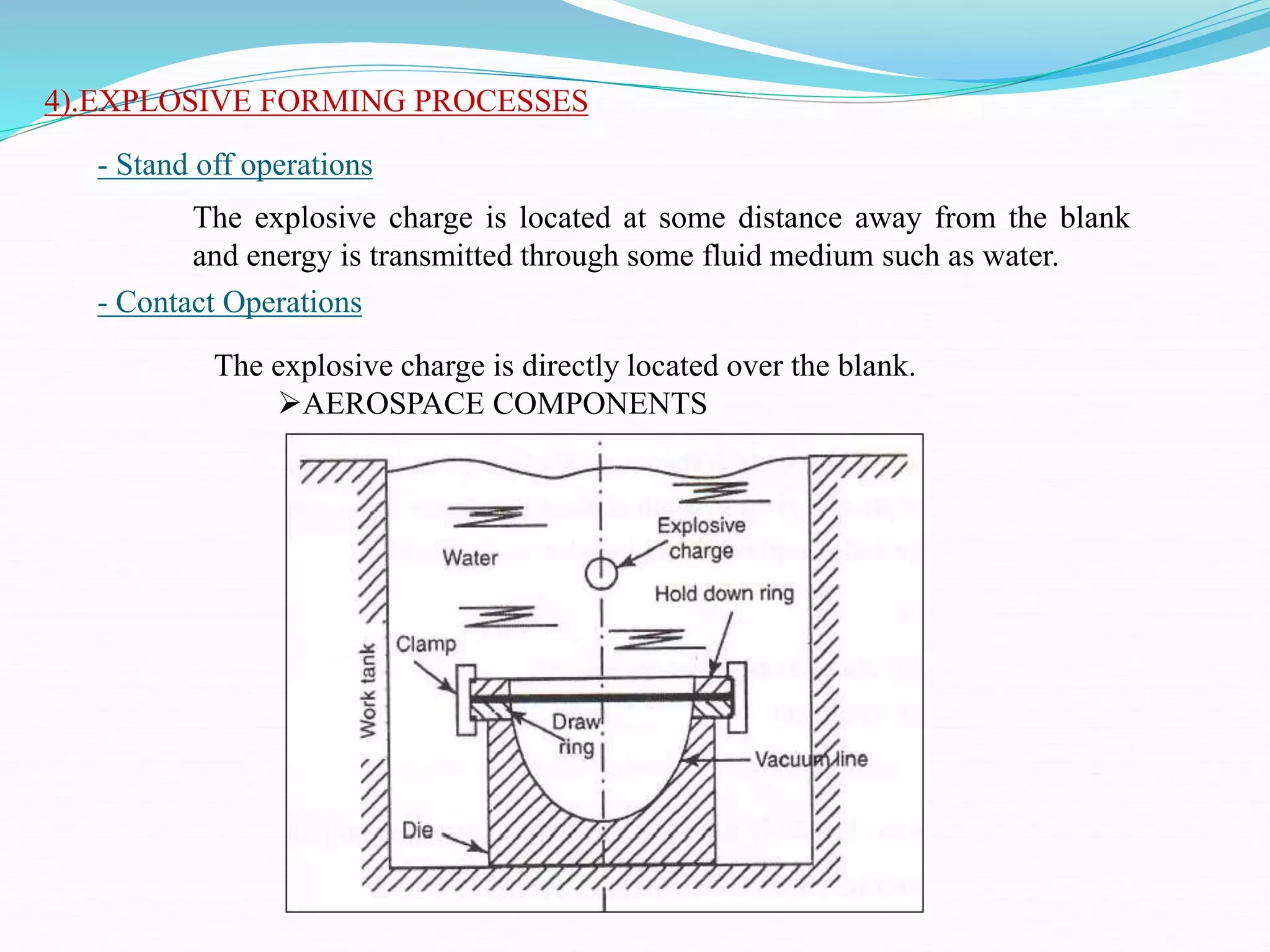
4).EXPLOSIVE FORMING PROCESSES
- Stand off operations
The explosive charge is located at some distance away from the blank
and energy is transmitted through some fluid medium such as water.
- Contact Operations
The explosive charge is directly located over the blank.
AEROSPACE COMPONENTS
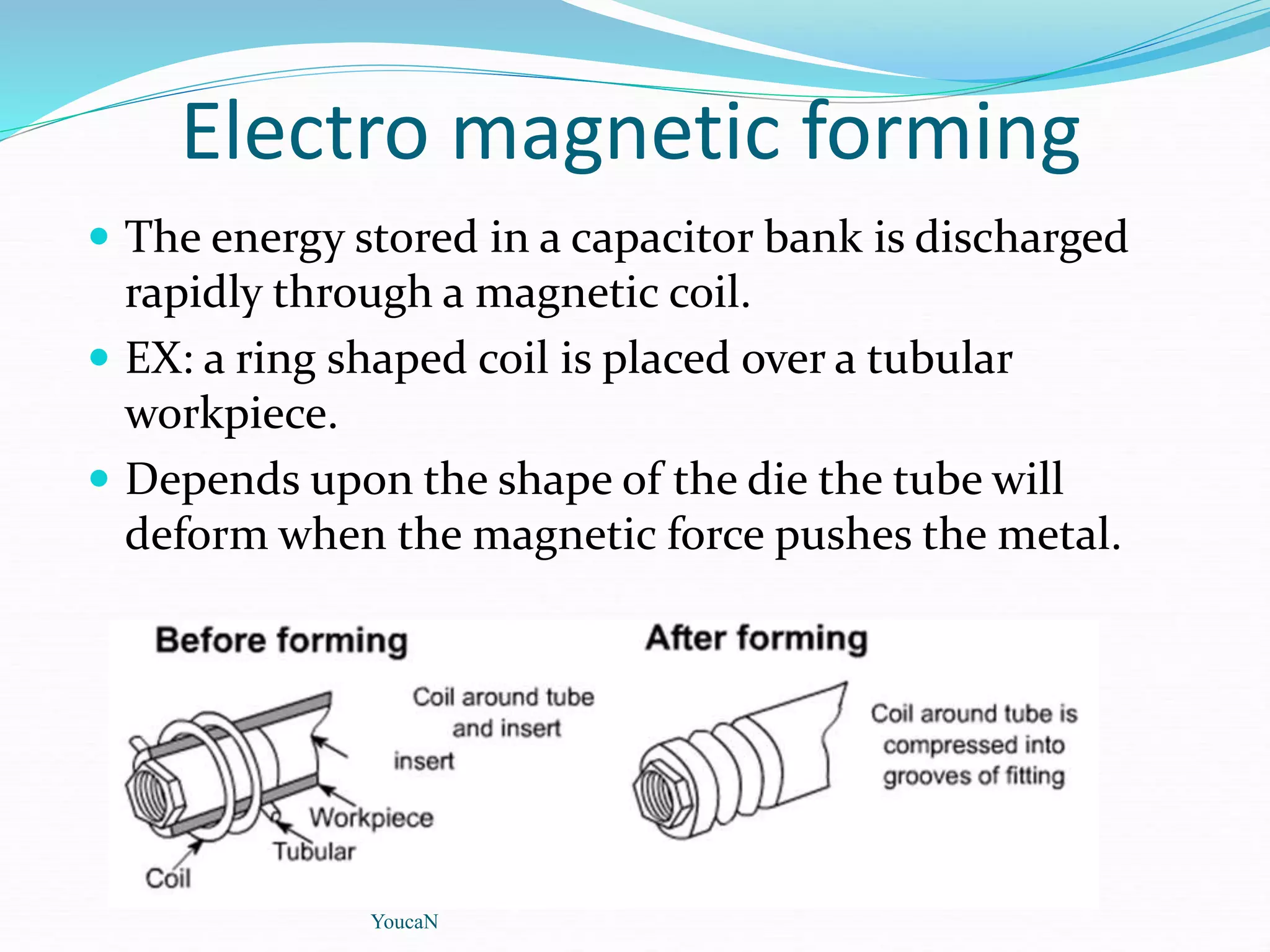
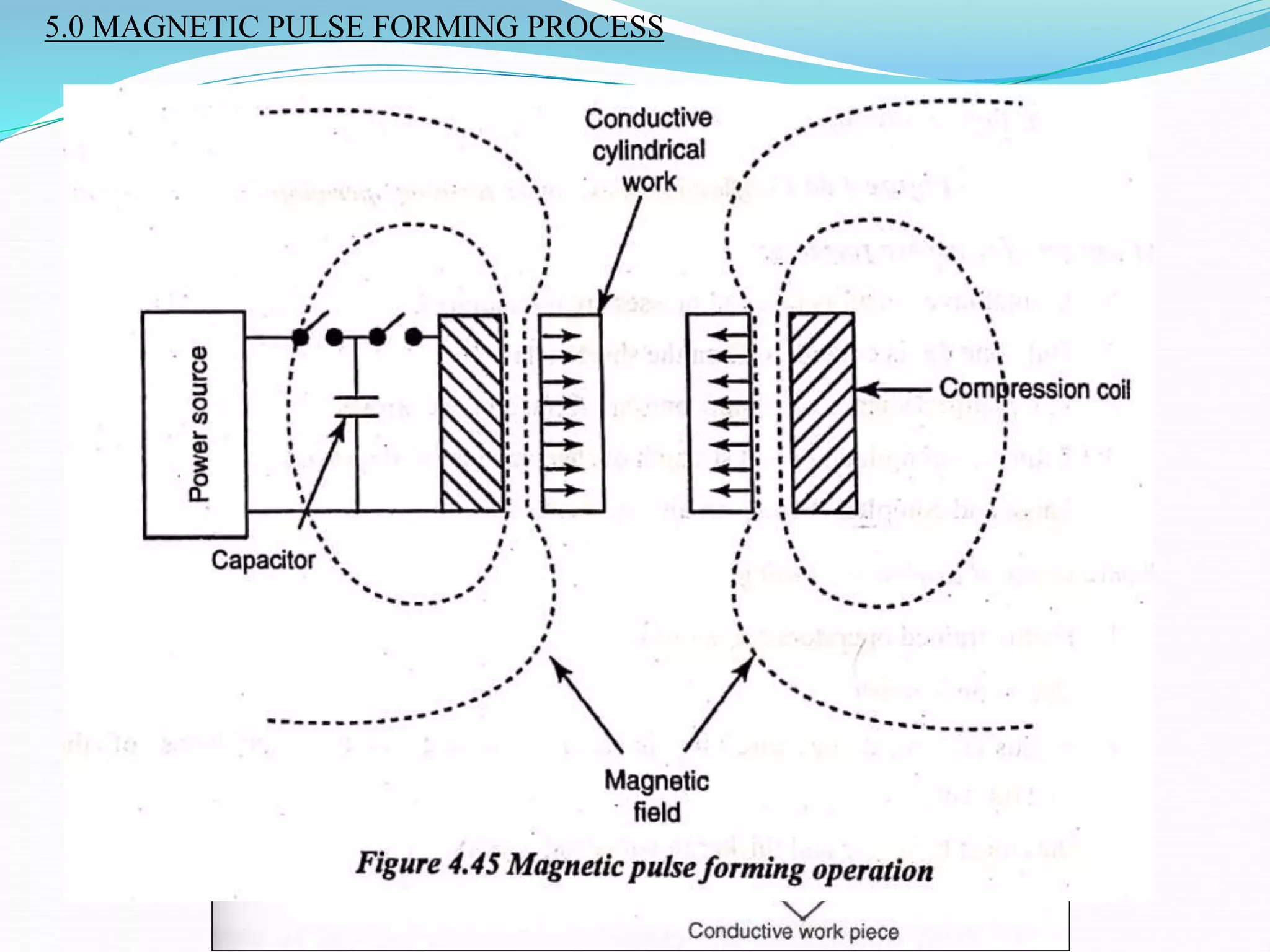
Electro magnetic forming
 The energy stored in a capacitor bank is discharged
rapidly through a magnetic coil.
 EX: a ring shaped coil is placed over a tubular
workpiece.
 Depends upon the shape of the die the tube will
deform when the magnetic force pushes the metal.
YoucaN
5.0 MAGNETIC PULSE FORMING PROCESS
YoucaN
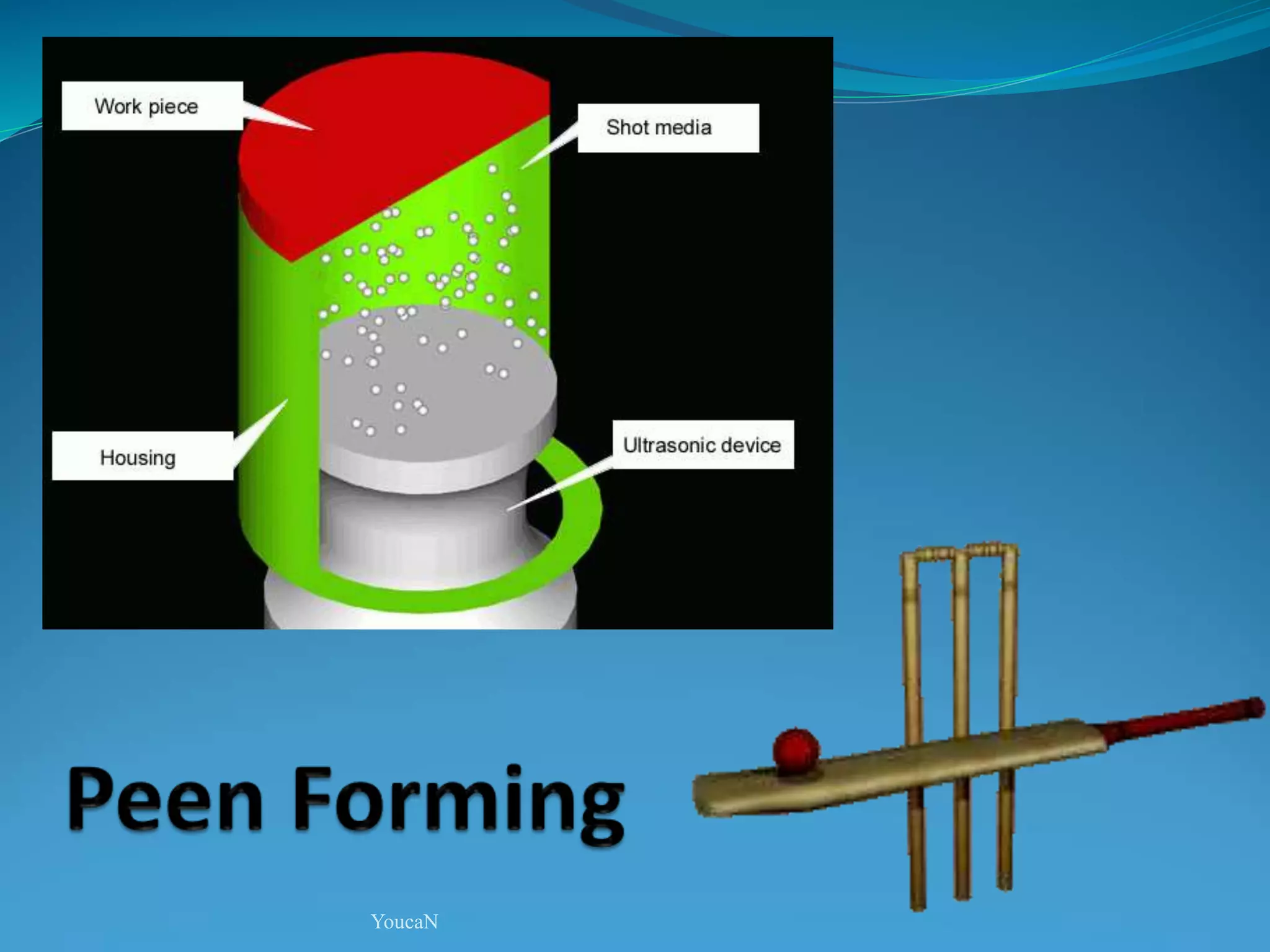
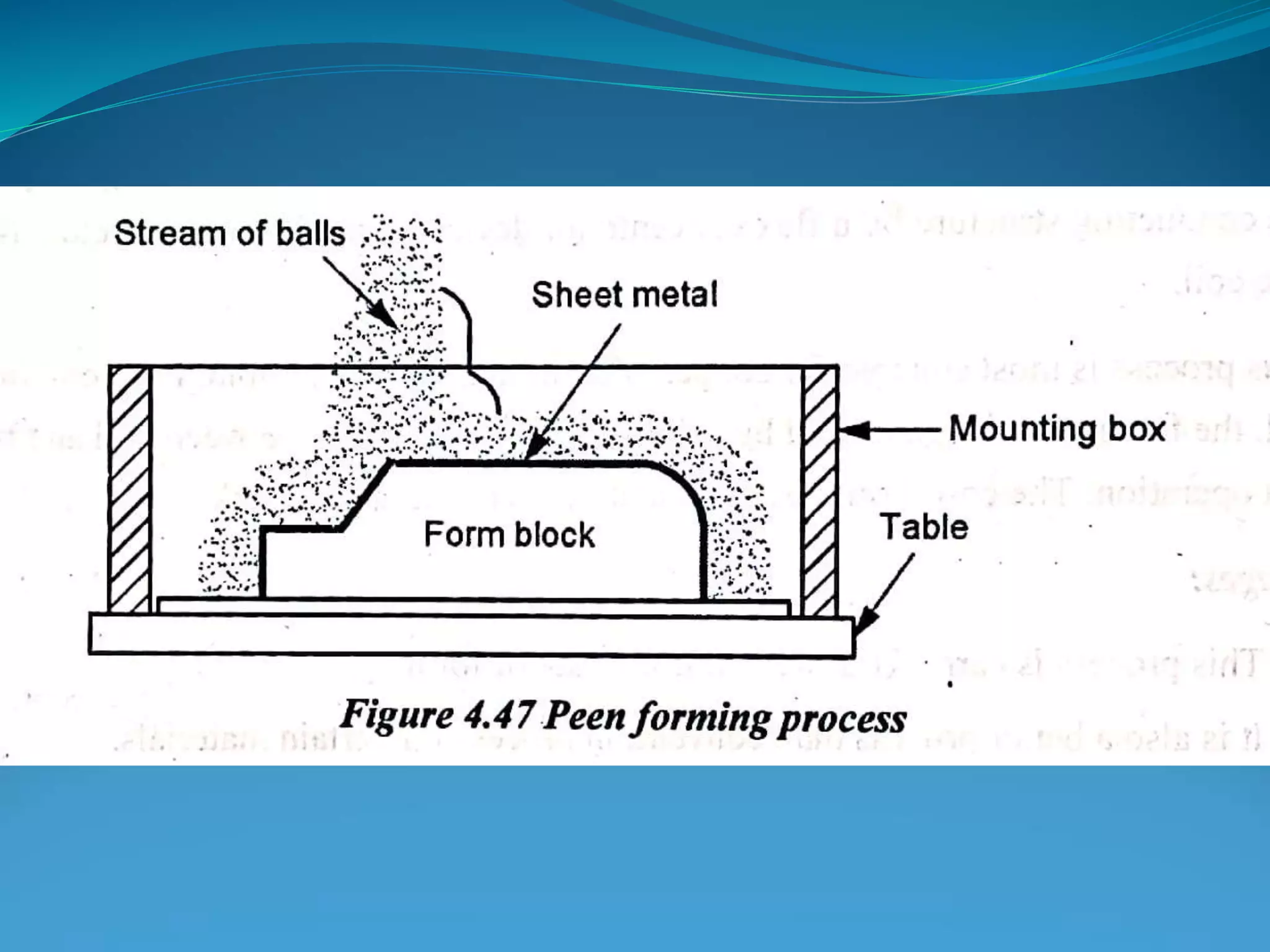
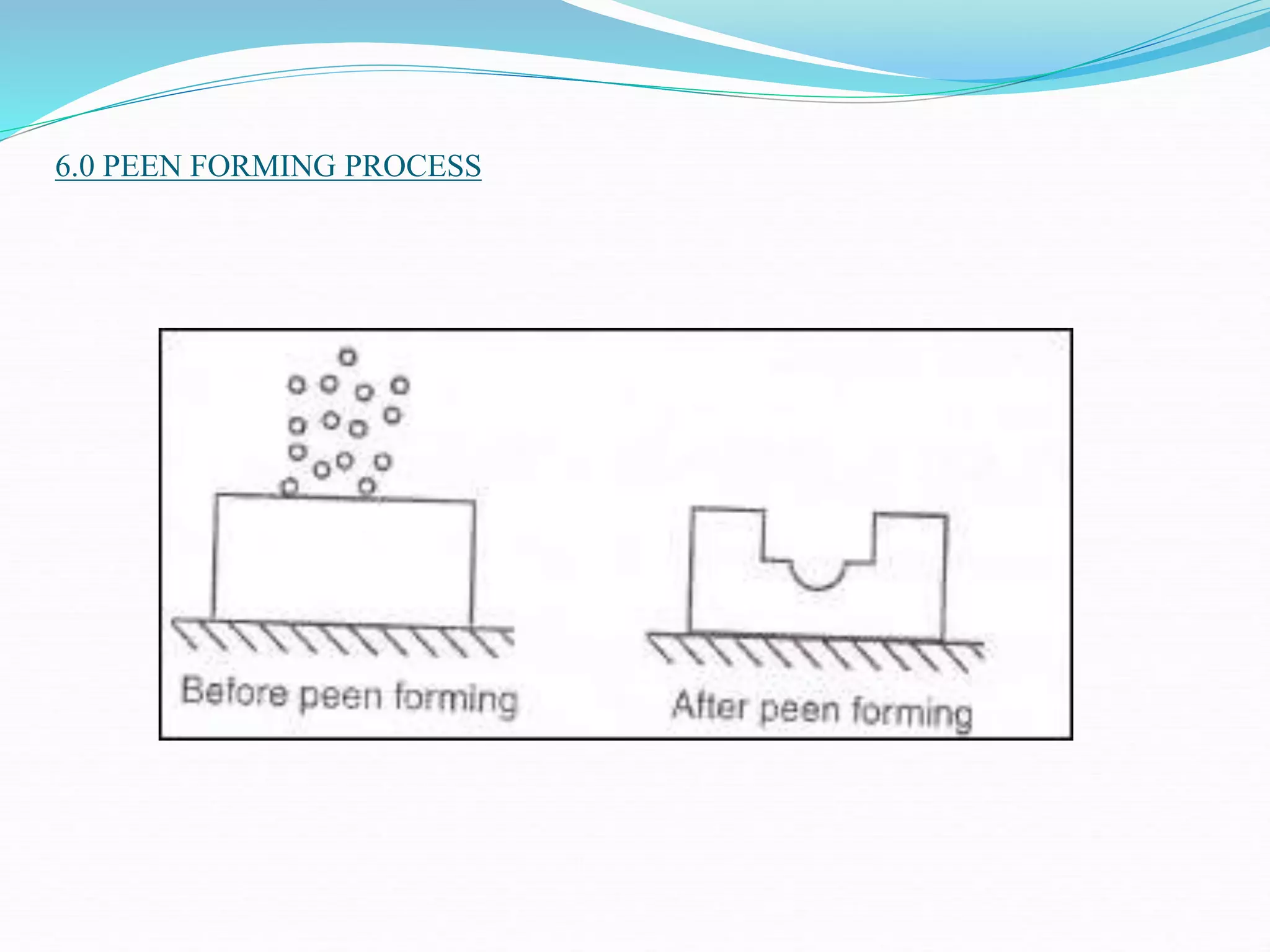
6.0 PEEN FORMING PROCESS
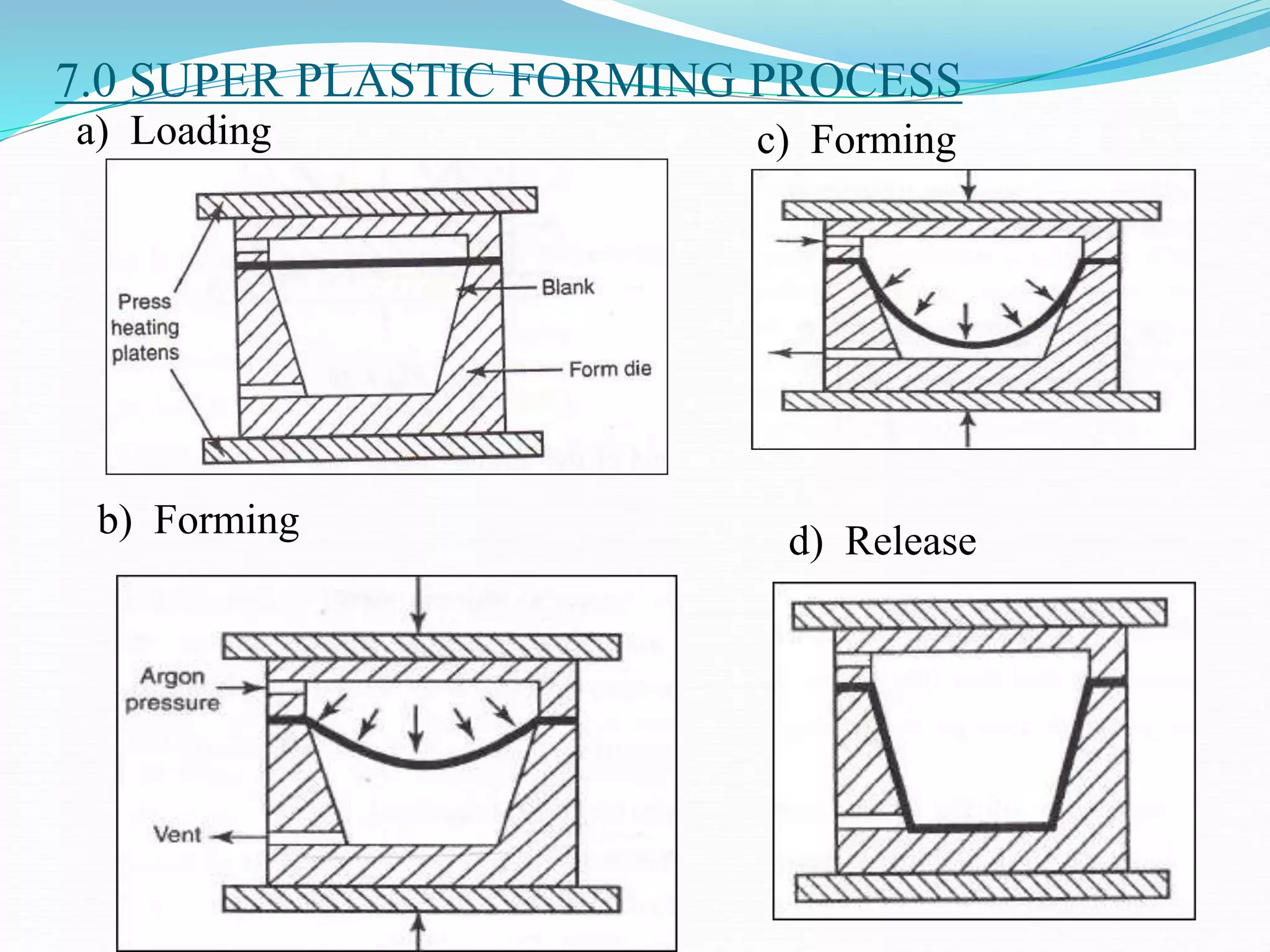
7.0 SUPER PLASTIC FORMING PROCESS
a) Loading
b) Forming
c) Forming
d) Release
Advantage:
 One step process
 Minimizes amount of scrap
 Higher material elongation possible
Application:
 Forming of– automotive body panels, aircraft frames
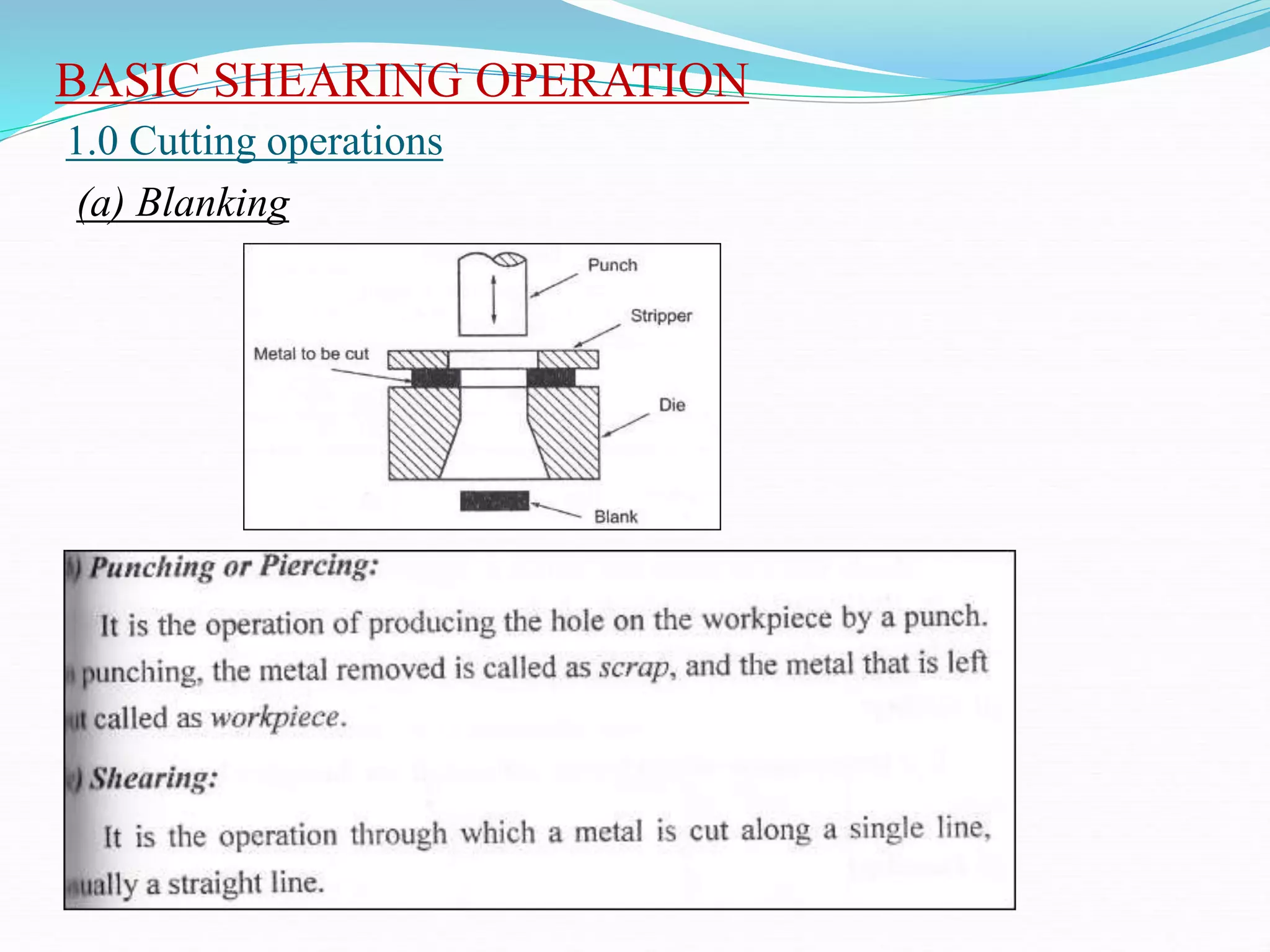
BASIC SHEARING OPERATION
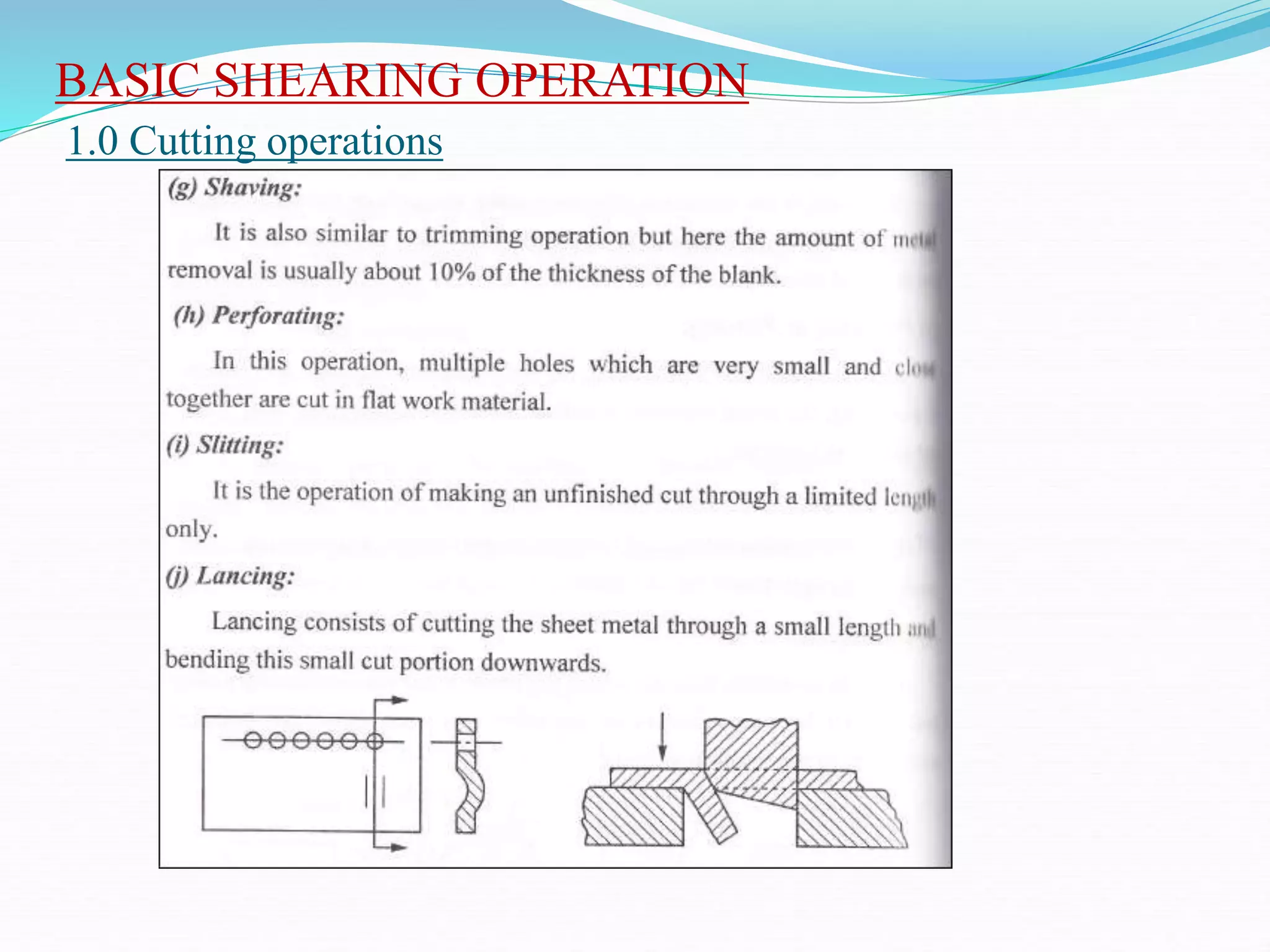
1.0 Cutting operations
(a) Blanking
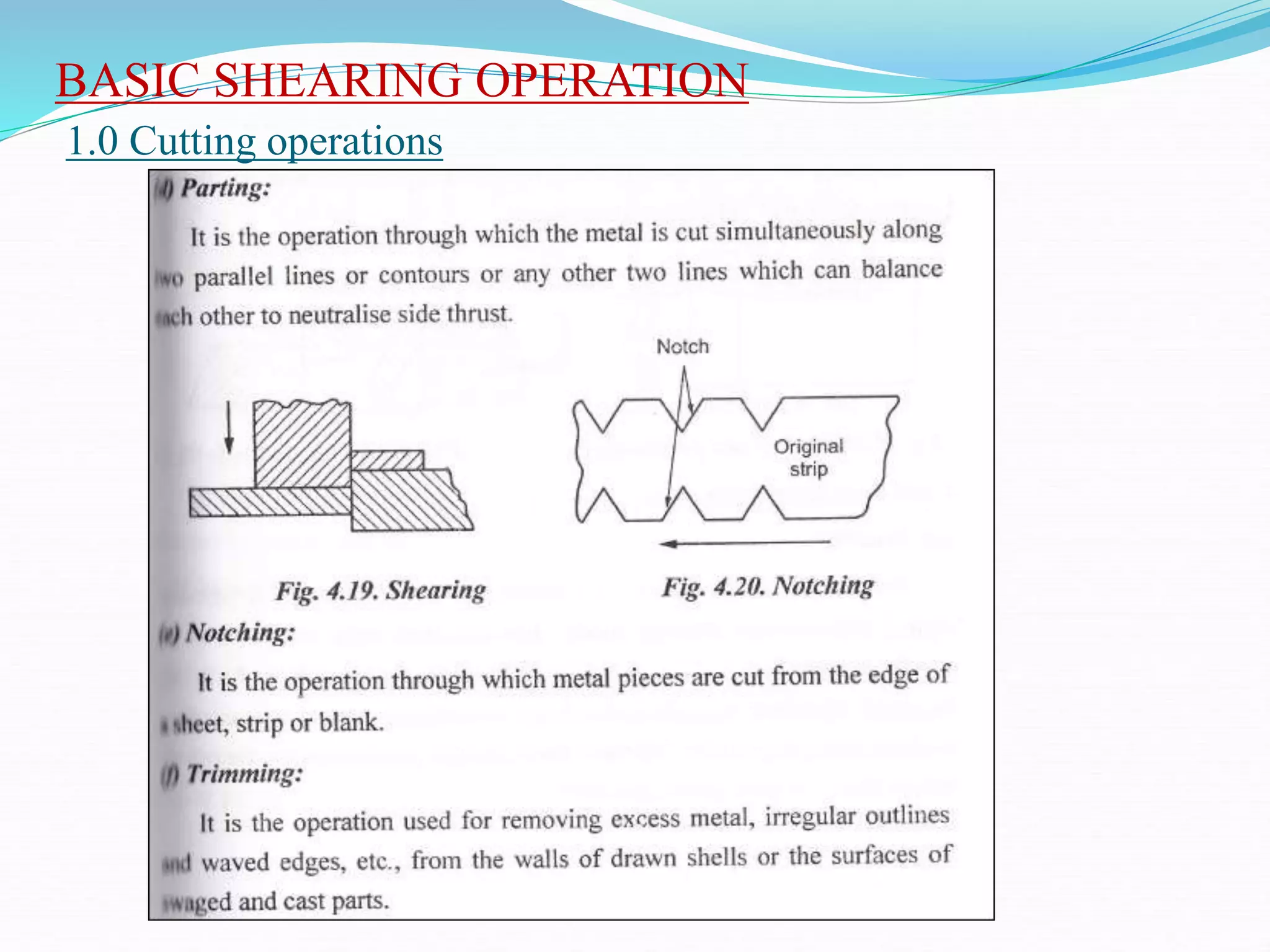
BASIC SHEARING OPERATION
1.0 Cutting operations
BASIC SHEARING OPERATION
1.0 Cutting operations
BASIC SHEARING OPERATION
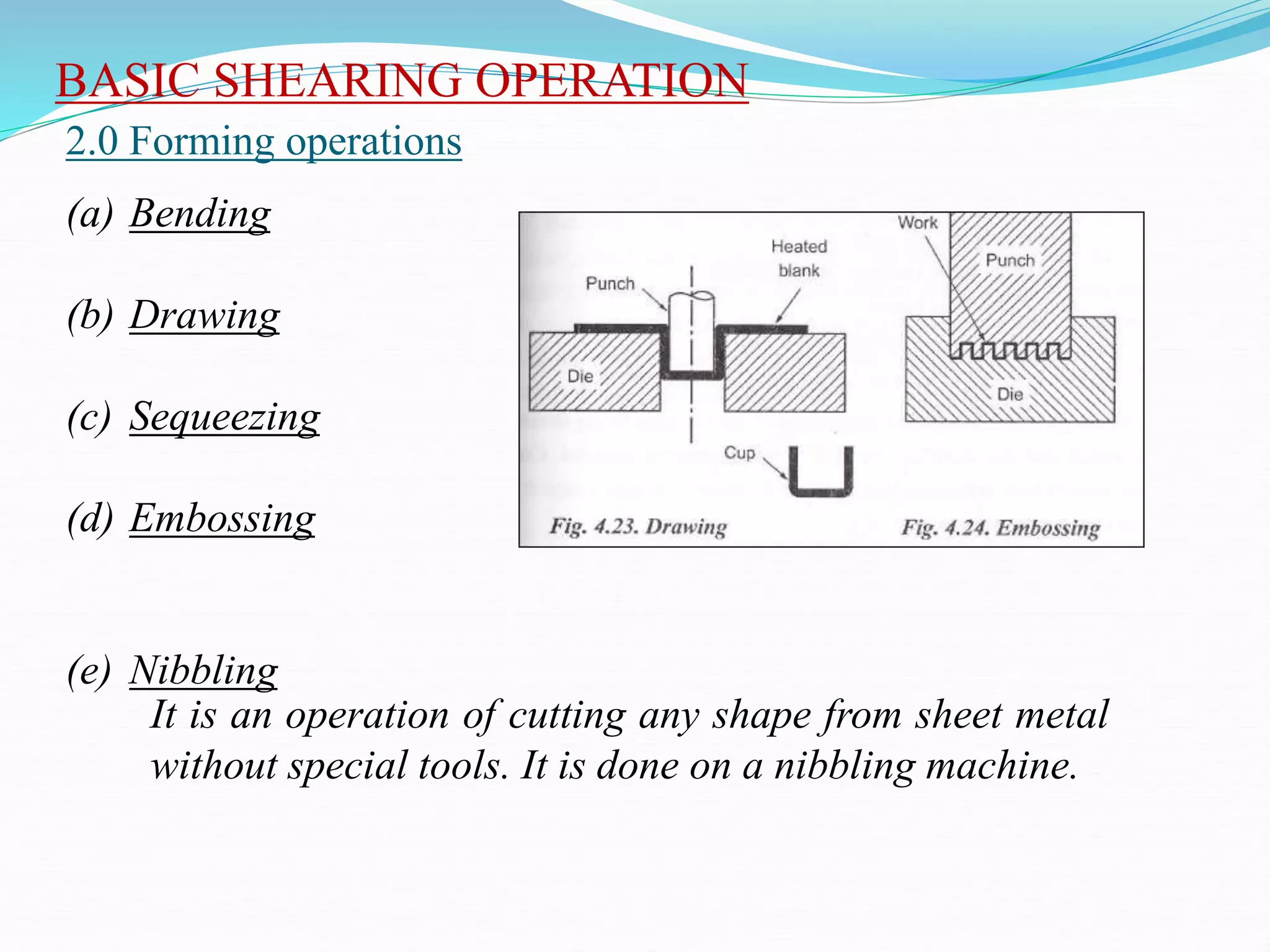
2.0 Forming operations
(a) Bending
(b) Drawing
(c) Sequeezing
(d) Embossing
(e) Nibbling
It is an operation of cutting any shape from sheet metal
without special tools. It is done on a nibbling machine.
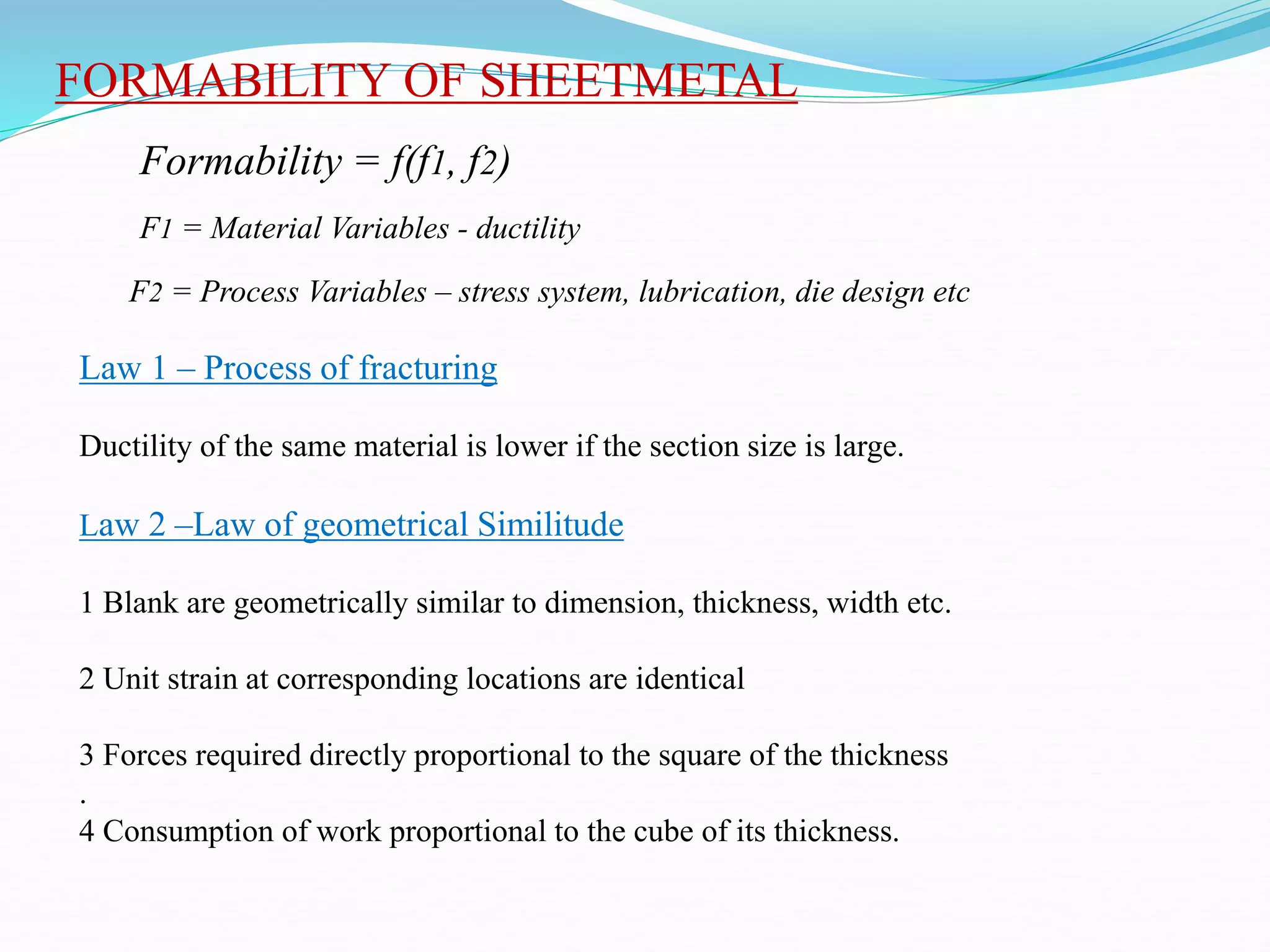
FORMABILITY OF SHEETMETAL
Formability = f(f1, f2)
F1 = Material Variables - ductility
F2 = Process Variables – stress system, lubrication, die design etc
Law 1 – Process of fracturing
Ductility of the same material is lower if the section size is large.
Law 2 –Law of geometrical Similitude
1 Blank are geometrically similar to dimension, thickness, width etc.
2 Unit strain at corresponding locations are identical
3 Forces required directly proportional to the square of the thickness
.
4 Consumption of work proportional to the cube of its thickness.
FORMABILITY TEST METHOD
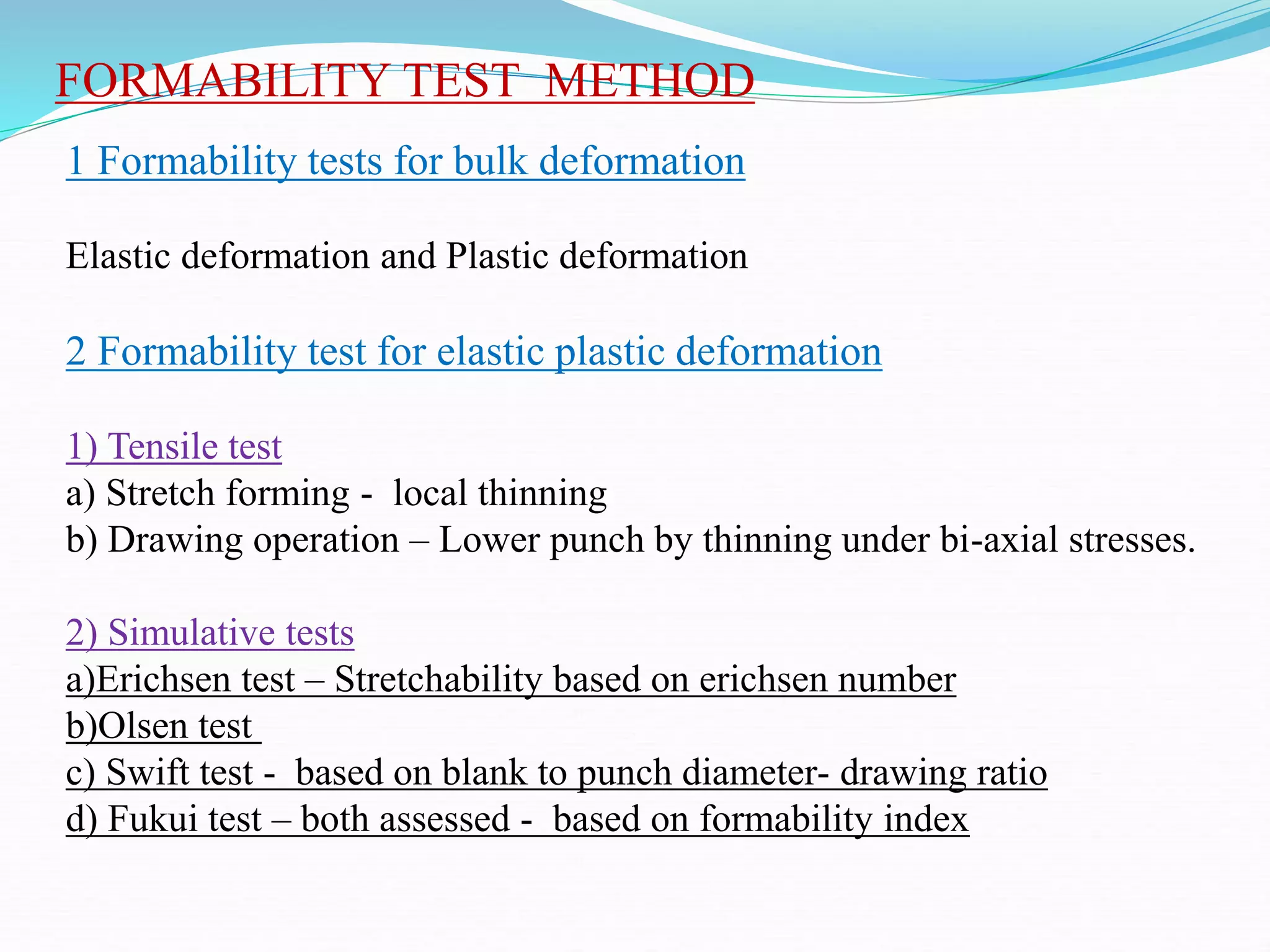
1 Formability tests for bulk deformation
Elastic deformation and Plastic deformation
2 Formability test for elastic plastic deformation
1) Tensile test
a) Stretch forming - local thinning
b) Drawing operation – Lower punch by thinning under bi-axial stresses.
2) Simulative tests
a)Erichsen test – Stretchability based on erichsen number
b)Olsen test
c) Swift test - based on blank to punch diameter- drawing ratio
d) Fukui test – both assessed - based on formability index
FORMABILITY TEST METHOD
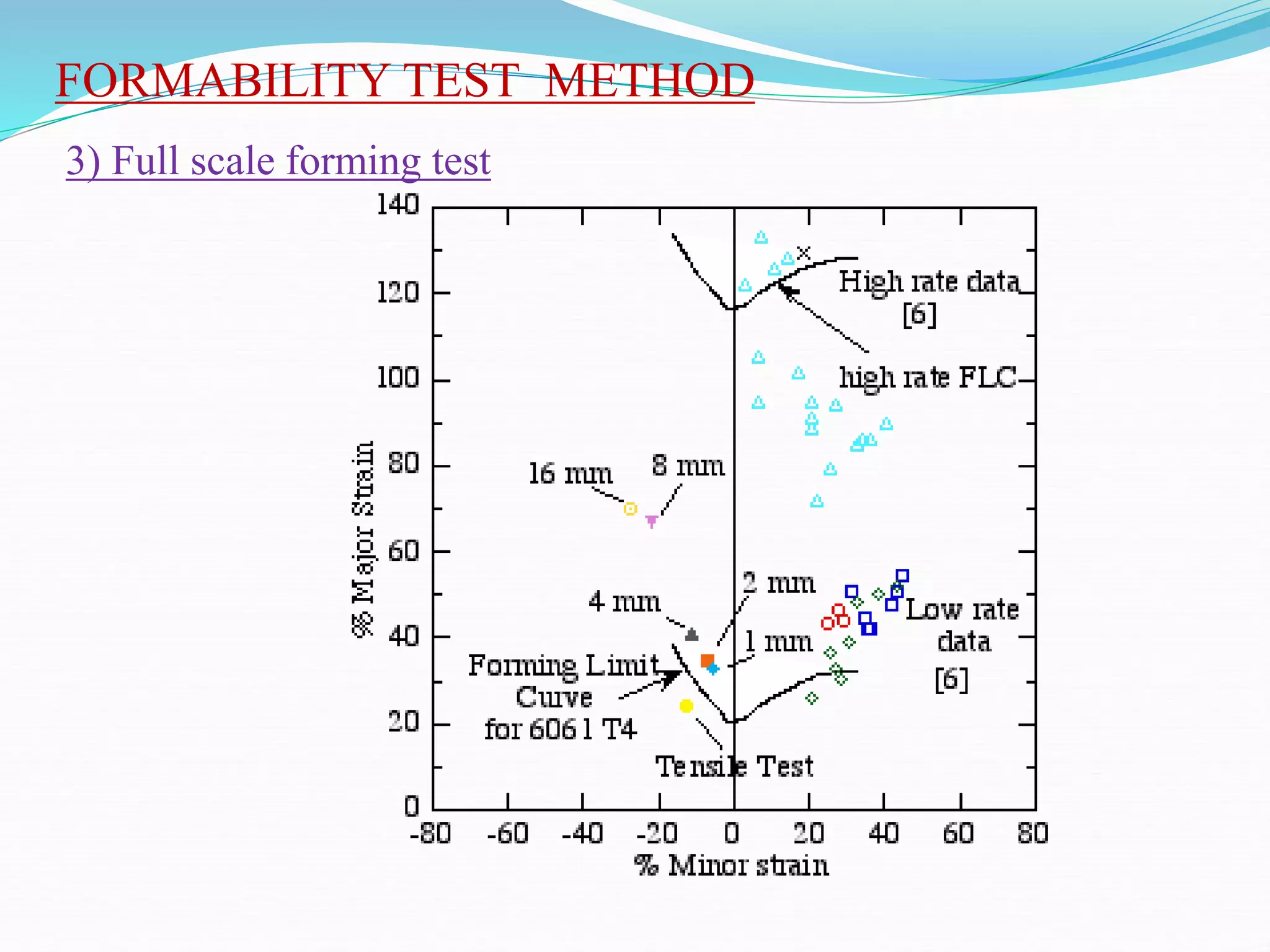
3) Full scale forming test

Mp 1-unit - iv - sheet metal processes

  • 1.
  • 2.
    Introduction  The workingof metal thickness from 3mm to 5mm with hand tools and simple machines into various forms is known as sheet metal work. Sheet metals  Black iron  Galvanized iron  Stainless steel  Brass  Copper  Zinc , Aluminium, tin plate and lead.
  • 3.
    SHEET METAL CHARACTERISTICS -RollForming -Stretch Forming -Drawing -Stamping -Rubber Forming -Spinning -Super Plastic Forming -Peen Forming -Explosive Forming -Magnetic Pulse Forming
  • 4.
  • 5.
    Mechanically Operated PowerPress or OBI Press
  • 6.
  • 7.
  • 8.
    Types of CuttingDies 1.Progressive Dies
  • 9.
  • 10.
  • 11.
  • 12.
  • 13.
  • 14.
    SHEARING OPERATION -BENDING TYPES OF BENDING OPERATION - Angle Bending
  • 15.
    - Angle Bending -Roll Bending
  • 16.
    - Roll Forming Ifthe edges are formed to a desired shape in the form of bend is made on the sheet metal - Seaming The process of providing lock between the two edges of the different work metal. SHEARING OPERATION - DRAWING - Deep Drawing Length of the part drawn is deeper then width. - Box Drawing Length of the part drawn is lesser then width
  • 17.
    STRETCH FORMING OPERATION Stretchingis the process of stressing the work blank beyond its elastic limit by moving a form block towards the blank. FORM BLOCK METHOD
  • 18.
  • 19.
    SPECIAL FORMING PROCESSES 1.0HYDRO FORMING 1.Hydro Forming 2. Rubber Pad Forming 3. Metal Spinning 4. Explosive forming 5.Magnetic pulse forming 6. Peen forming 7. Super plastic forming a) Hydro Mechanical forming b) Electro Hydraulic Forming
  • 20.
  • 21.
  • 22.
  • 23.
  • 24.
  • 25.
  • 26.
    3.0 METAL SPINNING a)Manual Spinning b) Power Spinning Applications: Ash trays, flower pots, lamp shades, missile and radar units
  • 27.
    4).EXPLOSIVE FORMING PROCESSES -Stand off operations The explosive charge is located at some distance away from the blank and energy is transmitted through some fluid medium such as water. - Contact Operations The explosive charge is directly located over the blank. AEROSPACE COMPONENTS
  • 28.
    Electro magnetic forming The energy stored in a capacitor bank is discharged rapidly through a magnetic coil.  EX: a ring shaped coil is placed over a tubular workpiece.  Depends upon the shape of the die the tube will deform when the magnetic force pushes the metal. YoucaN
  • 29.
    5.0 MAGNETIC PULSEFORMING PROCESS
  • 30.
  • 32.
  • 33.
    7.0 SUPER PLASTICFORMING PROCESS a) Loading b) Forming c) Forming d) Release
  • 34.
    Advantage:  One stepprocess  Minimizes amount of scrap  Higher material elongation possible Application:  Forming of– automotive body panels, aircraft frames
  • 35.
    BASIC SHEARING OPERATION 1.0Cutting operations (a) Blanking
  • 36.
    BASIC SHEARING OPERATION 1.0Cutting operations
  • 37.
    BASIC SHEARING OPERATION 1.0Cutting operations
  • 38.
    BASIC SHEARING OPERATION 2.0Forming operations (a) Bending (b) Drawing (c) Sequeezing (d) Embossing (e) Nibbling It is an operation of cutting any shape from sheet metal without special tools. It is done on a nibbling machine.
  • 39.
    FORMABILITY OF SHEETMETAL Formability= f(f1, f2) F1 = Material Variables - ductility F2 = Process Variables – stress system, lubrication, die design etc Law 1 – Process of fracturing Ductility of the same material is lower if the section size is large. Law 2 –Law of geometrical Similitude 1 Blank are geometrically similar to dimension, thickness, width etc. 2 Unit strain at corresponding locations are identical 3 Forces required directly proportional to the square of the thickness . 4 Consumption of work proportional to the cube of its thickness.
  • 40.
    FORMABILITY TEST METHOD 1Formability tests for bulk deformation Elastic deformation and Plastic deformation 2 Formability test for elastic plastic deformation 1) Tensile test a) Stretch forming - local thinning b) Drawing operation – Lower punch by thinning under bi-axial stresses. 2) Simulative tests a)Erichsen test – Stretchability based on erichsen number b)Olsen test c) Swift test - based on blank to punch diameter- drawing ratio d) Fukui test – both assessed - based on formability index
  • 41.
    FORMABILITY TEST METHOD 3)Full scale forming test