Shaped Tube Electrolytic
Machining
Nisarg Shah (11BIE021)
Dhruv Patel (11BIE024)
Rajat Patel (11BIE025)
Electrochemical Machining
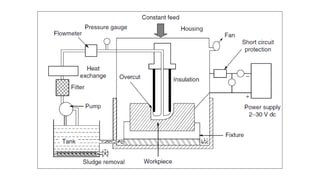
• Electrochemical machining (ECM) is a Non-traditional machining
process that relies on the removal of work piece atoms by
electrochemical dissolution.
• The machining current passes through the electrolytic solution that
fills the gap between an anodic work piece and a preshaped cathodic
tool.
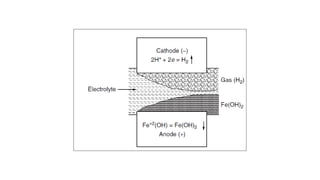
• The electrolyte removes the dissolution products, such as metal
hydroxides, heat, and gas bubbles, generated in the interelectrode
gap.
• Shaped tube electrolytic machining (STEM) is based on the dissolution
process when an electric potential difference is imposed between the
anodic work piece and a cathodic tool.
• Because of the presence of this electric field the electrolyte, often a
sulphuric acid, causes the anode surface to be removed.
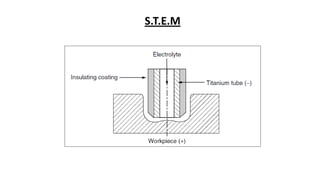
• After the metal ions are dissolved in the solution, they are removed by
the electrolyte flow the tool is a conducting cylinder with an insulating
coating on the outside and is moved toward the work piece at a certain
feed rate while a voltage is applied across the machining gap. In this way
a cylindrically shaped hole is obtained.
Introduction
S.T.E.M
• STEM is, therefore, a modified variation of the ECM that uses acidic
electrolytes.
• The process is capable of producing small holes with diameters of
0.76 to 1.62 mm and a depth-to-diameter ratio of 180:1 in electrically
conductive materials.
• It is difficult to machine such small holes using normal ECM as the
insoluble precipitates produced obstructs the flow path of the
electrolyte.
Process Parameters
• Electrolyte:
Type: Sulphuric, Nitric and Hydrochloric Acids
Concentration: 10–25% weight in water
Temperature: 38°C (sulphuric acid) and 21°C (others)
Pressure: 275–500 kPa
• Voltage:
Forwar0d: 8–14 V
Reverse: 0.1–1 times the forward
• Time:
Forward: 5–7 s
Reverse: 25–77 ms
• Feed rate: 0.75–3 mm/min
Process Capabilities
• Hole size: 0.5-6mm diameter at an aspect ratio of 150
• Hole tolerances: 0.5-mm diameter ± 0.050mm
1.5-mm diameter ± 0.075 mm
60-mm diameter ± 0.100 mm
Hole Depth ±0.050 mm
Advantages
• The depth-to-diameter ratio can be as high as 300.
• A large number of holes (up to 200) can be drilled in the same run.
• Nonparallel holes can be machined.
• Blind holes can be drilled.
• No recast layer or metallurgical defects are produced.
• Shaped and curved holes as well as slots can be produced.
Limitations
• The process is used for corrosion-resistant metals.
• STEM is slow if single holes are to be drilled.
• A special workplace and environment are required when handling
acid.
• Hazardous waste is generated.
• Complex machining and tooling systems are required.
Applications
• Because the process uses acid electrolytes, its use is limited to
drilling holes in stainless steel or other corrosion-resistant
materials in jet engines and gas turbine parts such as:
• Turbine blade cooling holes.
• Fuel nozzles.
• Any holes where EDM recast is not desirable.
• Starting holes for wire EDM.
• Drilling holes for corrosion-resistant metals of low conventional
machinability.
• Drilling oil passages in bearings where EDM causes cracks.
Thank You!!..

Shaped tube electrolytic machining

  • 1.
    Shaped Tube Electrolytic Machining NisargShah (11BIE021) Dhruv Patel (11BIE024) Rajat Patel (11BIE025)
  • 2.
    Electrochemical Machining • Electrochemicalmachining (ECM) is a Non-traditional machining process that relies on the removal of work piece atoms by electrochemical dissolution. • The machining current passes through the electrolytic solution that fills the gap between an anodic work piece and a preshaped cathodic tool. • The electrolyte removes the dissolution products, such as metal hydroxides, heat, and gas bubbles, generated in the interelectrode gap.
  • 5.
    • Shaped tubeelectrolytic machining (STEM) is based on the dissolution process when an electric potential difference is imposed between the anodic work piece and a cathodic tool. • Because of the presence of this electric field the electrolyte, often a sulphuric acid, causes the anode surface to be removed. • After the metal ions are dissolved in the solution, they are removed by the electrolyte flow the tool is a conducting cylinder with an insulating coating on the outside and is moved toward the work piece at a certain feed rate while a voltage is applied across the machining gap. In this way a cylindrically shaped hole is obtained. Introduction
  • 6.
  • 7.
    • STEM is,therefore, a modified variation of the ECM that uses acidic electrolytes. • The process is capable of producing small holes with diameters of 0.76 to 1.62 mm and a depth-to-diameter ratio of 180:1 in electrically conductive materials. • It is difficult to machine such small holes using normal ECM as the insoluble precipitates produced obstructs the flow path of the electrolyte.
  • 8.
    Process Parameters • Electrolyte: Type:Sulphuric, Nitric and Hydrochloric Acids Concentration: 10–25% weight in water Temperature: 38°C (sulphuric acid) and 21°C (others) Pressure: 275–500 kPa • Voltage: Forwar0d: 8–14 V Reverse: 0.1–1 times the forward • Time: Forward: 5–7 s Reverse: 25–77 ms • Feed rate: 0.75–3 mm/min
  • 9.
    Process Capabilities • Holesize: 0.5-6mm diameter at an aspect ratio of 150 • Hole tolerances: 0.5-mm diameter ± 0.050mm 1.5-mm diameter ± 0.075 mm 60-mm diameter ± 0.100 mm Hole Depth ±0.050 mm
  • 10.
    Advantages • The depth-to-diameterratio can be as high as 300. • A large number of holes (up to 200) can be drilled in the same run. • Nonparallel holes can be machined. • Blind holes can be drilled. • No recast layer or metallurgical defects are produced. • Shaped and curved holes as well as slots can be produced.
  • 11.
    Limitations • The processis used for corrosion-resistant metals. • STEM is slow if single holes are to be drilled. • A special workplace and environment are required when handling acid. • Hazardous waste is generated. • Complex machining and tooling systems are required.
  • 12.
    Applications • Because theprocess uses acid electrolytes, its use is limited to drilling holes in stainless steel or other corrosion-resistant materials in jet engines and gas turbine parts such as: • Turbine blade cooling holes. • Fuel nozzles. • Any holes where EDM recast is not desirable. • Starting holes for wire EDM. • Drilling holes for corrosion-resistant metals of low conventional machinability. • Drilling oil passages in bearings where EDM causes cracks.
  • 13.