JOINING PROCESSES
UNIT-2
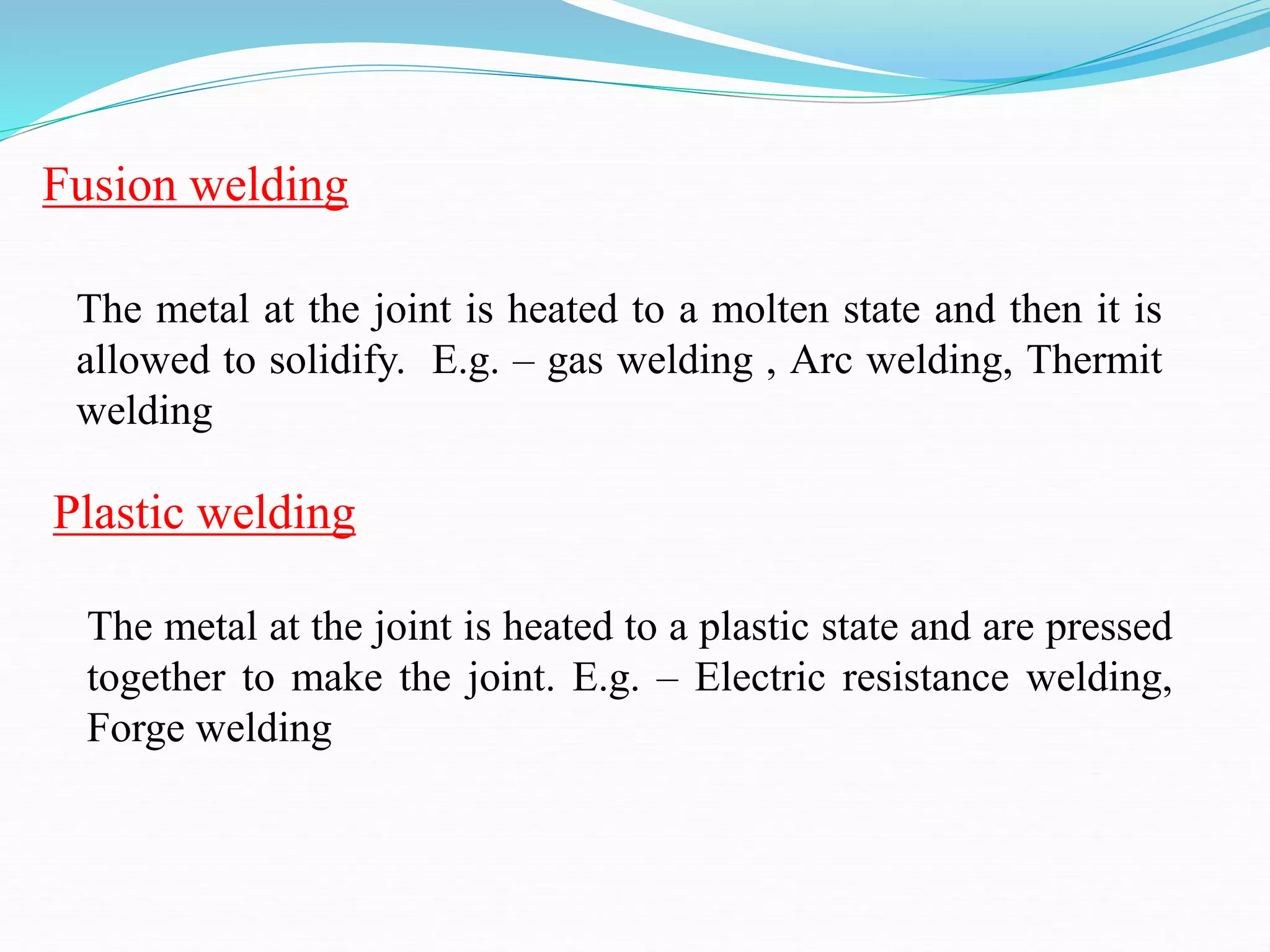
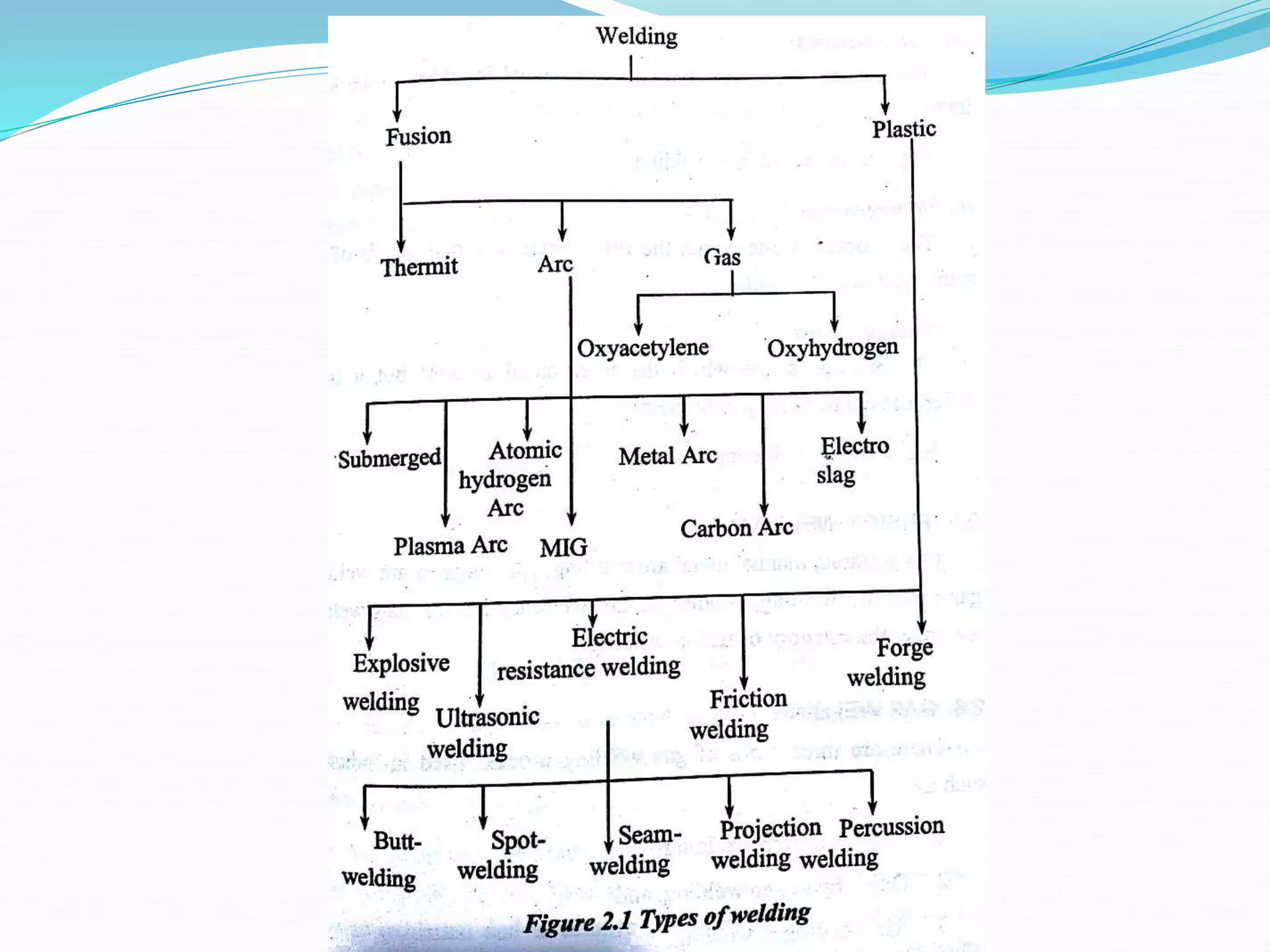
Fusion welding
The metal at the joint is heated to a molten state and then it is
allowed to solidify. E.g. – gas welding , Arc welding, Thermit
welding
The metal at the joint is heated to a plastic state and are pressed
together to make the joint. E.g. – Electric resistance welding,
Forge welding
Plastic welding
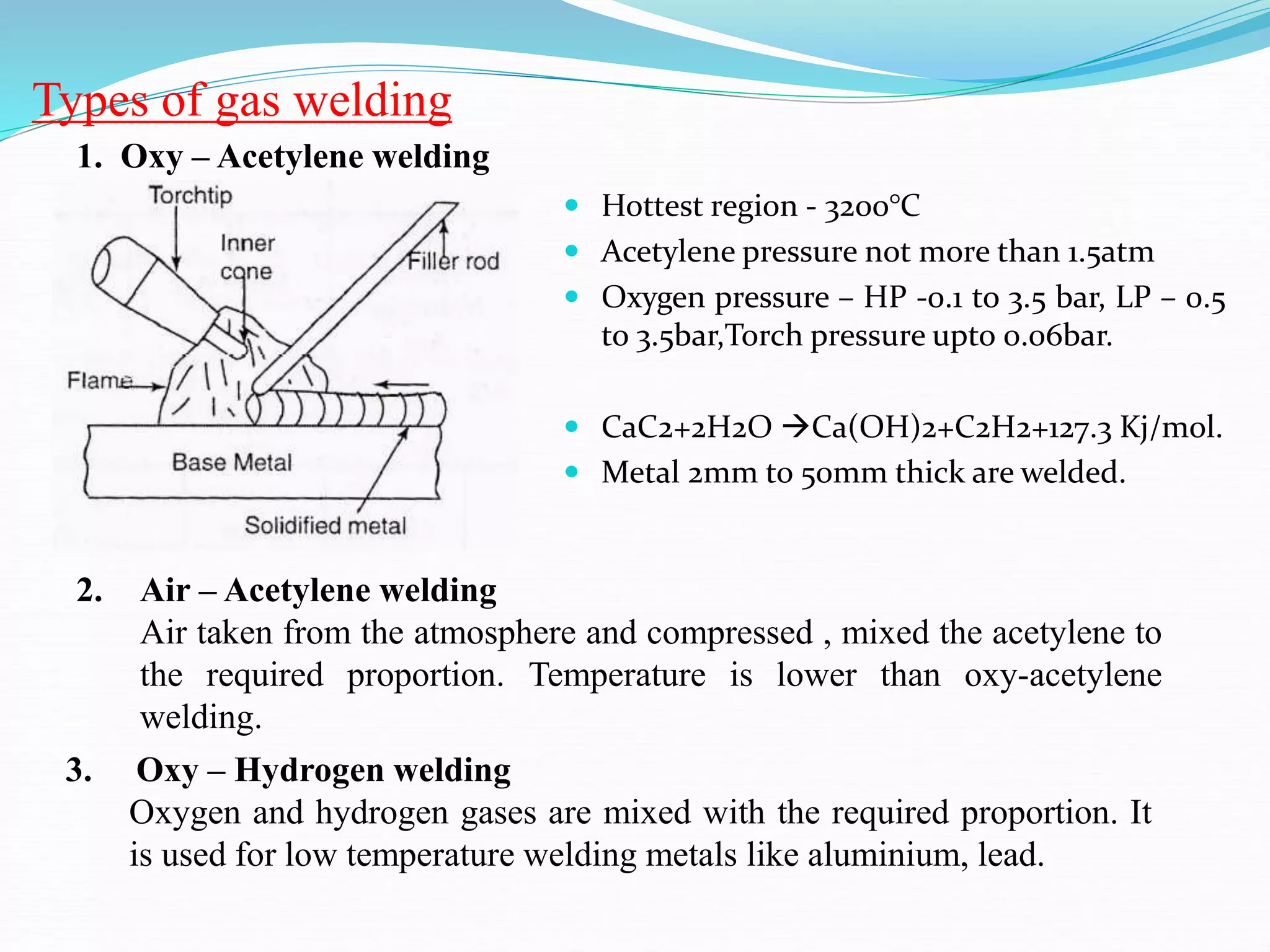
Types of gas welding
2. Air – Acetylene welding
Air taken from the atmosphere and compressed , mixed the acetylene to
the required proportion. Temperature is lower than oxy-acetylene
welding.
3. Oxy – Hydrogen welding
Oxygen and hydrogen gases are mixed with the required proportion. It
is used for low temperature welding metals like aluminium, lead.
1. Oxy – Acetylene welding
 Hottest region - 3200°C
 Acetylene pressure not more than 1.5atm
 Oxygen pressure – HP -0.1 to 3.5 bar, LP – 0.5
to 3.5bar,Torch pressure upto 0.06bar.
 CaC2+2H2O Ca(OH)2+C2H2+127.3 Kj/mol.
 Metal 2mm to 50mm thick are welded.
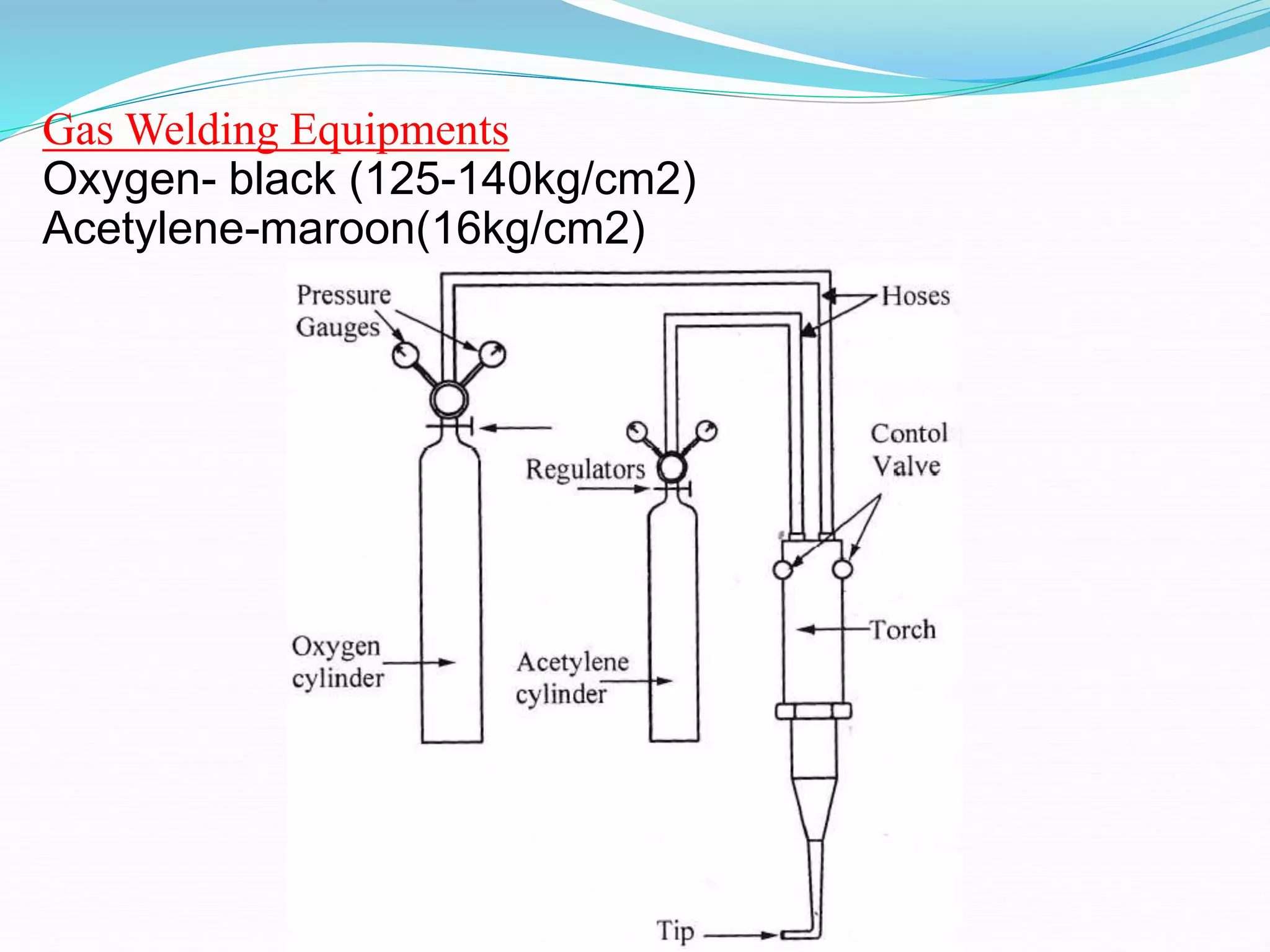
Gas Welding Equipments
Oxygen- black (125-140kg/cm2)
Acetylene-maroon(16kg/cm2)
Flame Characteristics
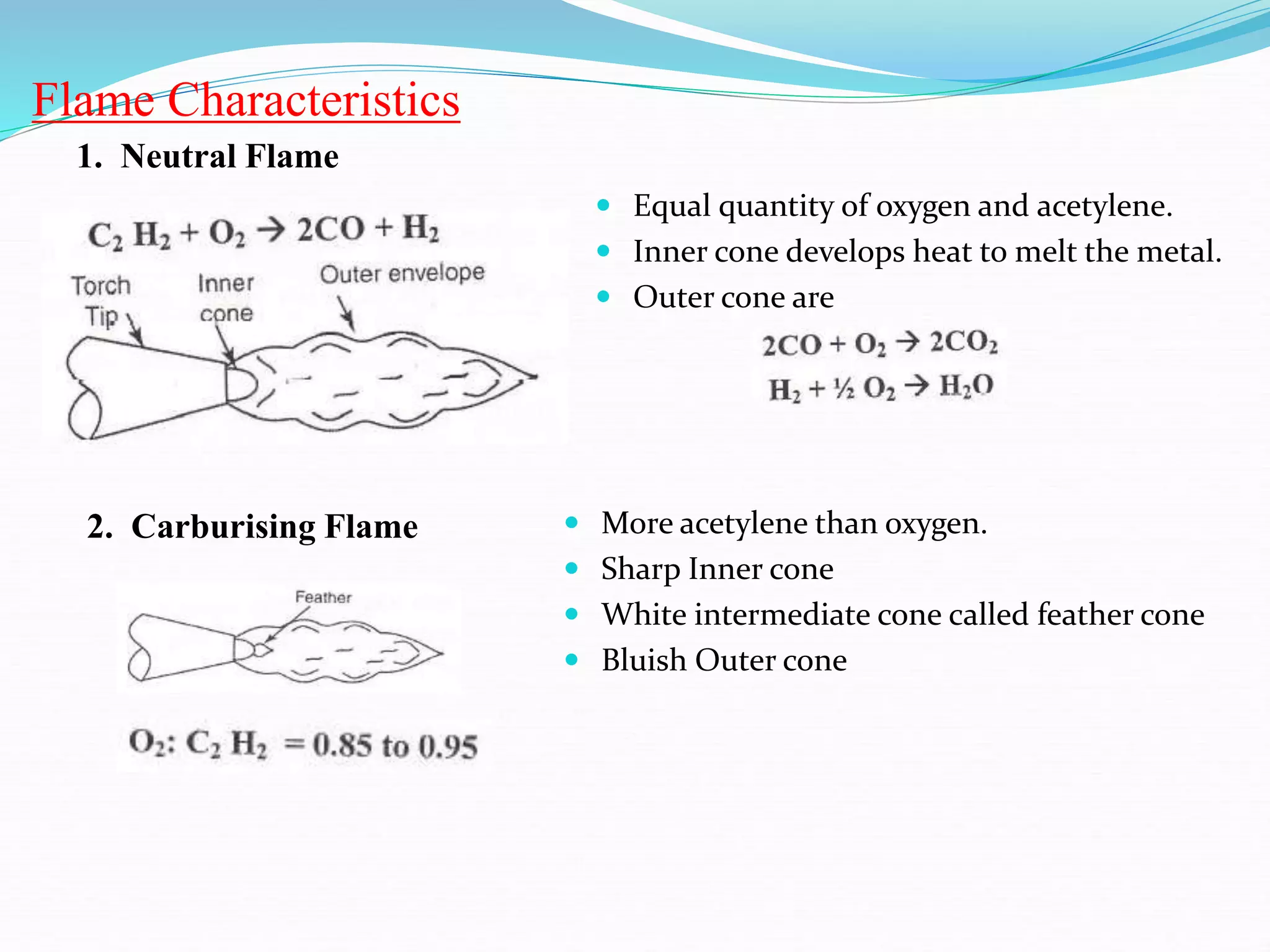
1. Neutral Flame
 Equal quantity of oxygen and acetylene.
 Inner cone develops heat to melt the metal.
 Outer cone are
2. Carburising Flame  More acetylene than oxygen.
 Sharp Inner cone
 White intermediate cone called feather cone
 Bluish Outer cone
Flame Characteristics
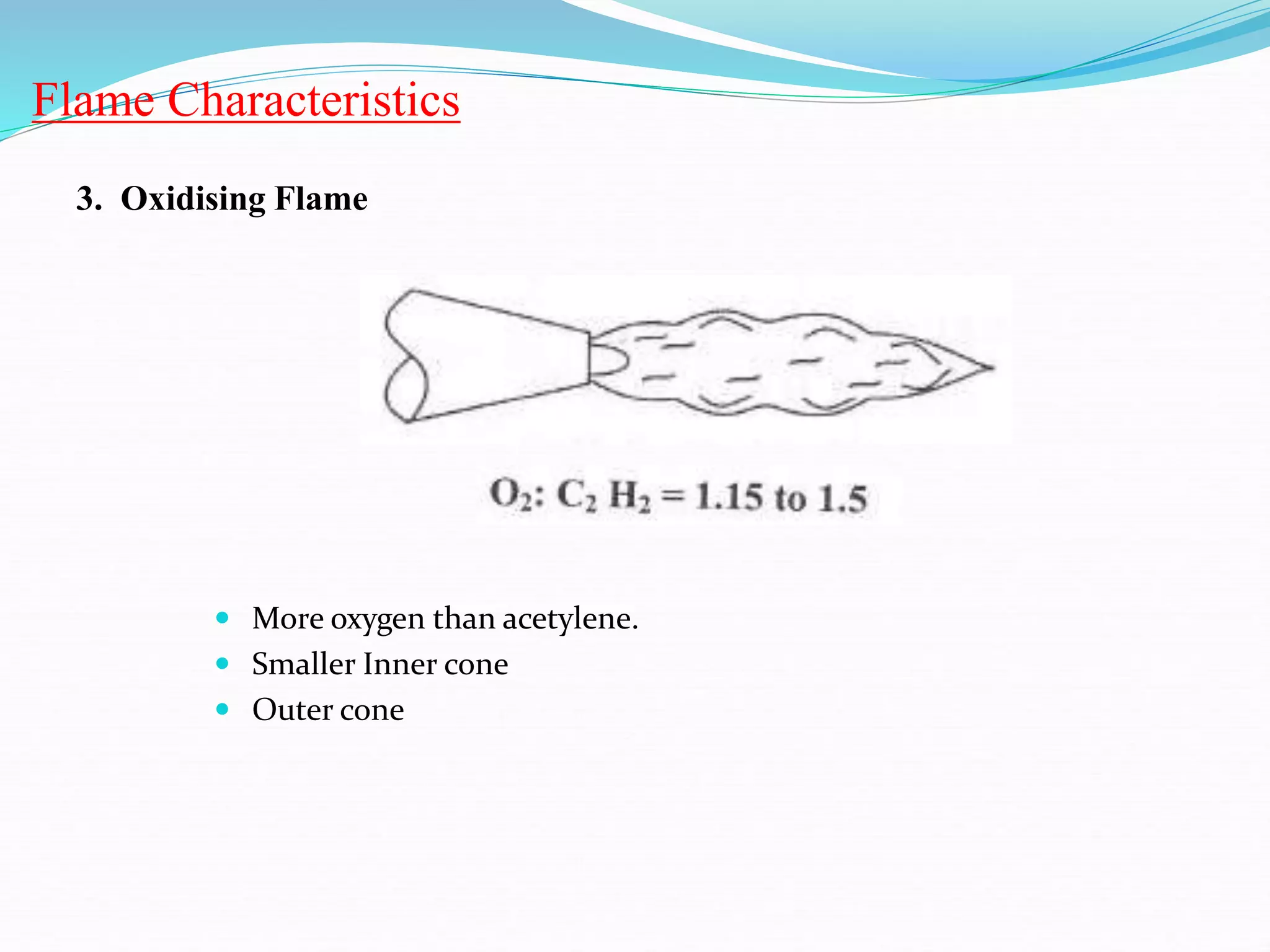
3. Oxidising Flame
 More oxygen than acetylene.
 Smaller Inner cone
 Outer cone
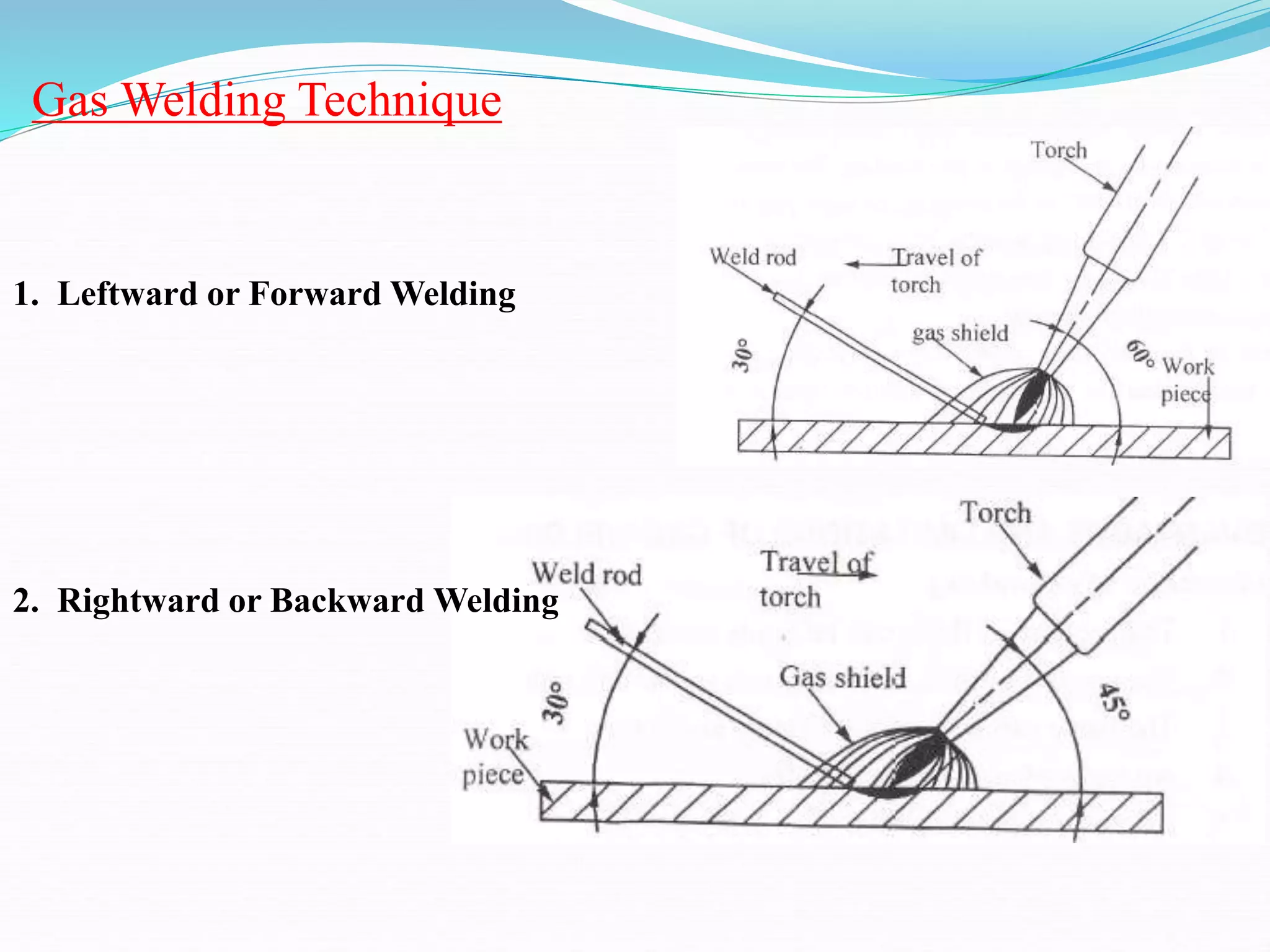
Gas Welding Technique
1. Leftward or Forward Welding
2. Rightward or Backward Welding
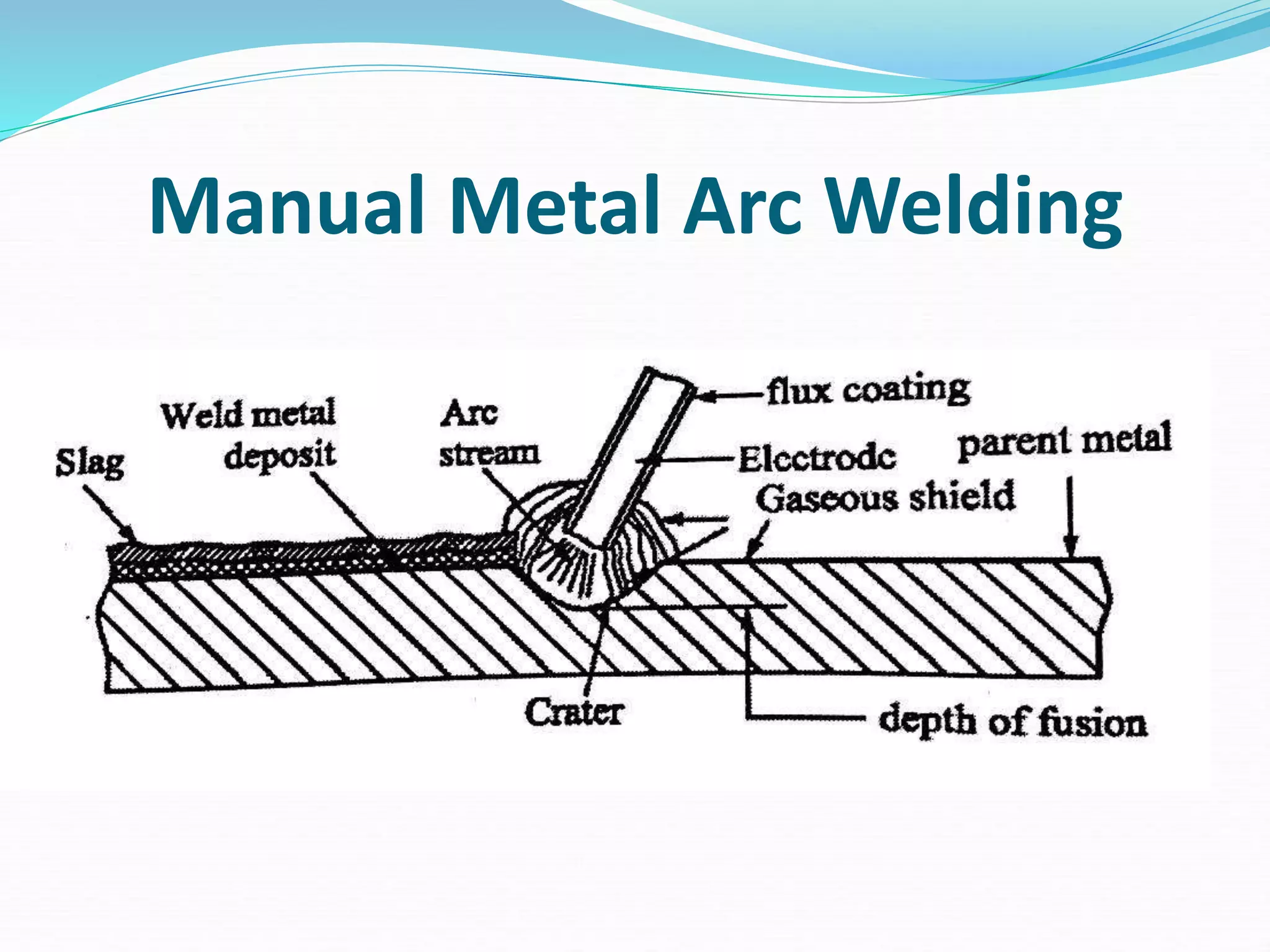
Manual Metal Arc Welding
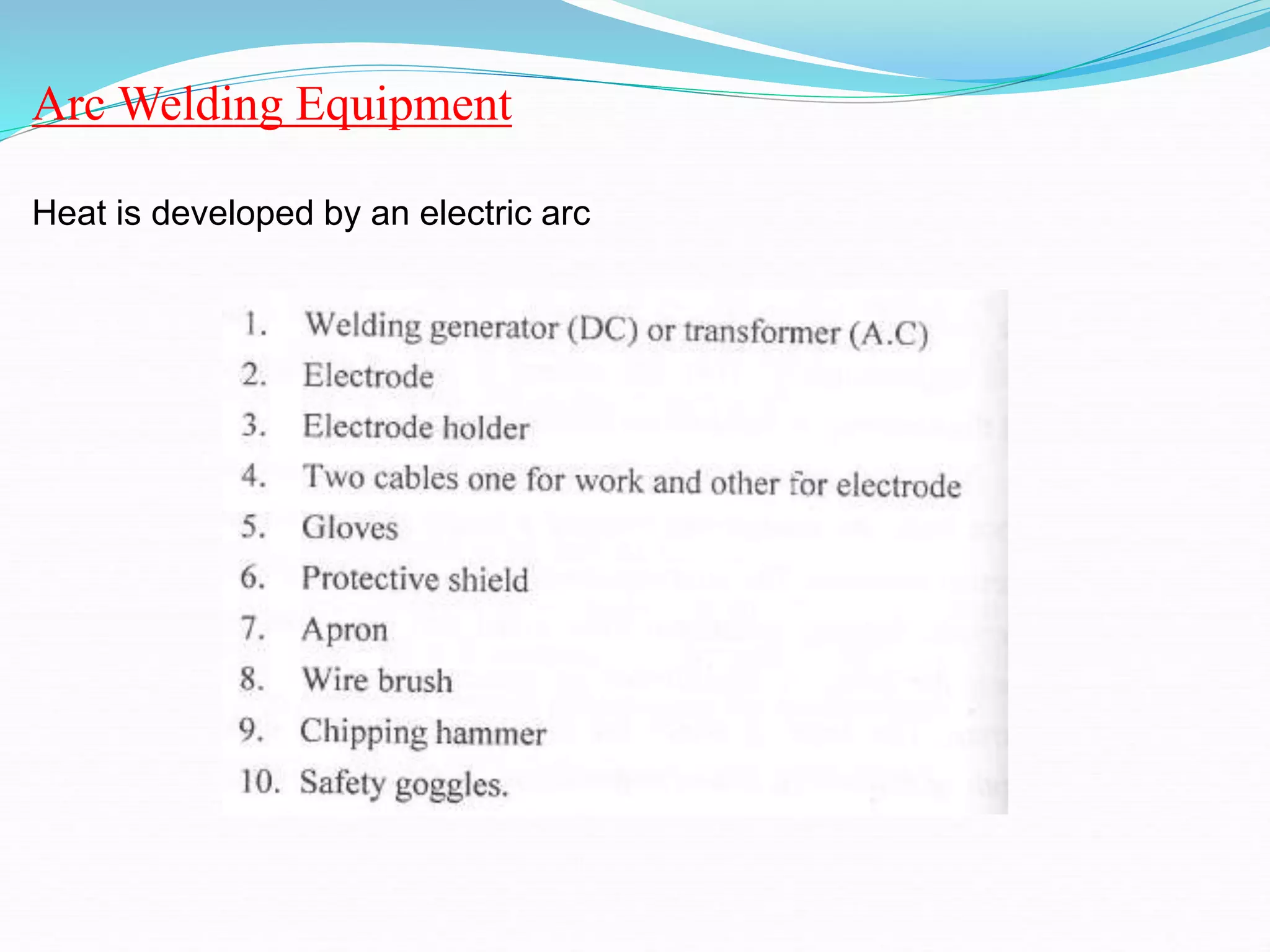
Arc Welding Equipment
Heat is developed by an electric arc
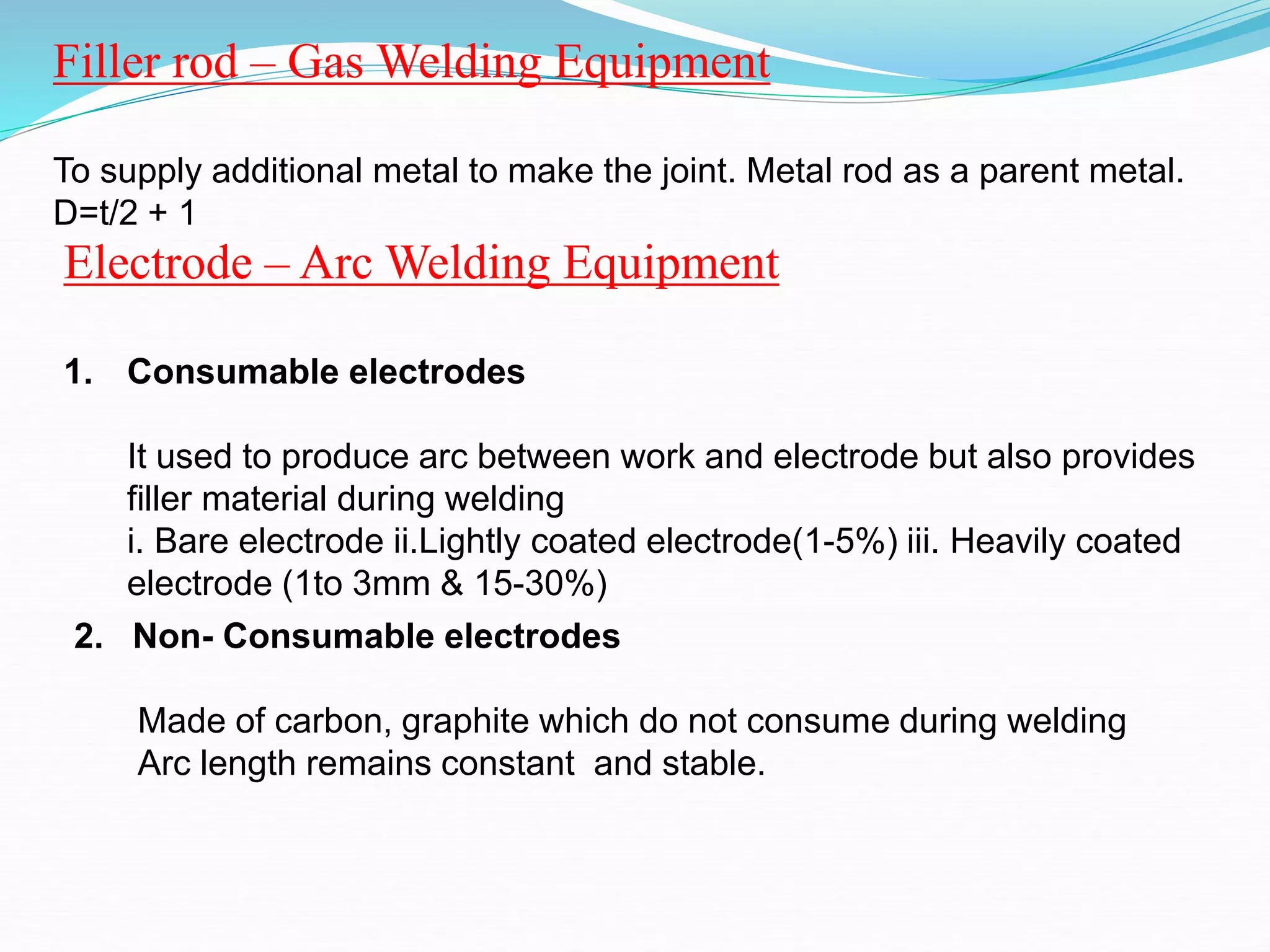
Filler rod – Gas Welding Equipment
To supply additional metal to make the joint. Metal rod as a parent metal.
D=t/2 + 1
Electrode – Arc Welding Equipment
1. Consumable electrodes
It used to produce arc between work and electrode but also provides
filler material during welding
i. Bare electrode ii.Lightly coated electrode(1-5%) iii. Heavily coated
electrode (1to 3mm & 15-30%)
2. Non- Consumable electrodes
Made of carbon, graphite which do not consume during welding
Arc length remains constant and stable.
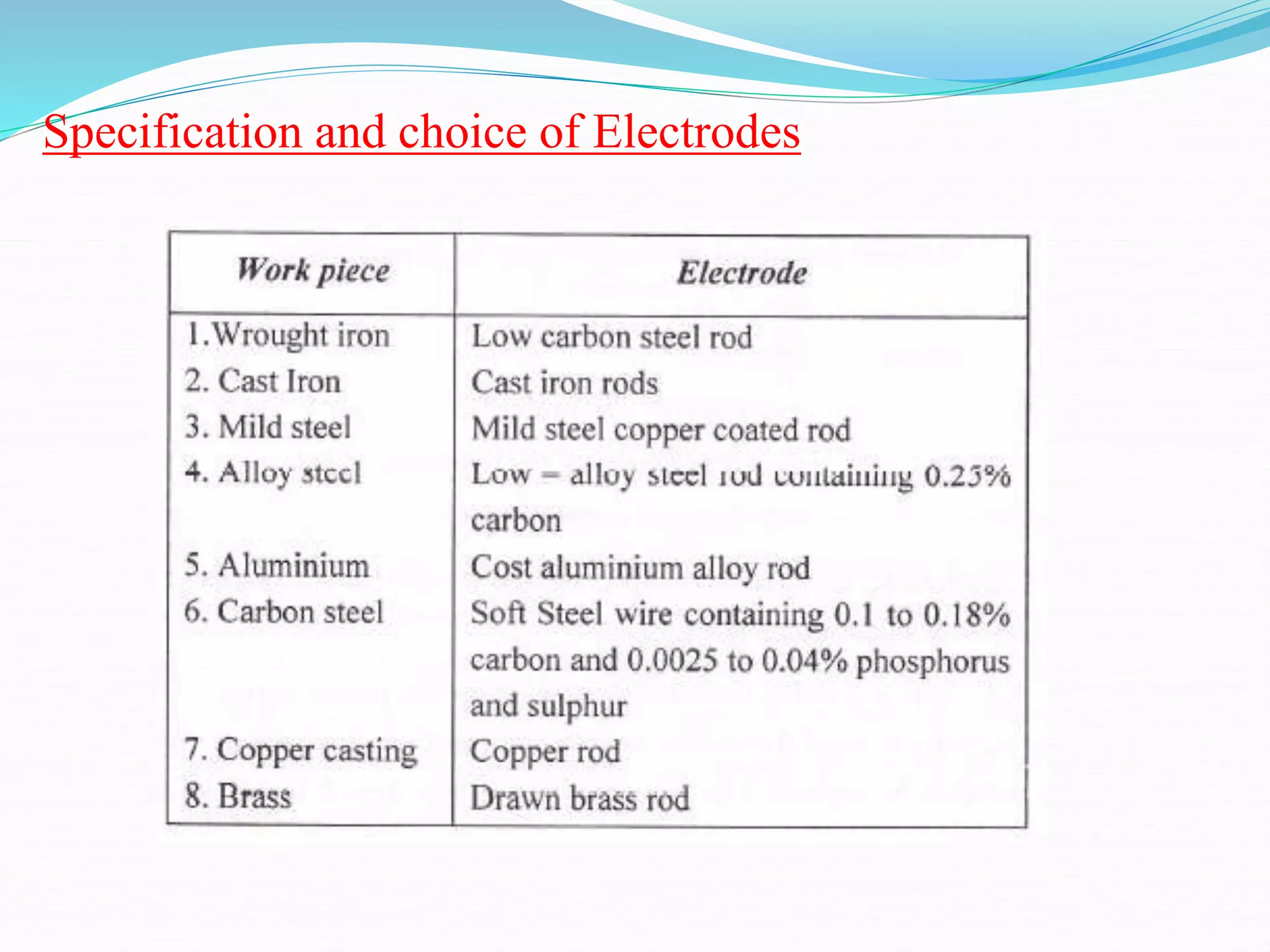
Specification and choice of Electrodes
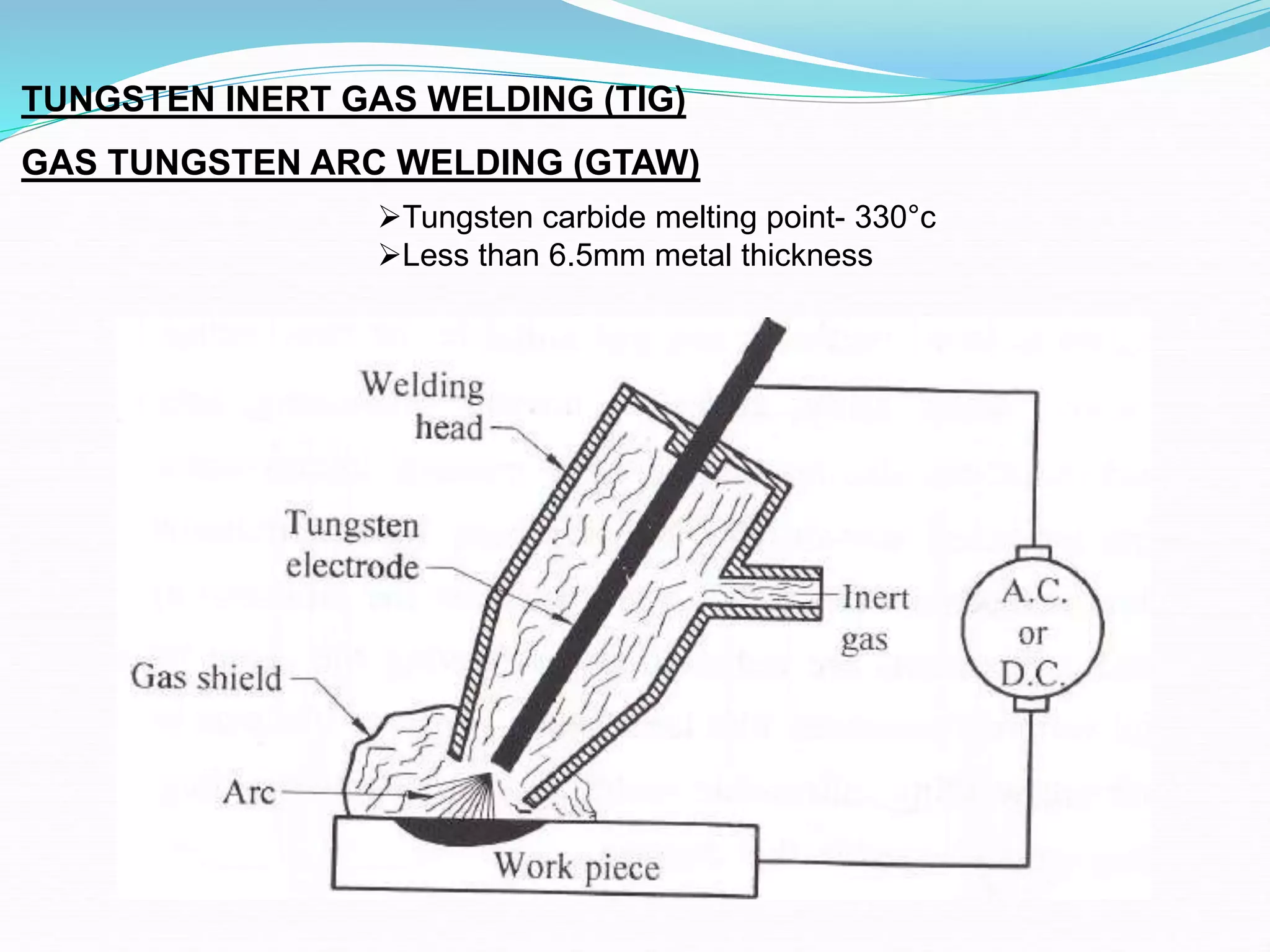
TUNGSTEN INERT GAS WELDING (TIG)
GAS TUNGSTEN ARC WELDING (GTAW)
Tungsten carbide melting point- 330°c
Less than 6.5mm metal thickness
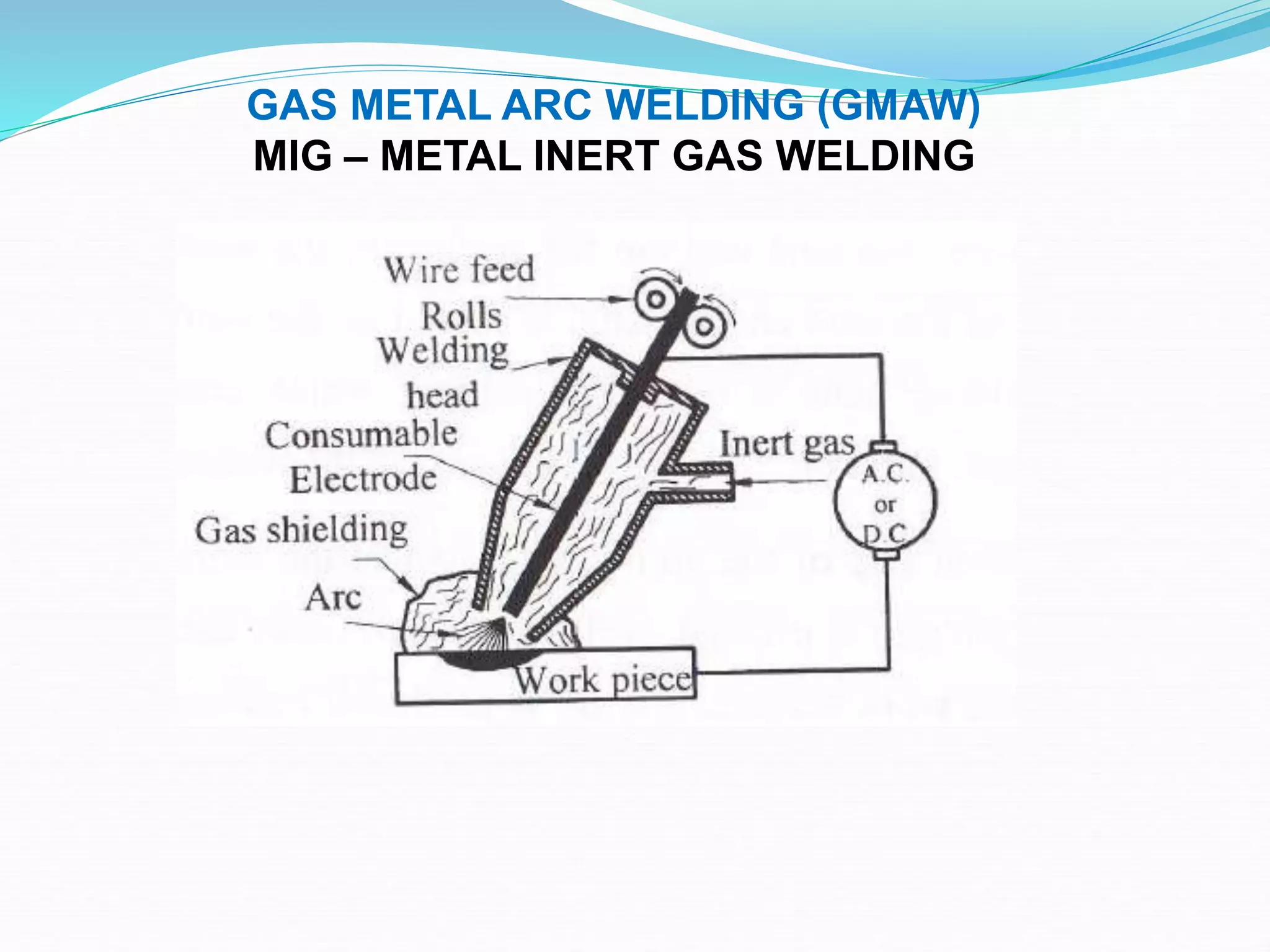
GAS METAL ARC WELDING (GMAW)
MIG – METAL INERT GAS WELDING
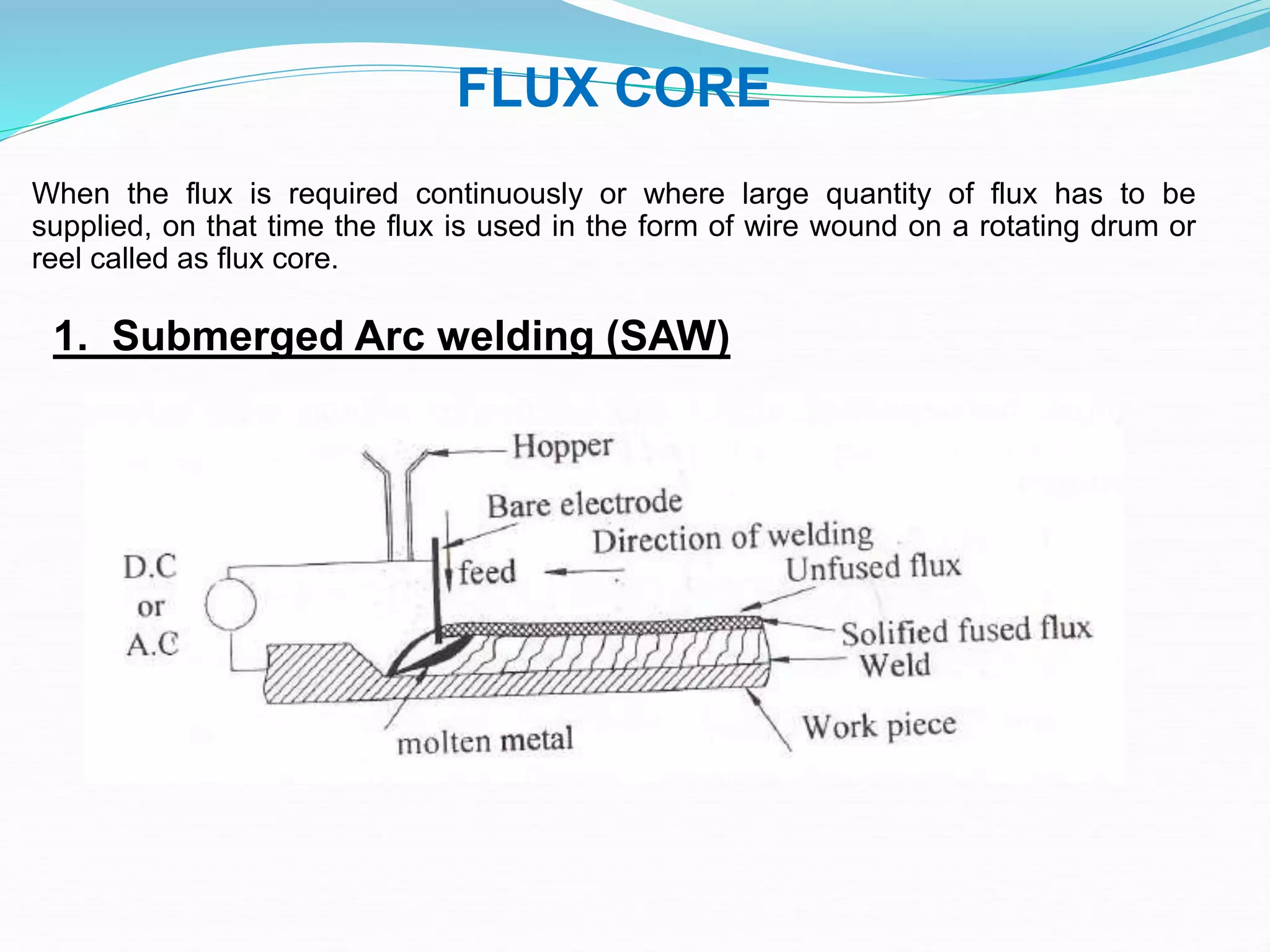
FLUX CORE
When the flux is required continuously or where large quantity of flux has to be
supplied, on that time the flux is used in the form of wire wound on a rotating drum or
reel called as flux core.
1. Submerged Arc welding (SAW)
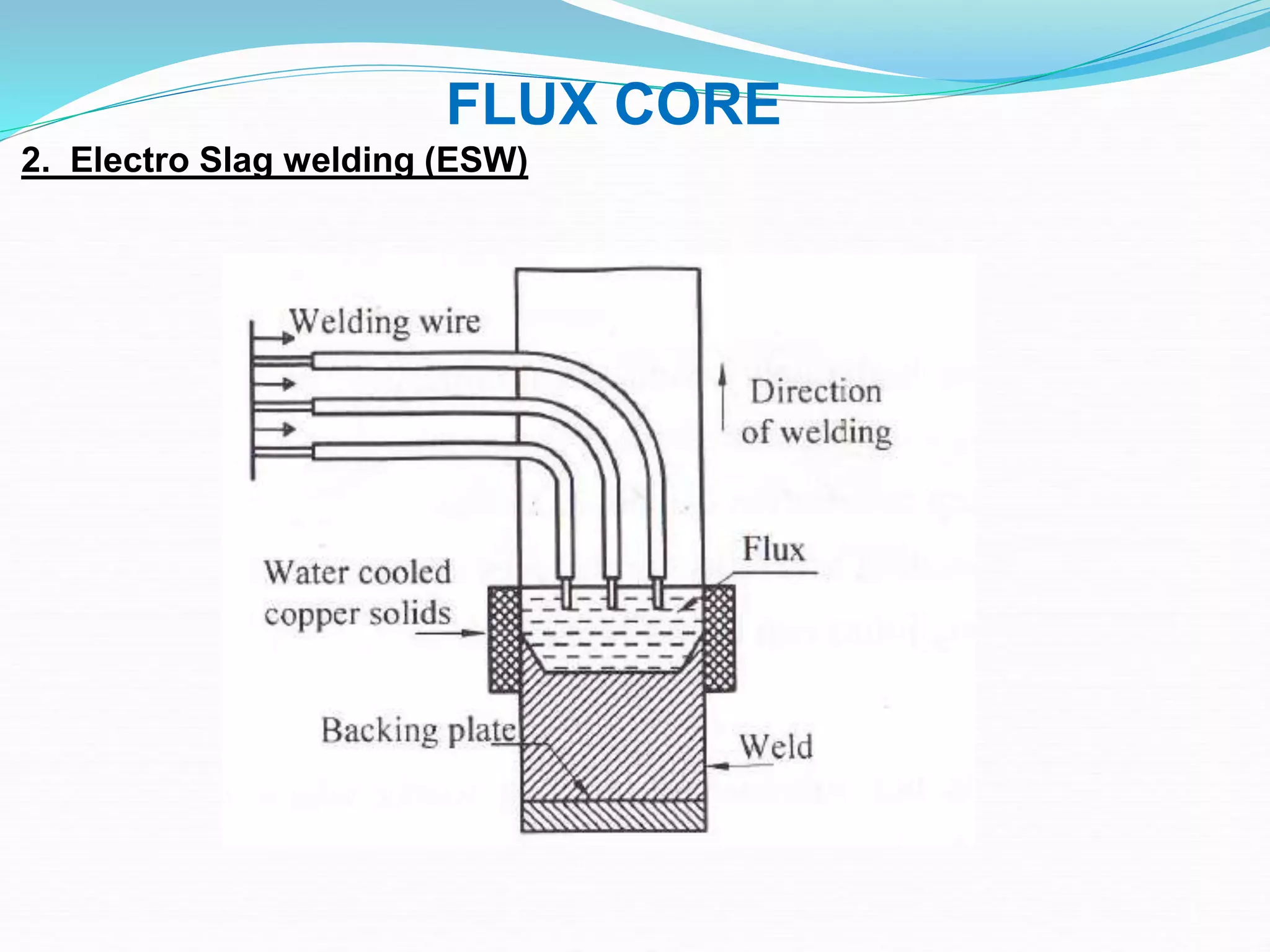
2. Electro Slag welding (ESW)
FLUX CORE
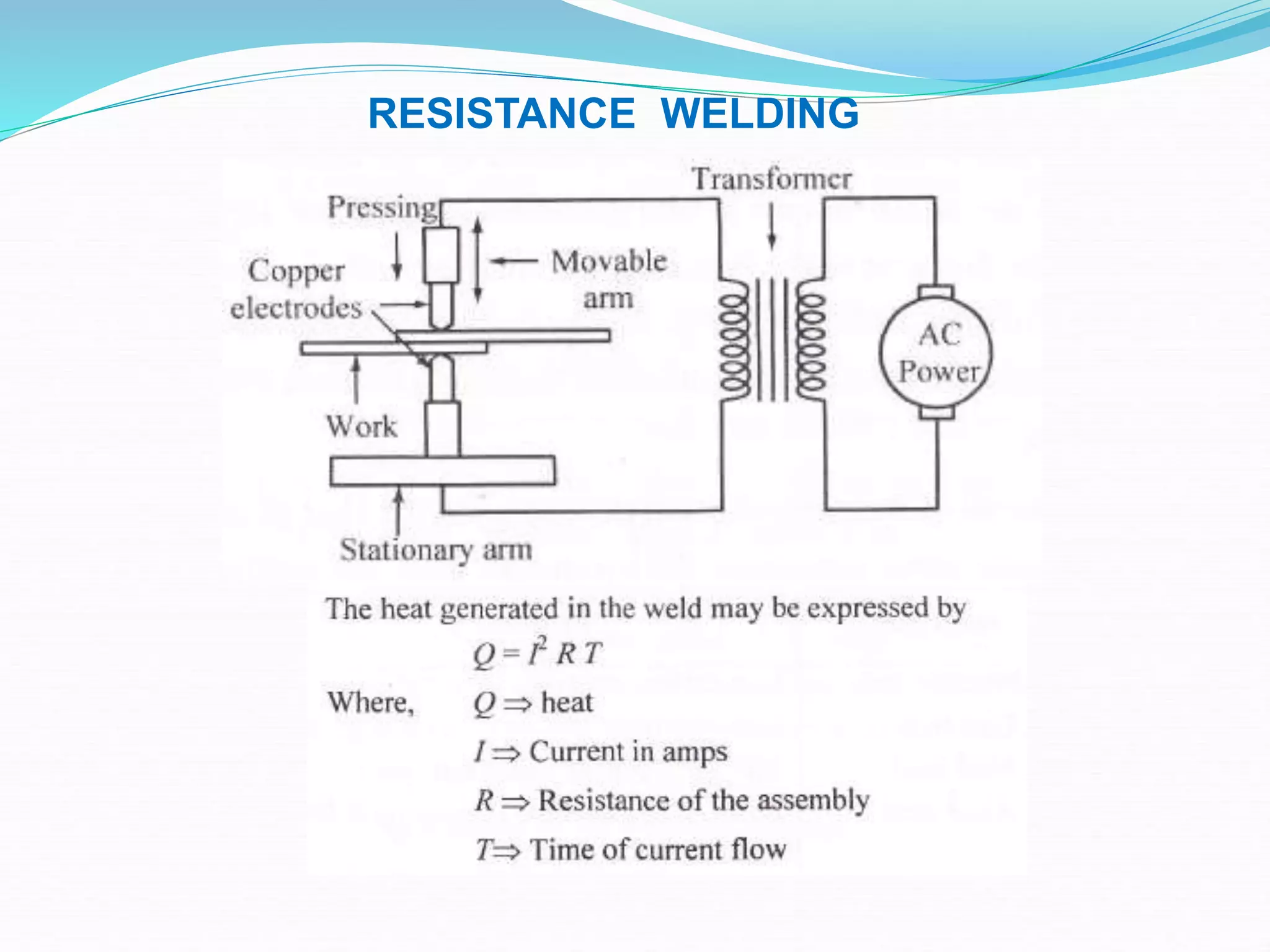
RESISTANCE WELDING
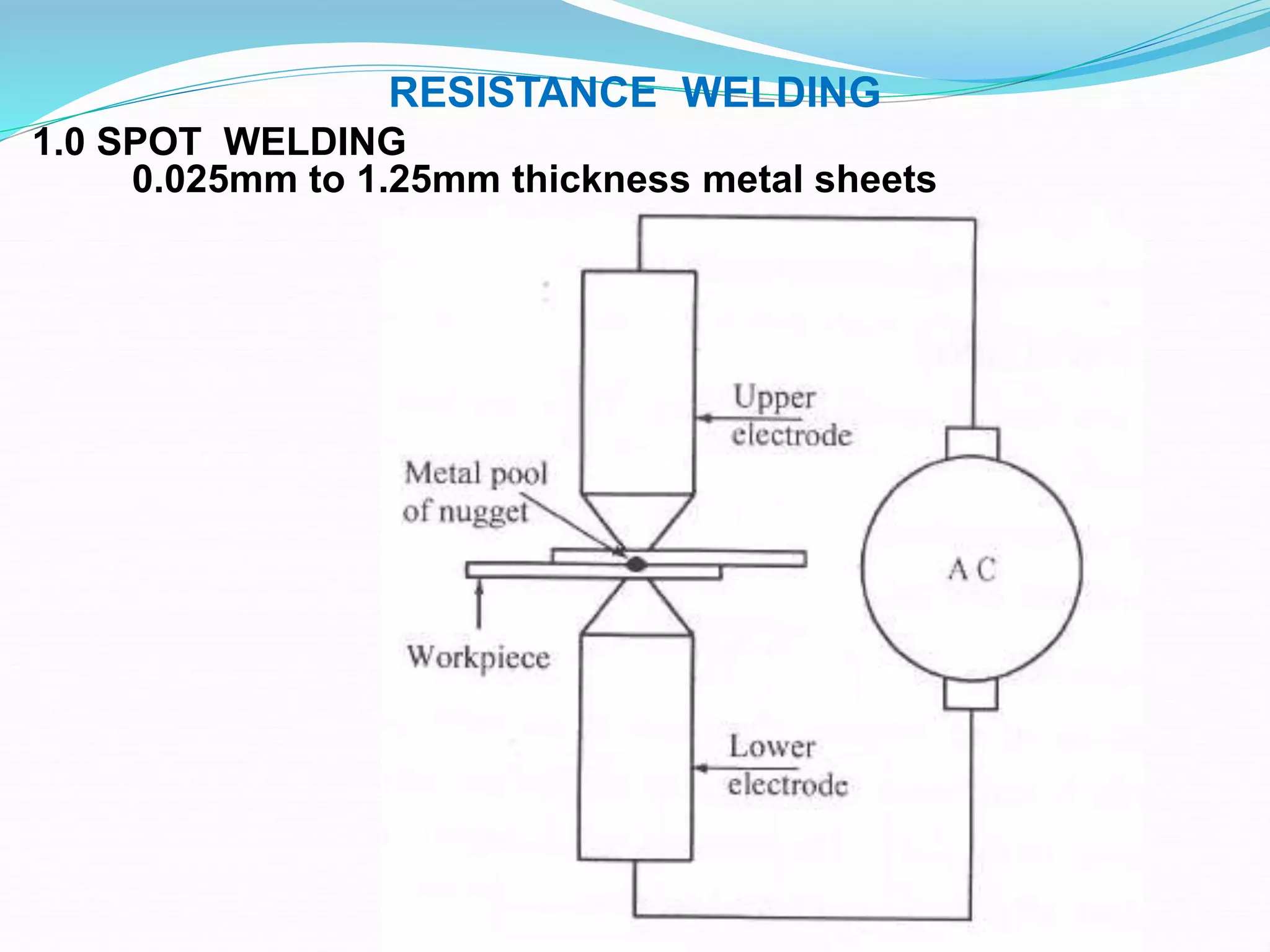
1.0 SPOT WELDING
0.025mm to 1.25mm thickness metal sheets
RESISTANCE WELDING
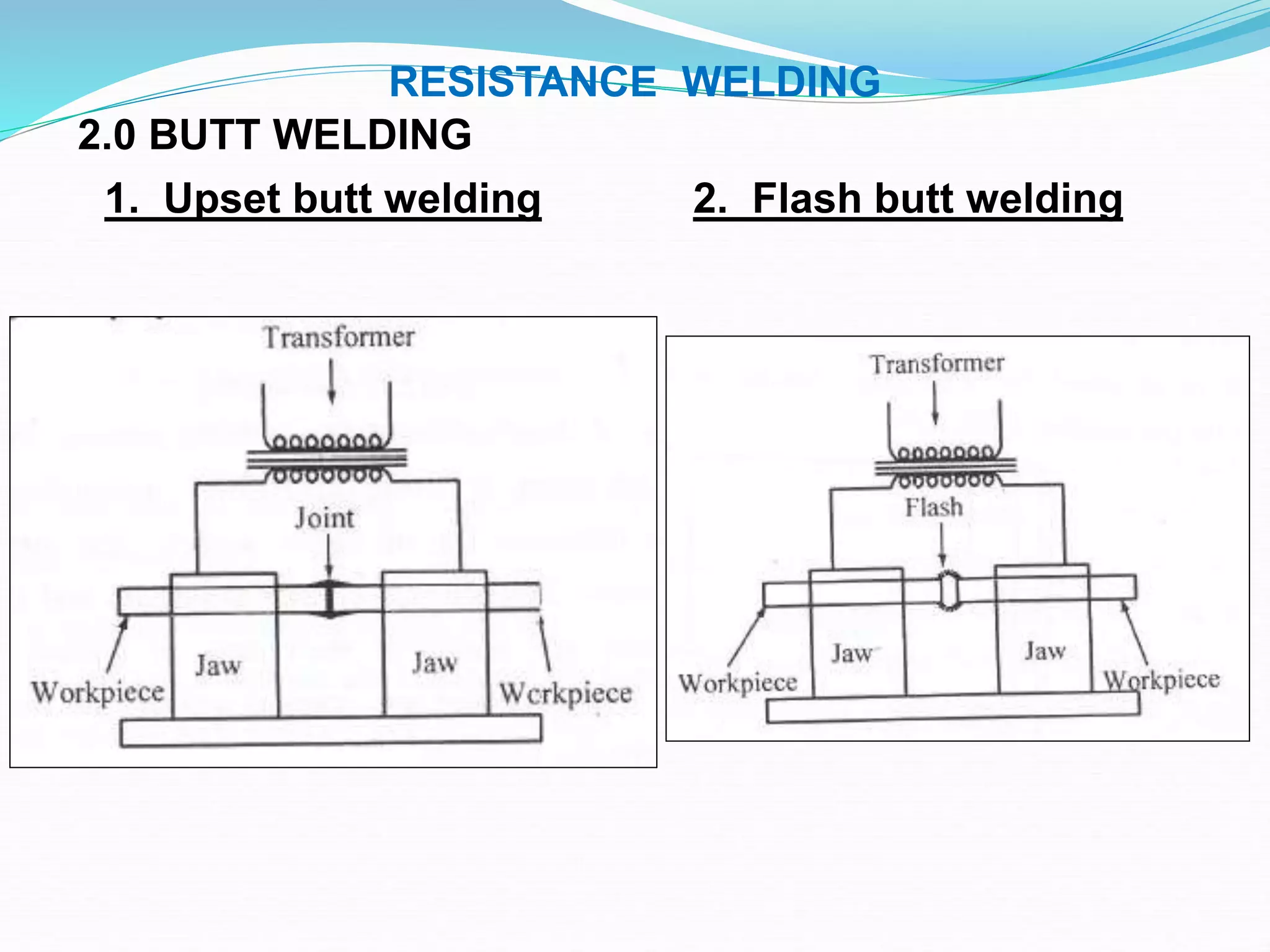
2.0 BUTT WELDING
1. Upset butt welding 2. Flash butt welding
RESISTANCE WELDING
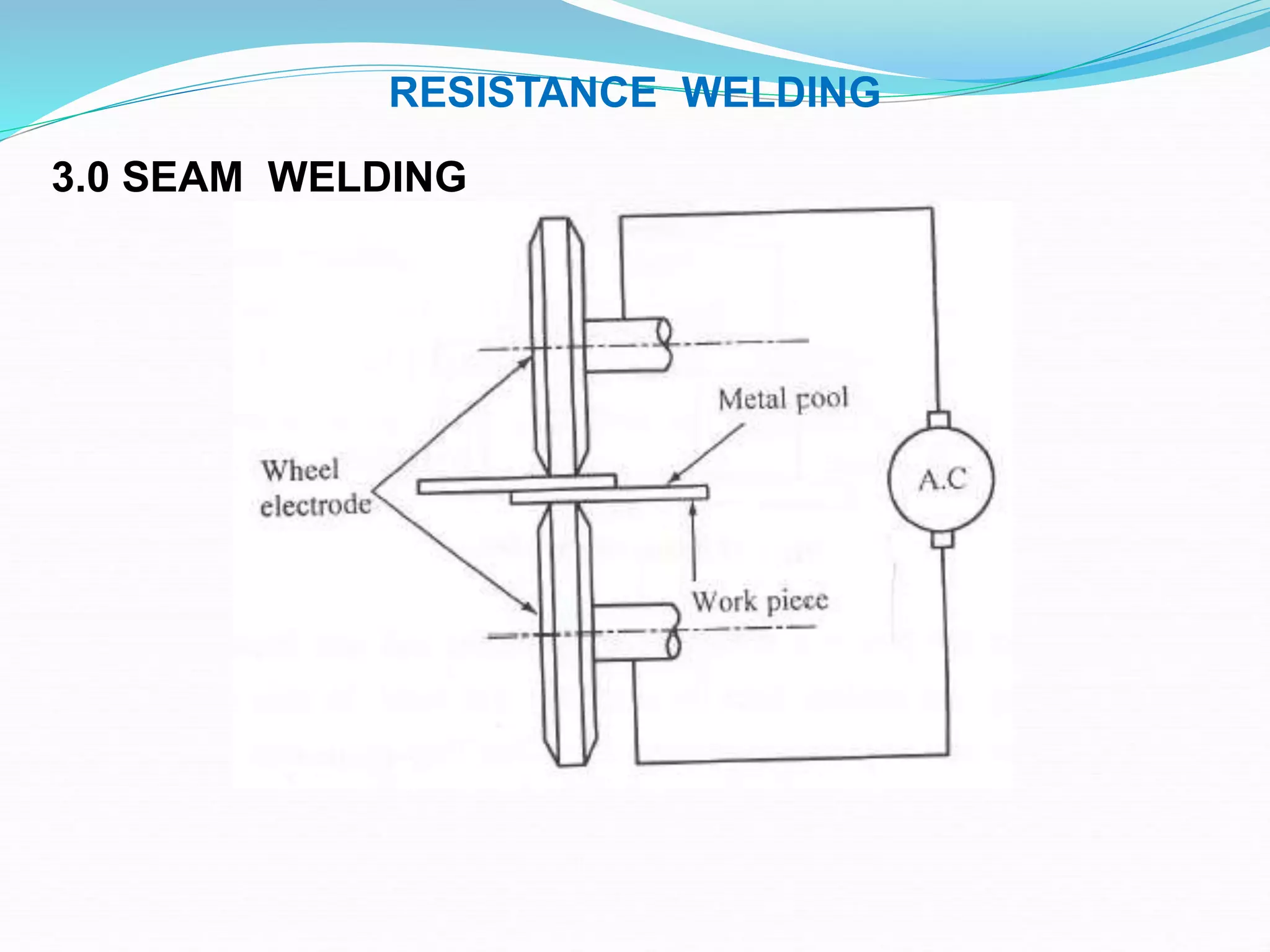
3.0 SEAM WELDING
RESISTANCE WELDING
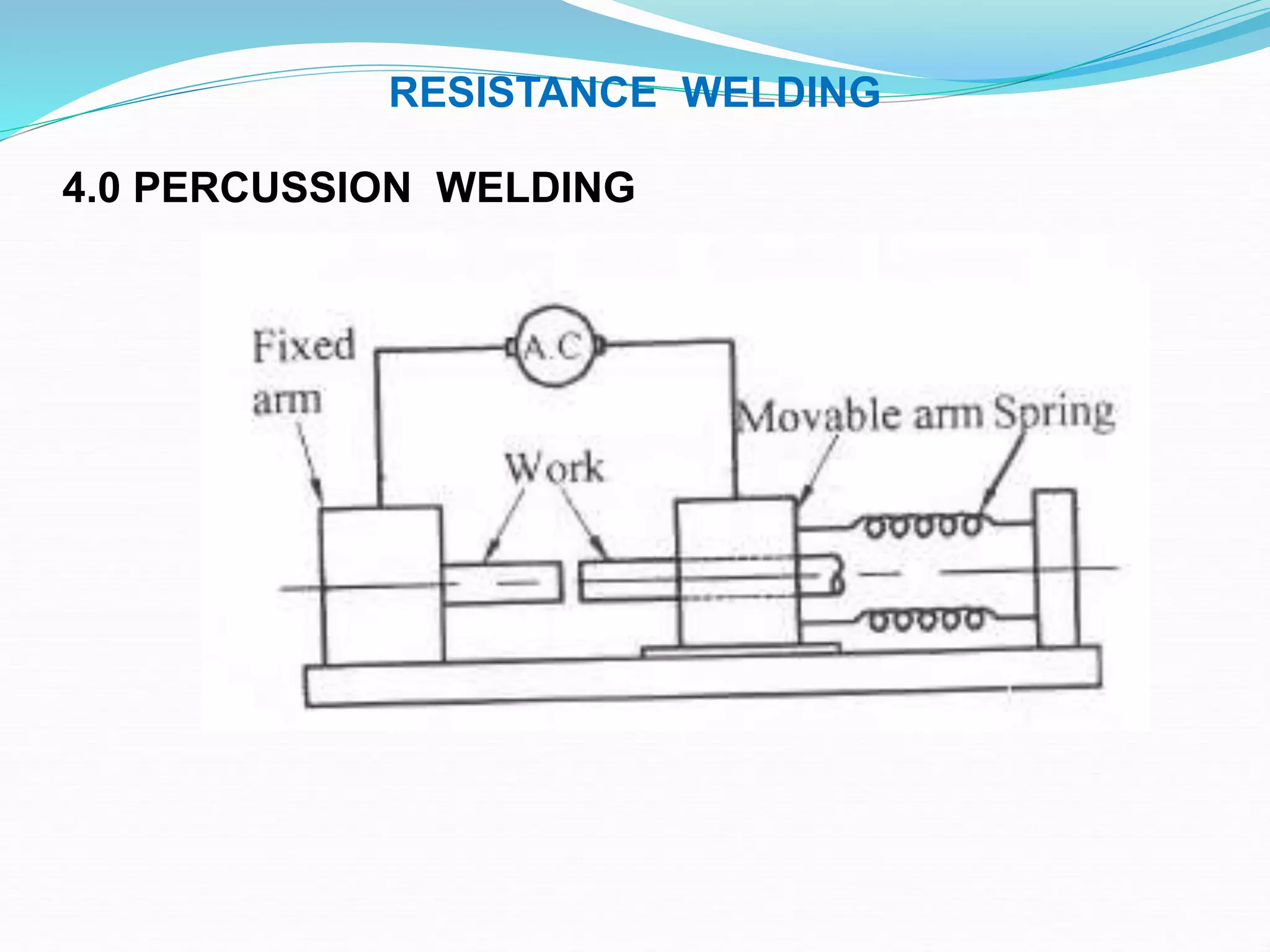
4.0 PERCUSSION WELDING
RESISTANCE WELDING
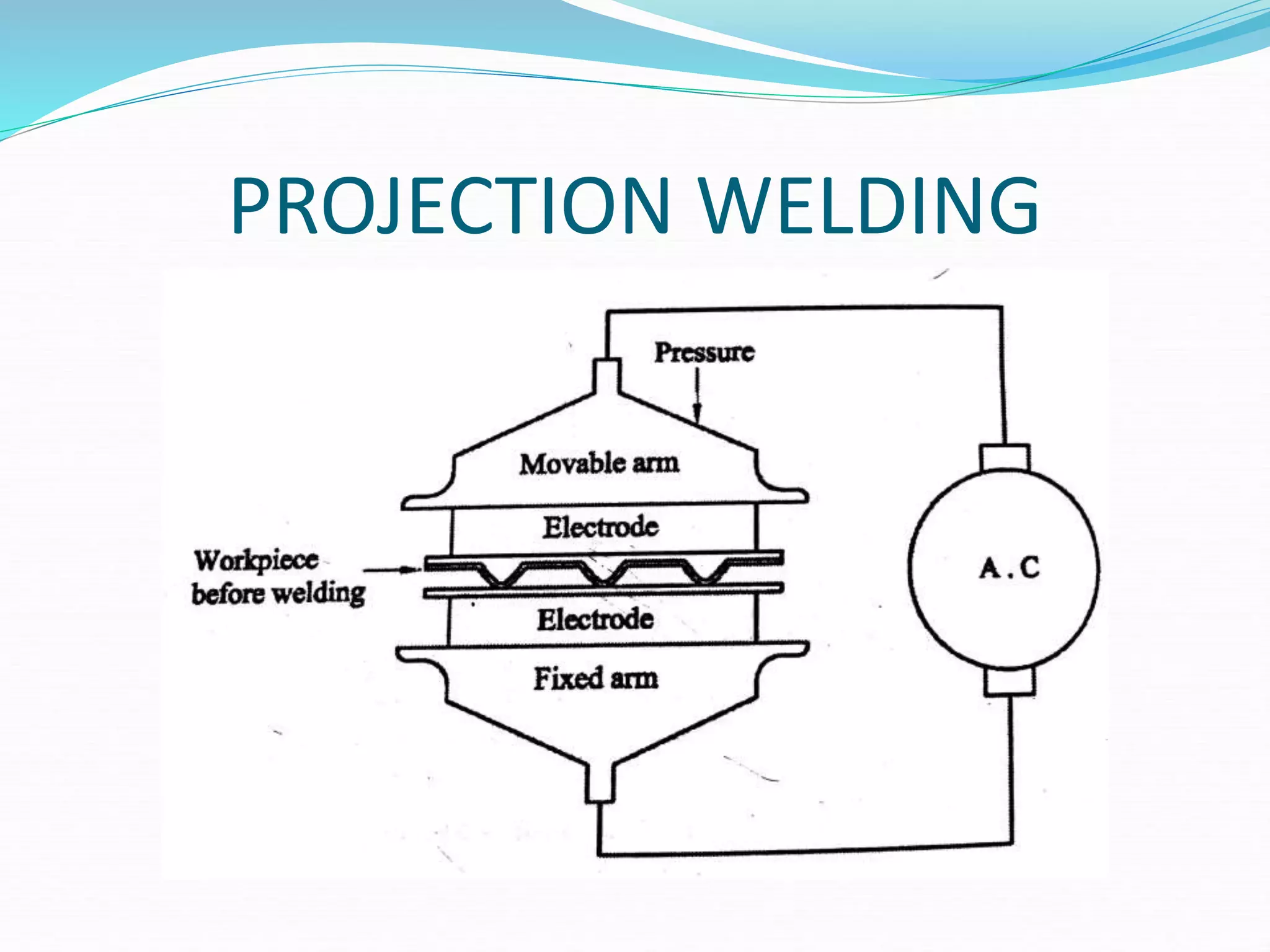
PROJECTION WELDING
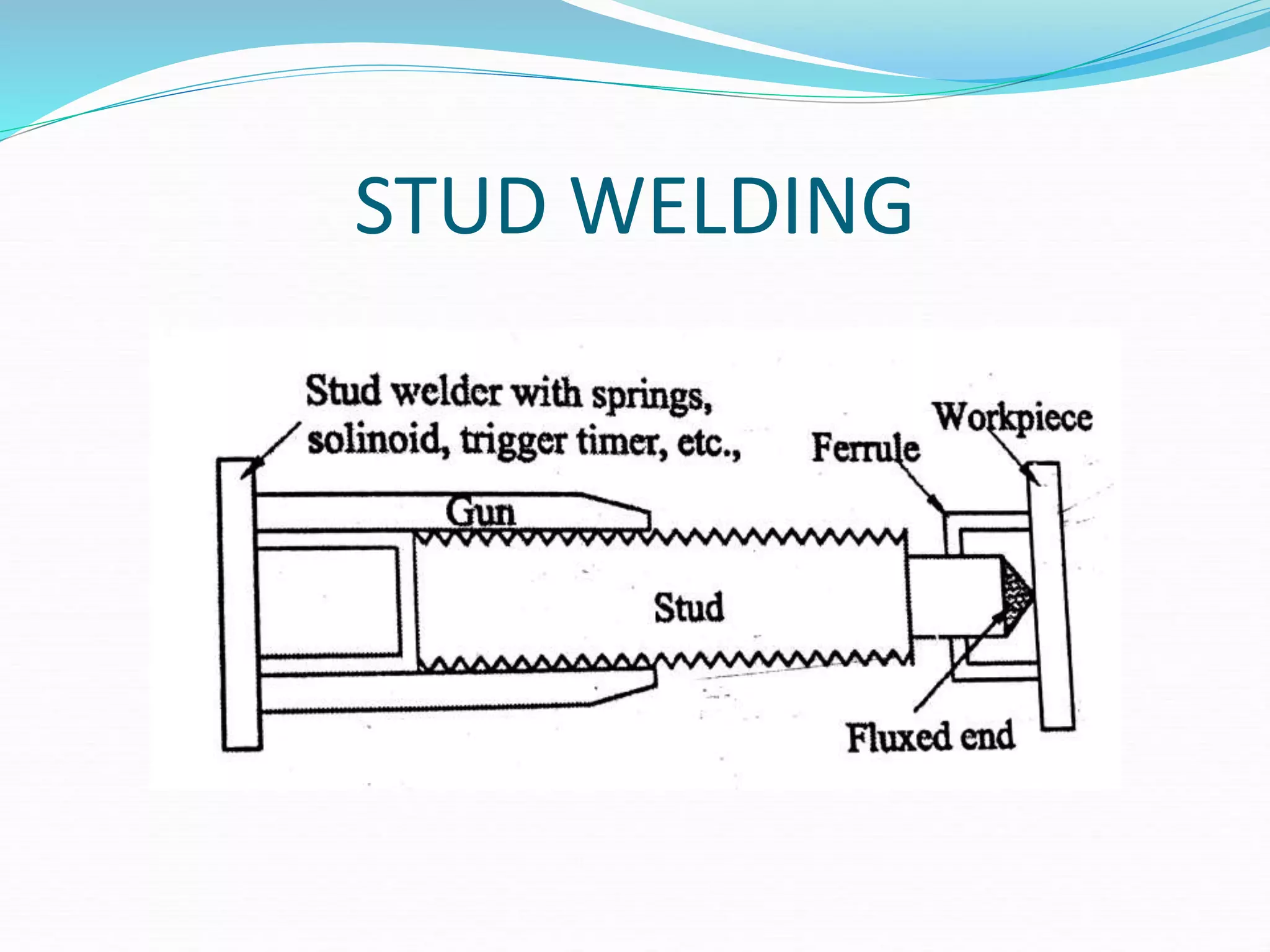
STUD WELDING
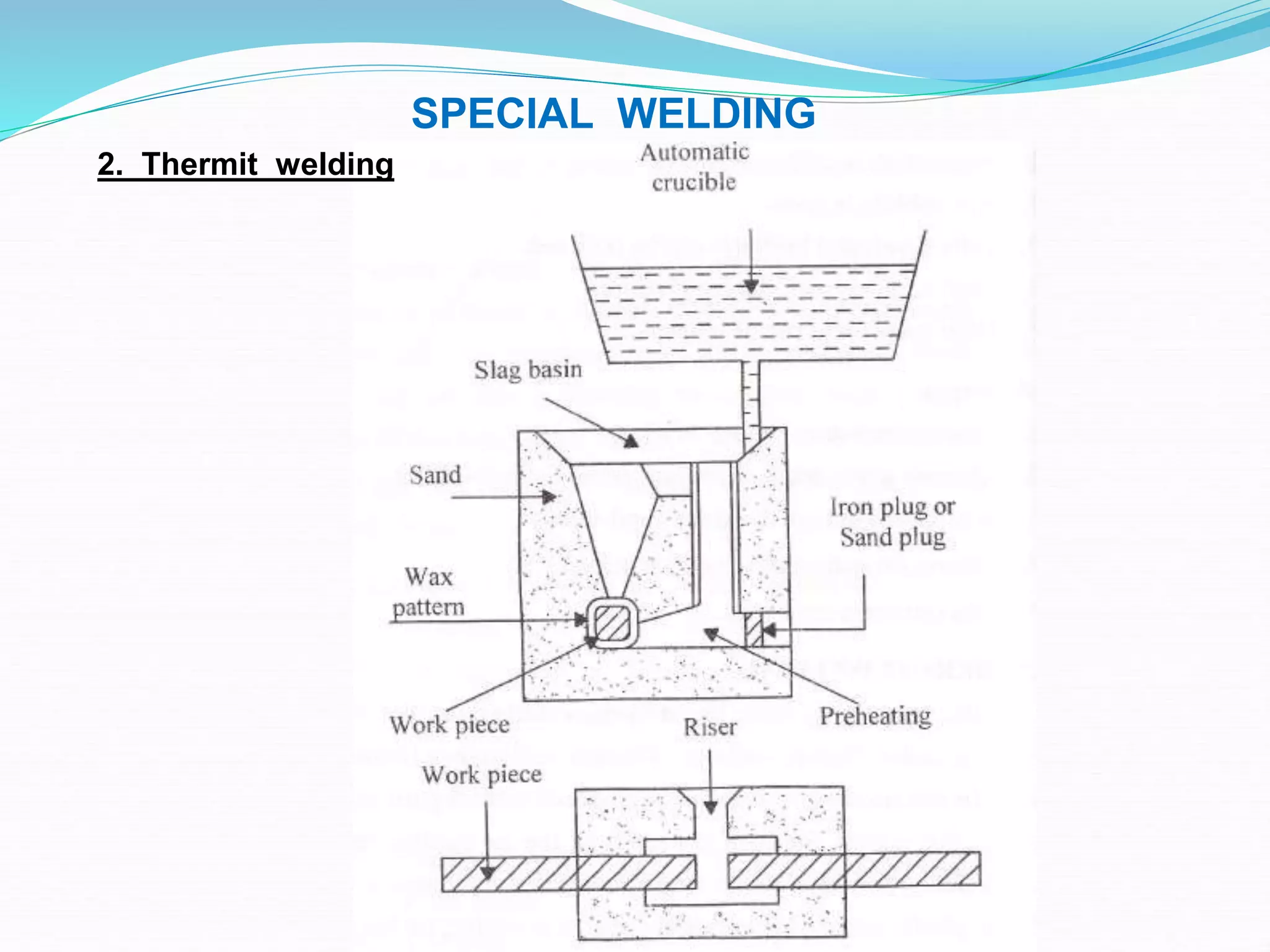
SPECIAL WELDING
2. Thermit welding
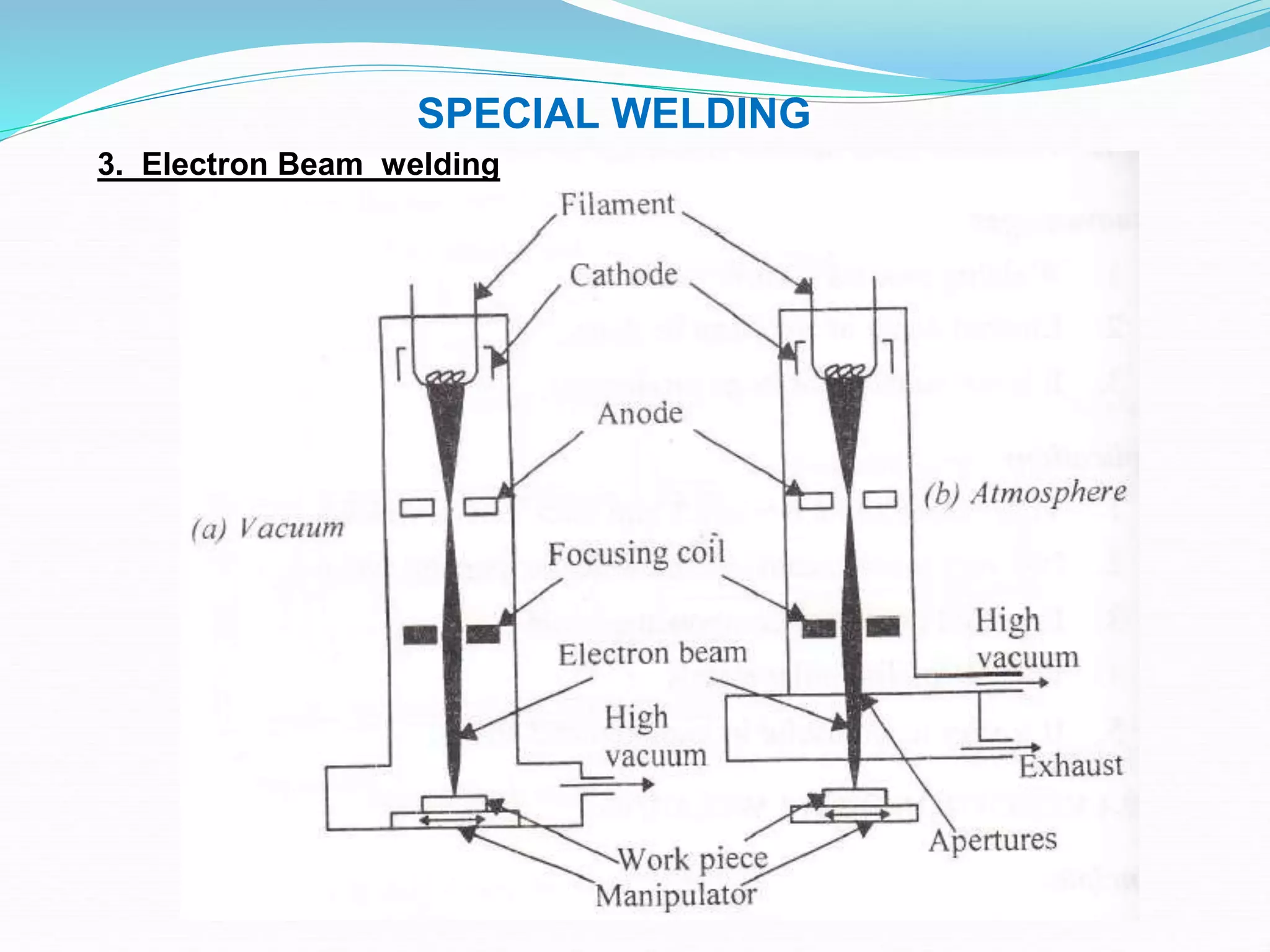
SPECIAL WELDING
3. Electron Beam welding
SPECIAL WELDING
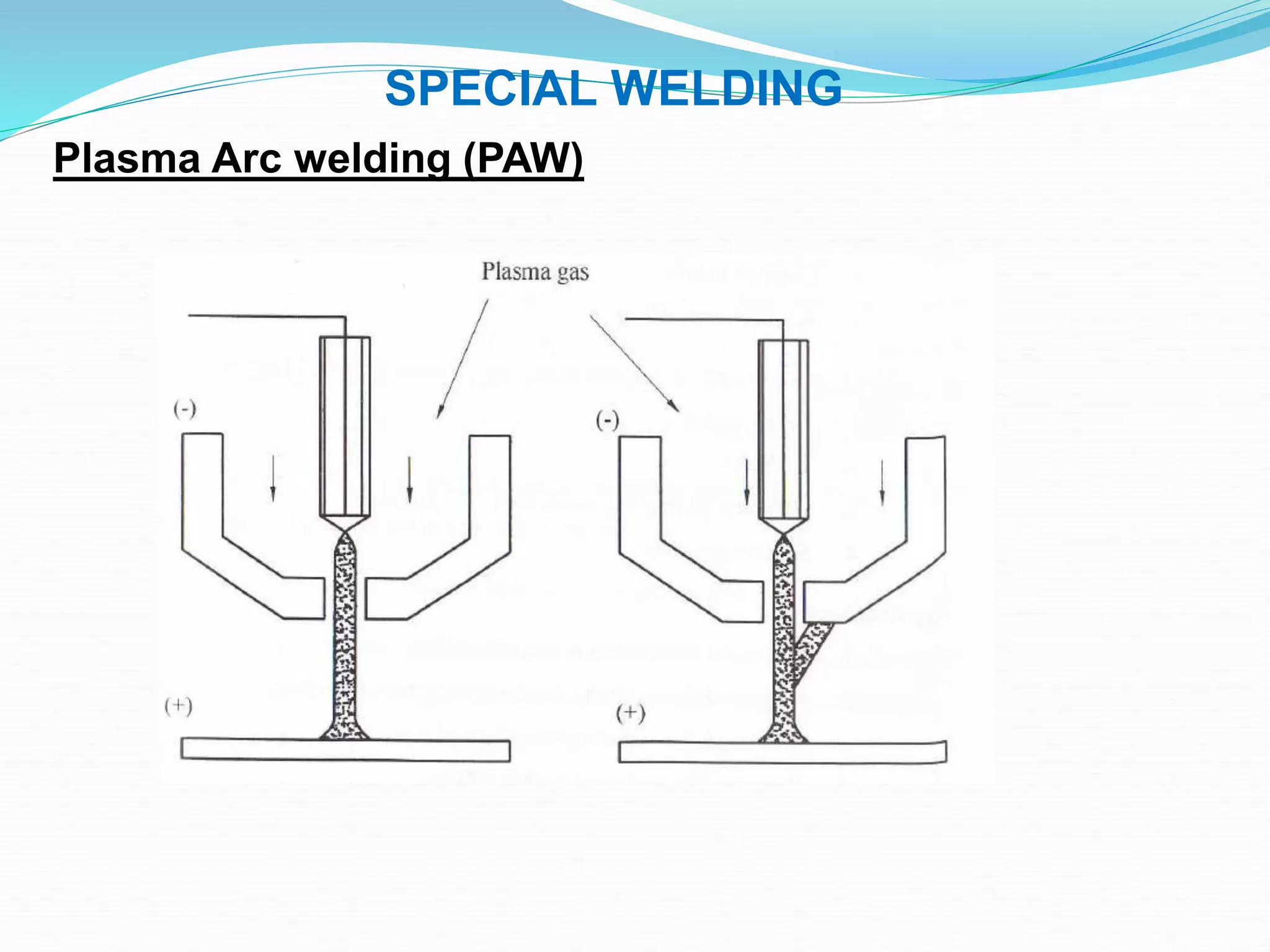
Plasma Arc welding (PAW)
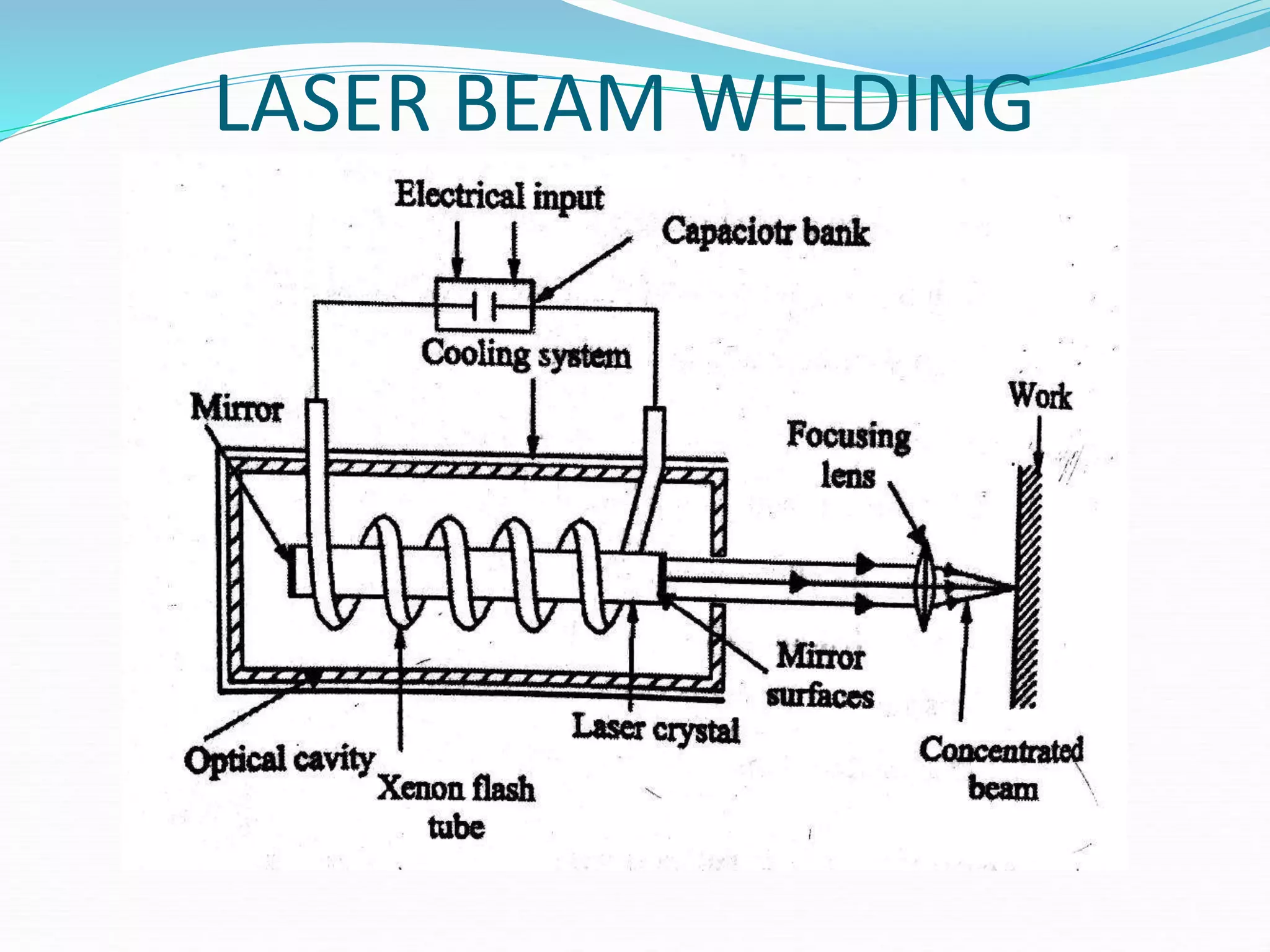
LASER BEAM WELDING
SPECIAL WELDING
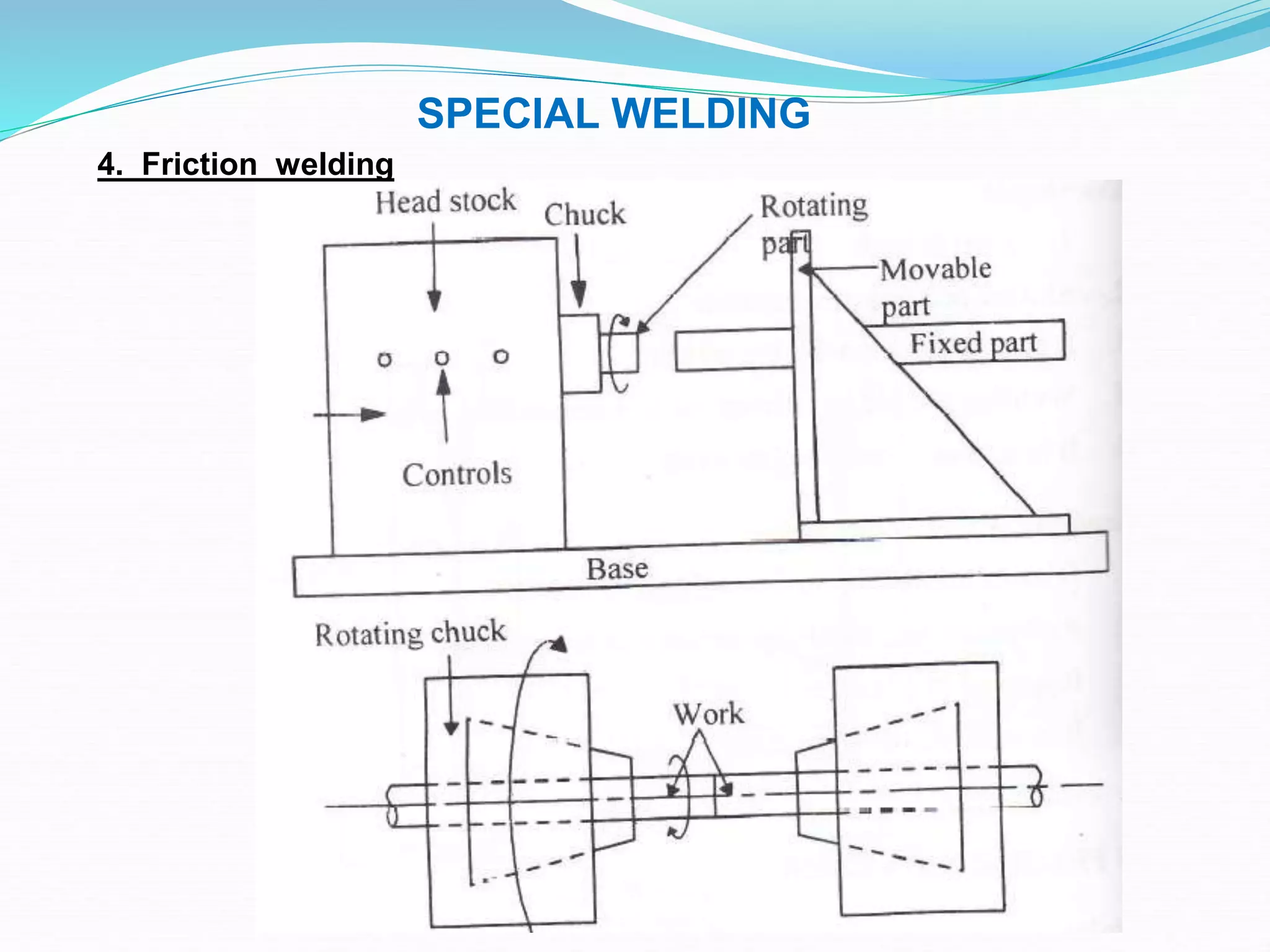
4. Friction welding
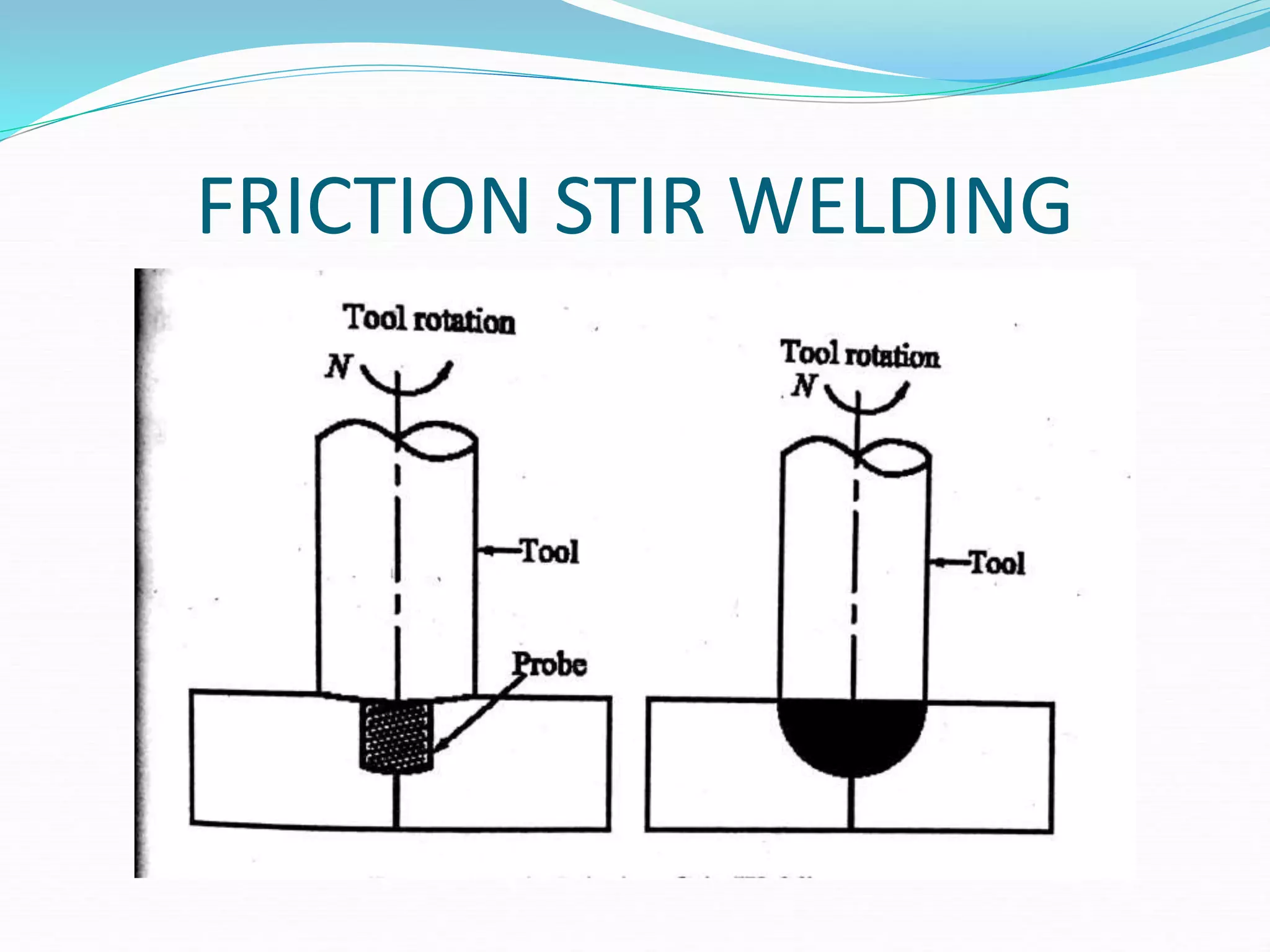
FRICTION STIR WELDING
BRAZING
Joining of two metal pieces by using a filler metal and the
liquid temperature is above 450 deg C.
Joining of two metal pieces by using a filler metal and the
liquid temperature is below 430 deg C.
SOLDERING
METHODS AND PROCESS CAPABILITES - BRAZING
 Torch brazing
Acetylene, natural gas and butane are combined with air or oxygen.
 Furnace brazing
The heat is supplied by gas or electric heating coils.
 Induction brazing
Heated by placing within the field of high frequency induction coil.
 Dip Brazing
Chemical dip - Filler metal placed in molten bath or flux.
Molten metal bath – The assembled parts are first prefluxed and then
immersed into molten bath.
 Resistance brazing
Rapid heating minimizes oxidation and the heat affected zone is small
 Laser brazing and electron beam brazing
Laser beam and electron beam are used to join the metal.
METHODS AND PROCESS CAPABILITES - SOLDERING
 Hard Soldering
The filler metal is silver. Also called as Silver soldering.
 Soft Soldering
Soldering iron is copper rod.
 Dip Soldering
A large amount of solder is melted in a closed tank and parts to
be soldered are cleaned and properly dipped in a flux bath.
 Wave soldering
Parts is not dipped into the solder tank but wave is generated in
the tank.
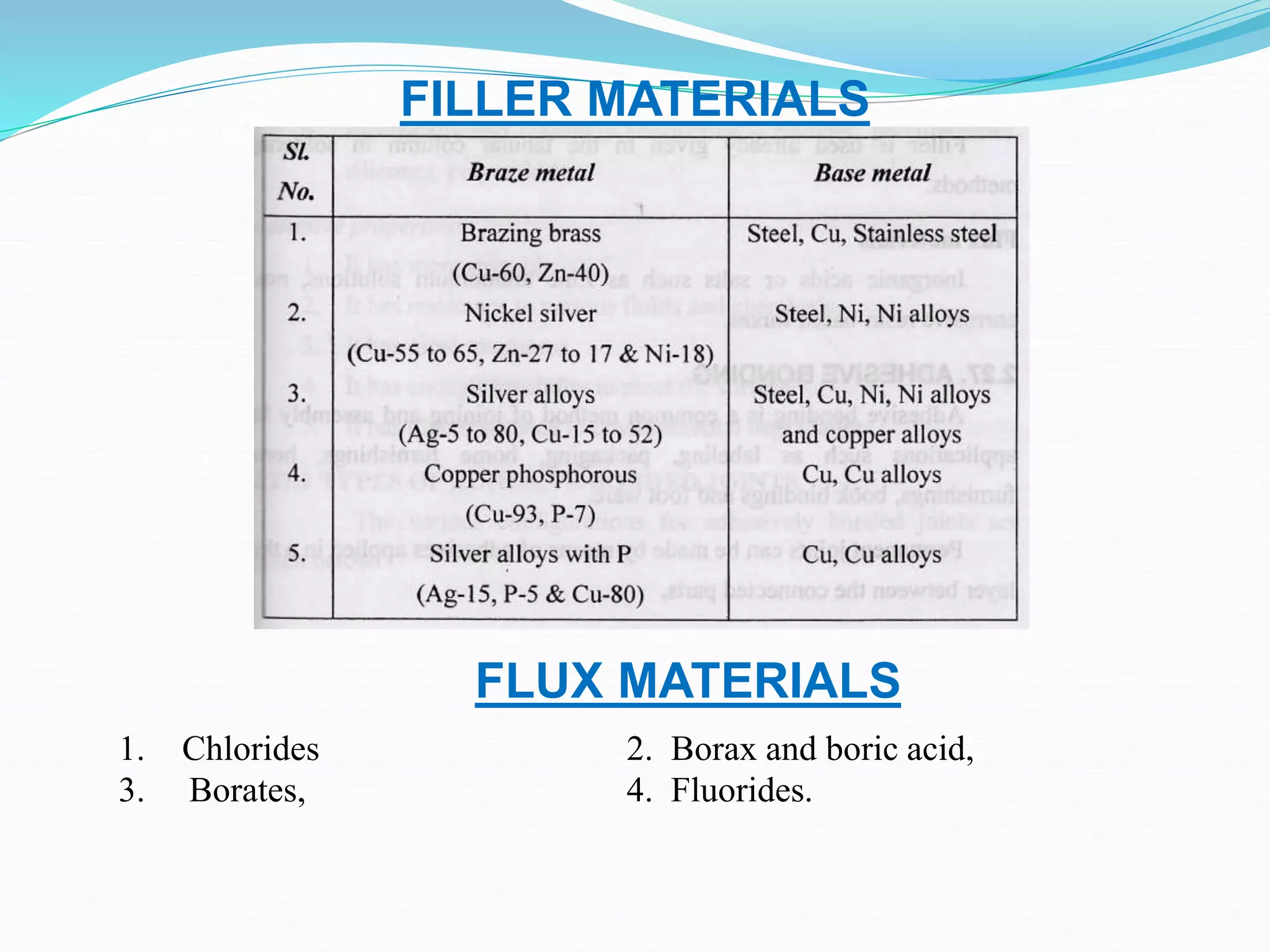
FILLER MATERIALS
FLUX MATERIALS
1. Chlorides 2. Borax and boric acid,
3. Borates, 4. Fluorides.
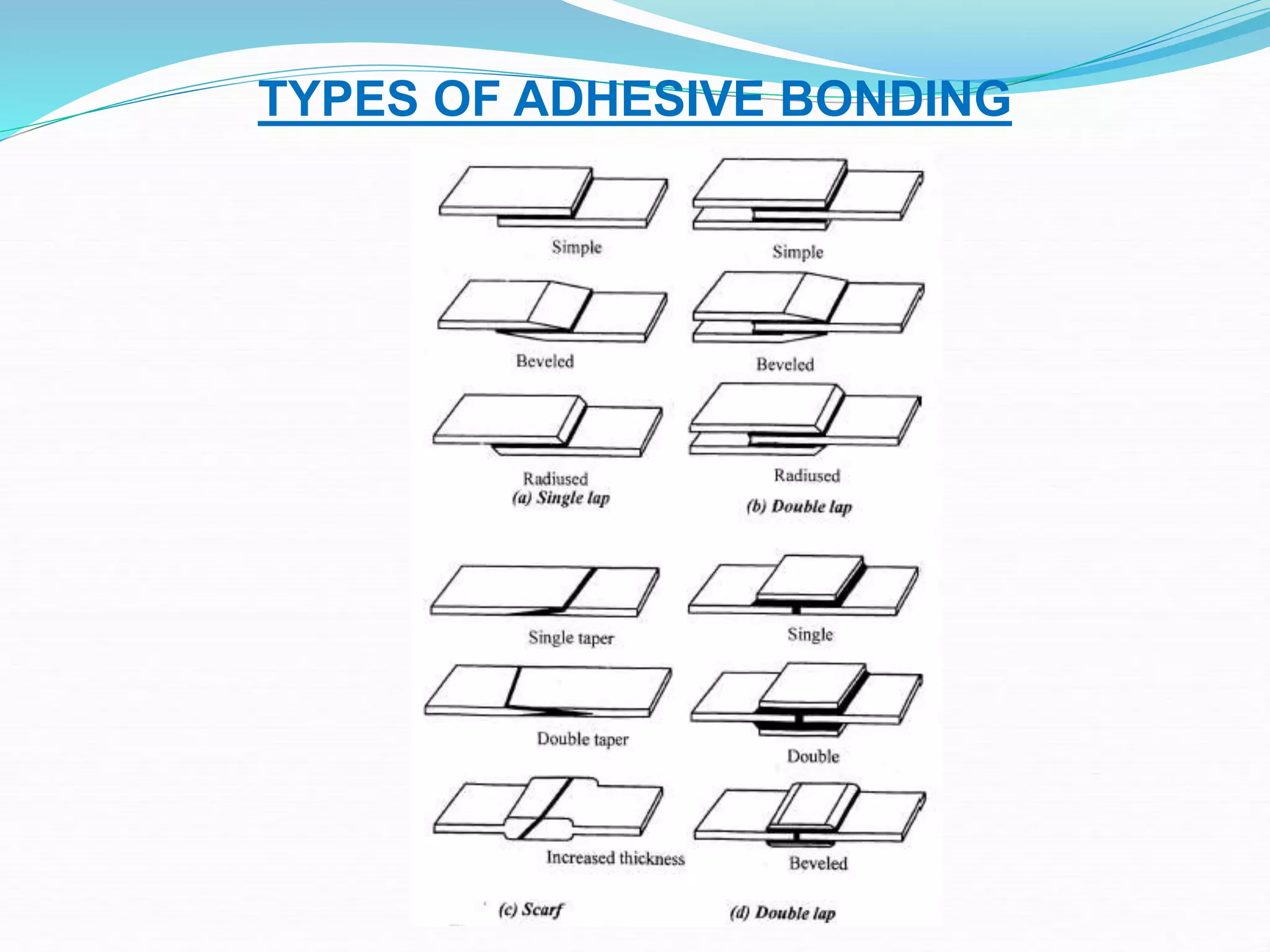
TYPES OF ADHESIVE BONDING

Mp 1-unit - ii - joining processes

  • 1.
  • 2.
    Fusion welding The metalat the joint is heated to a molten state and then it is allowed to solidify. E.g. – gas welding , Arc welding, Thermit welding The metal at the joint is heated to a plastic state and are pressed together to make the joint. E.g. – Electric resistance welding, Forge welding Plastic welding
  • 4.
    Types of gaswelding 2. Air – Acetylene welding Air taken from the atmosphere and compressed , mixed the acetylene to the required proportion. Temperature is lower than oxy-acetylene welding. 3. Oxy – Hydrogen welding Oxygen and hydrogen gases are mixed with the required proportion. It is used for low temperature welding metals like aluminium, lead. 1. Oxy – Acetylene welding  Hottest region - 3200°C  Acetylene pressure not more than 1.5atm  Oxygen pressure – HP -0.1 to 3.5 bar, LP – 0.5 to 3.5bar,Torch pressure upto 0.06bar.  CaC2+2H2O Ca(OH)2+C2H2+127.3 Kj/mol.  Metal 2mm to 50mm thick are welded.
  • 5.
    Gas Welding Equipments Oxygen-black (125-140kg/cm2) Acetylene-maroon(16kg/cm2)
  • 6.
    Flame Characteristics 1. NeutralFlame  Equal quantity of oxygen and acetylene.  Inner cone develops heat to melt the metal.  Outer cone are 2. Carburising Flame  More acetylene than oxygen.  Sharp Inner cone  White intermediate cone called feather cone  Bluish Outer cone
  • 7.
    Flame Characteristics 3. OxidisingFlame  More oxygen than acetylene.  Smaller Inner cone  Outer cone
  • 8.
    Gas Welding Technique 1.Leftward or Forward Welding 2. Rightward or Backward Welding
  • 9.
  • 10.
    Arc Welding Equipment Heatis developed by an electric arc
  • 11.
    Filler rod –Gas Welding Equipment To supply additional metal to make the joint. Metal rod as a parent metal. D=t/2 + 1 Electrode – Arc Welding Equipment 1. Consumable electrodes It used to produce arc between work and electrode but also provides filler material during welding i. Bare electrode ii.Lightly coated electrode(1-5%) iii. Heavily coated electrode (1to 3mm & 15-30%) 2. Non- Consumable electrodes Made of carbon, graphite which do not consume during welding Arc length remains constant and stable.
  • 12.
  • 13.
    TUNGSTEN INERT GASWELDING (TIG) GAS TUNGSTEN ARC WELDING (GTAW) Tungsten carbide melting point- 330°c Less than 6.5mm metal thickness
  • 14.
    GAS METAL ARCWELDING (GMAW) MIG – METAL INERT GAS WELDING
  • 15.
    FLUX CORE When theflux is required continuously or where large quantity of flux has to be supplied, on that time the flux is used in the form of wire wound on a rotating drum or reel called as flux core. 1. Submerged Arc welding (SAW)
  • 16.
    2. Electro Slagwelding (ESW) FLUX CORE
  • 17.
  • 18.
    1.0 SPOT WELDING 0.025mmto 1.25mm thickness metal sheets RESISTANCE WELDING
  • 19.
    2.0 BUTT WELDING 1.Upset butt welding 2. Flash butt welding RESISTANCE WELDING
  • 20.
  • 21.
  • 22.
  • 23.
  • 24.
  • 25.
  • 26.
  • 27.
  • 28.
  • 29.
  • 30.
    BRAZING Joining of twometal pieces by using a filler metal and the liquid temperature is above 450 deg C. Joining of two metal pieces by using a filler metal and the liquid temperature is below 430 deg C. SOLDERING
  • 31.
    METHODS AND PROCESSCAPABILITES - BRAZING  Torch brazing Acetylene, natural gas and butane are combined with air or oxygen.  Furnace brazing The heat is supplied by gas or electric heating coils.  Induction brazing Heated by placing within the field of high frequency induction coil.  Dip Brazing Chemical dip - Filler metal placed in molten bath or flux. Molten metal bath – The assembled parts are first prefluxed and then immersed into molten bath.  Resistance brazing Rapid heating minimizes oxidation and the heat affected zone is small  Laser brazing and electron beam brazing Laser beam and electron beam are used to join the metal.
  • 32.
    METHODS AND PROCESSCAPABILITES - SOLDERING  Hard Soldering The filler metal is silver. Also called as Silver soldering.  Soft Soldering Soldering iron is copper rod.  Dip Soldering A large amount of solder is melted in a closed tank and parts to be soldered are cleaned and properly dipped in a flux bath.  Wave soldering Parts is not dipped into the solder tank but wave is generated in the tank.
  • 33.
    FILLER MATERIALS FLUX MATERIALS 1.Chlorides 2. Borax and boric acid, 3. Borates, 4. Fluorides.
  • 34.