



Presenters
Purohit Pankaj (W579074)
Salagar Muaaz (W579080)
Kulkarni Pranav
(2010BCS203)
Desale Ritesh (2010BCS211)
Seminar Guide
Mrs. S. S. Solapure
Agenda
 Introduction
 Reference Paper and Its
Contents
 Application
 Conclusion
 Questions
Agenda
 Introduction




Introduction
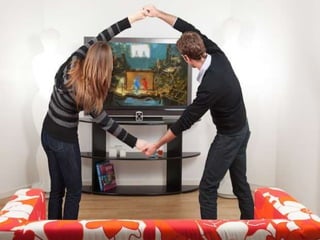
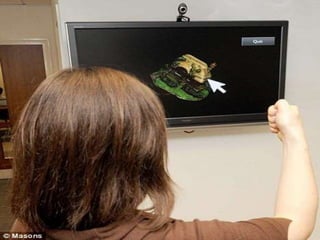
 Gesture Recognition
 Hand Gesture Recognition
Introduction (Contd.)
 What is it?
 How it works?
Introduction (Contd.)
 What is its NEED?
 Advantages
Natural Interaction
Builds a Richer Bridge
Remote Interaction
Wonderful Gaming Experience
Agenda

 Reference Paper and Its
Contents



Reference Paper
Movement Tracking in Real-time
Hand Gesture Recognition
Authored by
Hong-Min Zhu & Chi-Man Pun
Department of Computer and Information Science
University of Macau, Macau SAR, China
{ma86560, cmpun} [at] umac.mo

9th IEEE/ACIS International Conference on Computer
and Information Science
Reference Paper
 What does it say?
This paper deals with overcoming
of SCHD technique for Hand
Gesture Recognition using newly
improved Algorithm, IFDHD
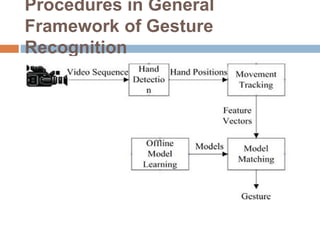
Procedures in General
Framework of Gesture
Recognition
Previous Work Done
 Temporal Hand Gesture
 Assumptions
Camera User Synchronization
Uniform Lightening Condition
Simple Background Features
Frame Rate – Gesture Speed
Coordination
S C H D
 Skin Color based Hand Detection
 J. Kovac and P. Peer – Designed Skin
Classifier
 Rules
 Pixel is classified as a skin pixel if:
Value of Red > 95, Green > 40 and Blue > 20
&
max{R, G, B} - min{R, G, B} > 15 &
|R - G| > 15 and R > G and R > B
Proposed Solution
 Problems with SCHD
Computationally Expensive
Skin-like Object Ambiguity
Illumination Parameters
Skin Color Variation
 Solution – Motivated from BSHD
IFDHD
Inter-Frame Difference based Hand Detection
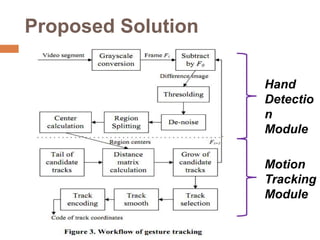
Proposed Solution
Hand
Detectio
n
Module
Motion
Tracking
Module
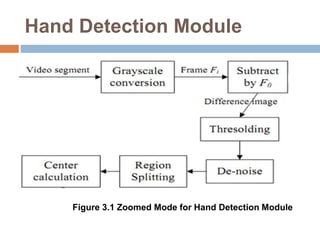
Hand Detection Module
Figure 3.1 Zoomed Mode for Hand Detection Module
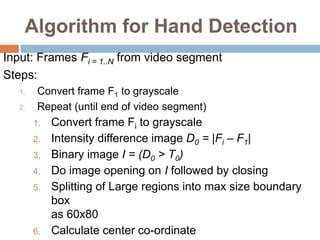
Algorithm for Hand Detection
Input: Frames Fi = 1..N from video segment
Steps:
1. Convert frame F1 to grayscale
2. Repeat (until end of video segment)
1. Convert frame Fi to grayscale
2. Intensity difference image D0 = |Fi – F1|
3. Binary image I = (D0 > T0)
4. Do image opening on I followed by closing
5. Splitting of Large regions into max size boundary
box
as 60x80
6. Calculate center co-ordinate
Experimental Results
 SCHD based Hand Detection





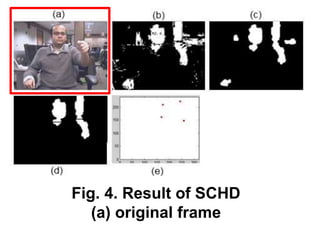
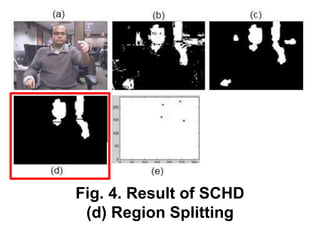
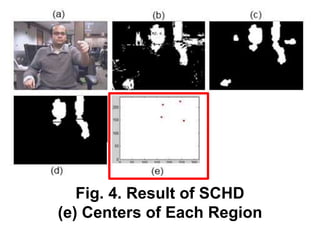
Fig. 4. Result of SCHD
(a) original frame
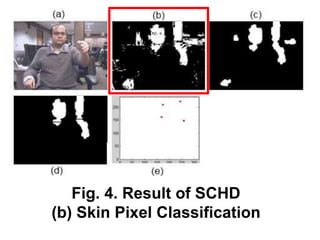
Fig. 4. Result of SCHD
(b) Skin Pixel Classification
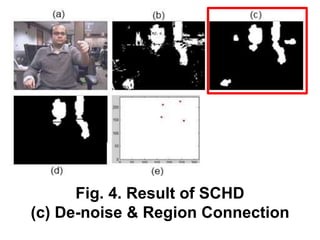
Fig. 4. Result of SCHD
(c) De-noise & Region Connection
Fig. 4. Result of SCHD
(d) Region Splitting
Fig. 4. Result of SCHD
(e) Centers of Each Region
Experimental Results

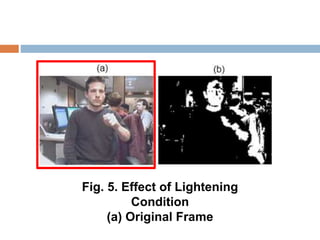
 Lightening Condition




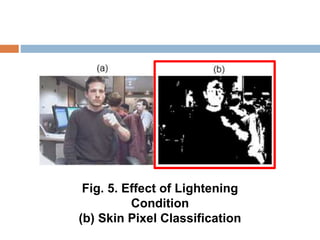
Fig. 5. Effect of Lightening
Condition
(a) Original Frame
Fig. 5. Effect of Lightening
Condition
(b) Skin Pixel Classification
Experimental Results


 IFDHD based Hand Detection



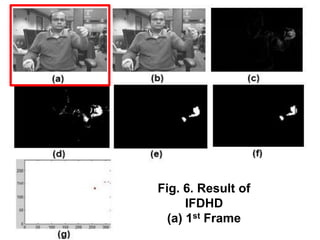
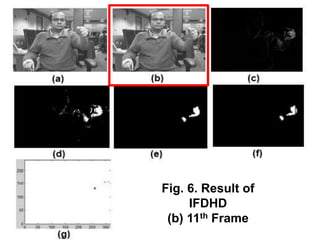
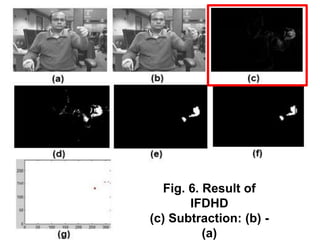
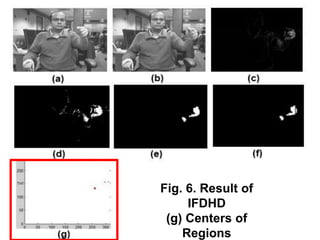
Fig. 6. Result of
IFDHD
(a) 1st Frame
Fig. 6. Result of
IFDHD
(b) 11th Frame
Fig. 6. Result of
IFDHD
(c) Subtraction: (b) -
(a)
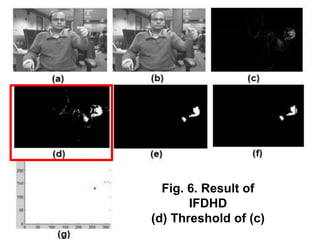
Fig. 6. Result of
IFDHD
(d) Threshold of (c)
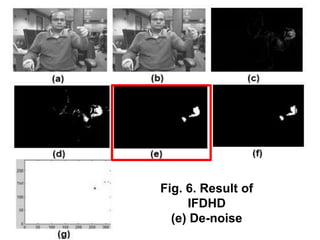
Fig. 6. Result of
IFDHD
(e) De-noise
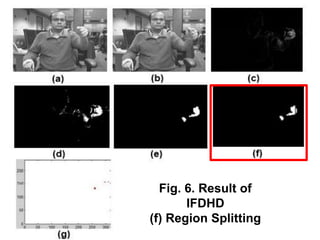
Fig. 6. Result of
IFDHD
(f) Region Splitting
Fig. 6. Result of
IFDHD
(g) Centers of
Regions
System Domain (Contd.)
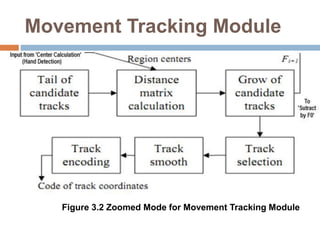
Movement Tracking Module
Figure 3.2 Zoomed Mode for Movement Tracking Module
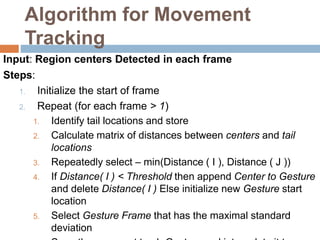
Algorithm for Movement
Tracking
Input: Region centers Detected in each frame
Steps:
1. Initialize the start of frame
2. Repeat (for each frame > 1)
1. Identify tail locations and store
2. Calculate matrix of distances between centers and tail
locations
3. Repeatedly select – min(Distance ( I ), Distance ( J ))
4. If Distance( I ) < Threshold then append Center to Gesture
and delete Distance( I ) Else initialize new Gesture start
location
5. Select Gesture Frame that has the maximal standard
deviation
Experimental Results



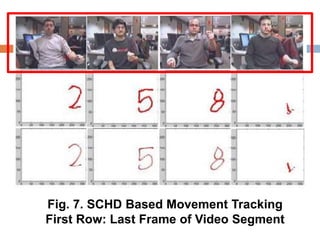
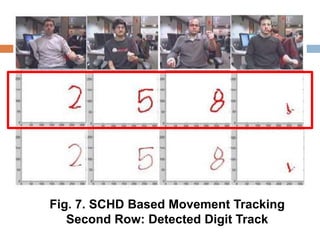
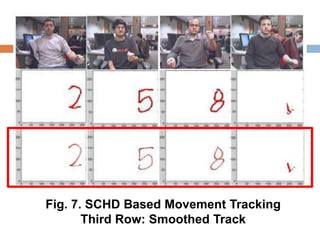
 SCHD based Movement Tracking


Fig. 7. SCHD Based Movement Tracking
First Row: Last Frame of Video Segment
Fig. 7. SCHD Based Movement Tracking
Second Row: Detected Digit Track
Fig. 7. SCHD Based Movement Tracking
Third Row: Smoothed Track
Experimental Results




 IFDHD based Movement
Tracking

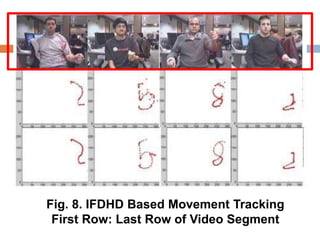
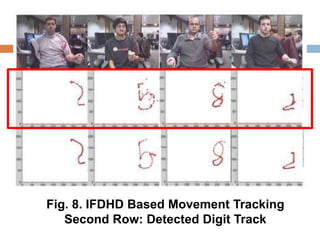
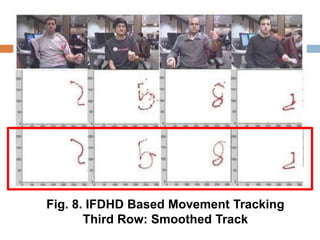
Fig. 8. IFDHD Based Movement Tracking
First Row: Last Row of Video Segment
Fig. 8. IFDHD Based Movement Tracking
Second Row: Detected Digit Track
Fig. 8. IFDHD Based Movement Tracking
Third Row: Smoothed Track
Experimental Results





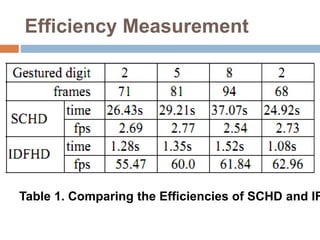
 Efficiency Measurement
Efficiency Measurement
Table 1. Comparing the Efficiencies of SCHD and IF
Outline


 Application Scenario


Reference Paper
American Sign Language Recognition
System for Hearing Impaired People Using
Cartesian Genetic Programming
Authored By
Fahad Ullah
Department of Computer Systems Engineering,
University Of Engineering & Technology,
Peshawar, Pakistan
Proceeding of 5th International Conference on
Automation, Robotics and Applications, New
Zealand
Application Scenario
 Why the interfaces are changing ?
 How many Apps Out there?
 Have you tried X-box,PSP-2,Mac-OSX
 January 9, 2012, 66 million Xbox 360 consoles
have been sold worldwide.
 New era of Interfaces
Application Scenario
 What if you can’t speak?
 ASL
 CGP (Cartesian Genetic Programming)
 How it works?
 Genetic programming an Overview:
 Probabilistic search
 Darwinian principle of natural selection
 Naturally occurring genetic operations such
as crossover and mutation.
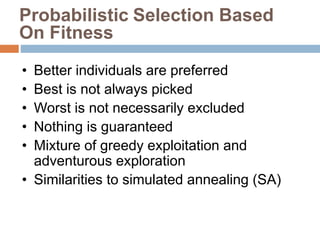
• Better individuals are preferred
• Best is not always picked
• Worst is not necessarily excluded
• Nothing is guaranteed
• Mixture of greedy exploitation and
adventurous exploration
• Similarities to simulated annealing (SA)
Probabilistic Selection Based
On Fitness
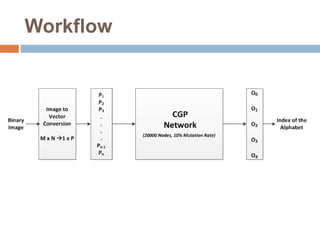
Workflow
ASL using CGP
26 English language alphabets are trained
and Identified
The system uses 26 binary images
representing the different alphabets
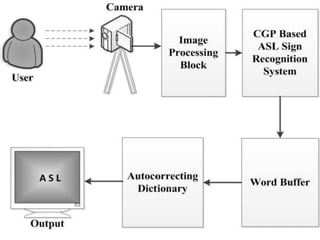
Mentioned system with a Dictionary
correction ability in order to increase the
overall accuracy of the system.
Outline



 Conclusion

Conclusion
 Proposed IFDHD
 Serving Feature Extraction Stage
 Overcoming the pitfalls of SCHD
Outline




 Questions
Questions, IF ANY?
Q?
Thank You


Movement Tracking in Real-time Hand Gesture Recognition